



Slewing Ring Bearing Selection Guide for OEM Buyers
Selecting the right slewing ring bearing for OEM applications requires understanding complex load requirements, precision specifications, and integration challenges. For OEM makers, picking the right slewing ring bearing is a very important choice that has a direct impact on the stability, economy, and long-term upkeep costs of their equipment. Standard bearings are only good for rotating loads. But slewing ring bearings are made to hold up big buildings while dealing with axial loads, radial loads, and rolling moments all at the same time. A lot of heavy-duty systems need stable spinning and structural support, like tractors, cranes, wind turbines, industrial automation equipment, naval gear, and more. These bearings are used in all of these areas. But there's more to picking the right bearing than just looking at the load capacity. When buying from an OEM, buyers need to think about things like working conditions, fitting needs, material quality, production capabilities, and seller support. Unexpected downtime, premature wear, and expensive equipment redesign can all be avoided with a reliable selection method. This guide talks about the most important things OEM buyers should think about when choosing a slewing ring bearing for tough industrial uses.
 |
Understanding Slewing Ring Bearing Fundamentals
What Makes Slewing Ring Bearings Different From Conventional Bearings
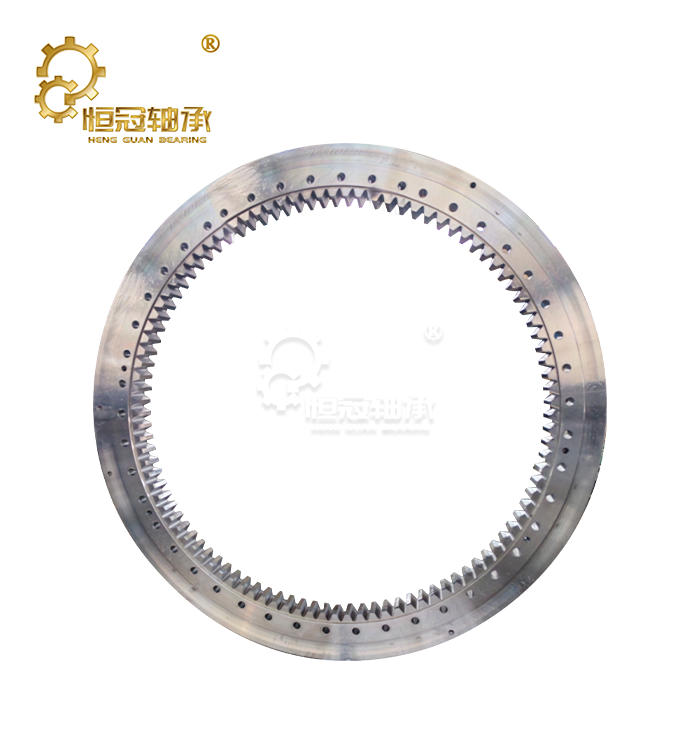
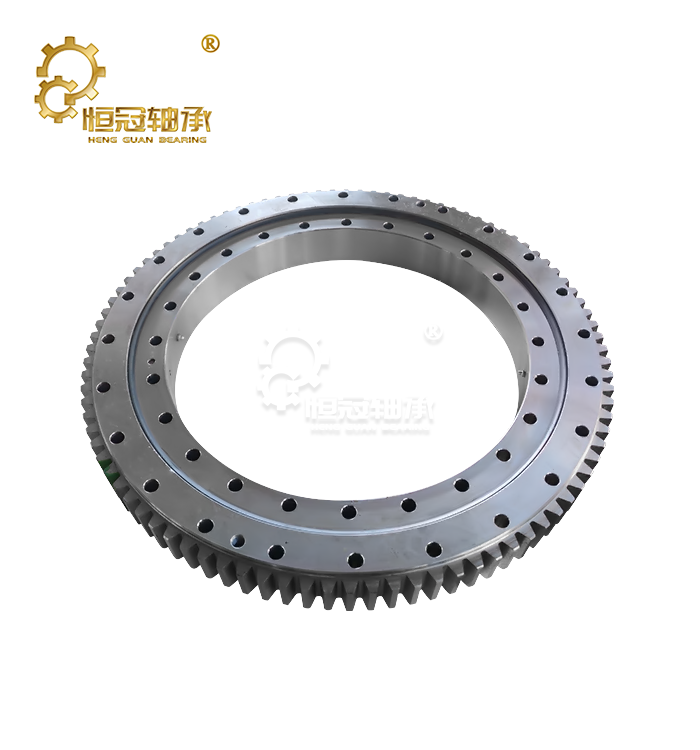
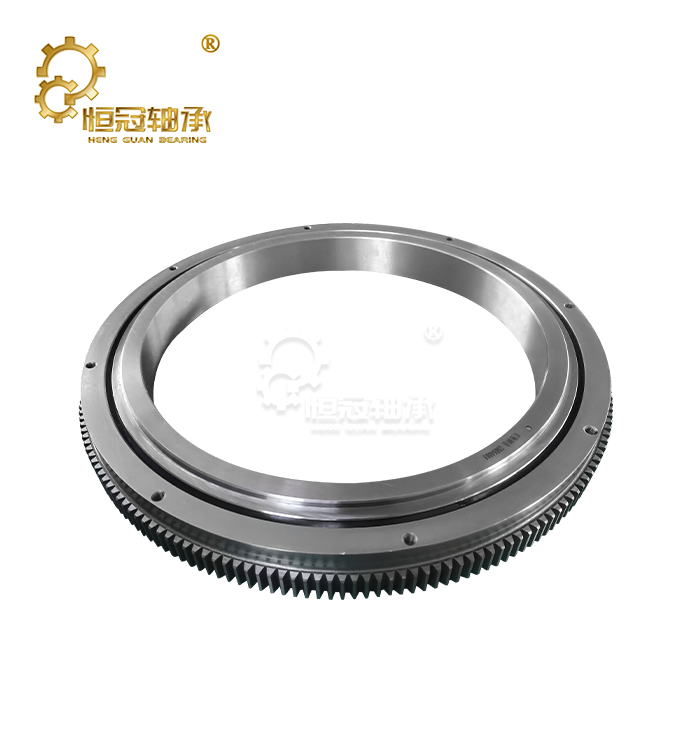
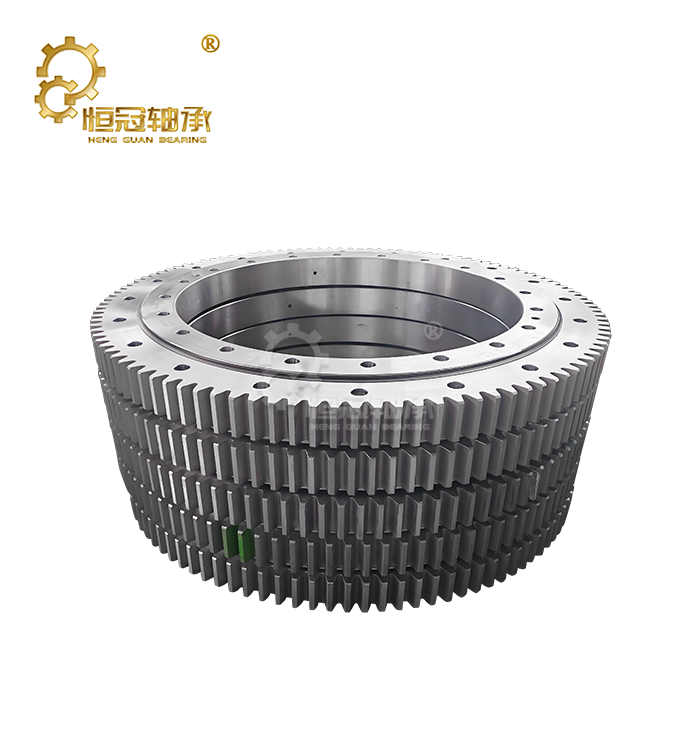
A slewing ring bearing is a big-diameter rotating bearing that holds heavy loads and connects structures that are both still and moving. Slewing ring designs can handle axial forces, radial forces, and twisting moments all at the same time, while standard bearings can only support one main load direction. Because of this one-of-a-kind feature, one bearing assembly can replace several standard bearing arrangements. This means a smaller design, less complicated mechanics, and better total system interaction for OEM equipment makers. Rolling elements placed between the inner and outer rings are what make the machine work. These moving parts could be balls or cylinder-shaped rollers, depending on the use. During use, the rolling elements move loads through raceway contact areas that have been optimised. This lets the structure stay stable while allowing smooth rotation. A lot of slewing ring bearings have attachment holes and gear teeth built right in. This lets them connect directly to drive systems, which cuts down on the number of extra motion parts and makes designing tools easier.
Main Components That Determine Bearing Performance
A slewing ring bearing's function depends on how well a few important parts work together.
Inner and Outer Rings
The main structure that supports the load is made up of the inner and outer rings. Most of the time, high-strength alloy steels like 50Mn or 42CrMo are used to make these parts because they are tough, don't wear easily, and stay the same size. When used in OEM applications, ring strength is very important since the bearing is often used to connect two large pieces of equipment structurally. Any change in the rings' shape can affect how well they rotate and speed up wear.
Rolling Elements and Raceway Design
The loads are moved from one ring to the next by rolling elements. Roller designs are better for heavy-duty tools because they can hold more weight and rotate more smoothly. Ball designs are more popular for uses that need smooth movement and a reasonable load capacity. How forces are spread out during action depends on the shape of the track. When raceways are designed correctly, they have fewer areas of high stress and are better able to resist fatigue damage.
Sealing and Lubrication Systems
Sealing systems keep dust, water, and other outside contaminants from getting into internal parts. In particular, this is important for building and mining tools as well as outdoor sites that are often exposed to tough circumstances. When grease works well, it lowers the friction between the moving elements and the raceways. This helps keep the operation stable and extends the time between service visits. What kind of lubricant to use depends on the temperature range, speed, load, and exposure to the environment.
How OEM Buyers Should Evaluate Slewing Ring Bearing Specifications
Selecting a bearing based only on diameter or load rating can result in poor performance. OEM engineers should evaluate multiple technical factors to ensure the selected bearing matches the actual application requirements.
Load Capacity Evaluation: Axial, Radial, and Moment Loads
Figuring out the load is the first step in choosing the right bearings.
Several forces may act on a slewing ring bearing at the same time:
- Axial loads are the vertical forces that come from the weight of the object or from raising it.
- Radial loads are horizontal forces that come from movement, outside pressure, or the way the machine is used.
- Moment loads are tilting forces that are caused by misaligned loads, long poles, or buildings that turn.
For instance, when moving heavy things over long distances, a crane's slewing system has to be able to handle big toppling moments. A digger needs to be able to handle the repeated shock loads that come from digging.
OEM buyers should think about:
- What are the maximum operating load, peak impact forces, duty cycle frequency, safety factors, and environmental conditions?
- For more complicated problems, professional engineering analysis might use finite element analysis (FEA) or load modelling. This helps make sure that the bearing is strong enough for normal use and can also handle pressure situations that aren't expected.

Dimensional Compatibility and Installation Requirements
Physical dimensions directly influence equipment design and integration.
Important dimensional factors include:
Inner Diameter
The inner diameter affects:
- central shaft requirements;
- cable routing;
- hydraulic line installation;
- structural clearance.
A correctly selected inner diameter allows smooth integration without unnecessary modifications.
Outer Diameter
The outer diameter determines mounting space and structural connection requirements. Larger diameters generally provide increased load capacity, but they also require stronger supporting structures.
Bearing Height
Bearing height affects equipment profile, installation space, and overall system rigidity.OEM buyers should evaluate dimensional specifications together with mechanical requirements rather than selecting size independently. A qualified supplier should be able to provide detailed drawings and engineering support to confirm compatibility before production.
Material Selection and Manufacturing Quality Considerations
Material quality and manufacturing processes determine how reliably a slewing ring bearing performs during long-term operation.
Choosing the Right Steel Grade for Heavy-Duty Applications
High-quality steel provides the foundation for bearing durability.
Common materials include:
50Mn Steel
50Mn is widely used for slewing ring applications because it provides:
- good strength;
- reliable toughness;
- cost-effective performance.
It is suitable for many construction and industrial applications.
42CrMo Alloy Steel
42CrMo provides higher mechanical performance compared with standard carbon steels. It offers:
- improved fatigue resistance;
- higher strength;
- better performance under heavy loads.
This material is often selected for demanding applications where shock loading and continuous operation are expected.
Heat Treatment and Surface Hardening
Heat treatment improves the mechanical properties of bearing components.
Induction hardening is commonly applied to raceway surfaces because it creates a hard, wear-resistant layer while maintaining a tougher internal structure.
This combination provides:
- improved resistance to surface fatigue;
- reduced wear;
- better load-bearing capability.
For OEM buyers, understanding heat treatment capability is important because inconsistent processing can lead to early bearing failure even when the correct material is selected.
Precision Requirements and Tolerance Control
Manufacturing accuracy influences:
- rotation smoothness;
- gear engagement;
- noise levels;
- service life.
Different applications require different precision levels.
Standard industrial equipment may use general precision grades, while automated systems or high-accuracy machinery may require tighter tolerances.
OEM buyers should confirm:
- dimensional inspection procedures;
- machining accuracy;
- raceway processing quality;
- gear tooth accuracy.
A supplier with strong quality control systems can provide more consistent performance across production batches.
|
|


Selecting the Right Slewing Ring Bearing Type for Different Applications
Different equipment designs require different bearing structures. Choosing the correct type depends on load conditions, rotation requirements, available installation space, and expected operating life.
Single Row Ball Bearings for General Industrial Applications
Single-row ball slewing ring bearings are commonly selected for applications requiring smooth rotation, moderate load capacity, and compact installation. The four-point contact design allows each ball to support loads from multiple directions, providing a balance between axial load capability, radial load support, and moment resistance.
Typical applications include:
- small and medium construction equipment;
- rotating platforms;
- light cranes;
- industrial machinery.
The main advantage of ball configurations is lower friction during rotation. This allows the drive system to operate with reduced torque requirements, which can improve overall equipment efficiency. However, when equipment experiences extremely high loads or frequent shock conditions, roller-based designs may provide better performance.
Roller Slewing Ring Bearings for Heavy-Duty Equipment
Roller slewing ring bearings are designed for applications requiring higher load capacity and increased structural rigidity.
Compared with ball designs, rollers create a larger contact area with the raceway. This improves load distribution and reduces contact stress under heavy operating conditions.
Roller configurations are commonly used in:
- large excavators;
- port cranes;
- offshore equipment;
- heavy industrial machinery.
For OEM manufacturers producing equipment that operates continuously under demanding conditions, roller bearings can provide improved durability and longer maintenance intervals. The correct roller configuration depends on the application. Single-row rollers, double-row rollers, and triple-row roller systems each provide different load-handling capabilities.
Four-Point Contact Ball Bearings for Combined Loads
Four-point contact ball bearings are among the most widely used slewing ring designs because they provide a good balance between performance and cost.
The raceway geometry creates four contact points between the balls and raceways, allowing the bearing to support:
- axial loads;
- radial loads;
- overturning moments.
This makes them suitable for equipment where multiple forces occur simultaneously.
Common applications include:
- cranes;
- aerial platforms;
- rotating equipment;
- wind turbine yaw systems.
Proper lubrication and correct preload adjustment are important because the contact conditions directly influence bearing life.
Crossed Roller Designs for High-Precision Applications
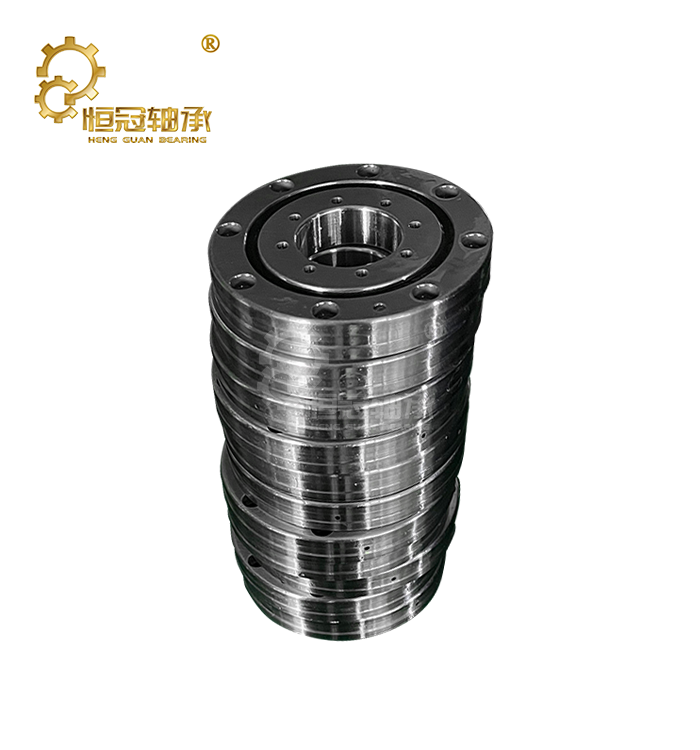
Crossed roller slewing bearings are designed for applications requiring high rigidity and accurate positioning. The rollers are arranged alternately, allowing the bearing to distribute loads evenly around the circumference. This structure reduces elastic deformation and improves rotational accuracy.
They are often used in:
- robotics;
- precision automation equipment;
- medical systems;
- semiconductor manufacturing equipment.
For OEM applications where positioning accuracy is more important than maximum load capacity, crossed roller designs can provide significant advantages.
How OEM Buyers Should Evaluate Slewing Ring Bearing Suppliers
Selecting the right bearing supplier is as important as selecting the correct bearing type. A qualified supplier should provide technical support, quality assurance, and reliable production capability.
Manufacturing Capability and Engineering Support
OEM buyers should evaluate whether a supplier has the ability to produce bearings that match specific equipment requirements.
Important factors include:
- machining equipment capability;
- heat treatment technology;
- quality inspection systems;
- engineering design support;
- customization experience.
A capable supplier should be able to review equipment drawings, analyze operating conditions, and recommend suitable bearing configurations.This engineering support helps reduce selection risks and prevents problems caused by incorrect specifications.
OEM Customization and Design Collaboration
Many OEM projects require customized solutions rather than standard catalog products.
Customization may involve:
- mounting hole patterns;
- internal or external gear designs;
- special sealing systems;
- corrosion protection;
- dimensional adjustments.
A supplier experienced in OEM cooperation should be able to support the development process from initial design review through final production. Early communication between equipment manufacturers and bearing suppliers can reduce redesign costs and improve product integration.
Quality Management and Production Reliability
Consistent manufacturing quality is essential for OEM applications because bearing failures can affect entire equipment systems.
Before selecting a supplier, buyers should review:
- material traceability procedures;
- inspection standards;
- production records;
- testing capability;
- quality certifications.
Reliable documentation provides confidence that each bearing meets the required specifications.A strong quality management system also helps maintain consistency when ordering repeated production batches.
Inspection, Testing, and Documentation Requirements
Quality verification should be completed before a slewing ring bearing is integrated into OEM equipment.
Incoming Inspection Procedures
Incoming inspection allows OEM buyers to confirm that delivered bearings meet agreed specifications.
Important inspection items include:
- inner and outer diameter measurements;
- height verification;
- mounting hole accuracy;
- gear tooth inspection;
- surface condition checks.
Dimensional accuracy is particularly important because incorrect tolerances can affect equipment assembly and operating performance.
Load Testing and Performance Validation
Performance testing provides additional confidence before installation.
Depending on the application, testing may include:
- static load testing;
- rotational testing;
- torque measurement;
- noise and vibration analysis.
For critical equipment such as cranes or offshore machinery, validation under simulated operating conditions can help identify potential issues before field operation.
Documentation and Traceability
Complete documentation supports quality management throughout the bearing lifecycle.
OEM buyers should consider requesting:
- material certificates;
- heat treatment records;
- inspection reports;
- production traceability information.
These records are valuable for:
- warranty support;
- maintenance planning;
- failure investigation;
- future procurement decisions.
A supplier that provides complete documentation demonstrates stronger quality control and manufacturing transparency.
Installation and Maintenance Recommendations for Long-Term Performance
Even a high-quality slewing ring bearing requires correct installation and maintenance to achieve reliable service life.
Installation Accuracy and Mounting Procedures
One common reason why bearing problems happen early is that they were not installed correctly.
Some important installation factors are:
- checking the flatness of the mounting surface, the right way to tighten the bolts, the right force values, and the alignment.
- Uneven mounting conditions can put more stress on raceways and rolling elements, which shortens their useful life.
- OEM makers should install their products the way the seller tells them to and use the right measuring tools when putting them together.
Lubrication Management
Using the right lubricant lowers friction and keeps internal parts safe.
When planning the lubrication schedule, you should:
- working regularity, weather conditions, exposure to pollution, and the amount of time the machine is used.
- Using the wrong oils or not enough grease can speed up wear and make upkeep more necessary.
- Lubrication methods should be changed for equipment that works in dusty, marine, or high-temperature conditions.
Condition Monitoring and Preventive Maintenance
Regular monitoring helps identify problems before they result in equipment failure.
Common inspection methods include:
Backlash Measurement
Increasing backlash may indicate gear wear or internal clearance changes.
Vibration Monitoring
Abnormal vibration can reveal:
- lubrication problems;
- misalignment;
- component damage.
Visual Inspection
Regular inspection can identify:
- seal damage;
- lubricant leakage;
- corrosion;
- abnormal wear patterns.
Preventive maintenance improves equipment availability and reduces unexpected repair costs.
Future Trends in Slewing Ring Bearing Technology
The slewing bearing industry continues to develop as equipment manufacturers demand higher efficiency, reliability, and intelligent monitoring capabilities.
Smart Monitoring and Predictive Maintenance
Industrial equipment is using sensors and digital tracking tools more and more.
Smart tools can keep an eye on:
- temperature; vibration; load conditions; cycles of operation.
- With this knowledge, maintenance teams can find problems earlier and plan repairs before they happen.
- OEM makers can use clever bearing solutions to make their equipment more reliable while also cutting down on the costs of upkeep over its lifetime
Advanced Materials and Surface Protection
Bearing performance in tough environments keeps getting better as new materials are made.
Possible future changes are:
- Better heat treatment methods, stronger alloys, better coats that don't rust, and lubricant technologies that last longer.
- Because of these changes, slewing ring bearings can work in harsher conditions and still do a good job.
Digital Manufacturing and Industry 4.0
The way bearings are designed and made is changing because of digital technologies.
Modern systems for making things let you:
- Better control of dimensions, faster customisation, and more consistent output.
- Engineers can also improve bearing designs before they are made by using digital simulations and virtual tests.
- These technologies make goods more stable and shorten the time it takes to make them for OEM buyers.
Conclusion
OEM manufacturers have to make a big choice when it comes to slewing ring bearings because it affects how reliable their equipment is, how efficiently it works, and how much it costs to own in the long run. More than just basic measurements or load ratings need to be looked at in order for the decision process to work well. OEM buyers should think about the needs of the application, the structure of the bearing, the quality of the materials, the ability to make the product, the testing methods, and the support from the supplier. Working with a bearing maker with a lot of knowledge can help you choose the right parts, make sure they fit together correctly, and make sure the equipment keeps working well for its whole life. When OEM companies do accurate technical analysis and careful source evaluation, they can lower the risks of upkeep, boost the productivity of their equipment, and get more value from their spinning systems.
|
|


FAQ
1. What are the key differences between single-row and double-row slewing ring bearings for OEM applications?
Single-row bearings provide compact installation with excellent moment load capacity, making them ideal for applications with moderate loads and space constraints. Double-row bearings separate axial and radial load paths, offering higher load capacity and enhanced rigidity for heavy-duty applications. Double-row configurations typically cost more but provide superior performance for demanding operational conditions.
2. How do I calculate the required load capacity for my specific application?
Load capacity calculation requires analysis of static loads, dynamic forces, and moment loads with appropriate safety factors. Consider equipment weight, operational loads, environmental forces, and dynamic amplification factors. Professional engineering analysis using finite element modeling ensures accurate calculations for critical applications. Safety factors typically range from 2.0 to 4.0, depending on application severity and reliability requirements.
3. What are the typical lead times for custom slewing ring bearing orders?
Standard bearing configurations typically require 4-8 weeks for delivery, depending on size and specifications. Custom bearings involving specialized dimensions, materials, or features may require 12-16 weeks due to engineering design, tooling requirements, and manufacturing complexity. Planning should include engineering review time, prototype development if required, and potential design iterations.
4. How can I ensure proper installation and avoid common mounting errors?
Proper installation requires precision-machined mounting surfaces, correct bolt specifications, and systematic assembly procedures. Mounting surface flatness within 0.1mm prevents stress concentrations and ensures proper load distribution. Use specified bolt grades with proper torque sequences and verify final torque values. Follow the manufacturer's assembly procedures and inspection requirements for optimal performance.
5. What maintenance intervals should I recommend to my end customers?
Maintenance intervals depend on operating conditions, environmental exposure, and application severity. Standard industrial applications typically require lubrication every 500-1000 operating hours with inspection every 2000 hours. Harsh environments may require more frequent attention, while light-duty applications may extend intervals. Establish maintenance schedules based on actual operating experience and manufacturer recommendations.
Partner with Heng Guan for Superior Slewing Ring Bearing Solutions
Heng Guan Bearing Technology delivers exceptional slewing ring bearing solutions tailored to your specific OEM requirements. Our 20+ years of manufacturing expertise span diameters from 50mm to 10,000mm with precision grades P0 through P5, ensuring optimal performance for construction, wind power, automation, and heavy industry applications. Connect with our engineering team at mia@hgb-bearing.com to discuss your technical requirements and discover why leading manufacturers worldwide trust our comprehensive bearing solutions and responsive technical support.
References
1. American Society of Mechanical Engineers. "Slewing Ring Bearing Design Standards and Testing Protocols for Heavy Equipment Applications." ASME Publication Series B-47, 2023.
2. International Standards Organization. "Rolling Bearings - Slewing Bearings - Geometrical Product Specifications and Tolerance Values." ISO 12043:2022 Technical Specification.
3. German Engineering Association. "Load Calculation Methods for Large Diameter Bearings in Construction Equipment." VDI Technical Guidelines 2241-3, 2023.
4. Society of Automotive Engineers. "Performance Requirements and Testing Methods for Slewing Bearings in Mobile Equipment." SAE Standard J2018-2023.
5. European Bearing Manufacturers Association. "Quality Management Systems and Certification Requirements for Industrial Bearing Production." EBMA Technical Report TR-145, 2023.
6. American National Standards Institute. "Safety Factors and Reliability Calculations for Critical Bearing Applications in Heavy Industry." ANSI/AGMA 6034-B23 Standard.

WHAT OUR CUSTOMERS SAY
Here is the customer's evaluation of us