



How Does an Aerial Lifting Slewing Ring Support Smooth Rotation Control?
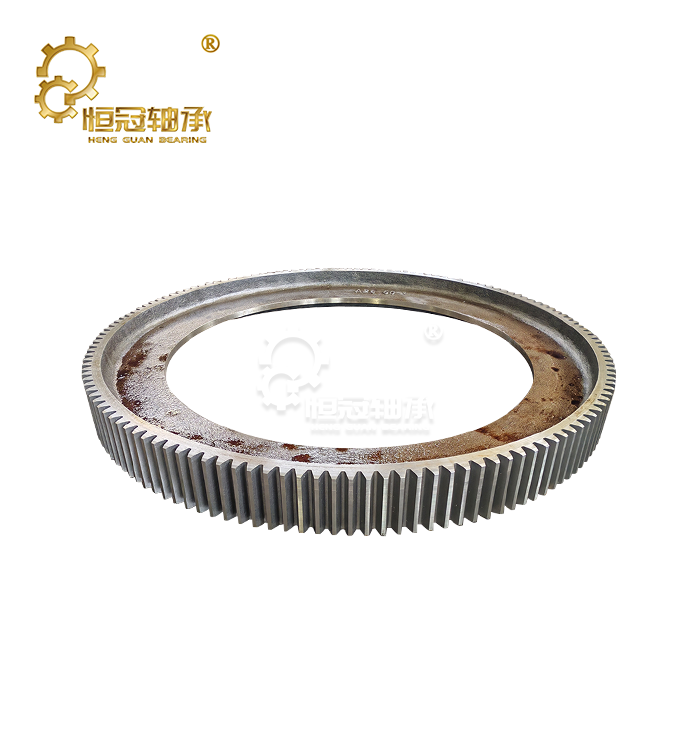
How can aerial lifting systems maintain smooth and fully controlled rotation when operating under heavy loads, wind disturbance, and extreme height conditions—without compromising safety? In aerial work platforms, helicopter decks, and other high-altitude lifting systems, rotational stability is directly tied to operational safety. The Aerial Lifting Slewing Ring is the core mechanical component that enables controlled, smooth, and stable rotation while simultaneously supporting heavy structural and dynamic loads under demanding working conditions. In Luoyang Heng Guan Bearing Technology Co., Ltd., these slewing rings are engineered specifically for high-altitude and aviation-adjacent applications where precision, load capacity, and long-term reliability are critical requirements.
Aerial Lifting Slewing Ring: Key Function in Aerial Work Platforms and Lifting Equipment
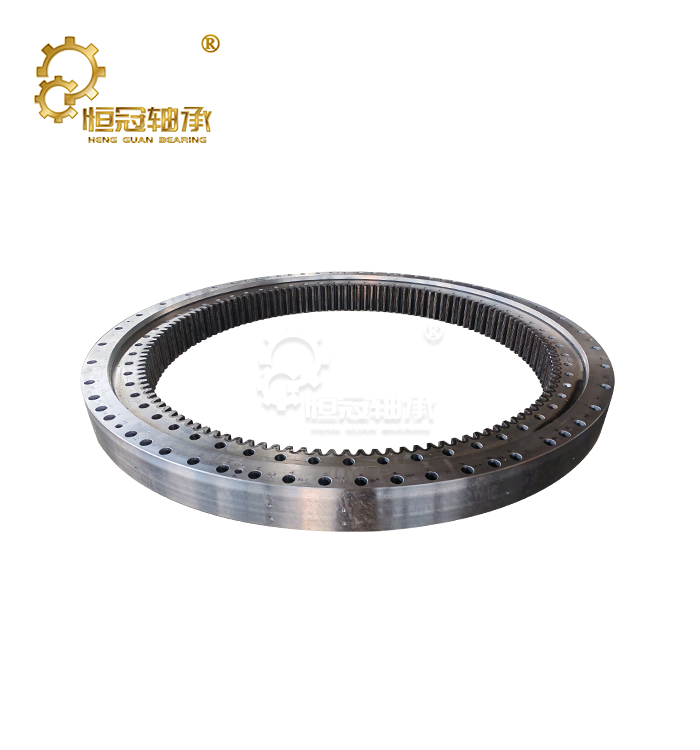
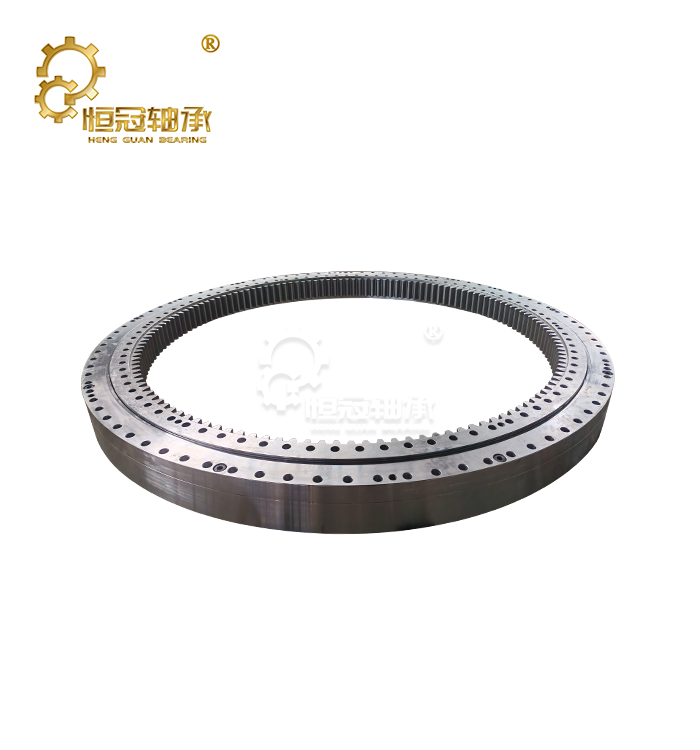
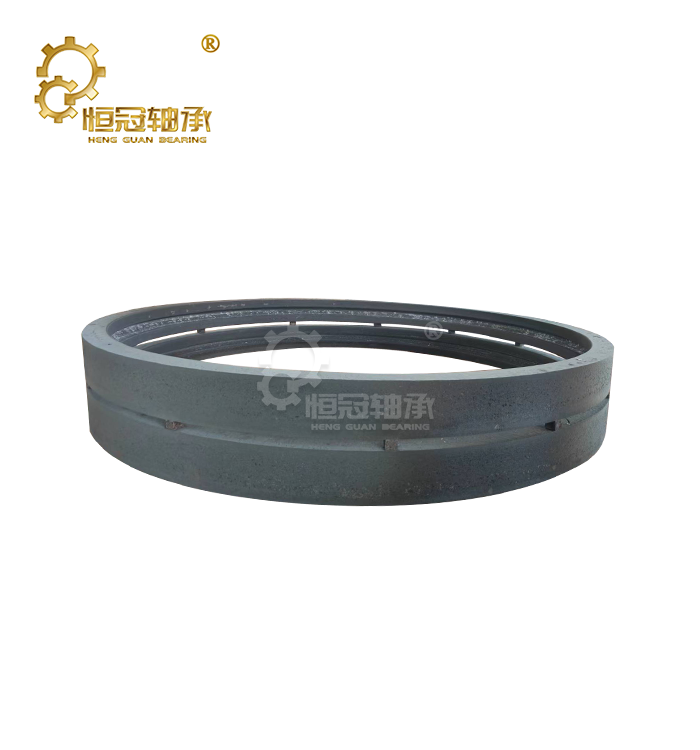
The Aerial Lifting Slewing Ring serves as the primary rotational interface between the fixed base and the rotating upper structure of aerial lifting systems.
In typical mobile elevated work platforms (MEWPs), boom lifts, and helicopter platform systems, it enables:
- Full 360° rotation of the working platform
- Stable support for boom arms and operator baskets
- Controlled positioning at height under load
Four-Point Contact Structure for Multi-Load Conditions
The bearing adopts a four-point contact ball design with a 45° contact angle, allowing it to simultaneously withstand:
- Axial loads (platform and payload weight)
- Radial loads (lateral wind and structural forces)
- Overturning moments (extended boom leverage forces)
This integrated load-handling capability eliminates the need for multiple bearing systems, improving both compactness and structural reliability.
Material and Structural Engineering
Heng Guan Bearing uses high-strength materials optimized for aerial lifting conditions:
- Ring materials: 42CrMo / 50Mn alloy steel
- Rolling elements: GCr15SiMn bearing steel
- Raceway hardness: HRC 55–62
This combination ensures both surface wear resistance and core toughness, essential for absorbing dynamic shock loads in elevated operations.
Technical Specifications Table
| Parameter | Specification |
|---|---|
| Standard Dimensions | 900 × 800 × 100 mm |
| Size Range | 50 – 10,000 mm (custom) |
| Bearing Structure | Four-point contact ball (45° contact angle) |
| Ring Material | 42CrMo / 50Mn alloy steel |
| Rolling Element Material | GCr15SiMn bearing steel |
| Raceway Hardness | HRC 55 – 62 |
| Precision Grades | P0 / P6 / P5 / P4 |
| Gear Options | Internal / External / Gearless |
These specifications enable adaptation across a wide range of aerial lifting equipment—from compact boom lifts to offshore helicopter deck systems.
How Does an Aerial Lifting Slewing Ring Improve Safety and Operational Stability?
Safety in aerial lifting equipment depends on predictable mechanical behavior under highly dynamic load conditions.
When a boom is fully extended, the slewing ring must resist:
- Amplified overturning moments
- Dynamic load shifts caused by operator movement
- Wind-induced oscillation and structural vibration
Any deformation or backlash in the bearing directly translates into platform instability.
Load Stability Through Contact Geometry
The 45° four-point contact design ensures:
- Even stress distribution across rolling elements
- Reduced localized contact fatigue
- Stable resistance against angular deflection
This prevents platform drift and maintains positional accuracy even under maximum extension conditions.
Material Strength and Heat Treatment
Heng Guan Bearing applies induction hardening to achieve:
- Raceway hardness: HRC 55–62
- High fatigue resistance under cyclic loading
- Shock absorption through tough alloy steel core
This combination prevents cracking, plastic deformation, and premature wear.
Offshore and Aviation Applications
For helicopter landing platforms, additional challenges include:
- Vessel motion-induced dynamic loads
- Salt spray corrosion exposure
- High operational safety requirements
Heng Guan Bearing offers optional C4/C5-M corrosion-protection systems, ensuring reliable performance in marine and offshore environments.
For application-specific engineering support, contact: mia@hgb-bearing.com
|
|
Why Is Smooth Rotation Critical in Aerial Lifting Equipment Applications?
Smooth rotation is not simply a performance preference—it is a direct safety and control requirement in aerial lifting systems.
Operational Risks of Poor Rotation Quality
If a slewing ring exhibits irregular rotation, it can cause:
- Jerky boom movement
- Reduced operator control precision
- Increased collision risk at height
- Accelerated drivetrain wear
Even minor stick-slip behavior becomes amplified in elevated environments.
Impact on Drive System Longevity
A non-uniform torque profile increases stress on:
- Gear motors
- Reducers
- Transmission interfaces
Over time, this leads to premature drivetrain failure and increased maintenance costs.
Precision-Grade Manufacturing Advantage
Heng Guan Bearing’s precision-grade (P5) slewing rings provide:
- Low rotational runout
- Consistent torque resistance
- Smooth angular transition across full rotation range
This ensures stable control behavior and reduced mechanical stress.
Performance Comparison
| Characteristic | Standard Grade | Heng Guan P5 Grade |
|---|---|---|
| Rotational Runout | Higher variation | Tight tolerance |
| Torque Consistency | Uneven | Stable and smooth |
| Stick-Slip Effect | Noticeable | Minimized |
| Drive System Load | Higher | Reduced |
| Positioning Accuracy | Moderate | High precision |
| Service Life | Shorter | Extended |
In helicopter platform systems, this level of precision directly supports safe landing operations and accurate structural alignment.
Aerial Lifting Slewing Ring Performance Features: Load Capacity, Durability, and Control Accuracy
The performance of an Aerial Lifting Slewing Ring is defined by three engineering pillars: load capacity, durability, and control accuracy.
Load Capacity
Load handling is achieved through:
- Four-point contact ball geometry
- High-strength alloy steel structure
- Optimized stress distribution paths
This enables simultaneous resistance to axial, radial, and moment loads in a compact design.
Durability
Durability is ensured through:
- Induction-hardened raceways (HRC 55–62)
- Uniform heat treatment via CNC-controlled processes
- High-toughness alloy steel core
ISO 9001-certified production at Heng Guan Bearing Technology Co., Ltd. ensures consistent quality across all units.
Additional sealing systems protect against:
- Dust ingress
- Moisture contamination
- Lubricant degradation
Control Accuracy
Control accuracy is achieved through:
- Precision machining (P0–P5 grades)
- Optimized raceway geometry
- Flexible gear configurations
Available options include:
- Internal gear
- External gear
- Gearless design
This allows integration with worm drives, helical reducers, or direct-drive systems depending on platform architecture.
With a product range spanning 50 mm to 10,000 mm, Heng Guan Bearing supports nearly all aerial lifting configurations worldwide.
|
|
Conclusion
The Aerial Lifting Slewing Ring is a critical safety and performance component in aerial work platforms and aviation-related lifting systems. Its ability to deliver smooth rotation, stable load support, and precise control directly impacts operational safety at height. Through advanced materials, precision manufacturing, and engineered four-point contact design, Heng Guan Bearing Technology Co., Ltd. provides reliable solutions for the most demanding aerial applications worldwide. In high-altitude systems, stability is not optional—it is engineered.
FAQ
Q1: What is the standard size of the Aerial Lifting Slewing Ring?
The standard specification is 900 × 800 × 100 mm, with custom sizes from 50 mm to 10,000 mm.
Q2: Why is a 45° contact angle used?
It enables simultaneous resistance to axial, radial, and overturning moment loads in a compact structure.
Q3: What hardness level do the raceways achieve?
Raceways are induction-hardened to HRC 55–62 for high wear resistance.
Q4: Can these bearings be used offshore?
Yes, with optional C4/C5-M corrosion protection systems for marine environments.
Q5: What gear options are available?
Internal gear, external gear, and gearless configurations are all available depending on system requirements.
Specify Your Aerial Lifting Slewing Ring Solution
Whether you are designing a new aerial work platform or upgrading an existing aviation-grade rotating system, selecting the right Aerial Lifting Slewing Ring is essential to ensuring safe, smooth, and stable rotation under complex load conditions.
Luoyang Heng Guan Bearing Technology Co., Ltd. provides full engineering support, including structural selection, load analysis, precision grade matching, and customized design based on real operating conditions and technical drawings. Our slewing ring solutions are widely used in aerial lifting platforms, helicopter decks, construction machinery, offshore equipment, and other high-reliability rotating systems requiring stable motion control.
For technical consultation, drawing review, or quotation requests, contact our engineering team: mia@hgb-bearing.com
References
1. Harris, T. A., & Kotzalas, M. N. (2007). Rolling Bearing Analysis: Essential Concepts of Bearing Technology (5th ed.). CRC Press.
2. ISO 76:2006 — Rolling Bearings: Static Load Ratings. International Organization for Standardization.
3. ISO 281:2007 — Rolling Bearings: Dynamic Load Ratings and Rating Life. International Organization for Standardization.
4. EN 280:2013+A1:2015 — Mobile Elevating Work Platforms: Design Calculations, Stability Criteria, Construction. European Committee for Standardization.
5. Brändlein, J., Eschmann, P., Hasbargen, L., & Weigand, K. (1999). Ball and Roller Bearings: Theory, Design, and Application (3rd ed.). Wiley.
6. MIL-HDBK-1being — Military Handbook: Helicopter Landing Facilities for Shipboard Operations. U.S. Department of Defense.

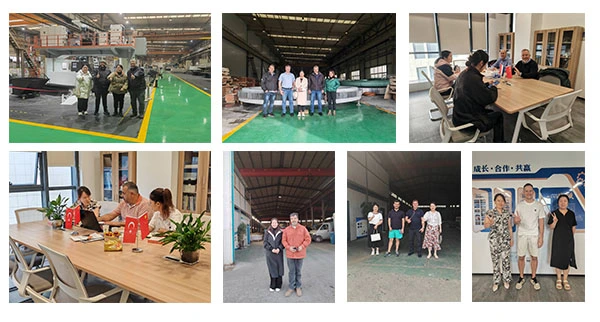
WHAT OUR CUSTOMERS SAY
Here is the customer's evaluation of us
_1767713770881.webp)
_1776668700508.webp)