



_1776668700508.webp)
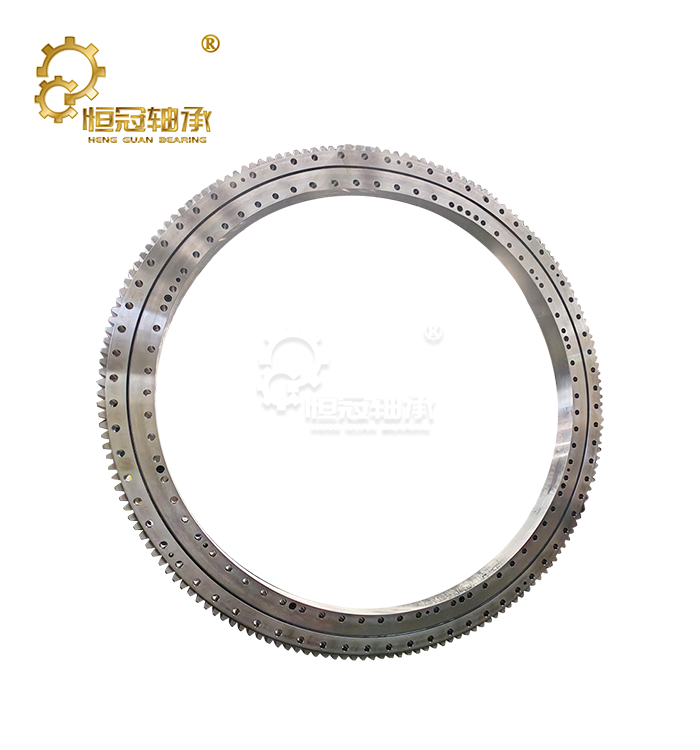
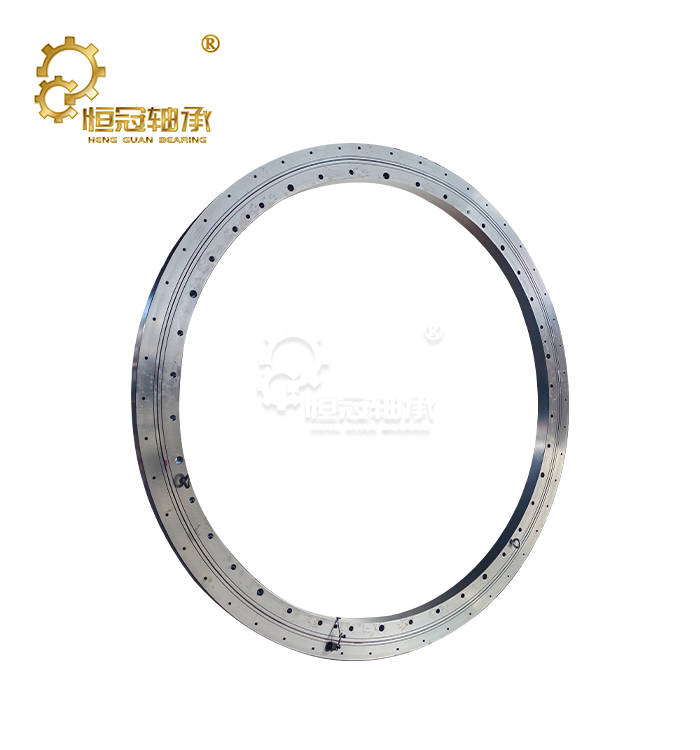
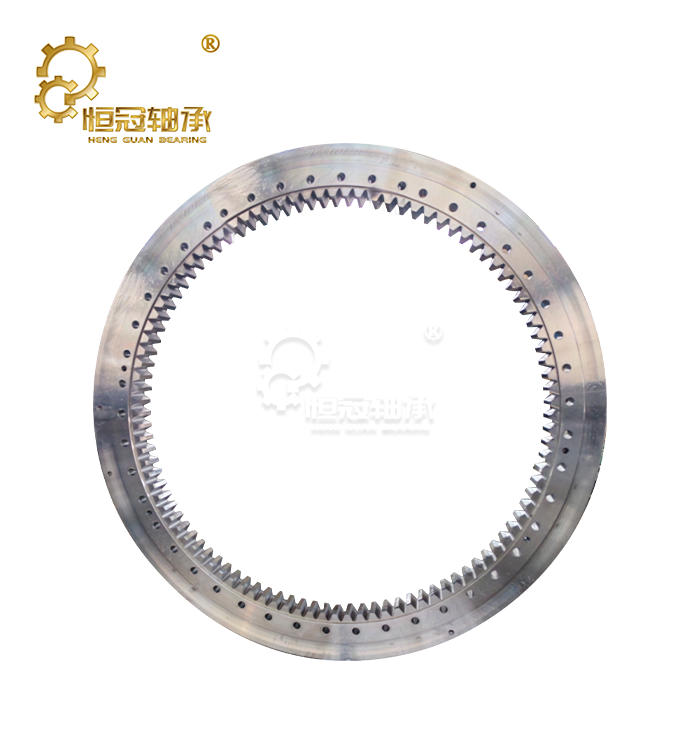
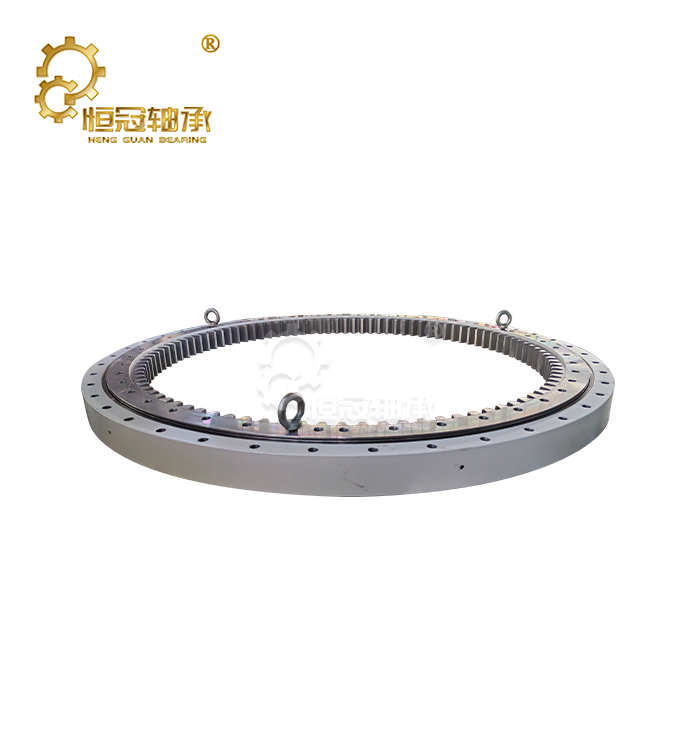
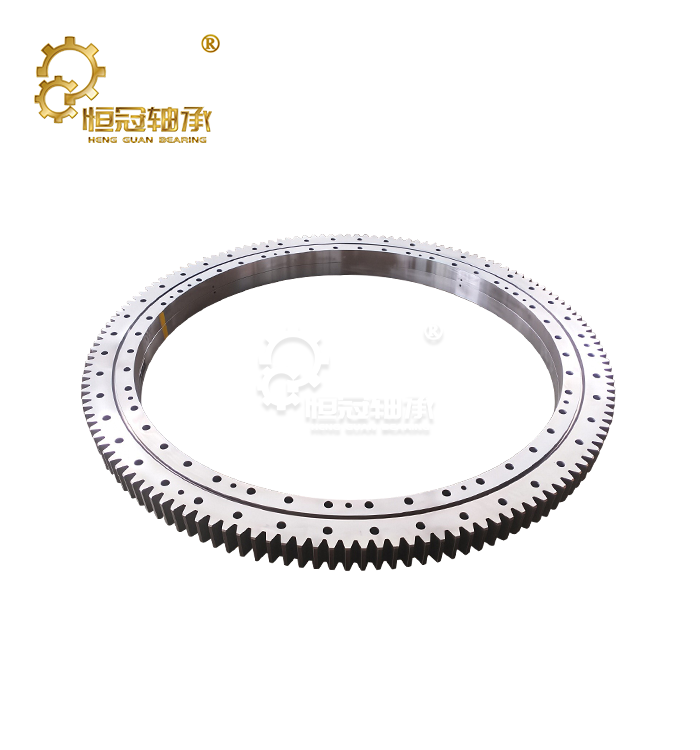
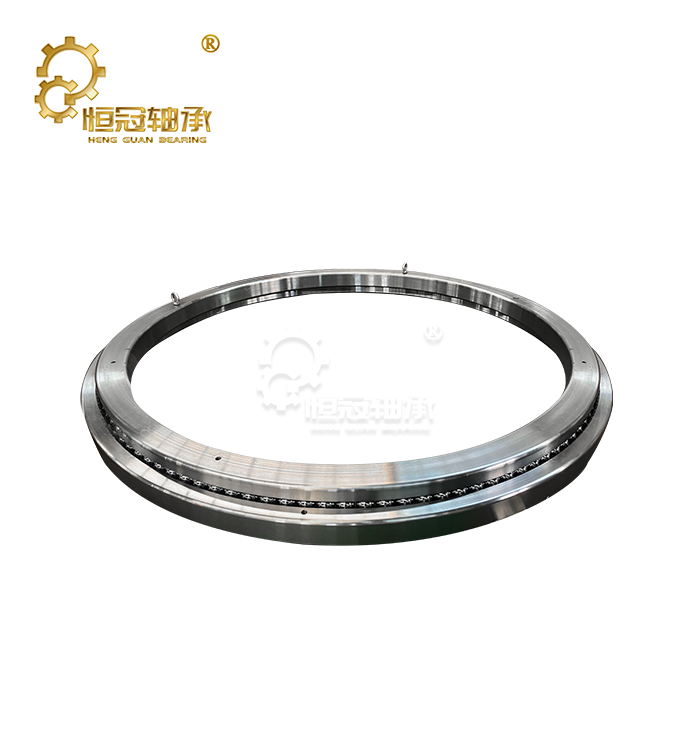
Thin Section Slewing Bearing
2. Product Structure: Single-row, four-point contact ball type
3. Size Range: 50mm-10,000mm diameter
4. Material: 42CrMo, 50Mn special alloy steel
5. Applications:
It is widely used in all advanced equipment requiring stringent weight reduction, space conservation, high precision, and low energy consumption, such as high-end construction machinery, aerospace ground support equipment, lightweight port machinery, industrial robots, and automated production lines.
- Product Description
Thin Section Slewing Bearing – Precision Engineered for Space-Critical Applications
Luoyang Hengguan Bearing Technology manufactures thin section Slewing Bearings with diameters ranging from 50 mm to 10,000 mm, designed to solve space, weight and rigidity challenges for high-end equipment. Our single-row four-point contact ball structure adopts 42CrMo and 50Mn alloy steel, with precision grades from P0 to P4. With over 20 years of engineering experience and a professional 50-member R&D team, we supply thin section bearings featuring low starting torque, high stiffness-to-weight ratio and superior rotational accuracy, ideal for robotics, medical imaging and aerospace industries.ISO 9001 certified and exported to 50+ countries worldwide, our workshop is equipped with CNC vertical lathes, gear shapers and professional heat treatment equipment to ensure stable and consistent product quality.
Thin Section Slewing Bearing Details
The product represents a fundamental shift in rotational component design. Unlike traditional slewing rings, this bearing maintains a constant, reduced cross-section regardless of bore diameter. This geometry enables you to integrate large-diameter hollow Shafts without adding unnecessary bulk to your equipment.
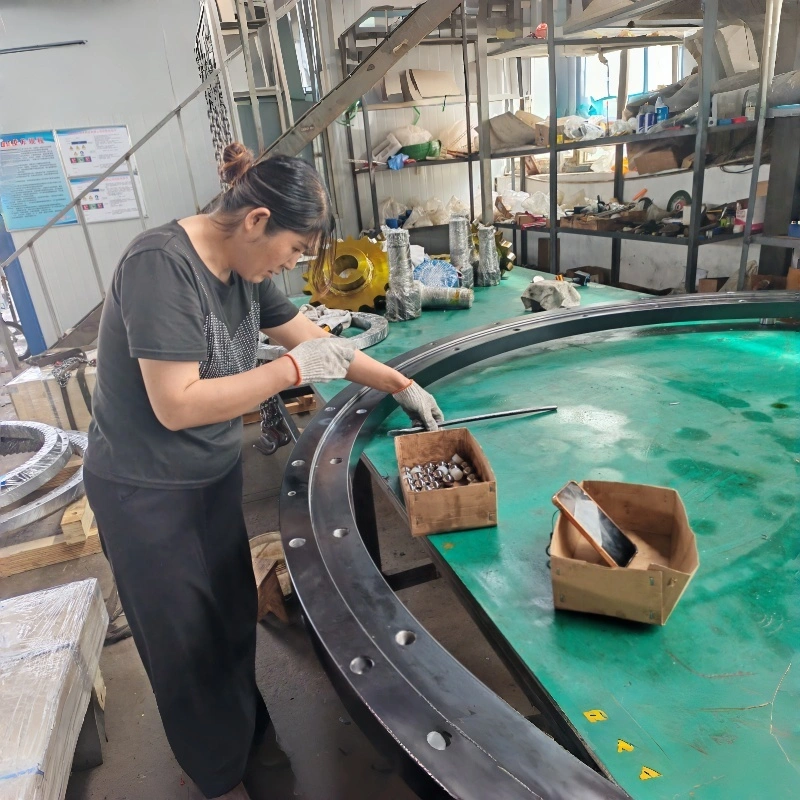
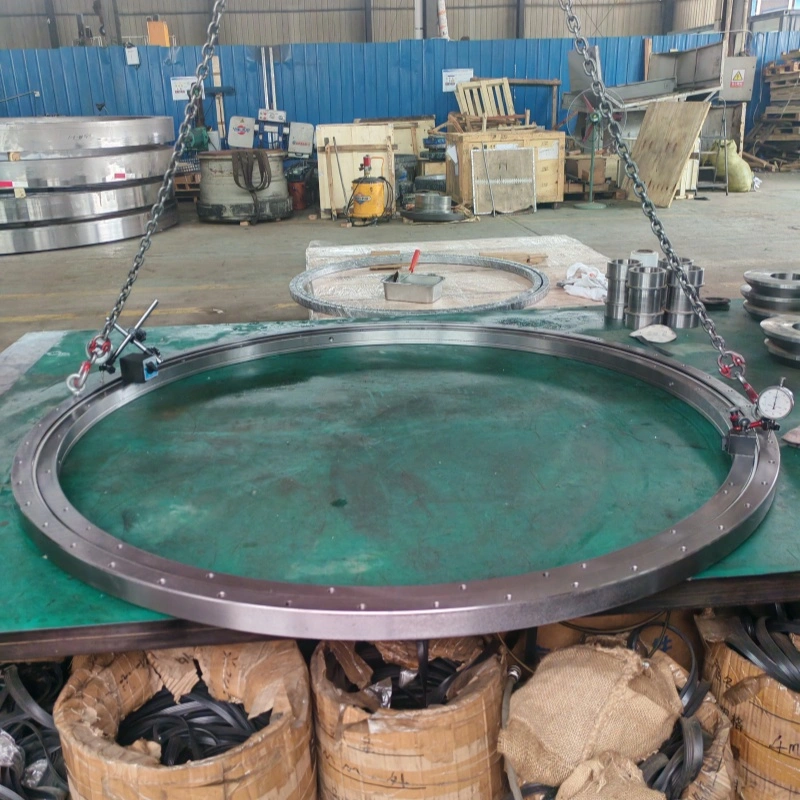
Our design uses single-row, four-point contact ball configuration. This structure distributes axial, radial, and moment loads simultaneously through optimized contact angles. The raceway undergoes induction hardening to HRC 55-62, providing wear resistance where it matters most while keeping the mounting surfaces machinable for your assembly process.
You get integrated mounting holes factory-drilled to your specifications. This eliminates secondary operations and ensures precise bolt circle alignment. Specialized lip seals prevent lubricant migration and protect against contamination in environments ranging from clean rooms to outdoor construction sites.
|
|
|
Why Choose Us
Manufacturing Depth You Can Verify
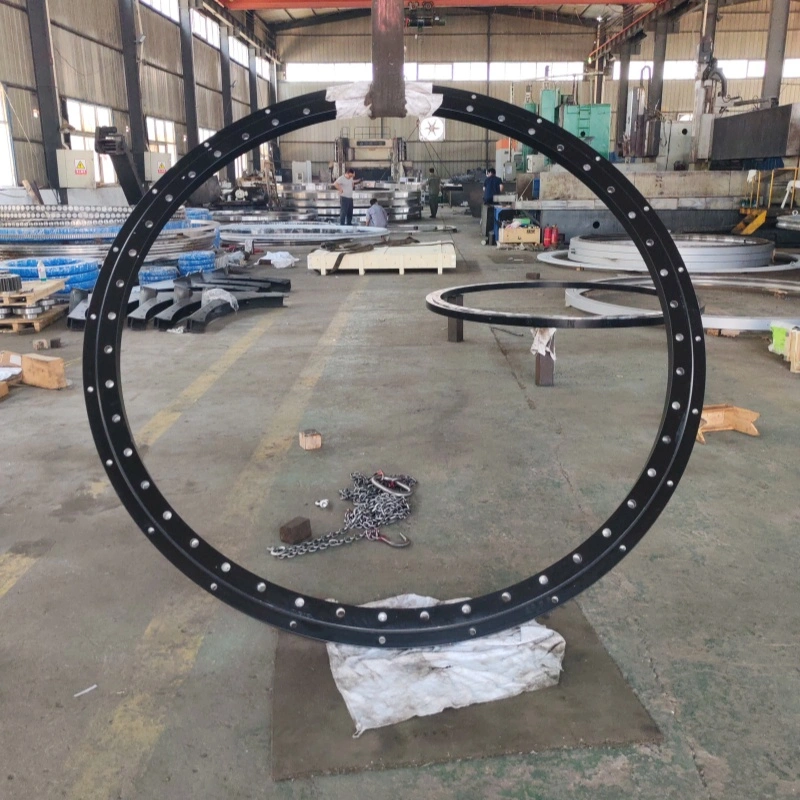
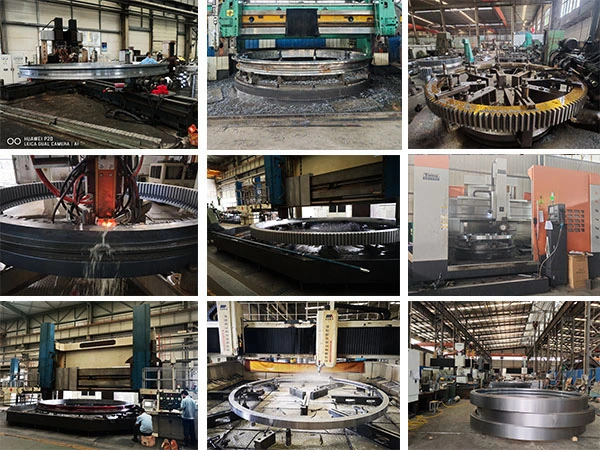
We operate CNC vertical lathes capable of processing rings up to 10 meters in diameter. Our CNC quenching machines provide controlled hardening with ±2°C temperature stability across the entire raceway. This is not standard heat treatment — it is precision thermal engineering that prevents distortion in thin-section structures.
Precision Across Four Grades
We customize precision to match your actual application. We manufacture P0 for general machinery, P6 for automated equipment, P5 for precision robotics, and P4 for medical imaging systems. Every grade is inspected by coordinate measuring machines, with formal runout test data included in delivery documents.
Custom Engineering Without Barriers
You may provide existing samples or simply describe your load conditions. Our team offers professional reverse engineering and develops tailored solutions, even without complete 3D drawings. We have helped customers from 50+ countries resolve structural integration challenges by focusing on your mechanical limitations, not only bearing parameters.
Real Production Capacity
Our facility is equipped with gear hobbing machines for integral pinion processing, precision grinding equipment for raceway finishing, and multi-axis machining centers for complex mounting interfaces. Complete vertical manufacturing shortens lead times and ensures stricter quality control compared with suppliers that outsource core processes.
Technical Specifications
Parameter | Specification |
Bearing Type | Single-row, four-point contact ball |
Diameter Range | 50mm – 10,000mm |
Precision Grades | P0, P6, P5, P4 |
Material | 42CrMo, 50Mn alloy steel |
Raceway Hardness | HRC 55-62 (induction hardened) |
Sealing Options | Lip seal, labyrinth seal |
Mounting | Integrated bolt holes (customizable) |
Operating Temperature | -40°C to +120°C |
Load Capacity | Simultaneous axial, radial, and moment loads |
Standards Compliance | ISO, DIN, GB |
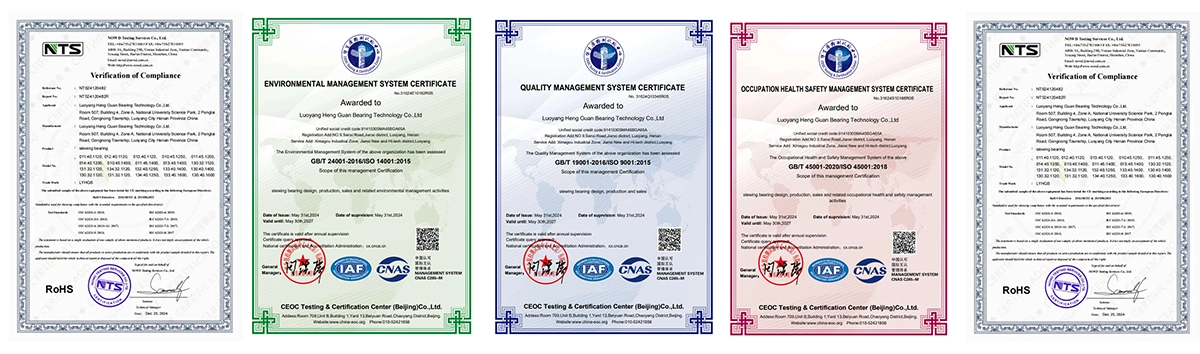
Certification | ISO9001, RoHS compliant |
Features and Benefits
Reduced Cross-Section Profile
The thin-section design saves 30-50% weight compared to standard slewing rings of equivalent diameter. This directly reduces your equipment's energy consumption during acceleration and improves payload capacity in mobile applications.
Low Starting Torque
Precision-ground raceways and optimized ball spacing minimize friction at startup. Your servo motors require less power for initial rotation, which matters in battery-powered robotics and precision positioning systems where every watt counts.
High Stiffness-to-Weight Ratio
The four-point contact geometry maintains structural rigidity despite the compact profile. You achieve deflection resistance comparable to much heavier bearing assemblies, critical for maintaining accuracy under variable loading.
Modular Design Philosophy
Constant cross-section across diameter ranges simplifies your product line engineering. Once you validate a bearing interface for one equipment size, scaling to larger or smaller models requires minimal redesign effort.
Integrated Mounting Interfaces
Factory-drilled bolt patterns eliminate alignment errors during installation. The holes are positioned with coordinate accuracy, ensuring your structure mounts flush without shimming or field modifications.
|
|
Applications
Industrial Robotics
Base and shoulder joints in collaborative robots and articulated arms benefit from weight reduction. The thin section slewing bearing lowers the center of gravity and reduces inertia, improving dynamic response during rapid direction changes.
Medical Imaging Equipment
CT and MRI gantries require large inner diameters for patient positioning combined with ultra-smooth rotation. Our P5 and P4 grade bearings deliver the necessary precision while maintaining quiet operation in clinical environments.
Aerospace Ground Support
Satellite communication arrays and radar positioning systems use these bearings in gimbal assemblies. The combination of thermal stability and weight reduction enhances launch efficiency and operational reliability in extreme temperature fluctuations.
Port and Material Handling
Lightweight cranes and automated guided vehicles gain mobility advantages. Reduced rotating mass means faster cycle times and lower structural loads on supporting frames.
Automated Production Lines
Rotary tables, indexing mechanisms, and transfer systems achieve higher throughput. The low friction characteristics enable faster positioning with less servo motor heating during continuous operation.
Testing & Certification
Every bearing undergoes dimensional verification using coordinate measuring machines. We document axial and radial runout, raceway geometry, and mounting hole position accuracy. Vibration testing identifies any irregularities in ball spacing or raceway finish before shipment.
Our facility maintains ISO9001 quality management certification. Production processes follow documented procedures with material traceability from steel mill certification through final inspection. RoHS compliance testing ensures our products meet environmental regulations for global markets.
Load testing simulates your actual operating conditions when specified. We can apply combined axial, radial, and moment loads while measuring deflection and torque characteristics to validate performance before delivery
|
|
|
Installation Guide
Surface Preparation
Ensure mounting surfaces are flat within 0.05mm per meter and free from burrs. The mating structure must provide sufficient rigidity—thin-section bearings transfer loads directly to supporting frames, and excessive deflection will cause premature wear.
Bolt Tightening Sequence
Use a star pattern when torquing mounting bolts. Apply 30% of final torque on the first pass, 60% on the second, and 100% on the final pass. This distributes preload evenly and prevents raceway distortion during installation.
Alignment Verification
After initial tightening, measure runout at four quadrants around the bearing diameter. Values should remain within specification before proceeding to full operation. Excessive runout indicates mounting surface issues requiring correction.
Lubrication Application
Apply lithium-based grease (NLGI Grade 2) to raceways before installation if bearings arrive unlubricated. For sealed versions, factory lubrication provides initial service. Plan for relubrication intervals based on your operating duty cycle.
Maintenance and Care
Inspection Intervals
Check mounting bolt torque after the first 50 operating hours, then every 500 hours or quarterly. Listen for unusual noise during rotation, which may indicate contamination or insufficient lubrication.
Relubrication Schedule
Open bearings require grease replenishment every 300-500 operating hours under normal conditions. Increase frequency in high-temperature or contaminated environments. Use grease guns connected to lubrication ports without disassembling the bearing.
Contamination Prevention
Inspect seals regularly for damage or wear. Replace compromised seals immediately to prevent abrasive particle ingress. In dusty environments, consider secondary protective covers over the bearing assembly.
Load Monitoring
Avoid shock loads and ensure operating loads remain within rated capacity. Overloading causes accelerated raceway wear and reduces service life. If your application demands change, consult with our engineering team for load verification.
Customer Reviews
Due to client confidentiality agreements in industrial applications, we do not publish specific testimonials. We invite you to request reference contacts in your industry segment for direct peer feedback on our bearing performance and service quality.
|
|

FAQ
What diameter range can you manufacture?
We produce bearings from 50mm to 10,000mm outer diameter. Smaller sizes suit robotic joints, while larger diameters serve construction and port equipment applications.
How do I select the right precision grade?
P0 works for general industrial machinery with standard tolerances. Choose P6 for automation requiring improved accuracy. P5 suits precision robotics and motion control. P4 is reserved for medical imaging and applications demanding minimal runout.
Can you manufacture from my existing bearing sample?
Yes. Send us your worn or damaged bearing for reverse engineering. Our team creates manufacturing drawings through precise measurement and can reproduce the design with documented improvements if needed.
What's the typical lead time for custom sizes?
Standard configurations ship within 4-6 weeks. Custom diameters or special mounting patterns require 8-12 weeks depending on complexity and current production schedule. Contact Us for specific project timelines.
Do you provide installation support?
We supply detailed installation drawings and procedures with every order. For critical applications or large equipment commissioning, our engineers offer remote guidance or on-site installation supervision by arrangement.
What documentation ships with the bearings?
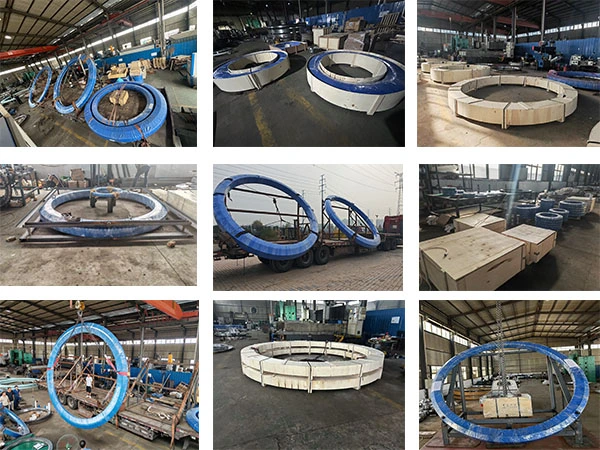
Each order includes material certifications, dimensional inspection reports, and maintenance recommendations. For export shipments, we provide commercial invoices, packing lists, and certificates of origin as required by your customs regulations.
Contact Us
Ready to optimize your equipment design with precision-engineered slewing solutions? Our thin section slewing bearing's team is available to discuss your specific application requirements and provide technical recommendations. Reach us at mia@hgb-bearing.com for quotations and engineering support.

WHAT OUR CUSTOMERS SAY
Here is the customer's evaluation of us