




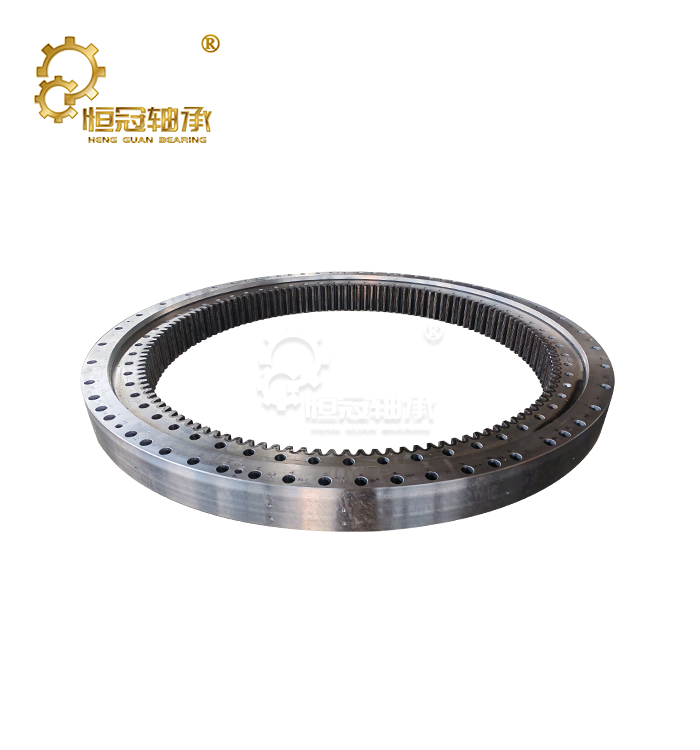
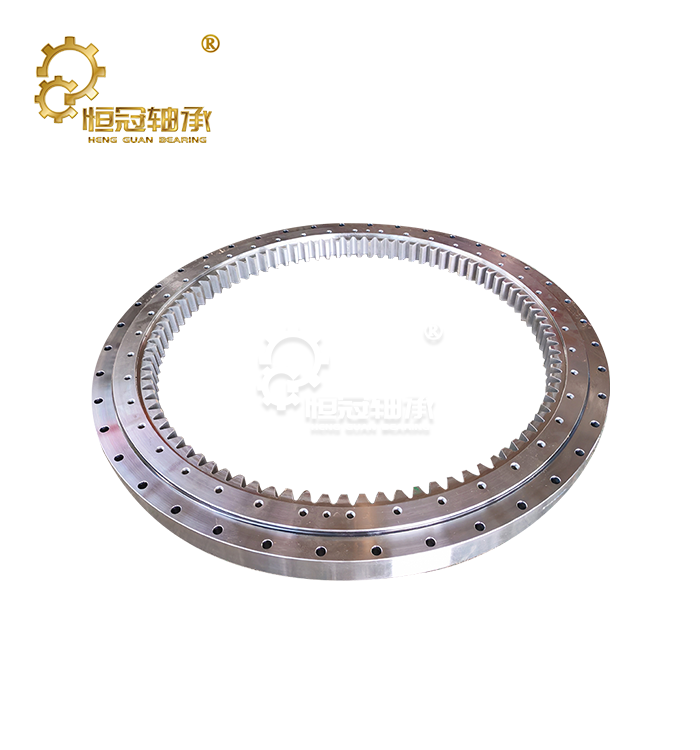
Jcb Excavator slewing bearing
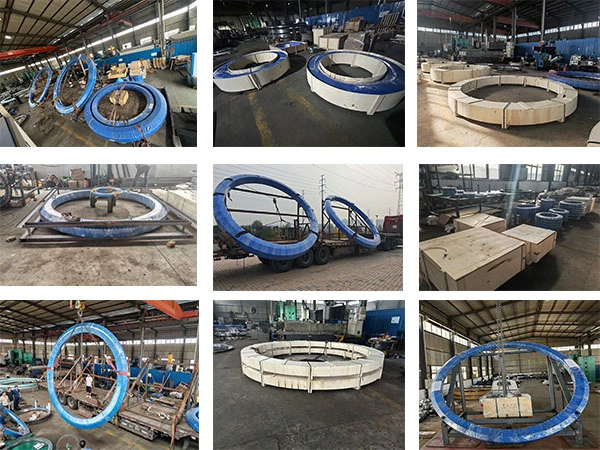
Service & Support: We maintain a large inventory of stock items covering a full range of models; we also offer reverse engineering services to measure existing bearings and manufacture custom replacements.
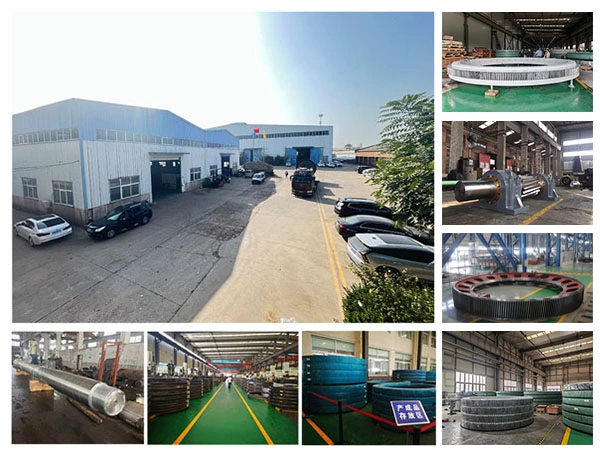
Core Manufacturing Processes and Quality Assurance
High-Quality Inner and Outer Rings: Manufactured using premium 50Mn or 42CrMo alloy structural steel. These components are integrally forged to ensure a dense grain structure, resulting in high strength and excellent toughness.
High-Strength Raceways:Processed using medium-frequency induction hardening followed by precision finishing, maintaining a stable hardness level of HRC55–62. This ensures superior resistance to wear, spalling, and fatigue, guaranteeing that the bearing remains free from cracks or deformation under heavy loads, thereby extending its service life.
- Product Description
JCB Excavator Slewing Bearing: Technical Guide & Solutions
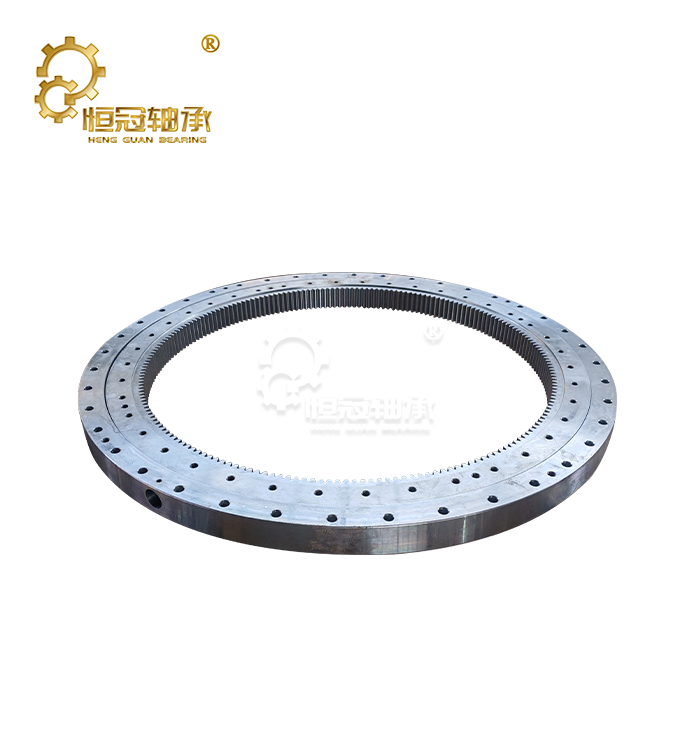
This JCB Excavator Slewing Bearing assembly—also called a slewing ring—enables 360-degree rotation while simultaneously carrying the weight of the superstructure, boom, bucket, and payload. Every swing, every positioning movement, and every load transfer depends on this single component's reliability.
Whether you operate a compact JS30 or a heavy-duty JS500, the slewing bearing experiences continuous axial loads,radial loads, and tilting moments. That's why choosing the right replacement bearing matters. At Luoyang Heng Guan Bearing Technology, we understand these demands. Our engineering team has spent years developing slewing bearing solutions specifically designed for JCB excavators operating in mining, construction, and demolition environments.
Contact our engineering team: mia@hgb-bearing.com
Technical Specifications & Structure Types
Parameter | Specification Range |
Outer Diameter | 600mm – 2,800mm (model dependent) |
Raceway Hardness | HRC 55–62 (induction hardened) |
Gear Tooth Module | M4 – M12 |
Precision Grades | P0, P6, P5, P4 available |
Base Material | 50Mn / 42CrMo alloy steel |
Load Capacity | Up to 180 kN axial, 95 kN radial (JS500) |
Sealing Type | Triple-lip seal with grease retention |
Jcb Model Product Parameters
Model | PartNumber | OuterDiameter | InsideDiameter | Totalheight | OuterHeight | InnerHeight | OuterHoleParameters | InnerHoleParameters | NumberofTeeth |
JCB 8060 | 234/11000 | 852 | 648.5 | 70 | 55 | 60 | 24 | 24 | 109 |
JCB JS130 | 332/K8067(New) | 1174 | 972 | 88 | 56 | 78 | 32-Ф18 | 36-M16 | 98 |
JCB JS130 | JNB0146(Old) | 1174 | 972 | 80 | 56 | 70 | 28-Ф18 | 36-M16 | 98 |
JCB JS130 | JNB0160 | 1174 | 972 | 80 | 56 | 70 | 28-Ф18 | 36-M16 | 98 |
JCB160 | 331/12091 | 1330 | 1093 | 102 | 74 | 92 | 31-Ф22.5 | 36-M20 | 92 |
JCB 205 | 333/P7280 | 1328 | 1092 | 102 | 74 | 92 | 31-φ22 | 36-M20 | 92 |
JS200LC | JRB0017 | 1328 | 1092 | 102 | 74 | 92 | 31-Ф22.5 | 36-M20 | 92 |
JCB JS220 | JRB0017 | 1328 | 1092 | 102 | 74 | 92 | 31-Ф22.5 | 36-M20 | 92 |
JCB JS220 | JRB0017 | 1328 | 1092 | 102 | 74 | 92 | 31-Ф22.5 | 36-M20 | 92 |
JCB 240 | JBB0001 | 1375 | 1094 | 125 | 80 | 115 | 26 | 36 | 92 |
JCB JS240 | 916/10029 | 1375 | 1094 | 124 | 80 | 114 | 26-Ф26 | 36-M24 | 92 |
JCB JS330 | JSB0022 | 1509 | 1192 | 135 | 100 | 125 | 38-φ26 | 43-M24 | 86 |
JCB 360 | JSB0022 | 1510 | 1193 | 135 | 101 | 125 | 38-φ26 | 30-M22 | 86 |
Structure Options
Single-Row Four-Point Contact Ball Bearing
This design uses precision-ground ball elements running in four distinct contact paths. It provides smooth rotation with minimal friction, making it ideal for standard excavation work. You'll find this structure in models like the JS130 through JS220, where balance between load capacity and operating smoothness matters most.
Single-Row Cross-Roller Bearing
Cylindrical rollers arranged in alternating perpendicular bearing deliver exceptional rigidity. This configuration excels under shock loading—think rock breaking or demolition work. The JS240 and above often specify this type when operating in quarries or heavy-duty applications.
Three-Row Roller Bearing
Combining separate axial and radial roller rows, this heavy-duty structure handles extreme tilting moments. You'll need this configuration for JS330+ models working with large hydraulic breakers or handling sorted scrap steel.
Manufacturing Process: Why Material and Heat Treatment Matter
Forging and Material Selection
We start with integral forging of inner and outer rings from 42CrMo chromium-molybdenum alloy steel or 50Mn manganese steel. Forging—not casting—produces a dense grain structure that resists crack propagation under cyclic stress.
42CrMo offers superior impact toughness, crucial for larger machines. 50Mn provides excellent wear resistance at lower cost, suitable for compact models in moderate-duty cycles.
Induction Hardening
After rough machining, raceways undergo medium-frequency induction hardening. This process heats the surface layer to transformation temperature, then rapidly quenches it. The result: a hardened case (HRC 55–62) over a tough, ductile core.
This combination prevents both surface spalling and catastrophic fracture. The hardened raceway resists rolling contact fatigue, while the soft core absorbs shock loads without cracking.
Real-World Engineering Challenges—And How We Address Them
Challenge: Tooth Breakage in Rock Excavation
Your Concern:Gear teeth break when burrowing impacted shale or solidified ground.
Our Solution:We apply through-hardening to tooth flanks utilizing induction strategies, making a hardness angle that stands up to surface setting whereas keeping up root durability. For JS260+ models, we can increment the tooth module from M8 to M10, conveying stack over a bigger contact area.
Challenge: Corrosion in Coastal Demolition Work
Your Concern:Salt splash quickens rust, especially in mounting bolt gaps and outside gear teeth.
Our Solution:Zinc-rich groundwork taken after by epoxy topcoat gives 500+ hours salt splash resistance (per ASTM B117). We can too supply stainless steel mounting equipment and apply erosion inhibitors to oil for amplified assurance.
Technical Selection Guide
Operating Condition | Recommended Structure | Material | Special Features |
Standard excavation, <5,000 hrs/year | Four-point ball | 50Mn | Cost-effective, smooth rotation |
Impact tools (breaker, compactor) | Cross-roller | 42CrMo | High rigidity, shock resistance |
Continuous rotation, heavy bucket | Three-row roller | 42CrMo | Maximum load capacity |
Marine/coastal environment | Any structure | 42CrMo + coating | Enhanced corrosion protection |
Demolition with sorting grapple | Cross-roller or three-row | 42CrMo | Combined impact and moment resistance |
Installation and Maintenance: Practical Guidance
Pre-Installation Inspection
Before mounting your new JCB Excavator slewing bearing, check the mating surfaces. Clean all mounting faces and verify flatness using a straightedge and feeler gauge. Deviation beyond 0.1mm per 1000mm length requires machining correction—otherwise, bolt preload will distribute unevenly, overloading certain areas.
Bolt Torque Sequence
Tighten mounting bolts in a star pattern, progressing through three torque stages:
1. 30% of final torque
2. 70% of final torque
3. 100% of final torque (typically 600–1,200 N·m depending on bolt size)
On-Site Measurement & Reverse Engineering Service
Missing original drawings? Equipment obsolete with no available spares? Our reverse engineering service solves this problem.
The Process:
1. Field Visit:Our engineers come to your site with calibrated measurement tools
2. Data Collection:We measure all critical dimensions—outer diameter, bolt circle, gear parameters, mounting interface geometry
3. Wear Analysis:Document damage patterns to optimize the replacement design
4. Design Optimization:We don't just copy the worn bearing—we compensate for platform wear and improve weak points identified during inspection
5. Manufacturing:Complete production cycle from forging through final testing
6. Delivery & Installation Support:We provide on-site guidance during fitment
FAQ
Q: What are the fundamental signs of bearing failure?
A: Unordinary commotion, intemperate play, and harsh or uneven rotation.
Q: How regularly ought to the bearing be lubricated?
A: Each 100–250 working hours utilizing EP2 grease.
Q: Why select 42CrMo over 50Mn?
A: 42CrMo offers higher quality and strength for heavy-duty applications.
Q: Can harmed adapt teeth be repaired?
A: Minor wear may be repairable, but broken teeth as a rule require replacement.
Q: How is bearing clearance checked?
A: Utilizing a dial pointer to degree play and guarantee it meets indicated tolerances.
Q: Can you supply bearing for adjusted JCB excavators?
A: Yes. We can plan custom bearing based on your machine adjustments and stack requirements.
Q: What is the anticipated benefit life?
A: Ordinarily 8,000–12,000 working hours with appropriate upkeep.
Start Your Replacement Planning Now
Don't wait for catastrophic failure. If your JCB Excavator slewing bearing has exceeded 6,000 operating hours, or you've noticed any signs of bearing wear.

WHAT OUR CUSTOMERS SAY
Here is the customer's evaluation of us
YOU MAY LIKE
 VIEW MOREKato Excavator slewing bearing
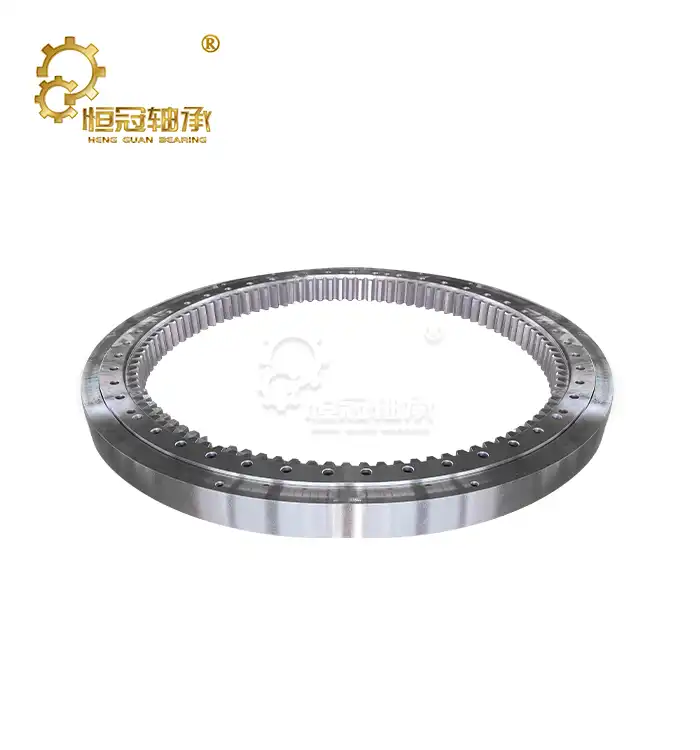 VIEW MOREJohn Deere Excavator slewing bearing
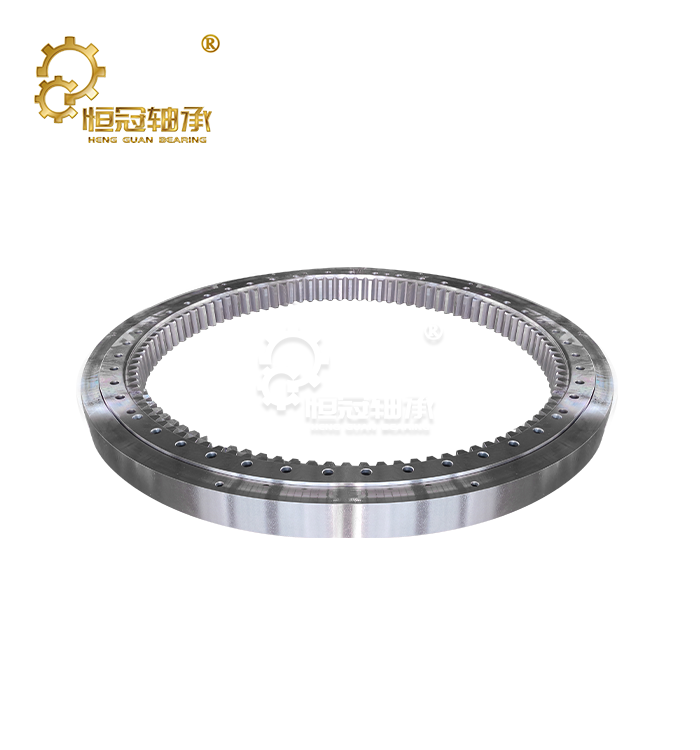 VIEW MOREDoosan Excavator slewing bearing
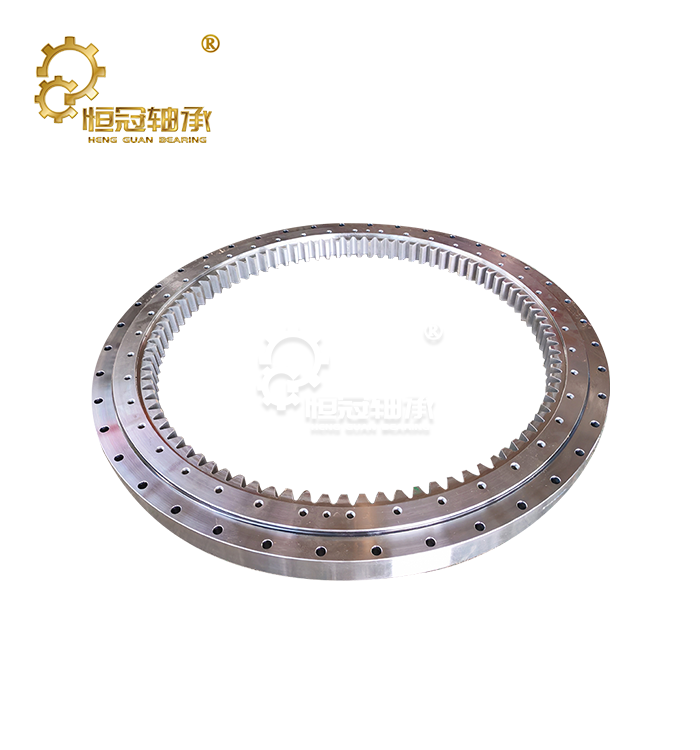 VIEW MOREDaewoo Excavator slewing bearing
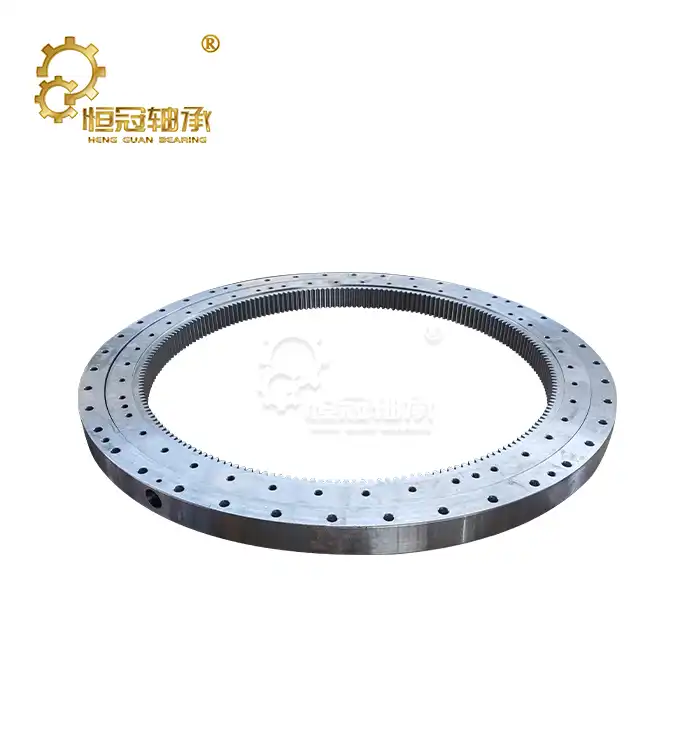 VIEW MOREKobelco Excavator slewing bearings
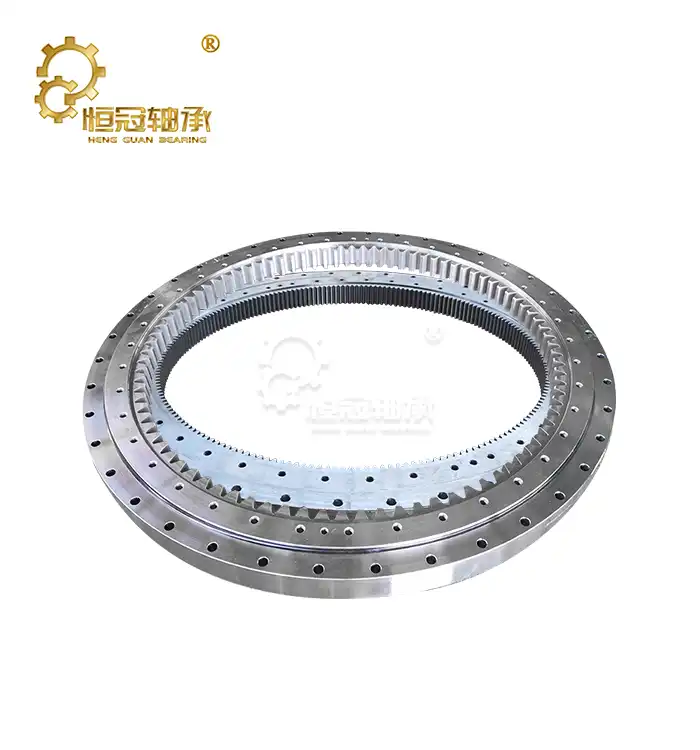 VIEW MOREHyundai excavator slew bearing
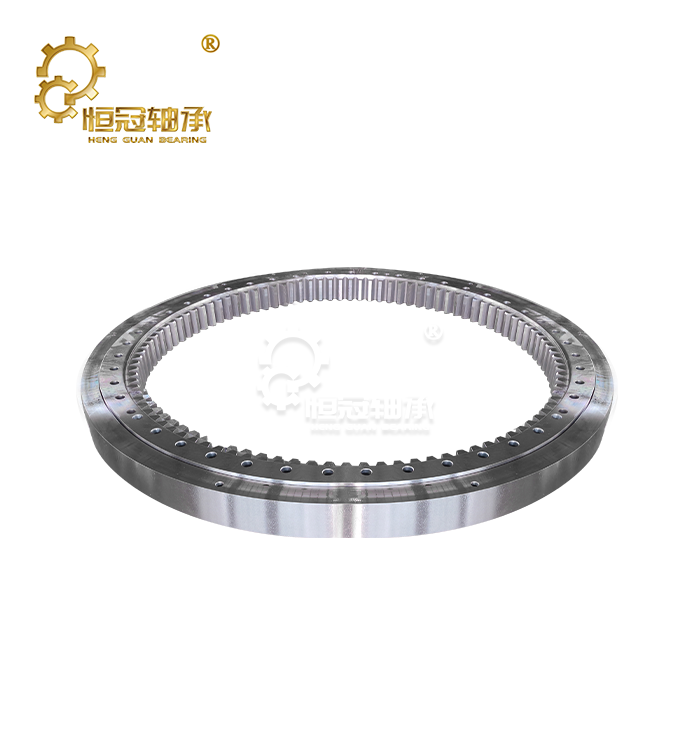 VIEW MOREKomatsu Excavator slewing bearing
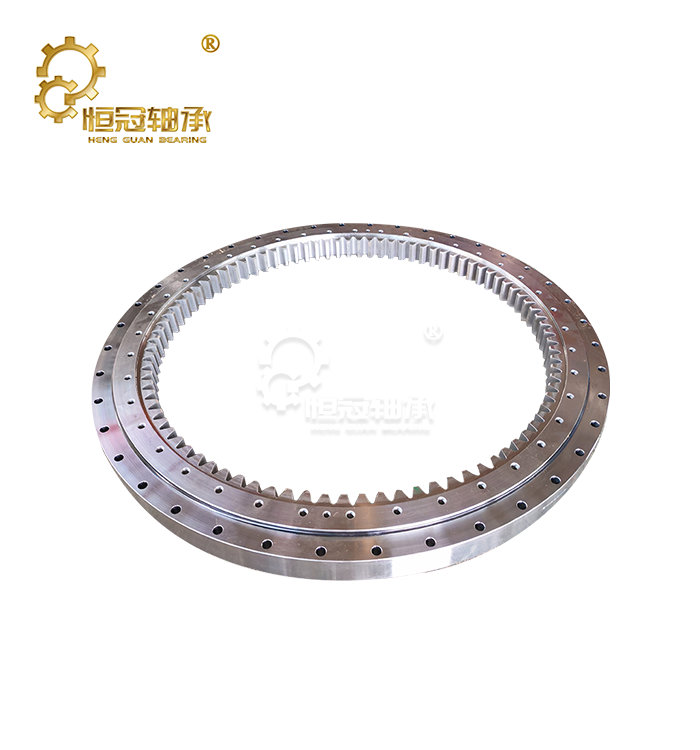 VIEW MORECat Excavator slewing bearing