




Deck Crane slewing gear ring - Hydraulicstroubleshooter
A deck crane that rotates unevenly, develops excessive vibration, or struggles to start slewing may not have a hydraulic problem alone. The slewing assembly deserves attention because it transfers loads between the crane pedestal and the rotating upper structure while also transmitting the driving torque from the pinion to the slewing gear ring. A deck crane slewing bearing is designed to carry a mixture of axial load, radial load and overturning moment. In marine applications, these loads can alter rapidly as the vessel rolls, pitches, or operates with suspended cargo. Thus the bearing has to operate in conjunction with the slewing gear, pinion, hydraulic motor, mounting structure, lubrication system and sealing arrangement. Multi-row roller slewing bearings are often considered for big naval cranes, where great load capacity and rigidity are required. However, bearing selection should always be based on actual crane load spectrum, mounting arrangement, operating speed, environmental conditions and manufacturer calculations and not only on bearing size.
How Does the Slewing Ring Assembly Work on a Deck Crane?
The slewing mechanism of a deck crane is more than just a gear that turns it around. This is a full system for transporting load and transmitting power. It’s so much easier to debug when you know how the components interact.
Slewing Gear Ring and Slewing Bearing: What Is the Difference?
The major rotating support is the slewing bearing. Depending on its design, it might comprise inner and outer rings, rolling elements, raceways, seals, and mounting holes. In certain configurations one of the rings is a gear integral with the ring.
The slewing gear ring is the toothed surface that engages with the crane pinion. The upper crane structure is rotated when the pinion transmits the torque to the gear teeth when the hydraulic or electric driving equipment forces the pinion to revolve.
Therefore, the bearing and gear should not be considered entirely independent components. Bad gear alignment can cause a bearing to make abnormal noise or vibration even if the bearing is mechanically sound. By contrast, the resistance of the hydraulic drive may be increased by worn raceways or improper bearing mounting.
Hence, when ordering a replacement bearing, the buyer should verify not only the bearing shape but also the gear data. Important information comprises outer and inside diameters, mounting-hole pattern, height, gear module, tooth dimensions, gear orientation, material and heat treatment, and applicable dimensional tolerances.
How Does Hydraulic Power Produce Slewing Motion?
A hydraulic slewing system uses hydraulic pressure to drive a motor that creates rotating torque. The motor turns the pinion, and the pinion engages the gear teeth on the slewing ring.
The bearing supports the spinning crane structure while the gear gearbox provides the rotational movement. During lifting, the bearing may be subject to vertical load, horizontal forces, and overturning moments due to the hanging load.
Vessel movement adds to the challenge. Cargo that is stable when the ship is at rest may exert varying stresses when the vessel rolls or pitches. Wind can significantly enhance the overturning moment, particularly if the boom or the hoisted cargo has a wide projected area.
Therefore, the bearing selection should be based on the whole load combination and not only on the rated lifting capacity of the crane.
Where Do Deck Crane Slewing Bearings Commonly Develop Problems?
In marine working circumstances, the slewing assembly is subjected to salt-laden air, moisture, vibration, varied loads, and occasionally long periods of inactivity followed by heavy-duty action, which can speed up wear.
Gear Tooth Wear, Pitting, and Backlash
Inspect the slewing gear for abnormal tooth wear, pitting, scoring, cracks, and changes in tooth contact pattern.
A localized contact pattern might be a sign of bad pinion and gear alignment. Excessive backlash may also result in a loss of smoothness in rotation, while too little backlash can lead to increased friction and excessive heating.
But blowback shouldn’t be assessed against a uniform number. The value relies on the design of the gear, the module, the tooth profile, the diameter, the operating temperature, and the specification of the manufacturer.
Inspection should match original drawing or service documents with measured values.
If the gear teeth show concentrated wear in one location only, the technician should additionally rotate the crane to different angular positions and compare the tooth contact pattern. This may help to find out whether the problem is local or on the mounting structure.
Corrosion and Seal Deterioration
Corrosion is another concern for deck crane slewing assemblies.
Moisture can enter through damaged or aged seals and accumulate around raceways, rolling elements, fasteners, or gear surfaces. Salt contamination can make the environment particularly aggressive. Corrosion products can then damage surfaces that should remain smooth and properly lubricated.
During routine maintenance, technicians should inspect:
seal condition and deformation;
exposed gear surfaces;
grease condition;
mounting bolts;
drainage areas;
raceway contamination where inspection is possible;
signs of water ingress.
Surface protection is useful, but it does not replace seal inspection or correct lubrication.
Uneven Rotation and Increasing Hydraulic Resistance
A crane that rotates more slowly in one direction or requires unusually high hydraulic pressure may have several possible causes.
The hydraulic motor, control valve, pump, brake, pinion, gear mesh, and slewing bearing should all be considered during diagnosis.
Bearing damage can increase rotational resistance, but it should not automatically be blamed for every hydraulic symptom.
A practical troubleshooting sequence for a deck crane slewing bearing is to compare hydraulic pressure, motor behavior, rotational speed, bearing temperature, gear condition, and abnormal noise. Looking at these parameters together provides a much better indication of the root cause than checking only one component.
Maintenance Practices That Help Extend Slewing-Bearing Life
A maintenance program for a deck crane should be based on the manufacturer's instructions and the actual operating environment. There is no single lubrication interval or inspection schedule suitable for every crane.
Lubrication of Raceways and Gear Teeth
Correct lubrication reduces metal-to-metal contact and helps protect the raceways and rolling elements from wear.
The bearing should be lubricated through the designated grease ports using a lubricant compatible with the bearing seals, operating temperature, load, and marine environment. The recommended grease grade and relubrication interval should come from the bearing manufacturer or crane maintenance documentation.
More grease is not automatically better. Excessive lubrication can increase churning and operating temperature, while insufficient grease can leave contact surfaces inadequately protected.
The gear teeth require separate attention. Open gear lubrication products may be specified for the gear mesh, depending on the gear design and manufacturer instructions. Bearing grease should not automatically be assumed to be suitable for the gear teeth.
During lubrication, technicians should also monitor whether old grease is being displaced normally and whether it contains water, metal particles, or other contamination.
Checking Bolts and Mounting Surfaces
The bearing mounting structure is just as important as the bearing itself. If the mounting surface is distorted or contaminated, the bearing ring may not be supported evenly.
Before installation, the mounting surface should be cleaned and inspected for:
local high spots;
deformation;
cracks;
corrosion;
damaged threads;
incorrect hole positions;
surface contamination.
Flatness and runout should be checked against the bearing manufacturer's installation tolerances. The same principle applies to mounting bolts. Bolt size, grade, tightening sequence, and tightening method should follow the approved installation documentation.
A calibrated torque or tensioning method should be used where required. After installation and initial operation, follow-up inspection should be carried out according to the manufacturer's procedure.
Checking Gear Mesh and Pinion Alignment
A slewing bearing may be correctly installed while the pinion remains poorly aligned. This can create uneven tooth loading and accelerate gear wear.
Technicians should inspect the tooth contact pattern and check the specified backlash at multiple angular positions when required by the service procedure.
If the backlash changes significantly around the circumference, possible causes include mounting-surface deformation, bearing runout, gear manufacturing variation, structural deflection, or incorrect installation.
This is why gear inspection should not be limited to one easily accessible position.
Choosing the Right Slewing Bearing Configuration
Not every deck crane needs the same bearing design. The appropriate configuration depends on crane capacity, available installation space, operating conditions, rotational speed, load spectrum, and required service life.
Single-Row Ball Bearings for More Compact Applications
Single-row four-point contact ball slewing bearings can provide a relatively compact solution for applications where space and weight are important considerations.
They can accommodate combined axial and radial loads and overturning moments within their design limits. Their suitability depends on the actual load combination rather than crane lifting capacity alone.
For larger or more heavily loaded marine cranes, however, a roller-based design may provide greater load-carrying capability and stiffness.
Multi-Row Roller Designs for High Combined Loads
Multi-row roller slewing bearings are often considered for applications requiring high load capacity and greater resistance to overturning moments.
Their internal geometry uses multiple rows of rollers arranged to support different components of the combined loading condition. The exact load distribution depends on the bearing's internal design and should be confirmed through the manufacturer's calculations.
For large deck cranes, the advantage is not simply that the bearing contains more rolling elements. The complete bearing structure, raceway geometry, ring thickness, roller arrangement, material, heat treatment, and mounting interface all contribute to its performance.
When evaluating a large three-row roller deck crane slewing bearing design, procurement teams should request the manufacturer's load ratings and application calculations rather than comparing bearing diameter alone.

How to Evaluate a Deck Crane Slewing-Bearing Supplier?
A reliable supplier should be able to provide more than a product photograph and a nominal diameter.
Review Material and Heat-Treatment Documentation
Large slewing rings are highly dependent on material quality and heat treatment. The supplier should be able to provide appropriate material documentation and, where applicable, traceability records.
Depending on the project requirements, buyers may request information covering the following:
steel grade;
chemical composition;
mechanical properties;
hardness;
heat-treatment process;
dimensional inspection;
gear inspection;
non-destructive testing;
final assembly inspection.
Materials such as 42CrMo or 50Mn may be used in different slewing bearing components, but the appropriate grade depends on the manufacturer's design and application requirements.
Verify Manufacturing and Inspection Capability
Large-diameter slewing bearings require suitable machining, heat treatment, gear cutting, grinding, and measurement equipment.
A qualified manufacturer should be able to explain how it controls critical dimensions and how it verifies the finished product.
For OEM and replacement projects, dimensional inspection is especially important. The supplier should be able to compare the new bearing with the original drawing or supplied measurements and identify any differences before production.
This is particularly important when replacing an older bearing for which complete original documentation is unavailable.
Ask for Application-Specific Data
A quotation based only on “4950 mm bearing diameter” is not enough for a critical crane application.
The supplier should ideally receive information about:
maximum axial load;
radial load;
overturning moment;
working load and duty cycle;
maximum rotational speed;
pinion data;
mounting dimensions;
operating temperature;
marine exposure;
lubrication method;
sealing requirements;
expected service life.
With this information, the manufacturer can evaluate whether the proposed bearing is suitable for the application.
Practical Procurement Guide for Replacement Bearings
Replacing a large slewing bearing is expensive and can keep a vessel or crane out of service. Procurement decisions should therefore consider more than the purchase price.
Compare Total Replacement Cost, Not Just Unit Price.
A lower-priced bearing may appear attractive during quotation comparison, but the real cost includes transportation, installation, crane downtime, alignment work, inspection, commissioning, and future maintenance.
For a large marine crane, downtime can become a significant part of the total project cost.
A more appropriate comparison considers the following:
- Bearing price + logistics + installation + downtime + maintenance + expected service life
- This approach helps buyers avoid choosing a component solely because it has the lowest initial quotation.
Prepare the Technical Information Before Requesting a Quote
Before contacting a manufacturer, collect as much information as possible about the existing bearing.
Useful documents include the original drawing, nameplate information, previous inspection records, photographs, gear dimensions, mounting-hole pattern, and crane load data.
If the original drawing is unavailable, accurate field measurements may still allow a manufacturer to evaluate a replacement or reverse-engineering project.
For a large bearing, measurements should be taken carefully because small dimensional differences can affect mounting and gear engagement.
Consider OEM Support for Difficult Replacement Projects
OEM support becomes particularly valuable when the original slewing bearing is obsolete or the crane has been modified.
An experienced manufacturer may be able to review existing measurements, inspect the old component, reproduce critical dimensions, and develop a replacement design where appropriate.
However, replacement should not simply mean copying the external dimensions. The supplier should also evaluate gear geometry, load requirements, material selection, heat treatment, sealing, and mounting conditions.
Conclusion
A deck crane slewing assembly has to perform under combined mechanical and environmental stresses that are very different from those found in many land-based machines. The slewing bearing supports the rotating structure, while the gear ring and pinion transmit the torque needed for controlled rotation. Hydraulic components provide the driving force, but abnormal slewing performance cannot be diagnosed correctly by examining the hydraulic system alone.
A properly selected deck crane slewing bearing should match the crane's axial load, radial load, overturning moment, operating speed, duty cycle, mounting structure, and marine environment. Maintenance teams should also pay close attention to lubrication, sealing, gear tooth condition, mounting bolts, backlash, alignment, and changes in operating temperature or noise.
For replacement projects, the best purchasing decision is rarely based on price alone. Material traceability, manufacturing capability, dimensional inspection, gear accuracy, application calculations, installation support, and after-sales technical assistance can all affect the actual cost and service life of the component.
Before requesting a quotation, buyers should provide the existing bearing dimensions, gear information, crane load data, operating conditions, and available drawings. A manufacturer with appropriate engineering and inspection capabilities can then determine whether a standard product, modified design, or fully customized slewing bearing is the right solution for the crane.
|
|
FAQ
1. What is the typical service life of a marine deck crane slewing bearing?
Marine Deck Crane Slewing Bearing units that are well taken care of usually last between 15 and 25 years, but the exact number of years varies on how often they are used, how well they are kept, and the environment. Cranes that are constantly used in salty settings that are corrosive and don't have enough lubrication may need to be replaced every 8 to 10 years. On the other hand, units that are well taken care of and used for mild loads often last longer than 25 years. Regular checks, the right amount of oil, and replacing seals quickly when they wear out all greatly increase the life of bearings.
2. Can slewing bearings be repaired, or must they be replaced when damaged?
Minor surface corrosion and gear tooth wear can sometimes be fixed by grinding the raceways and bonding the gear teeth back together. However, structural cracks, severe spalling, or extensive corrosion usually mean that the whole thing needs to be replaced. Repairs often cost between 60 and 70% of the cost of replacement, and they aren't always reliable, so replacement is the better choice for important uses. Based on test results, bearing makers like Heng Guan can figure out how bad the damage is and suggest the best way to fix it.
3. How do I determine the correct bearing size for my deck crane?
Finding the right bearings takes a lot of math, including figuring out the highest lifting capacity, the boom's length, its working radius, and the dynamic factors that affect how the vessel moves. Manufacturers of cranes usually list the bearing needs in the equipment paperwork. When changing old bearings or making changes to equipment, companies like Heng Guan offer technical help to figure out the load ratings that are needed and make sure that the dimensions are compatible. We can also reverse-engineer old equipment when the original specs aren't available to make sure it fits and works right.
Partner with Heng Guan for Reliable Deck Crane Slewing Bearing Solutions
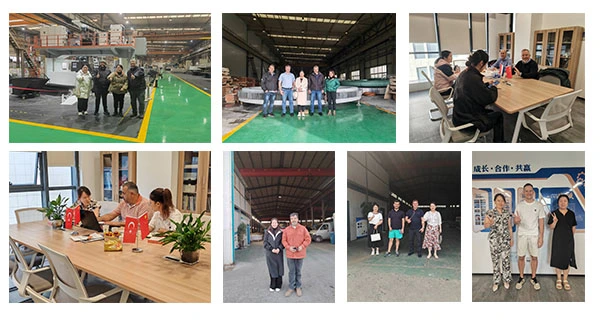
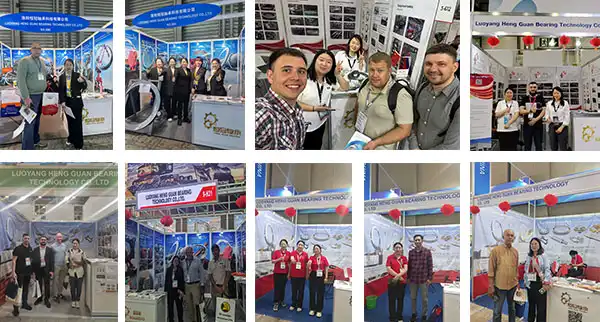
Luoyang Heng Guan Bearing Technology can help you with your toughest spinning bearing problems thanks to its 20 years of specialized engineering expertise. We can make parts in any size, from 50 mm in diameter to 10,000 mm in diameter, and in any precise grade, from P0 to P4, to meet your exact performance needs. We are a reliable provider of deck crane slewing bearing solutions to customers in North America, Europe, and Asia. To make sure we deliver parts you can count on, we use advanced CNC machining, controlled heat treatment methods, and strict quality checking. Our engineering team helps with everything, from the initial design review to fitting advice and reverse engineering of old equipment. Get in touch with mia@hgb-bearing.com right away to talk about your specific application needs and find out how our custom-engineered solutions can help your marine lifting operations run more smoothly and cost less.
References
1. American Bureau of Shipping (2021). Rules for Building and Classing Steel Vessels: Part 4 - Vessel Systems and Machinery. ABS Technical Publications, Houston, Texas.
2. Budynas, R.G. & Nisbett, J.K. (2020). Shigley's Mechanical Engineering Design, 11th Edition. McGraw-Hill Education, New York.
3. Det Norske Veritas (2019). DNV-OS-E101: Offshore Standard for Drilling Plant. DNV GL Group, Oslo, Norway.
4. Harris, T.A. & Kotzalas, M.N. (2018). Rolling Bearing Analysis: Essential Concepts of Bearing Technology, 5th Edition. CRC Press, Boca Raton, Florida.
5. Society of Naval Architects and Marine Engineers (2020). Marine Engineering Handbook Volume II: Machinery and Systems. SNAME Publications, Alexandria, Virginia.
6. Weman, K. & Linden, G. (2017). MIG Welding Guide: Maintenance and Repair Procedures for Heavy Equipment Bearings. Woodhead Publishing, Cambridge, United Kingdom.

WHAT OUR CUSTOMERS SAY
Here is the customer's evaluation of us