



Can a Pinion Gear Shaft Increase Equipment Efficiency?
Motor power and control systems are important, but overall efficiency depends on how effectively power is transmitted through the drivetrain. One of the key components in this process is the Shaft/pinion-gear-shaft">Pinion Gear Shaft, which transfers torque and motion between connected mechanical systems. A poorly designed shaft can lead to power loss, vibration, premature wear, and higher maintenance costs. A precision-engineered Pinion Gear Shaft, on the other hand, helps improve transmission efficiency, reduce downtime, and extend equipment service life. So, can a Pinion Gear Shaft increase equipment efficiency? In many industrial applications, the answer is yes.
How Integrated Design Reduces Power Loss
In conventional assemblies, gears are often mounted onto separate shafts using keys, splines, or press-fit connections. These interfaces can create several efficiency challenges:
Micro-slip under load
Alignment deviations
Increased bearing loads
Stress concentration at connection points
Additional vibration and noise
Over time, these issues contribute to energy loss and component wear.
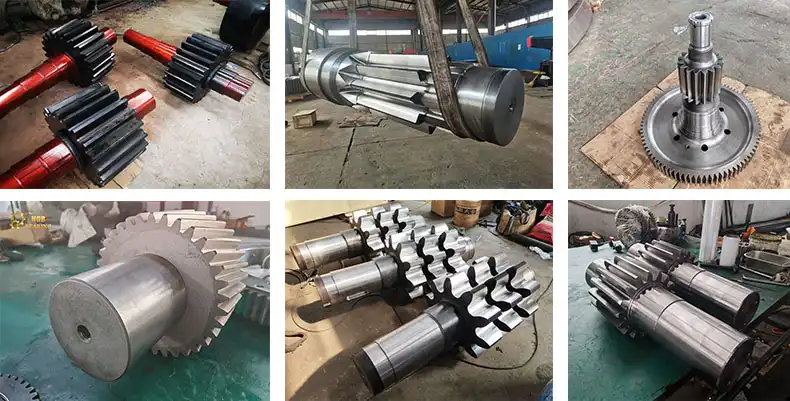
An integrated Pinion Gear Shaft eliminates the connection between the gear and shaft. Manufactured from a single forged blank, it creates a continuous load path throughout the component. This design improves rigidity and reduces losses associated with mechanical joints.
Luoyang Hengguan Bearing Technology Co., Ltd. manufactures integrated Pinion Gear Shafts with CNC-ground bearing seats that maintain concentricity within 0.01 mm. Optimized shoulder transitions help reduce stress concentration and improve fatigue resistance. Compared with traditional assemblies, integrated designs can improve torque transmission efficiency by up to 15%.
| Efficiency Loss Source | Assembled Gear + Shaft | Integrated Pinion Gear Shaft |
|---|---|---|
| Interface micro-slip | Present | Eliminated |
| Misalignment-induced bearing load | Possible | Minimized |
| Stress concentration at joints | High | Low |
| Torque transmission efficiency | Baseline | Up to 15% improvement |
| Vibration-induced energy loss | Moderate | Reduced |
For industrial reducers, mining machinery, wind turbine gearboxes, and other continuously operating equipment, even small efficiency gains can deliver significant long-term savings.
Looking for a More Efficient Pinion Gear Shaft?
If excessive vibration, power loss, gear wear, or frequent maintenance is affecting your equipment performance, a customized Pinion Gear Shaft may provide a practical solution.
Luoyang Hengguan Bearing Technology Co., Ltd. offers engineering support, material recommendations, and custom manufacturing based on customer drawings and operating requirements.
Send your specifications or drawings to mia@hgb-bearing.com for a technical review and quotation.
|
|
Surface Treatment and Long-Term Efficiency
Efficiency is not only determined by design. Surface treatment plays a major role in maintaining performance throughout the component's service life.
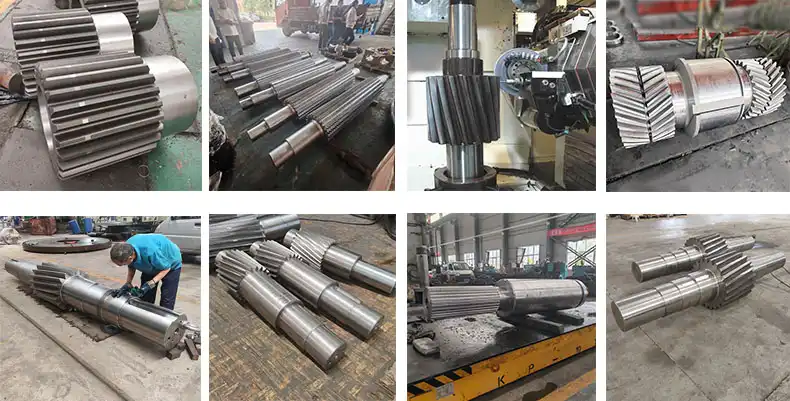
Most high-performance Pinion Gear Shafts use carburized gear teeth. This process creates a hard, wear-resistant surface while maintaining a tough core capable of absorbing shock loads.
Benefits include:
Improved wear resistance
Higher contact fatigue strength
Reduced tooth profile degradation
Longer service life
More stable transmission performance
By preserving tooth geometry over millions of operating cycles, carburizing helps maintain the original efficiency of the drivetrain.
Luoyang Hengguan offers a range of material options, including 42CrMo, 20CrMnTi, bearing steel, and special alloy grades for high-temperature or corrosive environments. Heat treatment parameters are adjusted according to application requirements.
Matching Specifications to Application Requirements
A Pinion Gear Shaft should be selected according to actual operating conditions rather than standard dimensions alone.
Different applications require different performance priorities.
| Application | Efficiency Priority | Key Specification Parameter |
|---|---|---|
| Wind Turbine Gearbox | High – Continuous Duty | Fatigue Life, Concentricity |
| Industrial Reducer | High – Sustained Load | Torque Capacity, Bearing Seat Accuracy |
| Mining Crusher Drive | Moderate – Shock Loading | Core Toughness, Surface Hardness |
| Port Crane Slewing Drive | Moderate – Intermittent Duty | Wear Resistance, Dimensional Accuracy |
| Rail Transmission System | High – Precision Ratio | Tooth Accuracy, Vibration Control |
Luoyang Hengguan supports full customization based on customer drawings, samples, and technical requirements. Standard DIN and ANSI keyways, involute splines, flanges, and custom connection features can all be produced to precise tolerances.
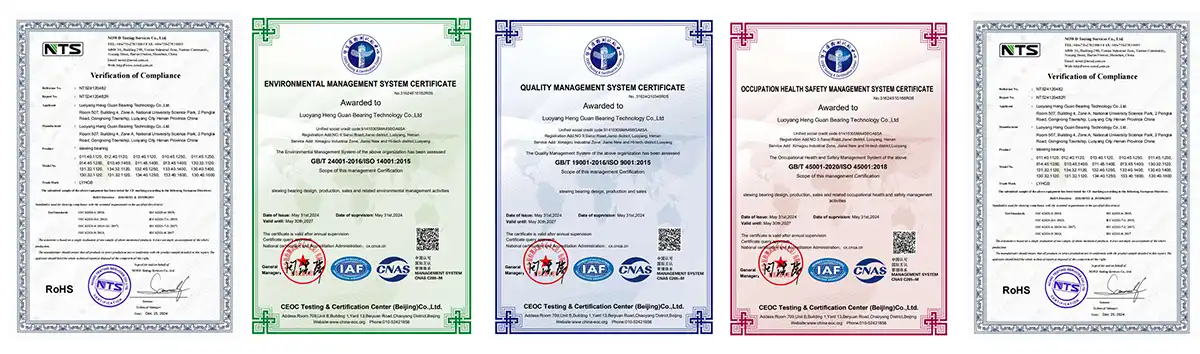
Supported by an ISO 9001-certified quality management system and a team of experienced engineers, every project receives assistance from material selection through final inspection.
Technical Specifications
| Parameter | Specification |
|---|---|
| Shaft Diameter | φ100mm - φ1000mm |
| Total Length | 100mm - 3000mm |
| Gear Module | M3 - M20 (Customizable) |
| Unit Weight | 5kg - 500kg |
| Base Material | 42CrMo, 20CrMnTi, 40Cr Alloy Steel |
| Core Hardness | HRC 28-32 (After Heat Treatment) |
| Tooth Surface Hardness | HRC 58-62 (After Carburizing) |
| Gear Accuracy Grade | GB 5-6 (ISO Equivalent) |
| Connection Types | Keyway, Spline, Flange |
| Tooth Profile Options | Spur, Helical, Bevel |
Why Choose Luoyang Hengguan Bearing Technology Co., Ltd.?
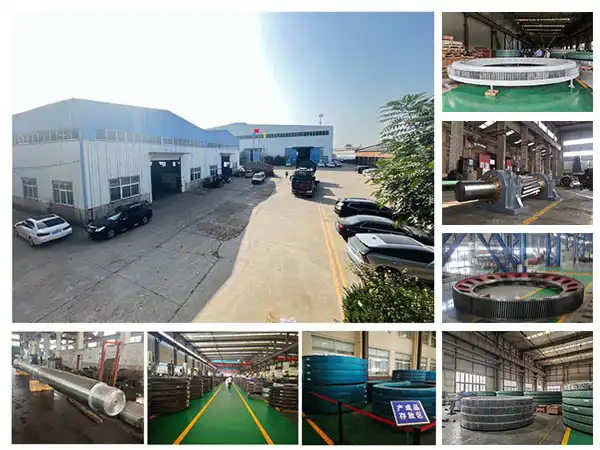
Over 20 Years of Manufacturing Experience
Extensive experience in producing precision transmission components for demanding industrial applications.
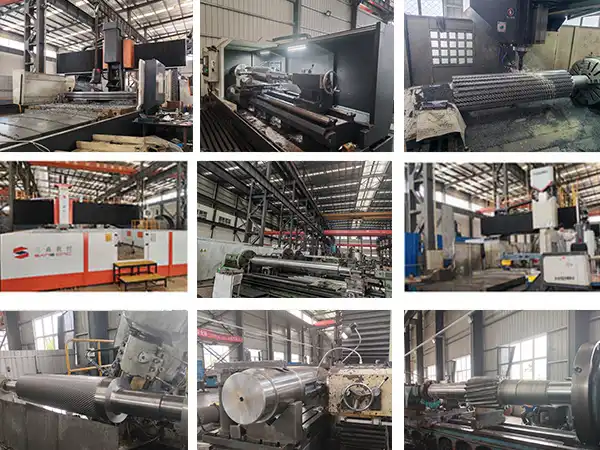
Advanced Manufacturing Equipment
CNC Turning Centers
Gear Hobbing Machines
Gear Grinding Machines
Heat Treatment Facilities
Precision Inspection Equipment
Custom Manufacturing Capability
Products can be manufactured according to:
Customer drawings
Samples
OEM requirements
Special material specifications
Strict Quality Control
ISO 9001 Certified
Full production traceability
Material certifications available
Comprehensive inspection reports
Global Service
Products are supplied to customers in more than 50 countries across industries including mining, energy, transportation, marine, and heavy machinery.
Conclusion
A properly designed Pinion Gear Shaft can improve drivetrain efficiency by reducing interface losses, minimizing vibration, and maintaining accurate power transmission over time. By combining integrated design, advanced heat treatment, precision machining, and application-specific customization, Luoyang Hengguan Bearing Technology Co., Ltd. delivers components built for long-term performance in demanding industrial environments.
|
|
FAQ
Q1: How much efficiency improvement can an integrated Pinion Gear Shaft provide?
Integrated designs can improve torque transmission efficiency by up to 15% compared with traditional gear-and-shaft assemblies.
Q2: What concentricity tolerance can be achieved?
CNC-ground bearing seats can maintain concentricity within 0.01 mm, helping reduce vibration and bearing wear.
Q3: Why is carburizing important?
Carburizing creates a hard, wear-resistant tooth surface while maintaining a tough core, helping preserve gear geometry and transmission efficiency over time.
Q4: Can the shaft dimensions and connection types be customized?
Yes. Shaft diameters, lengths, keyways, splines, flanges, materials, and tooth profiles can all be customized according to customer requirements.
Improve Your Drivetrain Efficiency — Contact Our Engineering Team
Whether you are designing a new gearbox, upgrading an industrial reducer, or replacing a worn transmission component, Luoyang Hengguan Bearing Technology Co., Ltd. can provide a Pinion Gear Shaft solution tailored to your application.
Email: mia@hgb-bearing.com
Send your drawings, specifications, or project requirements today and receive professional engineering support and a customized quotation.
References
1. Shigley, J. E., & Mischke, C. R. (2001). Mechanical Engineering Design (6th ed.). McGraw-Hill.
2. Dudley, D. W. (1984). Handbook of Practical Gear Design. McGraw-Hill.
3. Townsend, D. P. (Ed.). (1991). Dudley's Gear Handbook (2nd ed.). McGraw-Hill.
4. Norton, R. L. (2010). Machine Design: An Integrated Approach (4th ed.). Prentice Hall.
5. ASM International. (1991). ASM Handbook, Volume 4: Heat Treating. ASM International.
6. Hamrock, B. J., Schmid, S. R., & Jacobson, B. O. (2005). Fundamentals of Machine Elements (2nd ed.). McGraw-Hill.

WHAT OUR CUSTOMERS SAY
Here is the customer's evaluation of us