



What Design Features Define Slewing Ring Bearings' Performance?
Why do two bearings that look nearly identical on a spec sheet end up performing so differently after a year in the field? The answer almost always traces back to design details that never make it into a basic diagram. At Luoyang Heng Guan Bearing Technology Co., Ltd., we have spent years refining these details across thousands of Slewing Ring Bearings, and this article breaks down which design features actually separate a bearing that lasts from one that doesn't.
|
|
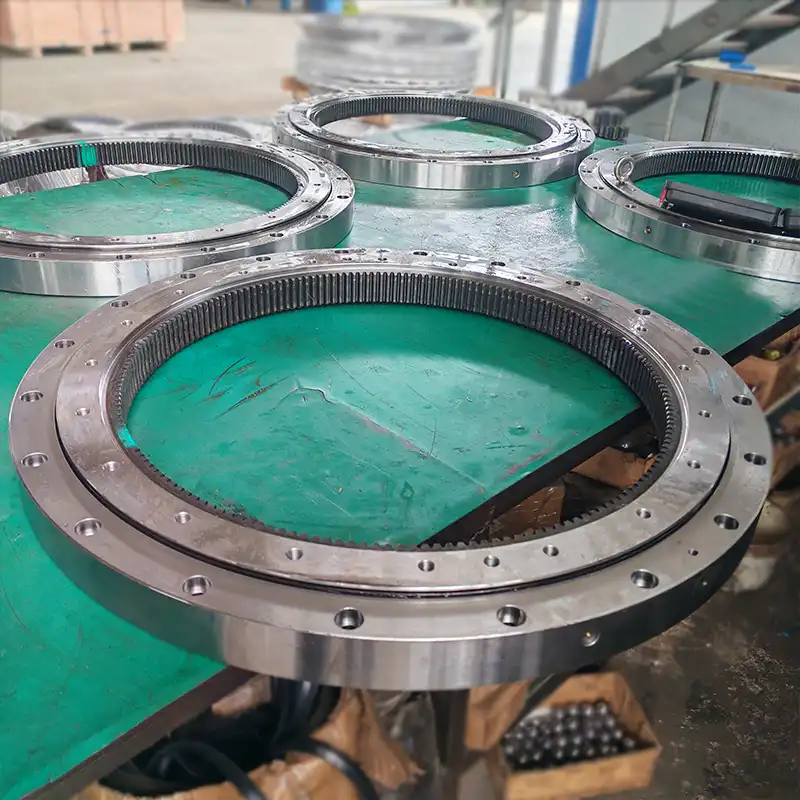
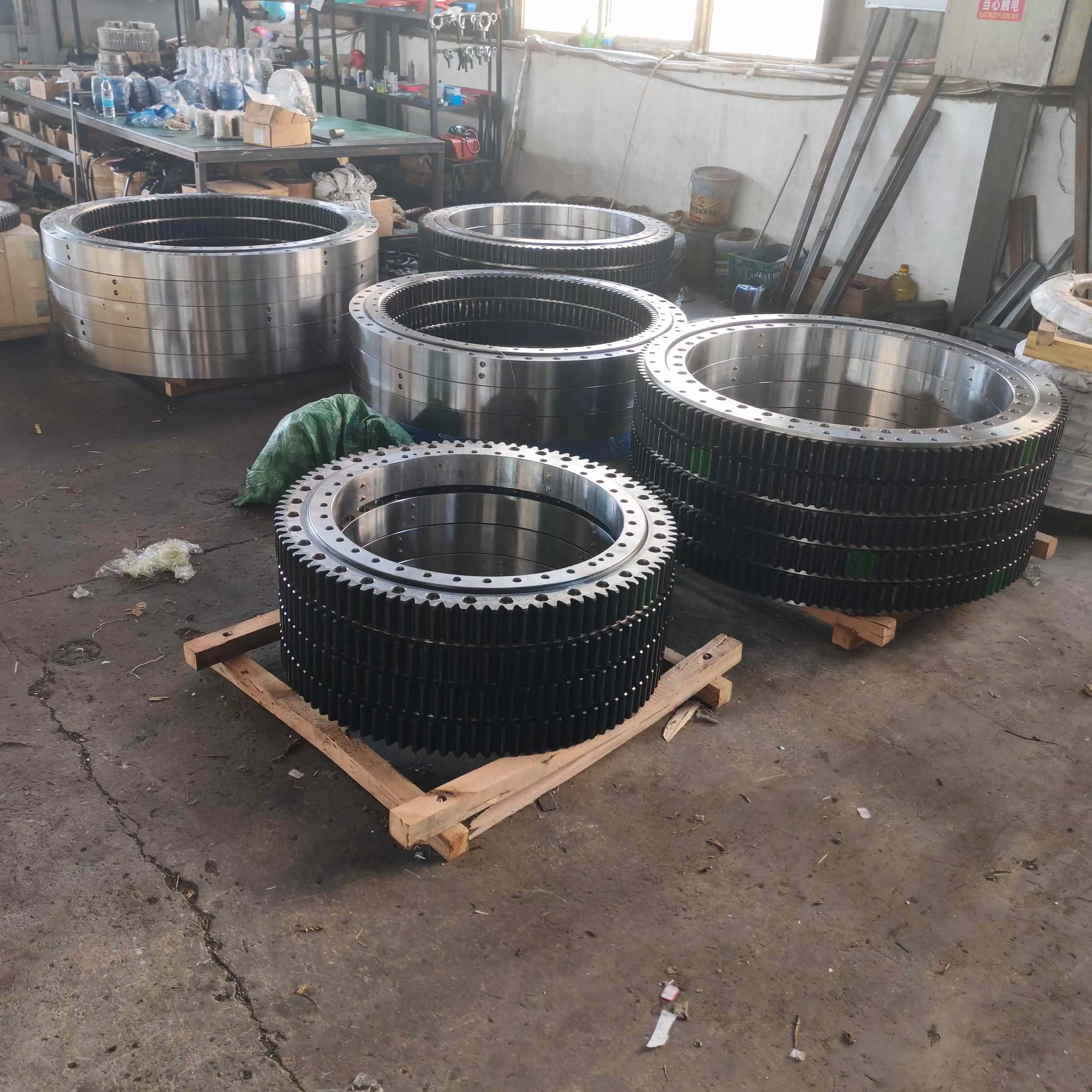
Raceway Geometry and Hardness Set the Load-Carrying Ceiling
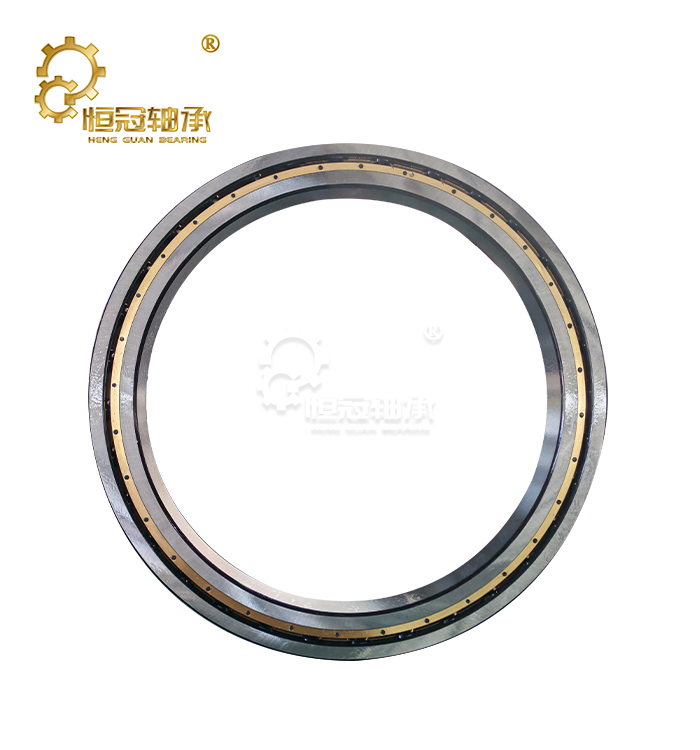
The raceway is where every load line meets the rolling element, so its geometry and hardness decide how much combined radial, axial, and moment load the bearing can absorb before wear sets in. On our Slewing Ring Bearings, raceways are induction hardened to HRC 55–60 with a hardened depth of 2.5–5mm, which keeps the surface resistant to fatigue even when the load fluctuates constantly during crane swings or turntable rotation.
Ring material matters just as much as surface hardness. We manufacture Slewing Ring Bearings using 42CrMo or 50Mn alloy steel for the rings, paired with GCr15SiMn high-purity bearing steel for the balls or rollers. That combination gives the raceway a hard, wear-resistant surface while the core stays tough enough to absorb shock loading rather than cracking under it.
| Design Feature | Effect on Performance |
|---|---|
| Induction-hardened raceway (HRC 55–60) | Resists surface fatigue under repeated loading |
| 42CrMo / 50Mn ring steel | Balances strength with impact toughness |
| GCr15SiMn rolling elements | High-purity steel resists pitting and wear |
| Precision grades P0–P4 | Controls runout and rotational smoothness |
| Integrated mounting holes | Removes the need for separate mounting hardware |
Gear Configuration Determines How the Bearing Transmits Power
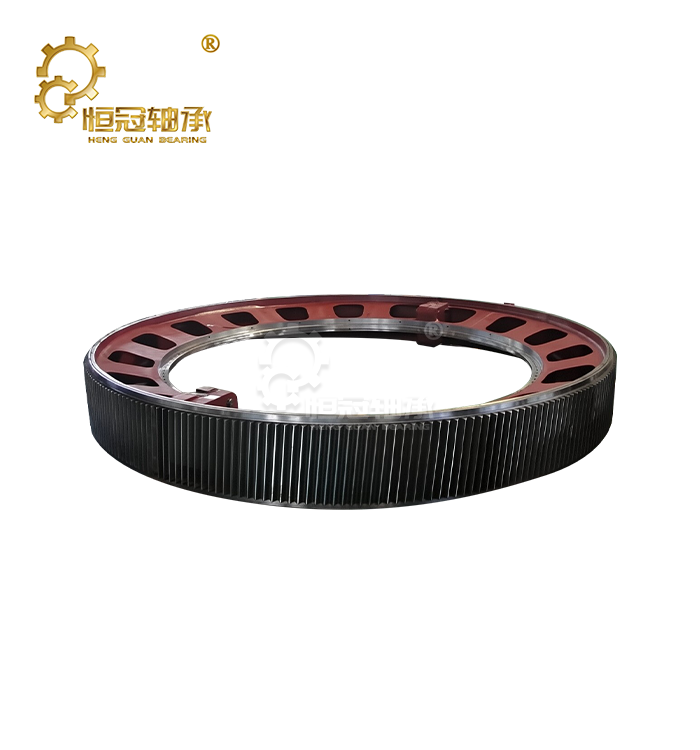
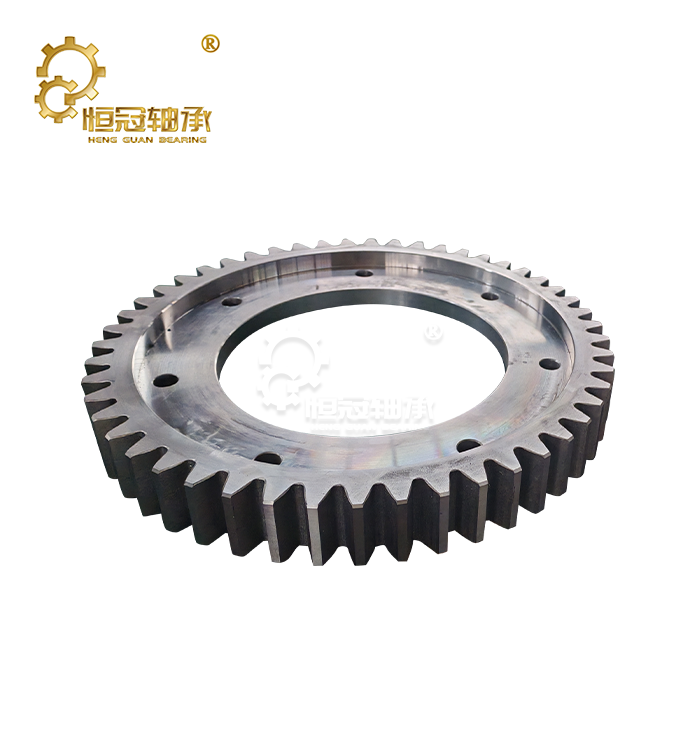
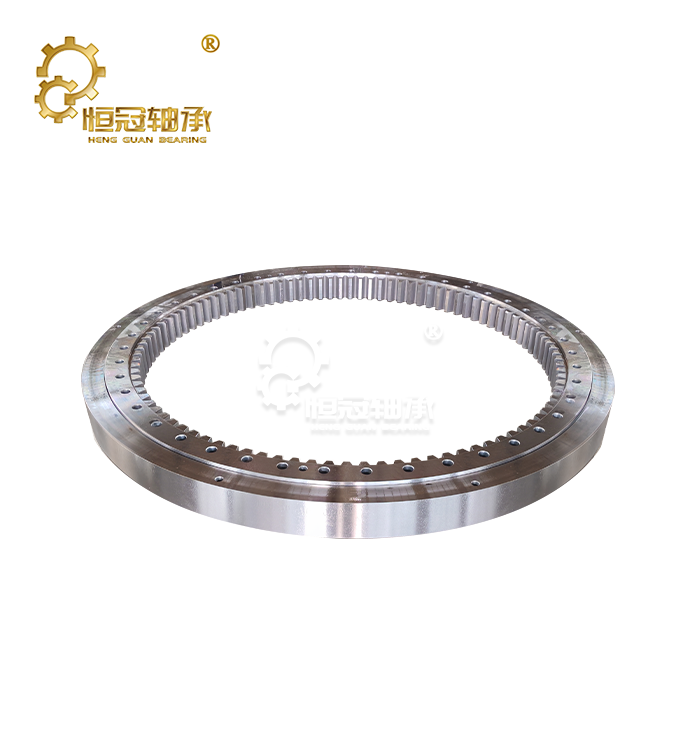
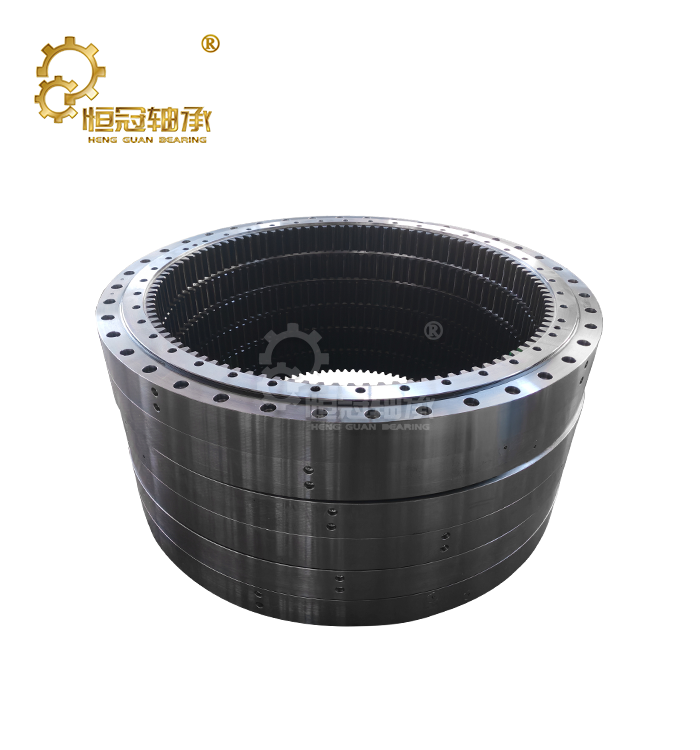
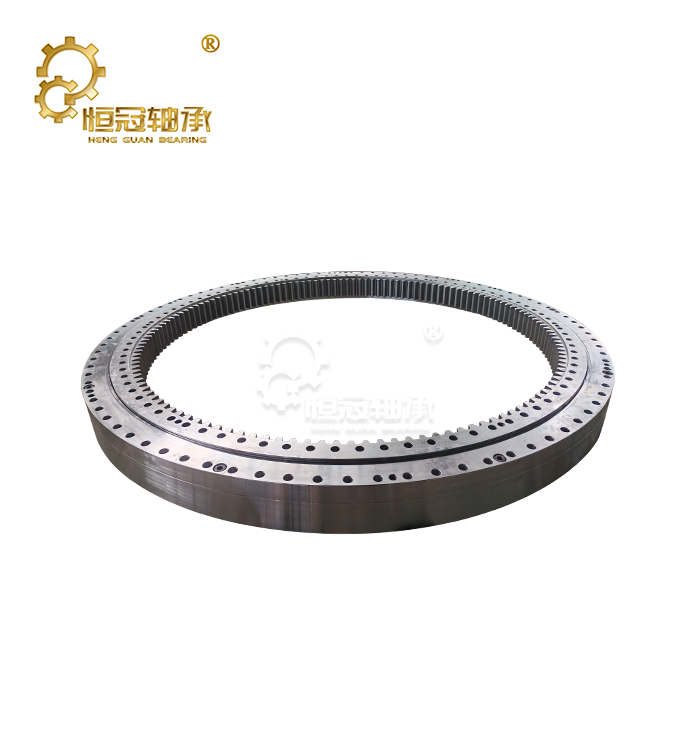
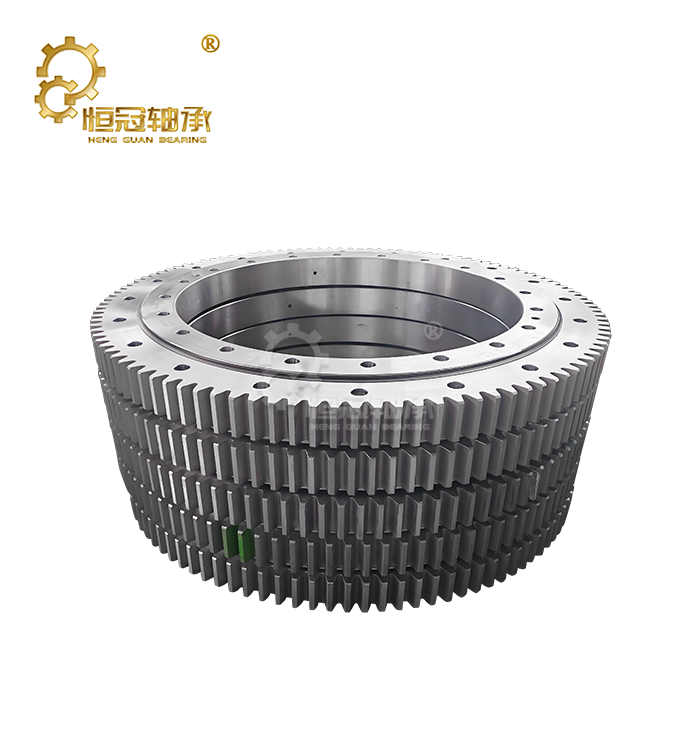
Most Slewing Ring Bearings work alongside a drive system, and whether the gear sits inside or outside the ring changes how the whole assembly behaves. Internal gear designs keep the teeth protected from dust and impact, which suits mobile equipment working in dirty environments. External gear designs put the teeth in plain view, making inspection and lubrication straightforward, and they simplify drive-pinion access for stationary machinery.
Our production line cuts gear teeth to induction-hardened HRC 45–50, a hardness band chosen to resist wear from repeated meshing without becoming brittle under shock load. Whichever configuration your project calls for, our engineers size the tooth profile to match your drive pinion so torque transfers smoothly instead of chattering under load.
Sealing Systems Decide How Long the Bearing Stays Precise
A perfectly machined raceway loses its precision fast once dust, water, or grit works its way into the rolling path. That is why sealing is treated as a core design feature on every one of our Slewing Ring Bearings rather than an afterthought bolted on at the end. Advanced multi-lip seals keep contaminants out while retaining grease at the contact zone, which matters enormously for equipment working in ports, mines, or marine environments where abrasive particles are constant.
Customers running equipment in these harsh conditions consistently report that upgraded sealing extends the interval between re-lubrication and inspection. If your application involves heavy contamination exposure, our technical team can recommend the right sealing configuration — just send your operating environment details to mia@hgb-bearing.com, and we'll walk you through the options.
Manufacturing Precision Turns a Good Design Into a Reliable Bearing
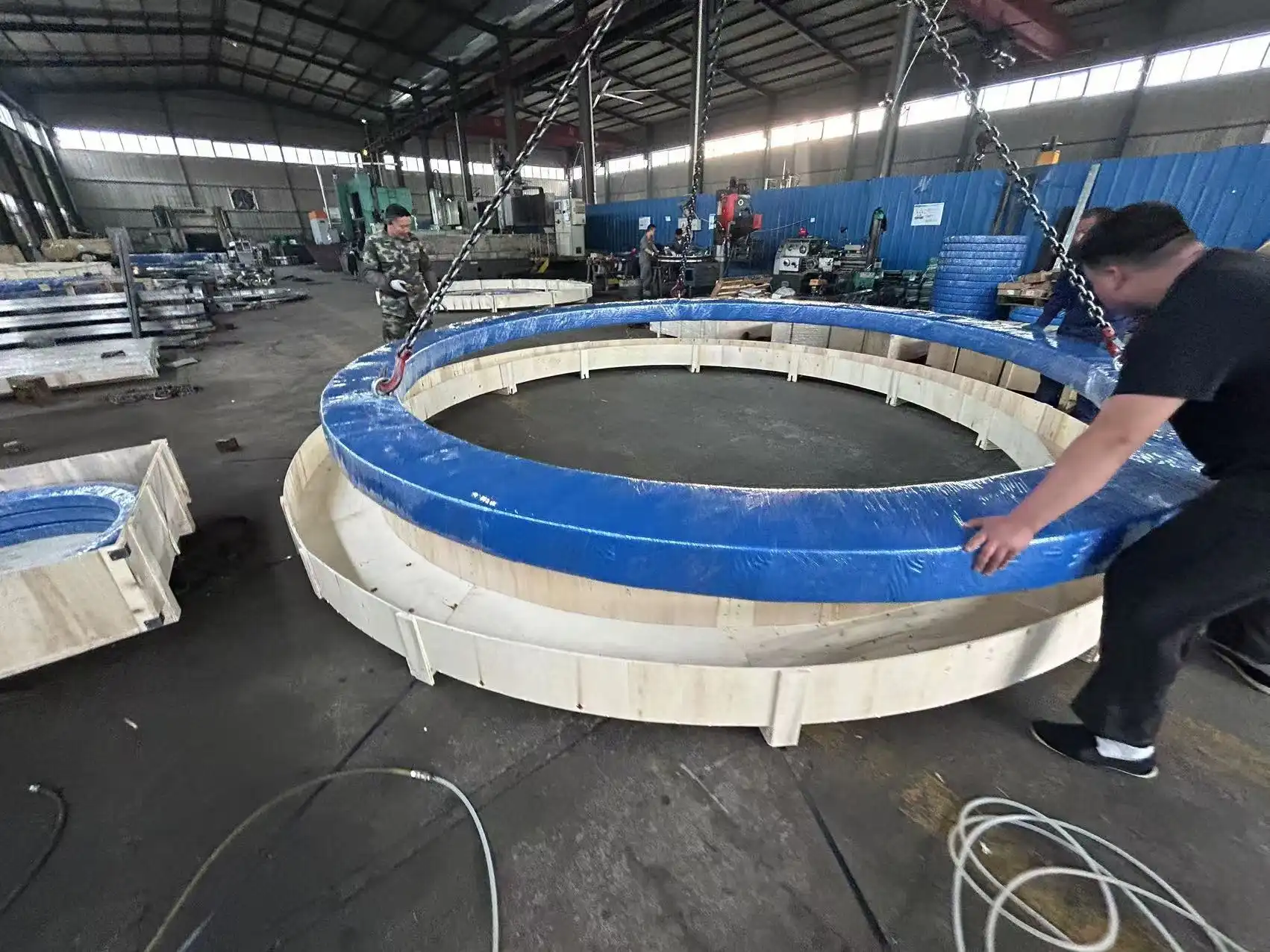
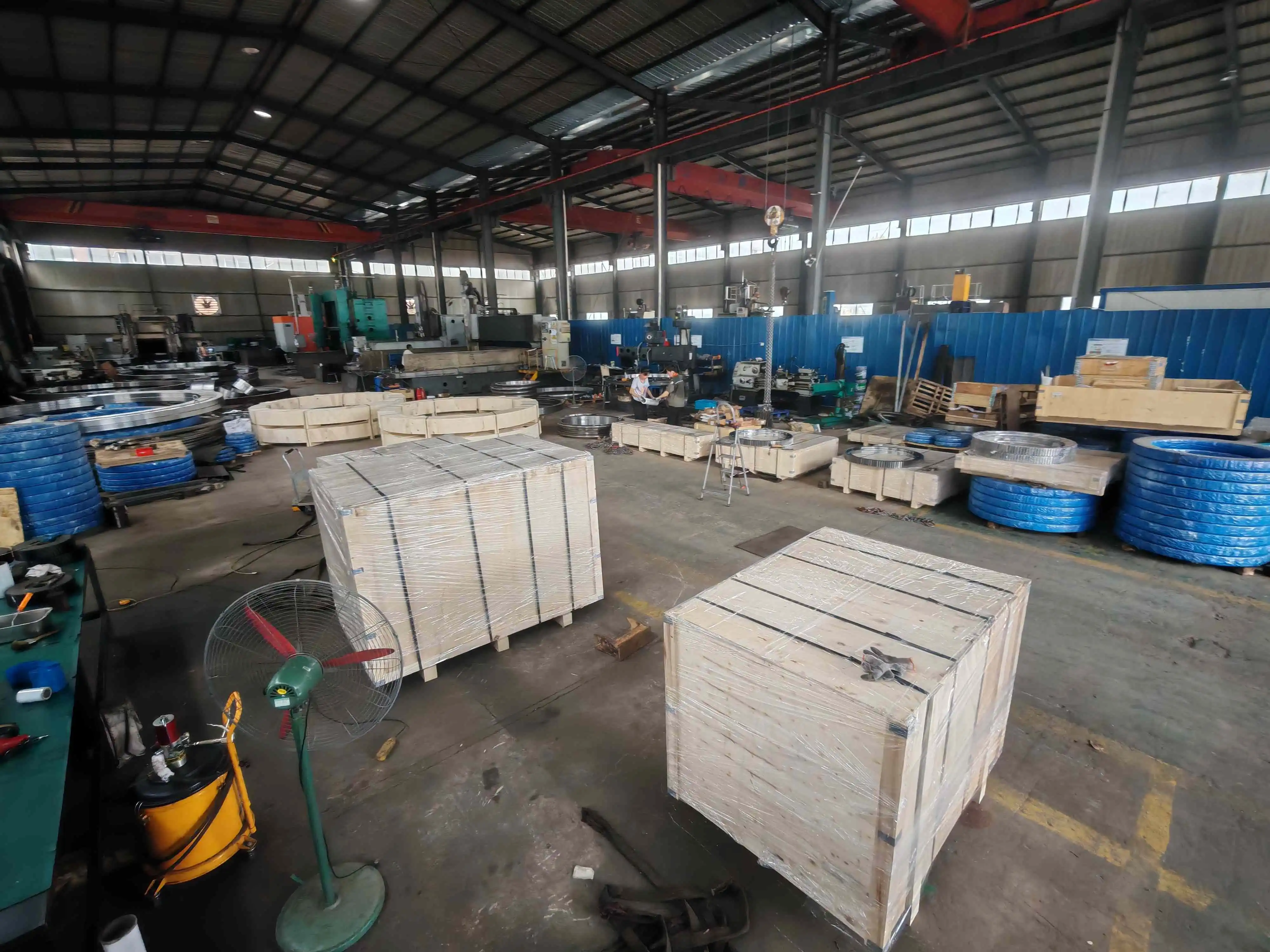
Even the best design on paper only performs as well as the shop that builds it. Our facility runs CNC vertical machining centers, quenching machines, gear shapers, and grinding equipment to hold tight tolerances across every batch of Slewing Ring Bearings we produce. Each finished bearing goes through coordinate measuring machine checks for dimensional accuracy and vibration testing to confirm smooth rotation before it ships.
The table below summarizes the manufacturing range and precision options available across our standard product line.
| Parameter | Specification |
|---|---|
| Diameter Range | 50 mm – 10,000 mm |
| Precision Grades | P0, P6, P5, P4 |
| Structure Types | Single-row four-point contact ball, double-row ball, three-row roller, crossed roller |
| Gear Options | Internal gear, external gear, or non-gear |
| Ring Material | 42CrMo / 50Mn alloy steel |
| Rolling Element Material | GCr15SiMn high-purity bearing steel |
| Quality Standards | ISO 9001 certified, RoHS-compliant materials |
Why Engineers Specify Heng Guan Bearing for Custom Slewing Ring Bearings Projects
Design features only translate into real-world performance when a manufacturer controls every step from raw material to final testing. Based in Luoyang, known across the industry as China's "Bearing Town," Luoyang Heng Guan Bearing Technology Co., Ltd. combines in-house design, heat treatment, gear cutting, and inspection under one roof, so nothing gets outsourced to a weak link in the process.
We regularly build non-standard Slewing Ring Bearings for customers whose equipment doesn't fit a catalog size — tunnel boring machines, CT scanners, specialized cranes — adjusting raceway geometry, gear profile, and sealing to match the actual operating conditions rather than forcing the application around a generic part. That customization capability, backed by consistent quality control, is why manufacturers across construction, wind power, ports, and metallurgy keep coming back to us for their next order.
Conclusion
Performance in a Slewing Ring Bearing comes down to a handful of design choices working together: hardened raceways that resist fatigue, ring steel that balances strength and toughness, a gear configuration matched to the application, sealing that keeps contamination out, and manufacturing precision tight enough to hold every one of those design intentions in the finished part. Getting all five right is what separates a bearing that needs replacing within a year from one that runs reliably for a decade.
|
|
FAQ
Q: What is the most important design feature in Slewing Ring Bearings for heavy-load applications?
A: Raceway hardness and geometry typically matter most, since they determine how much combined radial, axial, and moment load the bearing can carry before fatigue sets in.
Q: Should I choose internal or external gear Slewing Ring Bearings?
A: Internal gear designs suit mobile or dusty environments where the teeth need protection; external gear designs suit stationary equipment where easy inspection and drive access matter more.
Q: Can Slewing Ring Bearings be customized for non-standard equipment?
A: Yes. Raceway dimensions, gear profiles, sealing systems, and mounting hole patterns can all be adjusted to fit equipment that doesn't match a catalog size.
Request Engineering Support for Your Next Slewing Ring Bearings Order
LYHGB designs, hardens, cuts, and tests every Slewing Ring Bearing in-house, ensuring consistent quality across standard and custom orders alike. With diameters ranging from 50mm to 10,000mm, four precision grades, and worldwide export experience, our team is ready to match a bearing to your exact load and environment. Email your specifications to mia@hgb-bearing.com, and we'll respond with technical guidance and a quotation.
References
1. Luoyang Heng Guan Bearing Technology Co., Ltd. Slewing Ring Bearings product page, hgbearings.com.
2. Luoyang Heng Guan Bearing Technology Co., Ltd. Company Profile, "Story of LYHGB," hgbearings.com.
3. "Slewing Bearing," Wikipedia, accessed 2026.
4. ASME SRB-1 — Design, Installation, Maintenance, and Application of Ball Slewing Ring Bearings.
5. ISO 9001:2015 — Quality Management Systems Requirements.
6. European Committee for Construction Equipment, "Technical Guidelines for Slewing Bearing Specification and Procurement in Construction Machinery," Brussels: CECE Publications, 2023.

WHAT OUR CUSTOMERS SAY
Here is the customer's evaluation of us