




How Does an Amusement Ride Slew Bearing Work?
Amusement rides operate under constantly changing loads, including passenger weight, acceleration forces, braking forces, vibration, and outdoor environmental conditions. To keep large rotating structures safe and stable, an Amusement Ride Slew Bearing is the main component connecting the stationary base to the rotating superstructure of the ride. Slewing bearings are different from the common bearings that just bear the radial load; the slewing bearings should bear the combined load, like axial force, radial force, and tilting moment, at the same time.
A properly constructed slew bearing of an amusement ride can ensure that Ferris wheels, observation wheels, rotating platforms, carousels, and other entertainment equipment can move smoothly and remain structurally sound. Through the combination of optimum raceway design, high-strength material use, precise machining, and effective lubrication systems, these bearings can provide reliable performance for thousands of working cycles.
The way these bearings function needs to be understood by amusement equipment designers and park owners. The selection of bearings influences ride safety, maintenance, operating costs, and long-term dependability.
What Makes an Amusement Ride Slew Bearing Different From Standard Bearings?
An amusement ride slew bearing is a large-diameter bearing designed for rotation. It is primarily used in applications that require controlled rotation of heavy structures. Unlike traditional ball or roller bearings, slewing bearings offer the advantage of performing both load support and rotating movement inside a single compact unit.
The primary difference is that they can handle numerous forces at once. When an amusement ride is spinning, the bearing is not experiencing just one form of load. It has to be able to withstand:
- Axial loads due to the vertical weight of passengers and ride structures
- Centrifugal forces during rotation
- Tilting moments generated by uneven loads, acceleration, or wind forces
For instance, a Ferris wheel bearing must withstand the weight of the whole wheel construction and permit smooth rotation. During operation the passenger distribution changes continuously, which causes fluctuating loading circumstances. An optimized slew bearing adjusts for these variations by way of an optimized raceway geometry and load distribution.
This makes slewing bearings especially ideal for entertainment equipment where safety, smooth running, and long service life are of equal importance.
How Does the Working Principle of an Amusement Ride Slew Bearing Ensure Smooth Rotation?
An amusement ride slew bearing functions by guiding rolling elements in controlled motion between raceways that are constructed to exacting tolerances. The outer ring, inner ring, or gear structure rotates. Steel balls or rollers transmit forces between the two rings while reducing friction.
Double-row ball slewing bearings with optimal contact angles are used in many applications in amusement rides. Due to the double-row design, the load capacity is improved, as the rolling parts may disperse the forces over several contact sites. This design provides bearing stability in the event of rapid acceleration, deceleration, or unequal passenger loads.
Load Distribution Through Precision Raceway Design
The raceway is one of the most significant regions determining bearing performance. In operation, the bearing rings transmit the loads from the rotating framework to the rolling parts.
The raceway is well designed so as to ensure the following:
- Even load distribution on rolling elements
- Less local stress concentration
- Reduce the friction on rotating
- Increased resilience to fatigue damage
In entertainment equipment, unequal load distribution may result in severe wear at some portions of the bearing. This may lead to increased operating noise, vibration, and/or diminished rotational precision over time.
Manufacturers typically utilize precision machining and grinding procedures to get correct raceway dimensions. These methods, along with suitable heat treatment, contribute to maintaining the mechanical strength and the dimensional stability throughout long-term operation.
Key Components That Determine Amusement Ride Slew Bearing Performance
A slew bearing is not just one part. Slew bearing performance is a function of the interaction of numerous parts. Each component directly affects load capacity, service life, and operational safety.
High-Strength Bearing Rings for Structural Support
The bearing's primary load-carrying structure is made up of the inner and outer rings. They are also used in the construction of amusement rides since manufacturers often choose them for their good combination of strength, toughness, and wear resistance (50Mn and 42CrMo alloy steel).
50Mn steel is usually used for applications requiring high surface hardness and wear resistance under stable operating conditions. It is good where predictable loading patterns are experienced by the bearing.
42CrMo steel has increased toughness and impact resistance; therefore, it is suited for amusement equipment under heavier shock loads, more frequent acceleration cycles, or more severe working conditions.
The final performance of the rings depends on the selection of the material and on the following:
- Quality of heat treatment
- Hardness management
- Machining precision
- Surface treatment
These features will be checked by a good manufacturer before delivery.
Precision Rolling Elements for Reduced Friction
Slewing bearings handle stresses while permitting smooth rotation of rolling elements inside an amusement ride. GCr15 bearing steel balls are widely utilized because of their good hardness, fatigue resistance, and dimensional uniformity.
Precision-ground steel balls assist in maintaining:
- Stable contact situation
- Less drag
- Reduced vibration
- More constant rotation
The smooth running of amusement rides is not only a comfort need but also a crucial issue regarding safety. If there is excessive vibration or wandering, it may be due to unequal loading or an internal bearing problem.
Sealing and Lubrication Systems for Outdoor Operation
Most amusement rides are outside rides. This exposes their bearings to the elements such as rain, dust, humidity, temperature variations, and sometimes salt if the amusement park is located on the coast. Hence, the sealing and lubrication systems are critical elements of bearing reliability.
High-quality seals assist in keeping impurities from entering the interior of the bearing and also help keep the lubricant clean. NBR is a common sealing material because of its strong resistance to oil, weather, and mechanical wear.
Lubrication decreases the contact friction between the rolling elements and the raceways and also helps to manage the generation of heat during operation. For amusement ride uses, lubricant choosing should take the following into account:
- Temperature range of operation
- Speed of rotation
- Load conditions
- Environmental exposure
Regular grease inspections are needed for amusement ride slew bearing since a lack of or contaminated grease can speed up raceway wear and reduce bearing service life.

Types of Slew Bearings Used in Different Amusement Rides
Varied amusement equipment will cause varied loading conditions; thus, the selection of amusement ride slew bearings should be determined by the ride structure, rotation needs, operating frequency, and safety criteria. Choosing the appropriate bearing type will prevent premature wear and provide steady operation during the equipment lifecycle.
Double-Row Ball Slewing Bearings for Heavy Combined Loads
Double-row ball slewing bearings are often utilized in entertainment equipment because they can easily accommodate combined loads. The two rows of rolling parts provide better load distribution compared to single-row systems, making them ideal for situations where both axial forces and tilting moments are considerable.
Typical applications are:
- Big Ferris wheels
- Observation wheels
- Observation platforms that rotate
- Large carousel systems
- Large amusement building slow-speed rotation
The benefit of this design is that it can hold massive buildings and still be able to rotate accurately. When the ride starts, pauses, or changes speed, the bearing has to respond swiftly to changing forces. The double-row structure reduces stress concentration and increases the stability of the machine under the dynamic working circumstances.
Cross Roller and Customized Slewing Bearing Solutions
Some entertainment equipment calls for more precision on rotation or has restrictions on installation area. In such cases, the possibility exists of considering slewing bearings with a specific design.
Cross roller slewing bearings have cylindrical rollers arranged in a crossed pattern, which enables the bearings to have great stiffness and outstanding moment load capacity. They are generally useful for applications where accurate positioning and smooth motion are needed.
Tailored solutions can include:
- Special hole designs for mounting
- Integrated external or internal gearing
- Various sealing structures
- Changed lubrication systems
- Special anti-corrosive treatments
Amusement equipment manufacturers often need to make customizations, because the rides might vary greatly in design. A bearing provider with engineering capabilities may look at installation plans, operating circumstances, and load requirements and advise the best configuration to suit them.

Common Failure Causes and Maintenance Methods for Amusement Ride Slew Bearings
Although high-quality slewing bearings are designed for long service life, improper installation, insufficient maintenance, or unsuitable operating conditions can reduce performance. Understanding common failure causes allows operators to take preventive actions before major problems occur.
Preventing Lubrication Problems and Contamination Damage
Lubrication-related issues are among the most common causes of slewing bearing problems. Because amusement rides often operate outdoors, bearings are exposed to environmental contaminants that can affect internal components.
Common lubrication problems include:
- Insufficient grease supply
- Incorrect lubricant selection
- Contaminated grease
- Uneven grease distribution
When lubrication performance decreases, friction between rolling elements and raceways increases. This can result in higher operating temperatures, increased wear, and reduced bearing life.
A proper maintenance program should include:
- Scheduled lubrication intervals
- Grease condition inspection
- Seal condition checks
- Contamination monitoring
For rides operating in coastal areas or high-humidity environments, maintenance intervals may need to be adjusted because moisture and salt exposure can accelerate corrosion risks.
Monitoring Wear, Vibration, and Alignment Conditions
Structural alignment has a significant impact on slewing bearing performance. Even a high-quality bearing can experience abnormal stress if the mounting structure is not properly aligned.
Potential causes of alignment problems include:
- Incorrect installation procedures
- Foundation deformation
- Uneven mounting surfaces
- Excessive structural loads
Regular inspections can help identify early warning signs, including:
- Increased operating noise
- Abnormal vibration
- Higher rotation resistance
- Uneven wear patterns
Advanced amusement equipment operators may use condition monitoring systems to track vibration, temperature, and operating behavior. These technologies allow maintenance teams to identify potential problems before unexpected downtime occurs.
Using Predictive Maintenance to Improve Bearing Reliability
Traditional maintenance often relies on fixed replacement schedules. However, replacing components too early increases operating costs, while waiting too long increases safety risks.
Predictive maintenance provides a more efficient approach by using actual operating data to evaluate bearing condition.
Common monitoring methods include:
Vibration Analysis
Changes in vibration patterns may indicate raceway damage, lubrication problems, or internal wear.
Temperature Monitoring
Abnormal temperature increases can signal excessive friction or insufficient lubrication.
Lubricant Analysis
Checking grease conditions can reveal contamination, metal particles, or degradation.
For amusement rides, predictive maintenance of Amusement Ride Slew Bearing is especially valuable because unexpected failures can interrupt operations during peak seasons and create significant repair costs.
|
|


How to Select the Right Amusement Ride Slewing-Bearing Supplier?
Selecting an amusement ride slew-bearing supplier requires more than comparing product prices. Because these bearings directly affect ride safety and operating reliability, buyers should evaluate manufacturing capability, quality control processes, engineering support, and long-term service ability.
Evaluate Manufacturing Capability and Quality Control
A reliable supplier should have complete manufacturing capabilities covering the following:
- Material selection
- Heat treatment
- Precision machining
- Raceway processing
- Assembly
- Final inspection
Quality control is especially important for amusement applications because bearing failure can lead to serious operational consequences.
Important quality checks may include:
- Dimensional inspection
- Hardness testing
- Raceway accuracy testing
- Rotation performance testing
- Load verification
Suppliers with established quality systems can provide better consistency between production batches and reduce installation risks.
Consider Engineering Support and Customization Ability
Many amusement ride projects require customized bearing solutions rather than standard products. The supplier should be able to understand technical requirements and provide engineering recommendations.
Professional support may include:
- Reviewing equipment drawings
- Calculating load requirements
- Selecting suitable bearing structures
- Designing mounting solutions
- Providing installation guidance
For large amusement equipment, early communication between the ride manufacturer and bearing supplier can prevent design problems later in production.
Compare Total Cost Instead of Initial Purchase Price
The lowest purchase price does not always represent the lowest overall cost. A cheaper bearing may require more frequent maintenance, have shorter service life, or create higher downtime risks.
A complete cost evaluation should consider:
- Initial bearing cost
- Installation requirements
- Maintenance frequency
- Expected service life
- Technical support availability
- Replacement difficulty
Premium-quality bearings often provide better long-term value because they improve reliability and reduce unexpected maintenance expenses.
Future Development Trends of Amusement Ride Slew Bearings
The amusement equipment industry continues to develop toward safer, smarter, and more efficient operation. These trends are influencing how slewing bearings are designed, manufactured, and maintained.
Advanced Materials and Manufacturing Technologies
Material development continues to improve bearing durability. New alloy formulations and improved heat treatment technologies help increase fatigue resistance and improve performance under demanding conditions.
Manufacturing improvements such as the following:
- Higher precision machining
- Automated inspection systems
- Advanced surface treatments
- Improved production monitoringare helping manufacturers achieve better consistency and longer bearing service life.
Future bearing designs may focus on lighter structures, higher load capacity, and improved corrosion resistance for outdoor applications.
Smart Bearings and Digital Condition Monitoring
Digital technologies are changing maintenance strategies for amusement equipment. Sensors integrated into bearing systems can provide real-time information about operating conditions.
Smart monitoring systems can track:
- Temperature changes
- Vibration levels
- Load variations
- Lubrication conditions
This information helps operators make better maintenance decisions and reduce unexpected equipment shutdowns.
For large amusement parks, smart monitoring can become an important tool for improving safety management and operational efficiency.
Increasing Focus on Safety Standards and Reliability
As amusement ride safety requirements continue to develop worldwide, manufacturers and operators are placing greater emphasis on component reliability.
Bearing suppliers must pay closer attention to the following:
- Material traceability
- Manufacturing consistency
- Testing procedures
- Technical documentation
For buyers, selecting a supplier with strong engineering knowledge and quality management capability is becoming increasingly important.
Conclusion
Amusement ride slew bearings are essential components that allow large amusement structures to rotate safely, smoothly, and reliably. Their performance depends on the interaction of multiple factors, including bearing design, material selection, manufacturing accuracy, lubrication systems, and maintenance practices.
Understanding how an amusement ride slew bearing works helps equipment manufacturers and operators make better decisions when selecting components for Ferris wheels, carousels, rotating platforms, and other entertainment systems. Double-row ball structures, high-strength alloy steel rings, precision rolling elements, and effective sealing systems all contribute to stable operation under complex loading conditions.
When choosing a bearing supplier, buyers should consider more than product specifications or initial price. Manufacturing capability, customization support, inspection procedures, and long-term technical service all influence the overall reliability of the amusement equipment.
With continued development in smart monitoring technologies, advanced materials, and precision manufacturing, amusement ride slew bearings will continue to improve in safety, efficiency, and service life. Working with an experienced manufacturer can help ensure that every bearing solution meets the demanding requirements of modern amusement applications.
|
|


FAQ
1. What determines the service life of amusement ride slew bearings?
Service life relies on many things, such as the type of work, the climate, the quality of the lubrication, and how well the machine is maintained. If you keep your amusement park bearings in good shape, they should last between 10 and 15 years. However, setups that get a lot of use may need to be replaced more often. Regularly checking the state helps figure out the best time to replace something.
2. How often should lubrication be performed on these bearings?
Depending on how the machine is used, the recommended lubrication times range from 6 months to 2 years. High-use rides in dirty or acidic areas may need to be oiled more often, while rides that are only used during certain times of the year may need to be oiled less often. The best advice is to follow the manufacturer's instructions and keep an eye on the state of the lube.
3. Can bearing designs be customized for specific ride applications?
Yes, reliable makers offer a wide range of customization choices, such as changing the size, the way the parts are mounted, the addition of gear teeth, and better sealing systems. Most of the time, custom solutions have longer wait times and may have minimum order amounts, but they work best for specific uses.
Partner with Heng Guan for Superior Amusement Ride Slew-Bearing Solutions.
Heng Guan Bearing Technology is ready to help you with your amusement ride bearing needs with their extensive technical knowledge and reliable manufacturing skills. As a seller of amusement ride slew bearing solutions with a lot of experience, we can make custom solutions for bore sizes ranging from 50 mm to over 2000 mm. Our high-quality 50Mn and 42CrMo steel materials and precision-ground GCr15 rolling elements make up these solutions. Our double-row ball designs with 45-degree contact angles work perfectly for Ferris wheels, carousels, and pendulum rides all over the world.Email our technical team at mia@hgb-bearing.com to talk about your unique needs and find out how our precision-engineered bearings can improve the safety, reliability, and operating efficiency of your ride. We provide full documentation, fitting help, and upkeep instructions to make sure that your bearings work at their best for the entire life of your equipment.
References
1. International Association of Amusement Parks and Attractions (IAAPA). "Safety Standards for Amusement Ride Mechanical Components." 2023 Technical Guidelines.
2. American Society for Testing and Materials (ASTM). "Standard Specification for Steel Forgings for Rolling-Element Bearings." ASTM A295-18.
3. European Committee for Standardization. "Safety of Machinery - Slewing Bearings for Mobile Equipment." EN 12644-1:2014.
4. Society of Tribologists and Lubrication Engineers. "Guidelines for Lubrication of Large Slewing Bearings in Outdoor Applications." STLE Technical Paper 2022.
5. National Institute of Standards and Technology. "Bearing Steel Technologies for the 21st Century." NIST Special Publication 1195.
6. International Organization for Standardization. "Rolling Bearings - Dynamic Load Ratings and Rating Life." ISO 281:2007.

WHAT OUR CUSTOMERS SAY
Here is the customer's evaluation of us
YOU MAY LIKE
_1767713770881.webp) VIEW MORESlewing Bearing Customize
VIEW MORESlewing Bearing Customize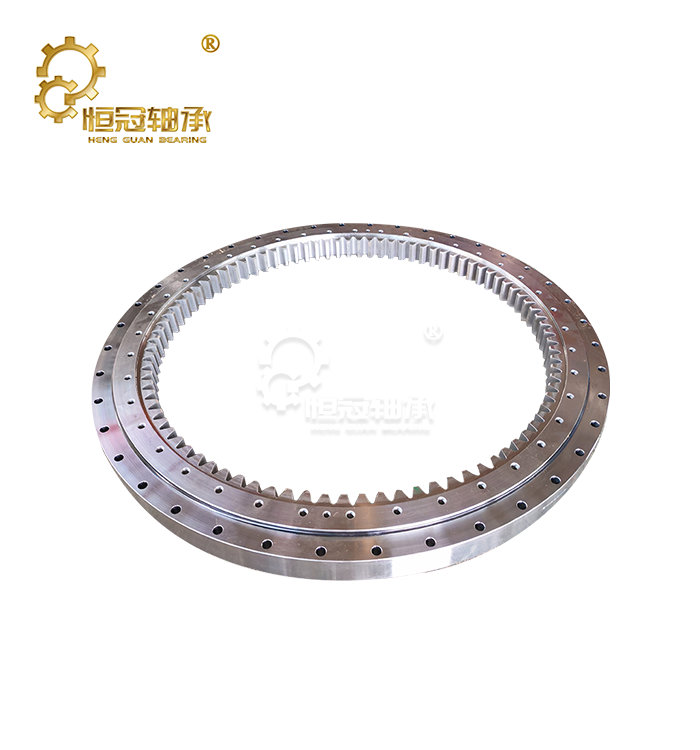 VIEW MORECat Excavator slewing bearing
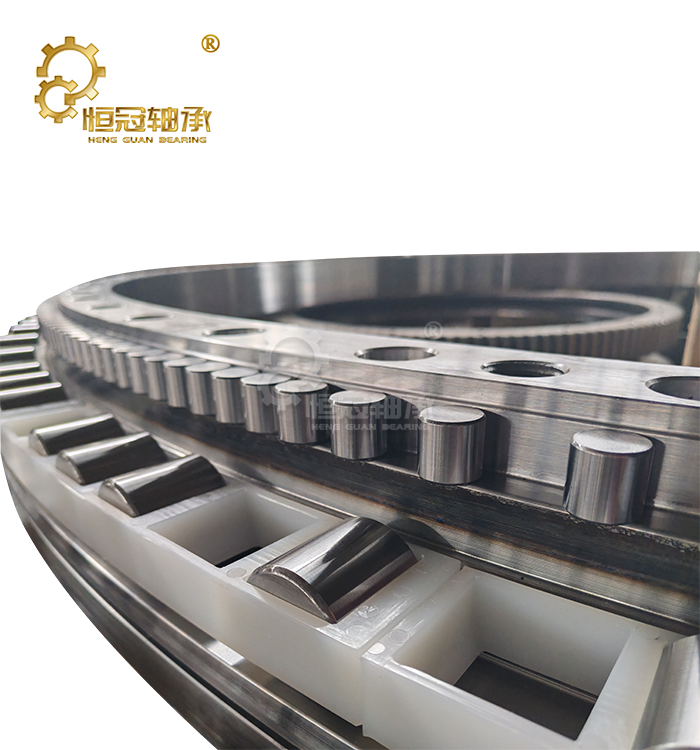 VIEW MOREThree-Row Roller Slewing Bearing
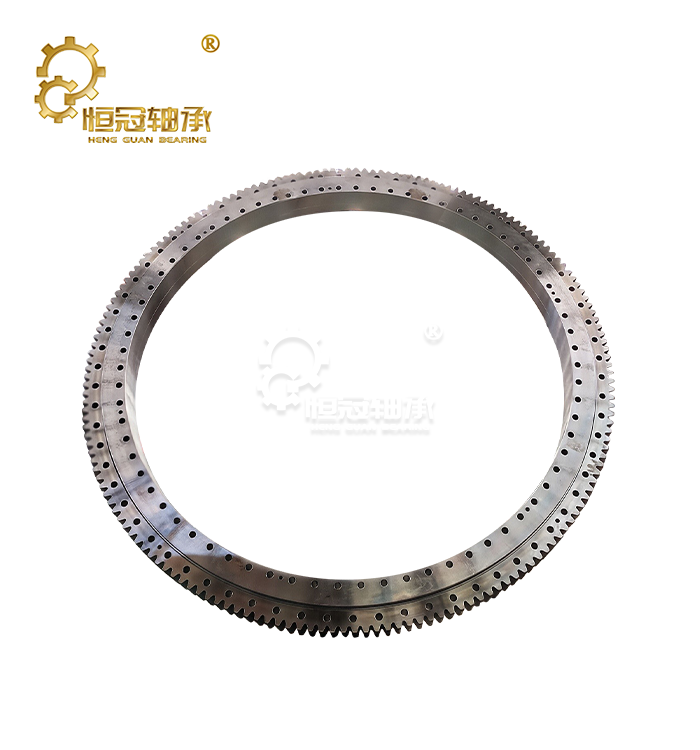 VIEW MORERoller Slewing Bearing
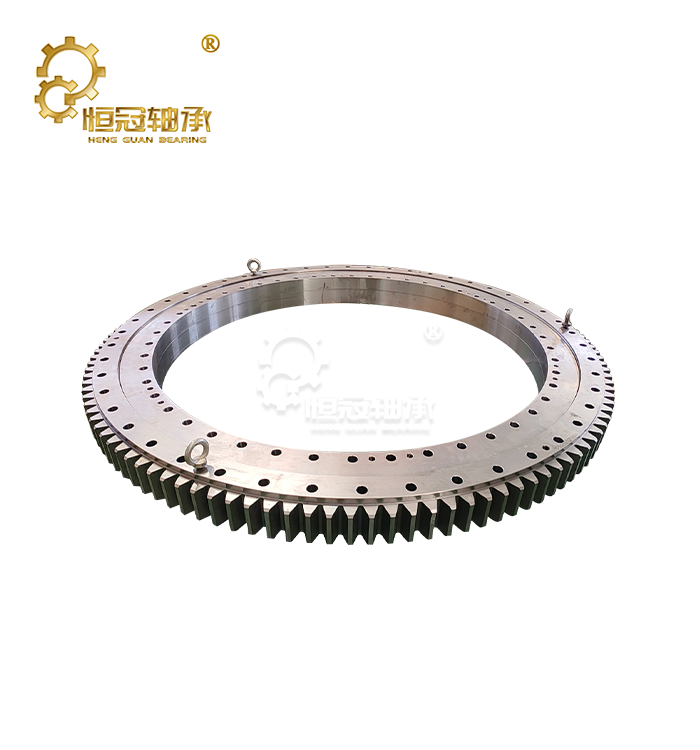 VIEW MOREExternal Gear Slewing Bearing
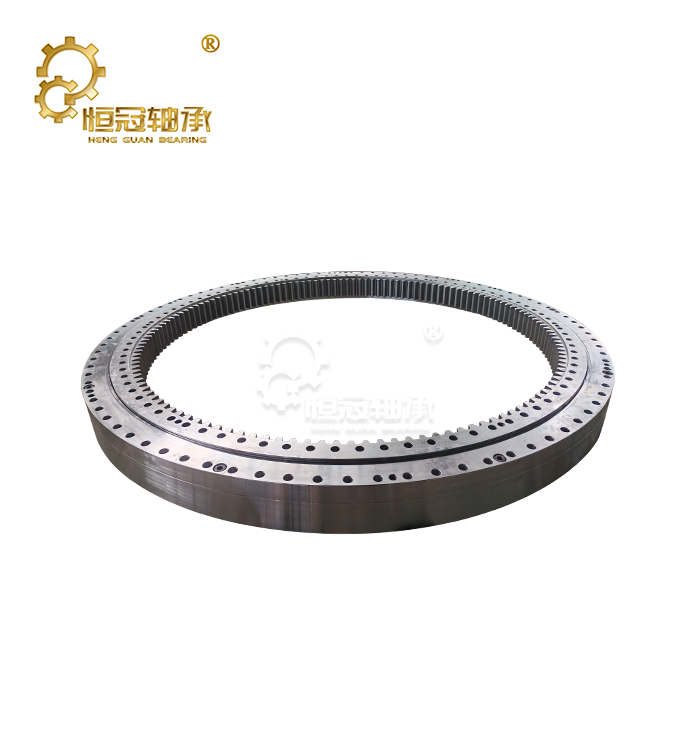 VIEW MOREConcrete Pump Truck Slewing Bearing
_1767784942887.webp) VIEW MOREDouble-Row Ball Slewing Ring Bearing
VIEW MOREDouble-Row Ball Slewing Ring Bearing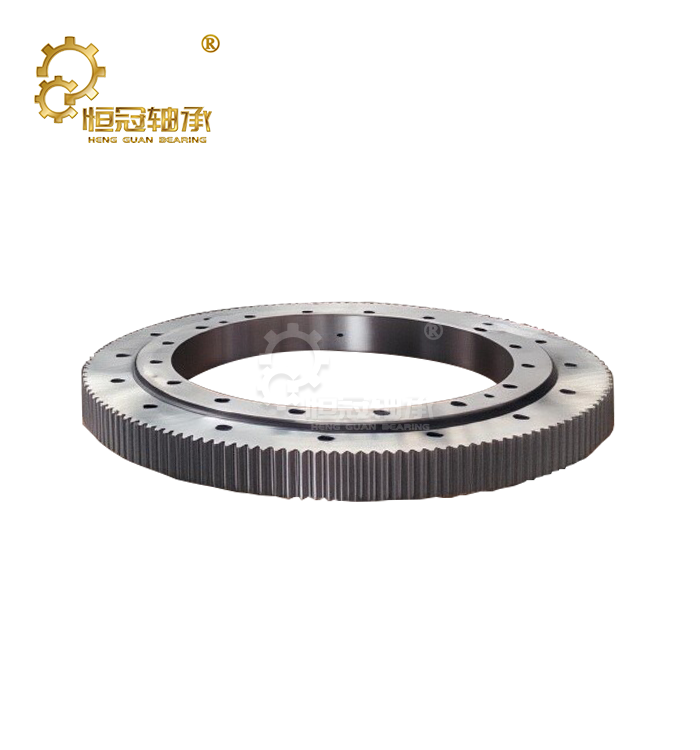 VIEW MORESlewing Ring For Billboard