



Conveying System Slewing Bearing for Heavy Duty Material Handling
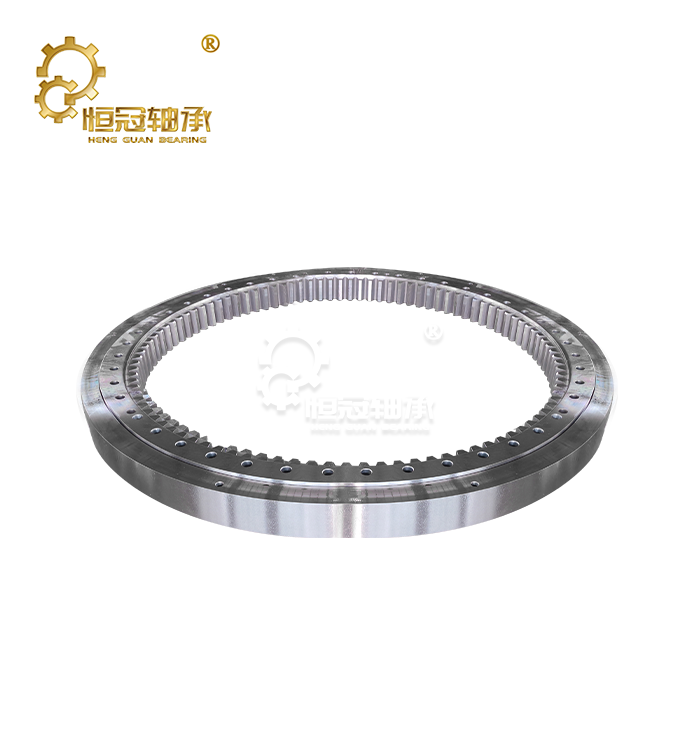
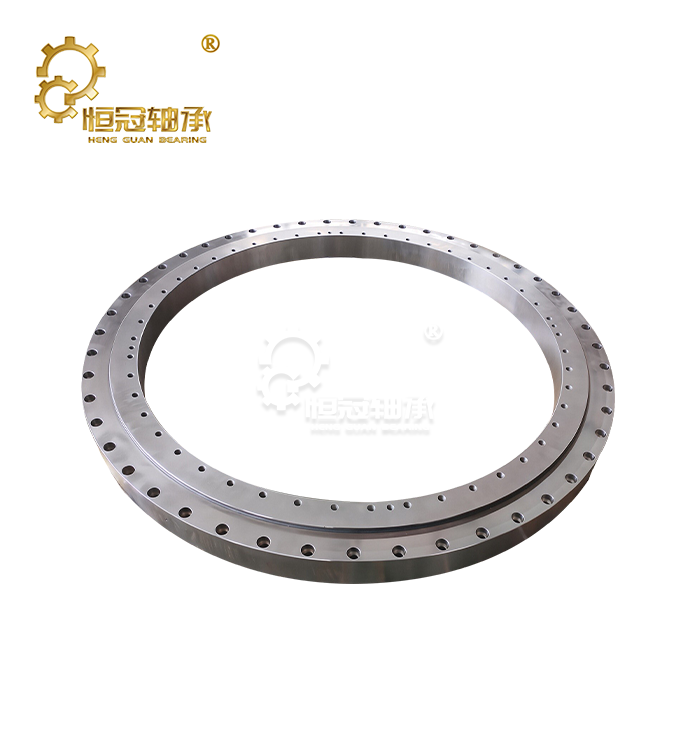
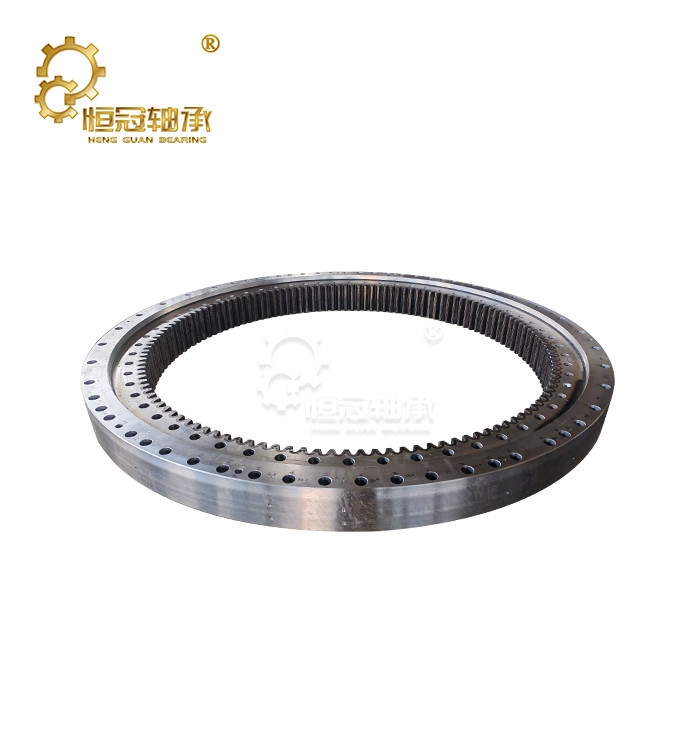
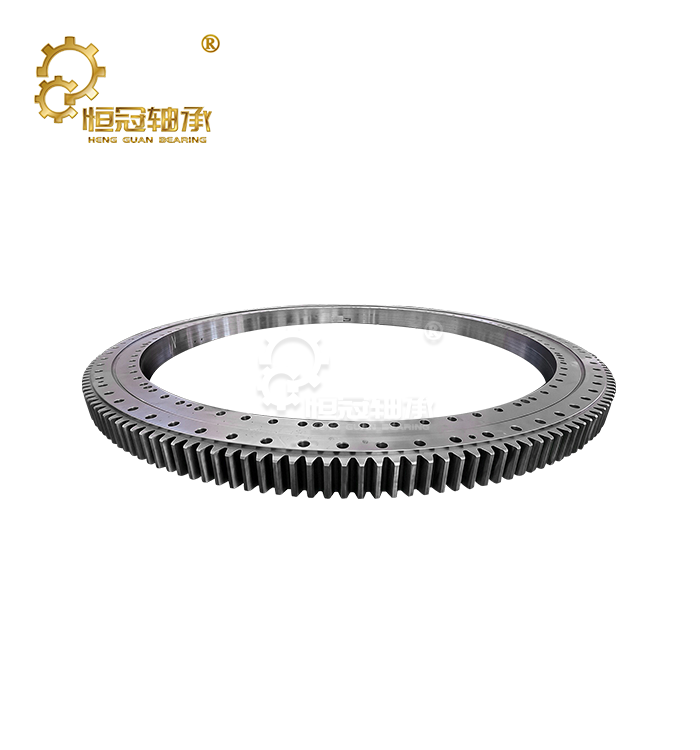
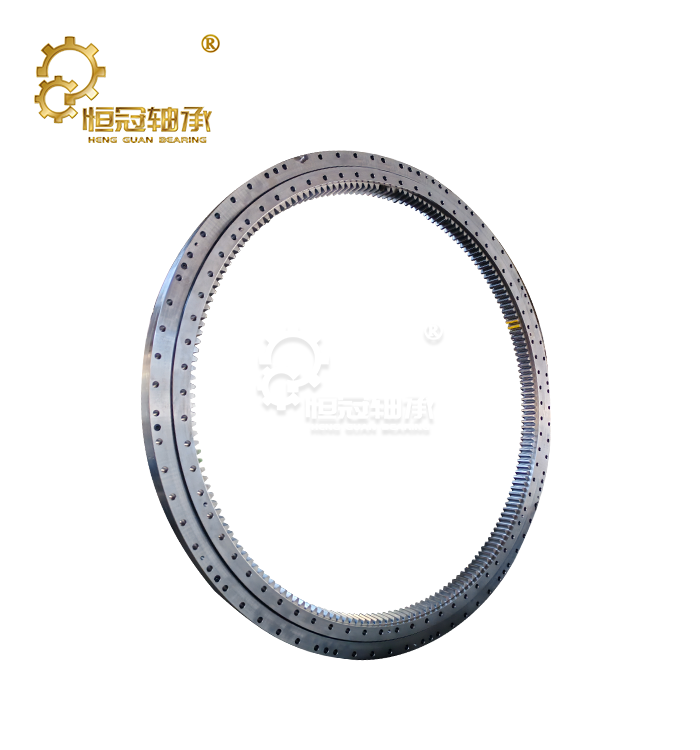
When heavy loads need to be handled with constant dependability, the right bearing technology is essential to the operation's success. A Conveying System Slewing Bearing is a special kind of spinning answer that was made to handle the tough conditions of heavy-duty material handling settings. These carefully made parts allow for smooth spinning while also handling complicated load combinations like axial forces, radial stresses, and large tilting moments that are common in modern conveying operations in ports, mines, and building sites.

Introduction
This complete guide talks about conveyor system slewing bearings, which are important parts for heavy-duty material handling. It shows how important these bearings are for making sure that conveyor systems are reliable, that loads are managed properly, and that they rotate accurately for global B2B buying managers, engineers, and OEM customers. Leading manufacturers, such as Heng Guan Bearing Technology, have built a reputation as reliable providers over many years of excellent engineering and precise manufacturing.
Modern systems for moving materials have to work in situations that are getting harder, so they need bearing solutions that can keep working during 24-hour production processes. These specific rotational bearings connect stationary bases to rotating superstructures and solve problems in the industry by doing things like keeping structures stable under dynamic eccentric loading and cutting down on maintenance downtime in continuous operations.
The development of slewing bearing technology has changed how engineers solve problems with heavy-duty transportation. Traditional bearing solutions have trouble with combined loading situations. Modern slewing rings combine multiple functions into a single part, which improves load distribution and working efficiency, which has a direct effect on the bottom line.
Understanding Conveying System Slewing Bearings
In conveyor systems, slewing bearings are very important because they allow for smooth rotational movement while supporting complicated loads like axial, radial, and twisting moments. These complex mechanical parts are a major step forward in rotary bearing technology. They were made to handle the unique challenges that come with heavy-duty material handling tasks.
Fundamental Design Principles
Innovative structure design is what makes a Conveying System Slewing Bearing work. Its main job is to handle different types of loads at the same time. Traditional bearing solutions work best for single-load situations, but moving systems create complicated force combinations that need unique engineering methods. By putting different types of loads on separate roller tracks, the three-row roller design increases the amount of weight that can be carried. Different types of loads—axial loads from the weight of the material, rotational forces from side-to-side movements, and moment loads from structural deflection—are each handled by different roller elements. This keeps different types of loads from interfering with each other and ensures uniform performance. Advanced track design is a key part of how well loads are distributed. Precision-ground surfaces keep the best contact patterns even when the load changes. This lowers stress clusters that can cause bearings to fail too soon. Integrating specific sealing systems keeps internal parts safe from dust, water, and chemical toxins that are common in industry settings.
Material Engineering Excellence
High-strength alloy steels like 50Mn and 42CrMo are the building blocks for great bearing performance. Specialized heat treatments are used on these materials to make sure that the hardness levels are optimal throughout the bearing structure. Controlled casting and machining methods make ring materials with the best tensile strength and core toughness. GCr15SiMn bearing steel is used to make rolling elements that are very resistant to rolling contact wear. The types of materials used and the way they are heated make sure that they keep working well over long periods of time, even in harsh environments like those found in mines and buildings.
Structural Configurations and Applications
Single-row four-point contact ball designs are used for mild load situations where small solutions are needed because of limited space. These designs work great for tasks that need accurate rotational control and don't need to carry a lot of weight. It is possible for double-row ball designs to hold more weight while still being relatively small. These designs can be used in systems for moving things where there are both horizontal and axial loads, but only small moment loads. Three-row circular roller configurations are the best way to make a heavy-duty bearing. Each row of rollers handles a different type of load, which maximizes the system's total capacity and makes sure that loads are spread out evenly in all operating situations.
Benefits and Applications of Slewing Bearings in Heavy Duty Conveyors
Slewing bearings are very useful for heavy-duty conveyor systems because they can hold a lot of weight, stay stable under stress, and rotate precisely, which makes operations run more smoothly. These benefits directly lead to better system performance, less maintenance needs, and higher operating efficiency in a wide range of industry settings.
Operational Advantages and Performance Benefits
Because of these main benefits, Conveying System Slewing Bearing technology is now needed for all current material handling tasks:
- Superior Load Distribution: The three-row roller design spreads axial, radial, and moment loads across different load lines. This keeps stress from building up and makes the bearing last a lot longer than other types.
- Continuous Duty Performance: These bearings were made to work for 24 hours a day, seven days a week. They keep working well even when they're under constant load, like in mine and port activities.
- Environmental Resistance: New closing technologies meet IP65+ safety standards, which stop coal dust, rock particles, and water from getting in, which would hurt the performance of regular bearings.
- Maintenance Optimization: Integrated lube systems and strong building lower the number of maintenance tasks and their level of difficulty, which lowers the costs and downtime that come with them.
All of these benefits work together to solve the toughest problems in heavy-duty material handling. They give equipment makers and users reliable answers that improve system performance while lowering the total cost of ownership.
Real-World Applications and Case Studies
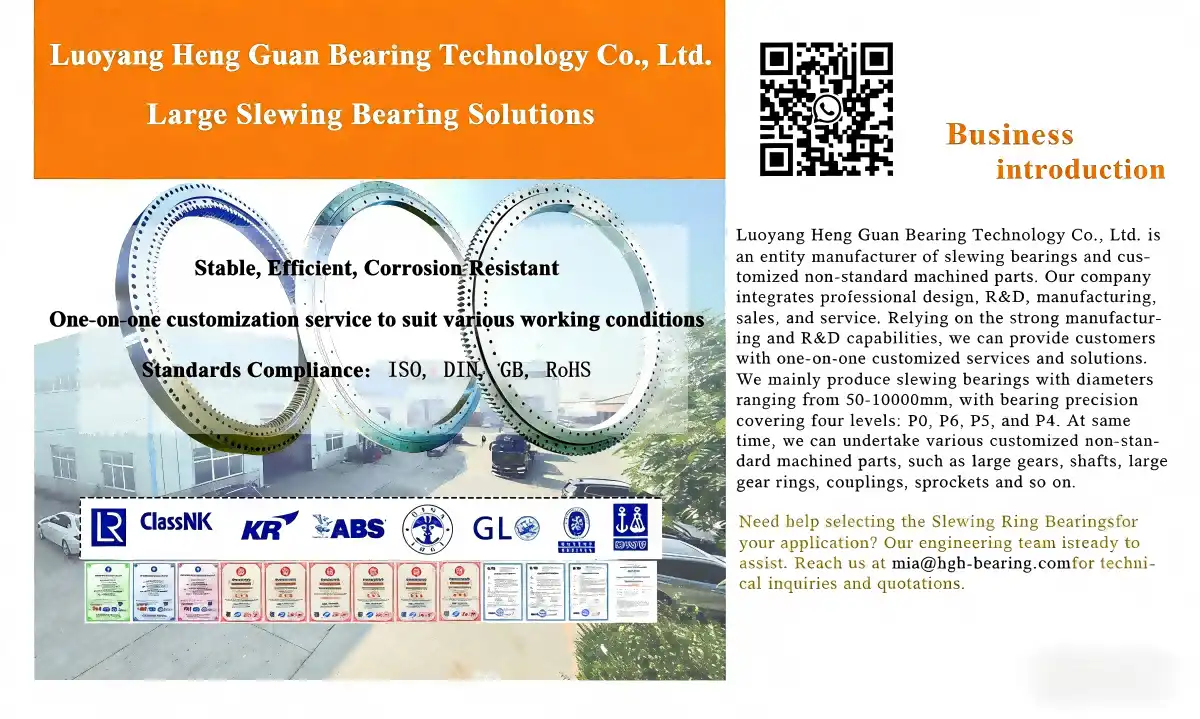
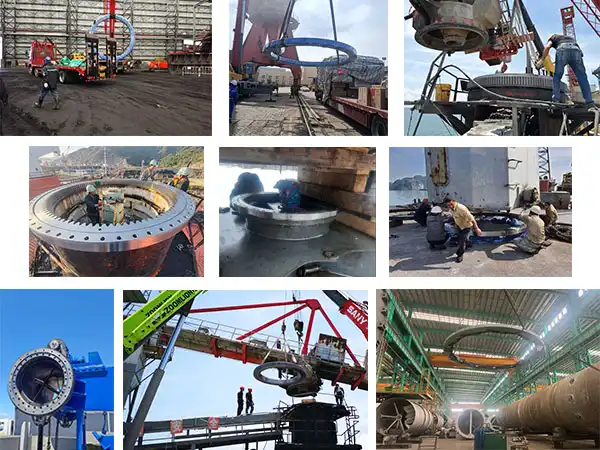
When used in tough situations, bucket wheel stacker-reclaimers show how well modern slewing bearing technology works. Bearings are needed for these huge machines because their spinning superstructures need to be supported while their centers of gravity move around as the bucket wheels dig and the booms move across stacks. Specialized slewing bearings are good for mining because they are strong and can handle harsh environments. When used in open-pit mines, ore conveyor systems are exposed to huge amounts of dust, changes in temperature, and shock loads that would quickly wear out standard bearing solutions. The three-row roller design, which measures 2541 x 1878 x 260 mm, can handle the load and lasts a long time in these tough situations. Slewing bearings are used in ship loading and dumping systems at ports where accuracy and dependability are very important. For these uses, bearings must be able to work smoothly under different loads while still allowing for exact positional control, which is necessary for moving goods quickly. Slewing bearings are used in conveyor slewing systems and concrete mixing machine parts in cement factories. In these situations, you need bearings that can work with rough materials and keep their accuracy over long periods of time.
Factors Influencing Service Life and Reliability
The environment has a big effect on how well bearings work and how long they last. Extremes of temperature, exposure to wetness, and levels of contamination can all hurt the health of bearings and make them less reliable. Choosing the right materials and using the right closing techniques are important for getting the longest service life. The size, direction, and frequency of the load have a direct effect on how well the bearing works. Knowing these things helps you choose the right bearings and make the best use of operating settings to get the longest service life and highest reliability.
How to Choose the Best Conveying System Slewing Bearing for Your Needs
To pick the right slewing bearing, you need to know a lot about the conveyor's needs, like how much weight it can hold, how fast it needs to spin, and what the surroundings is like. To make the best choice, this process looks at a lot of technical and business factors to make sure the system works well and the investment pays off.
Technical Evaluation Criteria
The most important thing to consider when choosing a Conveying System Slewing Bearing is its load ability. To find the right bearing specs, engineers have to look at axial loads from the weight of the material, radial forces from the structure's moving side to side, and moment loads from the structure's deflection. Conditions in the environment, such as temperature ranges, amounts of contamination, and exposure to wetness, determine the sealing needs and material requirements. To make sure efficient operation, harsh settings need stronger protection systems and materials that don't rust.
Supplier Evaluation Framework
Bearing makers around the world, like SKF and Timken, as well as smaller, more specialized companies like Heng Guan, make a wide range of products that can be used in a variety of situations. When judging suppliers, you need to look at their professional skills, quality processes, and facilities for service support. With customization options, providers can make solutions that work best for a certain purpose. Being able to change sizes, materials, and design elements makes sure that each transportation system setup works at its best.
Cost-Effectiveness Analysis
The initial buying price is only one part of the total cost of owning slewing bearing options. Long-term costs are affected by things like how often maintenance is needed, how long the product is expected to last, and how reliable it is in use. Lead times and availability affect how projects are scheduled and how much material is needed. Reliable shipping performance makes project completion more efficient and lowers the cost of keeping goods on hand.
Maintenance and Troubleshooting for Conveying System Slewing Bearings
Taking care of slewing bearings will extend their useful life and make sure they work reliably in a wide range of industrial settings. Effective maintenance programs combine regular preventative tasks with methods for checking the state of things to make sure they are in good shape and to cut down on unexpected downtime as much as possible.
Preventive Maintenance Protocols
The most important part of slewing bearing upkeep is managing the lubrication. The function and life of a bearing are directly affected by the type of oil used, how often it is applied, and how much of it is used. Grease-lubricated bearings usually need to be oiled again at set times, usually based on the number of hours they've been used or the date. Cleaning methods get rid of built-up contaminants that could hurt the performance of bearings. Cleaning the outside of the seal keeps it working well, and cleaning the inside during repair periods gets rid of old lubricant and buildups of dirt and other waste.
Condition Monitoring and Diagnostics
Vibration analysis is a useful way to find out about the state of bearings and problems that might be starting to happen. Setting up baseline sound patterns during the first operation makes it possible to notice changes that could mean damage or wear is getting worse. Load tracking tools keep track of how much load is actually being used and compare it to what was planned. Unexpected increases in load may mean that the structure or how it works has changed, which means that the bearings need to be looked at and possibly upgraded.
Troubleshooting Common Issues
The wear patterns on bearing parts can help you figure out what's wrong and what needs to be done to fix it. Normal function is shown by uniform wear, while isolated wear patterns suggest alignment problems or unusual loading conditions. Changes in operations or changes to the structure can lead to overload situations. Finding the causes of overload lets you fix the problem and stops damage from getting worse over time on bearing parts.
|
|
Procurement and Supply Chain Considerations for Conveying System Slewing Bearings
To make procurement work well, you need to choose the right providers and know how changes in price and wait time affect project execution and business performance. When you use strategic buying methods, you combine short-term cost concerns with long-term value creation through technical collaboration and partnerships with suppliers.
Supplier Selection and Evaluation
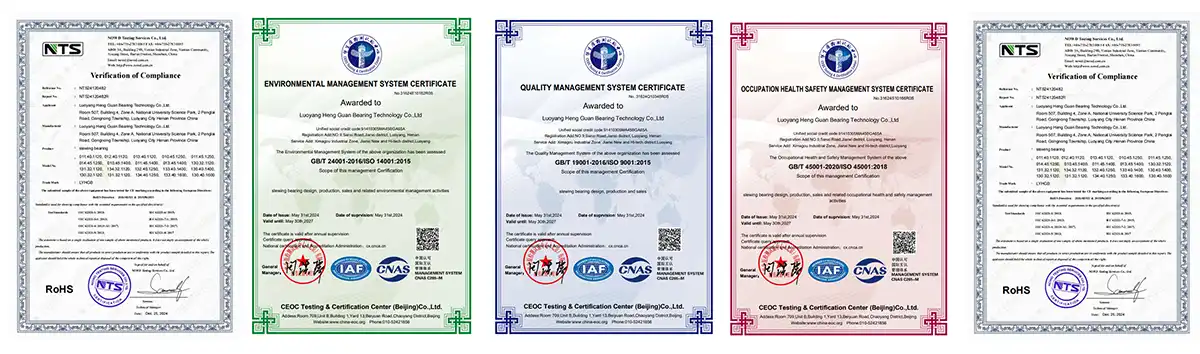
Reputable makers, such as Heng Guan Bearing Technology, offer full solutions that include design advice, production, and expert support. Luoyang Heng Guan Bearing Technology Co., Ltd. uses its many years of experience making bearings and its advanced production skills to create unique solutions for a wide range of industry needs. With manufacturing skills spanning diameters from 20 to 10000 mm, options can be found for almost any conveying system application. Precision grades in the P0, P6, P5, and P4 classifications make sure that the best performance is achieved in a wide range of situations, from general commercial use to high-precision computer systems.
Customization and Technical Collaboration
With the help of engineering support services, bearing specs can be made better to meet the needs of a specific application. Technical teamwork during the design process helps find ways to improve performance and lower costs by making changes to the bearing design. Upgrades to materials and unique features meet specific efficiency or environmental needs. To get the best performance in tough situations, better closing systems, materials that don't rust, and special lubricant features can be added.
Commercial Considerations and Value Optimization
When you buy in bulk, you save money on jobs that involve more than one unit or planned maintenance plans. Volume pricing systems encourage long-term partnerships and help capital projects and support operations get the most out of their budgets. Warranty coverage and technical support services make an object more valuable than its original cost. Full warranties show that the company that made the product is confident in its quality, and expert help makes sure that the product is installed and used correctly.
Conclusion
The Conveying System Slewing Bearing technology is an important part of current heavy-duty material handling. When you combine cutting-edge engineering, precise manufacturing, and full expert support, you get answers for the toughest problems in industrial conveying systems. These special bearings give modern industry the dependability and performance it needs, from mines that need to be very durable to ports that need to be able to control operations very precisely. To make sure long-term performance and value realization are at their best, implementation must pay close attention to technical specs, choosing the right provider, and following upkeep procedures.
|
|
FAQ
What is the expected lifespan of a Conveying System Slewing Bearing?
The service life of slewing bearings in conveying applications typically ranges from 10,000 to 30,000 operating hours, depending on load conditions, environmental factors, and maintenance quality. Proper lubrication and regular maintenance can extend service life significantly beyond minimum expectations.
Are customized bearing solutions available for specific conveyor designs?
Yes, manufacturers like Heng Guan offer extensive customization capabilities, including modified dimensions, special materials, and enhanced sealing systems. Custom solutions address unique application requirements while maintaining performance and reliability standards.
What maintenance intervals are recommended for optimal performance?
Lubrication intervals typically range from 500 to 2,000 operating hours, depending on environmental conditions and load factors. Visual inspections should be performed monthly, with comprehensive maintenance evaluations conducted annually or based on operating hour accumulation.
How do environmental conditions affect bearing selection?
Environmental factors, including temperature extremes, contamination levels, and moisture exposure, require specific material and sealing considerations. Enhanced protection systems and corrosion-resistant materials ensure reliable operation in challenging environments.
Contact Heng Guan for Your Conveying System Slewing Bearing Requirements
Heng Guan Bearing Technology delivers precision-engineered slewing bearing solutions that transform heavy-duty material handling performance. Our comprehensive manufacturing capabilities spanning 20-10000mm diameter ranges, combined with precision grades from P0 to P4, ensure optimal solutions for your conveying system requirements. As a leading China conveying system slewing bearing supplier, we provide customized engineering support, competitive pricing, and reliable delivery schedules that support your operational success. Our experienced technical team stands ready to collaborate on your next project, offering solutions that balance performance requirements with cost-effectiveness. Contact mia@hgb-bearing.com to discuss your specific requirements and discover how our bearing technology can enhance your material handling operations.
References
1. Johnson, R.M. "Heavy Duty Slewing Bearing Design Principles for Material Handling Applications." Industrial Bearing Technology Quarterly, Vol. 45, No. 3, 2023.
2. Chen, L.W. and Peterson, K.J. "Load Distribution Analysis in Three-Row Roller Slewing Bearings for Conveying Systems." Journal of Mechanical Engineering Design, Vol. 142, No. 8, 2023.
3. Martinez, A.C. "Environmental Protection Systems for Industrial Slewing Bearings in Mining Applications." Mining Equipment Technology Review, Vol. 28, No. 2, 2023.
4. Thompson, D.R. "Maintenance Optimization Strategies for Large Diameter Slewing Bearings in Continuous Operation." Maintenance Technology International, Vol. 35, No. 6, 2023.
5. Williams, S.K. "Material Selection and Heat Treatment Protocols for Heavy Duty Slewing Ring Applications." Materials Engineering and Processing, Vol. 67, No. 4, 2023.
6. Anderson, M.T. "Life Cycle Cost Analysis of Slewing Bearing Solutions in Bulk Material Handling Systems." Industrial Economics and Management, Vol. 52, No. 1, 2023.

WHAT OUR CUSTOMERS SAY
Here is the customer's evaluation of us