



How do I source replacement bearings for a CT system?
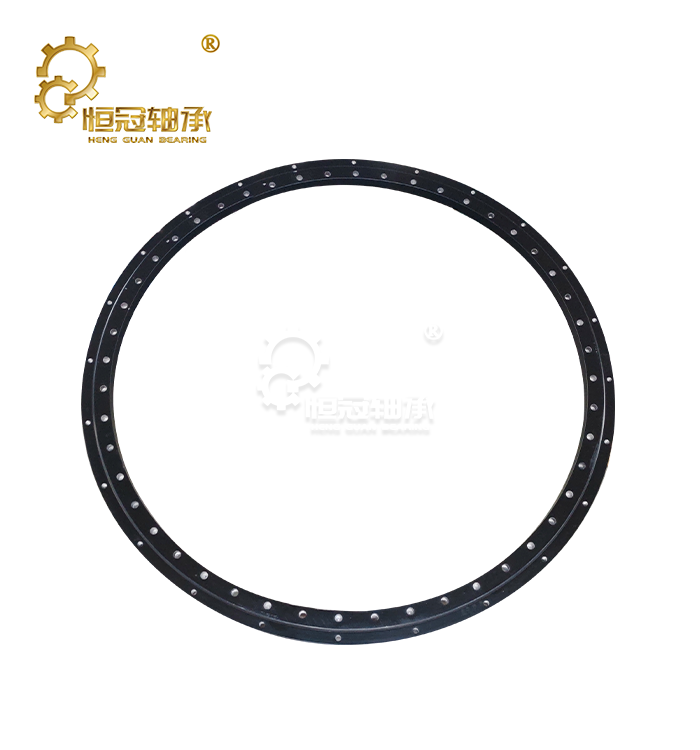
Sourcing a replacement bearing for a computed tomography (CT) system is not the same as purchasing a standard industrial bearing. The replacement must match the equipment's dimensional requirements, load conditions, rotational characteristics, installation arrangement, and maintenance specifications. For this reason, buyers should evaluate more than the bearing's outside diameter or quoted price. The supplier's manufacturing capability, inspection documentation, material traceability, and technical support can be just as important as the component itself. CT bearings are commonly used as precision rotary support components in CT scanning equipment. Their job is to support and guide the rotating assembly while maintaining the required mechanical accuracy during operation. A suitable replacement therefore needs to provide stable rotation, appropriate load capacity, controlled runout, and reliable dimensional accuracy. For equipment managers, maintenance companies, distributors, and OEM purchasing teams, the safest approach is to begin with the original bearing information and equipment requirements. The bearing number, drawing, dimensions, load requirements, mounting arrangement, accuracy requirements, and operating conditions should be confirmed before comparing suppliers. This approach reduces the risk of receiving a component that appears similar but cannot be installed or operated correctly.
What Information Should You Confirm Before Ordering a Replacement CT Bearing?
Start With the Original Bearing Identification
Any replacement project should begin with the original bearing. If the component has a part number, model name, drawing number, or manufacturer reference, pass this information to possible vendors.
But relying solely on a part number may not be adequate, particularly if the original component is obsolete or otherwise unavailable. Buyers should also make a note of the physical and technical qualities of the present bearing.
The information below is useful:
- Outside diameter, inner dia
- Total height of bearing
- Number of mounting holes and details
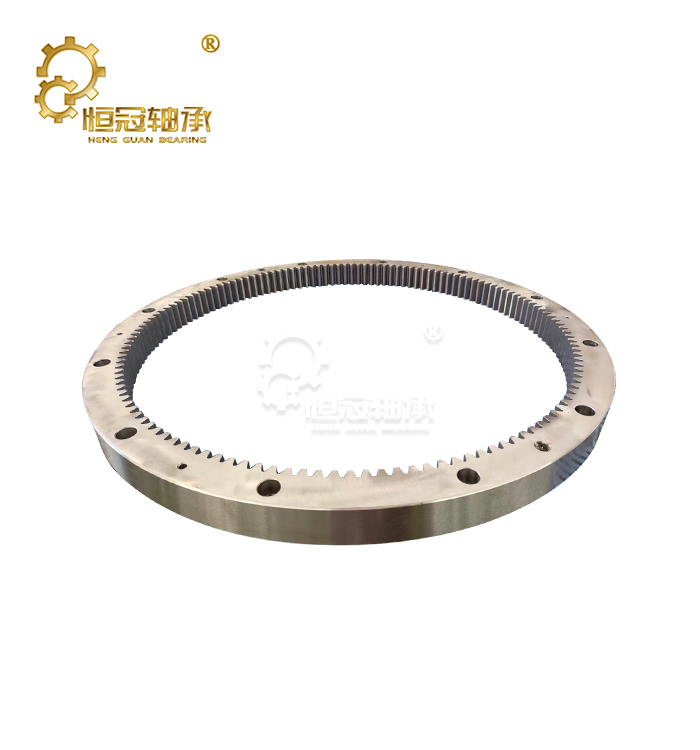
- Gear arrangement, if applicable
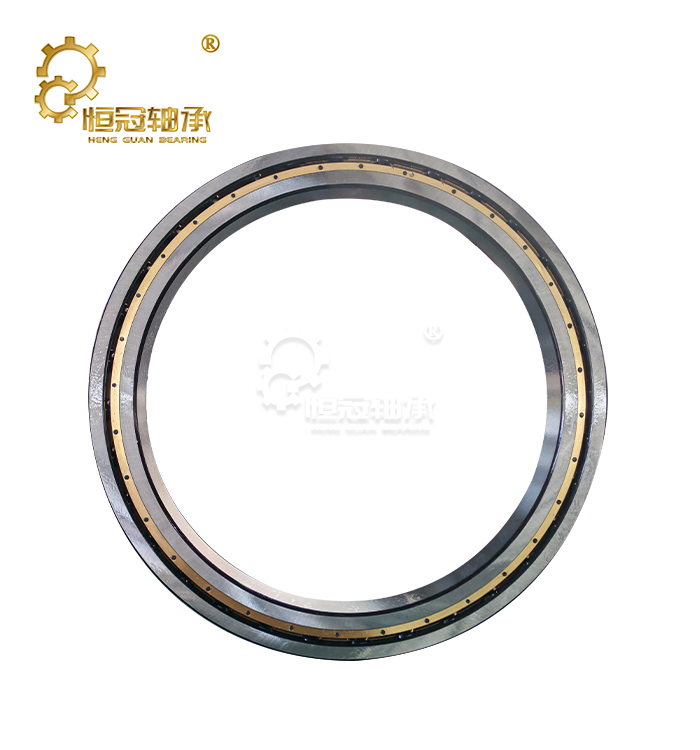
- Rolling element or ball arrangement
- Accuracy specifications
- Seal arrangement
- Lubrication needs
- Spin frequency
- Axial and radial loads
- Orientation of installation
This information enables a supplier to decide whether an existing product can be used or if a customized replacement would be better suited.
Check Compatibility With the CT System
But dimensional compatibility is only one phase of the selecting process. The replacement bearing must also be compatible with the surrounding mechanical framework.
Before placing an order, purchasers should evaluate the available installation space and the relationship between the bearing, mounting structure, drive system, and rotating assembly. A bearing with the proper basic dimensions may not be adequate if the mounting holes, gear arrangement, clearance, or load capacity varies from the original design.
This is particularly significant for older CT systems. Equipment can be in use long after a specific model from the original bearing supplier has been discontinued. In such circumstances, the replacement manufacturer may have to look at the original drawing and produce a comparable component rather than just giving a bearing of identical dimensions.
Which Technical Characteristics Matter When Comparing CT Bearings?
Bearing Accuracy and Rotational Runout
The rotational precision of CT equipment is vital since the scanner’s rotating assembly needs to be run in a controlled, repeatable manner. Too much runout or mechanical instability is an issue for the expected working conditions of the device.
When comparing vendors, customers should consequently ask about how the precision of bearings is regulated and checked. Request the appropriate grade of accuracy, dimensions tolerances, and inspection data, rather than accepting a broad assertion such as “high precision.”
The needed precision should be calculated always to the original equipment specifications. Some applications may have P4 or P5 precision, but buyers should not assume that any particular grade is automatically suited for every CT system.
Load Capacity and Rigidity
The CT bearing must support the rotating assembly and resist the forces generated during operation. Depending upon the equipment design, the bearing may be exposed to axial, radial, and moment loads.
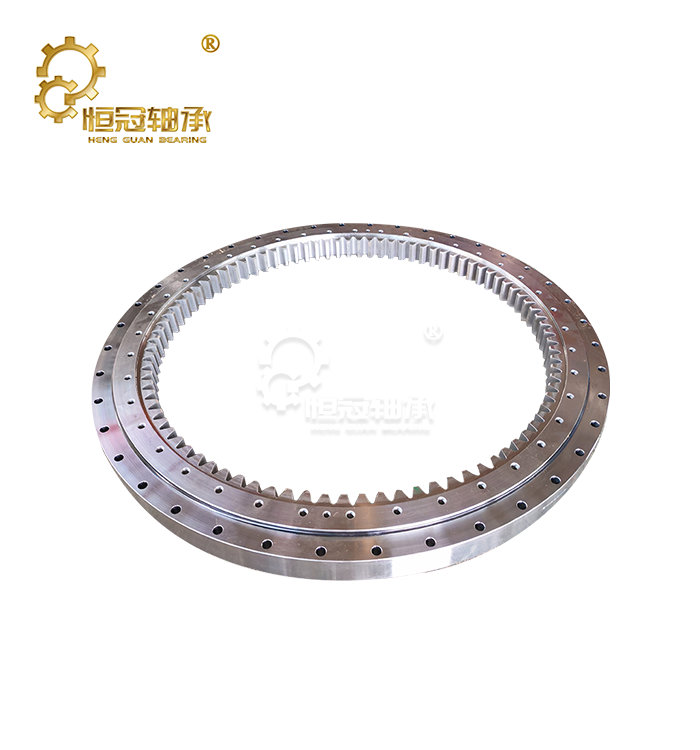
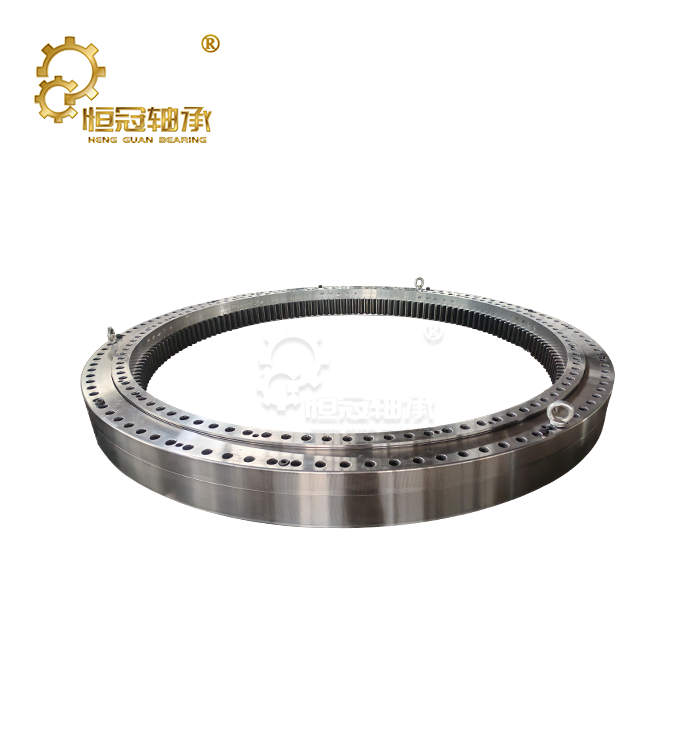
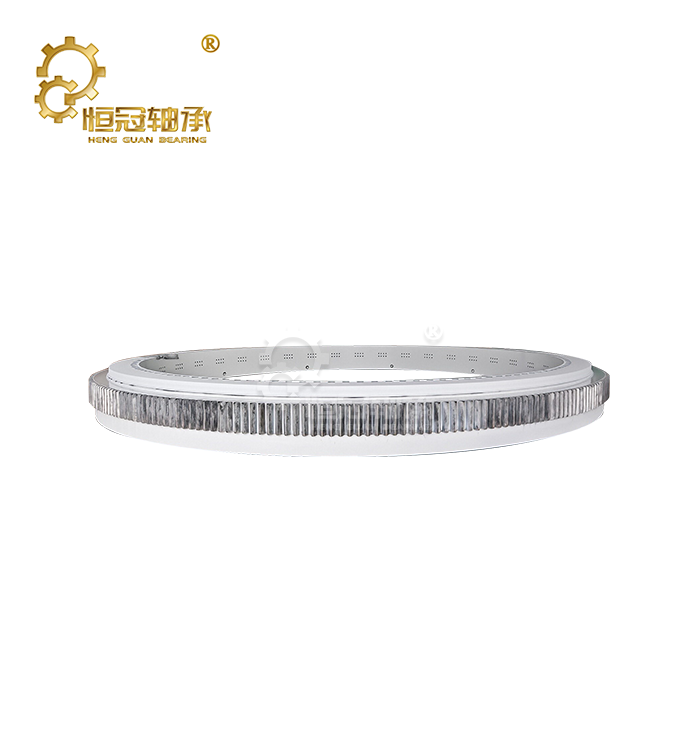
The four-point contact ball slewing bearing is one design for applications requiring combined load support. However, its applicability is dependent on the particular CT system and operational conditions.
Suppliers should be able to discuss significant technical factors, not a size from the catalogue. Buyers can ask for information on static load capacity, dynamic load capacity, allowable operating circumstances, and structural configuration.
This is especially critical in replacing a bearing in an older machine. Just because the replacement has similar dimensions to the original component doesn’t mean it’s the right one.
Material and Heat Treatment
The selection of the material has a direct consequence on the load-carrying capacity, durability, and dimensional stability. Based on the design, producers can utilize bearing steels or alloy steels for different parts of the bearing assembly.
The supplier must be able to identify the material of the rings and rolling elements and provide suitable material documentation as necessary.
Heat treatment is also crucial. The desired combination of hardness, strength, and toughness can be obtained by proper hardening and tempering operations. The raceway and ring treatment of bigger slewing bearing parts must be monitored closely, as excessive variance can compromise service performance.
Procurement teams should not accept a generic statement such as “high-strength steel” for CT bearings but rather require the particular material grade and necessary inspection evidence.
How Can You Evaluate a Replacement Bearing Supplier?
Review Manufacturing and Inspection Capability
It is important to begin by considering the manufacturing competence of the supplier and not just the pricing. A good supplier should be able to describe how the bearing is created and tested.
Questions helpful in a precision CT bearing include:
- What machines are used for machining?
- What is done to raceways?
- How do you check dimensional accuracy?
- How runout is measured
- How do you keep track of supplies from one run to the next?
- What heat treatment procedure do you use?
- What inspection records are included with the order?
The responses can show whether the supplier has the engineering infrastructure for a precision replacement part.
Tighter manufacturing control can be achieved with CNC machining centers, precision grinding machines, coordinate measuring equipment, and specialized bearing inspection tools. The selection of the equipment required is based on the bearing design and production process.
Do Not Treat ISO Certification as the Only Quality Evidence
An ISO 9001 certification can be a helpful part of the evaluation of a supplier since it demonstrates that the organization has a documented quality management system. However, certification should not substitute product-specific verification.
Buyers should also ask for:
- Product drawings
- Material Certification
- Dimensional Inspection Reports
- Heat treatment or hardness data, as relevant
- Run-out inspection results
- Traceability data of products
- Packaging specs
- Installation instructions
The documentation is more direct proof for the fact that the delivered bearing is in accordance with the stipulated technical specifications.
Ask About Engineering Support
The ability of a supplier to offer engineering assistance is particularly useful when the original bearing is antiquated or when drawings are missing.
For instance, a maintenance crew might have an old bearing but no current technical paperwork. The good manufacturer can check dimensions, pictures, original part numbers, and any available drawings and determine what information needs to be collected.
This type of technical communication decreases the chance of ordering a component with inadequate information.
How Should You Compare the Cost of Different Replacement Bearings?
Look Beyond the Initial Purchase Price
The lowest quotation is not necessarily the lowest-cost solution. For replacement components used in critical equipment, the total cost may include installation, shipping, inspection, downtime, maintenance, and future replacement requirements.
A cheaper bearing may become more expensive if it requires additional fitting work or causes premature maintenance.
When comparing quotations, buyers should therefore review:
- Unit price
- Tooling or customization costs
- Minimum order quantity
- Lead time
- Shipping cost
- Packaging
- Inspection documentation
- Warranty conditions
- Technical support
Comparing these factors provides a more realistic view of the total procurement cost.
Consider Custom Manufacturing for Obsolete Components
Custom production can be a practical option when an original CT bearing is no longer available.
A custom replacement may require the supplier to reproduce the original dimensions while adapting manufacturing methods to currently available materials and production equipment.
Before approving production, the buyer should review the technical drawing carefully. Critical dimensions, tolerances, mounting holes, raceway geometry, gear details, and other interface features should be confirmed before manufacturing begins.
For small quantities, tooling and engineering costs may have a greater influence on the unit price. For repeated orders, however, custom manufacturing of CT bearings can provide a stable source of replacement components for equipment with a long service life.
What Documentation Should You Request With the Replacement Bearing?
Technical Documents
Documentation helps maintenance teams verify that the delivered component corresponds to the approved specification.
Depending on the project requirements, buyers can request:
- Product drawing
- Technical data sheet
- Material certificate
- Inspection report
- Dimensional report
- Installation instructions
- Lubrication recommendations
- Packaging information
The exact documentation package should be agreed upon before production rather than requested only after shipment.
Traceability and Batch Information
Traceability is particularly useful for organizations managing multiple pieces of equipment. Batch information can connect a delivered component to its manufacturing and inspection records.
If a quality issue occurs later, traceability helps the buyer identify the affected production batch and communicate efficiently with the supplier.
A supplier should be able to explain how product identification is maintained during manufacturing, inspection, storage, and shipment.
How Should Replacement CT Bearings Be Shipped and Stored?
Protect the Bearing During Transportation
Large precision bearings require suitable packaging because contamination, moisture, impact, and improper handling can affect the component before installation.
Packaging should protect machined surfaces and prevent unnecessary movement inside the shipping container. Depending on the product and transportation method, corrosion protection may also be required.
For international orders, buyers should confirm:
- Packaging dimensions
- Gross weight
- Corrosion protection
- Lifting requirements
- Shipping method
- Export documentation
- Expected lead time
This is especially important for large-diameter slewing bearings because their size and weight can make transportation more complicated than conventional bearings.
Store Components According to Supplier Instructions
A replacement bearing should remain protected until it is ready for installation. Storage conditions should follow the manufacturer's recommendations concerning humidity, temperature, packaging integrity, and lubrication.
Opening the package unnecessarily can expose precision surfaces to contamination or moisture.
Maintenance teams should also avoid placing heavy objects on bearing packaging or moving large bearings without suitable lifting equipment.
What Should You Check During Installation and Maintenance?
Verify the Mounting Interface
Before installation, maintenance personnel should compare the replacement bearing with the approved drawing. Mounting holes, dimensions, orientation, and interface surfaces should be checked before the component is fitted.
The mounting structure should also be inspected for contamination, deformation, or damage. Installing a new bearing onto an unsuitable mounting surface can create problems even when the bearing itself meets the required specifications.
Follow Lubrication and Adjustment Requirements
Lubrication requirements vary according to bearing design, operating conditions, and manufacturer recommendations. Using the wrong lubricant or applying an unsuitable quantity may affect bearing temperature, friction, and service life.
For this reason, maintenance personnel should follow the supplier's specified lubricant type, lubrication points, quantity, and interval.
Where the bearing design requires adjustment or preload control, the procedure should also follow the approved technical documentation. Improper adjustment can increase friction or allow excessive movement.
Conclusion
Sourcing replacement CT bearings requires more than finding a component with similar dimensions. Buyers should first identify the original bearing and confirm critical specifications such as dimensions, mounting configuration, load requirements, accuracy, runout, material, and lubrication requirements. These details provide the technical foundation for evaluating potential replacements.
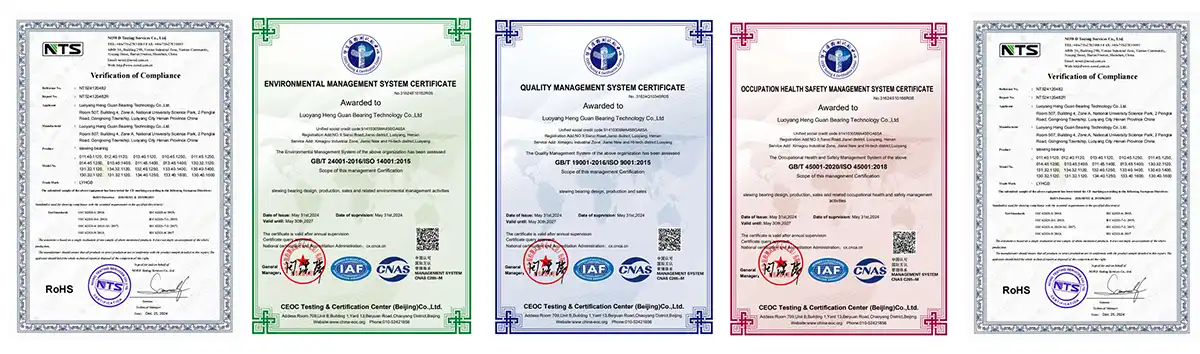
Supplier qualification is equally important. A capable manufacturer should be able to provide clear technical documentation, material traceability, inspection records, and engineering support. ISO 9001 certification can indicate a structured quality management system, but product-specific inspection and technical evidence should also be reviewed before an order is approved.
Cost should be evaluated through total cost of ownership rather than unit price alone. Lead time, customization, packaging, shipping, installation support, maintenance requirements, and future spare-parts availability can all influence the actual value of a replacement bearing.
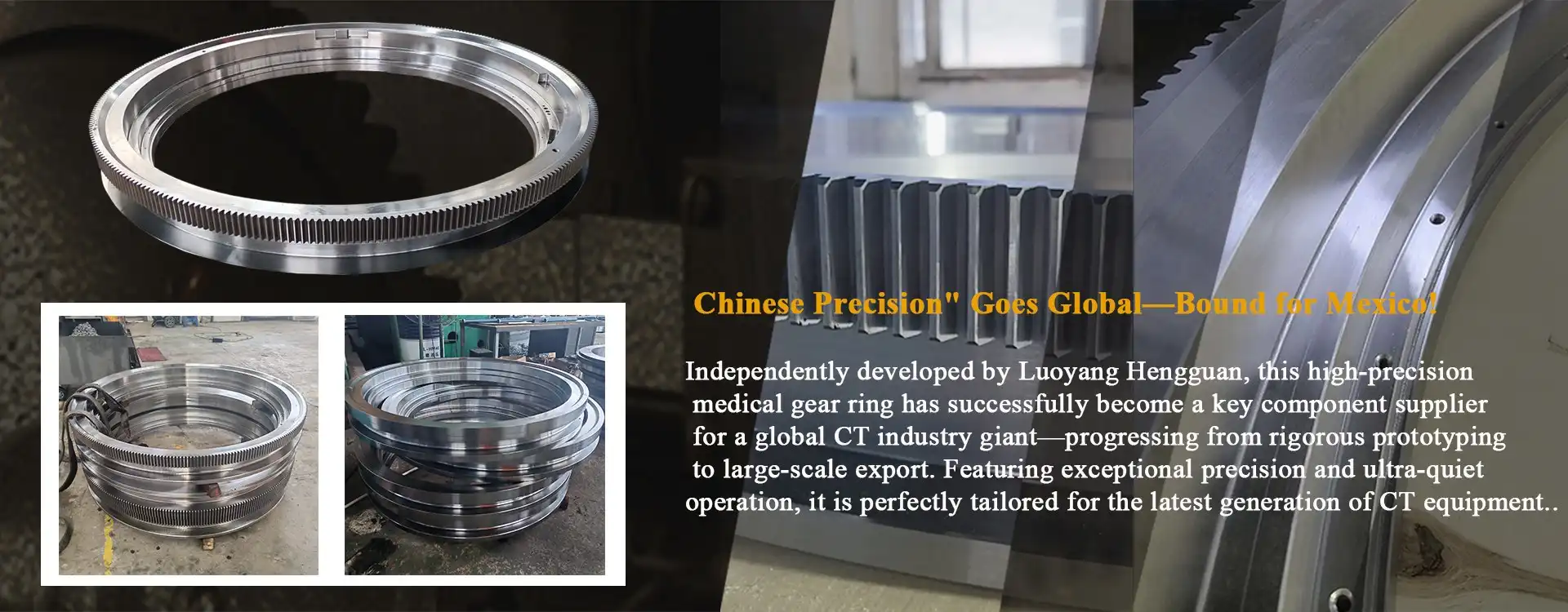
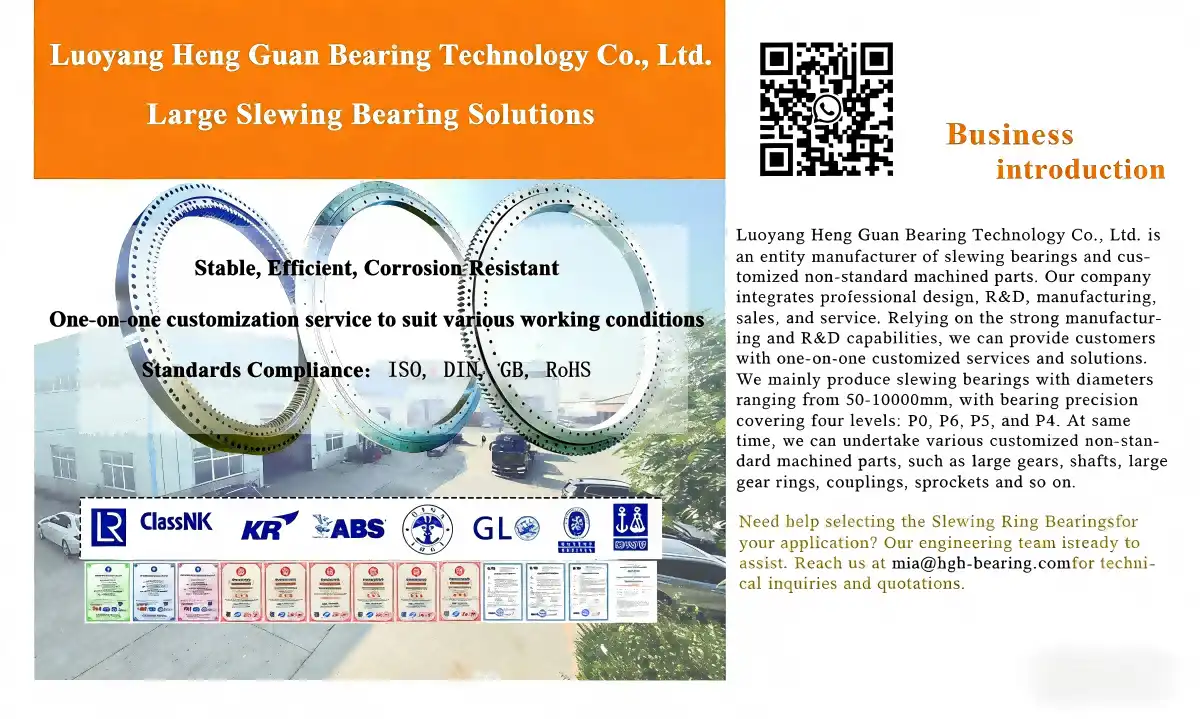
For equipment managers and purchasing teams dealing with obsolete or customized CT components, Luoyang Heng Guan Bearing Technology Co., Ltd. provides precision bearing solutions for CT applications. The company combines bearing manufacturing experience with CNC machining and precision grinding capabilities and supports customers with technical consultation and customized engineering solutions. Its ISO9001-certified production system provides a structured basis for quality management, while its experience in specialized slewing bearings supports projects requiring application-specific dimensions and configurations.
When requesting a quotation, buyers can provide the original bearing model, technical drawing, equipment information, dimensional measurements, photographs, and operating requirements. The more complete the technical information, the easier it is for the supplier to evaluate compatibility and propose an appropriate replacement.
FAQ
1. How long should CT scanner bearings typically last?
Service life depends on how often something is used, how well it is maintained, and the quality of the parts used. When properly maintained, medical-grade slewing bearings designed for CT uses can usually last between 40,000 and 60,000 hours of use. Facilities that do a lot of scans and use their equipment for long periods of time every day may see shorter intervals, while equipment that is used moderately often lasts longer than what the maker predicted. Regular greasing, keeping things clean, and regular inspections all have a big effect on how long something lasts. When parts fail too soon, it's usually because they weren't properly maintained, installed, or matched up with the specifications, not because of mistakes in the making process.
2. Can I use industrial bearings instead of medical-grade components?
Industrial bearings don't have the tight specs and good performance that are needed for diagnostic images. For a CT scanner to work, the spinning must be very accurate, there must be very little vibration transfer, and the dimensions must be very stable. These requirements are met by using special manufacturing methods. Industrial parts may fit onto scanner units literally, but using them lowers the quality of the images, makes noise levels higher, and raises the risk of equipment breaking down too soon. When you consider that using lower-quality parts will hurt performance, cost more to maintain, and even cause damage to your equipment, the cost savings aren't worth it.
3. What documentation should suppliers provide with bearing shipments?
Manufacturers who are doing business legally include all the paperwork needed to track the products and make sure they are of good quality. Material certifications confirm the alloy composition and heat treatment specs. Dimension reports show that the product meets the tolerance requirements, and following the quality of each manufacturing batch is possible. ISO certificates prove that the process is consistent, and test records list performance qualities such as runout measurements and load capacity checks. This paperwork makes sure that the parts are real and helps keep records of equipment care for legal reasons and guarantee claims.
Partner With Heng Guan for Reliable CT Bearing Solutions
Medical imaging facilities worldwide trust Luoyang Heng Guan Bearing Technology Co., Ltd. as their CT bearings supplier for precision components that deliver exceptional performance and reliability. Our specialized four-point contact ball slewing bearings combine advanced materials engineering with rigorous quality control, ensuring your diagnostic equipment operates at peak efficiency. With over twenty years of manufacturing expertise concentrated in China's premier bearing production center, we understand the exacting requirements of medical imaging applications. Our ISO9001-certified production facility employs advanced CNC machining and precision grinding equipment operated by skilled technicians dedicated to quality excellence. We help healthcare centers in more than fifty countries by giving them technical advice, unique engineering solutions, and quick support throughout the lifecycle of a component. Our engineering team works closely with your repair staff to make sure that you get standard setups or custom designs that are made to fit the specific needs of your scanner.Get in touch with our medical equipment experts at mia@hgb-bearing.com to talk about your CT scanner bearing needs. We offer clear technical specs, reasonable prices for both single parts and large orders, and dependable foreign shipping to keep your equipment running as much as possible. Find out how working with an expert CT Bearings manufacturer can improve your business's performance and lower its total cost of ownership.
References
1. Anderson, M.K., & Thompson, R.L. (2021). Precision Bearing Technology in Medical Imaging Equipment. Journal of Medical Engineering Applications, 15(3), 112-128.
2. Chen, W., & Martinez, J.P. (2020). Slewing Ring Design Principles for High-Speed Rotational Systems. International Bearing Technology Review, 44(2), 89-104.
3. Healthcare Equipment Maintenance Association. (2022). Best Practices for CT Scanner Component Procurement and Maintenance. Annual Industry Standards Report.
4. Nakamura, H., & Schmidt, P.D. (2019). Material Science Advances in Medical Grade Bearing Manufacturing. Advanced Materials in Healthcare Applications, 8(4), 234-251.
5. Petersen, K.L., et al. (2023). Total Cost of Ownership Analysis for Medical Imaging Equipment Components. Healthcare Operations Management Quarterly, 17(1), 45-62.
6. Williams, S.R., & Zhang, Q. (2020). Quality Assurance Protocols for Precision Bearing Procurement in Diagnostic Imaging. Medical Equipment Journal, 33(6), 178-195.

WHAT OUR CUSTOMERS SAY
Here is the customer's evaluation of us
_1776668700508.webp)