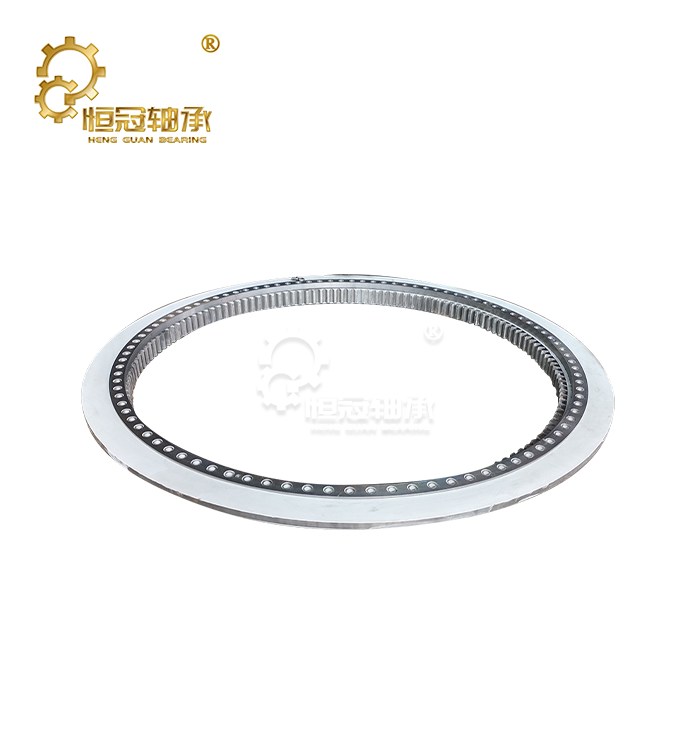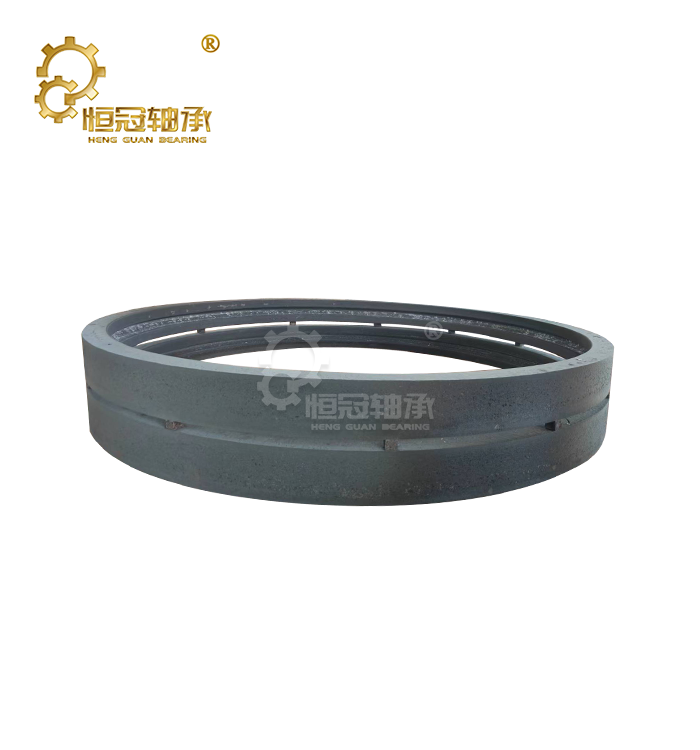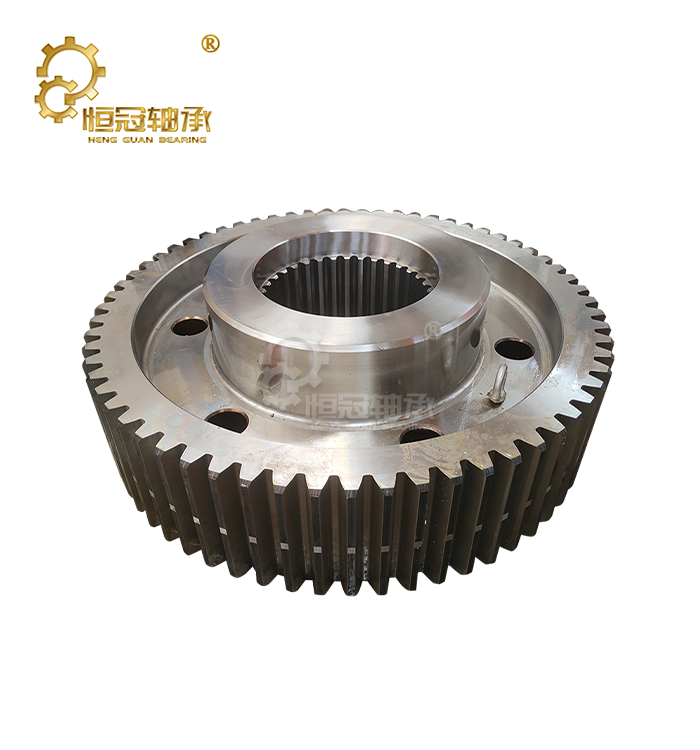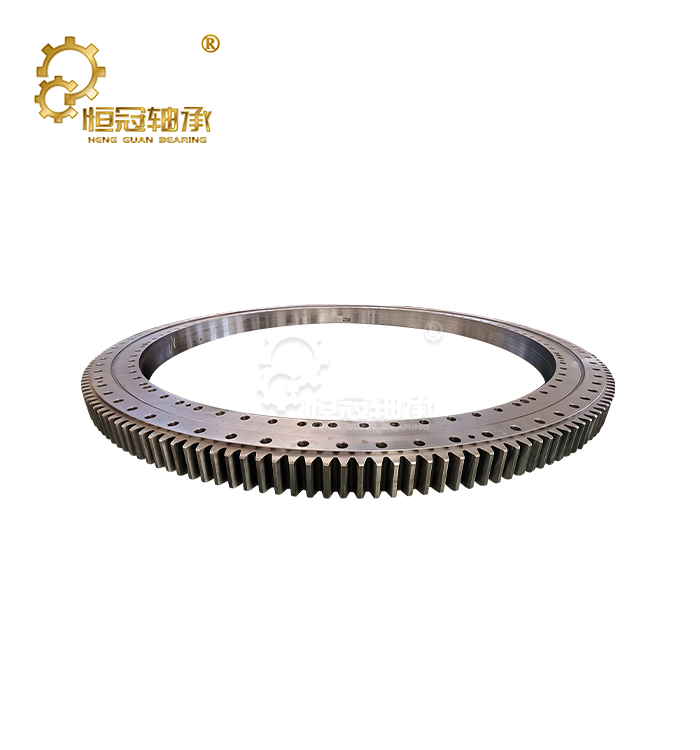




What Are the Advantages of Cross Roller Bearings?
When selecting precision components for robotics, machine tools, medical equipment, and heavy industrial systems, bearing performance directly affects equipment accuracy, stability, and service life. Understanding the advantages of a Cross Roller Ring Bearing helps engineers and procurement teams choose a solution that can handle complex loads while maintaining compact equipment designs.
Cross roller bearings differ from traditional bearing systems that may require numerous components to support different load directions. Cross roller bearings utilise cylindrical rollers arranged in a crossed pattern. This special structure allows one bearing unit to carry radial load, axial load and moment load at the same time. This enables equipment designers to increase the stiffness, improve the positioning precision and reduce the installation space.
For manufacturers that need reliable rotary motion solutions, selecting the proper bearing design is not simply a technical choice; it is an investment in the long-term functioning of the equipment. Load capacity, accuracy grade, working environment and manufacturing competence of the supplier will affect the ultimate performance of the bearing system.
How Does a Cross Roller Ring Bearing Work?
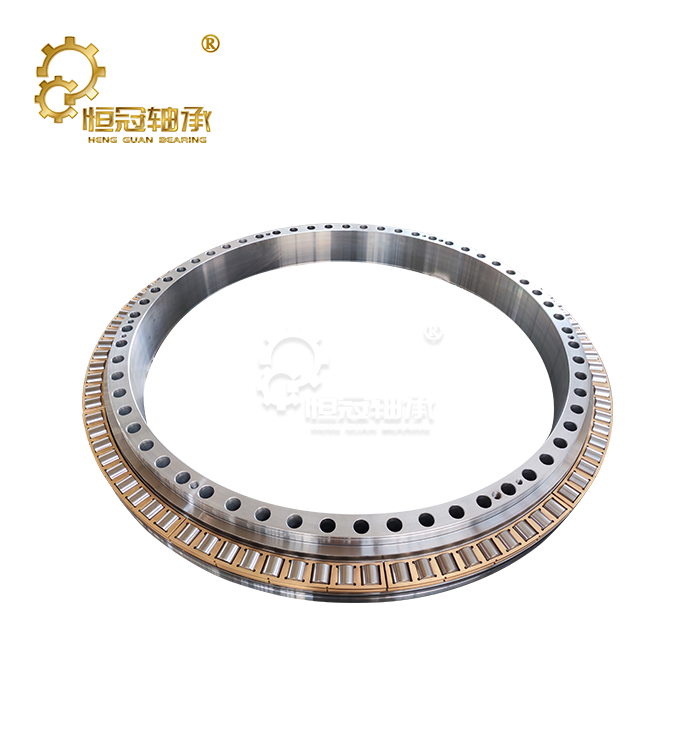
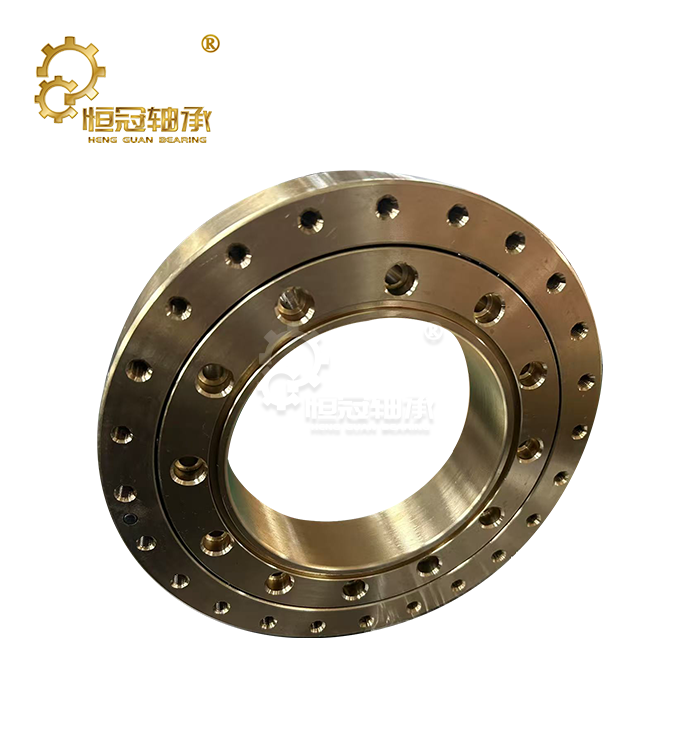
A cross roller bearing is a precise rotary bearing that uses cylindrical rollers in specifically constructed raceways at 90-degree angles to each other. This crossed roller configuration offers the possibility to load each roller from different directions, e.g., radial forces, axial forces, and tilting moments.
Conventional bearing solutions frequently need combinations of angular contact ball bearings or several bearing sets to attain similar load handling capability. By contrast, a cross roller ring bearing merges these functions into one unit with its small internal construction.
The rollers have a broader contact area for load distribution, as they are in line contact with the raceways rather than point contact. This design reduces local stresses and helps to increase resistance to deformation under changing loads or external forces on the equipment.
Usually high-grade cross roller bearings are produced utilizing hardened bearing steels such as GCr15 or similar alloys. The bearing rings may be formed of alloy steels that are designed to give great strength, wear resistance, and dimensional stability over the long term.
These bearings are utilized extensively in situations where load support and accurate positioning are important because of their precise structure.
What Structural Features Make Cross Roller Bearings Different?
Crossed Roller Arrangement for Multidirectional Load Support
The most significant aspect of cross roller bearings is the placement of the rollers alternately in the raceway system.
The cylindrical rollers are at right angles to the roller adjacent to it. This arrangement allows for simultaneous support of distinct force directions by different rollers.
Example:
- Radial forces are usually supported by vertical rollers.
- Mainly horizontal rollers are used to support axial forces.
- The combined roller contact may accommodate moment loads.
This design allows one bearing to replace numerous traditional bearing configurations in various applications. For equipment manufacturers it implies fewer parts, easier assembly, and less space.
Integrated Design Improves Rigidity
Rigidity is a key indicator of the performance of precision machines. If the bearings are exposed to external forces, the stiffness is not enough to induce deflection, vibration, and positioning problems.
A cross roller ring bearing is very stiff because the rollers make stable line contact with the raceways. During manufacture the preload between rollers and raceways can also be regulated to reduce internal clearance.
This feature is particularly useful in:
- CNC Rotating Tables
- Semiconductor manufacturing equipment
- Joints of the robot
- Inspection systems.
- Medical imaging devices
In certain applications tiny movements can impair the machining accuracy, the assembly quality, or the imaging results.
What Are the Main Advantages of Cross Roller Bearings?
Cross roller bearings provide a number of benefits that make them ideal for demanding industrial applications that require great precision.
Higher Load Capacity in a Compact Structure
Cross roller bearings offer a significant benefit in that they may accommodate numerous load types while still being compact in installation space.
Traditional bearing systems may need distinct parts to address the following:
- Radial loads
- Axial loadings
- Moment loading
- This adds complexity and increases the size of the assembly.
These functionalities are combined into a compact unit by a cross roller ring bearing. The crossed cylindrical rollers enable the forces to be equally distributed on the raceways, and the bearing can run stably under the combined loading state of the equipment.
These tiny load-handling capabilities allow for more design choices for machine makers. Smaller bearing arrangements allow for a reduction in equipment size without sacrificing mechanical performance.
Improved Accuracy and Reduced Backlash
One of the major reasons engineers use cross roller bearings is precision.
Backlash is the undesired movement generated by the clearance between the mechanical components. Excessive backlash can degrade repeatability and compromise product quality in applications like robotic arms or precision positioning systems.
Cross roller bearings can be supplied to reduce internal clearance. Preload can be adjusted. This results in a smoother rotation and more precise alignment.
One example is automation with robots:
- The robot joint has to repeat the same position again and again.
- Small position mistakes can influence the precision of assembly.
- Better production uniformity means stable bearing performance.
This makes cross roller technology very beneficial in automated manufacturing contexts because accuracy directly translates into productivity.
Space-Saving Design for Modern Equipment
The equipment manufacturers are progressively demanding components that deliver better performance without expanding the size of the machine.
The small design of cross roller bearings enables designers to reduce the following:
- Size of housing
- Difficulty of assembly
- Total Equipment Weight
This kind of advantage is especially relevant for industries like robotics and medical equipment where restricted space for installation is a major design constraint.
A more compact bearing design helps engineers to optimize equipment layouts and still meet the needed mechanical strength.
Reducing joint size can enhance the following for robotic systems:
- Flexibility of movement
- Ratio of payload to weight
- Energy efficiency
For medical equipment, compact cross roller ring bearing designs enable manufacturers to make smaller, more comfortable devices without losing precision.
Long Service Life and Stable Operating Performance
A bearing used in industrial equipment must maintain reliable performance under continuous operation, variable loads, and demanding working environments. Cross roller bearings are designed to provide long-term stability through optimized material selection, precision machining, and controlled manufacturing processes.
The use of hardened bearing steel improves resistance against:
- Surface fatigue
- Wear caused by repeated loading
- Deformation under pressure
In addition, the line contact between rollers and raceways helps distribute stress more evenly compared with point-contact designs. This reduces the concentration of force in specific areas and helps extend operating life when the bearing is properly lubricated and installed.
For industrial buyers, longer bearing life means fewer unexpected shutdowns, reduced maintenance requirements, and improved equipment availability.
However, service life depends on multiple factors, including:
- Applied load conditions
- Operating speed
- Lubrication method
- Installation accuracy
- Environmental conditions
Therefore, selecting a suitable cross roller ring bearing requires considering the complete operating environment rather than focusing only on load ratings.
How Do Cross Roller Bearings Compare with Other Bearing Types?
Choosing the correct bearing technology requires understanding how different designs perform under specific operating conditions. While ball bearings and slewing bearings remain widely used in industrial applications, cross roller bearings offer unique advantages when precision, rigidity, and compact design are priorities.
Cross Roller Bearings vs. Ball Bearings
Ball bearings are commonly used because they provide smooth rotation, high-speed capability, and relatively low manufacturing costs. However, their rolling elements contact the raceway through points rather than lines.
This point contact limits their ability to handle large moment loads.
When equipment requires support for combined forces, engineers often need multiple ball bearing arrangements with careful preload adjustments. This increases system complexity and installation requirements.
By contrast, a cross roller ring bearing uses cylindrical rollers with line contact, creating a larger contact area between rolling elements and raceways:
- The result is
- Higher rigidity
- Better moment load resistance
- Improved positioning accuracy
- Reduced assembly complexity
However, ball bearings still have advantages in applications requiring extremely high rotational speeds. Their lightweight rolling elements generate less centrifugal force, making them suitable for certain high-speed applications.
Therefore, the choice between ball bearings and cross roller bearings depends on the primary requirement:
- Choose ball bearings for high-speed rotation and general applications.
- Choose cross roller bearings for precision positioning, rigidity, and combined load support.
Cross Roller Bearings vs. Slewing Bearings
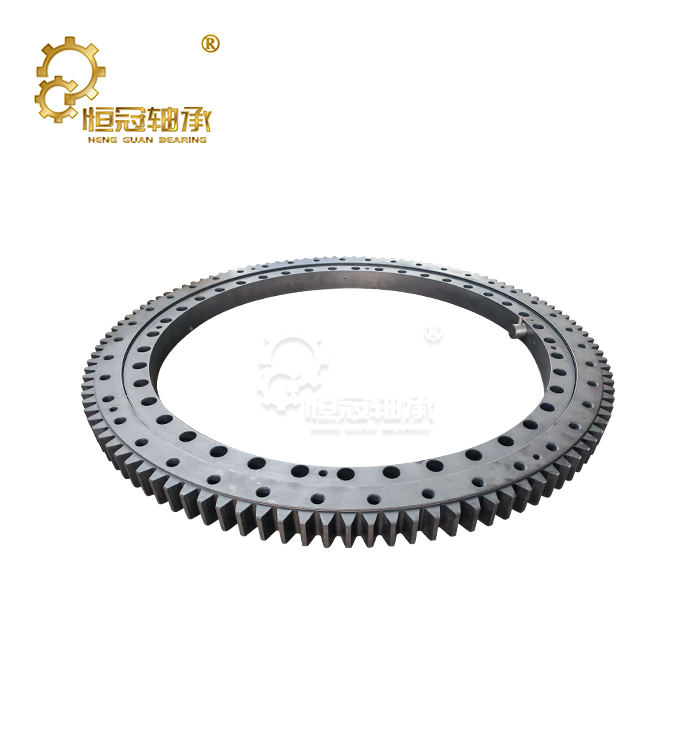
Slewing bearings are widely used in large-scale equipment such as cranes, excavators, wind turbines, and industrial turntables. Their primary advantage is the ability to support extremely large loads while allowing rotational movement.
However, large slewing bearings are generally designed for heavy-duty applications rather than ultra-high precision.
Compared with slew bearings, cross roller bearings offer:
- Higher rotational accuracy
- Lower internal clearance
- More compact dimensions
- Better positioning performance
For applications such as robotic systems, inspection equipment, and precision rotary tables, these characteristics are often more important than maximum load capacity.
On the other hand, when equipment requires very large diameters and extremely high static load capacity, slewing bearings may remain the preferred solution.
The correct selection depends on whether the project prioritizes the following:
- Precision movement
- Load capacity
- Equipment size
- Operating speed
Where Are Cross Roller Bearings Commonly Used?
The advantages of cross roller ring bearing make them suitable for industries where accuracy, reliability, and compact design are essential.
Robotics and Automation Equipment
Industrial robots require bearings that can withstand complex forces while maintaining accurate positioning.
Each robotic joint experiences:
- Radial loads from the robot structure
- Axial forces during movement
- Moment loads caused by extended arms and payloads
A conventional bearing system may require several components to achieve sufficient support. Cross roller bearings simplify the structure by providing multidirectional load capability within a single compact unit.
In robotic applications, their high rigidity and low backlash help improve:
- Repeat positioning accuracy
- Motion stability
- Production consistency
- This makes them widely used in:
- Six-axis industrial robots
- Collaborative robots
- Automated assembly equipment
- Precision handling systems
CNC Machine Tools and Rotary Tables
Precision machining requires excellent stability because cutting forces can create vibration and positioning errors.
In CNC rotary tables, bearings must support heavy workpieces while maintaining accurate rotation during machining operations.
Cross roller bearings provide advantages such as the following:
- High resistance to tilting forces
- Strong rigidity during cutting operations
- Stable positioning accuracy
These characteristics help reduce vibration and improve machining quality, especially in applications involving:
- Five-axis machining centers
- Grinding machines
- Precision indexing equipment
For machine tool manufacturers, using the correct bearing design can directly influence surface finish quality, production efficiency, and equipment reliability.
Medical Imaging Equipment
Medical imaging systems require extremely smooth and accurate rotational movement.
Equipment such as CT scanners must rotate heavy components while maintaining precise alignment between imaging components.
Cross roller bearings are suitable for these applications because they provide the following:
- Smooth rotation
- Low vibration
- High rigidity
- Compact installation dimensions
Their ability to maintain accuracy under uneven loading conditions makes them valuable for medical devices where reliability and precision are critical.
How to Choose the Right Cross-Roller Ring Bearing Supplier?
Selecting the correct bearing supplier is as important as choosing the right bearing type. A reliable manufacturer should provide not only products but also engineering support throughout the application process.
Evaluate Manufacturing Capability and Quality Control
A qualified supplier should have experience in:
- Precision machining
- Heat treatment processes
- Grinding technology
- Bearing assembly
- Dimensional inspection
Manufacturing accuracy directly affects bearing performance. Small deviations in raceway geometry, roller size, or preload control can influence running accuracy and service life.
Buyers should request information about:
- Material certificates
- Inspection reports
- Accuracy grades
- Quality management systems
This helps ensure that the bearing meets project requirements before installation.
Consider Customization Ability
Many industrial applications cannot be solved with standard catalog products.
Custom requirements may include:
- Special dimensions
- Different mounting configurations
- Specific preload levels
- Modified sealing solutions
- Unique operating environments
A supplier with engineering development capability can help optimize the bearing design based on actual operating conditions.
This is particularly important for:
- Customized robotic equipment
- Large precision machinery
- Replacement projects
- New equipment development
Confirm Technical Support and After-Sales Service
Bearing selection involves more than choosing a size from a catalog.
A professional supplier should be able to support customers with:
- Load calculation
- Installation guidance
- Lubrication recommendations
- Failure analysis
- Technical support helps prevent problems caused by incorrect selection or improper installation.
For international buyers, communication capability, documentation quality, and delivery reliability are also important factors when evaluating suppliers.
Conclusion
Cross roller bearings provide significant advantages for modern industrial equipment that requires high precision, strong rigidity, and compact mechanical design. The unique crossed cylindrical roller structure allows a cross roller ring bearing to support radial, axial, and moment loads simultaneously, reducing the need for multiple bearing arrangements.
Compared with conventional bearing solutions, cross roller bearings offer improved load distribution, reduced backlash, higher positioning accuracy, and better space efficiency. These characteristics make them valuable in robotics, CNC machinery, medical imaging systems, automation equipment, and other precision applications.
For procurement teams and equipment manufacturers, selecting the right bearing requires evaluating more than technical specifications. Material quality, manufacturing capability, customization support, and supplier experience all influence long-term performance.
By working with a reliable bearing manufacturer and selecting the correct design based on operating conditions, businesses can achieve improved equipment reliability, lower maintenance costs, and better overall system performance.
A well-designed cross roller ring bearing solution is not only a mechanical component but also an important factor in improving the accuracy, efficiency, and competitiveness of advanced industrial equipment.
|
|

FAQ
1. How do I determine if cross roller bearings suit my application?
Look at your load curve, which should include axial, radial, and moment parts. Cross roller bearings are great when you need to handle a lot of weight at once in a small area. Think about the speed of spin. These bearings work best at low to middling speeds that are common in positioning and indexing tasks. Suitability is also affected by things in the environment, such as high temperatures, contamination contact, and the length of time the product needs to be used. Get in touch with technical experts who can look at your working conditions and suggest the right bearing specs and precision grades.
2. What maintenance practices maximize cross roller bearing life?
It is important to lubricate regularly according to the manufacturer's instructions. The type of grease and how often it needs to be reapplied depend on the working conditions. Check the warmth and pressure of the bearings while they are in use. This will help you spot problems earlier, before they break. Keep the seals in good shape and the mounting surfaces clean to keep the bearings clean. Check for damage, rust, or wear patterns during upkeep, and measure rotational force to find changes in preload. If you use accurate torque tools and follow the mounting steps, you can avoid premature failure caused by bad assembly.
3. Can manufacturers customize cross roller bearings for unique requirements?
A lot of manufacturers, including Heng Guan, offer custom engineering services for uses that aren't normal. Customization choices include different sizes, different seal setups, different materials for harsh locations, and special mounting features. When plans aren't available, manufacturers can often reverse-engineer from existing models to make solutions that are specific to your needs based on how they will be used and where they will be installed.
Partner with Heng Guan for Your Cross Roller Ring Bearing Needs
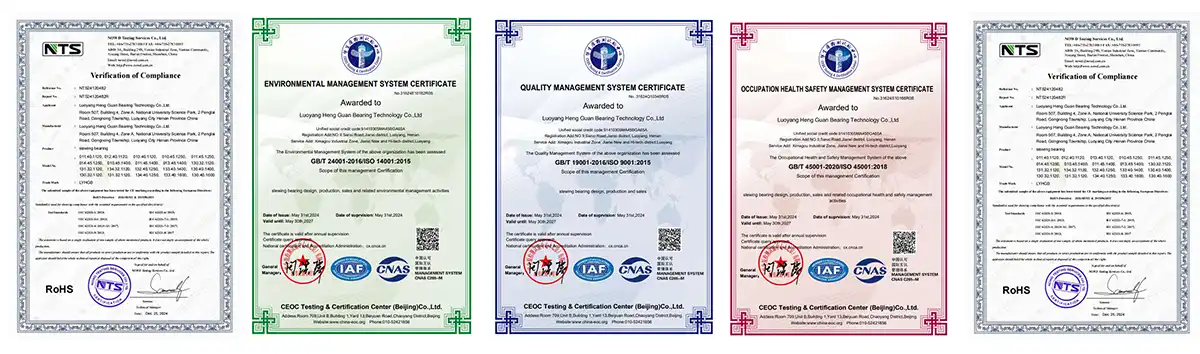
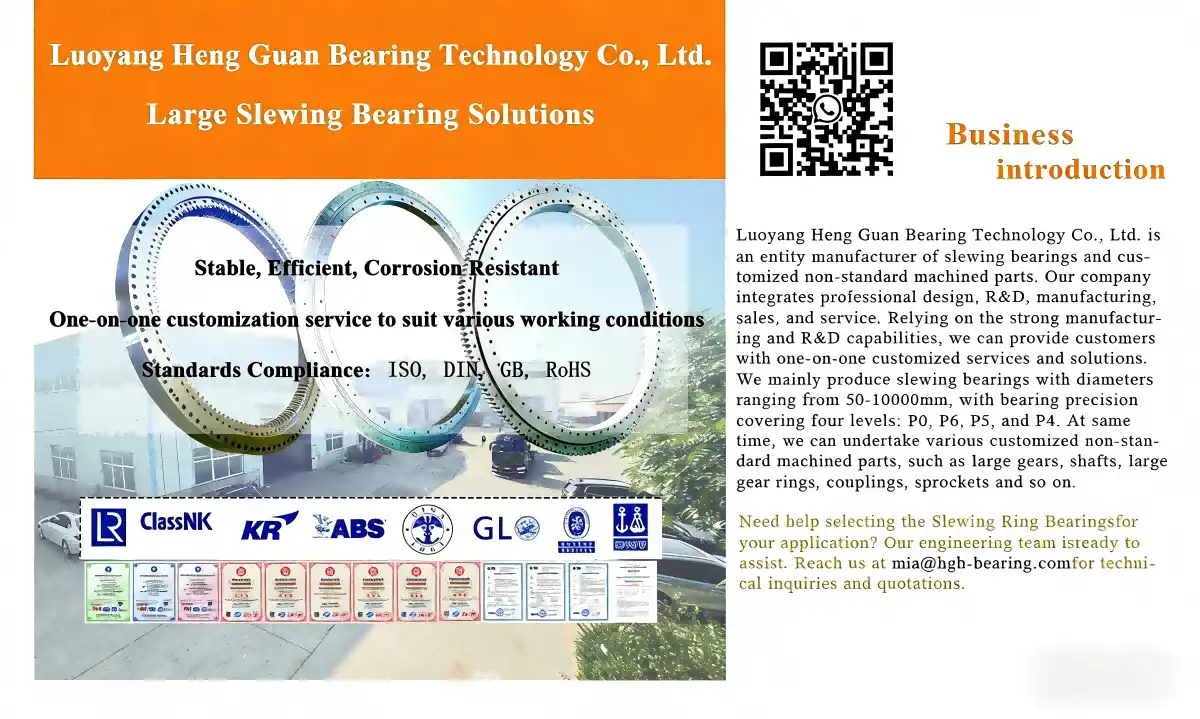
For solid cross roller ring bearing options in the 50 mm to 10,000 mm diameter range, Luoyang Heng Guan Bearing Technology uses its more than 20 years of specialized manufacturing experience and advanced production skills. Our ISO 9001-certified factory uses precise CNC cutting and heat treatment methods that make sure the quality is the same for all four precision grades (P0, P6, P5, and P4). As a reliable cross roller ring bearing seller to customers in North America, Europe, and the Asia-Pacific region, we offer unique engineering services for designs that aren't standard. We can do reverse engineering from samples without the need for 3D drawings. Our expert team can help you make the right choice with selection, installation, and application-specific solutions that are made to fit your equipment needs.Contact mia@hgb-bearing.com right away to talk about your bearing needs and find out how our precision-engineered solutions can help your tools work better and make your operations run more smoothly.
References
1. Harris, T.A. & Kotzalas, M.N. (2006). Advanced Concepts of Bearing Technology: Rolling Bearing Analysis (5th ed.). CRC Press.
2. Budynas, R.G. & Nisbett, J.K. (2015). Shigley's Mechanical Engineering Design (10th ed.). McGraw-Hill Education.
3. ISO 199:2014. Rolling bearings — Thrust bearings — Geometrical product specifications (GPS) and tolerance values. International Organization for Standardization.
4. Eschmann, P., Hasbargen, L., & Weigand, K. (1985). Ball and Roller Bearings: Theory, Design and Application (2nd ed.). John Wiley & Sons.
5. Hamrock, B.J., Schmid, S.R., & Jacobson, B.O. (2004). Fundamentals of Fluid Film Lubrication (2nd ed.). Marcel Dekker.
6. Vance, J.M., Zeidan, F.Y., & Murphy, B. (2010). Machinery Vibration and Rotordynamics. John Wiley & Sons.

WHAT OUR CUSTOMERS SAY
Here is the customer's evaluation of us