



Robust Crossed Roller Bearings With Sealing and Design Options
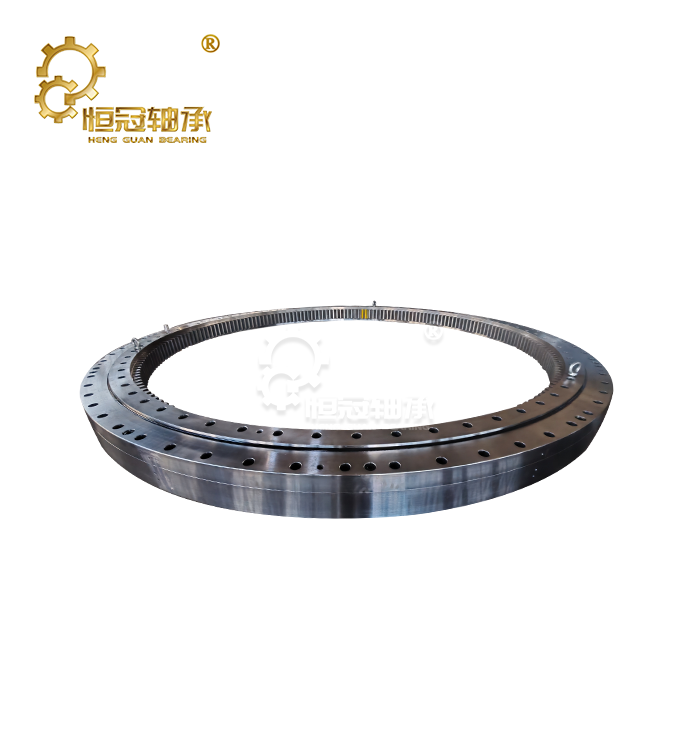
When machine breakdowns cost thousands of dollars an hour, picking the right bearing isn't just a matter of technical details. Crossed roller bearings that are strong and have more design Cross Roller Ring Bearing and sealing choices are a big step forward in rotary precision technology. These unique parts have cylinder-shaped rollers spaced at 90-degree angles. This lets a single Cross Roller Ring Bearing handle radial, axial, and moment loads all at the same time. Unlike other bearing systems that need more than one unit, this new design makes fitting easier while still providing better rigidity and load distribution. Better sealing arrangements keep dust, water, and particles from getting into internal parts, which can affect how well bearings work in tough industrial settings. This detailed guide is designed to meet the unique needs of procurement managers, OEM engineers, and maintenance directors who are looking for solid solutions that keep operations running smoothly and get the best return on investment.

Understanding Crossed Roller Ring Bearings: Design Features and Specifications
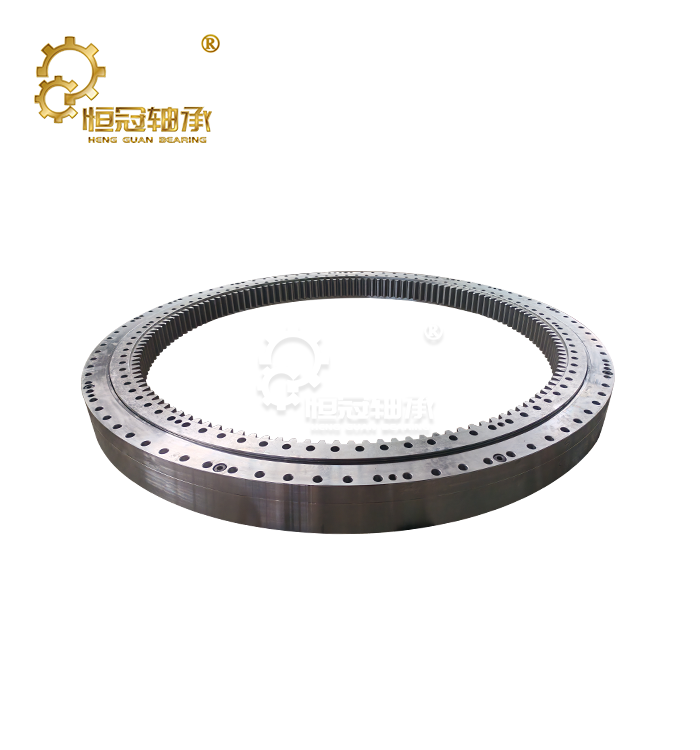
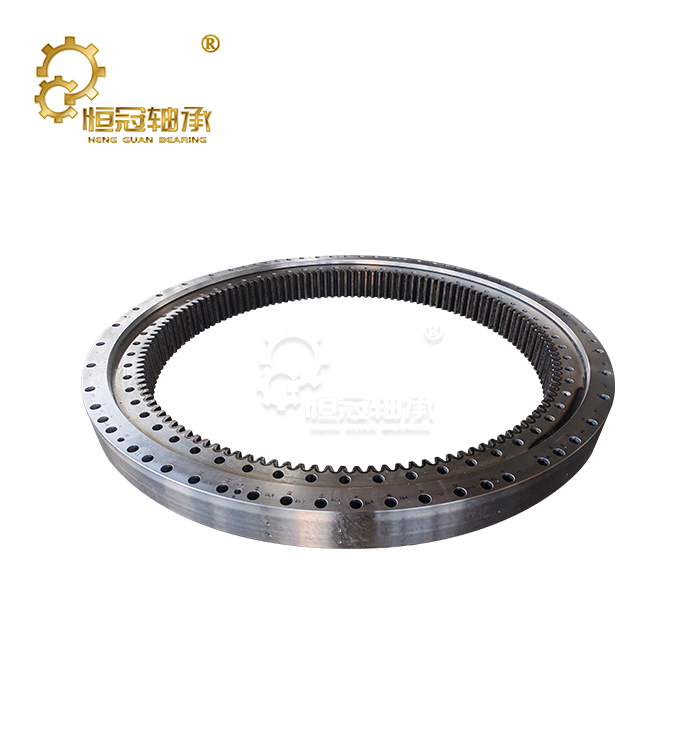
Cross Roller Ring Bearing is different from other rotating parts because its rollers are arranged in an alternate pattern. Each cylinder-shaped roller sits straight across from its neighbors on precisely ground V-groove raceways. This makes line contact instead of point contact. This arrangement spreads the working forces over a larger surface area, immediately fixing the deflection problems that happen with regular ball bearing groups when they are loaded with heavy objects.
Core Structural Elements
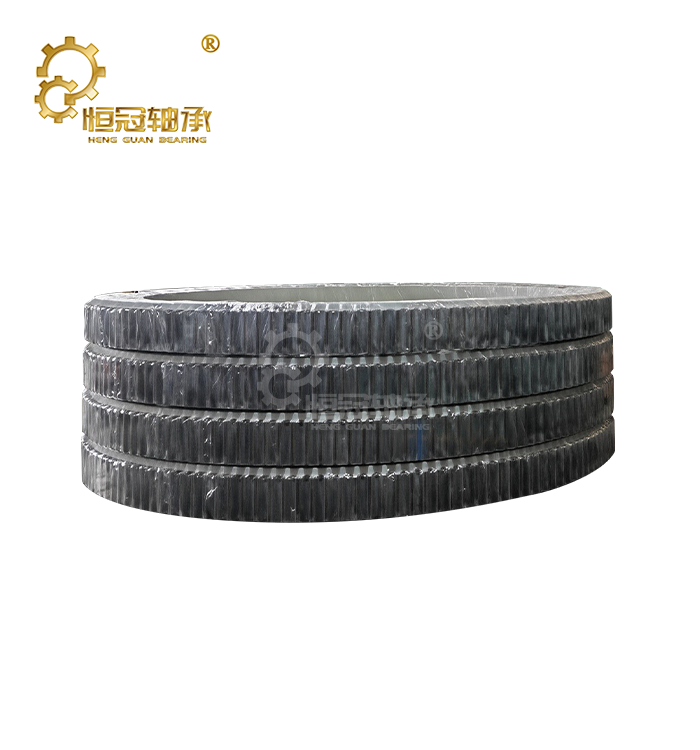
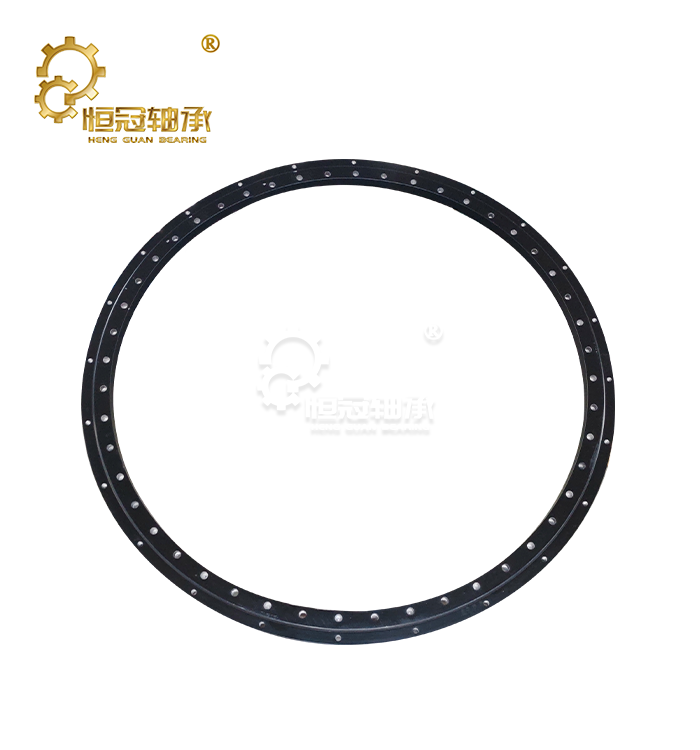
The choice of material is the basis for how well and how long a bearing works. We use 42CrMo and 50Mn special alloy steels to make base rings at Heng Guan because they have high strength-to-weight ratios and don't break easily when stressed. The rolling elements are made of GCr15SiMn high-purity bearing steel that has been through advanced cooling and hardening processes that make it harder while still keeping its toughness. This mix makes sure that the sizes stay the same even when the temperatures change during long production processes. The raceway form of the bearing uses combined construction, which gets rid of the weak spots that usually happen in units that are put together. Rollers set up in a pattern of 90-degree turns make a self-stabilizing system where each part helps the one next to it. Spacer spacers keep rollers from touching each other, which cuts down on friction and stops the skewing that hurts accuracy over time. Our engineering team can make both single-piece and split-ring setups. Split designs make fitting easier on solid Shafts or inside housings where taking them apart isn't possible.
Dimensional Range and Precision Classes
The outer sizes that can be manufactured range from 50mm to 10,000mm, so they can be used for everything from small medical tools to huge mining equipment. In the real world, different industries have very different needs. For example, a semiconductor chip handler has very different needs than a port crane slewing device. Four types of precision grades are based on ISO standards: P0 is for general industry use, P6 is for normal machine tools, P5 is for precision automation, and P4 is for very accurate uses like aerospace positioning systems. For each grade, there are tolerances for dimensional accuracy, running accuracy, and surface finish. This lets buying teams fit the performance of the bearings exactly to the needs of the application without defining too many expensive features. Depending on the needs of the job, sealed versions have either contact or non-contact covers. Contact seals made of nitrile rubber or fluoroelastomer materials keep out as much contamination as possible in places where particles are common. Non-contact labyrinth seals work well in high-speed situations where reducing friction is important. They make winding tracks that keep contaminants out without rubbing against anything. There are still open versions that can be used in controlled settings with external sealing features or where inspections need to be done often.
Comparing Crossed Roller Ring Bearings with Other Bearing Types: Making Informed Decisions
In order to choose the right bearing china cross roller ring bearing technology, you need to know how different types work in different situations. In a niche market where other technologies clearly fall short, the Cross Roller Ring Bearing shines.
Structural and Performance Distinctions
Ball bearings work by circular elements contacting raceways at a single point. This reduces friction but limits the amount of weight that can be carried per unit volume. When engineers need to handle both radial and axial loads at the same time, they usually pair angular contact ball bearings back-to-back. This takes up more room and makes it harder to change the preload. This is not needed with a single crossed roller unit, which has the same load limits but 40–50% less horizontal height. This small size is very important in robotic joint systems, where every millimeter changes the reach and weight of the system. Crossed roller setups are more accurate at keeping things in place than slewing bearings made for bigger diameters. When the diameter is more than two meters, slewing bearings work best because their ball-to-raceway shape is still useful. Below this size, however, the crossed roller setup is three to four times more rigid. This stiffness is very important to machine tool makers who make rotating tables for five-axis machining centers, because deflection measured in microns leads directly to surface finish flaws on precision aircraft parts. Needle roller bearings can hold a lot of circular load in a small space, but they can't handle any axial load at all. When you use combined loads, you have to pair needle rollers with different thrust bearings, which adds to the complexity of the system that crossed roller designs avoid. The 90-degree roller alignment in a Cross Roller Ring Bearing naturally fights forces coming from any direction, so it doesn't need any extra parts.
Sealing and Design Options for Enhanced Bearing Reliability
In all manufacturing areas, contamination is still the main reason why bearings fail early. Rusty bits scratching the raceway surfaces, water encouraging rust, and process chemicals breaking down lubricants are all things that shorten the life of an operation. When closing systems work well, they put up walls between sensitive parts inside and harsh conditions outside.
Seal Configuration Varieties
Rubber lip seals make positive touch with spinning surfaces, stopping particles from getting in through an interference fit. Nitrile compounds work well in temperatures ranging from -40°C to +100°C and don't react with oil-based oils that are popular in machinery. Different types of fluoroelastomers can withstand temperatures up to +200°C and can also handle the harsh chemicals that are used in processing equipment. The seal lip keeps a light contact pressure, which means that friction is kept to a minimum (usually less than 5% of total bearing drag) and contamination is kept out very well. As part of our production process, seals are built in during assembly. This makes sure that they are properly positioned and compressed, which is something that later retrofits rarely do. Labyrinth seals use complicated geometric pathways that cause contaminants to go through a lot of changes in direction before they reach important surfaces. Particles lose speed at each 90-degree turn and fall out of the air stream into holes for collection. Because there is almost no friction, this non-contact arrangement makes labyrinth seals perfect for high-speed uses where performance is already limited by problems with heat management. This low-drag design is good for medical CT scanner gantries that spin at 180 RPM because it keeps the placement accuracy without changing the dimensions. Combination seal systems add more than one level of safety for harsh conditions. Large contaminants are caught by an outer labyrinth seal before they reach an inner lip seal, which deals with fine particles that got through the first barrier. This extra safety feature is very useful for mining and building equipment that needs to be taken apart for a long time to change bearings. When port cranes move iron ore or coal, they have to work in very rough conditions with more sharp dust than single seals can safely keep out. The marginal cost rise for dual sealing is more than made up for by the longer time between repair visits.
Customization Capabilities Addressing Unique Applications
Standard stock bearings meet about 70% of industrial needs, but custom solutions are needed for machinery that is very specific. Our research team at Heng Guan often changes the designs of Cross Roller Ring Bearing to fit specific working conditions. Size changes can be made to fit shafts or housing bores that aren't standard, and material swaps can make the parts less likely to rust in naval settings or magnetic for medical imaging equipment. Engineers can improve the China cross roller ring bearing certain load lines of the c without over-engineering by using finite element analysis to optimize load capacity. It's possible for a robot wrist joint to have high moment loads but low radial forces. This means that the raceway shape should focus on tipping resistance instead of balanced capacity. This focused method lowers the mass and inertia of the bearings, which immediately improves the performance of the accelerometer. We do reverse engineering from actual samples when the original plans aren't available. For example, we measure worn bearings to find out what the original specs were and then fix any weak spots that caused them to fail too soon. Special attention should be paid to split ring designs because they are easier to place. Machines with solid shafts can't use one-piece bearings without taking the whole thing apart. When the inner or outer rings are split, they come apart into halves. Precise alignment pins make sure that the halves are back together again perfectly. Large industrial equipment's repair downtime is cut from days to hours by this feature. This makes lost output the main cost factor. The small loss in performance—usually less than a 5% drop in load rating—is fine because it saves so much work.
Applications and Industry Use Cases for Crossed Roller Ring Bearings
Performance in the real world backs up design theory. Looking at how crossing roller technology solves certain problems in the manufacturing world shows that it has value beyond just reading specifications.
Industrial Robotics and Automation
Precision bearings at each joint, such as Cross Roller Ring Bearing, help six-axis flexible robots stay in the right place while they move packages. When the arm is stretched out horizontally, the shoulder and elbow joints are put under a lot of moment loads. These loads get worse with every extra meter of reach. Using paired angular contact units in traditional bearing setups makes them heavier, which lowers their lifting capacity and makes them use more energy. A Cross Roller Ring Bearing built into the joint design reduces the weight of the unit by 30–40% while keeping the accuracy of the placement within 0.01 degrees over millions of cycles. When human workers work with collaborative robots, they have to deal with extra restrictions. Due to limited room, joint assemblies have to be small enough to fit inside protected housings, leaving only a small amount of space for bearings to move. Because the crossed roller design can handle combined loads in a slim shape, makers can get the reach they want without sacrificing safety or performance. We've made special bearings for robots that put together cars when the limited envelope measurements meant that no other type of bearing could be used.
CNC Machine Tool Rotary Tables
Five-axis machining centers use rotating and tilting axes to give them more flexibility when working with complicated part shapes. The rotating table bearing protects the workpiece and attachment assembly from cutting forces and keeps the position accurate to within arc-seconds. When big cuts are made, deflection leads to mistakes in measurements and a rough surface finish, so the bearing support needs to be very stiff. Crossed roller bearings make the table stiff in three dimensions, which keeps it from tilting when cutting features that aren't in the middle. Recently, we worked with a company that makes machine tools to source P4-grade bearings for a vertical machining center that cuts titanium aircraft parts. The user said that the bearings kept their positions within ±0.003mm during 12-hour production runs, and that the temperature rise was less than 10°C even though they were running all the time. This thermal stability comes from the fact that the roller design spreads heat over a bigger contact area than ball bearings do. When you combine a direct-drive motor with crossed roller bearings, you don't need any gear reducers, which can cause backlash and positioning mistakes. The motor rotor attaches directly to the spinning ring of the bearing, making a small unit that doesn't lose any motion. For grinding, where the quality of the surface finish rests on spinning that is smooth and free of vibrations, tool makers need this level of accuracy. As part of our mechanical support, we help build the motor interface and make sure there is enough electrical space and thermal control.
Conclusion
Strong crossed roller bearings with improved sealing are an established technology that is still growing, thanks to progress in material science and better production precision. Their special ability to handle loads in multiple directions in small spaces solves important engineering problems in many fields, from robotics to mining longevity. Effective sealing setups increase operating life in harsh settings, which lowers the total cost of ownership by allowing for longer periods of time between upkeep. Catalog bearings can't fully meet the needs of some applications, but custom design lets you make exact changes that meet those needs. A successful procurement relies on carefully evaluating suppliers, communicating clear specifications, and managing costs in a way that balances the original cost with the performance over the product's life. As industry technology improves and the accuracy needs of equipment rise, the Cross Roller Ring Bearing will continue to be an important part of making next-generation machines work well.

FAQ
1. How do sealed crossed roller bearings improve operational performance?
Studies from the bearing business show that 80% of early bearing failures are caused by contaminants like dust, moisture, and process chemicals getting in. Sealed designs stop these things from happening. Rubber lip seals make physical barriers that stop particles from passing through, while maze designs use geometric pathways to force particles through winding paths. This protection keeps the grease clean and stops rough wear from scoring the track surfaces. Some operational benefits are longer periods between upkeep, less unplanned downtime, and consistent performance over the stated service life. Strong sealing that keeps out harsh circumstances is especially helpful for equipment that works in mining, building, and outdoor settings with Cross Roller Ring Bearing protection.
2. What factors are used to choose bearings for robotic applications?
Robot joint bearings have to meet a lot of different needs, such as high stiffness to keep the robot's position accurate, low weight to keep the payload capacity large, small size to fit inside the joint covers, and smooth operation to allow precise motion control. Cross Roller Ring Bearing meets these needs because its 90-degree roller orientation gives it three-dimensional stability while keeping its thin dimensions. Accurate placement within arc-seconds is guaranteed by precision grades P5 or P4. Installing split rings on solid rods, which are popular in robotic arms, is easier. When you figure out a load's capacity, you should take into account the dynamic effects of acceleration and shock loading during sudden changes in direction. Sealed versions keep workplace settings clean by blocking airborne particles.
3. What tailoring choices are there to meet the specific needs of each application?
Standard forms can be changed in a number of ways by custom bearing engineering. By adjusting the dimensions, the inner diameter, outer diameter, and width can be changed to fit the needs of the shaft and chassis. Substituting materials can make them less likely to rust, less magnetic, or better at working at high temperatures. Changing the shape of the raceways to increase load capacity focuses on specific load directions, such as radial, axial, or moment loads, that are important for the application. Sealing arrangements change the amount of contamination protection based on the surroundings. Split ring shapes make it easier to install and fix things. Provisions for lubrication work with devices that deliver grease or oil. At Heng Guan, we do reverse engineering from real samples when we can't get our hands on the original specs. This means that we measure worn bearings and fix weak spots that led to failure for any Cross Roller Ring Bearing.
|
|


Partner With Heng Guan for Premium Crossed Roller Ring Bearing Solutions
The choice of bearing has a big impact on how well the machinery works and how reliably it operates. Heng Guan has been making specialized products for 20 years, and we use that knowledge in every Cross Roller Ring Bearing we make at our Luoyang factory, which is known as China's bearing technology hub. We can work with diameters ranging from 50mm to 10,000mm and precision grades P0 to P4. This means we can work with a wide range of uses, from general commercial use to very precise aircraft systems. Our ISO 9001 license proves that we know how to manage quality, and our exports to more than 50 countries show that we can consistently make things and handle logistics. Custom engineering lets us handle non-standard sizes, special materials, and reverse engineering from samples without the need for 3D models. This is what sets us apart. Get in touch with our technical team at mia@hgb-bearing.com to talk to Cross Roller Ring Bearing experts about your unique needs. We help you make choices, offer fair prices for both prototypes and full production runs, and are available to help you at any time during the product creation cycle. Find out why top OEMs in robots, machine tools, medical equipment, and heavy industry choose Heng Guan as their top Cross Roller Ring Bearing provider for performance, customization, and dependability.
References
1. Harris, T.A. & Kotzalas, M.N. (2006). Advanced Concepts of Bearing Technology: Rolling Bearing Analysis, Fifth Edition. CRC Press, Taylor & Francis Group.
2. ISO 492:2014. Rolling Bearings — Radial Bearings — Geometrical Product Specifications (GPS) and Tolerance Values. International Organization for Standardization.
3. Weck, M. & Brecher, C. (2006). Machine Tools Production Systems 3: Design and Calculation. VDI-Buch, Springer-Verlag Berlin Heidelberg.
4. Neale, M.J. (Ed.). (2001). The Tribology Handbook, Second Edition. Butterworth-Heinemann, Elsevier Science.
5. Eschmann, P., Hasbargen, L., & Weigand, K. (1985). Ball and Roller Bearings: Theory, Design and Application, Second Edition. John Wiley & Sons.
6. Khonsari, M.M. & Booser, E.R. (2008). Applied Tribology: Bearing Design and Lubrication, Second Edition. John Wiley & Sons.

WHAT OUR CUSTOMERS SAY
Here is the customer's evaluation of us