




Heavy-Duty Slewing Bearing vs Standard Slewing Bearing: Key Differences
When selecting a slewing bearing for a crane, excavator, loader, mining machine, or other rotating equipment, the choice should be based on the actual load spectrum rather than the bearing size alone. heavy-duty slewing bearings are generally selected when equipment must withstand high axial loads, radial loads, and overturning moments, particularly when shock loads or continuous operating cycles are involved. Standard slewing bearings may be a better fit for equipment with lower loads and less demanding duty cycles. The difference is not simply that one bearing is “stronger” than the other. Internal raceway geometry, rolling element arrangement, ring cross-section, material, heat treatment, sealing, gear design, mounting conditions, and lubrication all influence performance. Understanding these factors can help OEMs and maintenance teams select a bearing that provides sufficient capacity without unnecessarily increasing equipment weight and cost.
How Slewing Bearings Support Rotating Machinery?
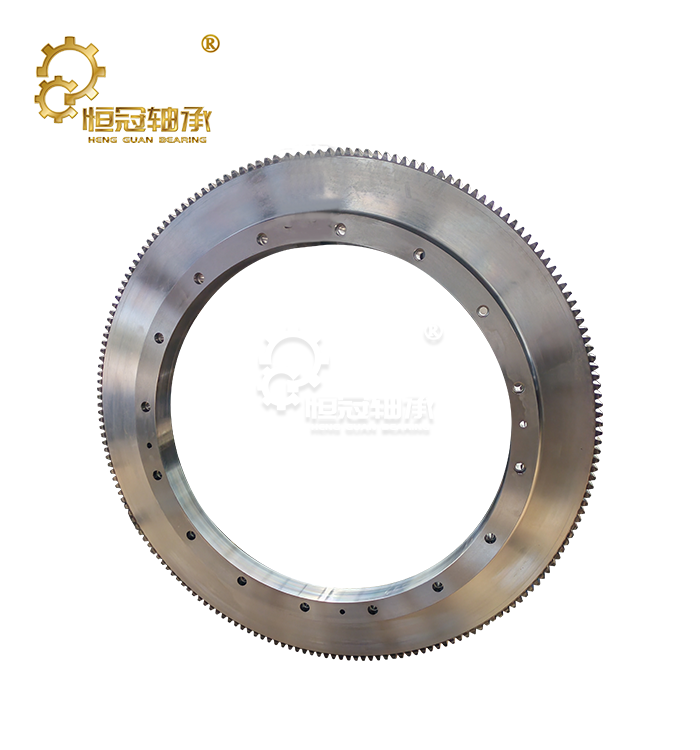
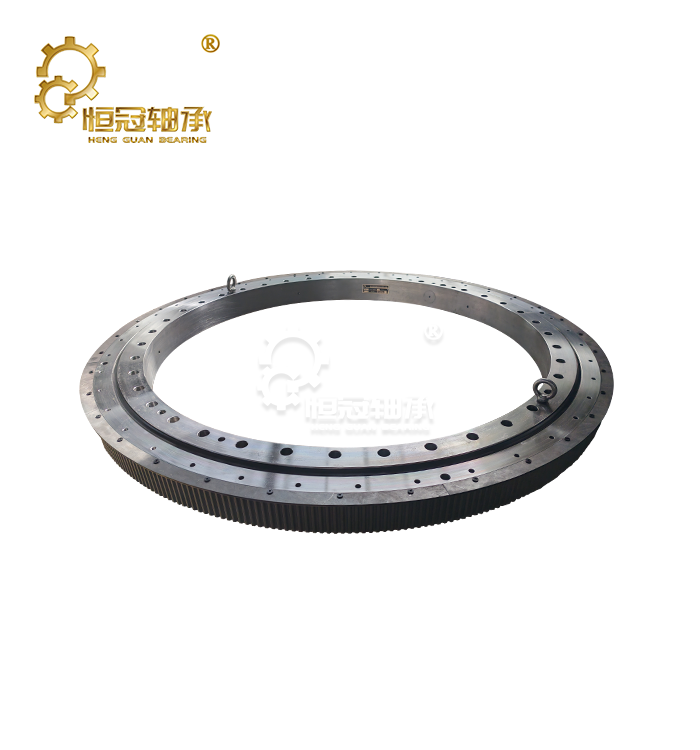
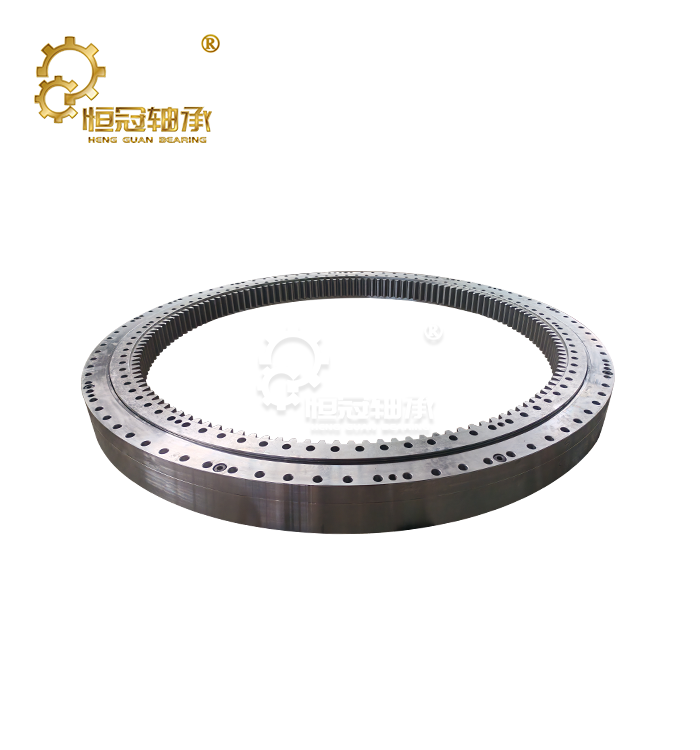
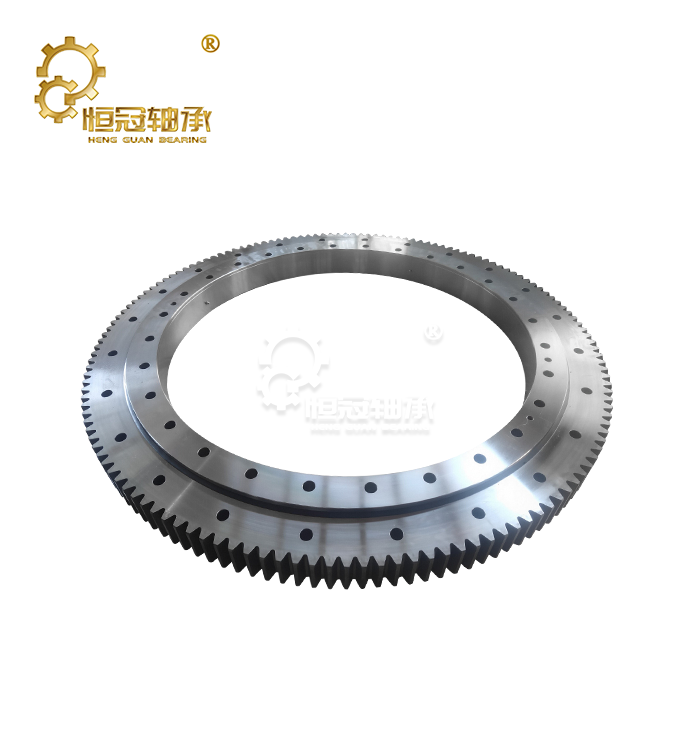
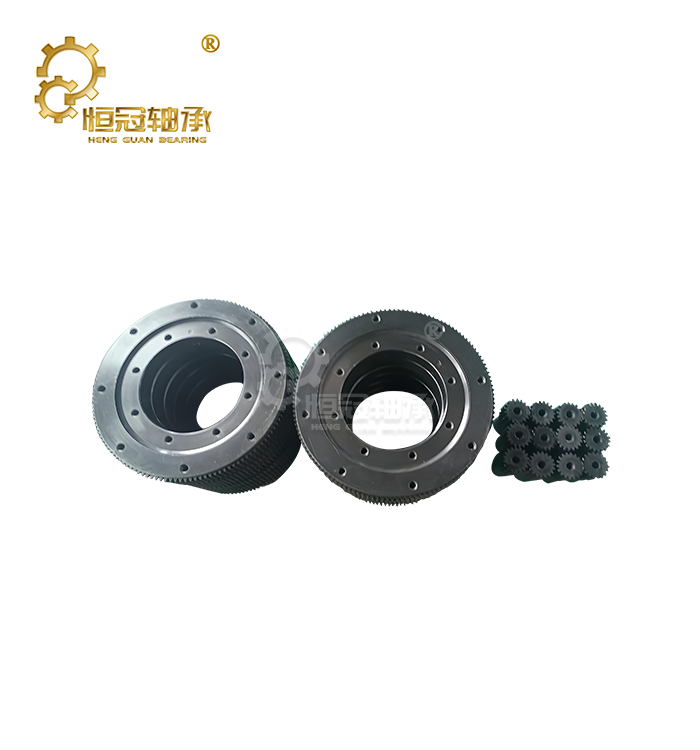
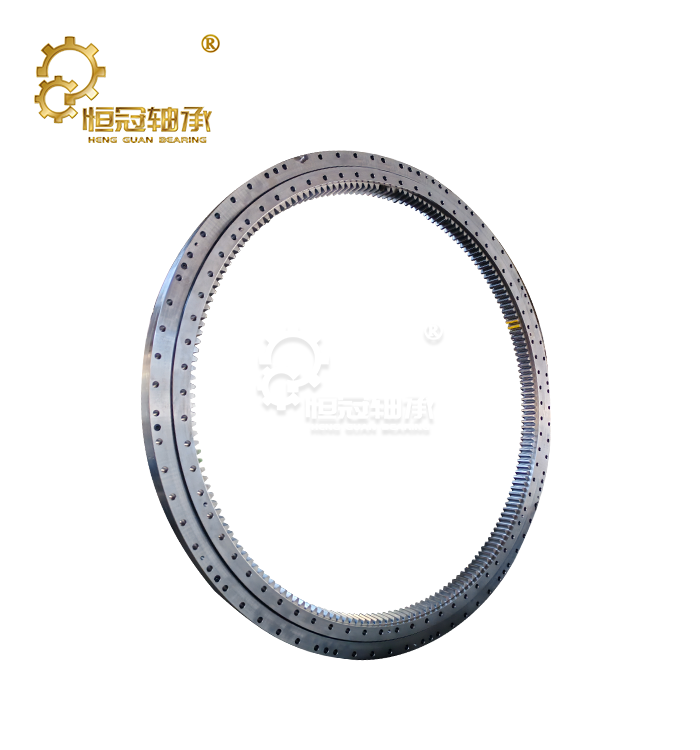
A slewing bearing connects a stationary structure with a rotating structure while allowing controlled rotation. Unlike conventional rolling bearings installed around a Shaft, slewing bearings are usually large-diameter components with mounting holes in the inner and outer rings. Depending on the design, a gear may also be integrated into one of the rings.
This arrangement allows the bearing to support loads while transmitting rotation through a relatively compact assembly. It is therefore widely used in equipment where a platform, boom, cab, or other large structure must rotate around a vertical or inclined axis.
What a Slewing Bearing Typically Contains?
A typical slewing bearing consists of the following:
an inner ring;
an outer ring;
raceways;
balls or rollers;
spacers or cages, depending on the design;
seals;
mounting holes; and
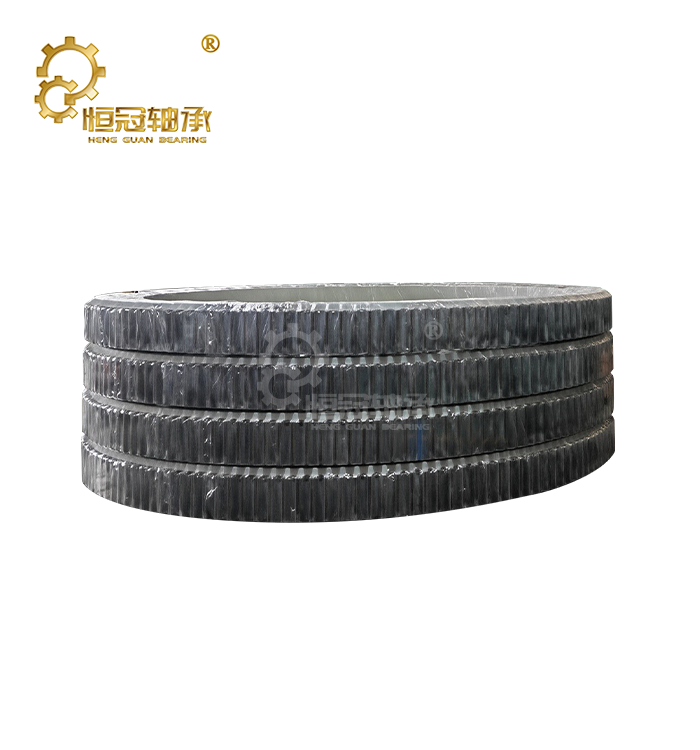
an optional integral gear.
The rolling elements transfer loads between the two rings, while the raceways control their movement. Seals help retain lubricant and limit the entry of water, dust, and other contaminants.
The bearing is also part of the machine's structural system. Its performance depends not only on the bearing itself but also on the stiffness and accuracy of the structures to which it is bolted. Even a properly designed bearing can experience premature wear if the mounting surfaces are distorted or the bolt pattern is incorrectly controlled.
Why Load Direction Matters?
Slewing bearings commonly experience several types of loading at the same time. An axial load acts along the bearing axis, a radial load acts perpendicular to it, and an overturning moment results from forces acting at a distance from the bearing centre.
For example, a crane may experience a relatively large overturning moment when the boom is extended with a heavy load. An excavator can experience changing radial and axial loads as the attachment moves. Mining equipment may also encounter shock and vibration during continuous operation.
This combination of loads is one of the main reasons engineers cannot select a slewing bearing based solely on outside diameter or static load rating.
Where Heavy-Duty and Standard Designs Differ?
The distinction between heavy-duty and standard slewing bearings is primarily related to the required load capacity, duty cycle, structural configuration, and operating environment. There is no single internal design that automatically makes a bearing "heavy-duty".
Raceway and Rolling Element Configuration
Different slewing bearing designs use different arrangements of balls or rollers. Single-row ball designs can provide a practical solution for many applications where loads and operating conditions are moderate. Other designs use multiple rows of balls or rollers to distribute loads through different contact zones.
Three-row roller designs, for example, separate the principal load directions among different roller arrangements. This can provide high load-carrying capability and stiffness for demanding machinery. Cross-roller designs use rollers arranged in different orientations and can provide high rigidity where rotational accuracy is important.
Therefore, a heavy-duty designation should be evaluated together with the actual bearing configuration. Two bearings with similar outside diameters can have very different load ratings because of differences in raceway geometry, roller size, contact conditions, and ring section.
Ring Strength and Material Selection
The bearing rings must withstand repeated loading without excessive deformation or premature fatigue. Material selection and heat treatment therefore become important considerations for heavy-duty applications.
Common bearing steels and alloy steels can be processed to obtain the required combination of strength, toughness, hardness, and wear resistance. Localised hardening of raceways can improve resistance to contact fatigue, while the ring core needs sufficient toughness to withstand structural loads and shock.
For demanding applications, buyers should ask the manufacturer for the specified material grade, heat-treatment method, hardness requirements, and applicable inspection records instead of assuming that a larger bearing automatically provides greater durability.
Sealing and Lubrication
A bearing operating in a clean indoor environment has different sealing requirements from one working in a mine, quarry, port, or outdoor construction site.
Dust, water, mud, salt spray, and process contaminants can enter a bearing if the sealing system is unsuitable or damaged. Contamination can accelerate raceway and rolling-element wear and can also degrade lubricant performance.
Heavy-duty applications may therefore require sealing systems selected for the actual environment. However, seal selection should not be treated independently from temperature, lubricant compatibility, operating speed, and maintenance requirements.
Regular relubrication is equally important. The correct grease quantity and lubrication interval depend on the bearing design, operating cycle, load, temperature, and environmental conditions.
Comparing Load Capacity and Operating Performance
The most useful comparison between the two bearing categories is how they respond to the actual load spectrum of the machine.
Axial, Radial, and Moment Loads
A slewing bearing must be evaluated against the combined loading expected during operation. A machine may have a relatively modest axial load but a substantial overturning moment. In another application, radial loading or shock loading may dominate.
Heavy-duty slewing bearings are generally chosen when the combined load case requires greater structural capacity or stiffness than a lighter configuration can provide.
However, engineers should avoid using a simple statement such as “heavy-duty bearings carry five or ten times more load.” The actual difference depends on bearing diameter, rolling-element arrangement, raceway geometry, material, contact stress, mounting conditions, and the manufacturer's rated capacities.
The correct approach is to compare the manufacturer's load curves or capacity data with the application's calculated axial load, radial load, and overturning moment.
Stiffness and Rotational Accuracy
Load capacity is only one part of bearing performance. Deflection and stiffness can also affect the behavior of the complete machine.
For cranes, excavators, and positioning equipment, excessive bearing deformation can affect boom or platform movement. In machines with integrated gears, bearing clearance and structural deformation can also influence gear engagement.
A heavy-duty design may provide greater structural stiffness, but the final result still depends on mounting flange rigidity, bolt preload, surface flatness, and the overall machine structure.
Duty Cycle and Shock Loading
Two machines can have the same maximum load but completely different operating requirements.
A machine that rotates occasionally under relatively stable conditions may place less demand on the bearing than equipment that operates continuously with frequent acceleration, deceleration, vibration, and impact.
For this reason, procurement specifications should include the expected duty cycle and load spectrum. Important information may include:
maximum and normal axial loads;
radial loads;
overturning moments;
rotational speed;
acceleration and braking frequency;
operating hours;
temperature;
environmental contamination; and
expected shock or vibration.
This information gives the manufacturer a much better basis for bearing selection than simply specifying the required diameter.
Applications That May Require a Heavy-Duty Design
Heavy-duty configurations are particularly relevant when equipment combines high loads with demanding operating cycles.
Cranes and Lifting Equipment
Cranes can generate substantial overturning moments when loads are positioned far from the rotation center. The bearing also needs to accommodate changes in load direction as the crane slews.
For this reason, crane applications often require careful analysis of the complete load spectrum rather than selection based only on rated lifting capacity. Bearing stiffness, mounting accuracy, bolt arrangement, gear requirements, and braking loads should all be considered.
Excavators and Mining Machinery
Excavators and large mining machines can expose slewing bearings to repeated shock loads, vibration, and contamination. Excavator rotation also involves frequent acceleration and deceleration, which can create demanding operating conditions.
Mining equipment may operate for long periods in environments containing abrasive dust and moisture. In these applications, bearing sealing, lubrication access, inspection procedures, and maintenance planning can be just as important as the nominal load capacity.
Wind, Port, and Material-Handling Equipment
Large rotating structures used in wind energy, ports, and material handling can require high stiffness and long operating life. Outdoor installations may also face temperature variation, moisture, and corrosion risks.
The appropriate bearing design depends on the specific machine. Corrosion protection, seal selection, lubrication, gear configuration, and inspection requirements should therefore be established according to the operating environment rather than assumed from the term “heavy-duty.”
When a Standard Slewing Bearing May Be the Better Choice?
Choosing a heavy-duty bearing is not automatically the best engineering decision.
A standard slewing bearing can be more appropriate than heavy-duty slewing bearings when the machine has moderate loads, limited operating hours, relatively low shock loading, and sufficient stiffness with a conventional bearing configuration.
Using an unnecessarily large or complex bearing can increase:
component weight;
purchase cost;
mounting requirements;
drive requirements;
transportation costs; and
replacement costs.
The goal should therefore be to select the smallest practical bearing that safely meets the required load, life, stiffness, and environmental requirements.
Avoiding Over-Specification
Oversizing a bearing may appear to provide an additional safety margin, but it can introduce new design constraints. A larger bearing may require a stronger supporting structure, larger bolts, greater mounting accuracy, or a different drive arrangement.
The more effective approach is to establish realistic operating loads and then select a suitable bearing based on calculated capacity and life requirements.
Matching the Bearing to the Machine Structure
The bearing does not work in isolation. The mounting surfaces need adequate stiffness and dimensional accuracy to distribute loads correctly.
If the mounting structure is too flexible or uneven, local raceway loading can increase even when the bearing itself has adequate theoretical capacity. Bolt preload and mounting procedures should therefore be included in the engineering evaluation.
What Buyers Should Check Before Ordering?
For OEMs and replacement-parts buyers, selecting the right slewing bearing requires more than comparing catalog prices.
Request Complete Technical Information
A supplier should be able to provide relevant technical information for the proposed bearing, such as:
bearing type and internal configuration;
dimensions and mounting-hole pattern;
static and dynamic load information where applicable;
allowable overturning moment;
gear specifications if a gear is integrated;
material and heat-treatment information;
seal and lubricant recommendations;
clearance or preload information;
operating temperature range; and
inspection or quality documentation.
The exact documents required will depend on the project and applicable standards.
Evaluate Manufacturing and Inspection Capability
For critical applications, buyers should consider how the supplier controls manufacturing consistency.
Useful questions include:
How are ring dimensions inspected?
How are raceways finished and checked?
How is heat treatment controlled?
How are gear teeth inspected?
What dimensional tolerances are guaranteed?
How are seals and rolling elements controlled during assembly?
Can the supplier provide inspection reports for production batches?
These questions provide more useful evidence of manufacturing capability than general statements about quality.
Consider Customization for OEM Projects
OEM applications may require customized mounting-hole patterns, gear dimensions, internal clearance, seals, materials, or lubrication arrangements.
Customization can be valuable when the standard catalog configuration does not match the machine's load spectrum or installation constraints. However, the design should be based on engineering data rather than customization for its own sake.
A useful supplier should be able to discuss the relationship between the requested dimensions and the expected operating loads and should clearly explain any limitations.
Conclusion
Choosing between a standard slewing bearing and heavy-duty slewing bearings should begin with the machine's real operating conditions rather than the bearing's name or size. Heavy-duty configurations can be advantageous when equipment experiences high combined axial and radial loads, significant overturning moments, shock loading, continuous duty cycles, or demanding environmental conditions.
At the same time, a heavy-duty bearing is not automatically better for every application. A properly selected standard configuration can provide an efficient solution when the load spectrum and duty cycle are moderate. Selecting an oversized bearing without analyzing the machine can increase cost and structural requirements without delivering a meaningful benefit.
For OEMs and equipment operators, the most reliable selection process is to provide the bearing manufacturer with the expected axial load, radial load, overturning moment, speed, duty cycle, environmental conditions, mounting dimensions, and gear requirements. The supplier can then evaluate the appropriate raceway configuration, material, heat treatment, sealing, lubrication, and dimensional requirements.
When comparing suppliers, buyers should also look beyond price. Technical documentation, manufacturing controls, inspection capability, customization experience, and after-sales engineering support can all influence the long-term reliability of the bearing. A well-matched slewing bearing is ultimately one that satisfies the machine's actual load and operating requirements while providing a practical balance between performance, serviceability, and total cost.
|
|
FAQ
1. How do I determine whether my application requires a heavy-duty or standard slewing bearing?
Figure out the total loads that your equipment will be subjected to, including axial forces, radial forces, and twisting moments, and then compare these to the bearing load values. Heavy-duty slewing bearings are needed when the weight of the load is more than 50 tons or when the equipment is used in difficult conditions with a lot of dust, water, or changes in temperature. No matter what the average load level is, Heavy-Duty Slewing Bearing designs are better for applications that are subject to shock loading or ongoing operation. Talking to bearing engineers about your unique job cycle and the conditions in the surroundings will give you clear advice.
2. What early warning signs indicate slewing bearing failure?
Unusual noise during rotation—grinding, clicking, or rumbling sounds—suggests rolling element damage or inadequate lubrication. Increased rotational resistance indicates contamination or raceway wear. Visible grease leakage points to seal failure requiring immediate attention. Temperature increases above normal operating ranges suggest friction from wear or lubrication breakdown. Addressing these symptoms promptly through inspection and maintenance prevents catastrophic failure and costly emergency replacements.
3. What lead times should I expect for custom heavy-duty slewing bearings?
Standard setups usually ship between 4 and 6 weeks after the order is confirmed. It takes 8 to 12 weeks for custom designs to be made, including engineering approval, buying the forging, precise machining, heat treatment, and quality testing. Lead times may go up to 14 to 16 weeks if you have complicated requirements that need special materials or finishes. Getting suppliers involved early on in the equipment design process ensures that bearing supply fits with project plans without having to pay extra for faster delivery.
Partner with Heng Guan for Reliable Slewing Bearing Solutions
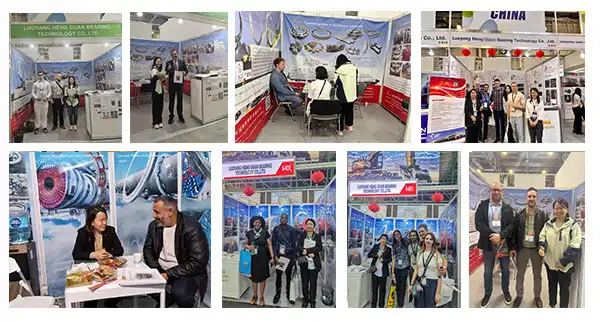
Luoyang Heng Guan Bearing Technology has been creating and making Heavy-Duty Slewing Bearings from 20 mm to 10,000 mm in diameter for more than 20 years. Our ISO 9001-certified facility in Luoyang, China's bearing manufacturing hub, has 50 engineers who can solve even the most difficult application problems. The facility has modern CNC machining tools. Heavy-Duty Slewing Bearing sets with precision grades from P0 to P4 are what we make. We help businesses from wind power to aerospace by making unique solutions that fit right into the designs of your equipment. Our customers in Asia, Europe, and the United States show that we are committed to quality and on-time service. You can email our engineering team at mia@hgb-bearing.com to talk about your unique needs and look at all of our products. Heng Guan has the technical depth and manufacturing quality that your critical applications need, whether you need a Heavy-Duty Slewing Bearing manufacturer for a one-time answer or a steady supply of these bearings.
References
1. American Bearing Manufacturers Association. "Load Rating Standards for Industrial Slewing Bearings." Technical Publication Series, 2021.
2. Budynas, Richard G., and Keith Nisbett. "Shigley's Mechanical Engineering Design, 11th Edition." Chapter 11: Rolling-Contact Bearings, McGraw-Hill Education, 2020.
3. Harris, Tedric A., and Michael N. Kotzalas. "Essential Concepts of Bearing Technology, 5th Edition." CRC Press, 2019.
4. International Organization for Standardization. "ISO 12043:2020 - Rolling Bearings - Single-Row Cylindrical Roller Bearings - Dimensions and Load Capacities."
5. Khonsari, Michael M., and E. Richard Booser. "Applied Tribology: Bearing Design and Lubrication, 3rd Edition." John Wiley & Sons, 2017.
6. Society of Tribologists and Lubrication Engineers. "Bearing Lubrication and Maintenance Guidelines for Industrial Applications." STLE Special Publication, 2022.

WHAT OUR CUSTOMERS SAY
Here is the customer's evaluation of us
_1776668700508.webp)