



Excavator Slewing Bearing Replacement: What Should Buyers Check?
Replacing an excavator slewing bearing is not a purchase to rush: a bad match on size, load rating, or quality may cost considerably more in downtime than the part itself. Heng Guan Bearing partners with equipment owners and dealers that appreciate straightforward instruction for purchasing a replacement, not simply a part number taken from an outdated catalog. This book will teach you how to see the warning indications that it’s time for a replacement, understand what specs are really important, and learn how to check quality before you purchase.
|
|
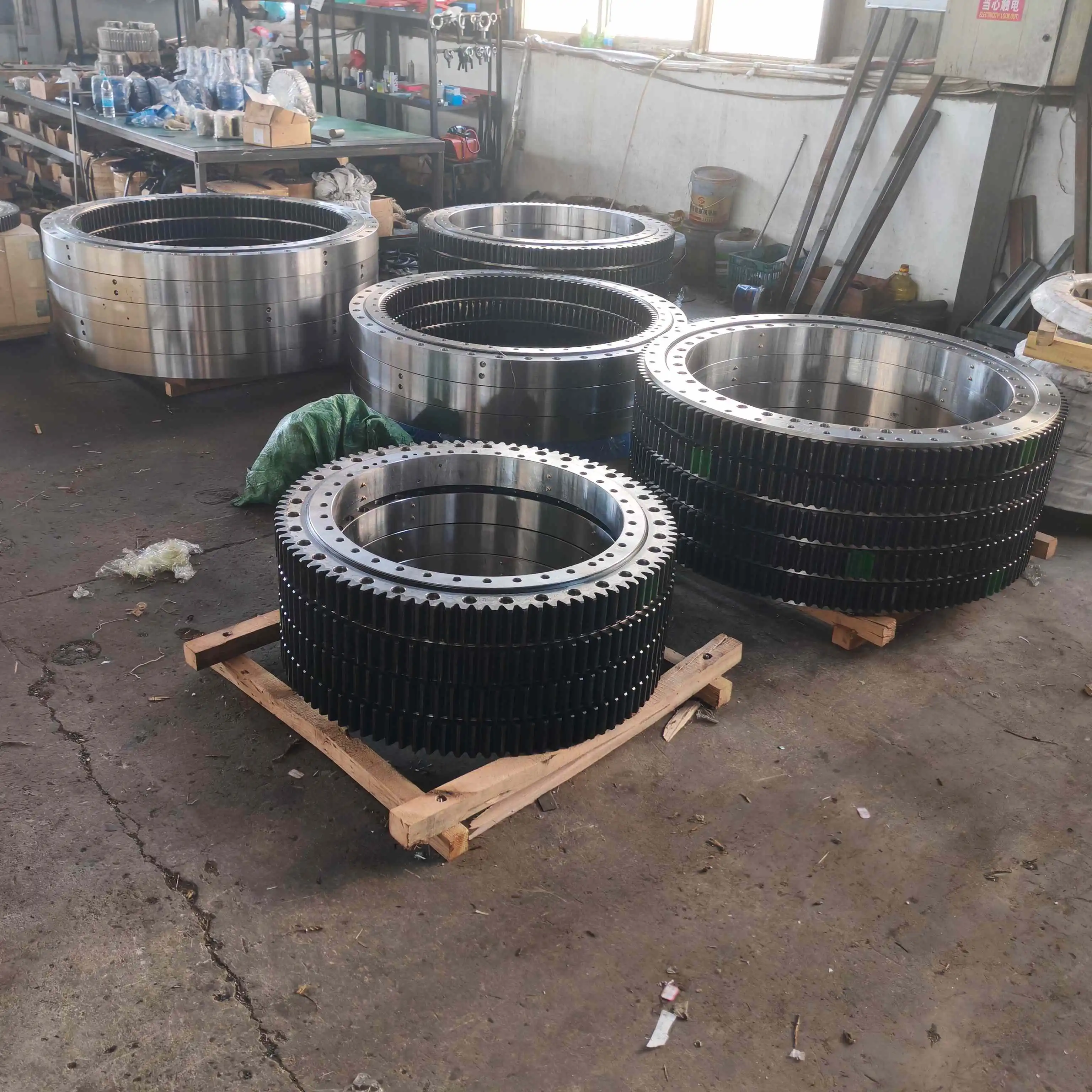
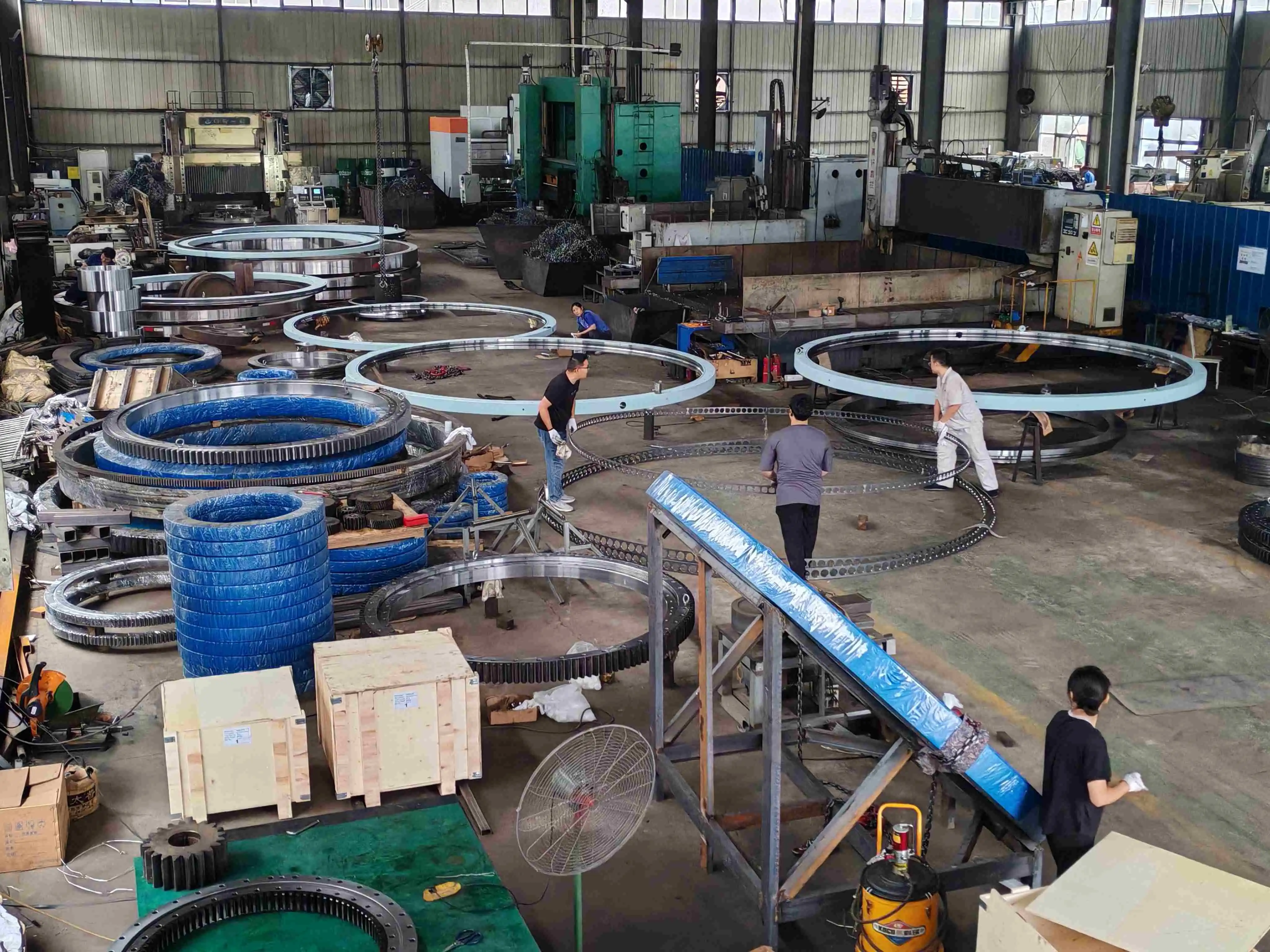
What Are the Key Signs That an Excavator Slewing Bearing Needs Replacement?
Most excavator slewing bearing problems don’t happen without notice, but rather build up over time, and operators may identify them early if they know what to look for. Common signs are: unusual noise during swing action, evident play in the top structure, uneven oil leaking, and rougher-than-normal rotation. Ignoring these signals just speeds wear on adjacent parts like the swing gear and mounting bolts, making a single part replacement a much more extensive repair.
Heng Guan Bearing advises you to arrange an examination as soon as any symptoms occur. The sooner you notice wear, the sooner you can obtain the correct replacement rather than having to make a hasty choice during unforeseen downtime.
| Warning Sign | What It Usually Indicates |
|---|---|
| Unusual swing noise | Raceway or ball/roller wear |
| Visible play in the upper structure | Excessive internal clearance |
| Grease leakage or discoloration | Seal wear or contamination |
| Rough or uneven rotation | Raceway damage or misalignment |
Excavator Slewing Bearing Size, Bolt Pattern, and Gear Compatibility
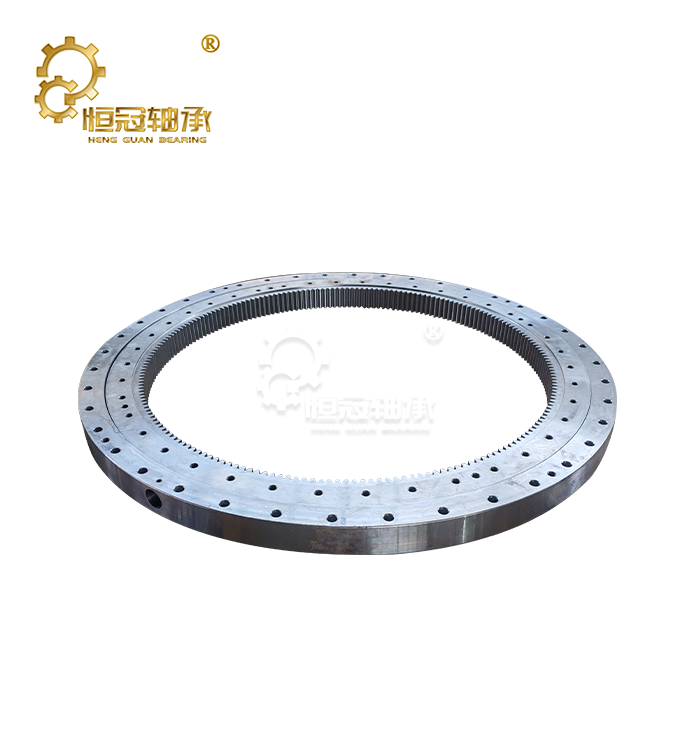
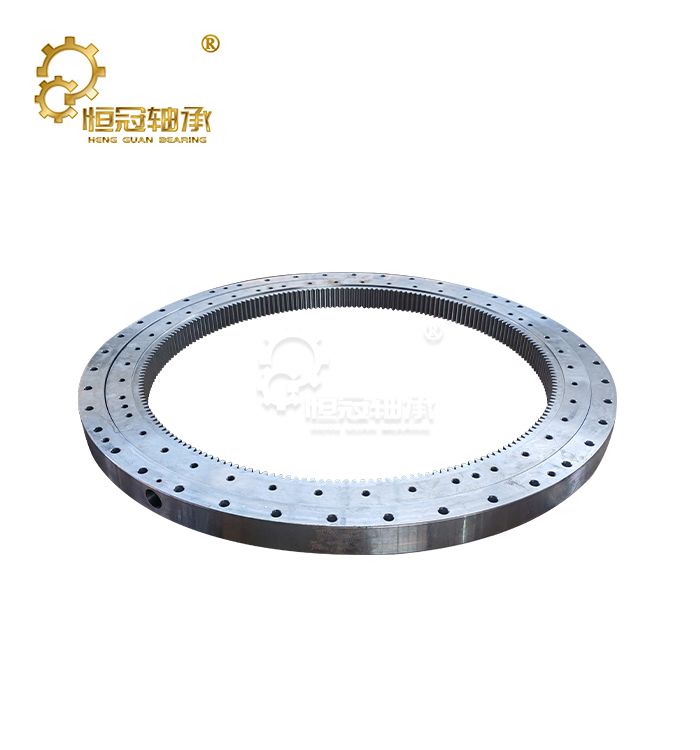
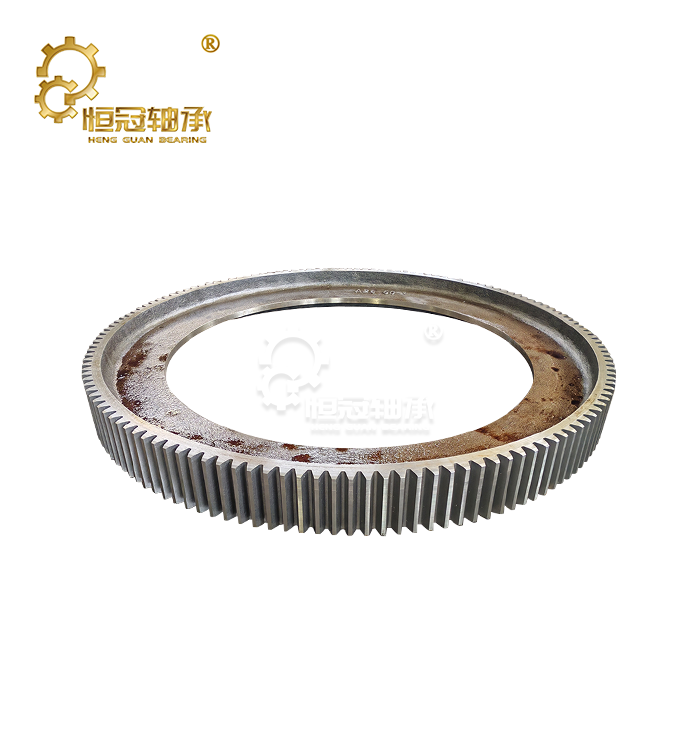
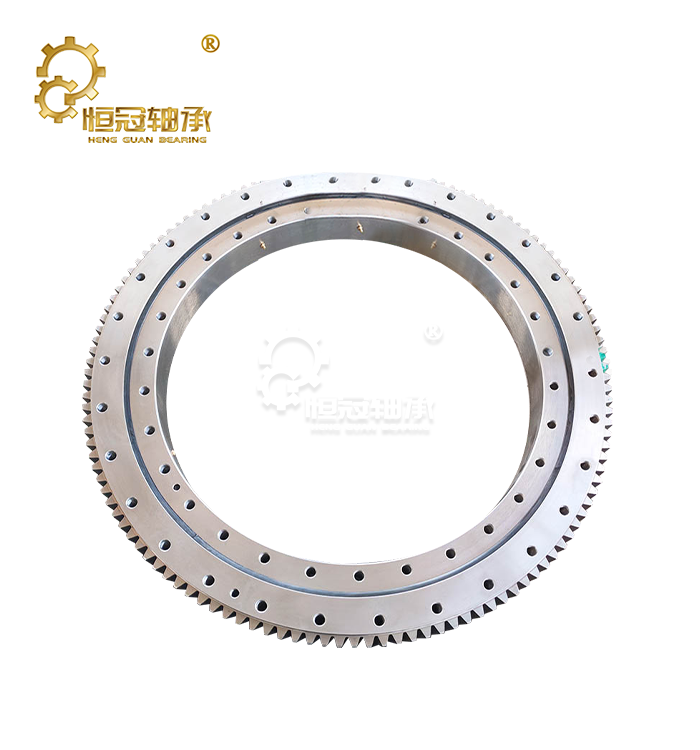
Getting the measurements properly is when many replacement orders go awry. The bolt circle diameter, number of bolt holes, outer diameter, and inner diameter of an excavator slewing bearing must be identical to the original; any little differences would impede correct mounting or lead to unequal load distribution after installation. Equally important is the compatibility of the gears. The tooth module, pressure angle, and tooth count must match the current swing drive to prevent premature wear on the gears.
An expert excavator slewing bearing supplier cross-references OEM part numbers or reverse-engineers the measurements from a worn sample, helping purchasers who no longer have original paperwork. These characteristics vary quite fast from machine to machine, as you will see in the examples below; thus, it is important to match each value to your individual model.
| Excavator Model | OD (mm) | ID (mm) | Tooth Count | Weight (kg) |
|---|---|---|---|---|
| Komatsu PC200-8 | 1321 | 1080 | 96 | 240 |
| CAT 320D | 1316 | 1081 | 110 | 235 |
| Komatsu PC700-8 | 1980 | 1540 | 112 | 1200 |
How Do You Check Load Capacity and Mounting Accuracy Before Ordering?
Load capacity is not something to estimate loosely: an undersized excavator slewing bearing wears out quickly under the combined axial, radial, and moment loads of digging and swinging. Confirm the machine's operating weight, duty cycle, and any attachment changes that raise load beyond design intent — four-point contact ball units suit small and mid-size machines, while double-row and three-row roller structures add capacity for larger classes.
Mounting accuracy matters equally: surface flatness should stay within 0.1 mm per metre, bolts should be tightened diagonally at 30%, 70%, and 100% of torque, and a retightening pass follows the first 100 operating hours. If you are unsure which structure or rating fits your machine, send your model and application details to mia@hgb-bearing.com for a specific recommendation rather than a guess from a general spec sheet.
| Factor to Confirm | Why It Matters |
|---|---|
| Operating weight | Determines the required load rating |
| Duty cycle | Affects fatigue life expectations |
| Mounting surface flatness | Prevents uneven load distribution |
| Bolt torque sequence | Ensures consistent clamping force |
Excavator Slewing Bearing Material, Heat Treatment, and Quality Standards
In the field, the service life of an excavator slewing bearing is determined by the material and heat treatment. Raceways are induction-hardened to HRC 55-60 with a case depth of 2.5-5 mm to prevent rolling-contact wear. Gear teeth are hardened to HRC 45-50, and the ring core is sufficiently robust to absorb digging shocks. One of the most obvious indications of a regulated process is uniform case depth all the way around the raceway circle; therefore, request hardness data immediately.
Dimensional inspection and material certification should also be part of the quality criteria, and documented heat-treatment techniques differentiate one excavator slewing bearing vendor from another when the price alone seems to be identical. Every order from Heng Guan Bearing comes with these records so that customers may compare on proof and not supposition.
| Parameter | Specification |
|---|---|
| Ring Base Material | 42CrMo / 50Mn special alloy steel |
| Rolling Elements | GCr15SiMn bearing steel, 10–60 mm |
| Raceway Hardness | HRC 55–60, induction hardened, 2.5–5 mm depth |
| Gear Tooth Hardness | HRC 45–50 |
| Cage Options | Brass, steel, or nylon (PA6/PA66) |
| Sealing | Double-lip, NBR or FKM |
| Working Temperature | –30 °C to +60 °C |
How Can Buyers Verify Excavator Slewing Bearing Quality and Service Life?
Checking quality before the item ships prevents consumers from getting surprises after installation. Don’t take the excavator slewing bearing provider’s marketing statements at face value – ask for hardness test results, raceway inspection reports, and projected service life for your duty cycle. Properly manufactured replacement bearings, when properly lubricated, often last between 8,000 and 15,000 working hours.
Check the grease specification and the relubrication interval, which is normally between 250–500 hours but may be reduced to 100–250 hours in dusty or damp circumstances. You may also gauge a manufacturer's confidence in their own goods by comparing warranty terms from other providers. Buyers who follow these procedures routinely report fewer repeat replacements and a reduced total cost of ownership throughout the life of the equipment.
Conclusion
Checking wear signs, dimensions, load capacity, and material quality helps buyers choose the right excavator slewing bearing. Heng Guan Bearing supports this process with documented quality data and responsive technical guidance.
FAQ
Q1: What are the most common signs a slewing bearing needs replacing?
Unusual swing noise, visible play, grease leakage, and rough rotation are the most common early signs.
Q2: How do I confirm bolt pattern compatibility for a replacement bearing?
Match bolt circle diameter, hole count, and overall dimensions to the original part or machine documentation.
Q3: Can a replacement bearing be sourced without the original part number?
Yes, reverse-engineering from a sample or machine measurements is possible when documentation is unavailable.
Q4: What heat treatment should I look for in a quality bearing?
Induction-hardened raceways with consistent hardness depth are a strong indicator of manufacturing quality.
Q5: How can I verify a supplier's quality before ordering?
Request hardness test data, inspection reports, and warranty terms before placing a full order.
Q6: How long does it take to produce a replacement excavator slewing bearing?
Standard sizes ship within 2–3 weeks; custom configurations typically take 4–6 weeks depending on complexity and production schedule.
Ready to Replace Your Excavator Slewing Bearing?
Not sure which excavator slewing bearing fits your machine? Contact Heng Guan Bearing's team at mia@hgb-bearing.com with your model details for a specification match, inspection data, or a replacement quote — standard sizes ship in 2–3 weeks and custom configurations in 4–6 weeks.
References
1. International Organization for Standardization. (2013). ISO 199:2013 — Rolling Bearings — Thrust Bearings — Dynamic Load Ratings and Rating Life. Geneva: ISO.
2. International Organization for Standardization. (2006). ISO 76:2006 — Rolling Bearings — Static Load Ratings. Geneva: ISO.
3. International Organization for Standardization. (2007). ISO 281:2007 — Rolling Bearings — Dynamic Load Ratings and Rating Life. Geneva: ISO.
4. Harris, T. A., & Kotzalas, M. N. (2006). Rolling Bearing Analysis: Essential Concepts of Bearing Technology and Advanced Concepts of Bearing Technology, 5th Edition. Boca Raton, FL: CRC Press.
5. ASM International. (1995). Heat Treater's Guide: Practices and Procedures for Irons and Steels, 2nd Edition. Materials Park, OH: ASM International.
6. International Organization for Standardization. (2015). ISO 9001:2015 — Quality Management Systems — Requirements. Geneva: ISO.

WHAT OUR CUSTOMERS SAY
Here is the customer's evaluation of us