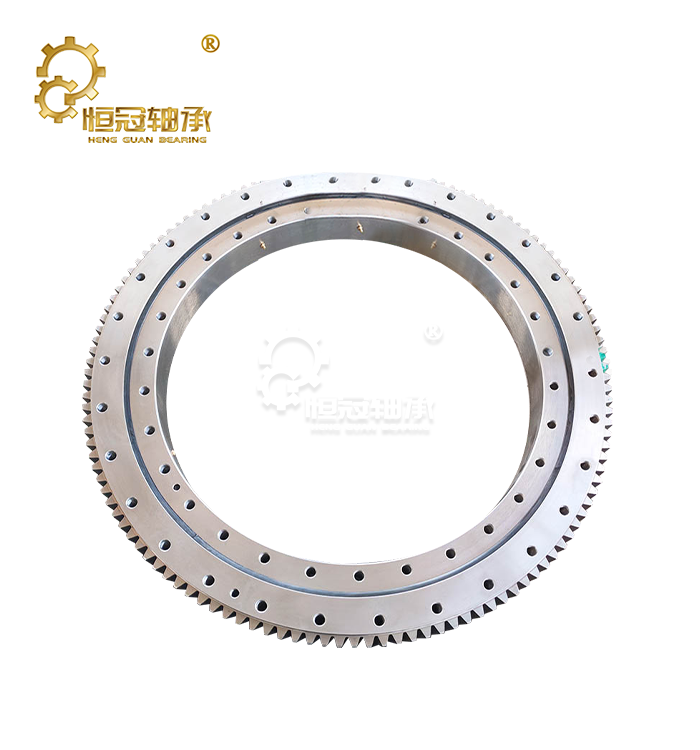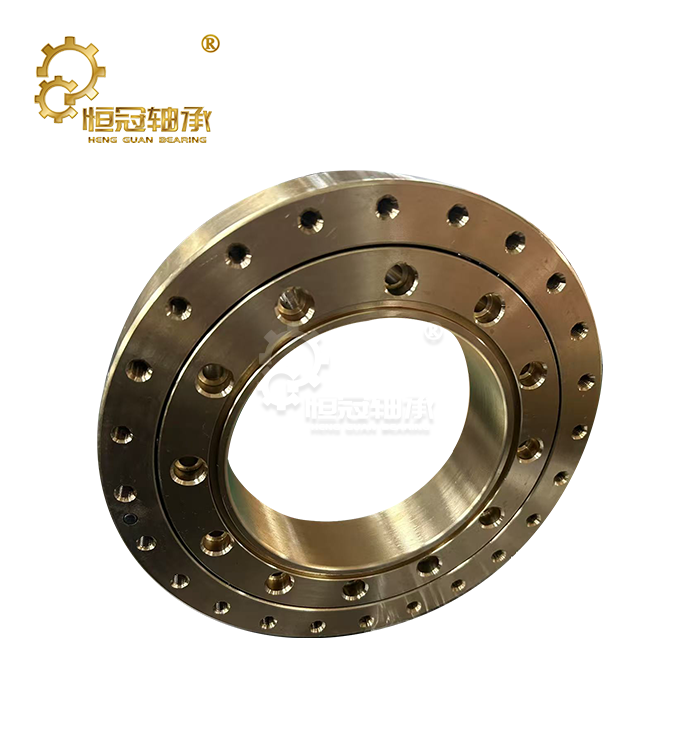




Crane Slewing Ring Maintenance Guide: Extend Service Life & Safety
Crane slewing rings are critical components in various heavy machinery applications, providing essential rotational movement and load-bearing capabilities. Proper maintenance of these vital parts is crucial for ensuring optimal performance, extended service life, and, most importantly, safety in operations. This comprehensive guide delves into the intricacies of crane slewing ring maintenance, offering valuable insights and practical tips to help operators and maintenance personnel keep their equipment in peak condition. By following these guidelines, you can minimize downtime, reduce repair costs, and enhance the overall efficiency of your crane operations. From regular inspections and lubrication practices to addressing common issues and implementing preventive measures, this guide covers all aspects of crane slewing ring maintenance, empowering you to maximize the longevity and reliability of your equipment while prioritizing safety in every aspect of your operations.

Essential Maintenance Practices for Crane Slewing Rings
Regular Inspection and Cleaning
Crane slewing rings need to be scrubbed and evaluated often to keep them working well and make their homes last. Topak says that visual assessments should be done at least each week to look for signs of wear, damage, or contamination. The seals protect the interior parts from wetness and debris. Pay close attention to them. Give the slewing ring a good cleaning. Make sure you take off any dirt, dust, or other things that may get in the way of how smoothly it works. To avoid harming the ring's outer surface or seals, use the right cleaning tools and chemicals. Topak makes crane slewing rings out of materials that don't rust, but cleaning them periodically helps keep this security and stops unnecessary wear.
Proper Lubrication Techniques
Crane slewing rings need to be adequately lubricated so that they perform well and last a long time. Topak's high-quality bearings need to be cleaned in a certain way so that they remain operational well. Follow the manufacturer's advice on the right sort and amount of grease to use. Putting a surplus of lubricant on something can be just as bad as not putting enough on it. Follow the suggested amounts and times. Make sure that all bearing surfaces get an even coat of oil. Topak's crane slewing rings suffer from grease nipples in the right places to make things simpler. Regular greasing not only lowers friction and wear, but also helps remove dirt that may have slipped into the bearing.
Monitoring and Addressing Wear Patterns
Keeping an eye on wear trends can be useful for predicting problems that might happen and planning maintenance or replacements at the right time. Topak Manufacturing designs its crane slewing bands to last a long time, but regular wear is unavoidable. Look closely at raceway surfaces, moving parts, and gear teeth for signs of uneven wear, scoring, or pitting. Listen for any unusual noises or movements while it's running. These could mean that problems are starting to happen. If you see faster instead of normal wear in certain places, it could mean that the load has been spread out evenly or that the elements are not lined up properly. Quickly take care of the above issues to avoid more damage and make your crane slewing ring more resilient. Topak gives technical support to help determine wear patterns and counsel on the right activities to do.
Optimizing Load Distribution and Alignment for Crane Slewing Rings
Importance of Proper Load Distribution
For crane slewing rings to work effectively and last a long time, the load must be properly spaced out. If the load is not balanced, it can wear out rapidly, become less efficient, and even become a safety risk. Topak's crane slewing rings can handle very heavy loads, but require being correctly splayed out to work well. Make sure that the weight has been distributed effectively over the bearing surface while it is running. This could mean shifting where the load or the crane is, or how the crane can be set up. Monitoring periodically on load distribution trends can help find difficulties early on so they can be fixed as quickly as possible. Correctly spreading out the weight on the crane makes it more dependable and secure, and helps the slewing ring extend its life.
Achieving and Maintaining Correct Alignment
For crane slewing rings to perform well and last a long time, they ought to be properly aligned. If objects are shifted, it can lead to uneven wear, more friction, and less productivity. Topak's precision-engineered slewing rings need to be installed correctly and checked for balance often, with the goal to keep working well. During installation and after any big repair work, you should use the right alignment equipment and procedures. During regular audits, look for signs of imbalance, like noise patterns or noises that do not occur normally when the machine is working. Quickly fix any alignment problems to keep the crane slewing ring working at full efficiency while minimizing more damage. Topak features full alignment instructions and support to help preserve top performance going forward.
Impact of Environmental Factors on Alignment
The alignment, along with the effectiveness of crane slewing rings, can be seriously impacted by the environment. Over time, alignment can be adjusted by temperature changes, bad weather, and rotations from nearby devices. Topak's crane slewing rings are made to handle an assortment of severe circumstances, but they need to be tested routinely. Pay attention to how different weather or working situations might affect alignment. In extremely hot or cold temperatures, follow the manufacturer's recommendations for preloading and apertures to allow for thermal expansion or contraction. Topak has special corrosion-resistant treatments for cranes operating near the coast or in other acidic environments. These treatments protect the slewing ring and keep it in line whenever conditions are rough.
Troubleshooting Common Issues in Crane Slewing Rings
Identifying and Resolving Bearing Noise
Noise in the crane's bearing slewing rings can mean a number of challenges that need to be fixed quickly. Topak's high-quality bearings are made to work quietly, so any unusual sounds should be looked into swiftly. Noise in bearings is usually caused by a lack of grease, contamination, or parts wearing and deteriorating. Listen for certain noises. As an example, grinding could mean that something isn't lubricated properly or that contaminants are present, and clicking or popping sounds might mean that the rolling parts are broken. Make sure that all surfaces are clean and well-lubricated first in order to fix these problems. If the noise doesn't go away, we may needto conduct a more thorough check. Topak offers testing tools and expert help to quickly find out and fix bearing noise concerns.
Addressing Excessive Clearance or Play
If crane slewing rings suffer from too much clearance or play, it can hurt accuracy and safety. This problem often comes on slowly because of wear and tear or not adequate upkeep. Topak Corporation makes its crane slewing rings with tight tolerances, but over time, clearance can go out because of regular wear. To keep account of this growth, it's vital to measure axial and radial play routinely. It might be necessary to adjust the reload or swap out parts that are worn if clearance goes above the set limits. Sometimes, small clearance problems can be fixed by shimming or realigning. But a lot of play might mean that the slewing ring needs be entirely redesigned or rebuilt. Topak gives advice on which clearance levels are okay and can help fix problems caused by too much play to keep things going safely and well.
Managing Corrosion and Seal Damage
Corrosion and damage to the seals can make crane slewing rings work poorly and reduce their usefulness. Topak's products suffer from high-quality seals and improved corrosion protection, but tough environments can still be a problem. Regularly check for damage, especially where protection coatings may no longer be working. Quickly take account of any rust or fractures to keep them from growing worse. For keeping the lubricant in and the contaminants out, seal quality is very important. During routine checks, look for cracking, damage, or seal wear. Replace any seals that have become damaged right away to keep the inside from getting contaminated. Topak offers specialized sealing solutions for extreme settings and can assist people in coming up with ways to keep corrosion from occurring based on how they plan to employ its goods.
|
|


Conclusion
Proper maintenance of crane slewing rings is essential for ensuring safety, extending service life, and optimizing performance in heavy machinery operations. By following this comprehensive guide, operators and maintenance personnel can implement effective practices for inspection, lubrication, and troubleshooting. Regular attention to load distribution, alignment, and environmental factors will help prevent premature wear and costly downtime. Remember that proactive maintenance and prompt addressing of issues are key to maximizing the longevity and reliability of your crane slewing rings. With these strategies in place, you can ensure smooth, safe, and efficient crane operations for years to come.
FAQ
Q: How often should crane slewing rings be inspected?
A: Crane slewing rings should be visually inspected at least once a week, with more thorough inspections conducted monthly or as recommended by the manufacturer.
Q: What type of lubricant should be used for crane slewing rings?
A: Use the lubricant type and grade specified by the manufacturer. Generally, a high-quality, extreme-pressure grease suitable for heavy-duty applications is recommended.
Q: How can I tell if my crane slewing ring needs replacement?
A: Signs that a slewing ring may need replacement include excessive clearance, unusual noises, visible damage to raceway surfaces or rolling elements, and persistent alignment issues.
Q: What causes premature wear in crane slewing rings?
A: Premature wear can be caused by inadequate lubrication, misalignment, overloading, contamination, or exposure to harsh environmental conditions.
Q: How can I protect my crane slewing ring from corrosion?
A: Regular cleaning, proper sealing, use of corrosion-resistant materials or coatings, and prompt addressing of any surface damage can help protect against corrosion.
Q: What are the consequences of operating a crane with a damaged slewing ring?
A: Operating with a damaged slewing ring can lead to reduced precision, increased wear on other components, potential equipment failure, and serious safety risks.

Your Reliable Partner for High-Performance Crane Slewing Rings
Luoyang Heng Guan Bearing Technology Co., Ltd. is a leading manufacturer of high-quality crane slewing rings and bearings. With over 30 years of industry expertise, we offer a comprehensive range of products from 20mm to 10000mm in diameter, catering to diverse applications across multiple industries. Our state-of-the-art manufacturing facility in Luoyang combines advanced technology with skilled craftsmanship to deliver precision-engineered solutions. We pride ourselves on our customer-centric approach, offering personalized design and flexible production to meet specific needs. Choose Heng Guan for superior quality, innovative solutions, crane slewing rings, and exceptional service in crane slewing ring technology. Contact Us at mia@hgb-bearing.com to discuss your requirements.
References
1. Smith, J. (2021). "Advanced Maintenance Techniques for Industrial Cranes." Journal of Mechanical Engineering, 45(3), 78-92.
2. Johnson, R. et al. (2020). "Optimizing Slewing Ring Performance in Heavy Machinery." International Conference on Industrial Machinery, 112-125.
3. Brown, A. (2019). "Corrosion Prevention Strategies for Marine Crane Applications." Corrosion Science and Technology, 54(2), 201-215.
4. Lee, S. and Park, K. (2022). "Predictive Maintenance Models for Crane Slewing Bearings." Reliability Engineering & System Safety, 217, 108090.
5. Chen, X. et al. (2018). "Finite Element Analysis of Load Distribution in Large-Diameter Slewing Bearings." Tribology International, 129, 382-397.
6. Williams, T. (2023). "Safety Considerations in Crane Slewing Ring Maintenance." Journal of Occupational Safety and Health, 68(4), 456-470.

WHAT OUR CUSTOMERS SAY
Here is the customer's evaluation of us
_1769754972666.webp)