



Why Quality Slew Bearings Boost Equipment Reliability?
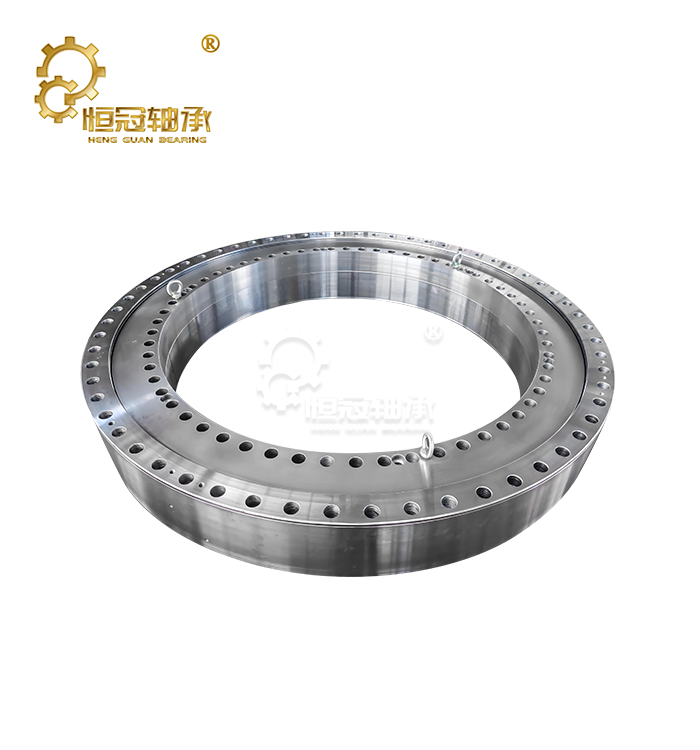
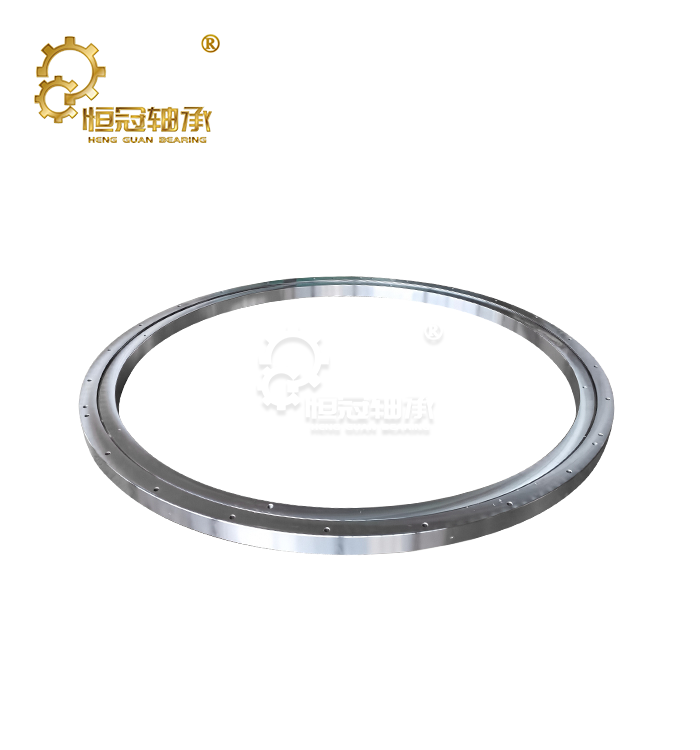
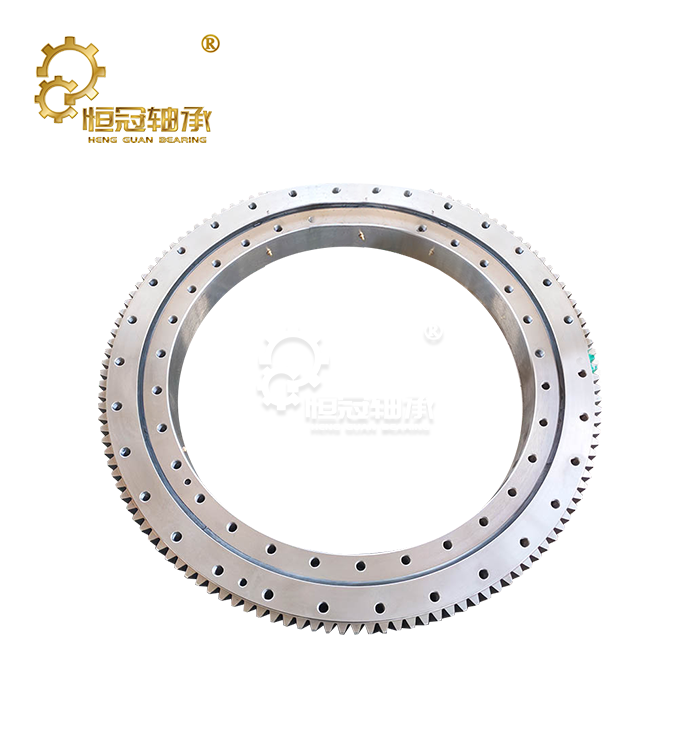
Quality slew bearings are the building blocks of reliable equipment because they allow exact rotational control and can handle complicated load combinations such as axial forces, radial loads, and tilting moments.Choosing a superior slew bearing is not only an issue of a stronger replacement part. The design of the bearings, the quality of the materials, the precision of the manufacturing, the performance of the sealing, and the application engineering significantly influence the availability of the equipment, the frequency of maintenance, and the overall operating expenses. Unplanned downtime, positioning precision, and the life of expensive gear can all be protected by well-constructed bearings.
It is important for equipment makers and industrial operators to understand how bearing quality impacts reliability. The correct bearing solution does more than simply support rotation—it increases operating stability and decreases the hazards of premature wear, contamination, and overload circumstances.
How Slew Bearing Quality Determines Long-Term Equipment Reliability?
Material Quality Creates the Foundation for Bearing Durability
The starting point of bearing service life is the quality of the material used in the construction of a bearing. Heavy demanding applications expose slew bearings to constant loads, shock forces, vibration, and changing operating conditions. If the bearing material cannot provide sufficient strength and fatigue resistance, surface damage and deformation can take place considerably earlier than intended.
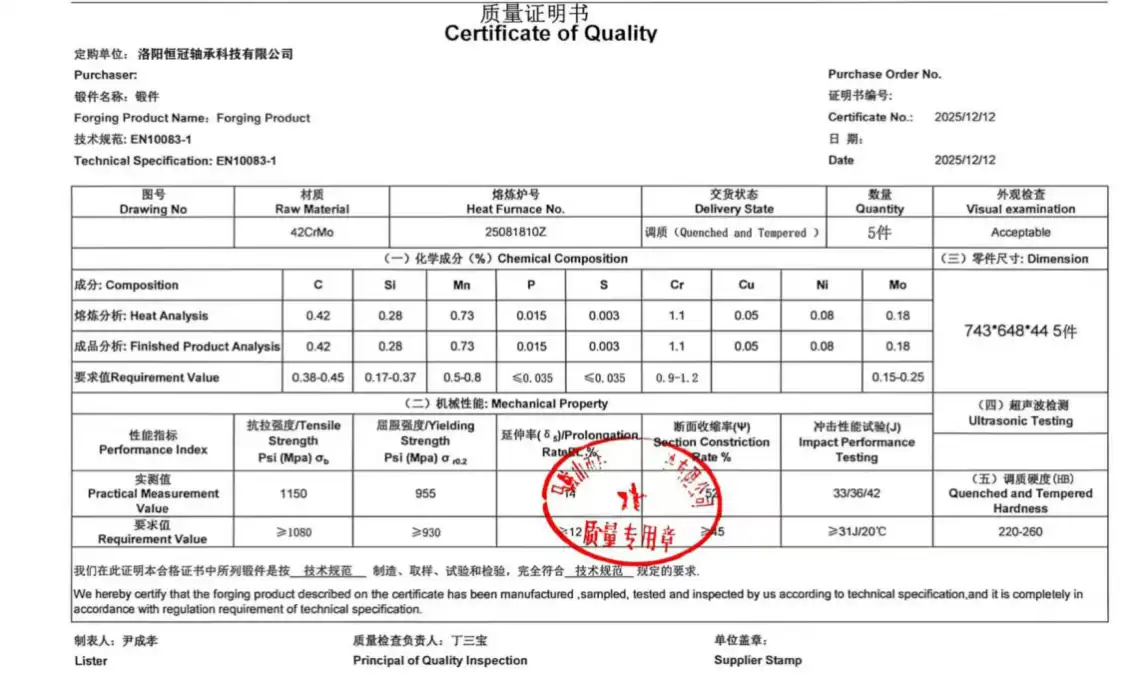
High-performance steel grades like 42CrMo and 50Mn are often chosen for demanding slew bearing applications due to their good balance of hardness, toughness, and load-carrying capacity. Manufacturers can use regulated heat treatment procedures to enhance the steel’s internal structure, allowing the bearing rings to resist numerous stress cycles without early fatigue cracking.
The material quality also impacts the impact load response of the bearing. For example, construction equipment is subjected to abrupt force changes when lifting, digging, or rotating with uneven loads. A correctly prepared bearing raceway can better absorb these forces and keep stable contact between rolling components and raceways.
In addition to the selection of steel, tracability of the material is an essential indicator for the reliability of manufacture. Records of raw material certificates, heat treatment results, and inspection data are normally maintained by professional bearing manufacturers. These techniques assist in assuring that each bearing fulfills mechanical performance standards necessary for when it is delivered to the customer.
Precision Manufacturing Reduces Wear and Operating Instability
High-grade materials require precise manufacture to provide consistent performance. The operation of slew bearings depends upon the accurate contact of raceways and rolling elements such that even tiny dimensional inaccuracies can cause uneven distribution of loads and increased wear.
The bearing performance is directly affected by the machining accuracy, grinding quality, and assembly control in the production process. A smoother raceway surface decreases friction between contact surfaces, hence helping to decrease heat generation and mechanical stress during operation. The uniform manufacturing tolerances also allow the loads to be dispersed more uniformly through the bearing construction.
The challenges caused by poor manufacturing accuracy are as follows:
Uneven contact pressure of rolling elements and raceways, increased vibration in rotation, abnormal noise in operation, fast fatigue damage, and reduced positioning precision.
These concerns may directly affect the operating safety and productivity of equipment like cranes and robotic handling systems. Precision manufacturing helps guarantee the bearing will perform consistently during its expected service life.
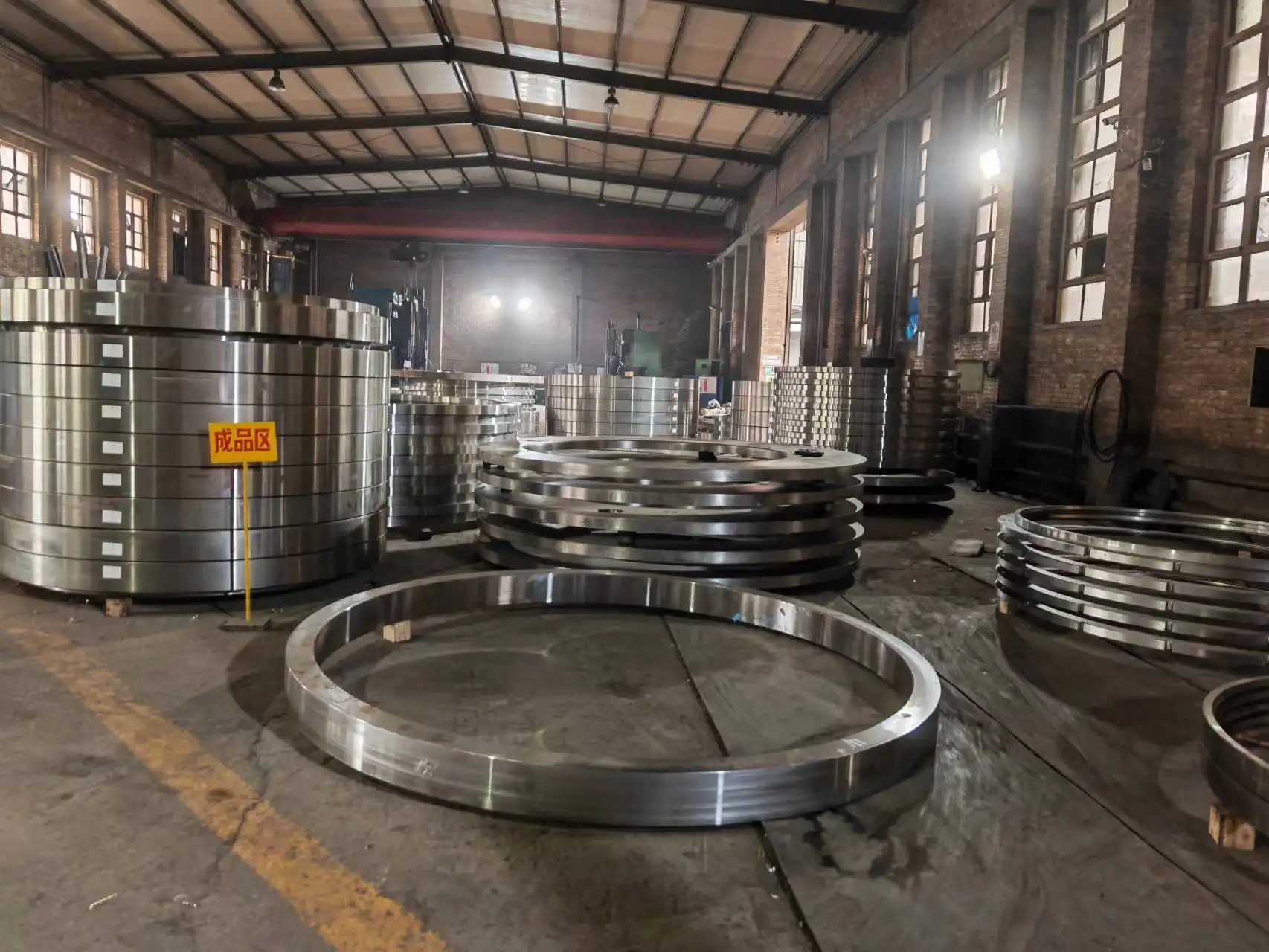
Quality-focused manufacturers would normally have inspection methods such as dimension measurement, hardness testing, final assembly inspections, etc. These techniques eliminate variation from bearing to bearing and give consumers more predictable performance.
Why Does Bearing Design Have a Direct Impact on Equipment Performance?
Advanced Sealing Systems Protect Against Environmental Damage
Much equipment failure is not due to lack of load capacity but to contamination and lubrication difficulties. Bearings operating in outdoor or severe industrial situations are continually exposed to dust, moisture, chemicals, and temperature variations.
The first protection barrier is the reliable sealing system. Multi-stage sealing arrangements are common for high-grade slew bearings. These restrict the ingress of contaminants into the interior bearing region, aiding the retention of lubricants.
This is especially significant in applications such as the following:
Salt spray on offshore wind turbines.
Mining equipment running in dust.
Construction machinery operating in mud and dampness.
Port cranes exposed to tough weather.
Poor sealing performance causes impurities to combine with grease and generate abrasive particles inside the bearing. These particles can cause damage to the raceway surfaces over time, increasing friction and working temperatures and accelerating component wear.
A good sealing system limits these dangers by keeping the inside cleaner. Coupled with proper lubrication, this permits the bearing to work more dependably between maintenance cycles.
Load Distribution Capability Improves Mechanical Stability
Slew bearings are required to handle several types of loads concurrently, such as axial loads, radial loads, and overturning moments. The dependability of the bearing is the ability to equally distribute these forces throughout operation.
High-grade bearings are distinguished by optimized internal geometry to improve the contact conditions between rolling elements and raceways. A better load distribution prevents localized stress concentrations that are frequently precursors to pitting, spalling, and fatigue damage.
For instance, a crane bearing needs to rotate stably under variable lifting loads. If the forces can not be sufficiently absorbed by the bearing structure, excessive deformation may be induced, which affects both safety and positioning accuracy.
Bearing selection should be based on proper engineering study of the bearing design against real operating circumstances. There are many considerations before finally specifying the equipment, including its weight, speed of rotation, duty cycle, and exposure to the environment.
 |  |
The Hidden Cost Advantage of Investing in Quality Slew Bearings
Lower Downtime Creates Higher Operational Value
The initial purchase price is generally the first thing that comes to mind when procuring equipment. But the true cost of a bearing is not the purchase price but the total service life.
A cheaper bearing can be desirable when first budgeting for a project, but if it fails early, it can lead to other cost implications such as
immediate replacement costs
losses from equipment downtime
personnel costs, production delays
damage to attached components
The cost of downtime of the key equipment can be many times the cost of the bearing. Sudden pauses of cranes, excavators, or wind turbines might disrupt entire project deadlines and income projections.
In general, high-quality slew bearings are a superior long-term value as they lower the risks of failure and allow machine operators to schedule maintenance more effectively. With predictable operating circumstances, firms can implement preventative maintenance techniques instead of reacting to unanticipated problems.
Longer Service Life Improves Total Cost of Ownership
A whole cost assessment should include the full life cycle of the bearing, including installation, maintenance, replacement frequency, and availability of equipment.
The advantages of a lasting bearing include the following:
fewer replacement cycles;
less work for maintenance;
higher equipment productivity;
more stable operation;
less chance of harm to secondary equipment.
For OEM makers, using reliable slew bearings also boosts the reputation of the final machine. Equipment users anticipate that machinery will function reliably once delivered, and the dependability of components has a direct impact on customer satisfaction.
Engineering Strategies to Maximize Slew Bearing Performance
Selecting the Right Bearing Specification for Actual Operating Conditions
When selecting the right slew bearings, it’s more than just matching the physical size of an existing part. Engineers need to assess the real working environment, load circumstances, rotation requirements, and maintenance expectations before coming to a conclusion.
“Every application has its own set of challenges. A tower crane bearing may have to resist repeated start/stop cycles; a wind turbine bearing must run reliably for decades under varying wind loads. Mining equipment may require extra protection from dust, vibration, and strong impact pressures.
The key factors that must be addressed while choosing a bearing are the following:
dynamic and static load requirements;
overturning moment capacity;
rotation speed and operation frequency;
temperature range;
exposure to contamination;
lubrication requirements;
estimated service life.
A bearing that is properly suited to the application can run at its design capacity without excessive stress. Otherwise, picking a bearing based solely on cost or simple dimensions can result in poor performance and premature failure.
Application engineering support is provided by several professional bearing suppliers to help their customers analyze their operating circumstances and select the most appropriate bearing structure. This is especially helpful when it comes to bespoke equipment where traditional bearing solutions may not offer sufficient reliability.
Manufacturing Quality Control Ensures Consistent Performance
Slew bearings are reliable because of controlled manufacturing procedures, not because of one production step. Every stage from the preparation of materials to the final inspection affects the final performance of the bearing.
A complete quality control system usually consists of several critical procedures:
Inspection of raw materials:
Fatigue resistance and durability directly depend on steel quality. Material verification allows confirming chemical composition and mechanical qualities before production starts.
Monitoring of Heat Treatment:
Proper heat treatment gives better hardness distribution and toughness. If not processed properly, it may have weak spots that could cause it to fail in operation.
Inspection for machining and grinding:
Precision machining assures the correct size and interaction of the bearing components. Surface quality directly effects friction and vibration and wear behavior.
Last performance testing:
Bearings should be checked before shipment to check dimensions, assembly accuracy, and functioning requirements.
Industrial buyers are more confident in the technology and get a more consistent product from manufacturers who follow established quality control procedures. ISO 9001 and similar certifications signal that production processes are managed and are continually improved, but buyers should also assess real manufacturing capability and inspection standards.

How Do Quality Slew Bearings Improve Performance in Different Industries?
Construction Machinery Requires Strength Under Changing Loads
Construction equipment represents one of the most demanding environments for slewing bearings. Excavators, drilling machines, and cranes frequently experience changing loads, shock impacts, and continuous rotational movement.
In excavator applications, the bearing must support the upper structure while allowing smooth rotation during digging, lifting, and material handling operations. The bearing experiences combined loads from the machine weight, bucket forces, and uneven ground conditions.
Lower-quality bearings may develop problems such as:
increased clearance;
abnormal vibration;
reduced rotation accuracy;
accelerated raceway damage.
High-quality slew bearings help construction equipment maintain stable movement and improve operator control. They also support longer maintenance intervals, allowing machines to remain productive during critical construction projects.
For equipment manufacturers, reliable bearing performance can also reduce warranty risks and improve the overall reputation of their machinery.
Wind Turbine Applications Demand Long-Term Reliability
Wind energy equipment places unique requirements on bearing performance. Unlike many industrial machines, wind turbines are expected to operate continuously for many years with limited maintenance opportunities.
Wind turbine slew bearings must handle the following:
variable wind forces;
repeated load changes;
outdoor exposure;
temperature fluctuations;
corrosion risks.
Offshore wind turbines create even more challenging conditions because salt spray and high humidity can accelerate corrosion if the bearing protection system is insufficient.
For these applications, bearing design usually focuses on:
corrosion-resistant materials;
enhanced sealing structures;
reliable lubrication systems;
condition monitoring compatibility.
A failure in a wind turbine bearing can require complex maintenance operations involving specialized equipment and weather-dependent scheduling. Therefore, investing in reliable bearing solutions during the design stage can significantly reduce long-term operational risks.
Crane and Material Handling Equipment Depend on Precision and Safety
Cranes rely heavily on accurate rotation and stable load support. Whether used in ports, factories, or construction sites, crane slew bearings must maintain performance while handling heavy and changing loads.
A bearing failure in lifting equipment can create serious safety concerns. For this reason, crane manufacturers and operators often prioritize the following:
predictable bearing performance;
sufficient load capacity;
accurate installation;
regular condition monitoring.
Quality bearings help maintain smooth rotation, reduce vibration, and support precise positioning. These benefits improve both equipment efficiency and operator confidence.
In high-cycle applications such as container cranes and industrial handling systems, bearing durability directly affects productivity because unexpected downtime can interrupt entire logistics operations.
What Buyers Should Evaluate Before Choosing a Slew Bearing Supplier?
Manufacturing Capability and Technical Support
Selecting the right supplier is as important as selecting the right bearing design. A reliable manufacturer should demonstrate not only production capacity but also engineering knowledge and quality management ability.
Important supplier evaluation factors include:
experience with similar industrial applications;
ability to manufacture customized designs;
material traceability systems;
inspection and testing capability;
engineering support availability;
after-sales service response.
For OEM customers, supplier capability directly affects production stability. A manufacturer with strong technical experience can help optimize bearing specifications, identify potential risks, and provide solutions for demanding operating environments.
Customization Ability for Specialized Applications
Many industrial machines cannot use standard bearing solutions. Different equipment designs may require customized dimensions, mounting configurations, gear structures, sealing systems, or lubrication methods.
A capable slew bearing manufacturer should be able to support:
customized raceway designs;
special mounting requirements;
different gear configurations;
harsh-environment protection solutions;
application-specific testing.
Customization allows companies to achieve better performance without unnecessary oversizing or excessive costs. Instead of choosing a generic bearing, engineers can develop a solution that matches the actual requirements of the equipment.
Lifecycle Support and Long-Term Partnership
Industrial buyers should consider supplier relationships beyond the first purchase order. Reliable support throughout the bearing lifecycle can significantly improve equipment performance.
A strong supplier partnership may include:
installation guidance;
maintenance recommendations;
replacement planning;
technical troubleshooting;
performance improvement suggestions.
For critical equipment, access to technical support can reduce downtime and help operators respond quickly when operating conditions change.
Conclusion
Quality slew bearings are a key factor in improving equipment reliability, reducing maintenance risks, and increasing long-term operational value. Although initial purchase cost is an important consideration, bearing performance should be evaluated based on total lifecycle impact, including durability, maintenance requirements, and equipment availability.
From construction machinery and cranes to wind turbines and industrial handling systems, reliable bearing performance depends on multiple factors, including material quality, precision manufacturing, sealing protection, correct application selection, and supplier expertise.
For equipment manufacturers and operators, choosing the right slew bearing solution is an investment in operational stability. Working with an experienced supplier that understands load conditions, environmental challenges, and engineering requirements helps ensure that equipment performs safely and efficiently throughout its service life. By focusing on quality rather than short-term cost savings, companies can reduce unexpected failures, improve productivity, and achieve better long-term returns.
 |  |
FAQ
1. How do I determine the right quality level for my specific application?
Consider your equipment's criticality, operating environment, expected service life, and total cost of ownership. High-criticality applications such as wind turbines and construction cranes typically justify premium bearing investments, while standard industrial applications may balance cost and performance differently. Evaluate factors including load requirements, environmental conditions, maintenance accessibility, and downtime costs to determine optimal quality levels.
2. What are the key indicators that my current slew bearings are affecting equipment reliability?
Monitor for increased vibration levels, unusual noise patterns, elevated operating temperatures, shortened lubrication intervals, and unexpected maintenance requirements. Additional warning signs include reduced positioning accuracy, increased power consumption, and visible wear debris in lubrication systems. These indicators often signal bearing quality issues that compromise overall equipment performance and reliability.
3. How can I verify bearing quality before installation in critical equipment?
Request material certifications, dimensional inspection reports, and performance test data from suppliers. Consider third-party quality audits for critical applications and establish incoming inspection protocols for high-value equipment installations. Verify compliance with relevant industry standards and ensure proper documentation for warranty and performance tracking purposes.
Partner with Heng Guan for Superior Slew Bearing Solutions
Heng Guan Bearing Technology stands slew bearings ready to transform your equipment reliability through our comprehensive slew bearing expertise and proven manufacturing capabilities. Our engineering team has successfully delivered customized bearing solutions across construction, mining, wind power, and aerospace applications, helping industrial leaders achieve measurable improvements in operational efficiency. With precision manufacturing capabilities spanning 20-10000mm diameter ranges and accuracy grades from P0 to P4, we provide the technical depth and quality assurance your critical applications demand.Contact our specialists at mia@hgb-bearing.com to discuss your specific requirements and discover why leading manufacturers choose Heng Guan as their trusted slew bearing supplier.
References
1. Johnson, M.R. and Anderson, K.L. "Impact of Bearing Quality on Industrial Equipment Reliability: A Comprehensive Analysis." Journal of Mechanical Engineering Applications, Vol. 45, No. 3, 2023, pp. 127-145.
2. Chen, W.H., Thompson, R.J., and Martinez, S.A. "Load Distribution Analysis in Large-Diameter Slewing Ring Bearings for Heavy Equipment Applications." International Journal of Heavy Machinery Engineering, Vol. 38, No. 2, 2023, pp. 89-107.
3. Williams, P.D. and Roberts, J.K. "Cost-Benefit Analysis of Premium Bearing Investments in Construction Equipment: A Five-Year Study." Construction Equipment Management Review, Vol. 29, No. 4, 2022, pp. 203-218.
4. Kumar, S.R., Davis, L.M., and Wilson, T.H. "Predictive Maintenance Strategies for Slew Bearing Applications in Wind Energy Systems." Renewable Energy Engineering Quarterly, Vol. 17, No. 1, 2023, pp. 45-62.
5. Brown, A.J., Lee, Y.S., and Garcia, M.E. "Material Selection and Heat Treatment Optimization for Extended Bearing Life in Mining Applications." Mining Equipment Technology Journal, Vol. 42, No. 6, 2022, pp. 156-174.
6. Taylor, R.K. and Singh, V.P. "Quality Control Standards and Their Impact on Bearing Performance in Aerospace Applications." Aerospace Bearing Technology Review, Vol. 31, No. 3, 2023, pp. 78-95.

WHAT OUR CUSTOMERS SAY
Here is the customer's evaluation of us