



Why Slewing Bearings Are Critical for Construction Equipment?
Construction machinery works day and night under hard working conditions, back and forth, lifting heavy weights. Excavators digging foundations, cranes lifting materials on construction sites — safe and efficient operation relies on robust rotation systems. Slewing bearings are key parts of these systems, bearing axial loads, radial loads and overturning moments and enabling the huge structures of the machinery to rotate smoothly.
Slewing bearings are the backbone of modern building equipment. They let excavators, cranes and heavy equipment in either direction.The right slewing bearing is important for the equipment manufacturer or operator, because it directly influences the machine’s performance, maintenance costs and service life. The correct bearing may be selected only if the load situation, operating conditions, material requirements and maintenance requirements over the life of the bearing are known.

Understanding the Role of Slewing Bearings in Construction Applications
What Are Slewing Bearings and How Do They Work?
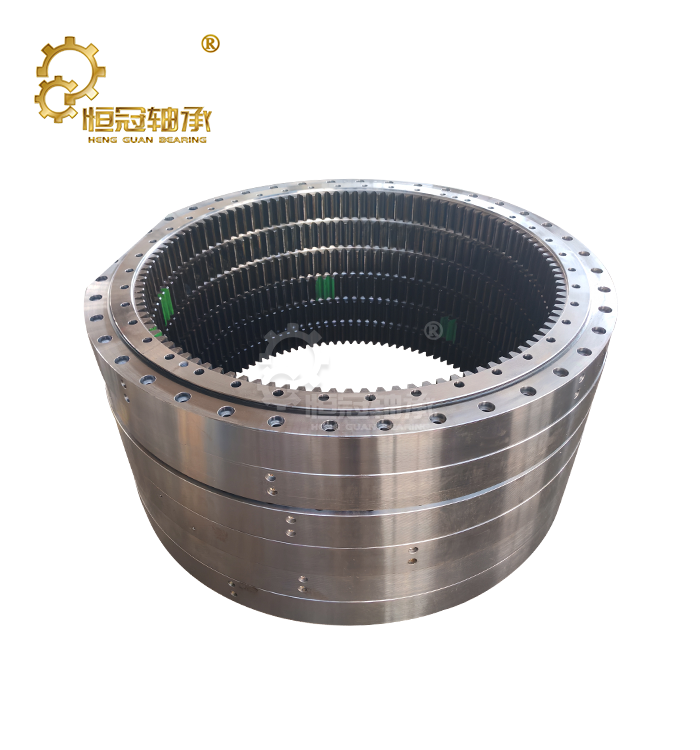
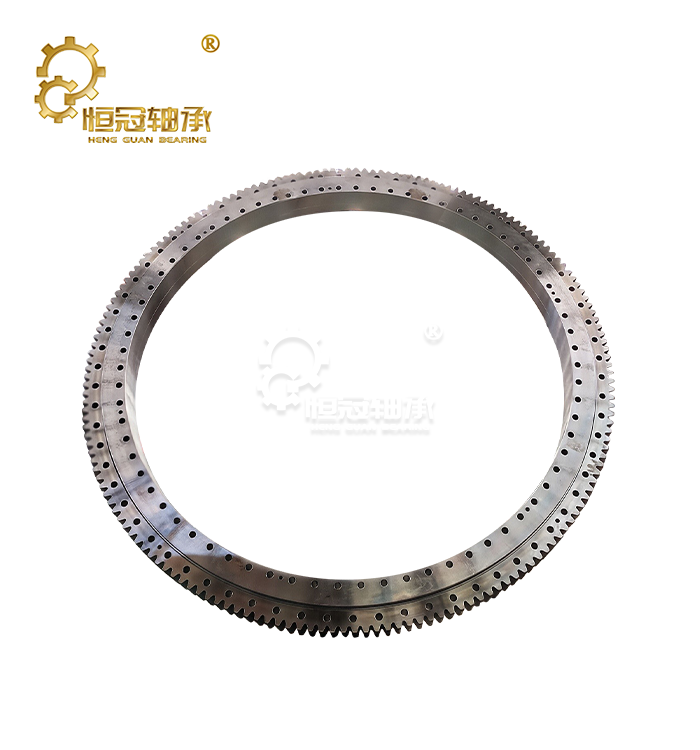
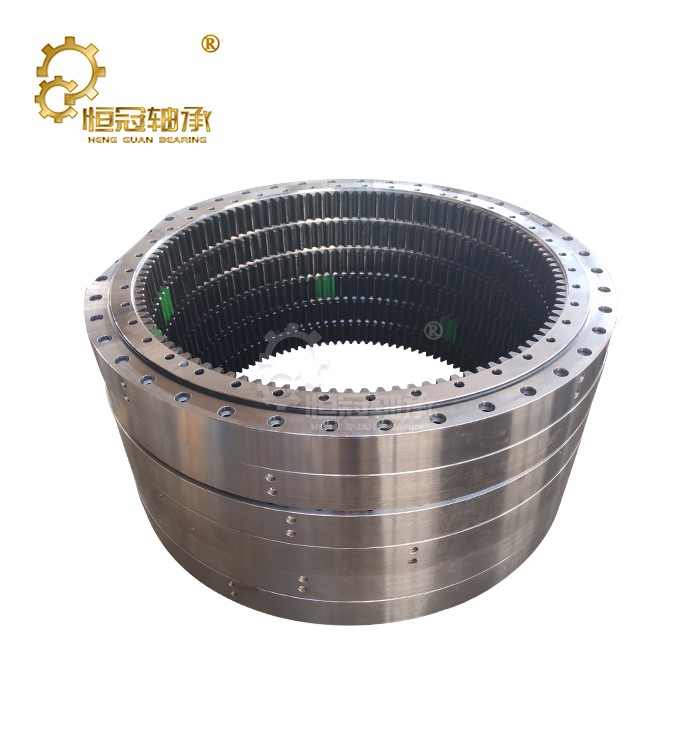
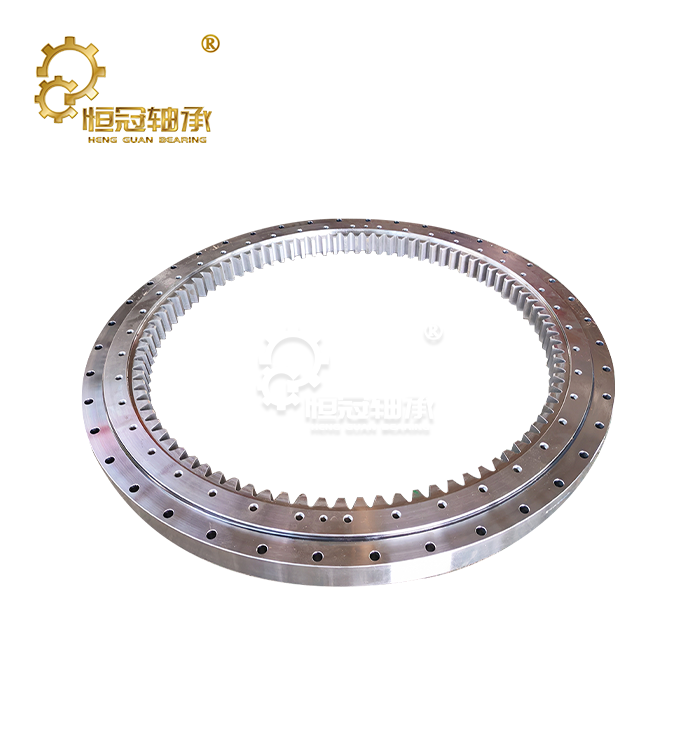
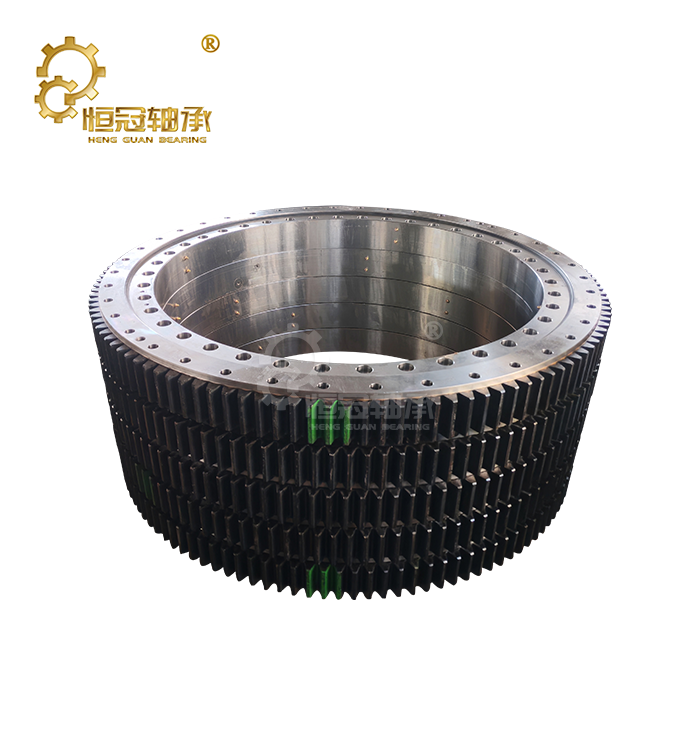
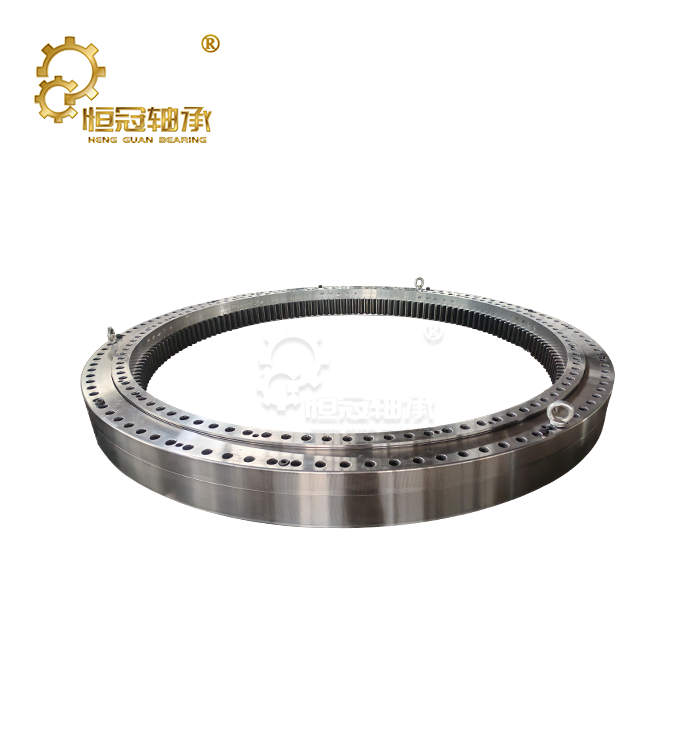
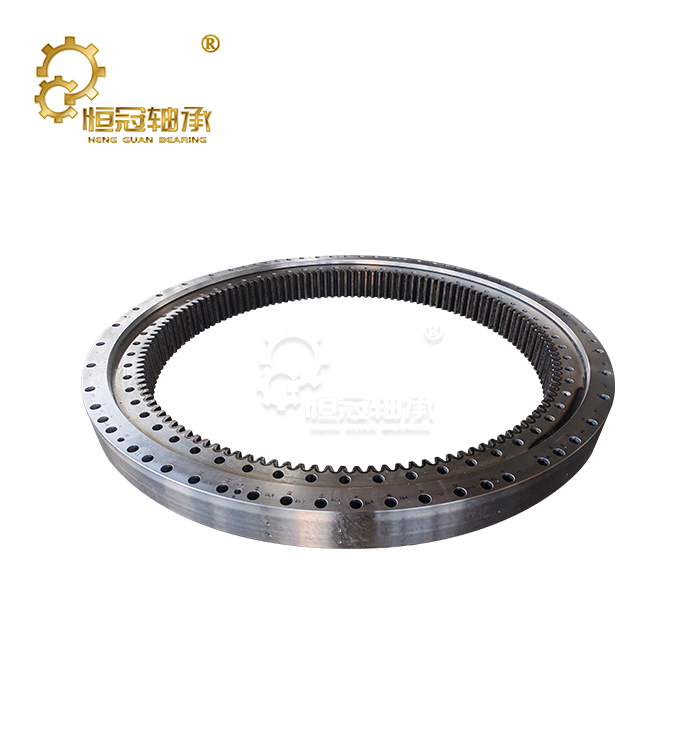
A slewing bearing is a large diameter rotating bearing that can handle enormous loads and provide controlled rotational movement between stationary and moving structures. Slewing bearings are constructed with mounting holes on the inner and outer rings, which permit direct installation to construction machines, unlike traditional bearings, which generally require extra housing components.
The bearing comprises raceways and rolling parts, which are used to transmit forces between the rotating and stationary components. Rolling parts might be balls or rollers, depending on the design, to take up differing loading circumstances.
During operation the slewing bearings are subjected to a mixture of the following:
Axial Load created by lifting or vertical motion
Radial loads from the weight of equipment and external forces
Tilting moments from uneven distribution of loads or long working arms
Robust sealing systems prevent dust, water and other pollutants common to construction sites from entering internal components. Proper lubrication lowers friction between the rolling elements and the raceways, which helps to ensure steady performance during the service life of the equipment.
Construction machinery generally operates on uneven ground and with different loads. As such, slewing bearings must be capable of withstanding shock loads, vibration and repeated rotation without premature wear.
Types of Slewing Bearings Used in Construction Machinery
The bearing design depends on the type of building machine. The right arrangement relies on load capacity, rotation speed, installation area and operating conditions.
Single-Row Ball Slewing Bearings
Typical applications for single-row ball slewing bearings are in locations where the space for installation is restricted and the load requirements are reasonable. Its compact design allows for smooth rotation and reliable performance for smaller construction equipment and auxiliary spinning systems.
However, their capacity is often lower as compared to multi-row designs, as the load is distributed through a single row of balls.
Double-Row Ball Slewing Bearings
Double-row ball slewing bearings provide a better load capacity and a better resistance to overturning moments than single-row types. The two-row design spreads the stresses over more contact points, which reduces the stress concentration and increases durability.
These bearings are frequently employed in medium-load construction equipment where a good balance between performance, reliability and cost-effectiveness are critical factors.
Three-Row Roller Slewing Bearings
The 3-row roller slewing bearing is frequently the first choice for heavy-duty construction machines under high stresses. Their divided roller arrangements allow axial, radial and moment loads to be supported via independent load channels.
This design offers great load-carrying capacity for applications such as huge cranes, mining equipment and heavy excavators.
According to the requirements of strength, impact resistance and working conditions, materials such as 42CrMo, 42CrMo4, 50Mn, S48C, and 20Mn can be selected. Hardness and fatigue resistance are further improved by proper heat treatment.
Cross-Roller Slewing Bearings
Cross-roller slewing bearings are used when high stiffness and accurate positioning are required in applications. The crossed roller design enables the bearing to accept loads in several directions while still keeping a small overall size.
They are perfect for construction equipment where accuracy and low deflection are required, such as specialized machinery and precision positioning systems.
Key Performance Requirements for Construction Equipment Slewing Bearings
Choosing a slewing bearing is not only about verifying fundamental dimensions. The engineers should consider the operational loads, ambient conditions and the anticipated service life for the proper design selection.
Load Capacity and Accuracy Requirements
Construction equipment is subject to complex loading conditions since the forces acting on a machine are often changing during its operation. When choosing Slewing bearings, take into account static loads, shock loads and dynamic activity.
The application also dictates the required accuracy. Accuracy grades consist of P0, P6, P5, P4, and P3. Normal construction equipment normally employs the P0 or P6 grades since they give accuracy adequate for most purposes and are quite cheap.
Where equipment requires increased rotational accuracy and less clearance in operation, higher accuracy ratings such as P5 or P4 can be specified.
Sealing and Environmental Protection
Machinery on construction sites is exposed to dust, moisture, dirt and temperature variations. Inadequately protected pollutants can reach the raceway system and cause increased wear.
The quality of the sealing structures is high and they prevent external contamination and keep the oil inside the bearing. The choice of materials, design of clearances and lubrication systems must also take into account temperature fluctuations during outside operation.
Additional protection measures may be necessary for equipment operating in mining, port or harsh outdoor settings to improve reliability.
Essential Applications of Slewing Bearings in Construction Equipment
Slewing bearings are utilized in various kinds of construction gear because they can turn steadily under large working loads. Each application generates various requirements for load capacity, precision and durability.
Excavator Slewing Bearing Systems
Slewing bearing systems are used in excavators to spin the upper structure 360 degrees and support the cabin, boom, counterweight and hydraulic components.
Fluctuated loads are exerted on the bearing during excavation due to bucket motion, material handling and uneven ground conditions. These forces consist of sustained loads and impact loads, which are sudden when the bucket hits hard materials.
Compact design and economy are the bearing criteria for mini excavators. However, large mining excavators demand heavy-duty systems that can handle exceptionally high loads over continuous working cycles.
A good excavator slewing bearing can increase the stability of rotation, minimize mechanical resistance, and make it easier for the operator to regulate precision operation.
Crane Slewing Bearing Applications
Cranes are one of the most demanding applications for slewing bearing systems. Bearing failure during a lifting operation can result in major safety hazards.
These components are used to sustain the boom structure, counterweight and lifted loads while maintaining precise rotation on mobile, tower and harbor cranes.
Crane applications include complicated pressures such as
Changes in suspended load
Effects of wind pressure
Swinging of loads in operation
Start-stop movements are often
Lifting equipment is subject to severe safety regulations. Therefore, a crane slewing bearing has to ensure dependable operation, controlled rotation torque and long-term structural stability.
Regular inspections, lubrication and load monitoring are important to prevent unscheduled downtime and guarantee safe crane operation.
Other Critical Construction Machinery Applications
Besides excavators and cranes, lots of specific construction machines require reliable slewing bearing systems for regulated rotation and operation under large loads.
Mining equipment is one of the most demanding applications. Machines like bucket-wheel excavators, crushers and huge material handling systems are often working continuously under high loads, dust exposure and vibration. These conditions demand bearings with superior wear resistance, high load capacity and effective sealing protection.
Slewing bearings are also used in concrete pump trucks, drilling equipment, tunnel boring machines and bridge construction machines where accurate placement and stable rotation are required. Custom bearings are often required in these applications. Equipment makers require solutions that are compatible with specific load situations, mounting arrangements and operating environments.
Choosing an experienced slewing bearing supplier may assist makers of construction equipment in achieving the right material selection, manufacturing accuracy and long-term reliability.
Why Slewing Bearings Are Mission-Critical Components?
The slewing bearing does more than only rotate. They immediately impact equipment productivity, safety, maintenance needs and total operating costs.
Improving Equipment Performance and Efficiency
The productivity of construction machines is highly dependent on smooth spinning. During operation of a slewing bearing, the equipment is able to make movements more efficiently and with less mechanical resistance, provided that appropriate lubrication, machining and load capacity are obtained.
A good bearing design assists in reducing the following:
Overfriction during rotation
Loss of energy (arising from low mechanical efficiency).
Unplanned downtime due to premature wear and tear
A smooth rotation of the excavator with Slewing bearings allows the operator to better control the digging and positioning of material. More consistent bearing performance enables more precise positioning of hanging loads for cranes.
Small increases in bearing efficiency can contribute to a reduction of operating costs as well as to an enhancement of machine availability across the whole service life of construction equipment.
Enhancing Safety and Operational Reliability
Safety is one of the most critical factors to consider when selecting slewing bearings for construction equipment. Heavy machinery bearing failure can cause equipment damage, production delays and major safety issues.
Reliable slewing bearings enhance the structural stability by uniformly spreading the loads over the raceways and mounting surfaces. Good design takes the following into account:
Max Working Loads
Shock & impact forces
Environmental conditions
Expected cycle of services
Equally crucial is regular maintenance. Inspection of lubricant state, mounting bolts, sealing systems and rotation performance might reveal potential problems before they become significant failures.
Safe equipment management for important applications such as cranes requires preventive maintenance and condition monitoring.
Reducing Total Cost of Ownership
The purchasing price of a slewing bearing is only one portion of the total cost. In addition, equipment owners should take into account the frequency of maintenance, the cost of replacement, downtime losses and the service life of the unit.
While a bearing with better quality may be more expensive to buy initially, it may result in economic benefits in the long term through:
Long service intervals
Fewer maintenance requirements
Reduced chance of sudden failure
Better availability of equipment
A reputable manufacturer also helps ensure consistency in product quality, technical assistance and availability of replacements over the life of the equipment.
Common Slewing Bearing Challenges in Construction Environments
Construction sites may be hard on bearings. If the necessary design and maintenance methods are not followed, bearing service life can be shortened.
Environmental Stress and Contamination Risks
Dust, sand and debris are the most typical causes of wear to slewing bearings. Small particles entering the raceway can harm the rolling surfaces and impair the efficiency of the lubrication.
Modern sealing systems offer good protection but still require frequent maintenance. Follow correct lubrication schedules according to the working environments and observe the seal conditions.
Temperature variation also influences bearing performance. Extreme heat or cold may affect the characteristics of lubricants, material expansion and internal clearance. Suitable materials and lubricating systems are used to achieve steady operation in varied conditions.
Shock Loads and Vibration Effects
Construction equipment is often subject to abrupt collisions and vibration. Excavators operating on rough ground, cranes lifting unstable cargoes and mining machines operating round the clock can all generate forces that lie outside typical operating parameters.
If such dynamic loads are ignored in the bearing selection, the bearing may suffer rapid fatigue and structural damage.
Engineers should consider:
Max impact loads
Frequency of rotation
Requirements of working cycle
Operating environment of equipment prior to determining the proper slewing bearing design.
Conclusion
Slewing bearings are critical components that enable construction equipment to rotate heavy-duty loads safely and efficiently. These bearings withstand complex loads and provide smooth and regulated movement, from excavators to cranes, mining machines, and specialized systems in construction.
The selection of a suitable bearing calls for careful analysis of its load capacity, type, material, sealing performance and operating conditions. Proper installation and maintenance is just as crucial for long service life and reduced ownership expenses.
For equipment makers and operators, investing in reliable slewing bearing solutions implies increased productivity, improved safety and greater value in the long run.
FAQ
1. What is the normal lifespan of slewing bearings in construction machinery?
The service life of a slewing bearing is determined by load circumstances, maintenance methods, operating environment and equipment usage frequency. In typical construction applications, well-maintained bearings can function for thousands of working hours. If the equipment operates in heavy-duty conditions like mining or continuously, it may have to be inspected and planned for replacement more often.
Proper lubrication, pollution control and load monitoring can greatly enhance the service life of bearings.
2. How to judge if a construction equipment slewing bearing has to be replaced?
Common symptoms of warning are
Weird noise when turning
Resistance to rotation increased.
Too much clearance or play
Oil leak
Broken seals
More vibration during operation
Regular check of lubrication conditions, mounting bolts and bearing performance can help to spot problems before major failure occurs.
For severely loaded equipment, professional condition monitoring can provide further information on bearing health.
3. How to select a slewing bearing supplier for construction equipment?
Choosing a supplier is not simply about the product pricing. Key elements are:
Production experience
Design support capabilities
Procedures for quality control
Custom design capability
Reliability of delivery
Technical support after sales
An experienced construction equipment provider can assist in selecting the proper bearing configurations, materials and standards for your real service conditions.
Contact Heng Guan for Construction Equipment Slewing Bearings
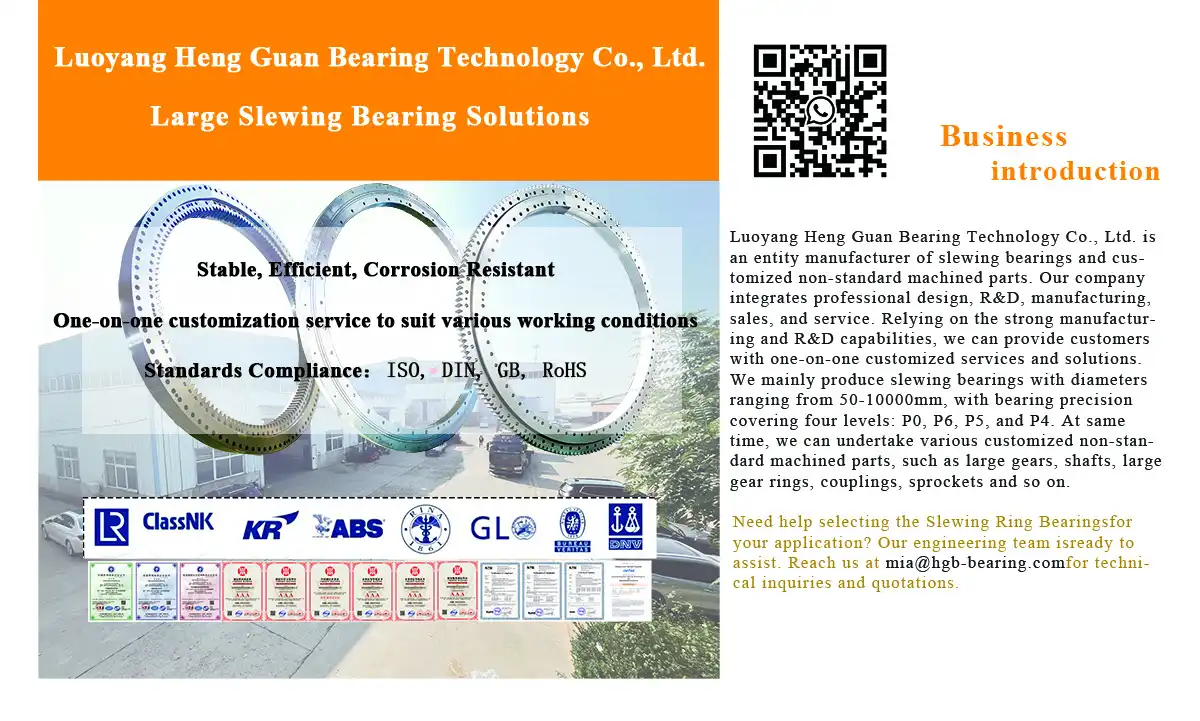
Heng Guan Bearing Technology supplies precision-manufactured Slewing bearings for a wide variety of construction equipment applications. The company offers a variety of bearing designs, including single-row ball bearings, cross-roller bearings and three-row roller bearings, with sizes from 20 mm up to 10,000 mm.
Heng Guan is a professional in custom bearing solutions helping equipment makers and industrial users with:
Selection of bearings by application
Custom engineering solutions
Various accuracy grade options
Technical advice.
Supporting manufacturing
HENG GUAN is committed to providing reliable slewing bearing solutions for excavators, cranes, mining equipment and specialized gear for tough working situations. Get in touch with the experts to discuss your equipment requirements and design a bearing solution to meet your needs.
Connect with our slewing bearings manufacturer experts at mia@hgb-bearing.com to discuss your specific requirements and discover how our proven solutions can enhance your equipment performance while reducing operational costs.
References
1. Anderson, M.J., "Bearing Technology in Heavy Construction Equipment," Journal of Construction Engineering and Machinery, Vol. 45, No. 3, 2023, pp. 234-248.
2. Thompson, R.K., et al., "Load Analysis and Service Life Prediction for Slewing Bearings in Mobile Cranes," International Conference on Construction Equipment Technology, Society of Automotive Engineers, 2022.
3. Chen, L.W., "Environmental Factors Affecting Bearing Performance in Construction Applications," Heavy Equipment Maintenance Quarterly, Vol. 28, No. 4, 2023, pp. 45-62.
4. Rodriguez, C.A., "Failure Analysis and Prevention Strategies for Construction Equipment Bearings," Construction Equipment Technology Review, American Society of Mechanical Engineers, 2023.
5. Kim, S.H., and Williams, P.T., "Cost-Benefit Analysis of Premium Bearing Solutions in Construction Fleet Management," Equipment Management Journal, Vol. 31, No. 2, 2023, pp. 78-94.
6. European Committee for Construction Equipment, "Technical Guidelines for Slewing Bearing Specification and Procurement in Construction Machinery," Brussels: CECE Publications, 2023.

WHAT OUR CUSTOMERS SAY
Here is the customer's evaluation of us