




Slewing Gear Bearing Noise: What Causes It and Fixes
Noise from slewing gear bearings should not be treated as a problem that can be solved simply by adding more grease or replacing the bearing immediately. In excavators, cranes, wind turbines, material-handling equipment, and other heavy machinery, abnormal noise can come from the bearing raceways, rolling elements, gear teeth, lubrication system, mounting structure, or even an external component. The first step is therefore to identify what kind of noise is occurring, when it occurs, and whether it changes with load or rotation direction. A grinding sound that increases under load points to a different problem from a rhythmic clicking that appears at the same angular position during every rotation. Likewise, gear mesh noise should be distinguished from rolling-element noise before maintenance work begins. This guide explains the most common causes of slewing bearing noise, practical inspection methods, repair options, and maintenance measures that can help equipment owners and OEMs reduce unnecessary downtime.
What Different Slewing Bearing Noises Can Tell You?
Listen for Changes in the Noise Pattern
A slewing bearing does not work absolutely silently. The rolling elements rolling through raceways and the gear teeth meshing while rotating may generate the operational noise. The crucial thing is if the sound is compatible with the regular operating condition of the equipment.
Any new grinding, tapping, clicking, squealing or rumbling noises should be investigated, especially if they are accompanied by increased rotational resistance, vibration, temperature or backlash.
The timing of the noise is useful also. Ask it if it happens:
throughout the whole rotation;
in one direction only;
under load only;
at some point in the rotation;
during acceleration or deceleration;
after the machine has been warmed up;
immediately after lubrication or maintenance.
These insights can help you find the source before you start taking things apart.
Do Not Use Sound Alone to Diagnose the Bearing
Noise is a symptom, not a definitive diagnosis. Raceway corrosion, rolling-element wear, insufficient lubrication, excessive clearance, gear tooth damage, mounting distortion, or improperly set gear mesh may cause a geared slewing bearing to emit anomalous sound.
External vibration might pass through the machine construction and make a healthy bearing sound strange.
Therefore, the noise should be cross-checked with other operating parameters by the maintenance people. A noise that goes up with temperature and increased drive torque is more of a nuisance than a noise change that happens without any other problematic symptom.
Four Common Causes of Slewing Gear Bearing Noise
1. Lubrication Problems
One of the first things to check is lubrication since the condition and distribution of the grease has a direct bearing on the contact between rolling components, raceways and gear teeth.
Lack of lubrication can lead to more friction and surface contact. Depending on the bearing design and operating conditions, this can result in a dry grinding or rough rolling sound. Another difficulty can be the introduction of abrasive particles or water into the contact zone of contaminated grease.
Nor can the danger of over-lubrication be neglected. More grease does not mean better protection immediately. Excessive grease in certain applications can increase churn resistance and operating temperature.
Maintenance staff should inspect:
whether the specified grease is being used;
whether grease is reaching the required lubrication points;
whether the grease contains water or foreign particles;
whether seals are damaged;
whether the lubrication intervals are consistent with the actual operating environment;
whether the gear teeth are receiving the lubrication specified by the manufacturer.
The correct lubricant depends on bearing design, load, speed, temperature, environment, and the manufacturer's specifications. Thus, a general grease suggestion should generally give way to the lubricant recommended by the bearing manufacturer.
2. Raceway or Rolling-Element Damage
Any of these conditions—pitting, spalling, indentation, scoring or excessive surface roughness—can alter the way rolling parts travel through the raceway.
A raceway that is damaged might provide a repeating sound when it rotates. If the damage is localised, the noise can be observed at a specific angular position only. Contact stress increases with greater loads; therefore, the sound may be more noticeable.
If there is abnormal noise and vibration or increased rotational resistance, the bearing should be evaluated rather than continually oiled to conceal the problem.
If the bearing has encountered stress loading, severe static load, contamination or long-term misalignment, experts should additionally evaluate the cause of the damage. If you change the bearing without addressing the root problem, you could very well have another premature failure.
3. Gear Tooth Wear and Incorrect Gear Mesh
Not all anomalous sounds in geared slewing bearings are generated from the bearing raceways. The integrated gear might also be noisy.
Common gear-related causes are:
broken or worn teeth;
inappropriate gear backlash;
poor tooth contact;
inadequate gear lubrication;
contamination;
pinion misalignment;
uneven mounting;
excessive transmitted torque.
If you hear a rhythmic click, knock or periodic impact that tracks with the rotation of the gears, it could be a gear mesh problem rather than a rolling element problem.
Therefore, the pinion and ring gear should be inspected as a unit. To look simply at the bearing raceway can cause you to make an incorrect diagnosis.
Gear tooth contact patterns are especially valuable for the study of alignment. Uneven contact across the tooth face may indicate difficulties in the mounting or pinion alignment and should be remedied before replacing the slewing bearing.
4. Mounting, Clearance, and Structural Problems
For a big slewing bearing, the precision and rigidity of the supporting structure are very important. Even a bearing that is properly made can perform badly if the mounting surface is deformed or the bolts are not properly placed.
May be caused by:
uneven mounting surface, insufficient structural rigidity, wrong tightening of bolts, mounting deformation, inappropriate bearing clearance, high external load, installation faults.
Increasing distortion modifies the internal load distribution of the bearing. Instead of distributing the load as planned, some places may have increased contact stress. Ultimately, this might lead to faster wear and aberrant noise.
This is why noise immediately after installation should not be automatically labelled as a flaw in the manufacture of slewing gear bearings. Review the mounting arrangement and installation records first
A Practical Way to Diagnose the Noise
Start With Operating Conditions
Before dismantling the bearing, record the conditions under which the noise occurs.
Useful information includes rotational speed, load condition, rotation direction, operating temperature, and whether the noise occurs continuously or at a specific position.
For mobile equipment, compare the sound during different operating cycles. For cranes or excavators, for example, a noise that appears only when the upper structure is heavily loaded may provide a useful clue about load distribution.
For OEM applications, these operating conditions should be recorded during commissioning so that later maintenance teams have a reliable baseline for comparison.
Compare Noise With Vibration
Vibration measurement can provide more useful diagnostic information than hearing alone.
Accelerometers can be positioned at appropriate locations around the bearing housing or supporting structure. Trending the measurements over time can help identify changes in machine condition.
The objective is not simply to find a high vibration value. Analysts should look for changes that correspond with the bearing's operating speed, rolling-element behavior, gear mesh, or known defect patterns.
For critical machinery, baseline measurements taken when the equipment is operating normally can make future comparisons much more meaningful.
Check Temperature and Rotational Resistance
Temperature is another useful supporting parameter. A localized or steadily increasing temperature may indicate increased friction, lubrication problems, abnormal loading, or another mechanical issue.
Rotational resistance should also be considered. If the drive system requires noticeably more torque to rotate the structure, the change should be investigated alongside the noise.
Neither temperature nor torque should be used alone to diagnose a bearing. Their value comes from comparing them with the noise, vibration, lubrication condition, and operating history.
Inspect the Gear and Mounting Assembly
If the bearing includes an external or internal gear, inspect the gear teeth and pinion carefully.
Look for:
abnormal tooth wear;
damaged tooth surfaces;
uneven contact;
contamination;
inadequate lubrication;
excessive backlash;
evidence of misalignment.
At the same time, inspect the mounting bolts and accessible structural surfaces. If the bearing was recently installed, verify that the mounting procedure, bolt tightening sequence, and specified installation tolerances were followed.
Fixes That Match the Root Cause
Correct the Lubrication Problem First When Appropriate
If inspection shows that the noise is related to lubrication, the solution may be straightforward. The bearing should be lubricated with the specified product and quantity, and damaged seals or blocked lubrication passages should be addressed.
However, lubrication should not be used to conceal a mechanical defect. If the noise returns quickly after lubrication, further inspection is warranted.
For equipment operating in dusty, wet, salty, or chemically aggressive environments, contamination control is equally important. Keeping contaminants out of the raceway and gear mesh can be more effective than simply increasing the lubrication frequency.
Repair or Replace Damaged Components
Minor issues may sometimes be corrected through adjustment or component-level repair, depending on the bearing construction and manufacturer's recommendations.
More serious raceway spalling, cracking, severe indentation, or extensive rolling-element damage generally requires professional assessment. Large slewing bearings are not components that should be disassembled or reconditioned without the appropriate equipment, procedures, and dimensional controls.
If replacement is necessary, the new bearing should match the actual application rather than simply matching the dimensions of the old component.
The replacement assessment should consider:
bearing diameter;
load and load distribution;
axial and radial forces;
overturning moment;
rotational speed;
gear requirements;
mounting arrangement;
environmental conditions;
expected service duty;
lubrication method.
This is particularly important for OEM projects where a small change in operating conditions can affect bearing selection.
Correct Gear Mesh and Mounting Problems
If the noise originates from the gear system, changing the bearing alone may not solve the problem.
The pinion position, gear backlash, tooth contact, lubrication, and alignment should be checked according to the equipment manufacturer's requirements.
Likewise, if mounting distortion is suspected, the supporting structure for slewing gear bearings should be measured. A replacement bearing installed on the same distorted mounting surface can develop similar problems again.
This is why root-cause correction is more valuable than treating noise as an isolated component failure.
 |  |
How to Prevent Recurring Slewing Bearing Noise?
Establish a Baseline During Normal Operation
A good maintenance program begins with an understanding of what normal operation sounds and measures like.
Record normal vibration, temperature, rotation resistance, lubrication condition, and gear condition when the machine is working correctly. This baseline can then be used as a comparison for future inspections.
Periodic measurements of essential equipment are more useful than waiting for the operator to hear a loud sound.
Keep Lubrication Records
Each service should be recorded to include the lubricant used, date of service, estimated amount utilized, lubrication points serviced, and any unexpected observations.
If numerous machines have the same bearing design, comparison of their lubrication histories can also show if a problem is localized to one machine or is related to the maintenance approach.
Lubrication intervals should be in accordance with the bearing manufacturer’s instructions and modified if the operating conditions warrant a change.
Inspect After Abnormal Loads or Maintenance
During the ordinary operation, it may not be obvious the circumstances of a slewing bearing. The working condition of the bearing can change due to shock loads, unexpected impacts, overload occurrences, structural repairs, or substantial maintenance work.
After such situations, evaluate the bearing, gear, mounting structure, and lubrication system before returning key equipment to normal duty.
This is especially true for cranes, excavators, and other machinery where load distribution changes can have a substantial effect on the slewing system.
When Should You Contact a Slewing Bearing Supplier?
Not every unusual sound requires immediate bearing replacement. However, professional assessment becomes increasingly important when noise is accompanied by vibration, temperature rise, increasing drive torque, abnormal gear backlash, visible damage, or changes in rotational smoothness.
When contacting a supplier, provide as much application information as possible. A useful technical inquiry should include:
existing bearing model or drawing;
bearing dimensions;
gear specifications;
machine type;
maximum and typical loads;
operating speed;
rotation frequency;
mounting arrangement;
operating temperature;
environmental conditions;
lubrication method;
photographs of the bearing and gear teeth;
description or recording of the abnormal noise;
maintenance and lubrication history.
For OEM projects, it is often better to ask the supplier to evaluate the bearing against the actual operating data rather than selecting a replacement only by size or catalogue designation.
A qualified supplier can also help determine whether the issue is related to bearing capacity, internal design, gear configuration, mounting conditions, or maintenance practices.
Conclusion
Noise in a slewing gear bearing should be regarded as a symptom to be investigated, not as a diagnosis in itself. Lubrication difficulties, raceway corrosion, rolling element wear, gear tooth deterioration, improper backlash, mounting distortion, and aberrant loads can all cause changes in the operating sound.
The surest way is to check the noise against other evidence. Also check when the sound occurs and if this varies with load or rotation direction. Has temperature, vibration, or rotational resistance altered too? Before deciding on repair or replacement, check the lubrication system, gear mesh, mounting arrangement, and accessible bearing parts.
The best preventative maintenance for slewing gear bearings is a combination of correct lubrication, periodic inspection, condition monitoring, accurate installation, and appropriate load control. If regular inspections don’t reveal the cause of a persistent noise, providing the bearing supplier with thorough operating and inspection data can significantly accelerate the root cause analysis.
The first and only answer should not be to replace a loud bearing, most of all. Whatever the root cause may be, be it contamination, poor lubrication, gear misalignment, mounting distortion, excessive loading, or real bearing damage, correction helps to avoid the same problem from recurring and supports more reliable long-term operation.
FAQ
1. What are the most common early warning signs of slewing bearing noise problems?
Early indicators include unusual grinding or rumbling sounds during rotation, increased vibration levels, temperature rises, and changes in operational torque requirements. Equipment operators often notice subtle changes in acoustic patterns before formal monitoring systems detect measurable increases. Increased power consumption during rotation cycles also signals developing bearing problems that require investigation.
2. How often should slewing bearings be inspected for noise-related issues?
Inspection frequency depends on operating conditions, but typically ranges from weekly visual checks to monthly detailed inspections. High-duty cycle applications require more frequent monitoring, while condition-based monitoring systems can optimize inspection intervals based on actual equipment performance. Critical applications benefit from continuous monitoring systems that provide real-time alerts.
3. Can slewing bearing noise issues be resolved without complete bearing replacement?
Many noise problems can be addressed through proper lubrication, seal replacement, or minor adjustments. Surface reconditioning and component replacement often restore acceptable performance levels at significantly lower costs than complete bearing replacement. Professional assessment is essential to determine the most cost-effective solution based on the extent of damage and operational requirements.
4. What role does proper installation play in preventing bearing noise?
Proper installation is crucial for preventing premature bearing noise. This includes ensuring proper surface preparation, correct mounting procedures, appropriate preload settings, and proper alignment. Poor installation practices account for approximately 30% of bearing failures and represent the most preventable cause of noise problems in industrial applications.
5. How do environmental conditions affect slewing bearing noise development?
Environmental factors such as temperature extremes, contamination, moisture, and shock loads significantly impact bearing performance. Contamination represents the primary environmental threat, introducing abrasive particles that accelerate wear and generate noise. Proper environmental protection through sealing, lubrication selection, and operational procedures can minimize these effects substantially.
Choose Heng Guan for Reliable Slewing Gear Bearing Solutions
Slewing gear bearing noise problems demand expertise from a trusted slewing gear bearing manufacturer who understands the critical nature of your operations. Heng Guan brings over two decades of engineering excellence and manufacturing innovation to solve your most challenging bearing noise issues. Our comprehensive product line covers 20-10000mm diameter bearings with precision grades from P0 to P4, ensuring optimal solutions for construction, mining, wind power, slewing gear bearings, and automation applications. Our technical team at Heng Guan provides personalized consultation services to identify root causes and implement cost-effective solutions that minimize downtime while maximizing equipment reliability. Contact our bearing specialists at mia@hgb-bearing.com to discuss your specific noise challenges and discover how our advanced bearing technologies can enhance your operational performance. We deliver customized engineering solutions backed by rigorous quality standards and comprehensive technical support.
References
1. International Organization for Standardization. "Rolling Bearings - Damage and Failures - Terms, Characteristics and Causes." ISO 15243:2017. Geneva: ISO Publishing, 2017.
2. American Bearing Manufacturers Association. "Bearing Noise and Vibration Analysis: Industrial Applications and Diagnostic Techniques." ABMA Technical Report TR-142. Washington D.C.: ABMA Publications, 2019.
3. Harris, Tedric A. and Michael N. Kotzalas. "Essential Concepts of Bearing Technology: Rolling Bearing Analysis, Fifth Edition." Boca Raton: CRC Press, 2021.
4. Society for Machinery Failure Prevention Technology. "Condition Monitoring of Rotating Machinery: Advanced Techniques for Bearing Fault Detection." MFPT Conference Proceedings, Volume 58. Virginia Beach: MFPT Society, 2020.
5. German Institute for Standardization. "Rolling Bearings - Tolerances - Definitions and Boundary Dimensions for Slewing Bearings." DIN 628-6:2018. Berlin: Beuth Verlag, 2018.
6. National Institute for Occupational Safety and Health. "Industrial Noise Control Manual: Bearing Systems and Rotational Equipment." NIOSH Publication No. 2022-106. Cincinnati: NIOSH Publications, 2022.

WHAT OUR CUSTOMERS SAY
Here is the customer's evaluation of us
YOU MAY LIKE
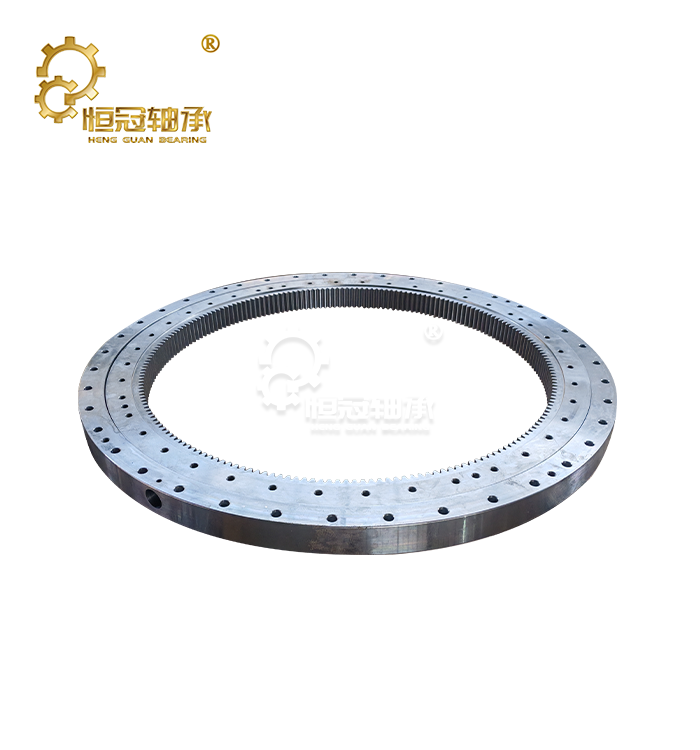
 VIEW MOREVLU200944 Slewing Bearings
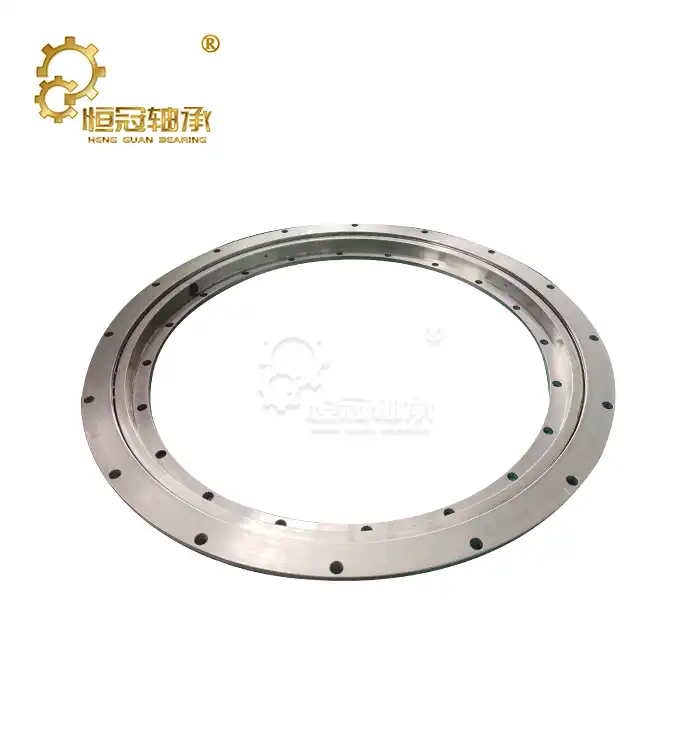
 VIEW MORERKS.122290101002 Slewing Bearings
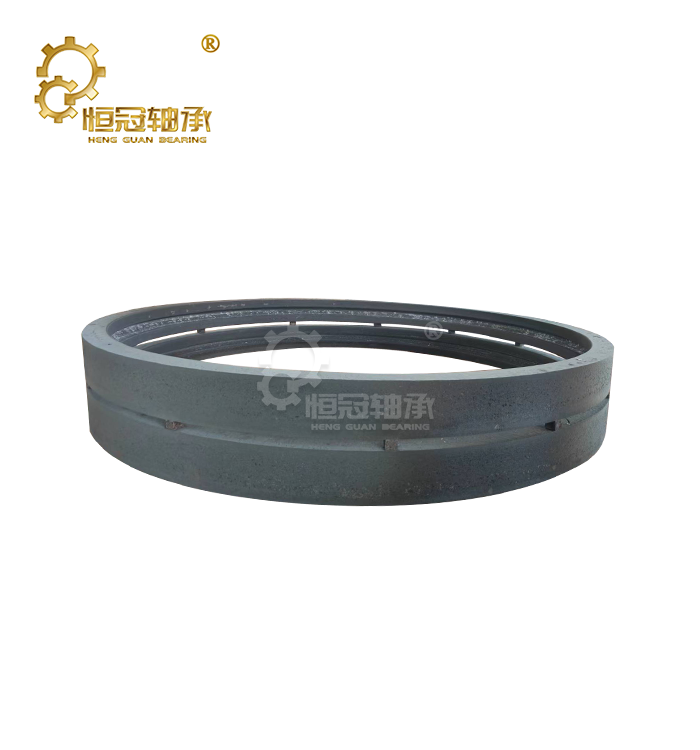
 VIEW MORERKS 061.20.0744 slewing bearing
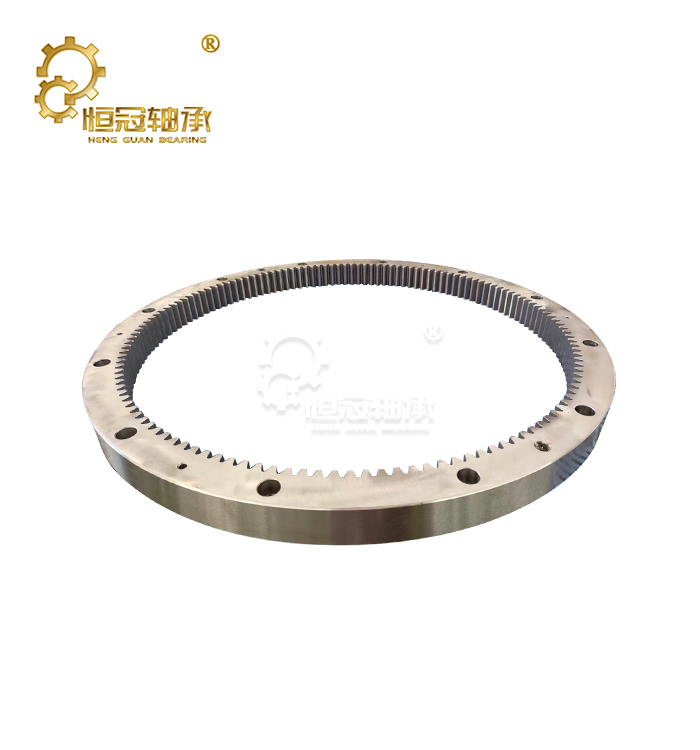
 VIEW MORESemi-Finished Forgings
 VIEW MOREInternal Gear Ring
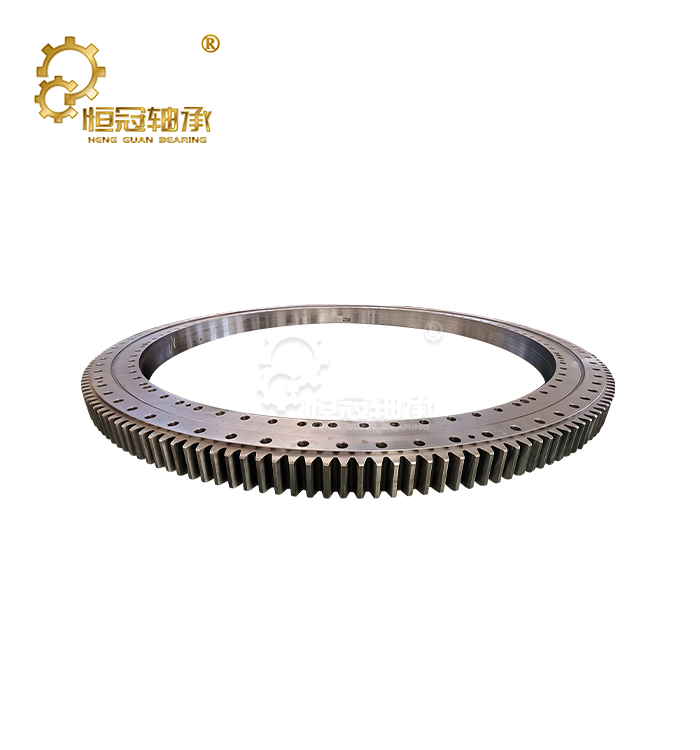 VIEW MOREDouble Row Ball Slewing Bearing
_1767784942887.webp) VIEW MOREDouble-Row Ball Slewing Ring Bearing
VIEW MOREDouble-Row Ball Slewing Ring Bearing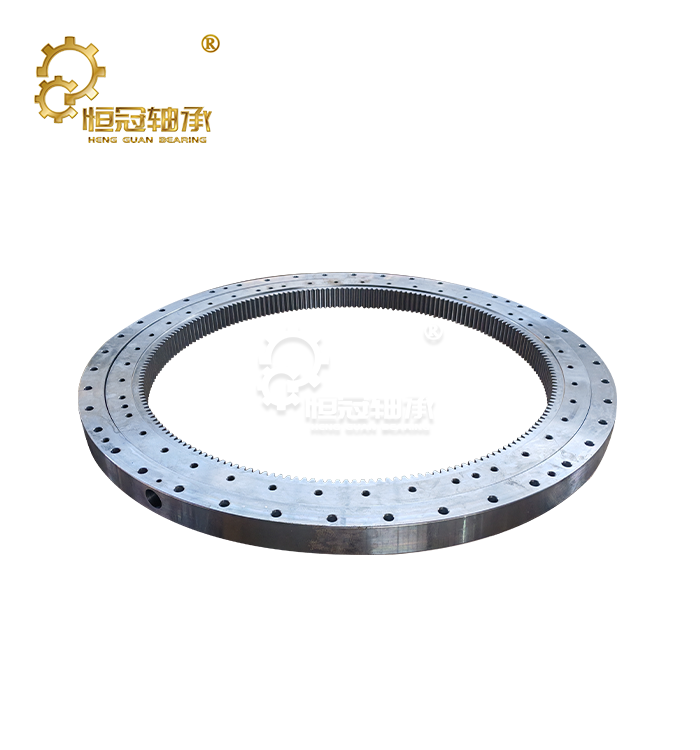 VIEW MOREInternal Gear Rotary Slewing Bearing