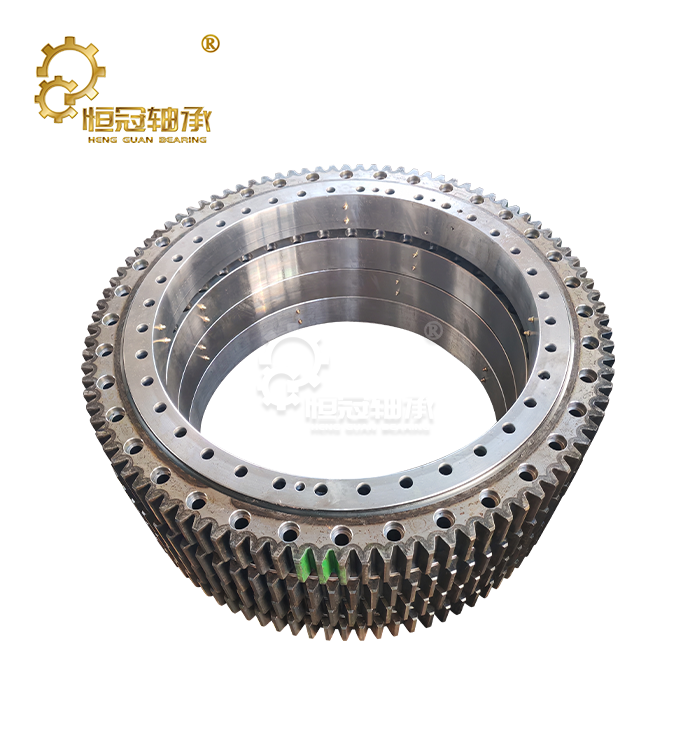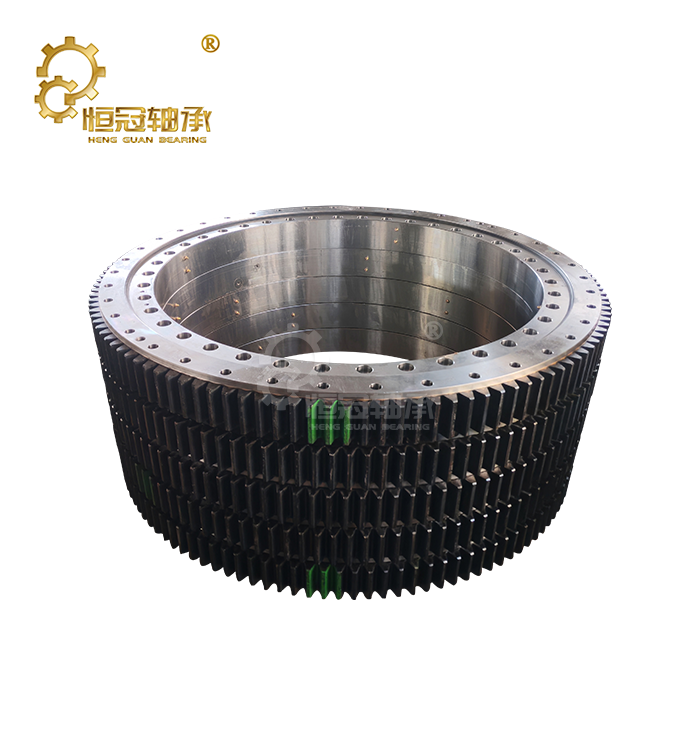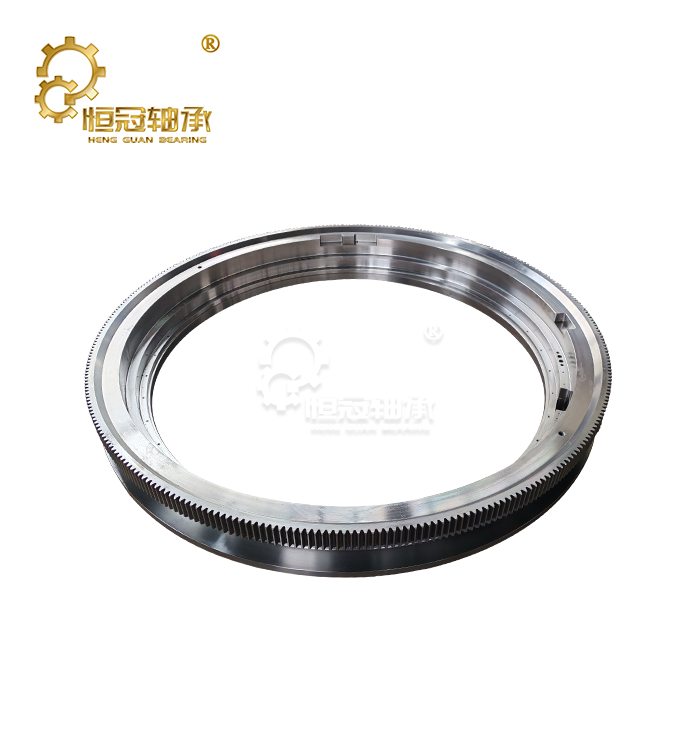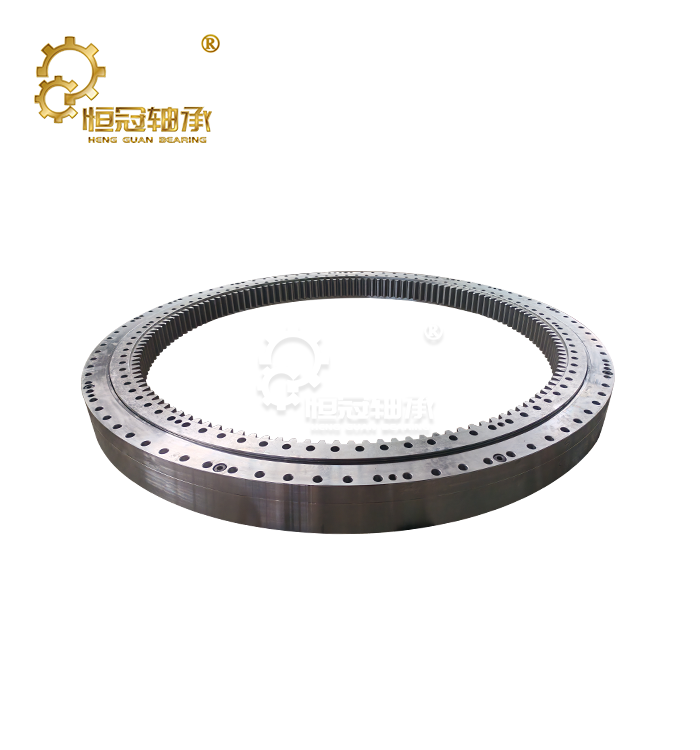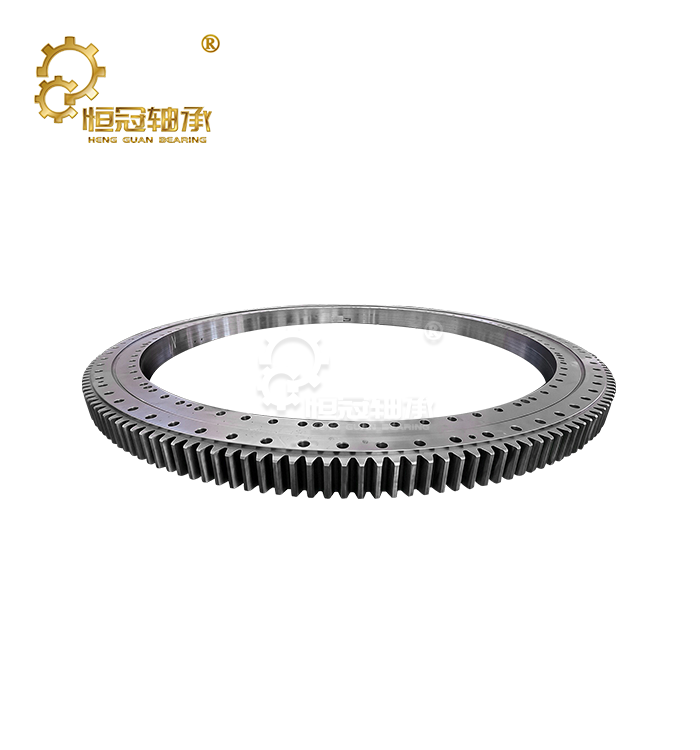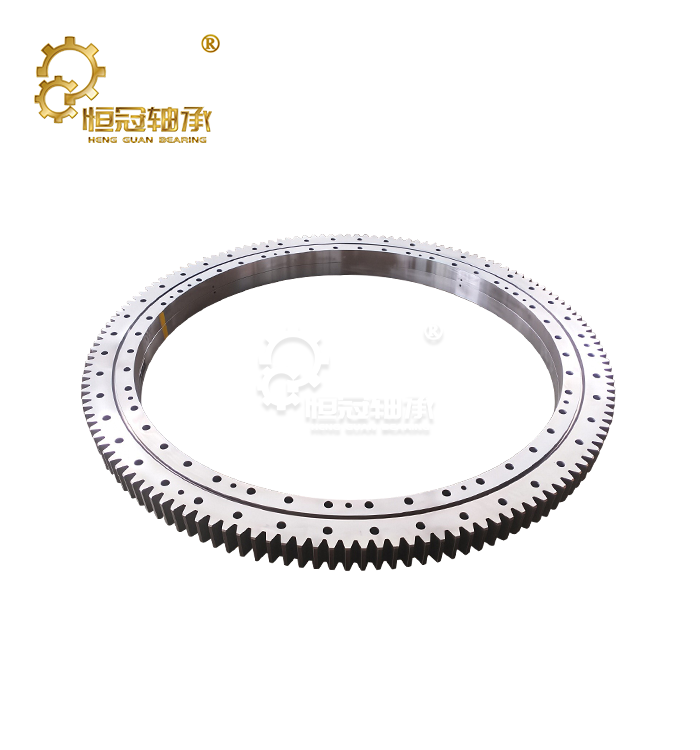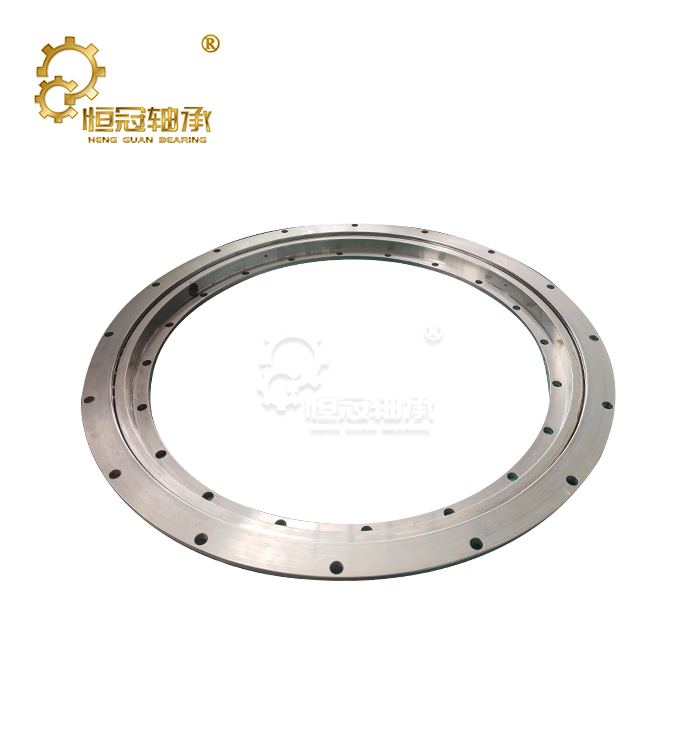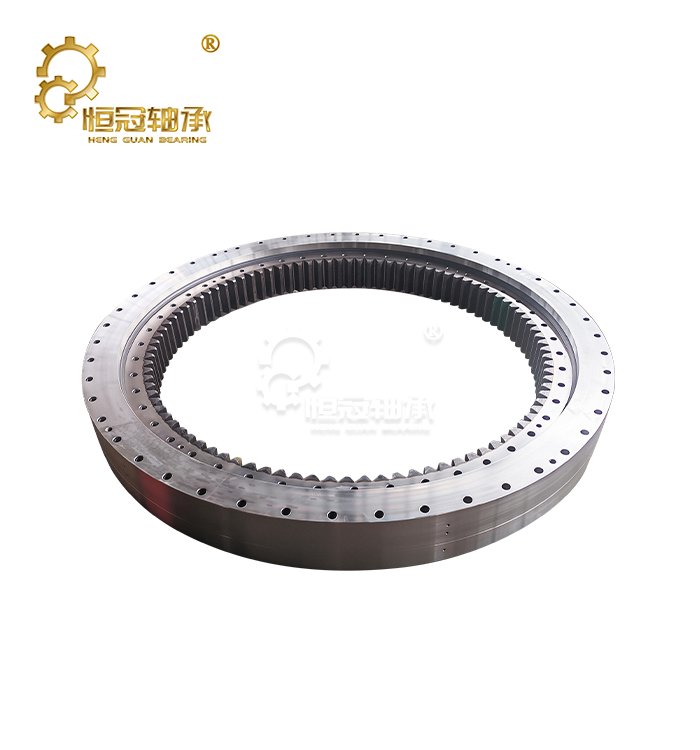




What Size Rotary Table Bearing Fits Your Machine?
Choosing the correct rotary table bearing When developing or improving precise machinery, one of the most critical considerations is size. The proper bearing must be chosen according to the load conditions, the space available for installation, the rotation speed, and the precision requirements of the machine. A bearing that's too tiny can lead to excessive wear, reduced stiffness, or early failure, whereas a bearing that's too large can raise equipment cost, make installation harder, and consume additional energy.
An appropriate rotary table bearing may accommodate combined loads such as axial, radial, and overturning moment loads in a compact design. It is a popular choice for CNC rotary tables, industrial robots, machine tools, indexing systems, construction equipment, and other applications where precision rotating movement is required.
Engineers usually take a number of important criteria into account when selecting a bearing size. These include maximum operating load, required service life, mounting dimensions, preload requirements, ambient conditions, and safety issues. If the bearing is properly sized, it can run stably with high rigidity and long-term reliability.
Selecting the right bearing for manufacturers and OEM customers is not only a matter of matching diameter dimensions. It demands knowledge of bearing behavior under genuine working situations. Professional vendors with experience in manufacturing can assist you in examining your application requirements and offer the most appropriate bearing configuration.

Understanding the Main Factors That Determine Rotary Table Bearing Size
Why Bearing Size Directly Affects Machine Performance
The size of a rotary table bearing determines how effectively the machine can handle operating forces while maintaining positioning accuracy. In precision equipment, the bearing is not simply a rotating component; it is a structural element that supports the entire rotary mechanism.
When the bearing capacity is insufficient, several problems may occur:
Reduced positioning accuracy caused by excessive deformation
Increased vibration during operation
Shortened fatigue life
Higher maintenance frequency
Possible damage to surrounding machine components
On the other hand, selecting a bearing much larger than necessary may create disadvantages. Larger bearings usually require more installation space, stronger mounting structures, and higher manufacturing costs.
The ideal size provides enough load capacity and rigidity while keeping the overall machine design efficient.
Load Conditions That Must Be Considered Before Selection
The first step in sizing a rotary table bearing is understanding the actual loads applied during operation. Different machines create different load combinations, and each load type affects bearing performance differently.
Axial Load
Axial load refers to forces acting parallel to the bearing axis. These loads are common in:
Vertical machining centers
Rotary worktables carrying heavy components
Lifting and positioning equipment
A bearing with insufficient axial capacity may experience excessive contact stress, leading to accelerated wear.
Radial Load
Radial loads act perpendicular to the bearing axis. They are commonly generated by:
Cutting forces in CNC machines
External mechanical pressure
Offset working loads
Radial load capability depends on the bearing structure, roller arrangement, internal geometry, and contact area.
Moment Load
Moment load is one of the most important factors when selecting a rotary bearing. It occurs when a force acts away from the bearing center, creating a tilting effect.
For example, in a 5-axis machining center, a large workpiece positioned away from the rotation center can generate significant overturning moments. If the bearing does not have sufficient stiffness, the rotary table may lose accuracy during machining.
For applications with high moment loads, engineers often select bearings with larger diameters or increased roller contact capacity to improve rigidity.
How to Calculate the Required Rotary Table Bearing Size?
Measure Installation Space Before Choosing a Bearing
The physical dimensions of the machine provide the basic limits for bearing selection. Before ordering a rotary table bearing, engineers should confirm:
Inner diameter requirements
Outer diameter limitations
Bearing height availability
Mounting hole positions
Shaft and housing dimensions
The inner diameter must provide enough clearance for the rotating shaft or spindle assembly. The outer diameter must fit the machine structure while providing sufficient load capacity.
In many cases, a larger bearing diameter improves moment resistance because the load distribution area becomes wider. However, the available installation space and machine weight limitations must also be considered.
Evaluate Dynamic and Static Load Ratings
Bearing catalogs usually provide two major load ratings:
Dynamic load rating indicates the bearing’s ability to withstand repeated operating loads while rotating.
Static load rating represents the maximum load the bearing can support without causing permanent deformation when stationary.
For machines with continuous movement, such as CNC rotary tables and automation systems, dynamic load capacity is especially important.
For equipment that frequently remains under heavy load while stopped, such as cranes or lifting systems, static capacity becomes a major consideration.
Engineers should also apply safety factors based on:
Load variation
Shock impact
Operating environment
Required reliability level
Expected service life
A machine operating under stable laboratory conditions may require a lower safety factor, while heavy industrial equipment may need additional capacity to handle unexpected loads.
Consider Rotation Speed and Accuracy Requirements
Size selection is also influenced by rotational speed and precision requirements.
High-speed applications usually require careful consideration of:
Friction generation
Heat buildup
Lubrication conditions
Bearing internal clearance
For precision machine tools, accuracy is often more important than maximum load capacity. The bearing must maintain stable rotation without excessive elastic deformation.
Applications such as:
CNC rotary tables
Semiconductor equipment
Precision indexing machines
usually require higher stiffness and tighter manufacturing tolerances.
In these cases, selecting the largest bearing is not always the best solution. The bearing design, preload setting, and installation accuracy are equally important.
 |  |
Rotary Table Bearing Size Selection for Different Machine Applications
The correct rotary table bearing size depends heavily on the machine type and working environment. A bearing used in a CNC machining center has completely different requirements from one installed in an excavator, crane, or wind turbine. Engineers must consider not only the load capacity but also operating cycles, maintenance conditions, accuracy expectations, and space limitations.
Choosing Rotary Table Bearings for CNC Machine Tools
Precision and Rigidity Requirements in CNC Rotary Tables
CNC machine tools are among the most demanding applications for rotary table bearings because they require both high accuracy and strong load resistance. During machining operations, the bearing must support the weight of the workpiece while absorbing cutting forces generated by the tool.
For 5-axis machining centers, the bearing must handle:
Heavy workpiece loads
Frequent acceleration and deceleration
Continuous positioning adjustments
High overturning moments
A bearing with insufficient rigidity may cause vibration, inaccurate machining results, and poor surface quality.
In these applications, engineers usually prioritize the following:
High rotational accuracy
Low runout
High stiffness
Stable preload performance
The selected bearing size is often determined by the maximum workpiece weight, table diameter, machining force, and required positioning accuracy rather than only the available installation space.
How Bearing Dimensions Affect CNC Performance
For CNC rotary tables, a larger bearing diameter can improve moment resistance because the load is distributed over a wider support area. However, increasing size also increases inertia, which may reduce acceleration performance.
Therefore, machine designers need to balance the following:
Bearing diameter
Rotating mass
Motor power
Positioning speed
Required precision
A properly selected rotary table bearing allows the machine to achieve stable operation without adding unnecessary weight or cost.
Selecting Bearings for Construction Equipment
Excavator and Crane Applications
Construction machinery creates very different challenges compared with precision equipment. Excavators, cranes, and similar machines operate under:
Heavy shock loads
Sudden load changes
Dust and moisture exposure
Long working hours
In excavators, the swing mechanism depends on large-diameter bearings to support the upper structure while allowing smooth rotation. The bearing must handle both vertical weight and overturning forces caused by digging operations.
For cranes, safety is the primary consideration. The bearing must maintain reliable performance when supporting lifting loads, especially when the equipment operates under changing weather conditions.
Important selection factors include:
Maximum static load
Impact factor
Sealing performance
Lubrication requirements
Fatigue resistance
For outdoor equipment, proper sealing and corrosion protection are especially important because contamination can significantly shorten bearing service life.
Wind Turbine Rotary Table Bearing Size Considerations
Pitch and Yaw Bearing Requirements
Wind turbines require bearings that can operate reliably for many years with limited maintenance access. The rotary table bearing used in wind energy systems must withstand constantly changing loads caused by the following:
Wind direction changes
Blade weight variation
Temperature fluctuations
Vibration
Extreme weather conditions
Pitch bearings control blade angles, while yaw bearings allow the nacelle to rotate according to wind direction. Both applications require excellent load capacity and long-term durability.
When selecting bearing size for wind turbines, engineers evaluate the following:
Turbine capacity
Blade length
Wind pressure
Operating temperature range
Expected service life
Because maintenance is difficult and expensive, wind turbine bearings usually require enhanced sealing systems, reliable lubrication solutions, and strict quality control during manufacturing.

Common Mistakes When Selecting Rotary Table Bearing Sizes
Choosing Based Only on Diameter
One common mistake is selecting a bearing only because its diameter matches the machine design.
Although diameter is important, it does not represent the complete performance capability.
Two bearings with the same outside diameter may have different
Load ratings
Internal structures
Roller arrangements
Accuracy levels
Operating limits
Engineers should evaluate the complete technical specification instead of relying on a single dimension.
Ignoring Real Operating Conditions
Another frequent mistake is using theoretical loads instead of actual operating conditions.
For example, a machining application may experience temporary peak forces during the following:
Tool engagement
Workpiece movement
Emergency stops
Similarly, construction equipment may experience shock loads much higher than normal working loads.
A reliable sizing process should consider both normal operation and unexpected conditions.
Selecting the Lowest-Cost Option Without Considering Lifecycle Value
Initial purchase price is important, but it should not be the only factor.
A lower-cost bearing may lead to the following:
More frequent replacement
Higher maintenance costs
Longer downtime
Production losses
For industrial equipment, total cost of ownership often provides a better evaluation method.
A higher-quality bearing with better material, manufacturing accuracy, and testing records may deliver better long-term value.
Standard vs. Customized Rotary Table Bearing Selection
When Standard Bearing Sizes Are the Better Choice
Standard-size bearings are commonly selected for applications where machine requirements match existing product specifications. They are usually available faster, easier to replace, and more cost-effective compared with fully customized solutions.
For many industrial applications, standard rotary table bearing models can provide sufficient performance when the following conditions are clearly defined:
Load requirements are within the bearing rating range.
Installation dimensions match existing designs
Operating speed is compatible with bearing limitations
Environmental conditions are manageable.
Accuracy requirements can be achieved with standard specifications
Standard bearings are often suitable for general automation equipment, conventional machine tools, and equipment with mature designs. Using a proven bearing design can also reduce engineering time because manufacturers already have established production processes and quality inspection procedures.
However, engineers should avoid selecting a standard bearing only because it is available. The bearing still needs to be evaluated based on actual operating conditions, including maximum load, service life requirements, and installation accuracy.
When Are Custom Rotary Table Bearings Necessary?
Some machines have unique structural requirements that cannot be satisfied by standard bearing dimensions. In these situations, a customized rotary table bearing may provide better performance and a more efficient overall solution.
Custom designs are often considered when applications require the following:
Special mounting dimensions
Extremely high load capacity
Limited installation space
Special sealing requirements
Specific accuracy grades
Unique operating environments
For example, large industrial equipment may require a bearing with a customized diameter, modified mounting holes, or special lubrication channels. Precision machinery may require optimized internal clearance or preload adjustment to achieve the required positioning accuracy.
A professional bearing manufacturer can analyze application data and recommend design adjustments that improve reliability without adding unnecessary cost.
How to Select a Reliable Rotary Table Bearing Manufacturer?
Evaluate Manufacturing Capability and Technical Support
Choosing the right bearing supplier is as important as choosing the correct size. A qualified manufacturer should not only provide products but also offer engineering support throughout the selection process.
Important supplier capabilities include:
Bearing design experience
Precision machining capability
Quality inspection systems
Application engineering support
Custom manufacturing services
Experienced manufacturers can help customers evaluate load conditions, review installation drawings, and recommend suitable bearing configurations.
This reduces the risk of selecting an unsuitable bearing and helps avoid costly redesigns after installation.
Check Quality Control and Testing Standards
Because rotary table bearings often operate in critical equipment, quality consistency is essential.
Reliable suppliers usually perform inspections such as the following:
Dimensional accuracy testing
Rotation performance testing
Load capacity verification
Material inspection
Hardness testing
Surface quality inspection
For precision applications, additional testing may be required to confirm the following:
Runout accuracy
Rotational resistance
Preload stability
Long-term durability
A strong quality management system helps ensure that each bearing performs according to the required specifications.
Practical Procurement Tips for OEM Buyers
Provide Complete Machine Information Before Ordering
When requesting a bearing recommendation, OEM customers should provide detailed application information instead of only asking for a bearing size.
Useful information includes:
Machine type
Required inner and outer diameter
Maximum axial load
Maximum radial load
Moment load
Rotation speed
Operating temperature
Installation conditions
Required accuracy level
With complete technical information, engineers can select a more suitable bearing design and avoid unnecessary oversizing or undersizing.
Consider Long-Term Operating Costs
The cheapest bearing option is not always the most economical choice. Industrial buyers should consider the complete lifecycle cost, including the following:
Purchase price
Installation cost
Maintenance requirements
Replacement frequency
Production downtime
A properly sized bearing can reduce operating problems and improve machine availability.
For equipment used in continuous production environments, reliability often provides greater value than a lower initial purchase price.
Conclusion
Selecting the correct rotary table bearing size requires more than comparing diameter specifications. Engineers need to evaluate the complete operating environment, including axial loads, radial loads, moment forces, speed requirements, accuracy expectations, and installation limitations.
The ideal bearing size provides sufficient load capacity while maintaining machine rigidity, precision, and long-term reliability. Choosing a bearing that is too small may lead to premature failure, while selecting an unnecessarily large bearing can increase cost and reduce system efficiency.
For CNC machines, automation equipment, construction machinery, wind turbines, and other industrial systems, proper sizing starts with accurate application analysis. Key factors such as mounting dimensions, safety factors, operating conditions, and maintenance requirements should all be considered before making a final decision.
Working with an experienced bearing manufacturer can help OEMs avoid incorrect selection, improve equipment performance, and achieve better lifecycle value. By providing detailed machine requirements and application data, customers can receive a more accurate recommendation and ensure that the selected rotary table bearing delivers stable performance throughout its service life.
FAQ
1. How do I determine if my current rotary table bearing is the correct size for my application?
Evaluating current bearing adequacy requires analyzing actual operating loads against design specifications. Monitor bearing temperature, vibration levels, and wear patterns during normal operation. Excessive heating, unusual noise, or premature wear indicate undersized bearings. Compare actual load requirements with bearing dynamic and static load ratings, including safety factors for load variations and environmental conditions.
2. What's the difference between nominal and actual load ratings when sizing bearings?
Nominal load ratings represent standardized test conditions that may not reflect actual operating environments. Actual load ratings account for specific application factors, including lubrication quality, contamination levels, temperature conditions, and installation accuracy. These modifications often reduce effective load capacity by 20-50% compared to catalog ratings, requiring larger bearings for equivalent performance.
3. Can I use a larger bearing than specified for an added safety margin?
Oversized bearings provide increased load capacity and safety margins but may create installation and performance issues. Larger bearings require modified mounting arrangements and may affect machine dynamics through increased weight and inertia. The cost increase may not justify marginal safety improvements unless specific reliability requirements demand additional capacity.
Partner with Heng Guan for Precision Bearing Solutions
Selecting the optimal rotary table bearing requires expertise in rotary table bearing that comes from years of engineering experience and manufacturing excellence. At Heng Guan Bearing Technology, our technical specialists have successfully sized and delivered precision bearing solutions for thousands of critical applications across construction, mining, wind energy, and automation industries. Our comprehensive sizing analysis ensures you receive bearings engineered specifically for your machine requirements, backed by our commitment to quality and reliability.Contact our engineering team at mia@hgb-bearing.com to discuss your application needs and receive detailed sizing recommendations. As a leading rotary table bearing manufacturer, we provide customized solutions with accuracy grades from P0 to P4, supporting diameters from 50mm to 10,000mm for demanding industrial applications.
References
1. Harris, Tedric A. and Kotzalas, Michael N. "Essential Concepts of Bearing Technology: Rolling Bearing Analysis." CRC Press, 5th Edition, 2006.
2. Hamrock, Bernard J., Schmid, Steven R., and Jacobson, Bo O. "Fundamentals of Machine Elements: SI Version." McGraw-Hill Education, 3rd Edition, 2013.
3. ISO 14728-1:2017 "Rolling bearings - Linear motion rolling bearings - Dynamic load ratings and rating life." International Organization for Standardization, 2017.
4. ANSI/ABMA Standard 11-1990 "Load Ratings and Fatigue Life for Ball Bearings." American Bearing Manufacturers Association, 1990.
5. Eschmann, Paul, Hasbargen, Ludwig, and Weigand, Karl. "Ball and Roller Bearings: Theory, Design and Application." John Wiley & Sons, 2nd Edition, 1985.
6. SKF Group. "Rolling Bearings Catalog: Principles of Rolling Bearing Selection and Application." SKF Group Publication, 2018.

WHAT OUR CUSTOMERS SAY
Here is the customer's evaluation of us