



What Makes a High-Quality Crane Slew Ring More Durable?
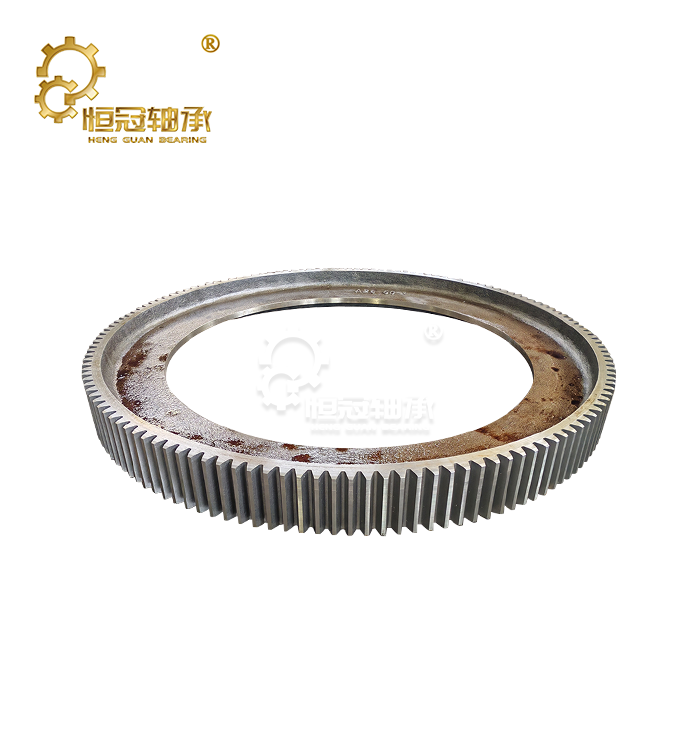
A crane slew ring carries some of the heaviest, most repetitive loads in rotating machinery, so durability is essential rather than optional. At Heng Guan Bearing, we engineer crane slew ring products for lifting, port, and construction equipment where failure is not acceptable. What separates a long-lasting crane slew ring from one that wears out early usually comes down to material choice, raceway hardness, sealing, and how the crane slewing gear is maintained over time. This guide breaks down the factors that genuinely influence durability, so you can evaluate suppliers and specifications with more confidence.
How Does Material Quality Affect Crane Slew Ring Durability?
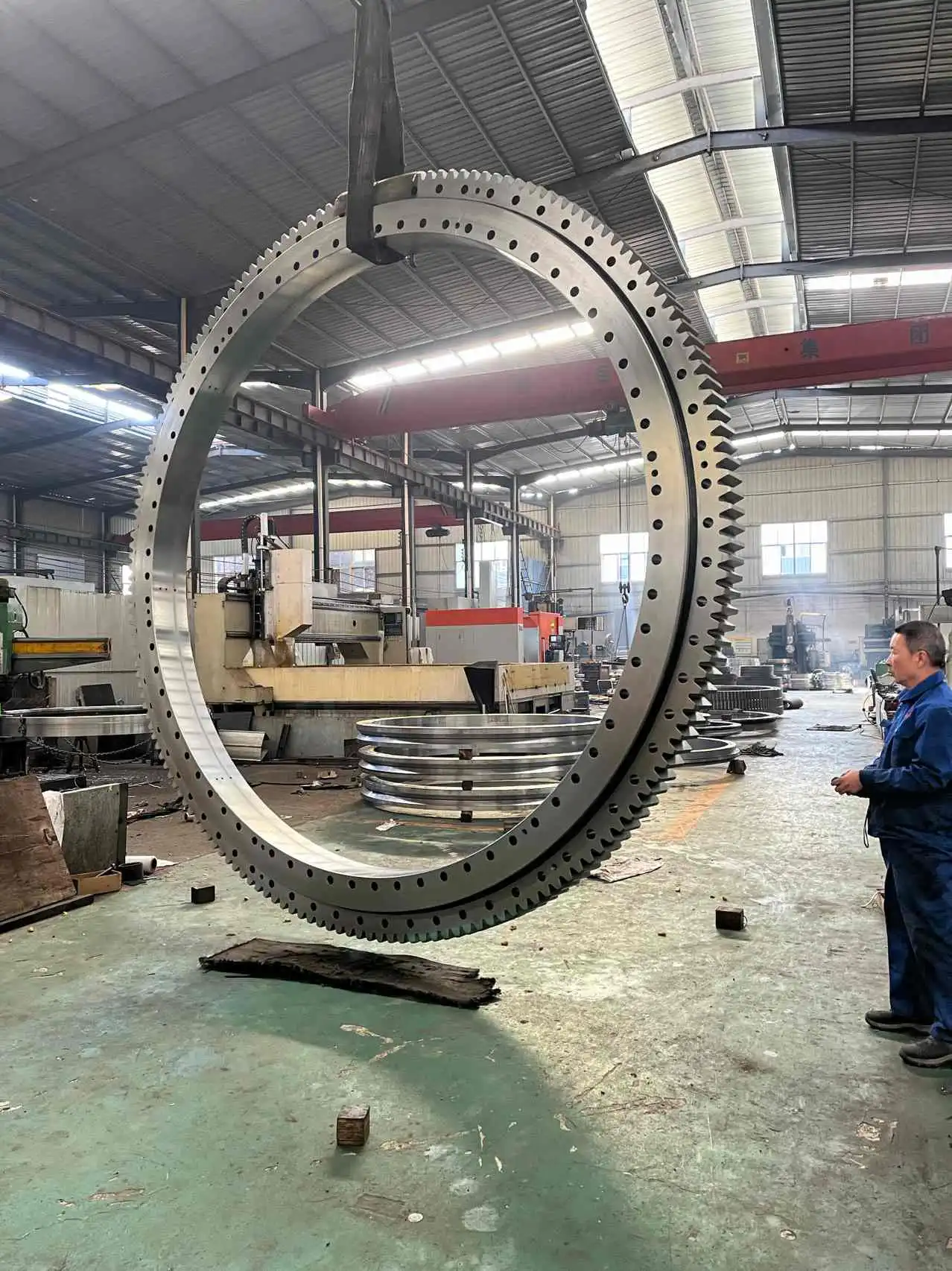
Every durable crane slew ring is based on material selection. The steel grade influences the ring’s resistance to fatigue, deformation, and surface wear under repetitive load. Alloy steels with regulated forging and heat treatment are able to sustain the stress loading typical of crane lifting cycles, but variable sourcing frequently results in premature cracking around bolt holes or raceways.
LYHGB employs 42CrMo & 50Mn alloy steel for ring bodies, GCr15SiMn high-purity bearing steel for rolling elements, and brass, steel, or engineering-plastic cages depending on the task. Gear quality is also important since crane slewing gear teeth manufactured to the ISO 1328-1 Grade 6 specifications wear uniformly and prevent the hidden failure point that broken teeth cause long before the main ring displays obvious damage.
| Component | Material / Specification | Role in Durability |
|---|---|---|
| Ring Body | 42CrMo / 50Mn alloy steel | Fatigue and shock-load resistance |
| Rolling Elements | GCr15SiMn high-purity bearing steel | Contact fatigue and wear life |
| Cage | Brass, steel, or engineering plastic | Rolling element guidance |
| Raceway Hardness | HRC 55–62 | Spalling resistance under load |
Crane Slew Ring Load Capacity, Raceway Hardness, and Fatigue Resistance
When determining the life of a crane slewing gear working under continuous operation, load capacity and hardness of the raceway are closely linked. The raceway surfaces are induction hardened to withstand rolling contact stress, and LYHGB calls for a hard wear layer of HRC 58-62 over a robust, impact-resistant core of HRC 30-35, so you don’t sacrifice surface hardness for brittleness. The structure selection should be based on the actual moment ratio: a single-row four-point contact ball ring is suitable for moment loads below 1.5 times the axial load times radius, and triple-row roller rings can take up to three times the moment ratio for tower cranes.
Also, four-point contact raceways provide a 30–40% reduction in rotating platform height in compact designs. Ask about the performance of the crane slewing gear in cyclic testing before ordering, CMM dimensional records, hardness tests at 3 mm depth, and vibration analysis reports.
| Structure Type | Moment Capacity | Typical Crane Use |
|---|---|---|
| Single-row four-point contact ball | Up to 1.5× (axial load × radius) | Mobile cranes, compact layouts |
| Double-row different-diameter ball | Balanced axial and radial capacity | General lifting duty |
| Triple-row roller | Up to 3× moment ratio | Tower and heavy port cranes |
What Role Do Sealing and Lubrication Play in Crane Slew Ring Life?
Sealing and lubrication often decide whether a crane slew ring reaches its rated service life or fails early through contamination. Outdoor lifting equipment meets dust, rain, and debris daily, and once abrasives enter the raceway, they wear surfaces faster than load alone ever would. LYHGB combines labyrinth channels with imported NBR lip seals, and offers FKM seals for corrosive coastal or offshore duty, matched with NLGI Grade 2 lithium complex grease. Relubricate every 200–300 operating hours under standard conditions, and shorten that interval to roughly 100 hours in dusty or coastal environments.
For guidance on sealing and grease suited to your site, our engineering team at mia@hgb-bearing.com can review your project and recommend the right crane slewing gear configuration, making contamination-related failures far less likely.
| Parameter | Specification |
|---|---|
| Sealing System | Labyrinth channels + imported NBR lip seals; FKM for coastal duty |
| Grease | NLGI Grade 2 lithium complex grease |
| Relubrication Interval | 200–300 h standard; ~100 h dusty or coastal |
| Grease Temperature Range | -30 °C to +120 °C |
| Operating Temperature | -40 °C to +80 °C (standard seal) |
How Can Proper Maintenance Extend Crane Slew Ring Service Life?
No matter how high quality a crane slewing gear is, it will operate poorly without regular maintenance. Thus, inspection procedures are just as important as original quality. Scheduled relubrication eliminates metal-to-metal contact, and frequent torque checks prevent loosening of mounting nuts by vibration. Operators should also examine the crane slewing gear for uneven wear, since misalignment normally initially becomes apparent at the teeth. LYHGB advises monthly inspections for unusual noise and seal condition, quarterly verification of bolt torque on a 10% sample basis including tooth pitting checks, and yearly measurement of resistance to rotation, staying within ± 15% of the baseline value.
New rings should be cycled for 10 rotation cycles at 25% of rated load with bolt torque re-checked after the first 8 operating hours, making unplanned downtime uncommon throughout the equipment’s working life.
| Check | Frequency | What to Verify |
|---|---|---|
| Relubrication | 200–300 h (100 h dusty/coastal) | New grease purges at the seal gap |
| Noise and Seals | Monthly | Abnormal sound, cracked or misaligned seals |
| Bolt Torque and Teeth | Quarterly | 10% sampling torque, pitting or wear marks |
| Rotation Resistance | Annually | Stays within ±15% of baseline |
Conclusion
Crane slew ring durability comes down to material quality, raceway hardness, sealing, and consistent maintenance. Heng Guan Bearing combines all four to deliver reliable, long-lasting lifting solutions.
FAQ
Q1: What steel grade is best for a crane slew ring?
A: 42CrMo and 50Mn alloy steel with controlled forging and heat treatment offer the best balance of toughness and fatigue resistance, with GCr15SiMn high-purity bearing steel used for the rolling elements.
Q2: How often should a crane slew ring be lubricated?
A: Under standard operating conditions, relubricate with NLGI Grade 2 lithium complex grease every 200–300 operating hours; in dusty or coastal environments, reduce the interval to about 100 hours.
Q3: Can a worn crane slewing gear be replaced separately?
A: In some designs, yes, though replacement depends on how the gear is integrated with the main ring structure. Keep in mind that crane slewing gear teeth are typically cut to ISO 1328-1 Grade 6 tolerances, so a replacement ring must match the original drive geometry.
Q4: What causes premature raceway wear? A: Insufficient hardening depth, poor sealing, or contamination are the most common causes, but installation issues matter too: an out-of-flat mounting surface distorts load distribution and accelerates raceway damage.
Q5: How long does a quality crane slew ring typically last?
A: With proper lubrication and the monthly, quarterly, and annual checks above, a well-made crane slew ring can last many years under standard crane operating cycles.
Q6: What installation tolerances should be verified before mounting?
A: The mounting surface should be flat within 0.5 mm across the bolt circle, support deflection under load should not exceed 0.001 × diameter, and bolts should be tightened in a star pattern to 70% then 100% of final torque, then re-checked after the first 8 operating hours.
Get a Reliable Crane Slew Ring for Your Project
Ready to upgrade your crane's rotational reliability? Heng Guan Bearing offers durable crane slew ring and crane slewing gear solutions built for demanding lifting environments, with standard catalogue sizes (500–3,000 mm) delivered in 4–6 weeks and custom configurations in 8–12 weeks. Contact our team at mia@hgb-bearing.com today for technical support, sizing help, or a custom quote.
References
1. American Bearing Manufacturers Association (ABMA). ANSI/ABMA STD 11 — Load Ratings and Fatigue Life for Roller Bearings.
2. Harris, T. A., & Kotzalas, M. N. Rolling Bearing Analysis (5th ed.). CRC Press.
3. International Organization for Standardization. ISO 76:2006 — Rolling Bearings — Static Load Ratings.
4. Brändlein, J., Eschmann, P., Hasbargen, L., & Weigand, K. Ball and Roller Bearings: Theory, Design, and Application (3rd ed.). Wiley.
5. International Organization for Standardization. ISO 281:2007 — Rolling Bearings — Dynamic Load Ratings and Rating Life.
6. International Organization for Standardization. ISO 1328-1:2013 — Cylindrical Gears — ISO System of Flank Tolerance Classification — Part 1: Definitions and Allowable Values of Deviations Relevant to Flanks of Gear Teeth.

WHAT OUR CUSTOMERS SAY
Here is the customer's evaluation of us
_1767713770881.webp)