




What Are Slewing Ring Bearings Used For?
Slewing ring bearings are the backbone of rotation in a huge variety of heavy machinery applications.Traditional bearings are often built to take a load from one direction only. But these big bearings combine the function of supporting a load and enabling rotation into one small package.
They are used in many applications, including excavators and cranes, wind turbines, marine equipment and industrial automation to help improve equipment performance, reduce mechanical complexity and improve operational reliability. The correct bearing design is important for equipment makers and maintenance teams. Bearing failure can lead to unscheduled downtime, costly repairs and delays in production.
When giving an appropriate solution, professional bearing providers normally examine application factors, including load circumstances, operating environment, mounting structure and service requirements. Understanding the operation and usage of these bearings will let clients make better decisions for industrial rotating systems.
Understanding Slewing Ring Bearings and Their Operating Principles
Key Features That Make Slewing Ring Bearings Different
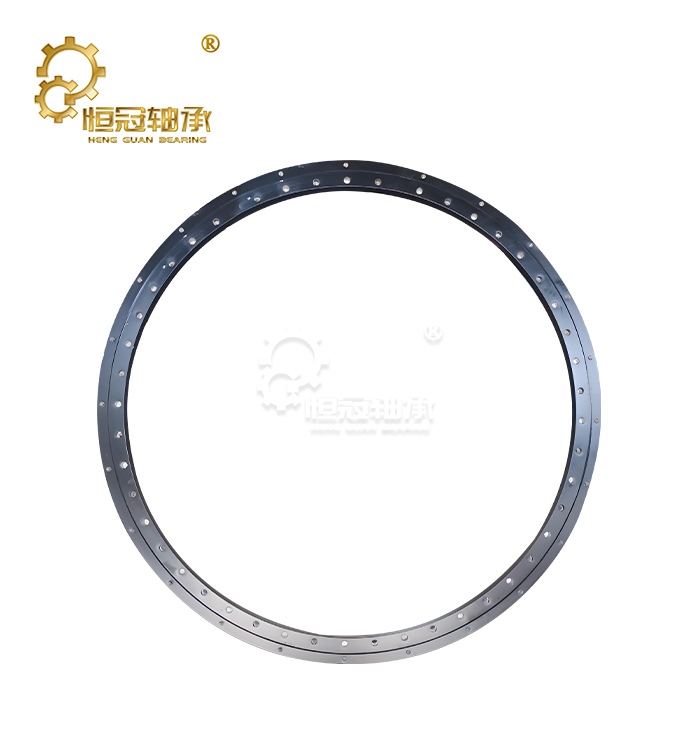
Slewing ring bearings have a large diameter but a small cross section. They are able to withstand huge loads and do not require numerous bearing arrangements. They normally consist of inner and outer rings, rolling elements, spacers, seals and lubrication systems.
Depending on the load capacity and operating conditions, the rolling elements can be balls or rollers. Normal bearings are designed to take either predominantly radial or predominantly axial loads. Slewing ring types can take combined radial, axial and overturning moments due to unequal loading or external forces.
Another essential element is the integrated construction of the mount. The bearing rings have drilled mounting holes to make mounting easier and to increase the strength of the connection between the bearing, the machine and the frame. Some designs also have internal or exterior gears, enabling direct connection to drive systems to achieve regulated rotation.
The slewing ring bearing is thus an integrated design and is particularly ideal for situations in which space, weight and structural simplicity are key issues.
How Slewing Ring Bearings Support Heavy Loads
A slewing ring bearing works by dispersing loads among several rolling parts that roll between precision-machined raceways. This design allows the bearing to rotate smoothly with stability under strenuous operating conditions.
Bearings are arranged differently for different types of loads:
Four-point contact ball bearings
Small dimension
Multidirectional load capacity
Compromise
Roller slewing bearings have greater contact surfaces due to roller parts, which are capable of carrying larger loads.
Three-row roller designs isolate axial, radial and moment stresses in different raceways for particularly heavy-duty applications.
The huge diameter of slewing bearings also provides a greater mechanical advantage, allowing the equipment to turn massive structures with a controlled driving torque. This feature is especially useful for cranes, excavators and renewable energy equipment when precision movement is required under varying loads.
Main Types of Slewing Ring Bearings and Their Applications
Single-Row and Double-Row Ball Slewing Bearings
Single-row, four-point-contact ball slewing bearings are typically picked for applications needing medium load-carrying capability, small size and smooth rotation. Its basic design makes it appropriate for mobile cranes, lifting platforms and automated machines.
Double-row ball slewing bearings Optimized raceway structures and extra rolling elements increase load capacity and improve resistance against overturning moments. These are commonly employed in equipment where stability and extended life are critical factors.
The choice of single-row versus double-row designs is generally made on the basis of:
Axial and radial stresses applied
Moment load requirements
Space for installation
Frequency of operation
Maintenance requirements
The proper setting depends on the real work conditions and not on the equipment size just.
Ball and Roller Slewing Bearing Systems
The ball slewing bearing has smooth operation, decreased friction and lower start torque. They are commonly employed in applications demanding exact positioning and repeated rotation cycles, such as automation equipment, medical systems and precision machinery.
Roller slewing bearings are ideal for applications requiring higher load capacity and stiffness. In roller bearings, line contact exists between rollers and raceways, allowing them to carry larger loads than ball types. This makes them excellent for use in mining machinery, big cranes, drilling equipment and massive industrial systems.
For difficult situations, roller bearings offer a better long-term value because of their greater load capacity and longer life span but at a larger initial investment.
Internal Gear and External Gear Configurations
Slewing bearing bearings with gears can be connected directly to the drive systems without the requirement for additional gearbox elements.
Internal gear designs shield gear teeth inside the bearing structure to minimize exposure to dust, impact and pollution. This layout is often utilized for the design of compact equipment and for environmental protection.
External gear designs are more accessible for inspection, lubrication and maintenance. They are generally preferred for stationary equipment where machine housing can give additional protection.
The choice between internal and external gears is determined by
Space available for installation
Maintenance needs
Environmental factors
Design of drive systems
Where Are Slewing Ring Bearings Used?
Construction Equipment and Heavy Machinery
Bearings of slewing rings are one of the most widespread application areas in construction machines. Slewing bearings are used in excavators for the slewing of the upper structure and for supporting the loads produced while digging.
These bearings must be capable of:
Shocks of excavations
Continuous vibration in hydraulic systems
Dust and building site pollution
In crane applications, even higher reliability is required, as the performance of the bearings influences lifting safety directly. Slewing ring systems in mobile, tower and crawler cranes allow for steady rotation of big loads despite fluctuating forces from wind, movement and uneven weight distribution.
Heavy-duty slewing bearings are also used in other mining equipment, such as rotary drilling machines and huge excavators. Sturdy bearing designs shorten maintenance intervals and save expensive equipment downtime at distant mining sites.
Renewable Energy Applications
Wind Turbines and Solar Tracking Systems
Renewable energy equipment needs slewing bearings that can operate stably for long periods outdoors. Wind turbines are one of the most demanding applications, with bearings that have to cope with varying wind forces, temperature fluctuations and continuous running cycles.
Slewing ring bearings are mainly employed in wind turbine systems in the following:
Blade pitch control systems
Yaw nacelle systems
Maintenance and placement mechanisms
The blade pitch bearings allow the blades to change their angle to suit the wind conditions, thereby aiding the turbine to operate efficiently. Slewing bearings are used for yaw systems to rotate the nacelle to the best wind direction; they also bear large structural loads.
Precision slewing bearings are also used in solar tracking systems, where they change the angle of panels during the day. Large solar installations frequently have limited access for maintenance; thus, applications need smooth movement, reliable positioning and lengthy service intervals.
In renewable energy projects, the choice of the bearing directly influences equipment availability, operating efficiency, and long-term maintenance costs.
Advanced Industrial and Precision Applications
Robotics, Automation, and Medical Equipment
In modern automation systems, the components must be able to position accurately, move repeatedly and operate in a stable manner. Slewing ring bearings are utilized in robotic platforms, assembly systems and automated industrial equipment where regulated rotation is necessary.
These applications normally need:
Low resistance to rotation
Limited Clearance
High positioning accuracy
Repeatable performance over multiple cycles
Specialized slewing bearing solutions are also used in medical equipment like imaging systems and robotic surgical devices. The efficiency of the equipment directly influences the safety and precision of the operation; thus, these applications demand smooth functioning, high dependability, and stringent factory oversight.
For aerospace and defense equipment, it may be necessary to develop unique slewing bearings using specialized materials and lightweight structures that are subject to rigorous inspection procedures to meet specific operational requirements.
Marine and Transportation Applications
Ship Equipment and Port Machinery
In addition, the bearing systems are exposed to salt water, humidity and strong mechanical loads in marine conditions. Slewing ring bearings for maritime applications are normally manufactured using corrosion-resistant materials, protective sealing systems and adequate lubrication methods.
Common maritime applications are the following:
Cranes on vessels
Cargo handling gear
Offshore equipment
Winch systems.
Reliable slewing bearings are also crucial for port equipment to keep it running nonstop. Bearings are essential for the longevity of container cranes and automatic loading systems, which commonly run for long periods, and for planning their maintenance.
Slewing bearings are also used in transportation equipment such as truck-mounted lifting systems and customized vehicles, where restricted installation space and dynamic loading conditions must be taken into account.
How to Choose the Right Slewing Ring Bearing
Evaluate Load Requirements and Operating Conditions
The first step of choosing the right slewing bearing is to know the real working environment. Buyers should consider:
0 Axial Load
Radial load
Moment of overturning
Spin speed
Frequency of operation
Exposure to the environment
In real operating conditions there are typically vibration, shock loading and unexpected forces; hence, safety aspects should be addressed when estimating the needed capacity.
A professional manufacturer can help to analyze these factors and suggest a proper bearing configuration.
Consider Manufacturing Quality and Supplier Capability
The performance of a slewing ring bearing is not only determined by its design but also by the manufacturing accuracy and quality control.
Buyers should verify before buying:
Experience in manufacturing
Production capacity
Quality check procedures
Traceability of material
Technical Support capabilities
Reliable suppliers perform inspections such as dimensional measurement, raceway hardness testing, gear accuracy verification, and operational testing to ensure consistent performance.
Certification systems such as ISO-based quality management can also add confidence when choosing a long-term bearing partner.
Maintenance Requirements and Service Life Considerations
Proper maintenance is the key to extending bearing service life. Regular lubrication, bolt inspections, seal condition checks and clearance monitoring prevent premature failure.
The real service life of a slewing bearing is determined by:
Load conditions
Lubrication quality
Installation precision
Operating environment
Maintenance Procedures
For critical equipment, condition monitoring and scheduled inspections can help identify potential problems before they result in unexpected downtime.
Conclusion
Turntable bearings and Slewing ring bearings are used extensively in construction machinery, renewable energy equipment, automation systems, marine applications and many other industrial sectors. They are an important part of large mechanical systems because they enable smooth rotation and can handle combined loads.
The choice of a bearing is a careful consideration of the load parameters, operating environment, design of the equipment and supplier knowledge. Working with a trusted manufacturer helps you to guarantee steady performance, lower the risks of maintenance and raise the overall value of your industrial equipment.
The development of bearing technology with improvement in material, manufacturing process and monitoring systems will provide more efficient and durable solutions for future industrial applications.
FAQ
1. What are the major applications of slewing ring bearings?
Slewing ring bearings are mostly employed in equipment that needs to carry huge loads while rotating at considerable angles. Typical applications are excavators, cranes, wind turbines, solar tracking systems, naval equipment and industrial automation equipment.
2. How long is the service life of slewing ring bearings?
The lifetime of a slewing ring bearing depends on the loading circumstances, the working environment, the quality of the assembly and the maintenance methods. “With proper selection and regular maintenance, many industrial bearings can provide years of reliable service.
3. How do I choose the right slewing ring bearing?
When selecting, load capacity, rotation requirements, installation dimensions, environmental conditions, and estimated service life should be considered. For complex applications, it is recommended to have competent technical help to guarantee that the bearing meets the equipment requirements.
4. What should I verify before I buy from a slewing bearing supplier?
Buyers should examine a supplier's manufacturing experience, quality control system, production capacity, delivery performance and technical support. A good supplier will have product data sheets, inspection information and application advice available.
Get Professional Slewing Ring Bearing Solutions. Contact Heng Guan
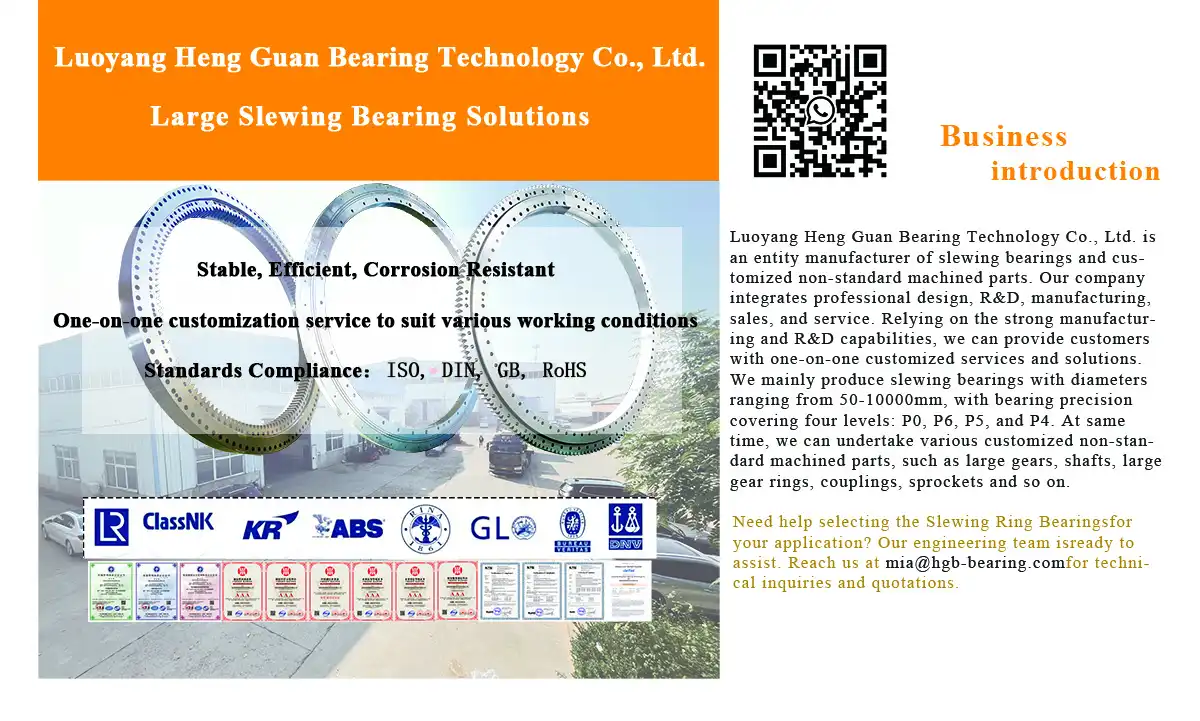
Luoyang Heng Guan Bearing Technology Co., Ltd. offers customized slew bearing solutions for demanding applications like construction equipment, renewable energy systems, and industrial equipment.
Heng Guan has experience manufacturing large-diameter bearings and helps customers with bearing selection, custom design, quality inspection and technical help throughout the purchase process. The company manufactures slewing ring bearings in various sizes, precision requirements and design options to cater to varied industrial needs.
Quality control includes dimensional inspection, performance verification and management of the production process to help assure steady functioning in demanding settings. Heng Guan collaborates with the technical team to deliver dependable solutions based on real operational needs, regardless of the standard bearing clients require or the design needed for the application.
For enterprises seeking a dependable slewing bearing partner, choose a supplier with manufacturing capabilities, technical knowledge and constant quality control of Slewing ring bearings. This can help decrease operational risks and enhance long-term equipment performance.
Contact our engineering team at mia@hgb-bearing.com to discuss your application requirements and discover how our expertise can optimize your machinery performance while reducing the total cost of ownership.
References
1. American Bearing Manufacturers Association. "Load Ratings and Fatigue Life for Ball Bearings." ANSI/ABMA Standard 9-1990. Rolling Element Bearing Engineers Committee, 2018.
2. Harris, Tedric A., and Michael N. Kotzalas. "Advanced Concepts of Bearing Technology: Rolling Bearing Analysis, Fifth Edition." CRC Press Taylor & Francis Group, 2019.
3. International Organization for Standardization. "Rolling Bearings - Slewing Bearings." ISO 12043-1:2007. Technical Committee ISO/TC 4, 2017.
4. Kruschel, Ernst, and Heinrich Loser. "Slewing Bearings: Design, Applications and Testing." Mechanical Engineering Publications Limited, 2020.
5. Palmgren, Arvid, and Burton J. Hamrock. "Ball and Roller Bearing Engineering, Third Edition." Mechanical Engineering Design Series, Marcel Dekker Inc., 2021.
6. Schaeffler Technologies AG & Co. "Slewing Bearings: Catalog HR-1, Design and Application Guidelines." Industrial Applications Engineering Division, 2019.

WHAT OUR CUSTOMERS SAY
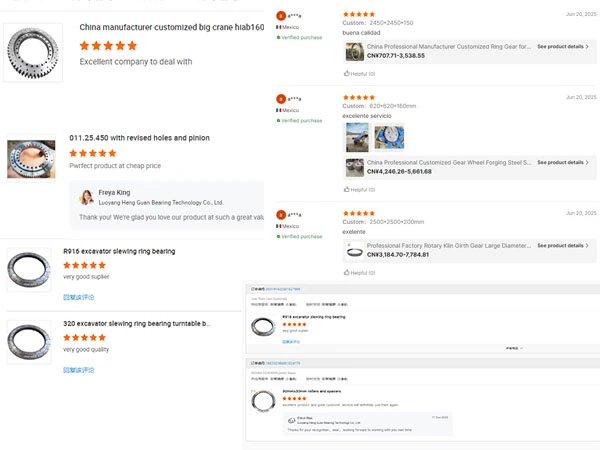
Here is the customer's evaluation of us
YOU MAY LIKE
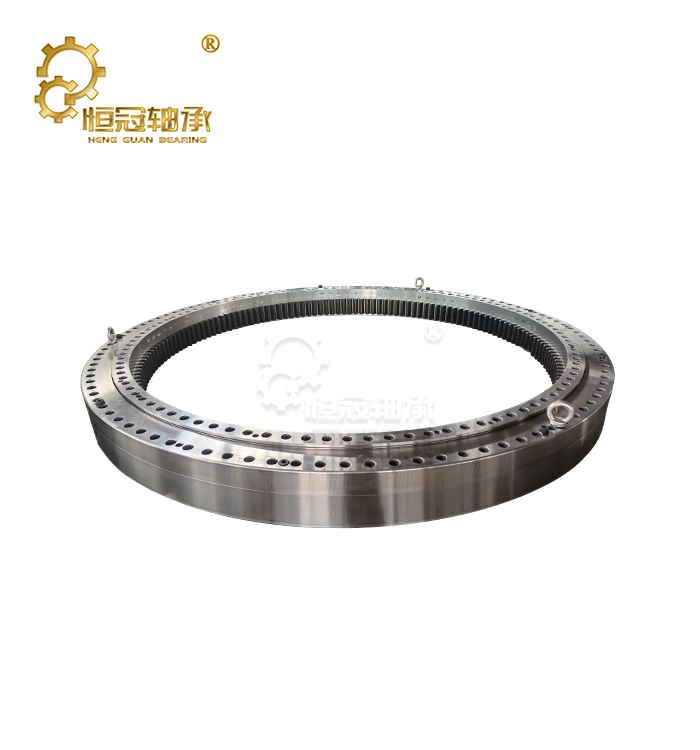 VIEW MORESlewing Bearing For Marine Crane
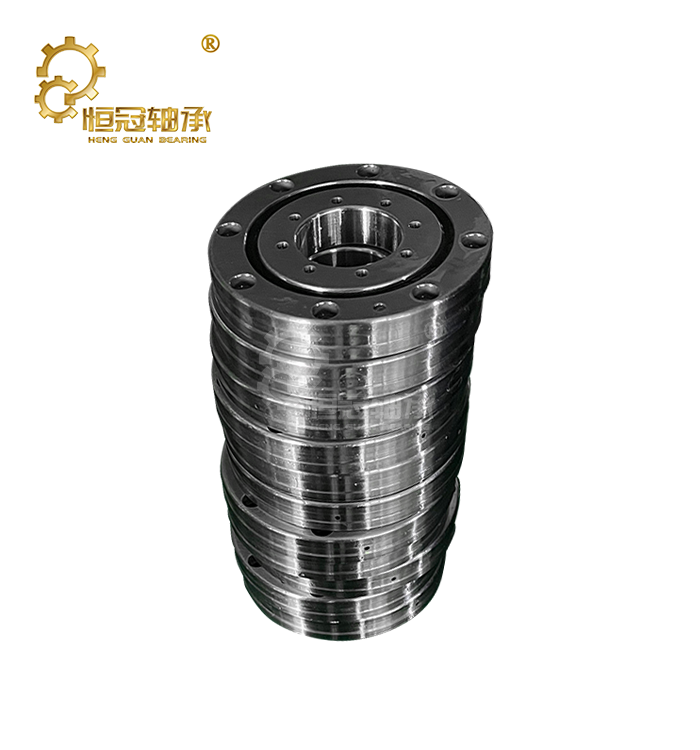 VIEW MOREPrecision Crossed Roller Bearings
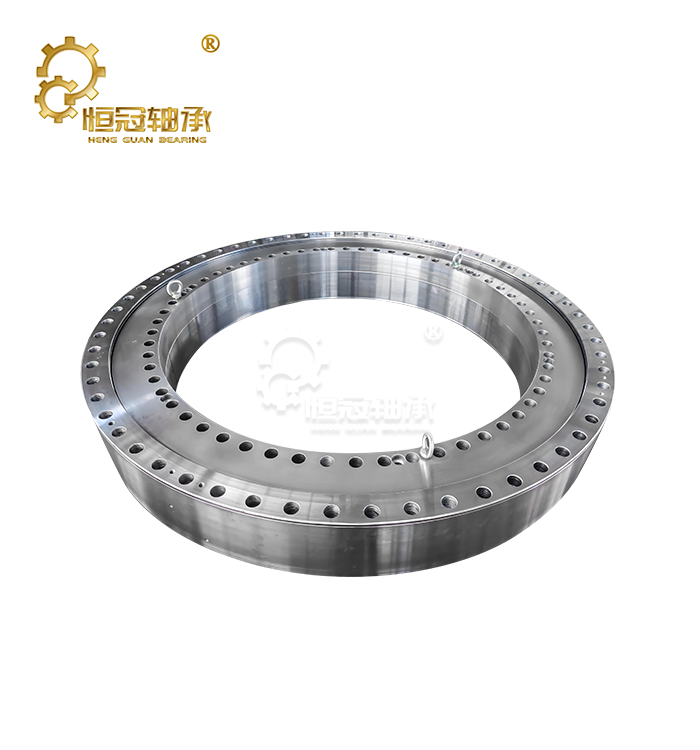 VIEW MOREConveying System Slewing Bearing
_1767784942887.webp) VIEW MOREDouble-Row Ball Slewing Ring Bearing
VIEW MOREDouble-Row Ball Slewing Ring Bearing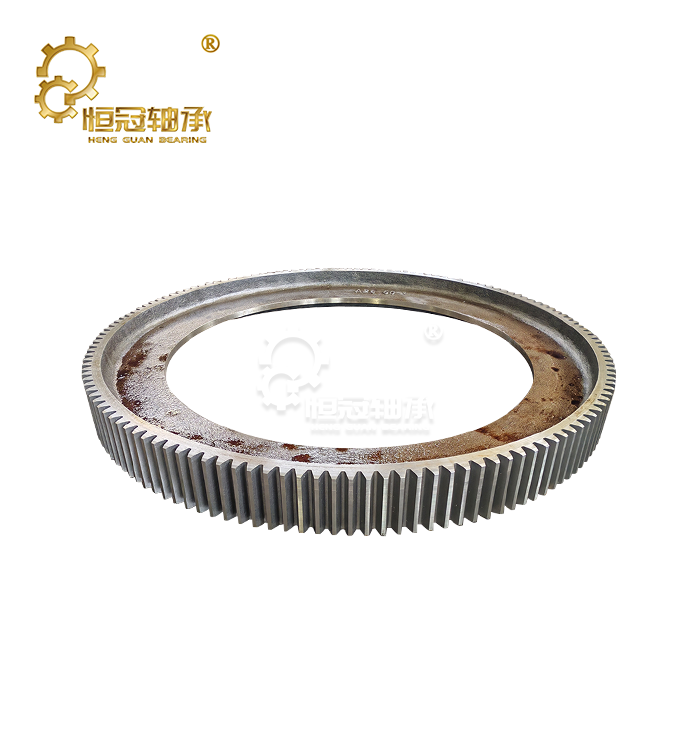 VIEW MORElarge gear rings for mining
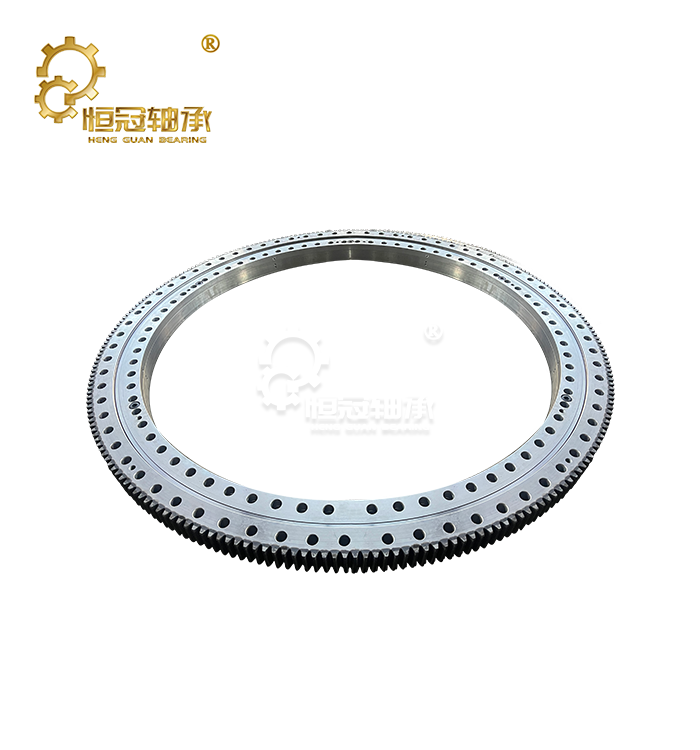 VIEW MOREAC200 Crane Slewing Bearing
 VIEW MORESlewing Ring For Billboard
 VIEW MOREBridge Scraper Slewing Bearing