




Tower Crane Slewing Ring Maintenance and Inspection Guide
A tower crane is only as safe as the rotating joint that carries it, which is exactly why maintenance deserves real attention. This guide, put together with input from Heng Guan Bearing, walks through how to inspect, lubricate, and protect a Tower Crane Slewing Ring so it keeps performing under years of heavy cyclical loading. Whether you're a site engineer or a maintenance manager, let's go through what actually matters — section by section — so nothing gets overlooked.
What Should You Inspect on a Tower Crane Slewing Ring?
First, the basics. A visual inspection should be the beginning of every regular inspection of a Tower Crane Slewing Ring: Look for surface cracks, discolouration from overheating, and any pitting on the raceway. Then watch the crane spin – strange sounds, sticking, jerky motion, or an increasing slewing torque typically indicate a growing issue long before a breakdown occurs.
You’ll also want to examine seal integrity, since a damaged or missing seal allows dust and moisture in, which speeds up wear from the inside out. Heng Guan Bearing suggests documenting these findings at each inspection since it is a recorded trend (not a single picture) that really helps you determine when a slewing ring requires further care or replacement.
| Inspection Point | What Signals Trouble |
|---|---|
| Raceway & surfaces | Cracks, pitting, overheating, discoloration |
| Rotation feel | Noise, binding, jerky movement, rising torque |
| Seals | Cracks, tears, gaps, grease leakage |
| Inspection records | Trends that point to accelerating wear |
Tower Crane Slewing Ring Lubrication and Grease Maintenance
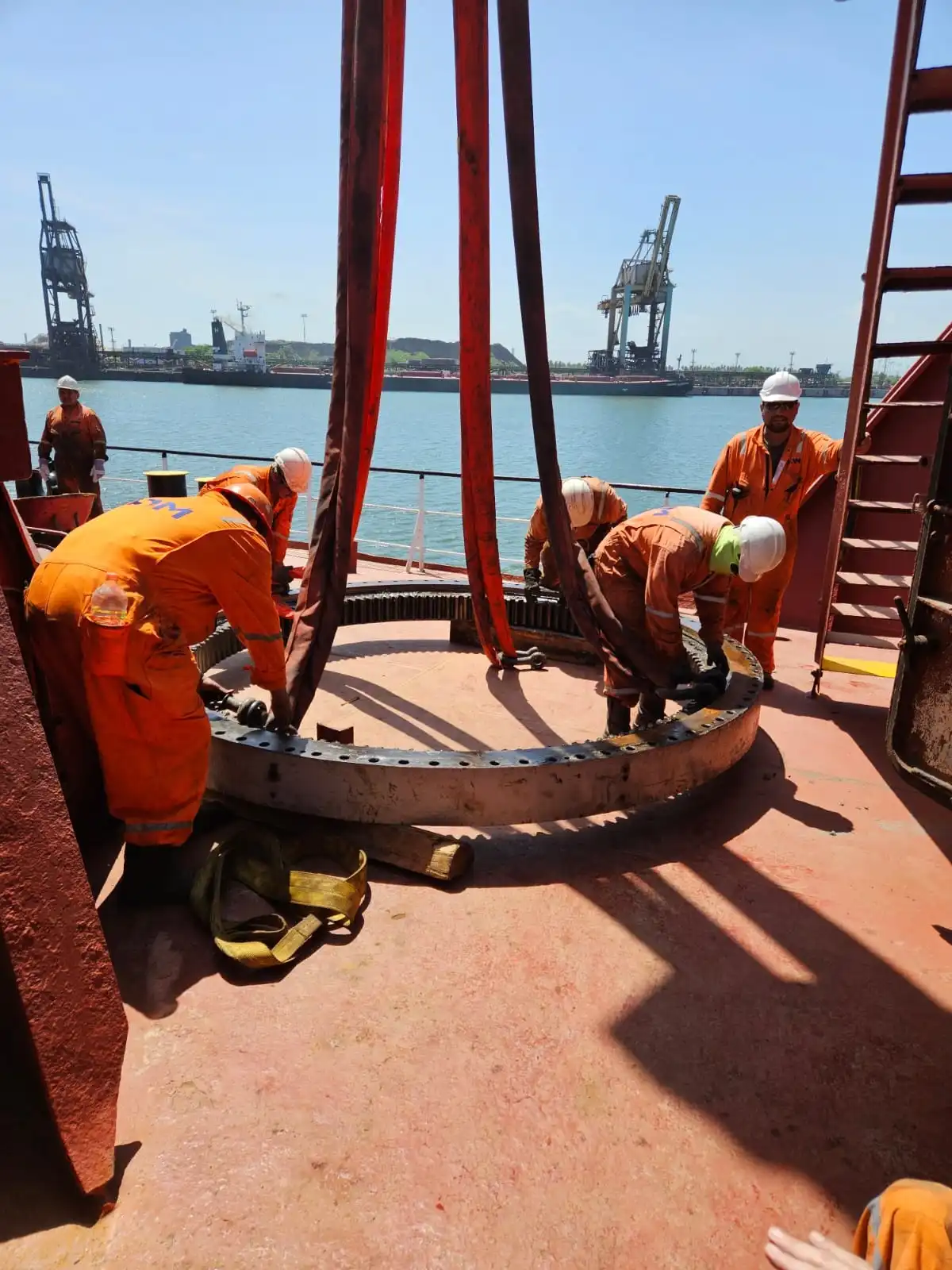
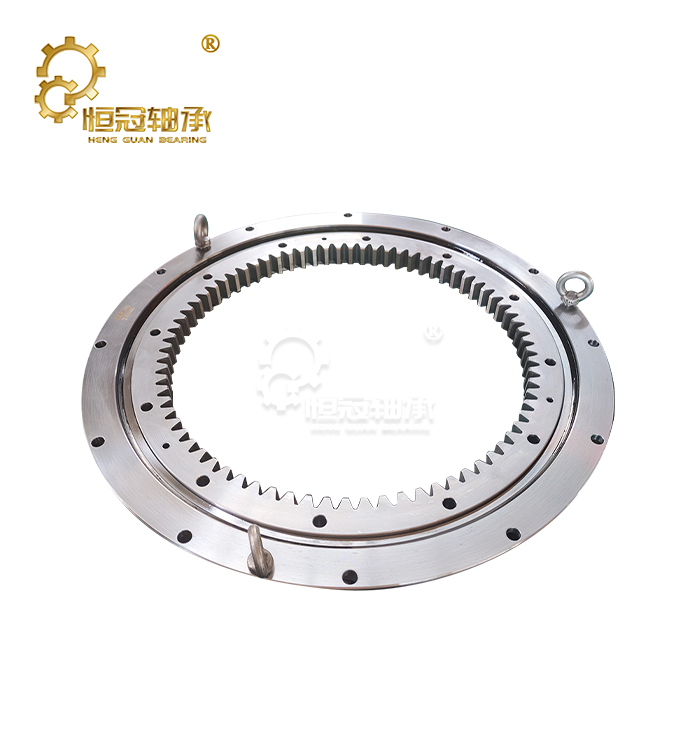
Naturally, lubrication comes next, and it's arguably the single most important maintenance task. Most failures in a Tower Crane Slewing Ring trace back to inadequate or inconsistent greasing rather than manufacturing defects. Grease should be applied evenly around the raceway through the grease nipples distributed on the ring's upper surface, and old, contaminated grease should be purged rather than simply topped up.
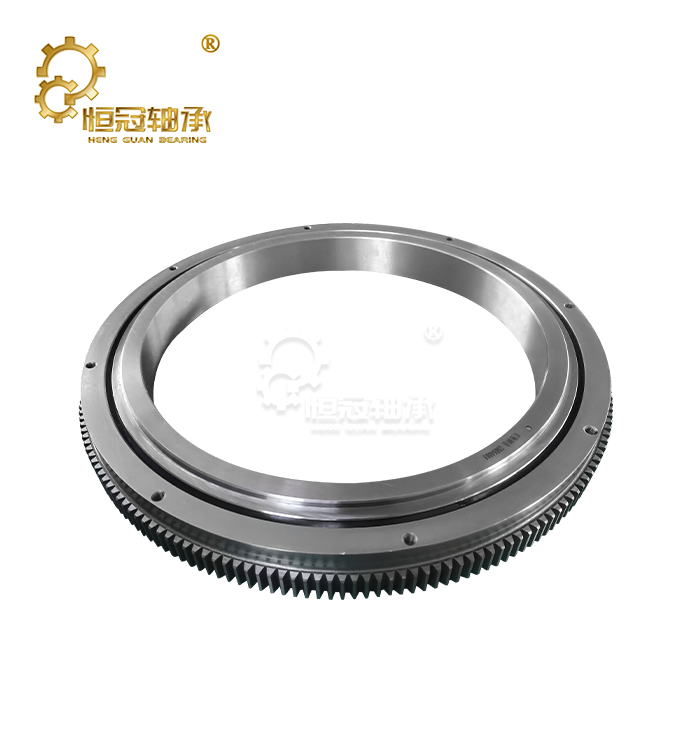
Use an EP (extreme-pressure) lithium grease suited to heavy loads, and avoid mixing incompatible products, which weaken the lubrication film. Where the ring has open gear teeth and a pinion, keep those surfaces separately coated, since they wear differently from the raceway. If you need product-specific guidance, our engineers at mia@hgb-bearing.com can recommend a grease interval suited to your crane's duty cycle and site conditions.
| Lubrication Task | Recommended Interval |
|---|---|
| Raceway re-lubrication | Every 100–200 operating hours, or quarterly |
| Open gear/pinion coating | With each raceway service, or per OEM advice |
| Grease type review | Every 6 months |
| Full grease purge | Annually |
How Often Should a Tower Crane Slewing Ring Be Inspected?
You could ask whether a set timetable actually works at all job sites, and the honest truth is: it's a beginning point, then changed. As a baseline, visually examine the Tower Crane Slewing Ring once each week in active use. Check the connection-bolt torque monthly for the first year of bearing service, and quarterly thereafter. Schedule a more thorough inspection of wear and clearance with each lubrication service — every 100-200 running hours.
These intervals should be reduced for high dust, coastal humidity, or large temperature changes, since environmental stress increases seal and grease deterioration. Heng Guan Bearing also proposes synchronizing the inspection frequency with the crane’s yearly certification cycle, so that wear data and official safety assessments are in step and not running separately.
| Task | Interval |
|---|---|
| Visual inspection | Weekly during active use |
| Bolt torque verification | Monthly in the first year, then quarterly |
| Deep wear & clearance check | Every 100–200 operating hours |
| Alignment with safety review | With annual crane certification |
Tower Crane Slewing Ring Bolt, Gear, and Wear Inspection
Finally, let’s talk about the structural side of things. The bolts of the Tower Crane Slewing Ring with the mast and the slewing platform are under continual pulsing stresses. The pre-tightening torque must be re-checked using a calibrated wrench, then re-tightened in a symmetrical cross pattern to ensure even tension. Check the gear teeth for irregular wear patterns, pitting, or chipping, which are frequently signs of misalignment or lack of lubrication at the mesh.
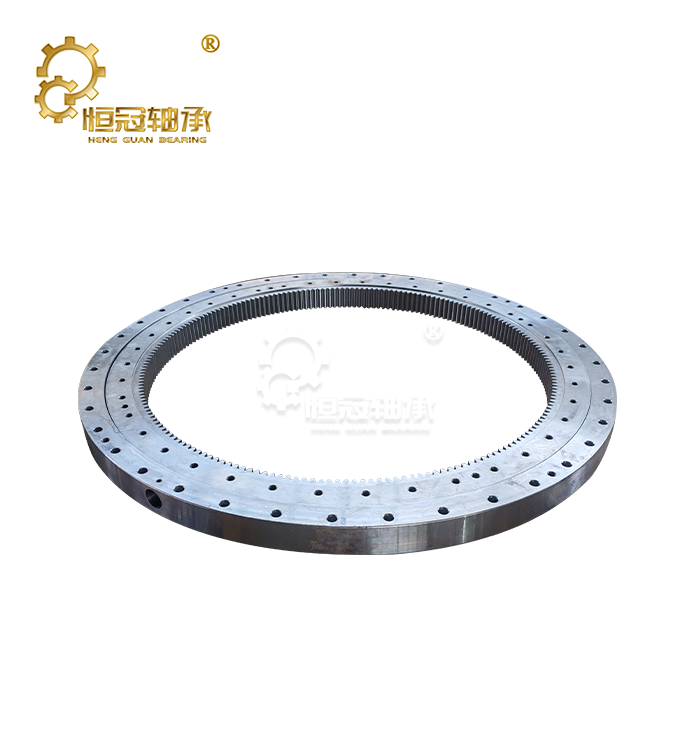
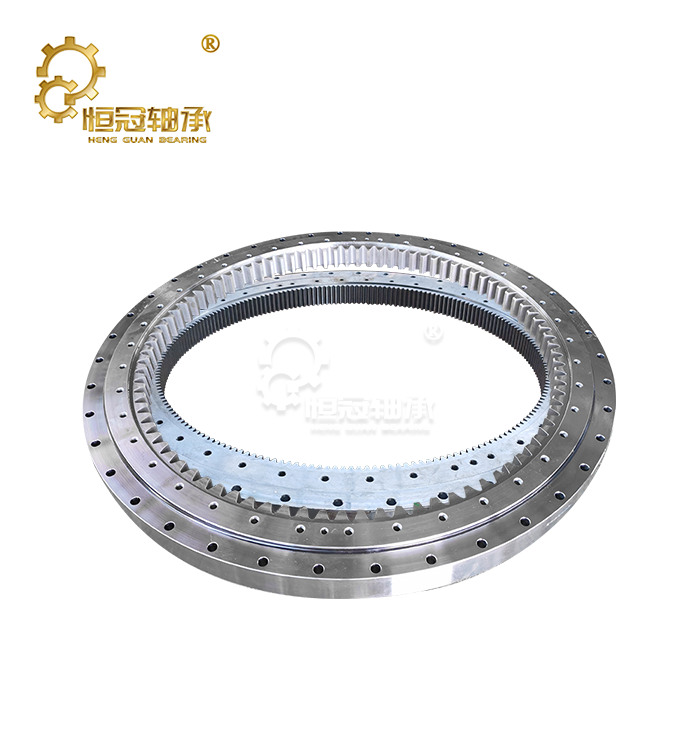
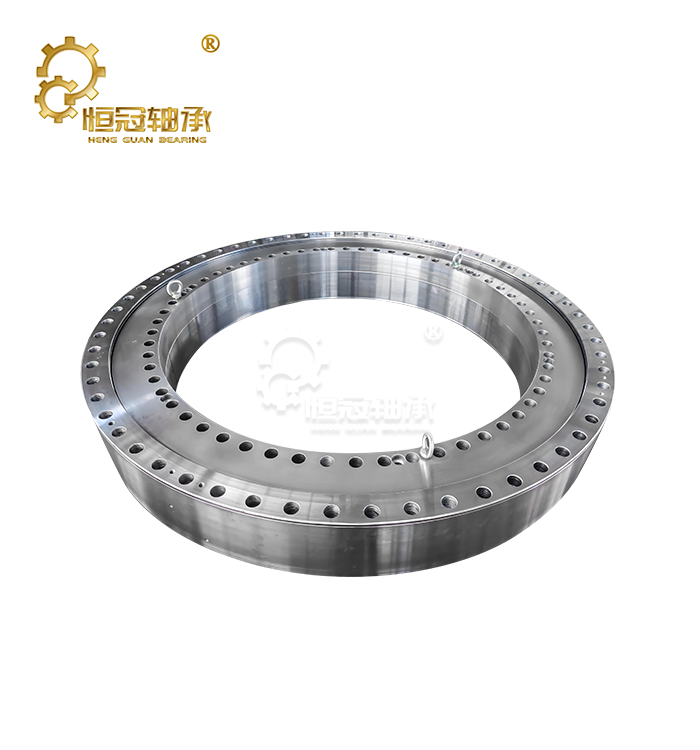
Also, periodic measurement of axial and radial clearance will allow detection of raceway wear prior to it becoming a safety problem. This is where well-built bearing manufacturing comes into the picture: Heng Guan Bearing produces tower crane slewing rings with 800-8,000 mm bore sizes in single-row four-point contact ball, double-row different-diameter ball, and three-row roller designs. Tight tolerances provide you with a longer and more predictable wear curve.
| Inspection Point | What to Check |
|---|---|
| Connection bolts | Torque value, corrosion, cross-pattern tightening |
| Gear teeth | Pitting, chipping, contact pattern |
| Raceway clearance | Axial and radial play measurement |
| Seals | Cracking, gaps, debris ingress |
Conclusion
Consistent inspection, correct lubrication, and prompt bolt checks keep a Tower Crane Slewing Ring reliable for years. Heng Guan Bearing designs and builds with this full service life in mind — reach out before wear becomes a safety concern.
FAQ
1. How often should a tower crane slewing ring be greased?
A: Every 100–200 operating hours or quarterly, whichever comes first, using an EP lithium grease.
2. What are early warning signs of slewing ring wear?
A: Unusual noise, binding during rotation, rising torque, vibration, and visible grease leakage.
3. How is bolt torque checked on a slewing ring?
A: With a calibrated torque wrench, tightened in a symmetrical cross pattern — monthly during the first year, then quarterly.
4. Can a damaged seal be replaced without removing the ring?
A: In many cases, yes, though severe damage may require a full seal and grease service.
5. What sizes and structures does Heng Guan Bearing supply for tower cranes?
A: Single-row four-point ball, double-row different-diameter ball, and three-row roller types, in bore sizes from 800 mm to 8,000 mm, with custom options beyond.
Keep Your Tower Crane Slewing Ring Running Safely
Don't wait for a warning sign to think about maintenance. Contact Heng Guan Tower Crane Slewing Ring at mia@hgb-bearing.com for inspection checklists, lubrication guidance, or replacement bearings engineered for your tower crane — because consistent care today prevents costly downtime tomorrow.
References
1. International Organization for Standardization. (2007). ISO 281:2007: Rolling bearings — Dynamic load ratings and rating life. Geneva, Switzerland: ISO.
2. International Organization for Standardization. (2006). ISO 76:2006: Rolling bearings — Static load ratings. Geneva, Switzerland: ISO.
3. Harris, T. A., & Kotzalas, M. N. (2007). Rolling Bearing Analysis: Essential Concepts of Bearing Technology (5th ed., Vol. 1). Boca Raton, FL: CRC Press, Taylor & Francis Group.
4. Brändlein, J., Eschmann, P., Hasbargen, L., & Weigand, K. (1999). Ball and Roller Bearings: Theory, Design and Application (3rd ed.). Chichester, England: John Wiley & Sons.
5. International Organization for Standardization. (2013). ISO 9927-1:2013: Cranes — Inspections — Part 1: General. Geneva, Switzerland: ISO.
6. International Organization for Standardization. (2015). ISO 9001:2015: Quality management systems — Requirements. Geneva, Switzerland: ISO.

WHAT OUR CUSTOMERS SAY
Here is the customer's evaluation of us

_1776668700508.webp)