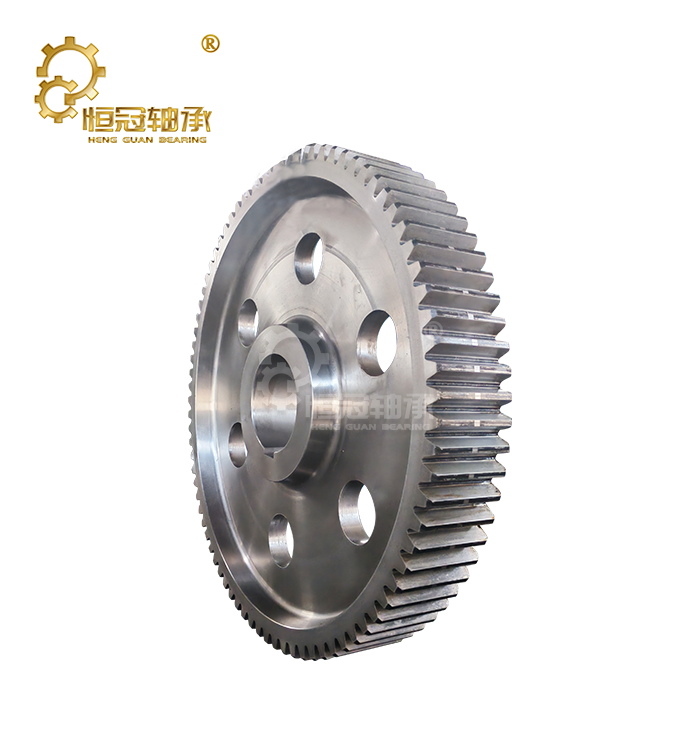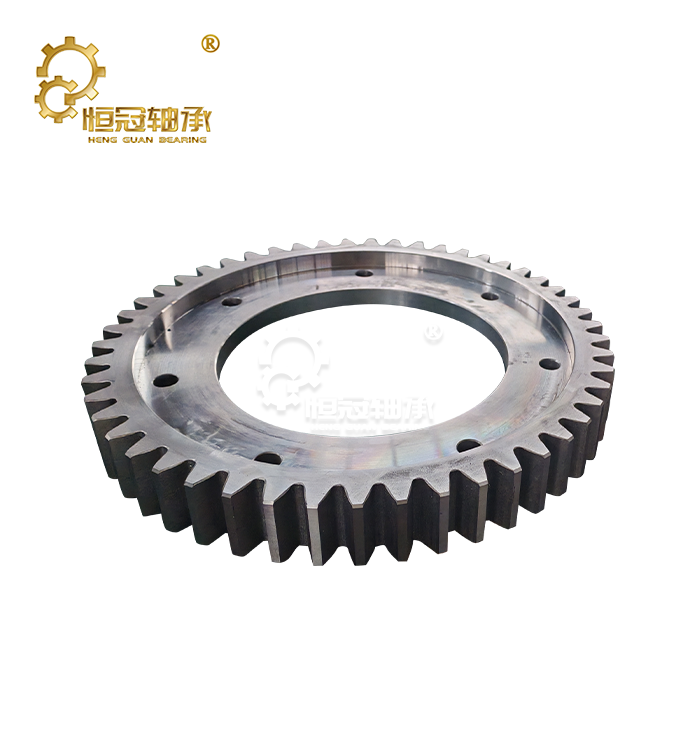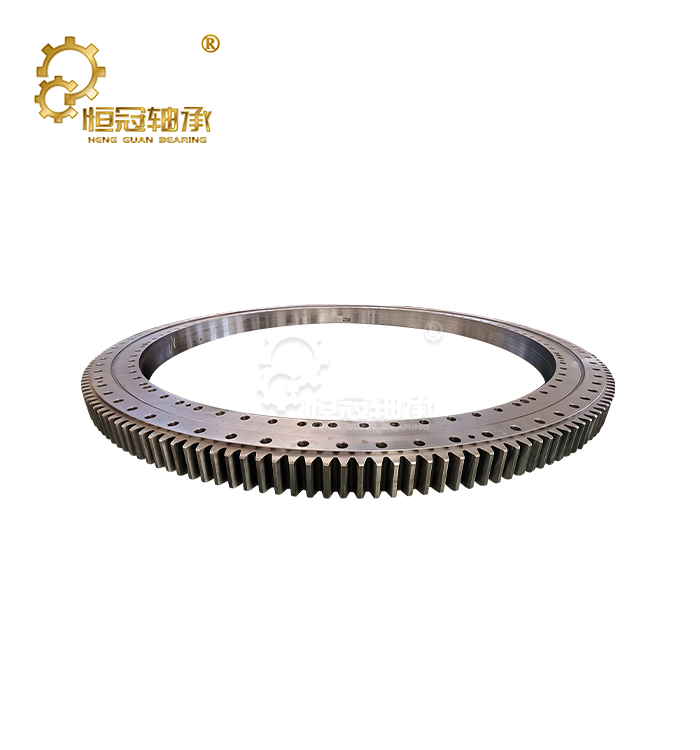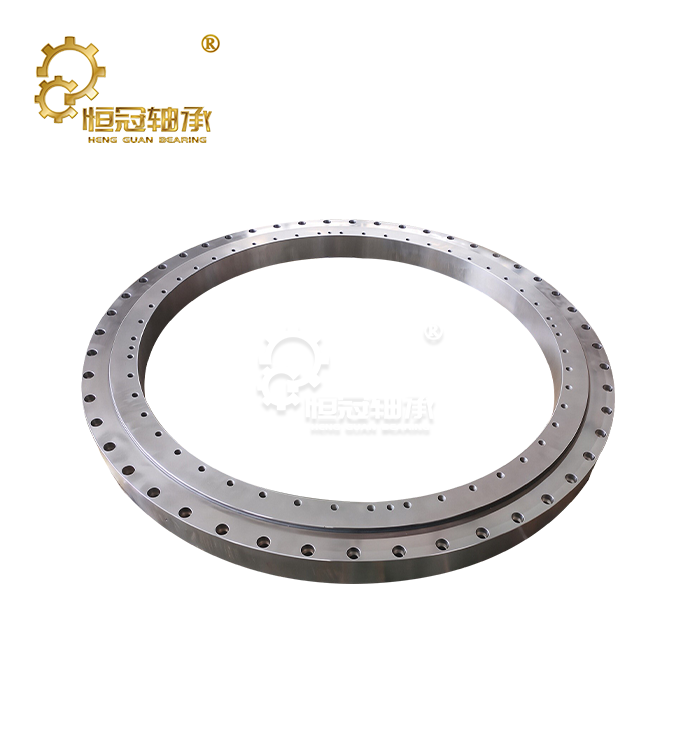




Top manufacturers of drilling rig slewing bearings
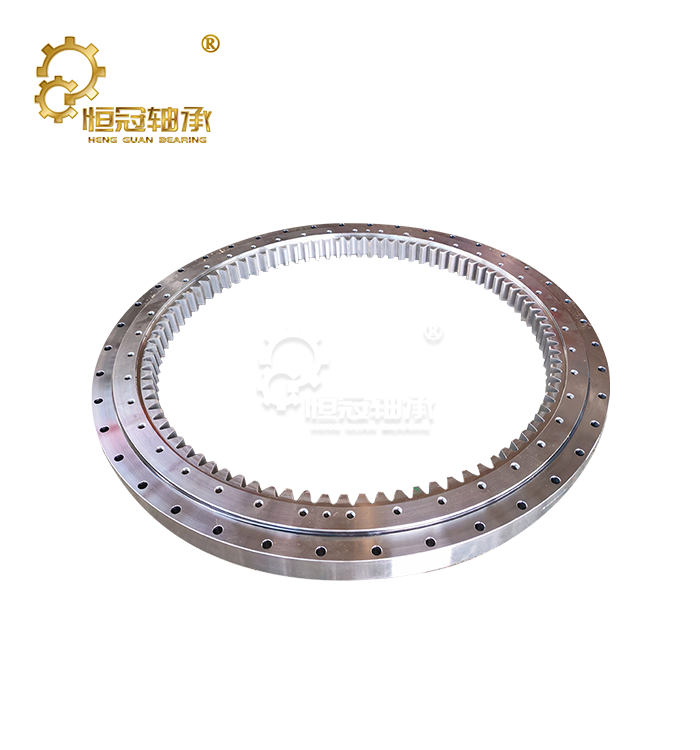
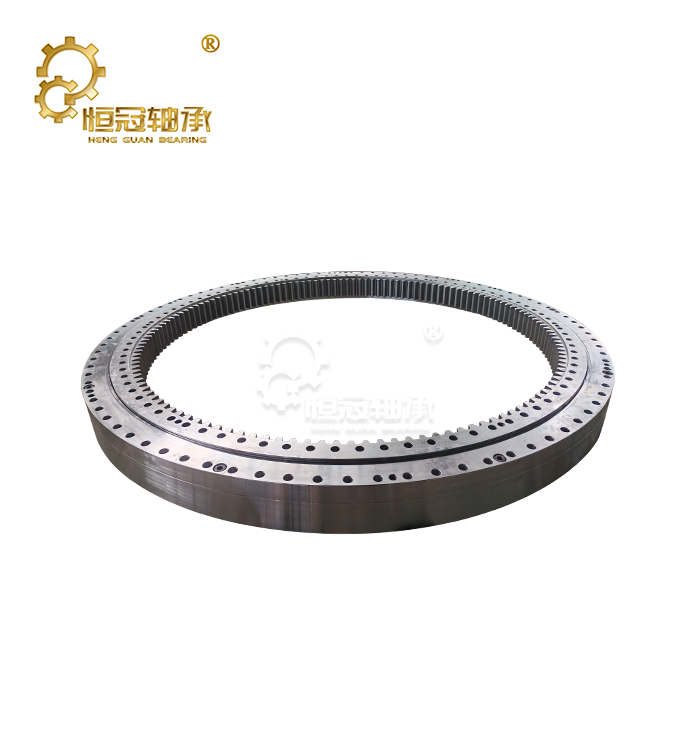
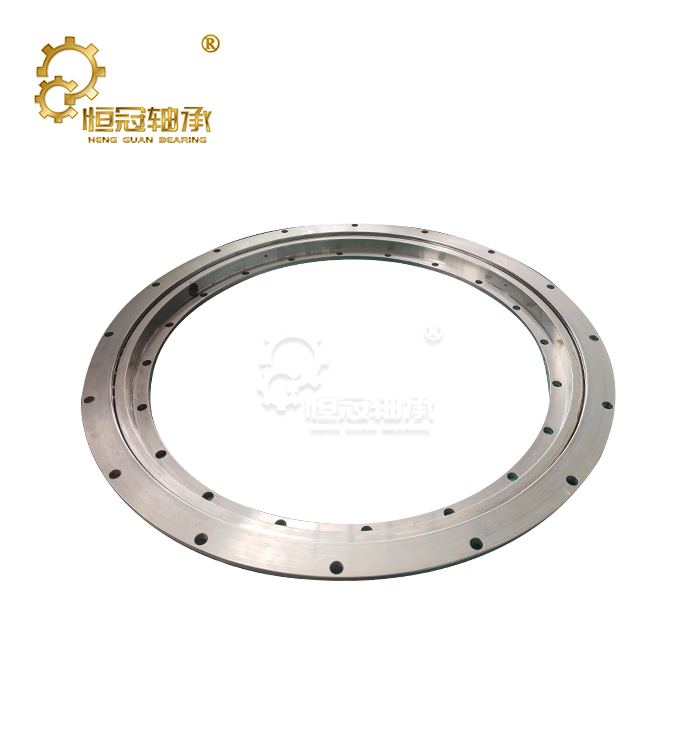
Choosing a drilling rig slewing bearing is not simply a matter of selecting a familiar bearing brand. Rotary drilling rigs, foundation drilling machines, mining equipment, and other heavy-duty drilling systems place complex loads on the slewing bearing, including axial loads, radial loads, and overturning moments. The bearing must also be able to sustain stable rotation under vibration, dust, moisture, shock loading and severe duty cycles. One can consider well-known bearing manufacturers like SKF, NSK, Rothe Erde, ZWZ, etc. or specialised slewing bearing manufacturers like Luoyang Heng Guan Bearing Technology. But there isn't a universal ranking that makes any one manufacturer the greatest fit for all drilling applications. A more helpful way is to compare manufacturers on bearing structure, load capacity, manufacturing capability, customisation, quality control, technical assistance and total cost of ownership. This is an important distinction for procurement managers and OEM engineers. A bearing that works well in a crane or excavator is not necessarily the ideal choice for a drilling rig. The right provider will be able to comprehend what the real load circumstances of the machine are and propose a bearing design that fits the mounting arrangement, rotation requirements, operating environment and estimated service life.
What Makes a Slewing Bearing Suitable for Drilling Rigs?
The loads a drilling rig bearing must manage
A slewing bearing is the connection between the stationary and rotating structures of the machine, which allows for rotation. In drilling equipment it may be necessary to transmit numerous simultaneous loads.
An axial load may be from the weight of the upper structure, drilling assembly, or other mounted equipment. Radial loads may originate from lateral forces created during drilling. The overturning moment is of particular importance. This is when the load is located distant from the centerline of the bearing.
These loads are not consistent at all times. Load changes might occur as a consequence of hard rock drilling, change of drilling direction, starting and stopping rotation, or protracted drilling assembly operations. Therefore, the outside diameter of the bearing should not be the primary criterion for the bearing selection. The load data must be realistic, and it should be provided to the bearing manufacturer.
Why does a bearing structure matter?
There are different types of slewing bearings, such as single-row ball bearings, double-row ball bearings, cross-roller bearings, and three-row roller bearings. Each structure has different properties.
Heavy-duty machinery commonly uses three-row cylindrical roller slewing bearings because distinct roller rows can be used to carry axial and radial loads. Four-point contact ball slewing bearings are a compact solution for combined axial, radial, and moment loads.
The right structure is dependent on the specific application. A roller bearing is not necessarily a superior bearing just because it is larger or heavier than a ball bearing. Engineers should evaluate load ratings, stiffness, rotation speed, mounting rigidity, lubrication, sealing, and service circumstances before making the selection.
Materials, heat treatment, and raceway durability
Material selection directly affects the service performance of a large slewing bearing. Generally, big bearing rings are made from alloy steels, such as 42CrMo and 50Mn, and the rolling elements can be chosen from bearing steels as per design.
Heat treatment is also very significant. Hardening of the raceway can increase rolling contact fatigue and wear resistance, but the base material still needs to have adequate toughness to handle the operational stresses.
Buyers should consequently request suppliers to provide information on:
Material of the ring and material certificates
Raceway heat treatment process
Effective depth of hardened layer and surface hardness
Rolling element material
Gear material Gear hardening (if applicable)
Dimensional check
Raceway inspection
Final assembly inspection
A supplier that can provide verifiable manufacturing and inspection records provides the OEM with more valuable evidence than a broad declaration that the bearing is “high quality.”
Five Manufacturers Worth Considering for Drilling Rig Applications
The companies below should be viewed as manufacturers worth evaluating rather than a universal ranking. Their capabilities, product ranges, and suitability can vary according to the specific drilling equipment and bearing specification.
SKF: Established bearing engineering and global resources
SKF is one of the best-known names in the international bearing industry. Its long experience in rolling-bearing engineering makes it a company that procurement teams may consider when a project requires established bearing technology and technical support.
For large rotating equipment, buyers should not evaluate SKF only by brand recognition. The important question is whether the proposed bearing configuration matches the required diameter, load combination, rotation characteristics, mounting arrangement, and operating environment.
For drilling equipment, engineering support can be particularly valuable during the selection stage. The bearing should be evaluated as part of the complete rotating structure rather than as an isolated component.
For international OEMs with established supplier qualification procedures, SKF may be attractive because of its global presence and long history in bearing technology. However, the final decision should still be based on the actual technical specification and commercial quotation.
NSK: Bearing engineering and application-focused solutions
NSK is another established bearing manufacturer with extensive experience in industrial bearing applications. Its bearing technology covers demanding machinery where load capacity, accuracy, lubrication, and service life are important considerations.
For large slewing applications, NSK's published information demonstrates the use of high-capacity roller slewing bearing configurations for applications that require the transmission of radial, axial, and moment loads.
When evaluating NSK or a similar global supplier, OEM engineers should provide complete operating information. This should include the maximum axial load, radial load, overturning moment, rotation speed, duty cycle, temperature, contamination level, and expected operating hours.
This information allows the manufacturer to determine whether a standard design is suitable or whether a customized bearing is more appropriate.
Rothe Erde: Strong expertise in large-diameter slewing bearings
Rothe Erde, part of thyssenkrupp, is particularly relevant when large-diameter slewing bearing technology is required. The company states that its slewing bearings are individually designed according to customer requirements and are available in ball, roller, wire-race, and segmented configurations. Its published product information also covers very large diameters, including single-piece bearings up to 9,600 mm and segmented bearings up to 25,000 mm.
This makes Rothe Erde an important manufacturer to consider for large-scale machinery and infrastructure applications where bearing size, load capacity, and customized design are critical.
Its manufacturing process includes machining of raceways and mounting holes, heat treatment, finishing, assembly, lubrication, and final inspection. The company also describes inspection procedures covering functionality and geometry, with results documented in quality assurance records.
For drilling-related applications, such engineering depth can be valuable when the bearing is a critical part of a large rotating assembly.
ZWZ: Broad slewing bearing product coverage
ZWZ, or Wafangdian Bearing Group, is a major Chinese bearing manufacturer with a broad product portfolio. Its published slewing bearing range includes four-point contact designs with toothless, external-toothed, and internal-toothed configurations.
For procurement teams, the advantage of a broad product range is flexibility. Depending on the equipment design, buyers can compare different bearing structures rather than forcing every application into the same configuration.
However, price should not be the only comparison point. A proper quotation for a drilling rig slewing bearing should be evaluated together with material certificates, heat-treatment records, dimensional tolerances, gear accuracy where applicable, inspection documentation, packaging, delivery time, and technical support.
For large-volume projects, these factors can have a greater impact on total project cost than the initial unit-price difference.
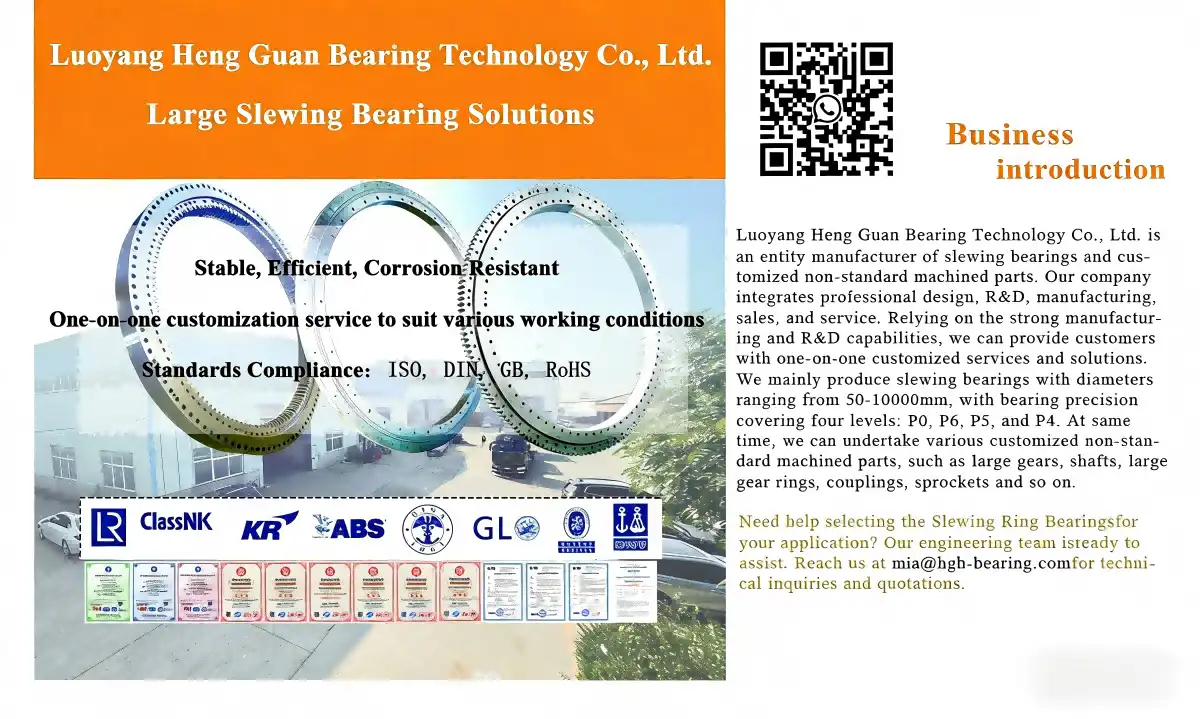
Luoyang Heng Guan Bearing Technology: Custom slewing bearing capability
Luoyang Heng Guan Bearing Technology is a specialized Chinese manufacturer focused on slewing bearings and customized non-standard machining components. Its published information lists multiple slewing bearing structures, including single-row four-point contact ball bearings, cross-roller bearings, three-row roller bearings, double-row ball bearings, and ball-and-roller combination designs. The company also lists precision grades P0, P6, P5, and P4.
Its published product information covers large-diameter slewing bearings and emphasizes customized design for different applications. The company also states that its products are exported to customers in Europe, North America, Asia, and other markets.
This type of customization can be useful for drilling rig OEMs that cannot use an off-the-shelf bearing. Instead of changing the machine to accommodate a standard bearing, the buyer can work with the manufacturer to evaluate the required bore, outside diameter, mounting holes, gear arrangement, raceway structure, sealing arrangement, and internal clearance.
For a drilling rig manufacturer, this can make the engineering discussion more practical because the bearing is developed around the machine rather than selected independently from a catalog.
How Should Buyers Compare Drilling Rig Slewing Bearing Manufacturers?
Start with load data instead of brand names.
A manufacturer cannot properly select a large slewing bearing from the machine name alone. “Rotary drilling rig” describes a category of equipment, not one fixed operating condition.
Before requesting quotations, prepare a technical data sheet containing:
Bearing mounting diameter
Inner and outer diameter requirements
Maximum axial load
Maximum radial load
Maximum overturning moment
Rotation speed
Rotation direction
Duty cycle
Operating temperature
Contamination and moisture exposure
Gear requirements
Bolt pattern
Lubrication requirements
Expected service life
The more complete the information, the easier it becomes for different suppliers to quote comparable products.
Compare bearing design, not just dimensions.
Two bearings with the same outside diameter may have very different load capacities and service characteristics.
Important design variables include raceway geometry, rolling element diameter, number of rolling elements, contact angle, internal clearance, ring thickness, gear arrangement, sealing system, and heat-treatment process.
For a heavy drilling application, stiffness can be just as important as nominal load capacity. Excessive elastic deformation or clearance can affect the stability of the rotating structure and may increase wear during operation.
Examine quality documentation.
A professional supplier should be able to explain how it controls quality from raw material to finished bearing.
Useful documents may include:
Material certificates
Heat-treatment records
Dimensional inspection reports
Hardness test results
Gear inspection records
Raceway inspection records
Assembly records
Final inspection reports
Certificate of conformity
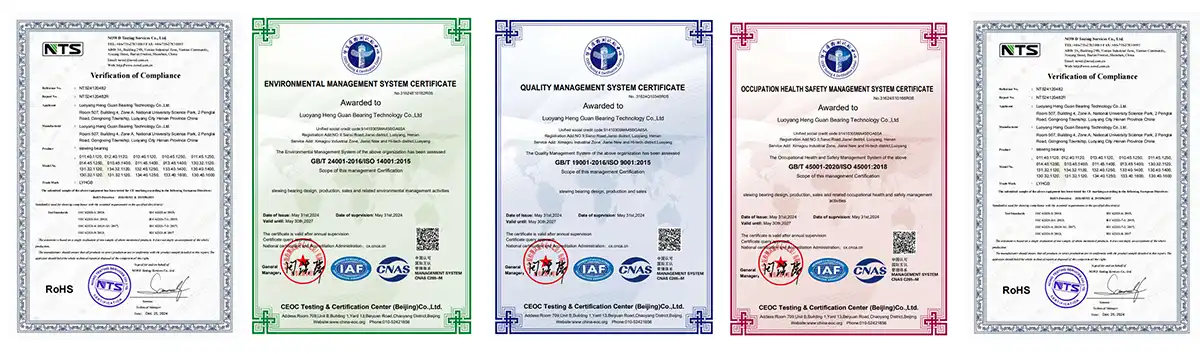
Quality management certification
ISO 9001 certification can indicate that a quality management system is established, but it should not be treated as proof that every individual bearing is suitable for a particular drilling rig.
The bearing itself still needs to meet the customer's drawing, technical agreement, inspection requirements, and application conditions.
What Should Buyers Check Before Placing an OEM Order?
Verify the mounting interface.
Mounting problems are among the most expensive mistakes to discover after production.
Check the bolt-hole pattern, bolt diameter, pitch-circle diameter, flange dimensions, mounting surface flatness, gear position, gear module or other applicable gear parameters, and installation orientation.
If the bearing is replacing an existing component, provide the supplier with the original bearing drawing whenever possible. Photographs alone are rarely enough for a critical replacement.
Confirm the gear and drive arrangement.
Many slewing bearings include internal or external gear teeth that engage with a pinion. The gear design directly affects the transmission of rotation.
The supplier should receive information about:
Pinion dimensions
Gear module or applicable gear specification
Required gear accuracy
Drive torque
Maximum rotation speed
Gear lubrication
Required backlash
The bearing and pinion should be considered a matched system. A bearing with excellent raceway performance can still experience premature gear wear if the drive arrangement is incorrectly specified.
Discuss sealing and lubrication early.
Drilling environments can contain dust, mud, water, abrasive particles, and other contaminants. Seal design therefore deserves attention during the quotation stage.
Buyers should ask how the bearing is sealed and where grease is introduced. They should also establish the recommended lubricant type, relubrication interval, grease quantity, and maintenance procedure.
The correct maintenance interval for drilling rig slewing bearing depends on the actual application. A supplier should not provide a generic maintenance schedule without considering operating speed, load, contamination, temperature, and duty cycle.
Maintenance Practices That Influence Bearing Service Life
Inspect seals, lubrication points, and mounting bolts.
Routine inspection can identify problems before raceway damage becomes severe.
Operators should monitor:
Seal condition
Grease leakage
Unusual noise
Increased rotational resistance
Abnormal vibration
Gear wear
Bolt loosening
Changes in backlash or clearance
If the bearing begins to rotate unevenly or develops unusual noise, continuing operation without investigation can increase the damage and make the eventual repair more expensive.
Monitor the operating environment.
A drilling rig used in a dry and dusty mining environment faces different challenges from a rig operating in a wet coastal location.
Dust can contaminate grease and accelerate abrasive wear. Water can promote corrosion and compromise lubrication. Low temperatures can affect lubricant performance, while high temperatures may accelerate lubricant degradation.
The bearing specification should therefore reflect the real operating environment rather than a generic indoor industrial condition.
Keep installation under control.
Even a well-manufactured slewing bearing can suffer premature damage if it is installed incorrectly.
The mounting structure should have adequate stiffness and suitable surface flatness. Bolts should be tightened according to the specified procedure and sequence. The gear should be correctly aligned with the pinion.
During installation, avoid forcing the bearing into position with uncontrolled impact loads. Follow the manufacturer's handling and installation instructions, particularly for large-diameter bearings.
Why Customization Can Be Important for Drilling Rig OEMs?
Standard bearings are not always the best solution.
A standard catalog bearing may work well when the machine uses common dimensions and operating conditions. However, drilling equipment often has its own mounting interface, load distribution, drive arrangement, and space limitations.
A customized drilling rig slewing bearing can be developed around these requirements.
Customization may involve:
Bore and outside diameter
Ring height
Mounting holes
Gear teeth
Raceway configuration
Rolling element arrangement
Internal clearance
Material
Heat treatment
Sealing system
Lubrication ports
For OEM projects, customization can also reduce the need to redesign the surrounding machine structure simply to accommodate an existing standard bearing.
Ask for engineering support before production.
The most useful supplier is not necessarily the one that sends the lowest quotation first. For a large custom bearing, the supplier should be willing to review drawings and operating parameters before production.
A practical engineering workflow is the following:
Submit the machine drawing and operating conditions.
Confirm axial, radial, and moment loads.
Review the proposed bearing structure.
Confirm material and heat treatment.
Check mounting and gear dimensions.
Review tolerances and internal clearance.
Confirm inspection requirements.
Approve the technical drawing.
Manufacture and inspect the bearing.
Provide installation and maintenance guidance.
This process gives both parties a clear technical record and reduces the risk of misunderstanding during production.
Conclusion
Finding the best drilling rig slewing bearing supplier means finding the right balance between technical capability, manufacturing quality, customization, service, and total cost. SKF, NSK, Rothe Erde, ZWZ, and Luoyang Heng Guan Bearing Technology are manufacturers that buyers may evaluate, but the most suitable supplier depends on the specific drilling equipment and its operating requirements.
The selection process should begin with load calculations and mounting information rather than brand preference alone. Buyers should compare bearing structure, raceway design, material, heat treatment, gear configuration, sealing, lubrication, inspection procedures, and technical support.
For OEM and replacement projects, customization can be especially important. A supplier that can review drawings, calculate the appropriate bearing configuration, manufacture non-standard dimensions, provide inspection documentation, and support installation offers greater value than a supplier competing only on unit price.
For buyers considering a customized drilling rig bearing, providing the manufacturer with the machine drawing, load data, rotation conditions, mounting dimensions, gear requirements, and operating environment is the best starting point. This gives the engineering team enough information to recommend a suitable bearing structure and prepare a more accurate quotation.
|
|
FAQ
1. How long does it usually take for buying teams to get drilling rig slewing bearings?
Taking into account production schedules and quality control steps, standard stock bearings usually ship 8 to 12 weeks after an order is placed. Lead times can be up to 16 to 20 weeks for custom-designed Drilling Rig Slewing Bearing that need technical teamwork, the purchase of specialized materials, or dimensions that aren't standard. Manufacturers who keep popular sizes in stock may be able to offer faster delivery for people who need replacements right away. These dates should be used in procurement planning when arranging the start-up of equipment or repair breaks that need to replace bearings.
2. How can buyers make sure that slewing bearing sellers are real and offer good quality?
Asking for certifications like ISO9001 quality management system certificates and material mill certificates is a good way to get concrete proof of quality. By asking for references from clients who have used similar drilling equipment, you can get straight feedback on how well the company does and how reliable their products are. Audits of factories by buying teams or third-party inspection services make sure that the factories can make things and that the quality control processes are working properly. Manufacturers with a good reputation, like Heng Guan, let site checks happen and are open about how they make things and how they test them.
Partner with Heng Guan for Reliable Drilling Rig Slewing Bearing Solutions
For tough drilling jobs, Heng Guan Bearing Technology offers designed options that combine years of manufacturing experience with good value. We are experts at making drilling rig slewing bearing parts with sizes ranging from 800mm to 7000mm. These parts are made from high-strength 42CrMo alloy steel and precision GCr15 rolling elements. We keep up with accuracy grades from P0 to P4, so we can meet the needs of customers in the oil and mining discovery, geotechnical drilling, and other sectors that need precise work. Our team of more than 50 engineers has been making bearings for more than 20 years and can help with everything from the initial conversation to custom design optimization and installation advice. Email our experts at mia@hgb-bearing.com to talk about your project needs and get specific quotes from a reliable manufacturer that is dedicated to giving you cost-effective, high-performance options for your drilling equipment needs.
References
1. Harris, T.A. & Kotzalas, M.N. (2006). Rolling Bearing Analysis: Essential Concepts of Bearing Technology. CRC Press, Boca Raton.
2. Society of Tribologists and Lubrication Engineers. (2014). Slewing Bearing Applications in Heavy Machinery: Design and Maintenance Guidelines. STLE Technical Publication Series.
3. International Organization for Standardization. (2018). ISO 76:2006 Rolling Bearings — Static Load Ratings. Geneva: ISO Standards.
4. American Petroleum Institute. (2019). API Specification 7K: Drilling and Well Servicing Equipment. Washington, DC: API Publishing.
5. Wensing, J.A. (2011). On the Dynamics of Ball Bearings. Doctoral Dissertation, University of Twente, Netherlands.
6. German Institute for Standardization. (2017). DIN 628: Rolling Bearings - Slewing Rings - Calculation of Load Capacity. Berlin: Beuth Verlag.

WHAT OUR CUSTOMERS SAY
Here is the customer's evaluation of us
_1767713770881.webp)