




Maintenance tips for no gear slewing bearings
Proper maintenance of a No Gear Slewing Bearing is essential to reliable rotating equipment and minimising unscheduled downtime. A slewing bearing usually includes inner and outer rings, rolling elements, raceways, seals and mounting characteristics. With its design it is capable of carrying axial loads, radial loads and overturning moments and at the same time it allows controlled rotating movement.
A no-gear design, unlike a geared slewing bearing, does not include an incorporated gear rim for transmitting drive torque. This eliminates gear teeth and gear mesh maintenance from the bearing itself, but does not remove the requirement for frequent inspection, lubrication, mounting inspections or contaminant control. The actual maintenance interval should be calculated based on the bearing design, operating conditions, load profile, rotation speed, environment and manufacturer's recommendations.
Knowing these parameters helps equipment makers, maintenance teams and B2B procurement professionals to develop a practical maintenance schedule and choose a bearing configuration that fits the application.
Understanding the Maintenance Requirements of No Gear Slewing Bearings
How Is a No-Gear Slewing Bearing Designed?
The No-Gear Slewing Bearing combines precision-machined raceways and rolling elements to support loads and allow relative rotation between the bearing rings. Depending on the application, manufacturers can use single-row ball arrangements, double-row configurations, three-row roller designs, or cross-roller constructions.
Each design has various load characteristics and maintenance issues. A moderate-load, compact-equipment bearing may have different lubrication requirements than a large bearing used on construction or material-handling equipment.
The fundamental structural difference between no-gear and geared designs is the absence of gear teeth. No integrated gear rim exists; hence, there is no gear rim to inspect for pitting, tooth wear, or gear-mesh damage. But the rolling elements and raceways are still important working surfaces and should be properly lubricated and inspected.
Therefore, a no-gear design is not to be considered maintenance-free. Rather, maintenance becomes more focused on the bearing raceways, rolling elements, seals, mounting bolts, and installation circumstances.
Components That Require Regular Attention
A normal inspection program should comprise several components.
Race tracks:
The condition of the raceway bears directly on the rolling contact. If you see visible pitting, flaking, scoring, indentation, discoloration, or odd wear, have it checked out rather than dismiss it.
Rolling elements:
Balls or rollers should be free sliding with no surface damage. A problem with the rolling elements or their contact surfaces may be indicated by unusual noise, vibration, or increased rotational resistance.
Seals,
Seals help keep out dust, water, and other pollutants. Seals that are damaged or displaced (cracked, toughened) should be immediately replaced, as contamination can increase internal wear.
Mounting bolts:
Loose or improperly tightened bolts will compromise the load sharing and enable movement between the bearing and the mount structure. Bolt inspection shall be per the bearing manufacturer’s standards.
Mounting Surfaces -
The supporting framework should be flat, sturdy, and clean enough. An unsuitable mounting surface might cause distortion of the bearing rings and affect contact with the raceway.
Maintenance Factors That Depend on the Application
Load, Speed, and Rotation Pattern
Maintenance requirements should be based on actual bearing use. A bearing that operates at high loads or oscillates frequently may be different from one that operates at moderate speed and rotates occasionally.
Load distribution is particularly crucial for slewing bearings, as they are capable of supporting combined axial, radial, and moment loads. Where the equipment is operated frequently within its design limitations, maintenance staff should give special attention to any changes in vibration, noise, temperature, and rotation resistance.
Intermittent movement is also something to consider. Applications that rotate but do not make continuous revolutions but instead rotate across a limited angle, such as those using a No Gear Slewing Bearing, may create different lubricating conditions than constantly rotating equipment.
Temperature and Operating Environment
Temperature affects the lubricant performance, the behavior of the seals, the characteristics of the materials, and the dimensional relationship between the components. Outdoor equipment may also be subject to greater temperature swings than interior, controlled-environment equipment.
Dust, dampness, salt spray, chemicals, and abrasive particles might lead to extra maintenance requirements. Machinery running in a clean and stable environment may require less regular inspection than machinery running in a dirty and unstable environment such as mining equipment, construction equipment, port equipment, and outdoor tracking systems.
The maintenance plan should therefore be based on the actual working environment and not just on a regular calendar interval.
Contamination Control
Contamination is one of the major maintenance problems of rolling element bearings. Improper servicing or damaged seals can allow fine dust, water, metal particles, and other foreign material to enter.
Keep the area of lubrication clean, and use clean tools and containers for lubricant application. That is why, if the bearing design has accessible lubrication points, the area around the bearing should be cleaned prior to service to minimize the chance of introducing impurities.
In applications where there is a lot of water or dust exposure, the condition of the seal should be carefully monitored. The correct sealing material and arrangement should be checked during the bearing selection stage.
Practical Inspection Procedures for No Gear Slewing Bearings
Visual Inspection
Visual inspection is one of the easiest ways to notice problems as they emerge. Maintenance professionals should assess accessible areas during scheduled inspections for the following:
damaged or dislocated seals.
Lubricant leak or improper grease condition
Corrosion at exposed surfaces
Broken or loose mounting hardware
Visible surface damage such as cracks
Strange discoloration
Contamination of Lubrication Points
Document visible results Include the date of examination and equipment operating conditions. Photographs may also be beneficial for repeated inspections of the same region.
A single visual check cannot establish the whole internal condition of a bearing but can give an early signal that more study may be required.
Checking Noise, Vibration, and Rotation
Changes in operational behavior can be useful maintenance information. If it makes a funny noise rotating, it could be a change in rolling contact, lubrication, contamination, or some other mechanical issue.
Vibration monitoring can provide additional information when appropriate measurement equipment is available and baseline data are accessible. The best way to do this is to create a regular pattern of operation and then evaluate future data against this baseline.
If the vibration is steadily increasing and not varying randomly, the maintenance crew can analyze the bearing, the mounting structure, the associated components, and the operating conditions before the problem becomes a more significant equipment problem.
Monitoring Mounting Bolts
The bearing is fixed to the supporting structure by means of mounting bolts. Any of the above can damage the mechanical condition of the bearing, such as incorrect torque, insufficient preload, and uneven tightening.
Inspection shall be in accordance with the original manufacturer's torque specification and tightening sequence. If you have a bolt that keeps coming loose, just tightening it up again and again may not solve the root cause of the problem. Check the mounting surface, condition of the bolt, structural rigidity, and operational loads.
Lubrication Practices for No Gear Slewing Bearings
Choosing the Appropriate Lubricant
Lubrication is one of the most important maintenance activities for a no-gear slewing bearing. The correct lubricant depends on the bearing design, operating temperature, load, speed, environment, and manufacturer's specifications.
Maintenance personnel should not select grease based only on general bearing experience. Different greases may have different base oils, thickeners, viscosity characteristics, temperature ranges, and additive systems. Mixing incompatible lubricants can also affect performance.
The bearing manufacturer's recommended lubricant should therefore be treated as the starting point for maintenance planning.
Applying Lubricant at Suitable Intervals
Both insufficient and excessive lubrication can create maintenance problems. Insufficient lubricant may increase friction and wear, while excessive lubrication can increase churning, temperature, and operating resistance in some bearing arrangements.
There is no universal lubrication interval that applies to every no-gear slewing bearing. The appropriate interval should consider operating hours, rotation frequency, load, environmental contamination, temperature, and lubricant condition.
For equipment operating in demanding environments, maintenance personnel may need to adjust the interval based on actual inspection results rather than following a fixed schedule without review.
Keeping Lubrication Records
A simple lubrication record can provide valuable information over the service life of the equipment. The record can include:
Date of lubrication
Lubricant type
Lubricant quantity
Operating hours
Ambient conditions
Observed lubricant condition
Inspection findings
Unusual noise or vibration
These records make it easier to identify changes over time and determine whether the existing maintenance interval remains appropriate.
Installation and Alignment Checks
Preparing the Mounting Surface
Proper installation starts before the bearing is positioned on the equipment. The mounting surface should be clean, sufficiently rigid, and within the flatness requirements specified by the bearing manufacturer.
Uneven support can cause local deformation of the bearing rings. This may change the contact conditions between rolling elements and raceways and can influence the way loads are distributed.
For large slewing bearings, the supporting structure is particularly important because even a small installation error can have a greater effect across a large diameter.
Following the Correct Bolt Tightening Sequence
Mounting bolts should be installed and tightened according to the manufacturer's recommended procedure. A controlled tightening sequence helps distribute clamping forces around the bearing rather than concentrating them in one area.
Torque tools should be appropriate for the required specification and maintained in suitable working condition. When required by the equipment design, bolt torque should also be checked as part of scheduled maintenance.
Checking Alignment After Installation
Alignment should be considered whenever the bearing is installed, replaced, or subjected to significant structural changes. If the bearing does not sit correctly against its mounting surface, operating loads may not be distributed as intended.
Maintenance teams should also consider connected components such as Shafts, frames, drive assemblies, and mounting structures. A bearing-related symptom can sometimes originate from another part of the rotating system.
Comparing Maintenance Requirements: No Gear and Geared Designs
What Maintenance Tasks Are Removed
The main maintenance advantage of a no-gear design is the absence of an integrated gear rim. A geared slewing bearing requires attention to gear teeth, tooth contact, gear lubrication, backlash, and related drive interfaces.
A no gear slewing bearing does not require these gear-specific inspections because there are no integrated gear teeth. This can simplify the bearing maintenance scope, particularly in equipment where the drive mechanism is located separately.
However, the bearing still requires raceway lubrication, seal inspection, mounting checks, and condition monitoring where appropriate.
Where Both Designs Have Similar Requirements
Both geared and no-gear slewing bearings depend on correct installation and suitable operating conditions. Raceway damage, rolling-element wear, contamination, improper lubrication, mounting distortion, and excessive loads can affect either design.
Therefore, choosing a no-gear bearing should not be presented as a replacement for a structured maintenance program. The design can simplify certain maintenance tasks, but overall reliability still depends on correct bearing selection, installation, lubrication, inspection, and load management.
Building a Practical Maintenance Program
Establish a Baseline at Commissioning
A useful maintenance program starts by documenting the bearing's condition when the equipment enters service. Initial records can include installation information, mounting torque, lubricant type, operating temperature, vibration readings where applicable, and normal rotational behavior.
This baseline gives maintenance teams a reference point for future inspections.
Use Condition-Based Information Where Practical
Routine schedules remain useful, but condition information can make maintenance planning more precise. Changes in noise, vibration, temperature, lubricant condition, or rotational resistance can be tracked alongside operating hours.
The goal is not to monitor every parameter on every machine. Instead, maintenance teams should select measurements that are relevant to the equipment's operating conditions and practical to collect.
Keep Maintenance Records Consistent
Consistent records are particularly useful for equipment fleets. If several machines use similar bearings, maintenance teams can compare inspection findings and identify recurring issues.
A centralized record can also help procurement teams communicate with manufacturers when replacement bearings are required. Historical information about bearing size, configuration, lubricant, mounting conditions, and operating environment can reduce the risk of selecting an unsuitable replacement.
How to Select a Supplier That Supports Long-Term Maintenance?
Review Technical Documentation
Before purchasing a no-gear slewing bearing, buyers should request technical information that is relevant to the application. Depending on the project, this may include dimensional drawings, load information, material specifications, sealing configuration, lubrication recommendations, mounting requirements, and inspection documentation.
Clear documentation allows engineering and procurement teams to compare suppliers using technical criteria rather than price alone.
Confirm Manufacturing and Inspection Capabilities
Supplier evaluation should also consider manufacturing consistency and quality-control procedures. Buyers can ask how dimensional accuracy, raceway quality, heat treatment, material properties, and final inspection are controlled.
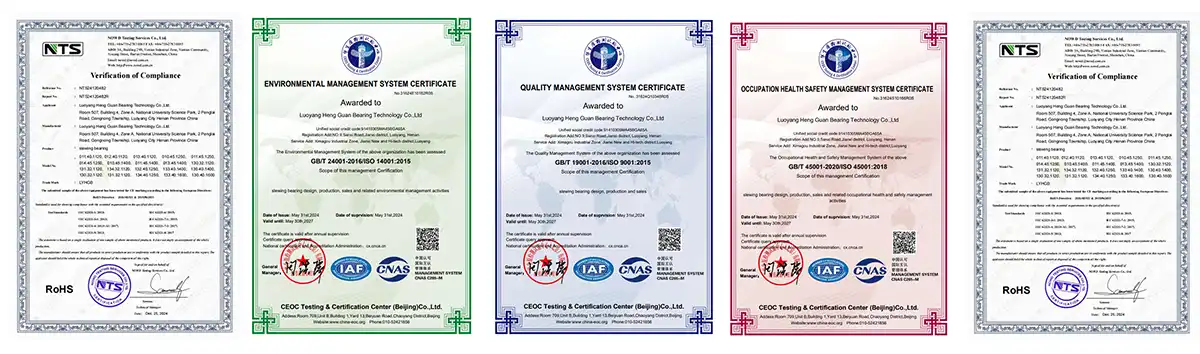
Where applicable, quality-management certification can provide additional information about the supplier's production and documentation processes. However, certification should be considered alongside product-specific technical evidence rather than as the only selection criterion.
Evaluate Technical Support
A supplier can provide additional value by supporting bearing selection, installation, lubrication, troubleshooting, and replacement planning. This is especially useful for large or application-specific slewing bearings where operating conditions vary significantly between machines.
Before placing an order, procurement teams should confirm what technical documents and support services are available and whether the supplier can provide application-specific recommendations.
Information to Provide When Ordering a No-Gear Slewing Bearing
Providing complete application information helps the manufacturer recommend an appropriate bearing configuration. Buyers should, where available, provide:
Bearing dimensions or existing bearing drawings
Axial, radial, and moment load information
Rotation speed and rotation pattern
Continuous or intermittent operating conditions
Operating temperature range
Installation orientation
Expected service environment
Exposure to dust, water, salt, or chemicals
Lubrication method
Mounting structure information
Required sealing arrangement
Relevant equipment or industry requirements
The more complete the application information is, the easier it becomes to evaluate bearing configuration and maintenance requirements before production.
Conclusion
Proper maintenance of a no gear slewing bearing depends on more than periodic lubrication. Raceways, rolling elements, seals, mounting bolts, installation surfaces, and operating conditions should all be included in the maintenance program. Regular visual inspections can identify visible problems, while vibration, temperature, noise, and rotational behavior can provide additional condition information when appropriate monitoring methods are available.
The absence of an integrated gear rim removes gear-tooth inspection and gear lubrication from the bearing's maintenance scope, but it does not make the bearing maintenance-free. Correct installation, suitable lubrication, contamination control, and consistent inspection remain essential for reliable operation.
For B2B buyers, maintenance planning should begin before the bearing is ordered. Reviewing technical documentation, confirming application conditions, evaluating supplier quality controls, and discussing maintenance support can help ensure that the selected bearing matches the equipment requirements. A clear maintenance record and feedback process can then support more consistent service throughout the bearing's operating life.
|
|
FAQ
1. How often should I lubricate gearless slewing bearings?
How often you lubricate relies on how hard you're working and what the weather is like. Light-duty indoor uses usually need to be relubricated every three months, while heavy equipment in dirty areas should be relubricated once a month. Extreme operating temperatures, constant operation, and high loads all speed up the rate at which lubricants wear out, so they need to be applied more often. Monitoring the state of the lubricant through samples gives information that helps make plans that are more effective than just following the time-based suggestions.
2. What distinguishes maintenance approaches between geared and gearless configurations?
Gearless bearings don't need to be inspected for gear mesh, measured for backlash, or oiled separately as geared options do. This makes things easier to maintain and lowers the level of skill that is needed, while also increasing the time between services. Attention is now only on the state of the bearing elements, including the raceway surfaces, the integrity of the rolling elements, the effectiveness of the seals, and the lubrication of the bearings. There are no extra gear-specific processes that would make upkeep more difficult or increase the time that equipment is down.
3. Which warning signs indicate urgent maintenance needs?
Strange noises during spinning could mean that the lube is wearing down, getting dirty, or a part is damaged and needs to be looked into right away. Temperature rises outside of normal working ranges are a sign of poor lubrication or too much friction from being out of line. Changes in vibration patterns picked up by tracking systems are signs that mechanical problems are starting to happen. Visible oil leaks or seal damage weaken security against the environment, letting dirt in and speeding up wear. If you notice any of these signs, you should see a professional right away so that small problems don't get worse and turn into big problems.
Partner with Heng Guan for Superior Gearless Slewing Solutions
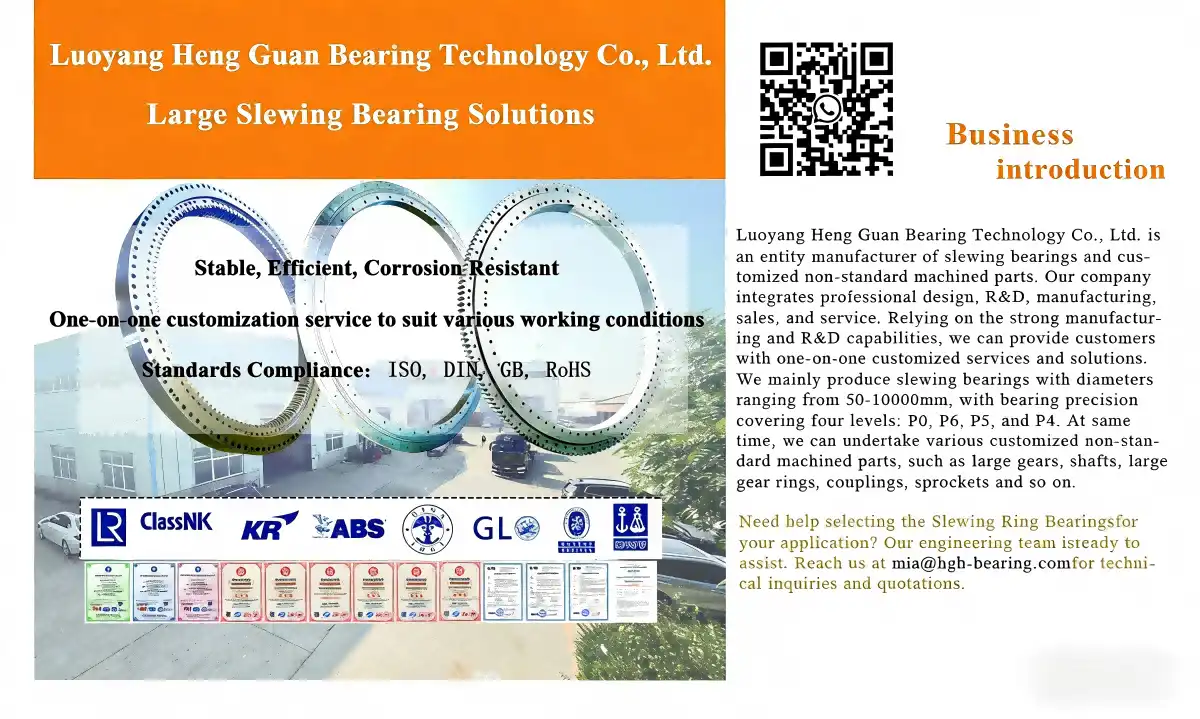
Optimizing your equipment performance requires more than quality components—it demands partnership with manufacturers who understand your operational challenges and provide comprehensive support throughout product lifecycles. Heng Guan Bearing Technology combines decades of manufacturing expertise with advanced production capabilities, delivering gearless slewing bearings engineered for demanding industrial applications. Our product range accommodates specifications from compact 50mm inner diameter units to massive 10-meter diameter bearings, with precision grades reaching P4 for applications requiring exceptional accuracy. We manufacture using premium materials—42CrMo and 50Mn alloy steel bases with GCr15SiMn rolling elements and imported seal materials—ensuring durability in harsh mining, construction, and metallurgical environments. Whether you're an OEM designing next-generation equipment or a maintenance manager seeking reliable replacement components, our engineering team provides technical consultation, optimizing No Gear Slewing Bearing selection and maintenance protocols for your specific requirements. Contact our team at mia@hgb-bearing.com to discuss your application needs with experienced bearing specialists who deliver customized solutions supporting your operational excellence goals. As a trusted slewing bearing manufacturer serving global markets, we're committed to providing cost-effective products backed by responsive technical support that B2B procurement teams depend on for mission-critical applications.
References
1. Anderson, K. (2021). Industrial Bearing Maintenance: Practical Guidelines for Heavy Equipment. Technical Press Publications.
2. Chen, L. & Roberts, M. (2020). "Comparative Analysis of Slewing Bearing Configurations in Material Handling Applications." Journal of Mechanical Engineering Design, 142(8), 081201-081215.
3. Davis, R. (2022). Lubrication Best Practices for Rotating Machinery Components. Manufacturing Technology Institute.
4. Harris, T.A. & Kotzalas, M.N. (2019). Advanced Concepts of Bearing Technology: Rolling Bearing Analysis (6th ed.). CRC Press.
5. Mitchell, J. (2023). "Predictive Maintenance Strategies for Large Diameter Slewing Bearings in Mining Equipment." International Journal of Heavy Industry Technology, 17(3), 245-262.
6. Williams, P. & Zhang, H. (2021). Design and Maintenance of Slewing Ring Bearings for Industrial Applications. Engineering Solutions Publishing.

WHAT OUR CUSTOMERS SAY
Here is the customer's evaluation of us
YOU MAY LIKE
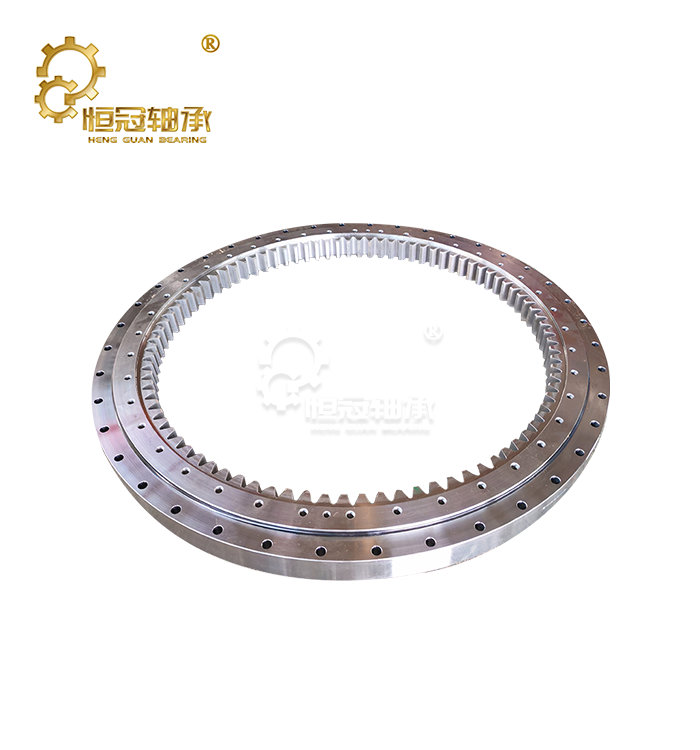 VIEW MORECat Excavator slewing bearing
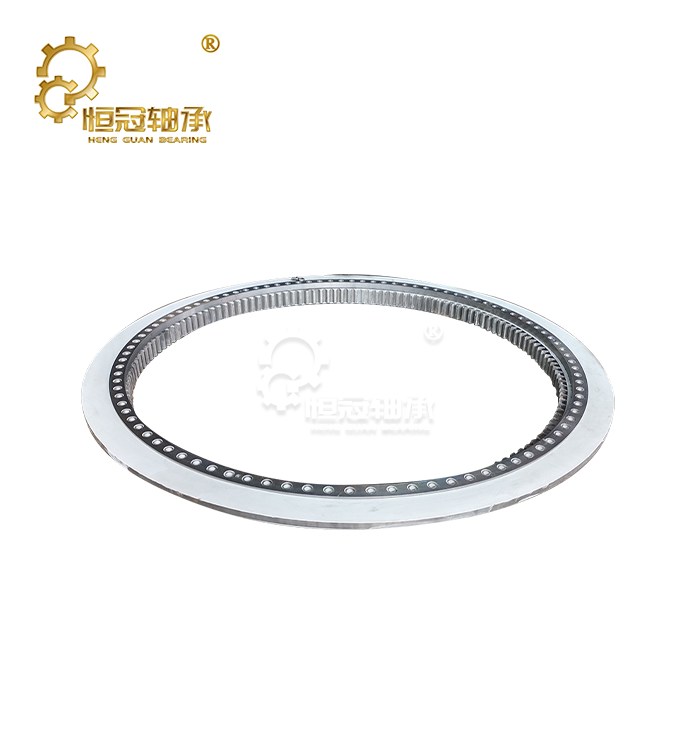 VIEW MOREFour-Point Contact Ball Slewing Bearings
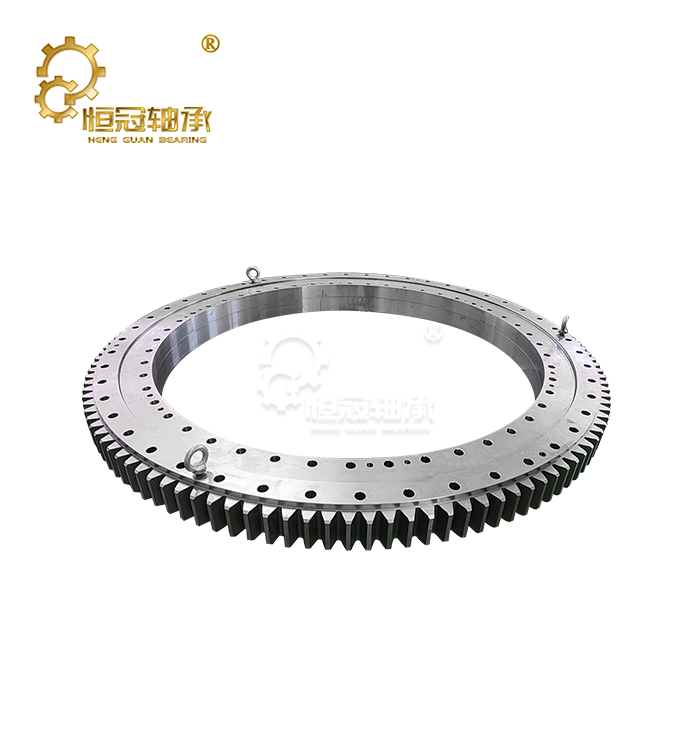 VIEW MORECrane Slewing Bearing
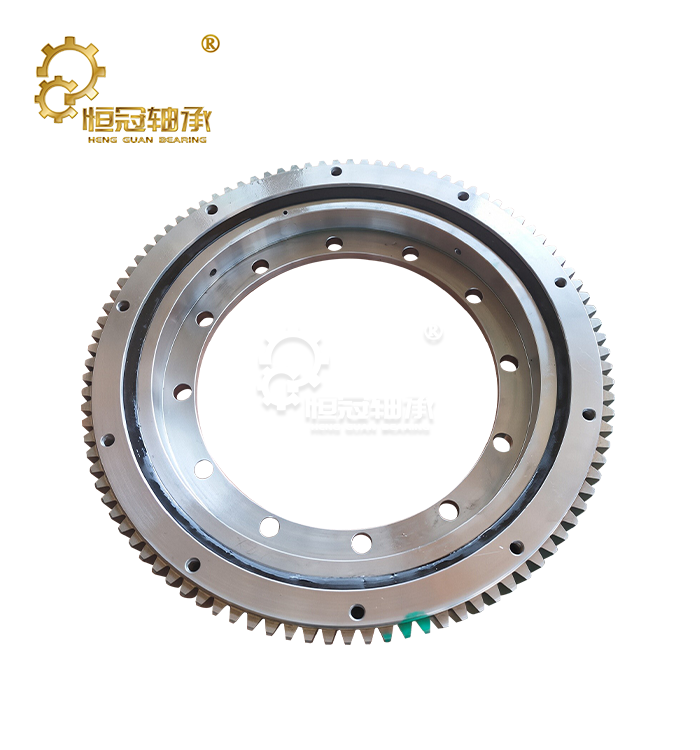 VIEW MORERoller Slewing Ring
 VIEW MORECrossed Roller Bearing
_1769754972666.webp) VIEW MOREWelding Positioners Slewing Bearing
VIEW MOREWelding Positioners Slewing Bearing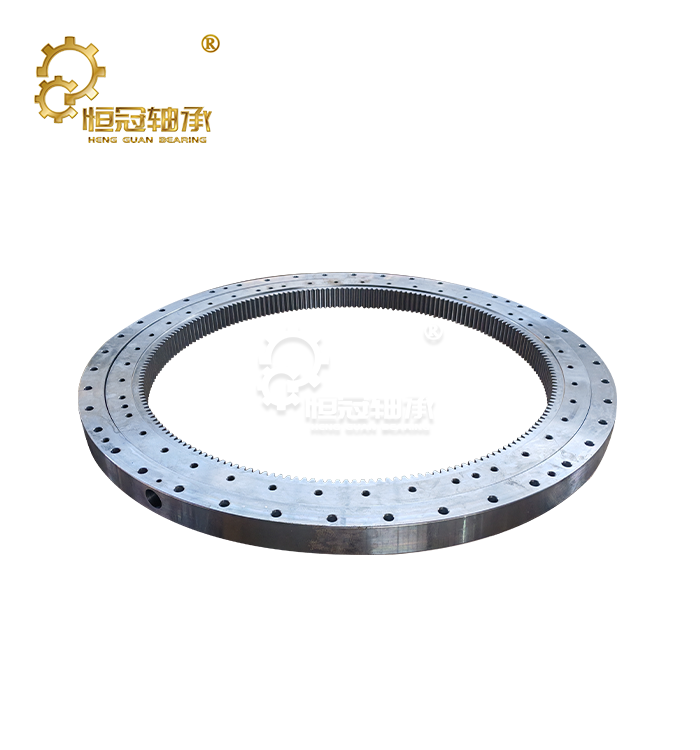 VIEW MOREInternal Gear Rotary Slewing Bearing
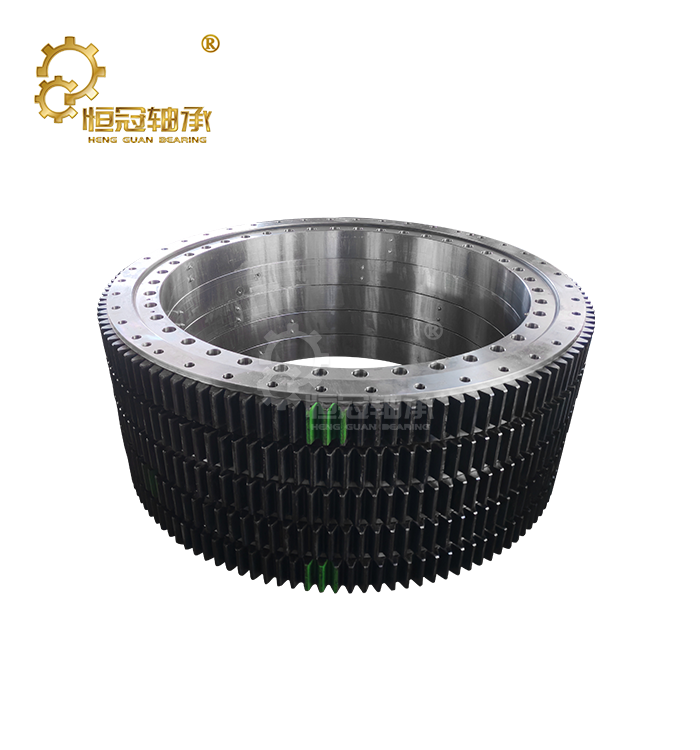 VIEW MOREUncoiling Machine Slewing Ring