



Top Features of Low Vibration CT Machine Slewing Rings
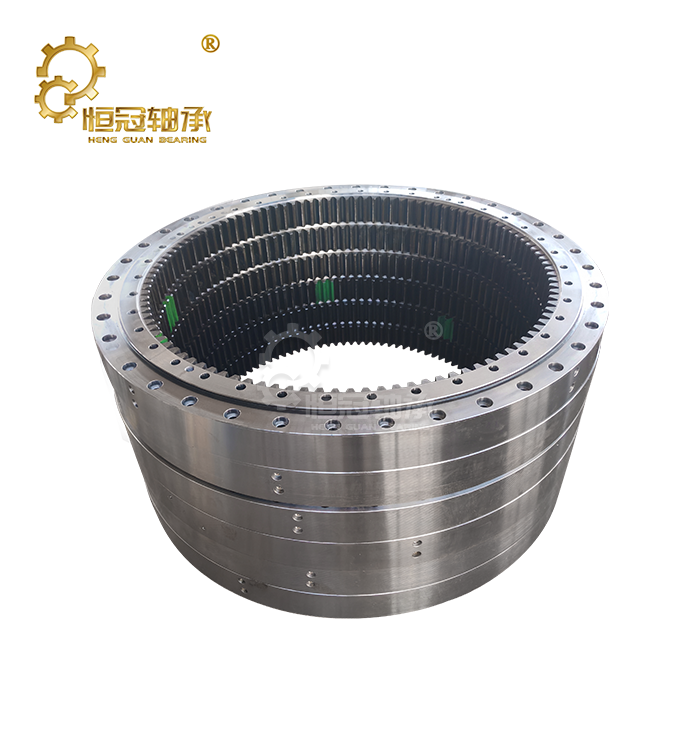
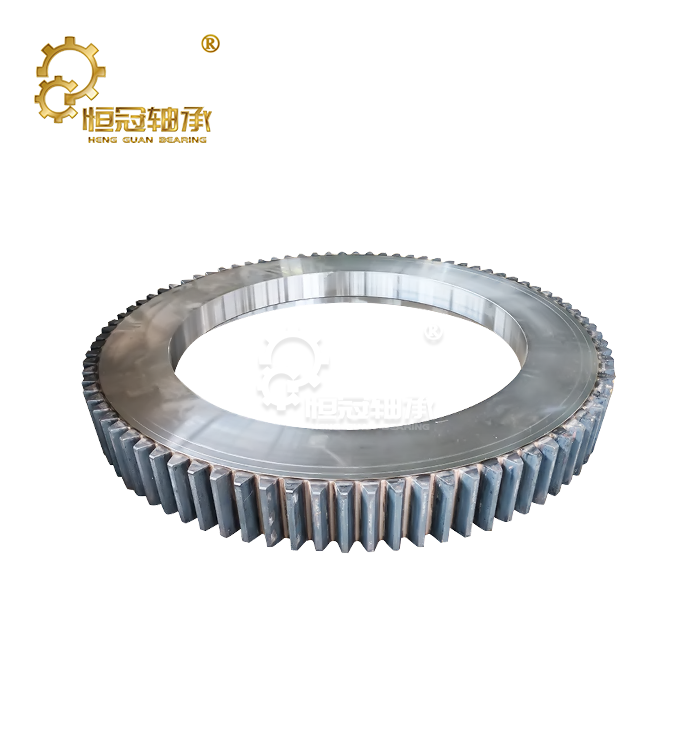
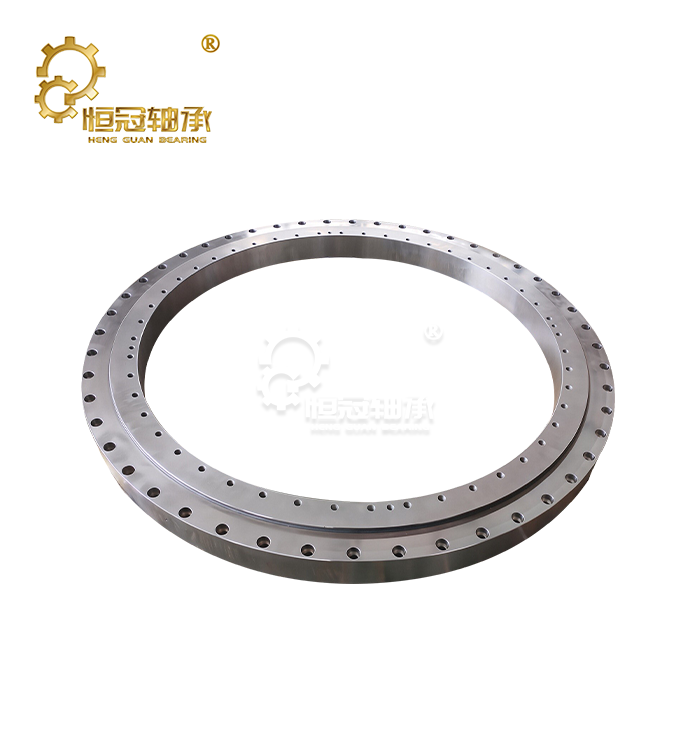
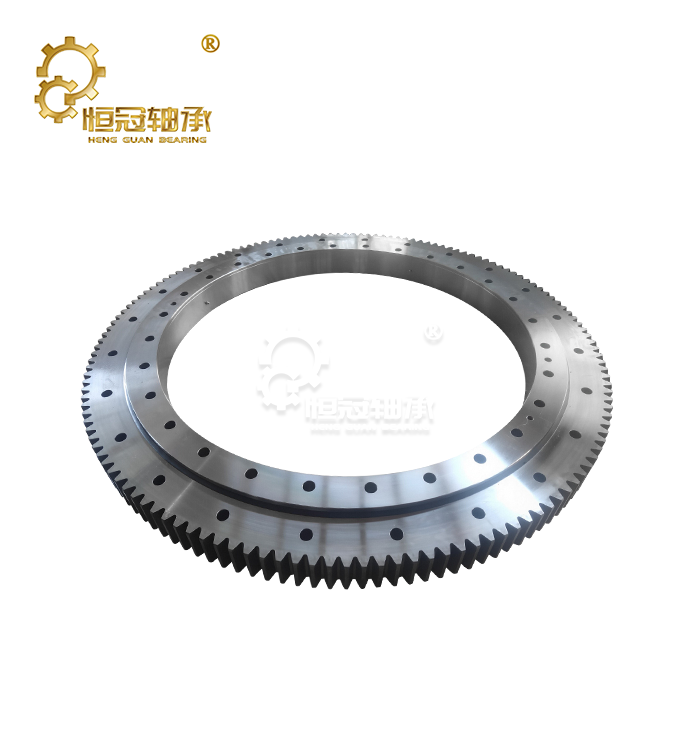
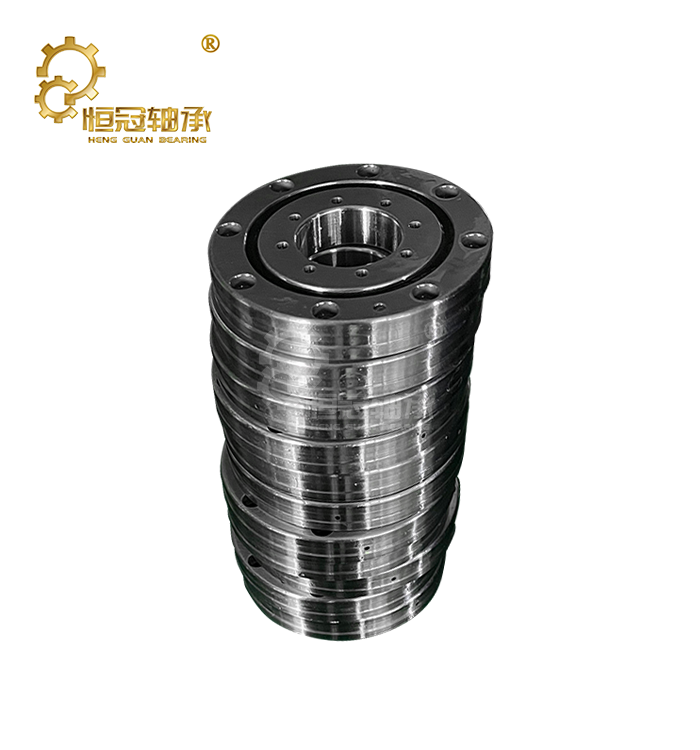
Low-vibration CT machine slewing rings are a key part of the rotation systems in the computed tomography equipment. A CT gantry must spin smoothly around the patient with regulated placement and reproducible motion. Equipment designers and maintenance teams face issues with undesirable mechanical vibration, excessive runout, uneven torque, or bearing degradation that occurs too early. Therefore, choosing a slewing ring for a CT application is not as simple as looking at the outside diameter and load rating. The operating behavior can be affected by the bearing geometry, raceway accuracy, material condition, heat treatment, preload or clearance, lubrication, sealing, mounting accuracy, and manufacturing consistency. Depending on the design of the equipment, a single-row, four-point contact ball bearing may be considered for applications needing axial, radial, and moment load capacity in a compact arrangement. Some types of bearing rings can be made with 42CrMo, 50Mn, or similar materials, and rolling elements can be made of GCr15SiMn or other suitable bearing steels. The final material and configuration should always be determined from the actual CT gantry requirements and not as a universal specification.
Bearing Geometry and Four-Point Contact Design
The rolling elements touch the raceways at four points; hence, the four-point contact ball bearing can sustain combined stresses. This arrangement is beneficial when a CT gantry is subjected to a combination of a radial load, an axial load, and an overturning moment.
The actual load distribution relies on bearing geometry, contact angle, preload or clearance, mounting stiffness, and operating conditions. Therefore, for an OEM project, the bearing should be selected using application-specific calculations rather than relying only on a catalogue load rating.
Proper geometry also assists in controlling running behavior. Accuracy and consistency of the raceway are especially critical when the bearing is required to turn over and over again with regulated positioning.
Material Selection and Heat Treatment
The material of the bearing ring has a direct link with the fatigue strength, hardness, toughness, and dimensional stability. When bearing rings are made from 42CrMo and 50Mn, the mechanical properties and the heat treatment reaction should be suitable for the application.
Steel is selected for rolling element bearing for the required hardness, contact fatigue resistance, cleanliness, and manufacturing process. GCr15SiMn is one of the potentials for bearing components; however, it should not be blindly regarded as the right choice for all CT applications.
Nor is heat treatment any less important. Hardness tests, metallographic examination, and dimension checks may serve to confirm that the material has received the necessary treatment. In the case of OEM procurement these records are better evidence than a sweeping assertion that a bearing is made from “premium steel.”
Raceway Accuracy and Surface Quality
The smooth rotation depends largely on the condition of the raceways. The rolling contact and operation noise may be affected by waviness, local surface damage, or uneven finishing due to machining flaws.
Suppliers shall establish applicable dimensional limits and inspection processes for CT applications. Depending on the design, purchasers also may need data on radial and axial runout, raceway precision, internal clearance or preload, and mounting-face flatness.
These metrics should be compared with the equipment drawing and required operational performance, not with some ill-defined concept of “medical-grade precision.”
Five Key Features to Evaluate in Low-Vibration CT Machine Slewing Rings
The most useful technique to evaluate a CT bearing is to relate each stated characteristic to a measurable technical need. Rather than buying a product on the basis of it stating that it is ‘high precision,' procurement and engineering teams should enquire as to how that accuracy is attained and validated.
1. Controlled Running Accuracy
The running accuracy is one of the first properties to be checked when a bearing is designed for a rotating CT gantry.
Dimensional correctness is not the whole picture. Buyers should examine axial and radial runout, raceway geometry, internal clearance or preload, precision of the mounting face, and consistent rotation under the load required.
The provider should ideally offer inspection data showing how these metrics are measured for CT machine slewing rings. For special bearings, it is necessary to set acceptability limits prior to production.
2. Stable Combined Load Capacity
A CT gantry is under more than one kind of load. The bearing may have to carry radial forces, axial forces, and overturning moments due to the rotating assembly.
Four-point contact designs can be a realistic option for combined loads, but the actual capacity of the bearing is dependent on the diameter, size of the balls, geometry of the raceway, material qualities, contact angle, and operating conditions.
When comparing providers, buyers should not just compare one catalogue load number with another. They should seek load estimations based on the application. The computation must be based on the real mass of the gantry, its center of gravity, acceleration, deceleration, working speed, and duty cycle.
3. Low-Noise and Low-Vibration Running Characteristics
There is not one feature that results in low vibration. Vibration can be affected by raceway quality, rolling-element quality, preload or clearance, lubrication, bearing installation, and system balance.
A useful supplier evaluation will therefore question how vibration or running noise is measured. The test technique, rotational speed, load condition, sensor position, and acceptance criteria shall be clearly described.
This is particularly critical for the CT equipment, as a bearing that works well under no-load conditions may respond differently when installed in the entire gantry system.
4. Consistent Service-Life Performance
A CT scanner can function via repeated rotations over a lengthy duration of operation. Therefore, bearing reliability depends not only on initial precision but also on fatigue resistance, lubrication, sealing, contaminant control, and mounting conditions.
Proper lubrication helps keep the rolling contacts in working order and minimizes wear. Depending on the bearing design, either grease or oil can be selected. The supplier shall indicate the recommended lubricant, lubrication interval, operating temperature range, and any compatibility restrictions.
Seals, too, deserve our attention. They are used to keep oil in and to minimize the entrance of impurities. However, a too tight seal might increase friction and torque. The right balance is a function of the bearing design and the operating environment.
5. Application-Specific Customization
CT equipment makers may require bearings with non-standard dimensions, mounting hole configurations, internal geometry, preload characteristics, or interface tolerances.
The ability to customize is especially helpful when the bearing has to fit into an existing gantry framework. Rather than providing a generic bearing and expecting the equipment designer to modify the machine around it, an expert provider will evaluate the exact application data.
Useful data include bearing diameter, mounting configuration, radial and axial loads, overturning moment, speed of rotation, acceleration, duty cycle, temperature, lubrication method, permissible runout, and projected service life.
A claimed processing range, for example, 50 mm to 10,000 mm, should not be taken as evidence of appropriateness for CT equipment in itself. The more essential concern is whether the provider can repeatedly produce the requisite shape and precision at the target size.
How to Compare CT Machine Slewing Rings Before Purchase?
A good procurement selection needs to balance technical performance, production capability, evidence of inspection, and life cycle cost.
Compare Engineering Data Instead of Marketing Claims
Terms such as “ultra-precision,” “low vibration,” and “long life” are difficult to compare without test conditions.
A better technical comparison includes:
Bearing dimensions and mounting interfaces
Radial and axial load ratings
Allowable overturning moment
Rotation speed
Internal clearance or preload
Radial and axial runout
Raceway accuracy
Material specification
Heat-treatment requirements
Hardness range
Lubrication method
Seal configuration
Expected service life
Inspection and test procedures
This approach gives the engineering team measurable criteria for supplier comparison.
Review the Manufacturing Process
The manufacturing route can strongly influence the consistency of the final bearing.
For example, buyers can ask whether the supplier controls turning, heat treatment, grinding, raceway machining, assembly, lubrication, and final inspection internally or through qualified subcontractors.
The supplier should also be able to explain how dimensional tolerances are controlled after heat treatment. This is important because heat treatment can influence dimensional stability, and later machining operations may be necessary to achieve the required accuracy.
Verify Quality Documentation
For an OEM or international B2B buyer, documentation is part of product quality.
Depending on the project, useful documents may include:
Material certificates
Heat-treatment records
Hardness inspection reports
Dimensional inspection reports
Runout measurement results
Raceway inspection records
Assembly records
Lubrication records
Final inspection reports
Performance or running-test data
ISO 9001 certification can provide evidence of a supplier's quality management system, but buyers should still verify the specific product-control procedures relevant to the bearing being purchased.
Maintenance Practices That Help Preserve Low-Vibration Performance
Even a precisely manufactured bearing can develop vibration problems if it is incorrectly installed or maintained.
Installation Accuracy
Installation errors are a common source of bearing problems. Uneven mounting surfaces, excessive bolt tightening, contamination, incorrect alignment, or insufficient structural stiffness can introduce additional loads into the bearing.
Before installation, mounting surfaces should be checked against the drawing requirements. Bolts for CT machine slewing rings should be tightened according to the equipment manufacturer's procedure, and the bearing should not be forced into position using inappropriate impact or loading methods.
Lubrication and Contamination Control
Lubrication should follow the bearing manufacturer's specified lubricant type and interval. Adding excessive grease is not necessarily beneficial because it can increase friction and temperature.
Contamination should also be controlled during maintenance. Dust, metal particles, moisture, and incompatible lubricants can negatively affect rolling contacts and raceways.
For equipment operating in a controlled medical environment, maintenance personnel should follow the equipment manufacturer's service procedures rather than applying a generic industrial bearing maintenance schedule.
Vibration Monitoring and Troubleshooting
If vibration increases during operation, replacing the bearing immediately may not identify the root cause.
The troubleshooting process should first consider:
Lubrication condition
Bearing mounting
Structural deformation
Gear or motor condition
Gantry balance
Bearing preload or clearance
Raceway or rolling-element damage
Contamination
Changes in operating load or speed
Trend monitoring can be more useful than a single measurement. A gradual increase in vibration or noise may indicate developing wear before a serious failure occurs.
A Practical Procurement Checklist for CT Equipment OEMs
For buyers sourcing CT machine slewing rings, a structured RFQ can significantly reduce misunderstandings between the equipment manufacturer and bearing supplier.
Information to Include in the RFQ
Before requesting a quotation, provide as much of the following information as possible:
Required inner and outer diameter
Bearing cross-section
Mounting-hole pattern
Axial load
Radial load
Overturning moment
Maximum and normal rotation speed
Acceleration and deceleration
Operating cycle
Environmental temperature
Lubrication requirements
Sealing requirements
Required runout
Clearance or preload requirements
Target service life
Applicable drawing or technical standard
The more complete the application information, the easier it is for the supplier to recommend an appropriate design.
Questions to Ask the Supplier
Instead of asking only “What is your price?" procurement teams can ask:
What material and heat-treatment process will be used?
What precision tolerances can you guarantee?
How are axial and radial runout measured?
How is internal clearance or preload controlled?
What inspection equipment is available?
Can you provide material and heat-treatment certificates?
Can you provide a dimensional inspection report for each batch?
What lubrication is recommended?
How is final running performance tested?
What is the prototype lead time?
What changes in cost or lead time will result from customization?
These questions help distinguish a supplier that can genuinely control precision manufacturing from one that mainly resells standard bearings.
Why Supplier Manufacturing Capability Matters?
The performance of a customized CT bearing depends on manufacturing consistency as much as on the original design.
A capable manufacturer should have appropriate machining equipment, heat-treatment controls, grinding or raceway-finishing capabilities, dimensional inspection systems, assembly procedures, and traceability.
For overseas buyers, supplier evaluation should also include production capacity, quality-control resources, export experience, packaging methods, and technical communication. A technically suitable bearing can still create project problems if documentation is incomplete or replacement parts cannot be supplied consistently.
Rather than relying solely on a supplier's years in business or product catalog, buyers should request evidence related to the specific bearing application.
Conclusion
Low-vibration CT machine slewing rings require a more careful evaluation than standard industrial bearings because the bearing operates as part of a highly integrated rotating imaging system. Bearing geometry, material selection, heat treatment, raceway accuracy, runout, preload or clearance, lubrication, sealing, and mounting conditions all influence the final running behavior.
For OEMs and B2B procurement teams, the most reliable selection method is to connect every performance claim with measurable technical requirements. Load calculations should reflect the actual gantry conditions, while vibration and precision requirements should be supported by defined inspection or testing methods.
Supplier qualification is equally important. Material certificates, heat-treatment records, dimensional inspection reports, runout measurements, and application-specific technical documentation provide much stronger evidence than general claims about “medical-grade” or “ultra-precision” performance.
A well-defined RFQ also improves the purchasing process. By providing load data, dimensions, rotation conditions, accuracy requirements, and service-life expectations at the beginning of the project, buyers give bearing manufacturers the information needed to develop a suitable solution. This reduces specification misunderstandings, supports more accurate quotations, and provides a stronger basis for long-term supply and maintenance.
FAQ
1. What materials are used in low-vibration CT machine slewing rings?
Premium materials are used to make low-sound CT machine bearings that are especially chosen for medical uses. Special alloy steels 42CrMo and 50Mn are used in the base structure to make it very strong and stable in its shape. Rolling elements are made of GCr15SiMn high-purity bearing steel that goes through special processing to get rid of flaws that could cause vibrations or wear out too quickly.
2. How often should CT machine slewing rings be maintained?
Maintenance times rely on how the machine is being used and what the maker suggests. For regular checks, they are usually between 6 and 12 months. Depending on how often it is used, lubrication upkeep may need to be done more often, usually every 3 to 6 months. Monitoring vibrations should be done daily to find problems as they start to happen before they get worse.
3. What customization options are available for different CT machine specifications?
Large-scale customization options include changing the sizes of parts within a range of 50 mm to 10,000 mm in diameter. Material choices, precision grades (P0, P6, P5, and P4), and performance improvements can all be made to fit the needs of a particular application. To meet specific design requirements, products can be made in different sizes and shapes.
4. How do low-vibration slewing rings compare to standard bearings?
Low-vibration versions have much lower levels of vibration compared to regular industrial bearings, and their vibration levels are usually within the limits allowed by medical equipment. Better materials, precise manufacturing, and unique design features allow for higher prices, which are justified by better performance and longer service life.
Partner with Heng Guan for Superior CT Machine Slewing Ring Solutions.
Enhance your medical imaging equipment performance with Heng Guan's precision-engineered CT machine slewing rings designed specifically for demanding healthcare applications. Our three decades of specialized bearing expertise, combined with ISO 9001 certification and proven international export success, ensure you receive components that meet the highest medical industry standards. As a trusted CT machine slewing ring manufacturer, we offer comprehensive customization capabilities, precision grades from P0 to P4, and dedicated technical support to optimize your equipment performance. Contact our expert team at mia@hgb-bearing.com to discuss your specific requirements and discover how our advanced bearing solutions can elevate your medical imaging capabilities.
References
1. Johnson, M.R., and Chen, L. "Advanced Bearing Technologies in Medical Imaging Equipment: Performance Analysis of Low-Vibration Slewing Rings." Journal of Medical Equipment Engineering, vol. 42, no. 3, 2023, pp. 156-171.
2. Williams, K.A. "Precision Manufacturing Standards for CT Scanner Components: A Comprehensive Review of Bearing Technologies." Medical Device Manufacturing Quarterly, vol. 18, no. 2, 2023, pp. 89-104.
3. Rodriguez, S.P., and Kim, H.J. "Material Science Innovations in Medical Bearing Applications: Alloy Steel Performance in High-Precision Environments." International Journal of Medical Engineering Materials, vol. 15, no. 4, 2023, pp. 234-249.
4. Thompson, R.D. "Maintenance Strategies for Medical Imaging Equipment: Optimizing CT Scanner Bearing Performance." Healthcare Equipment Management Review, vol. 28, no. 1, 2023, pp. 67-82.
5. Anderson, P.L., and Zhang, W. "Global Supply Chain Management for Medical Device Components: Quality Assurance in International Bearing Procurement." Medical Device Supply Chain Journal, vol. 11, no. 3, 2023, pp. 145-160.
6. Mitchell, C.R. "Vibration Analysis and Control in Medical Imaging Systems: Engineering Solutions for Enhanced Diagnostic Accuracy." Biomedical Engineering Applications, vol. 35, no. 2, 2023, pp. 198-213.

WHAT OUR CUSTOMERS SAY
Here is the customer's evaluation of us