



Slew Ring Bearing vs Plain Bearing: Pros and Cons
Choosing between slew ring bearings and plain bearings represents a critical decision for industrial equipment manufacturers and procurement managers. Slew ring bearings excel in applications requiring combined load handling and rotational capabilities, while plain bearings offer simplicity and cost-effectiveness for linear motion applications. The selection depends on specific load requirements, operating conditions, and performance expectations. Understanding these fundamental differences enables informed procurement decisions that optimize equipment performance and minimize the total cost of ownership across construction, mining, and automation industries.

Understanding the Fundamental Differences Between Slew Ring and Plain Bearings
The mechanical engineering landscape relies heavily on bearing technology to ensure the smooth operation of rotating equipment. Understanding the core differences between slew ring bearings and plain bearings helps procurement teams make informed decisions that impact equipment performance and operational costs.
What Are Slew Ring Bearings? Core Design and Construction
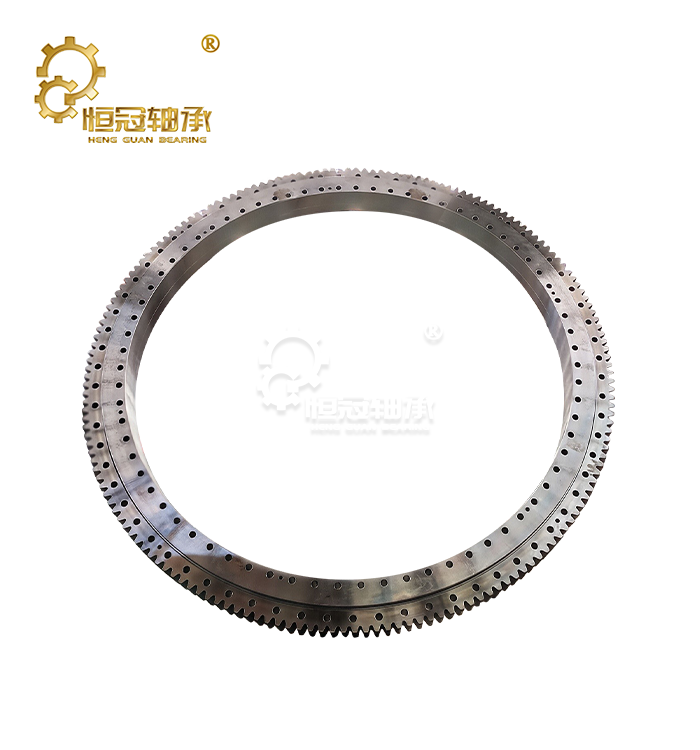
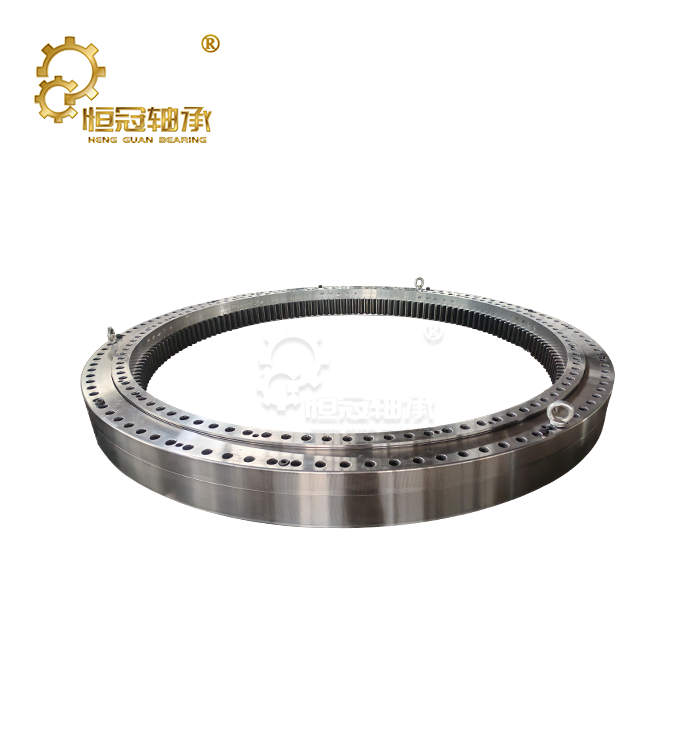
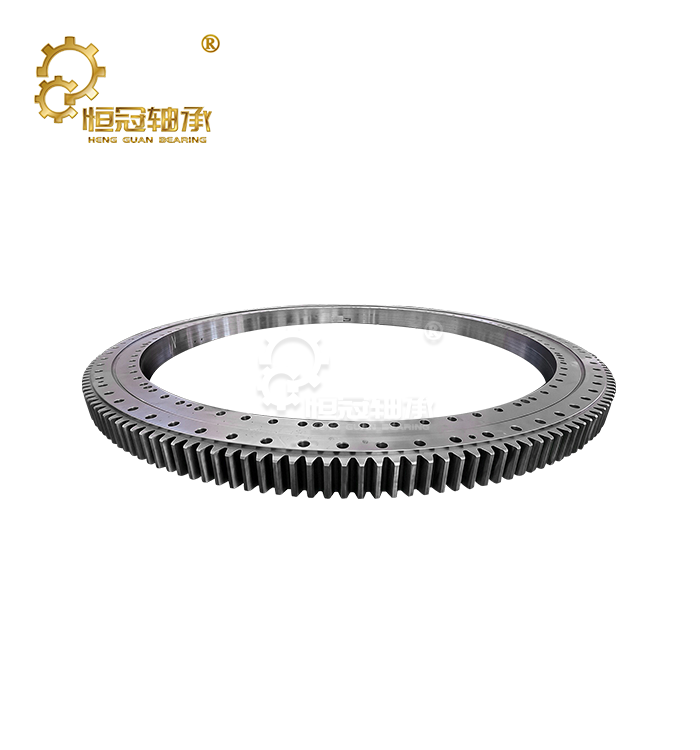
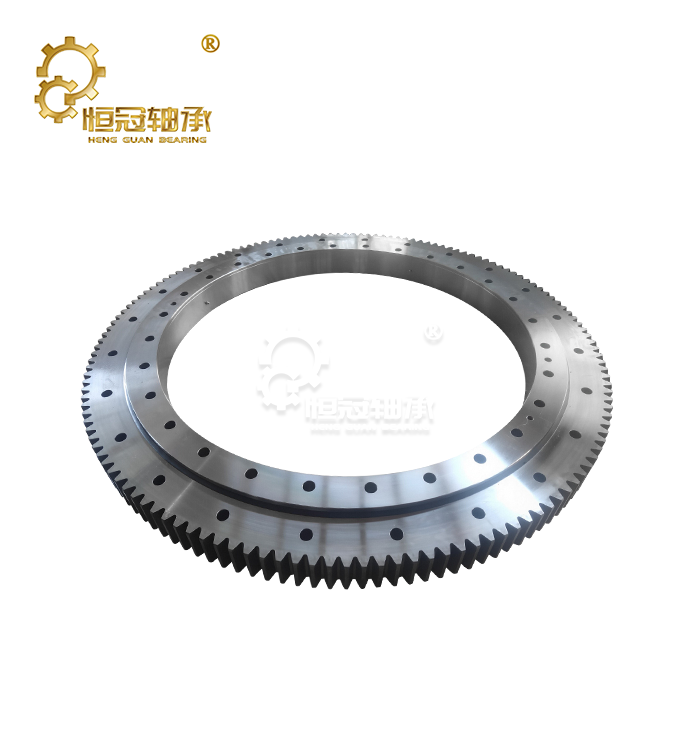
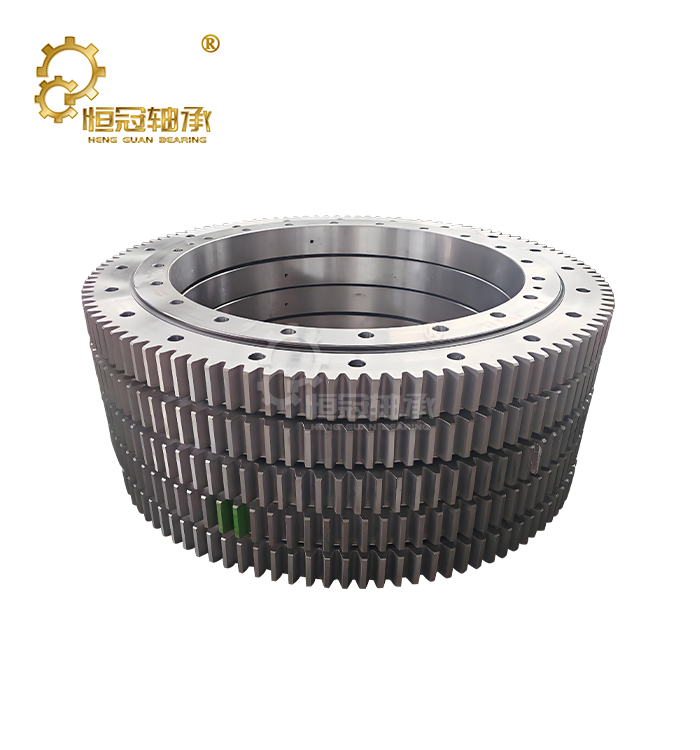
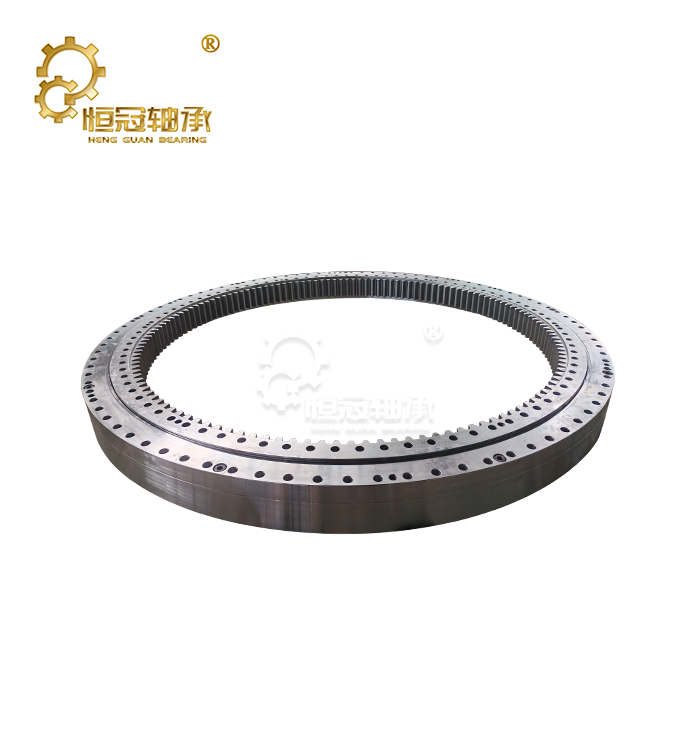
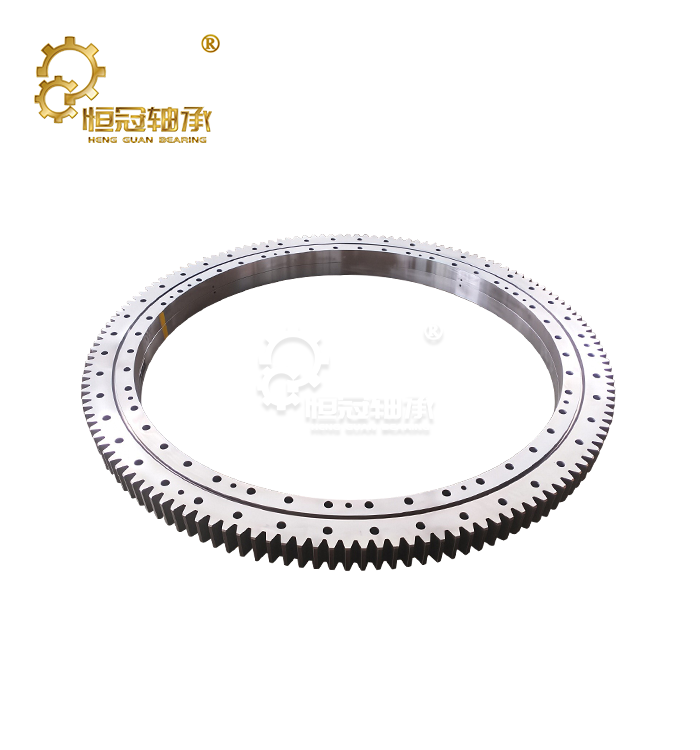
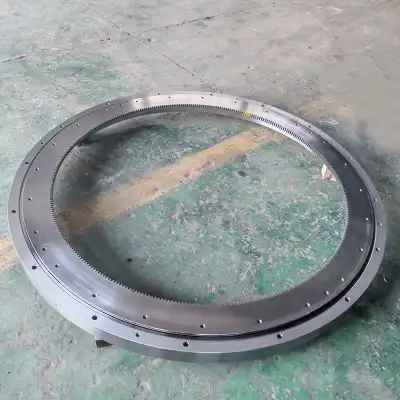
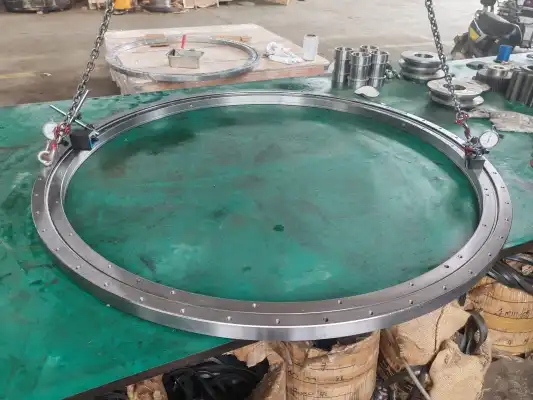
Slew ring bearings, also known as turntable bearings or slewing bearings, feature a sophisticated design that enables rotation under heavy loads. These bearings consist of inner and outer rings with rolling elements positioned between them, allowing for smooth rotational movement while supporting significant axial, radial, and moment loads simultaneously. The construction typically includes single-row four-point contact ball structures, cross cylindrical roller structures, or three-row cylindrical roller configurations. Each design serves specific load requirements and operational conditions. Modern slew ring bearings incorporate precision-machined raceways that distribute loads evenly across the bearing surface, maximizing load capacity and service life. Manufacturing processes for these bearings involve advanced heat treatment and precision grinding to achieve accuracy grades ranging from P0 to P4. The raceway geometry plays a crucial role in load distribution, with optimized designs increasing capacity by up to 30% compared to standard configurations.
Plain Bearing Fundamentals: Types and Basic Principles
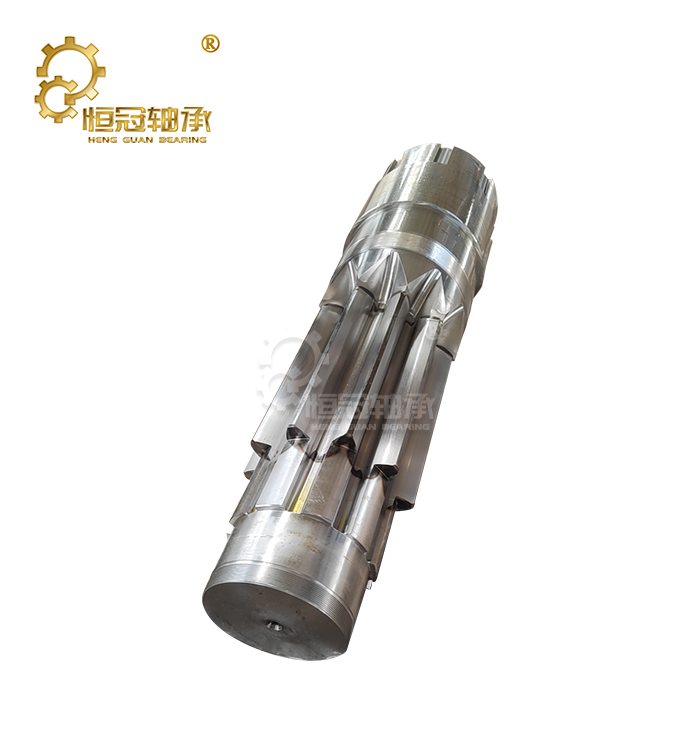
Plain bearings operate on fundamentally different principles, relying on sliding contact between surfaces rather than rolling elements. These bearings consist of a Shaft rotating within a sleeve or bushing, with lubrication providing the separation between moving surfaces. The simplicity of plain bearing design offers advantages in specific applications. Common types include sleeve bearings, thrust washers, and composite bearings made from various materials, including bronze, steel-backed composites, and self-lubricating polymers. Each material selection addresses specific environmental conditions and performance requirements. Plain bearings excel in applications where space constraints limit the use of rolling element bearings. Their compact design and ability to handle shock loads make them suitable for reciprocating machinery and high-speed applications where the hydrodynamic lubrication film provides effective load support.
Key Structural Differences That Impact Performance
The structural distinctions between these bearing types create performance differences that influence application suitability. Slew ring bearings feature complex internal geometry with multiple load paths, enabling simultaneous handling of radial, axial, and moment loads. This capability proves essential in applications like excavator swing mechanisms and wind turbine pitch systems. Plain bearings rely on surface area contact and lubrication film thickness for load support. While this creates limitations in combined loading scenarios, it provides advantages in high-speed applications where rolling element bearings might experience excessive centrifugal forces or lubrication challenges. The installation requirements differ significantly between these bearing types. Slew ring bearings typically require precise mounting with controlled bolt torques and proper alignment, while plain bearings often allow for simpler installation procedures with greater tolerance for misalignment.
Load Capacity Analysis: Slew Ring vs Plain Bearing Performance
Load handling capabilities represent the primary consideration when selecting bearing technology for industrial applications. Each bearing type demonstrates distinct advantages depending on the loading conditions and operational requirements.
Axial Load Handling Capabilities Comparison
Slew ring bearings demonstrate superior axial load capacity through their specialized raceway geometry and rolling element configuration. The four-point contact ball design effectively distributes axial loads across multiple contact points, enabling these bearings to handle thrust loads that would overwhelm plain bearing designs. Testing data shows that properly sized slew ring bearings can handle axial loads exceeding several hundred tons while maintaining smooth rotation. The load distribution across rolling elements prevents stress concentrations that could lead to premature failure in demanding applications. Plain bearings handle axial loads through surface contact area, limiting their capacity compared to rolling element designs. However, thrust washers and specialized plain bearing configurations can effectively manage moderate axial loads in applications where space constraints or cost considerations favor their selection.
Radial Load Distribution and Management
Radial load handling showcases different strengths between bearing types. Slew ring bearings distribute radial loads through their rolling elements, creating multiple load paths that enhance overall capacity. The precision manufacturing ensures uniform load distribution, preventing excessive stress on individual components. Plain bearings manage radial loads through the lubricant film and direct surface contact. While this limits their ultimate load capacity compared to rolling element designs, plain bearings can accommodate shock loads and impact forces that might damage more complex bearing systems. The load zone distribution differs significantly between these technologies. Slew ring bearings typically distribute loads across a wider circumferential area, while plain bearings concentrate loads in the immediate contact region, requiring careful consideration of bearing area and material selection.
Moment Load Resistance: Where Slew Rings Excel
Moment load resistance represents a critical advantage of slew ring bearings in many industrial applications. The large bearing diameter and specialized internal geometry enable effective resistance to tilting moments that would cause binding or failure in plain bearing systems. Excavator and crane applications demonstrate this advantage clearly, where the bearing must resist overturning moments while maintaining smooth rotation under varying load conditions. The distributed contact pattern in slew ring bearings provides the necessary stability for these demanding applications. Plain bearings struggle with moment loads due to their limited contact area and inability to distribute tilting forces effectively. This limitation restricts their use in applications where moment loads represent a significant portion of the total loading spectrum.
Combined Load Scenarios in Real-World Applications
Real-world applications rarely involve single-direction loading, making combined load capacity a crucial selection criterion. Slew ring bearings excel in these scenarios through their ability to handle simultaneous radial, axial, slew ring, and moment loads without performance degradation. Wind turbine applications exemplify combined loading conditions where slew ring bearings demonstrate clear advantages. The pitch control systems must handle wind loads, gravitational forces, and operating torques simultaneously while maintaining precise positioning accuracy over extended service periods. Plain bearings require careful application engineering in combined load scenarios. While they can handle specific combinations effectively, the design limitations often necessitate multiple bearing arrangements or supplementary support systems to achieve comparable performance levels.
Application-Specific Advantages: When to Choose Each Bearing Type
Application requirements drive bearing selection decisions, with each technology offering distinct advantages in specific operational contexts. Understanding these application-specific benefits enables optimal equipment design and performance optimization.
Heavy Machinery and Construction Equipment Applications
Construction equipment applications favor slew ring bearings due to their robust construction and ability to handle the severe loading conditions typical in these environments. Excavators, tower cranes, and mobile cranes rely on slew ring bearings to provide reliable operation under demanding conditions. The durability requirements in construction applications align well with slew ring bearing capabilities. These bearings can withstand shock loads, contamination, and temperature variations while maintaining operational reliability. The extended service life, often exceeding 100,000 hours in properly maintained applications, provides significant value in equipment with high replacement costs. Plain bearings find application in construction equipment where linear motion or high-speed rotation occurs. Hydraulic cylinders and engine components often utilize plain bearings due to their compact design and ability to handle reciprocating motion effectively.
Rotating Platforms and Turntable Applications
Rotating platform applications represent the ideal use case for slew ring bearings. The large diameter and specialized load handling capabilities enable smooth rotation of heavy loads with precise positioning control. Satellite tracking systems, solar panel arrays, and industrial turntables benefit from this technology. The precision capabilities of modern slew ring bearings support demanding positioning requirements in automated systems. Manufacturing accuracy levels achieving micrometer-level precision enable these bearings to meet stringent repeatability requirements in precision equipment applications. Plain bearings serve rotating platform applications where high-speed operation or space constraints limit slew ring bearing use. Small turntables and high-speed rotating equipment often utilize plain bearings with appropriate lubrication systems to achieve required performance levels.
High-Speed vs Low-Speed Operation Requirements
Operating speed significantly influences bearing selection decisions. Plain bearings excel in high-speed applications where their hydrodynamic lubrication capabilities provide effective load support with minimal friction. The absence of rolling elements eliminates concerns about centrifugal forces and cage stability at extreme speeds. Low-speed applications often favor slew ring bearings due to their ability to provide smooth motion even under boundary lubrication conditions. The rolling contact maintains low friction across a wide speed range, enabling precise motion control in positioning applications. The lubrication requirements differ substantially between these technologies at various operating speeds. Slew ring bearings typically require grease lubrication systems that provide effective protection across wide speed ranges, while plain bearings may require sophisticated oil circulation systems for high-speed operation.
Space Constraints and Installation Considerations
Space limitations often drive bearing selection decisions in compact equipment designs. Plain bearings offer significant advantages in applications where radial space limitations prevent the use of larger diameter slew ring bearings. The mounting requirements create additional considerations for space-constrained applications. Slew ring bearings require adequate bolt circle access and precise mounting surfaces, while plain bearings often accommodate simpler mounting arrangements with standard housing designs. Weight considerations also influence selection decisions in mobile equipment applications. While slew ring bearings provide superior load handling capabilities, their weight may impact overall equipment performance in weight-sensitive applications where plain bearings offer adequate performance with reduced weight penalties.
|
|
Cost-Benefit Analysis for B2B Procurement Decisions
Financial considerations play a crucial role in bearing selection decisions, requiring a comprehensive analysis of initial costs, operational expenses, and long-term value creation. Understanding these economic factors enables procurement teams to optimize equipment investments.
Initial Investment Comparison: Purchase Price Analysis
The initial purchase price differential between slew ring bearings and plain bearings reflects their complexity and manufacturing requirements. Slew ring bearings typically command higher prices due to precision manufacturing processes, specialized materials, and complex internal geometry requiring advanced production equipment. Plain bearings offer lower initial costs through simpler manufacturing processes and material requirements. However, the total system cost must consider additional components that may be necessary to achieve equivalent performance levels in demanding applications. Volume procurement opportunities can significantly impact pricing for both bearing types. Manufacturers like Heng Guan offer competitive pricing for large quantity orders, particularly for customized applications requiring specific dimensional or performance characteristics. The relationship between order volume and unit cost often favors slew ring bearings in high-volume applications due to manufacturing efficiencies.
Maintenance Costs and Service Life Expectations
Service life expectations differ substantially between bearing technologies, creating significant implications for maintenance planning and operational costs. Slew ring bearings typically provide extended service life through their robust construction and effective load distribution capabilities. Maintenance requirements vary between bearing slew ring types based on their operational characteristics. Slew ring bearings generally require periodic lubrication and seal inspection, while plain bearings may require more frequent lubrication system maintenance and wear monitoring procedures. The predictable failure modes of slew ring bearings enable proactive maintenance scheduling that minimizes unexpected downtime costs. Plain bearings may exhibit more variable wear patterns depending on lubrication conditions and operational factors, potentially increasing maintenance complexity and costs.
Total Cost of Ownership Over Equipment Lifecycle
Total cost of ownership analysis reveals the true economic impact of bearing selection decisions over equipment service life. While slew ring bearings may require a higher initial investment, their extended service life and reduced maintenance requirements often provide superior economic value. Downtime costs represent a significant factor in total ownership calculations. Equipment reliability directly impacts operational profitability, making bearing reliability a critical economic consideration. The proven track record of slew ring bearings in demanding applications often justifies their higher initial cost through reduced downtime risk. Replacement cost considerations become particularly important in equipment where bearing failure requires extensive disassembly or specialized tools. The extended service life of slew ring bearings reduces the frequency of these costly replacement procedures.
ROI Calculations for Different Industrial Applications
Return on investment calculations must consider application-specific factors, including load severity, operating cycles, and performance requirements. Applications with severe loading conditions typically favor slew ring bearings due to their superior durability and load handling capabilities. The productivity impact of bearing performance affects ROI calculations significantly. Equipment capable of handling heavier loads or operating more efficiently can generate additional revenue that offsets higher initial bearing costs. Slew ring bearings often enable equipment designs that improve overall productivity. Risk mitigation value represents an important but often underestimated component of ROI calculations. The reliability advantage of slew ring bearings in demanding applications provides insurance against costly failures and associated business disruption.
Performance Characteristics: Pros and Cons Breakdown
Comprehensive performance evaluation requires understanding the specific advantages and limitations of each bearing technology. This analysis enables informed decisions based on application requirements and operational priorities.
Slew Ring Bearing Advantages and Limitations
Slew ring bearings offer numerous performance advantages that make them ideal for demanding applications. Here are the primary benefits that equipment manufacturers recognize:
- Superior Load Capacity: The optimized raceway design and rolling element configuration enable these bearings to handle significantly higher loads than comparable plain bearings. The distributed load paths prevent stress concentrations and extend service life.
- Combined Load Handling: Unlike plain bearings, slew ring bearings effectively manage simultaneous radial, axial, and moment loads without requiring additional support systems or complex bearing arrangements.
- Extended Service Life: Premium materials and precision manufacturing typically result in service lives exceeding 100,000 operating hours under proper maintenance conditions, reducing replacement frequency and associated costs.
- Precision Performance: Advanced manufacturing processes achieve micrometer-level accuracy that supports demanding positioning requirements in automated systems and precision equipment.
These advantages directly address the demanding requirements of heavy industry applications where reliability and performance cannot be compromised. The technology particularly excels in applications where equipment downtime creates a significant financial impact. However, slew ring bearings present certain limitations that must be considered. The complex internal design requires precise installation procedures and qualified maintenance personnel. The initial cost typically exceeds plain bearing alternatives, although this difference often proves justified through improved performance and extended service life. Additionally, the physical size requirements may limit their use in space-constrained applications.
Plain Bearing Strengths and Weaknesses
Plain bearings provide distinct advantages in specific application scenarios. Their design simplicity enables cost-effective solutions for many industrial applications while offering unique performance characteristics. The primary strengths of plain bearings include their compact design, which makes them suitable for space-constrained applications. Their ability to handle shock loads and impact forces exceeds that of many rolling element bearings. The absence of rolling elements eliminates concerns about cage stability and centrifugal forces in high-speed applications. Cost effectiveness represents another significant advantage, particularly in applications where the superior load capacity of slew ring bearings is unnecessary. The simpler manufacturing processes and material requirements enable competitive pricing that appeals to cost-conscious procurement decisions. Plain bearings demonstrate limitations in several key areas. Their load capacity remains significantly lower than comparable slew ring bearings, particularly for combined loading scenarios. The dependency on effective lubrication for proper operation creates maintenance challenges in harsh environments. Service life typically falls short of slew ring bearing performance in demanding applications.
Operating Temperature and Environmental Factors
Environmental conditions significantly influence bearing performance and service life. Slew ring bearings demonstrate superior performance in extreme temperature conditions through their robust sealing systems and controlled lubrication environment. The enclosed design protects critical components from contamination and moisture. The material selection and heat treatment processes used in slew ring bearing manufacturing enable operation across wide temperature ranges. Specialty alloys and advanced lubricants extend the operational envelope for demanding environmental conditions, including marine applications and extreme weather exposure. Plain bearings require careful material selection and lubrication system design for harsh environmental conditions. While they can operate effectively in many environments, the open contact surfaces may require additional protection measures in contaminated or corrosive atmospheres.
Precision and Accuracy Requirements Comparison
Precision requirements often drive bearing selection decisions in automated systems and positioning equipment. Slew ring bearings achieve superior accuracy levels through precision manufacturing processes and controlled internal clearances. The large bearing diameter typical of slew ring bearings provides a mechanical advantage that enhances positioning accuracy. The rolling contact maintains consistent friction characteristics that support precise motion control across varying load conditions. Plain bearings can achieve acceptable precision levels in appropriate applications, particularly when supported by advanced lubrication systems and precision mounting arrangements. However, the sliding contact and potential for wear typically limit their precision capabilities compared to properly maintained rolling element designs.
Technical Specifications and Selection Criteria
Proper bearing selection requires a comprehensive evaluation of technical specifications and application requirements. Understanding these criteria enables optimal equipment design and performance optimization.
Load Rating Calculations and Safety Factors
Load rating calculations form the foundation of proper bearing selection. Slew ring bearings utilize dynamic and static load ratings that account for the unique loading characteristics of rotating applications. The calculation methods consider combined loading effects and fatigue life requirements. Safety factors for slew ring bearings typically range from 1.5 to 3.0, depending on application criticality and loading variability. Critical applications such as crane operations require higher safety factors to ensure reliable operation under peak loading conditions. Plain bearing load calculations focus on pressure-velocity relationships and heat generation considerations. The simplified calculation methods reflect the different failure mechanisms and operational characteristics of sliding contact bearings.
Size and Weight Considerations for Equipment Design
Physical dimensions significantly impact equipment design decisions. Slew ring bearings require adequate mounting space and access for installation and maintenance procedures. The bolt circle requirements must be accommodated in the equipment structure. Weight optimization becomes particularly important in mobile equipment applications. While slew ring bearings provide superior load handling capabilities, their weight contribution must be evaluated against equipment mobility and energy consumption requirements. Design flexibility options include various cross-sectional configurations and mounting arrangements that optimize space utilization. Custom designs can address specific dimensional constraints while maintaining required performance levels.
Lubrication Requirements and Maintenance Protocols
Lubrication system design directly impacts bearing performance and service life. Slew ring bearings typically utilize grease lubrication systems that provide effective protection with minimal maintenance requirements. The sealed design maintains lubrication effectiveness over extended periods. Maintenance protocols for slew ring bearings focus on periodic lubrication, seal inspection, and torque verification procedures. The predictable maintenance requirements enable effective planning and cost control. Plain bearings may require more sophisticated lubrication systems depending on application requirements. Oil circulation systems, automatic lubrication devices, and condition monitoring equipment can optimize plain bearing performance in demanding applications.
Material Options: Steel vs Aluminum vs Specialty Alloys
Material selection influences bearing performance, cost, and application suitability. Standard steel construction provides excellent durability and load capacity for most applications while maintaining cost effectiveness. Specialty alloys enable operation in extreme environments or demanding load conditions. Corrosion-resistant materials extend service life in marine applications, while high-temperature alloys support extreme operating conditions. Weight reduction requirements may favor aluminum or composite materials in specific applications. However, the load capacity limitations must be carefully evaluated against weight savings benefits to ensure adequate performance margins.
Industry Case Studies and Real-World Performance Data
Real-world performance data provides valuable insights into bearing technology selection and application optimization. These case studies demonstrate the practical implications of bearing selection decisions across various industries.
Excavator Applications: Performance Comparison Results
Excavator swing mechanisms represent demanding applications where bearing selection significantly impacts equipment performance and reliability. Comparative studies between slew ring bearings and alternative technologies demonstrate clear performance advantages in these applications. Field testing of excavators equipped with high-quality slew ring bearings shows service lives exceeding 8,000 operating hours without significant performance degradation. The bearings maintain smooth rotation under varying load conditions while providing the precise positioning control required for efficient operation. Cost analysis reveals that while slew ring bearings require a higher initial investment, the extended service life and reduced maintenance requirements provide superior economic value over the equipment's lifetime. The reduced downtime and improved productivity justify the premium bearing technology selection.
Wind Turbine Pitch Systems: Long-term Reliability Analysis
Wind turbine pitch control systems demand exceptional reliability due to maintenance difficulties and safety considerations. Long-term performance studies of slew ring bearings in these applications demonstrate the technology's suitability for critical applications. Performance monitoring of wind turbine installations shows slew ring bearings maintaining operational effectiveness over 15-year service periods. The bearings withstand constant load variations, temperature cycling, and environmental exposure while providing the precise positioning control required for optimal energy capture. The reliability advantage translates directly to improved wind farm economics through reduced maintenance costs and increased energy production. The predictable performance characteristics enable effective maintenance planning and cost control over project lifecycles.
Marine and Offshore Equipment: Durability in Harsh Environments
Marine applications present extreme environmental challenges, including saltwater exposure, temperature variations, and shock loading conditions. Performance data from offshore cranes and ship-based equipment demonstrates slew ring bearing durability in these demanding environments. Specialized sealing systems and corrosion-resistant materials enable slew ring bearings to operate effectively in marine environments. Performance tracking shows these bearings maintaining operational effectiveness despite constant exposure to corrosive atmospheres and contamination. The reliability advantage becomes particularly important in offshore applications where maintenance access limitations make bearing failure extremely costly. The proven durability of properly selected slew ring bearings provides essential reliability for mission-critical equipment.
Manufacturing Automation: Precision and Repeatability Metrics
Automated manufacturing systems require exceptional precision, slew ring, and repeatability from their bearing components. Performance studies of slew ring bearings in robotic systems and automated machinery demonstrate their capability to meet stringent accuracy requirements. Positioning accuracy measurements show properly maintained slew ring bearings achieving repeatability within micrometers over extended operating periods. The consistent performance supports demanding manufacturing processes where precision directly impacts product quality. The long-term stability of slew ring bearings reduces calibration requirements and maintenance interventions in automated systems. This reliability advantage contributes significantly to overall equipment effectiveness and production efficiency.
Conclusion
The selection between slew ring bearings and plain bearings requires careful consideration of application requirements, performance expectations, and economic factors. Slew ring bearings demonstrate clear advantages in applications requiring combined load handling, precision positioning, and extended service life. Their superior load capacity and durability justify higher initial costs through improved equipment performance and reduced maintenance requirements. Plain bearings remain viable solutions for specific applications where their compact design and cost advantages align with operational requirements. Understanding these fundamental differences enables procurement teams to make informed decisions that optimize equipment performance while minimizing the total cost of ownership across diverse industrial applications.
|
|

FAQ
1. What is the typical service life difference between slew ring bearings and plain bearings in heavy machinery applications?
Slew ring bearings typically achieve service lives of 100,000+ operating hours in heavy machinery applications, while plain bearings generally provide 20,000-50,000 hours depending on operating conditions. The extended service life of slew ring bearings results from their rolling element design and superior load distribution capabilities. Proper maintenance and lubrication can extend these service intervals, with some applications reporting slew ring bearing operation exceeding 150,000 hours.
2. How do I calculate the required load capacity when choosing between slew rings and plain bearings for my specific application?
Load capacity calculations for slew ring bearings consider dynamic and static load ratings under combined loading conditions. The process involves analyzing axial, radial, and moment loads simultaneously using manufacturer-provided load charts and safety factors. Plain bearing calculations focus on pressure-velocity relationships and heat generation. Professional engineering analysis considering specific operating conditions, duty cycles, and safety requirements ensures proper bearing selection for your application.
3. What are the key maintenance requirements and costs associated with each bearing type?
Slew ring bearings require periodic grease lubrication, seal inspection, and bolt torque verification, typically every 500-1000 operating hours. Annual maintenance costs generally range from $500-2000 depending on bearing size and accessibility. Plain bearings may require more frequent lubrication system maintenance and wear monitoring, with costs varying significantly based on lubrication system complexity. The predictable maintenance requirements of slew ring bearings often result in lower total maintenance costs over equipment lifetime.
4. Can slew ring bearings be retrofitted to replace plain bearing systems in existing equipment?
Retrofit applications require careful engineering analysis of space constraints, load paths, and mounting arrangements. While possible in many cases, successful retrofits depend on adequate mounting space and structural modifications to accommodate the different installation requirements. The benefits of improved load capacity and extended service life often justify retrofit costs in critical applications. Professional engineering consultation ensures proper integration and performance optimization.
5. What factors should procurement managers consider when evaluating suppliers for these bearing types?
Supplier evaluation should consider manufacturing capabilities, quality certifications, technical support services, and global supply chain reliability. Key factors include precision manufacturing equipment, heat treatment capabilities, testing facilities, and engineering expertise. Supplier track record in your specific industry and application provides valuable insight into their capability to meet your requirements. Customization flexibility, delivery reliability, and after-sales support represent critical factors for long-term supplier partnerships.
Contact Heng Guan for Expert Slew Ring Solutions
Heng Guan Bearing Technology delivers precision-engineered slew ring bearings that optimize equipment performance while reducing operational costs. Our comprehensive bearing solutions serve construction, mining, wind power, and automation industries with customized designs meeting exact specifications. From 20-10000mm diameter configurations to specialty applications requiring P4 precision grades, our engineering team provides technical expertise that ensures optimal bearing selection for your specific requirements. Contact mia@hgb-bearing.com for detailed technical consultation and discover why leading OEMs choose Heng Guan as their preferred slew ring bearing manufacturer for critical applications worldwide.
References
1. Harris, T.A., and Kotzalas, M.N. "Advanced Concepts of Bearing Technology: Rolling Bearing Analysis." CRC Press, 2020.
2. Budynas, R.G., and Nisbett, J.K. "Shigley's Mechanical Engineering Design: Bearing Selection and Application." McGraw-Hill Education, 2019.
3. ISO 12043-1:2007, "Rolling bearings - Single-row angular contact ball bearings - Chamfer dimensions for outer ring non-thrust side."
4. Warda, B., and Chudzik, A. "Fatigue Life Prediction of Rolling Bearings Based on Modified SWT Parameter." Materials, 2020.
5. Glover, D. "Turntable Bearing Design Guide for Construction Equipment Applications." SAE Technical Paper Series, 2019.
6. Chen, L., and Wang, H. "Performance Analysis of Large-Scale Slewing Bearings in Wind Turbine Applications." Renewable Energy Engineering, 2021.

WHAT OUR CUSTOMERS SAY
Here is the customer's evaluation of us