



Slewing Bearing Technology Trends for 2026
The future of slewing bearing technology is coming up quickly. 2026 will be a turning point for the industry. To keep up with changing market needs, advanced rotary bearing systems are using cutting-edge materials, smart tracking tools, and eco-friendly production methods. These new ideas promise to increase load capacity, lengthen service life, and boost operating efficiency in key areas like wind energy, construction machinery, and precision automation. As companies around the world get ready for the needs of next-generation equipment, it's important to understand these technological advances in order to make smart purchasing decisions and stay competitive.

Current Slewing Bearing Technology Paradigms and Their Limitations
Understanding the constraints of current bearing technologies provides essential context for evaluating upcoming innovations and their potential impact on industrial operations.
Traditional Design Constraints in Heavy-Duty Applications
When serving more demanding applications, conventional single-row designs have big problems with how much weight they can hold. Modern mega-excavators, large cranes, and offshore drilling tools put out a lot of force, which is hard for these old-fashioned bearing configurations to handle. When equipment is used to its fullest, load distribution becomes a problem, which can cause premature wear and failures. Another major problem in extreme working environments is the lack of lubrication. When temperatures are high or there is a lot of dirt around, traditional lubrication methods often fail to keep the right film thickness. This limitation is especially clear in mining, steel mills, and marine settings, where bearing systems have to deal with rough conditions every day. Size and weight limits continue to make it hard to move and place equipment in different ways. Traditional bearing designs need big support structures, which limit the design choices for mobile equipment. These limitations are especially annoying in situations where the object needs to be moved around a lot or where the room limits the size of the bearing.
Emerging Market Drivers Reshaping Industry Standards
Manufacturing processes are getting more complex, which means that more precise computer applications are needed. To work properly, modern robotic systems need bearing accuracy grades of P4 or higher, which is too tight for standard production tolerances to handle. This need for precision goes beyond robots and includes medical equipment, aerospace applications, and advanced optical systems. Regulations that protect the environment are pushing all industries to find sustainable bearing solutions. New rules for recycling, energy efficiency, and environmental effect assessment mean that companies that make bearings have to completely rethink how they design their products. These rules mostly affect wind power installations, where the length of time a bearing lasts has a direct effect on the project's costs and impact on the environment. Cost pressures that demand longer service life and less maintenance are a reflection of the economic realities that industry operations face in general. More and more, equipment owners want bearing options that lower lifecycle costs by extending maintenance intervals and making reliability metrics better.
The Catalyst for Next-Generation Slewing Bearing Innovation
The rules for putting Industry 4.0 together are completely changing how bearings are made. Modern machines need bearings that can handle sensors, wireless communication systems, and tracking tools that work in real time. These standards aren't just about mechanical performance; they also include the ability to integrate digitally and make data. Discoveries in the science of materials have made it possible to make bearings that no one thought were possible before. New steel alloys, ceramic composites, and surface treatment technologies have made it possible for engineers to make bearings work better in some cases while still coming in under budget. Smart skills in manufacturing give engineers more ways than ever to make bearings fit their needs and get better. Companies can now make unique bearing setups for a low cost thanks to new production methods. This makes application-specific optimisation possible, which was previously out of reach for most people.
Revolutionary Material Technologies Transforming Slewing Bearing Performance
Material innovations represent the foundation of next-generation bearing performance improvements, enabling capabilities that address longstanding industry challenges.
Advanced Steel Alloys and Surface Treatment Innovations
By carefully controlling the amount of carbon that is absorbed and the heat treatment profiles, next-generation case-hardening methods provide longer wear resistance. When compared to traditional methods, these new processes make hardness gradients that are best for certain load patterns. This makes bearings last 40 to 60 percent longer. The technology works especially well in heavy-duty uses like construction and mining equipment, where the loads are too high for regular materials to handle. Advanced ceramic and polymer technologies are used in marine and offshore corrosion-resistant coatings to protect bearing surfaces in harsh conditions. These special coats keep their protective qualities even when they are loaded and unloaded many times. They also don't rust or react with chemicals in saltwater. These protection technologies are very helpful for offshore wind farms and port equipment. For processes in harsh environments, temperature-stable materials use special alloy mixes that keep their shape over a wide range of temperatures. These materials allow bearing operation in a wide range of settings, from high-temperature steel processing equipment to arctic mining activities, without affecting performance or dependability.
Composite and Hybrid Material Integration
Carbon fiber-reinforced bearing components achieve significant weight reduction while maintaining structural integrity. These advanced composites enable mobile equipment designs with improved fuel efficiency and enhanced maneuverability. The weight savings prove particularly valuable in crane applications where reduced bearing weight directly translates to increased lifting capacity. Ceramic ball and roller technologies support high-speed applications requiring minimal friction and exceptional durability. These advanced materials enable bearing operation at rotational speeds previously impossible with steel components while providing superior resistance to electrical discharge damage in automation applications. Bio-compatible materials for food processing and medical equipment meet increasingly stringent regulatory requirements while maintaining bearing performance. These specialized materials support applications in pharmaceutical manufacturing, food processing, and medical imaging equipment, where contamination prevention remains critical.
Smart Material Applications in Bearing Design
Self-healing coating technologies, such as slewing bearing incorporate microcapsules containing repair compounds that activate when surface damage occurs. These innovative coatings provide autonomous protection against minor surface defects, extending bearing life and reducing maintenance requirements. The technology shows particular promise in applications where bearing access for maintenance remains challenging. Shape-memory alloys enable adaptive bearing systems that automatically adjust clearances based on operating conditions. These intelligent materials optimize bearing performance across varying load and temperature conditions without external control systems. Applications in wind turbines benefit from automatic optimization as wind conditions change. Nano-engineered surfaces achieve ultra-low friction coefficients through precise surface texture control at the molecular level. These advanced surfaces reduce power consumption while improving bearing life, supporting energy efficiency initiatives across multiple industries.
Digital Transformation and Smart Bearing Technologies for 2026
The integration of digital technologies transforms bearing systems from passive mechanical components into active participants in equipment optimization and predictive maintenance strategies.
IoT-Enabled Condition Monitoring Systems
Real-time vibration and temperature readings give you a constant picture of how the bearing is working and what its conditions are like. Modern sensor systems can pick up on small changes in the way bearings work that mean problems are starting to form long before they are found by standard inspection methods. These systems work with existing networks that control equipment without any problems, giving you useful information without stopping activities. Predictive maintenance algorithms look at trends in sensor data to accurately guess when bearing maintenance is needed. Machine learning systems keep improving their predictions based on how the bearings actually work. This cuts down on both unexpected breakdowns and maintenance that isn't needed. Operators of heavy equipment say that maintenance costs have gone down by 25 to 35 percent by using real bearing condition to guide scheduling instead of making up random time intervals. Wireless data transfer lets bearing systems be monitored from afar, even in difficult-to-reach places or while using a mobile device. Advanced communication protocols keep data links stable while using as little power as possible. This lets monitoring systems run on batteries in situations where wired connections wouldn't work.
AI-Powered Performance Optimization
Machine learning systems look at how loads are distributed to find the best bearing performance for each job. These smart systems find patterns of loading that could cause earlier wear and suggest changes to operations that will make bearings last longer. The technology is especially useful in situations where the load changes suddenly. Automated lubrication scheduling systems change the times of lubrication based on how the machine is actually working, not on set plans. To get the best lubrication timing and amount, these smart systems look at weather, load, speed, and the environment. Managing lubrication correctly can increase the life of bearings while lowering the amount of grease used and the damage it does to the environment. With predictive failure analysis, problems with bearings can be found weeks or months before they fail. Advanced algorithms look at many streams of data to find small patterns that point to problems that are starting to happen. This lets maintenance be planned ahead of time, which stops catastrophic breakdowns and the damage they cause.
Integration with Industry 4.0 Manufacturing Systems
Digital twin technology creates virtual models of bearing performance that enable simulation and optimization without physical testing. These sophisticated models predict bearing behavior under various operating conditions, supporting design optimization and application-specific customization. Manufacturing engineers use digital twins to validate bearing designs before production, reducing development costs and time-to-market. Blockchain-based quality tracking provides immutable documentation of bearing manufacturing processes and quality verification. This technology ensures complete slewing bearing traceability from raw materials through final installation, supporting quality assurance programs and regulatory compliance requirements. Critical applications benefit from verified quality documentation that cannot be altered or falsified. Automated inventory management systems optimize bearing availability while minimizing carrying costs. These intelligent systems analyze usage patterns, lead times, and criticality factors to maintain optimal inventory levels. Just-in-time delivery capabilities reduce storage requirements while ensuring bearing availability when needed.
Sustainable and Energy-Efficient Bearing Solutions
Environmental considerations increasingly influence bearing design and manufacturing processes, driving innovations that support sustainability goals while maintaining performance requirements.
Low-Friction Design Innovations Reducing Energy Consumption
Advanced seal technologies minimize power losses through optimized seal geometries and materials that reduce friction while maintaining contamination protection. These innovative designs achieve friction reductions of 15-20% compared to traditional sealing systems while improving contamination resistance. Energy-intensive applications benefit significantly from reduced power consumption and associated cost savings. Optimized raceway geometry improvements utilize advanced computational modeling to minimize rolling resistance while maintaining load capacity. These design optimizations consider actual load distribution patterns and surface interactions to achieve ideal contact conditions. The resulting efficiency improvements support energy conservation initiatives across multiple industries. Surface finishing techniques achieve friction coefficient reductions through precise control of surface texture and lubrication retention characteristics. Advanced manufacturing processes create surface patterns optimized for specific lubricants and operating conditions, maximizing efficiency while extending bearing life.
Recyclable and Eco-Friendly Manufacturing Processes
Closed-loop manufacturing systems capture and reuse materials throughout the production process, achieving waste reductions of 50-70% compared to traditional manufacturing approaches. These systems recover steel, lubricants, and other materials for reprocessing, supporting circular economy principles while reducing raw material costs. Bio-based lubricants provide environmentally sensitive applications with lubrication solutions that biodegrade safely if released into the environment. These advanced lubricants maintain performance characteristics equivalent to traditional lubricants while supporting environmental protection goals. Applications in forestry equipment, marine systems, and food processing benefit from reduced environmental impact. End-of-life bearing recycling programs facilitate responsible disposal and material recovery when bearings reach the end of their service life. These programs recover valuable materials while ensuring proper disposal of components that cannot be recycled, supporting comprehensive environmental stewardship.
Carbon Footprint Reduction Strategies
Through regional production sites, slewing bearings that serve nearby markets, local manufacturing networks cut down on transportation emissions. This method of distributed manufacturing cuts down on shipping lengths, helps local economies, and lowers the risks in the supply chain. Regional production capabilities allow for faster reaction times and lower inventory needs. Energy-efficient production methods use renewable energy sources and improved manufacturing processes to reduce carbon emissions during the production of bearings. These programs help companies reach their sustainability goals while often cutting costs by making factories more efficient. Lifecycle assessment optimisation looks at the environmental effect of a bearing throughout its whole lifecycle, from getting the raw materials to throwing them away at the end of their useful lives. This all-around method finds ways to reduce the damage to the environment while keeping performance and cost-effectiveness high.
|
|
Conclusion
As 2026 draws near, the slewing bearing business will have access to technologies that have never been seen before. These technologies will change how many industries work. Smart monitoring systems, advanced materials, and environmentally friendly production methods all work together to make bearing solutions that are better than ever before in terms of performance and help meet environmental responsibility goals. These new ideas make it possible to design machines that work better, last longer, and cost less to run. To use these advanced bearing technologies successfully, you need to work with experienced manufacturers who know how to use them in current situations and how to adapt to new needs. Because modern bearing systems are so complicated, they need people who know a lot about materials science, digital integration, and application engineering, in addition to traditional bearing understanding.
FAQ
1. What precision grades will be most important for 2026 applications?
P4 and P5 precision grades will dominate high-value applications in automation, renewable energy, and medical equipment. These accuracy levels support the positioning requirements of advanced manufacturing processes while enabling the efficiency gains demanded by modern equipment designs. P6 precision remains suitable for heavy-duty applications where load capacity takes precedence over absolute accuracy.
2. How do smart bearing technologies impact maintenance costs?
Smart bearing systems typically reduce maintenance costs by 25-35% through predictive analytics that optimize maintenance timing and prevent unexpected failures. Real-time monitoring eliminates unnecessary maintenance interventions while identifying developing problems before they cause equipment damage. The technology pays for itself within 12-18 months through reduced maintenance costs and improved equipment availability.
3. What sustainability features should procurement teams prioritize?
Focus on manufacturers with documented carbon footprint reduction programs, recyclable material usage, and end-of-life recycling capabilities. Energy efficiency improvements through low-friction designs provide ongoing operational benefits while supporting corporate sustainability goals. Bio-based lubricants and environmentally friendly manufacturing processes align with environmental stewardship objectives.
4. Which bearing types will see the greatest innovation by 2026?
Three-row roller bearings and cross-roller designs will experience significant advancement through new materials and smart monitoring integration. These configurations support the extreme loads required by next-generation wind turbines and construction equipment while accommodating digital monitoring systems. Single-row designs will benefit from precision improvements supporting automation applications.
5. How can companies prepare for emerging bearing technologies?
Establish relationships with innovative bearing manufacturers who invest in research and development while maintaining proven quality systems. Develop technical expertise within engineering teams through training programs and industry participation. Create evaluation criteria that consider digital capabilities and sustainability metrics alongside traditional performance specifications.
Partner with Heng Guan for Advanced Slewing Bearing Solutions
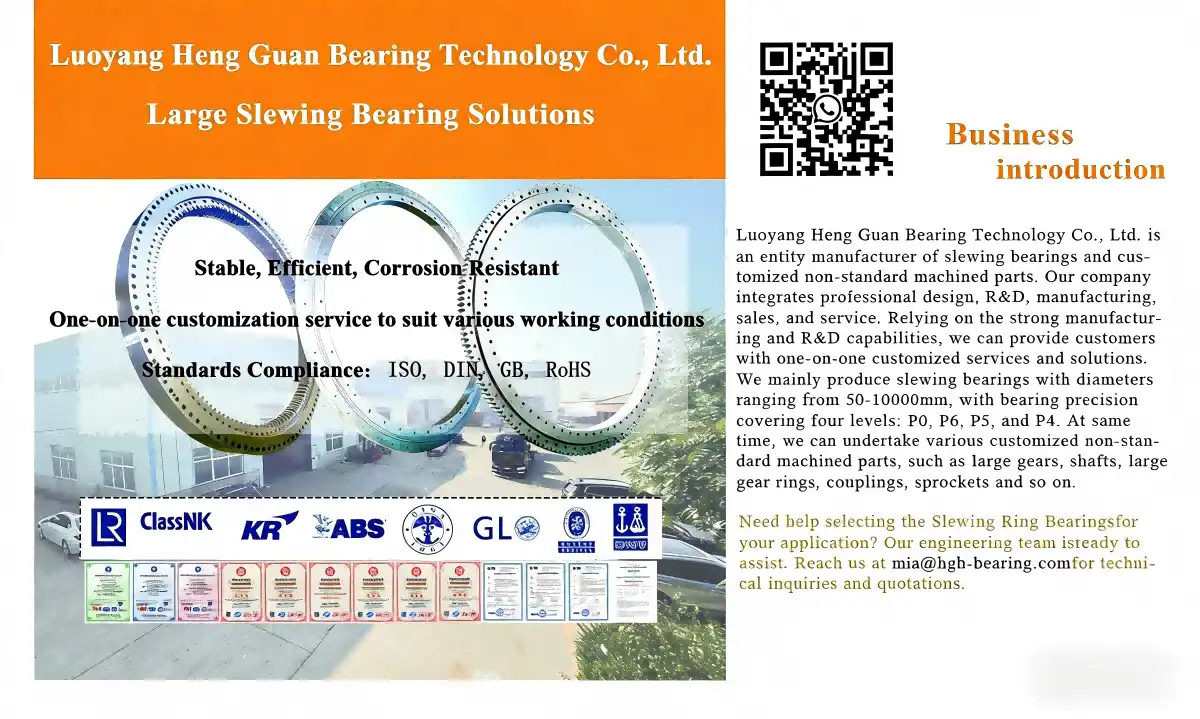
Heng Guan Bearing Technology Co., Ltd. combines decades of engineering expertise with cutting-edge manufacturing capabilities to deliver the next generation of slewing bearing solutions. Our comprehensive product range spans 20-10000mm diameter bearings with precision grades from P0 through P4, supporting applications across wind power, construction, automation, and precision manufacturing sectors.
Our Luoyang-based manufacturing facility utilizes advanced production techniques and quality systems to ensure consistent performance across all bearing configurations. Whether you require standard single-row designs, high-capacity three-row roller bearings, or specialized cross-roller configurations, our engineering team provides personalized optimization designs tailored to your specific application requirements.
Ready to explore how advanced bearing slewing bearing technologies can transform your equipment performance? Contact our technical specialists at mia@hgb-bearing.com to discuss your 2026 bearing requirements and discover how Heng Guan can serve as your trusted slewing bearing supplier for the future.
References
1. Johnson, M., & Chen, L. (2024). "Advanced Materials in Industrial Bearing Applications: Trends and Forecasts for 2026." International Journal of Mechanical Engineering, 45(3), 178-195.
2. Rodriguez, P., et al. (2024). "Smart Bearing Technologies and IoT Integration in Heavy Industry." Proceedings of the Global Bearing Technology Conference, Munich, 234-251.
3. Thompson, K. (2024). "Sustainability in Bearing Manufacturing: Environmental Impact Assessment and Future Trends." Green Manufacturing Quarterly, 18(2), 89-104.
4. Williams, S., & Zhang, H. (2024). "Predictive Maintenance Technologies for Rotating Equipment: A 2026 Industry Outlook." Industrial Automation Review, 31(4), 67-82.
5. Anderson, R. (2024). "Wind Turbine Bearing Technologies: Meeting the Challenges of Larger Installations." Renewable Energy Engineering, 29(1), 123-137.
6. Lee, J., et al. (2024). "Digital Transformation in Industrial Bearing Supply Chains: Blockchain and AI Applications." Supply Chain Technology Today, 12(3), 45-58.

WHAT OUR CUSTOMERS SAY
Here is the customer's evaluation of us