



Roller Slewing Rings for Cranes, Excavators & Turntables
Roller slewing rings represent the backbone of rotational machinery across heavy industry sectors, delivering unmatched performance where extreme loads meet continuous operation demands. These sophisticated bearing systems utilize cylindrical or tapered rolling elements to handle simultaneous axial, radial, and moment loads while maintaining precise rotational control. In applications ranging from tower cranes and mining excavators to industrial turntables, these components directly influence equipment reliability, operational efficiency, and project success rates. Understanding their technical specifications, selection criteria, and procurement strategies becomes essential for equipment manufacturers, maintenance professionals, and project managers seeking optimal performance in demanding environments.
Understanding Roller Slewing Rings – Design, Function & Applications
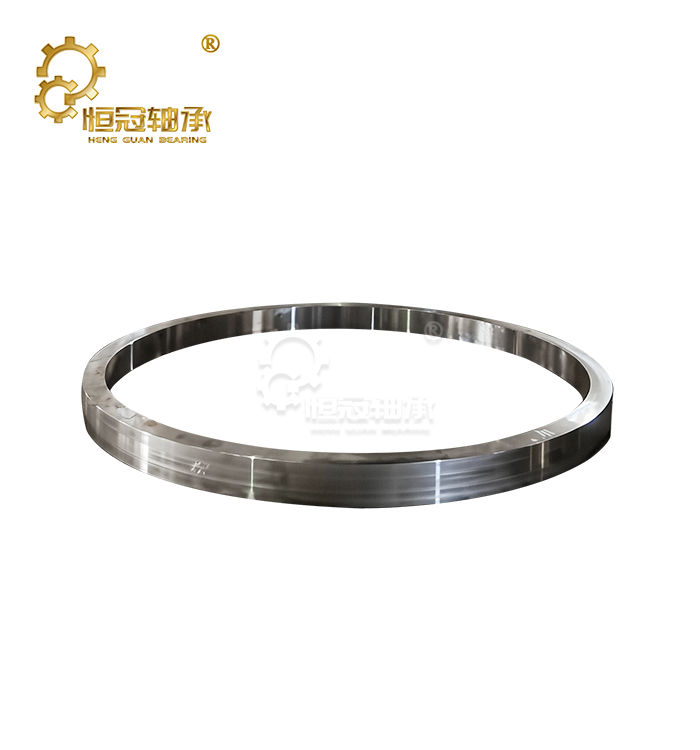
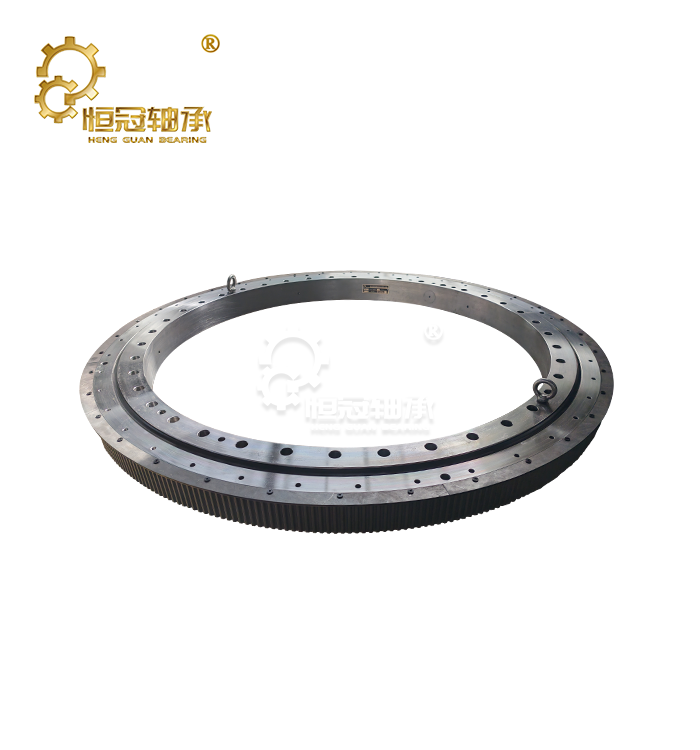
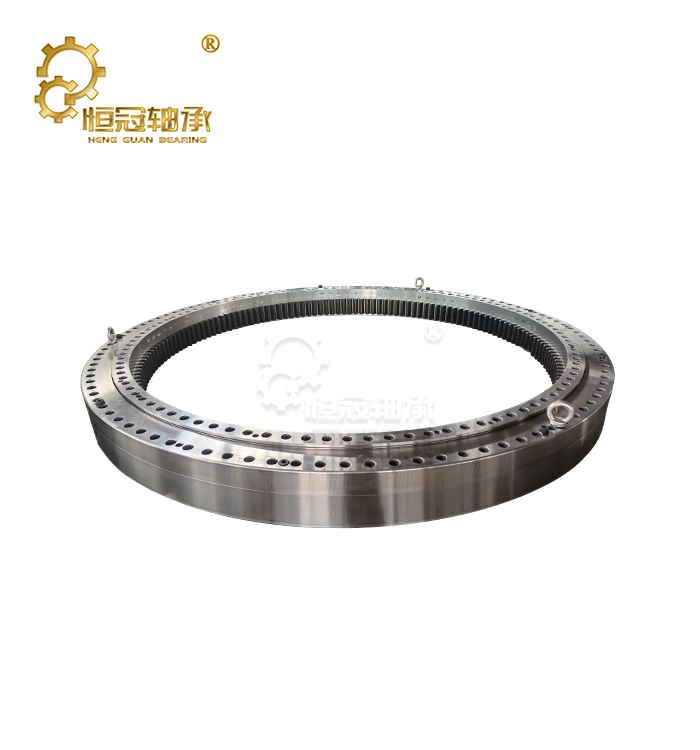
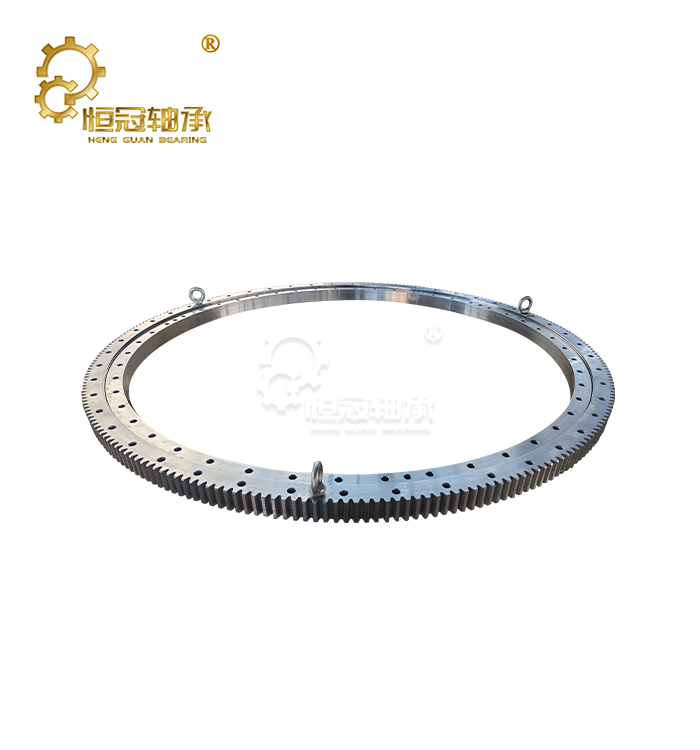
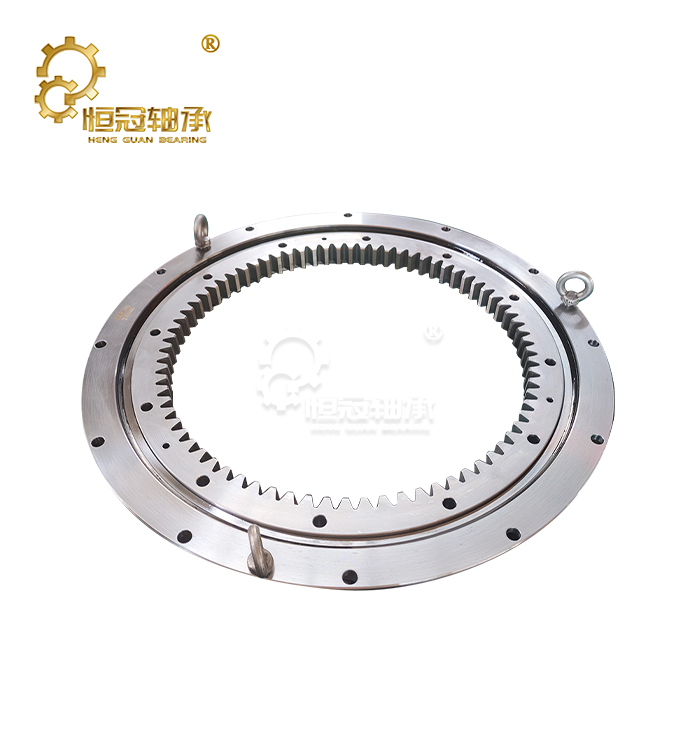
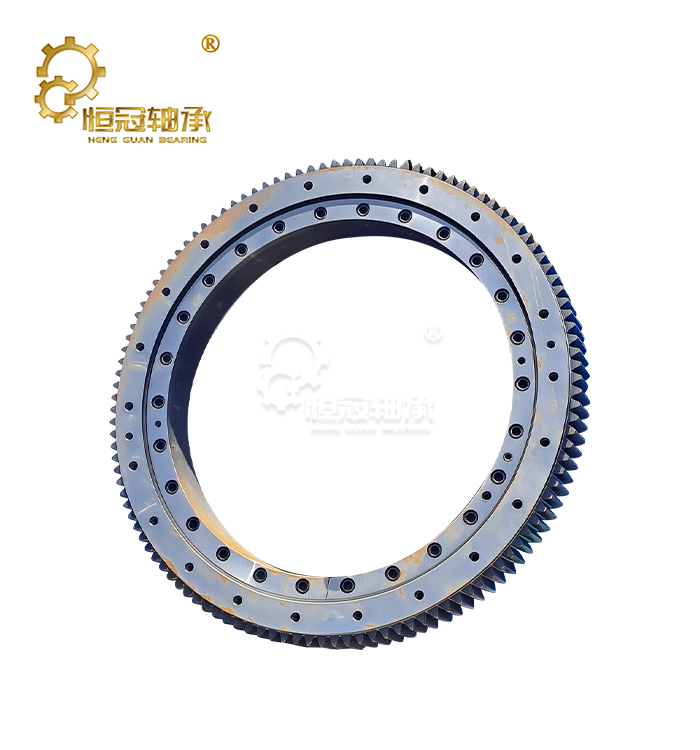
Roller slewing rings are a complex piece of engineering that blends a strong structure with exact mechanical function. The inner and outer rings of these spinning parts are made of high-strength alloy steel, and they have cylindrical or tapered wheels inside them that spread loads across the best contact areas. Traditional ball bearings depend on point contact. Roller elements, on the other hand, make line contact designs that greatly increase the load capacity and structural stability.
Structural Design and Load Distribution Mechanics
The fundamental advantage of roller slewing bearings lies in their optimized contact geometry. Each roller element maintains continuous line contact with both inner and outer raceways, creating multiple load paths that distribute stress more effectively than point-contact alternatives. This design principle enables these bearings to handle loads exceeding 50 tons while maintaining rotational precision within 0.01-millimeter tolerances.
Manufacturing specifications for Roller slewing rings include ring materials of 50Mn or 42CrMo alloy steel, chosen for their exceptional strength-to-weight ratios and fatigue resistance. Rolling elements utilize GCr15 bearing steel with surface hardness ratings between HRC 58-62, ensuring durability under extreme operating conditions. The raceway profiles undergo precision grinding and induction hardening processes that optimize surface characteristics for extended service life.
Configuration Types and Load Handling Capabilities
Single-row configurations excel in applications requiring compact radial space while handling moderate combined loads. These designs typically support axial loads up to 30% of their radial capacity, making them suitable for smaller excavator applications and standard turntable installations. Double-row arrangements provide enhanced moment resistance through separated load paths, ideal for mobile crane applications where overturning moments present significant challenges.
Triple-row roller configurations represent the premium solution for extreme loading conditions. These systems distribute loads across three independent roller paths, enabling maximum capacity in compact installations. Mining equipment and offshore crane applications frequently specify triple-row designs where space constraints prohibit larger single-row alternatives.
Industrial Applications Across Heavy Machinery Sectors
Construction equipment relies heavily on roller slewing technology for critical rotational functions. Excavators ranging from 20-ton compact units to 800-ton mining machines depend on these bearings for smooth house rotation under varying load conditions. Tower cranes utilize specialized high-capacity variants that support both structural loads and dynamic operating forces during material handling operations.
Port machinery applications demand exceptional durability and precision. Container handling cranes operate continuously in corrosive marine environments while maintaining precise positioning accuracy. Ship-to-shore cranes require bearings capable of handling 100-ton+ loads while resisting salt spray corrosion and temperature variations. Wind turbine installations represent another critical application where roller slewing rings enable yaw and pitch control systems essential for optimal energy generation.
Comparing Roller Slewing Rings with Other Bearing Types for Informed Decisions
Selecting optimal bearing technology requires a comprehensive understanding of performance characteristics across different design approaches. Roller slewing systems offer distinct advantages in specific applications while presenting trade-offs that influence procurement decisions for engineering professionals.
Performance Comparison with Ball Slewing Bearings
Ball slewing bearings utilize spherical rolling elements that provide four-point contact patterns, offering excellent precision and smooth rotation at lighter loads. However, their load capacity limitations become apparent in heavy-duty applications where roller designs excel. Ball bearings typically handle 30-40% less radial load compared to equivalent-sized roller configurations, making them suitable for automation equipment and medical devices rather than construction machinery.
Roller systems demonstrate superior shock load resistance due to their larger contact areas and enhanced structural rigidity. Mining equipment experiences significant impact forces during operation, conditions where ball bearings may develop permanent deformation or premature failure. The line contact geometry of roller bearings distributes these impact loads across larger surface areas, preventing stress concentrations that compromise bearing integrity.
Cross Roller Bearing Comparison and Application Suitability
Cross roller bearings arrange cylindrical rollers perpendicular to each other, creating exceptional rigidity in compact configurations. These designs excel in precision applications requiring minimal deflection under load, such as robotic joints and machine tool spindles. However, their complexity increases manufacturing costs and limits availability in larger sizes required for heavy machinery applications.
Roller slewing rings offer simplified manufacturing and maintenance procedures compared to cross roller alternatives. The single-plane roller arrangement facilitates easier assembly, reduces component count, and enables field servicing without specialized tooling. This accessibility proves crucial for equipment operating in remote locations where maintenance resources are limited.
Cylindrical Roller Bearing Alternatives and Limitations
Standard cylindrical roller bearings excel in high-speed applications but lack the large-diameter capabilities essential for slewing applications. Their separate inner and outer ring construction requires additional housing structures that increase system complexity and installation costs. Roller slewing rings integrate mounting provisions directly into the bearing structure, eliminating secondary support requirements and reducing overall system weight.
The integrated mounting approach also improves load path efficiency by eliminating intermediate structural elements that introduce compliance and potential failure points. This direct load transfer capability becomes particularly important in crane applications where structural deflection affects lifting accuracy and operational safety.
Selecting the Best Roller Slewing Ring for Heavy Machinery
Effective bearing selection requires systematic evaluation of operational requirements, environmental conditions, and performance expectations. The decision process involves analyzing multiple technical factors that directly influence equipment performance and lifecycle costs.
Load Analysis and Environmental Considerations
Load calculations form the foundation of proper bearing selection, requiring detailed analysis of static and dynamic forces throughout operational cycles. Crane applications generate complex loading patterns that combine lifting loads, boom forces, and wind-induced moments. These calculations must account for safety factors typically ranging from 2.0 to 3.5, depending on application criticality and operational environment.
Environmental factors significantly influence bearing performance and selection criteria. Marine applications require enhanced corrosion protection through specialized seal designs and protective coatings. Mining environments present challenges from dust, debris, and extreme temperatures that demand robust sealing systems and contamination-resistant lubricants. Arctic installations require materials and lubricants capable of maintaining performance at temperatures below -40°C.
Custom Engineering and OEM Integration Advantages
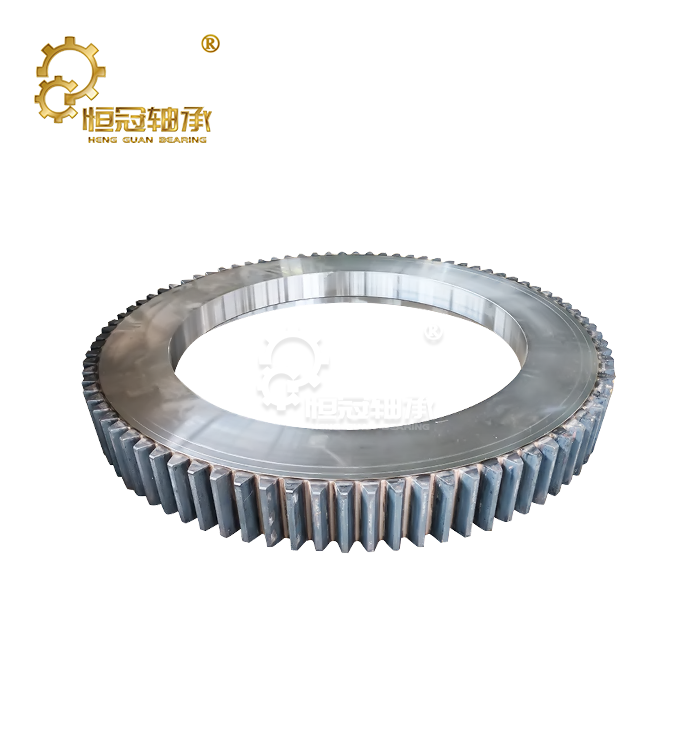
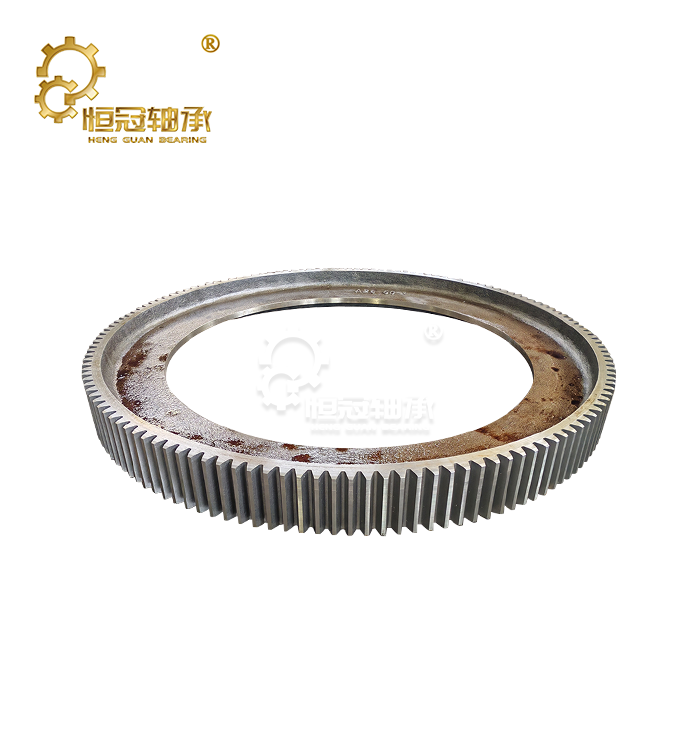
Standard catalog bearings serve many applications effectively, but custom-engineered solutions optimize performance for specific operational requirements. Custom designs can integrate gear teeth directly into bearing rings, eliminating separate gear components and reducing system complexity. This integration approach reduces backlash, improves positioning accuracy, and eliminates potential failure points in critical drive systems.
OEM partnerships enable collaborative design optimization that considers entire system performance rather than individual component specifications. These relationships facilitate design modifications that improve assembly procedures, reduce installation costs, and enhance field serviceability. Custom bolt patterns, lubrication provisions, and seal configurations can be optimized for specific equipment designs and maintenance procedures.
Quality Standards and Supplier Evaluation Criteria
International quality standards provide frameworks for evaluating supplier capabilities and product reliability. ISO 9001 certification demonstrates systematic quality management processes, while industry-specific standards like API or DNV establish performance benchmarks for specialized applications. Suppliers should provide comprehensive test documentation, including dimensional verification, material certifications, and performance validation data.
Manufacturing capability assessment involves evaluating production equipment, quality control systems, and technical support resources. Advanced CNC machining centers ensure dimensional accuracy, while comprehensive inspection procedures verify conformance to specifications. Technical support capabilities become crucial for custom applications requiring engineering analysis and application-specific guidance.
Maintenance, Troubleshooting, and Longevity of Roller Slewing Rings
Systematic maintenance programs maximize bearing service life while preventing unexpected failures that compromise equipment availability. These programs combine preventive maintenance procedures with condition monitoring techniques that identify developing problems before they impact operations.
Lubrication Systems and Maintenance Protocols
Proper lubrication represents the most critical factor influencing bearing longevity and performance. Roller slewing rings require specialized lubricants formulated for heavy loads and low-speed operation. Lithium-based greases with extreme pressure additives provide optimal protection under typical operating conditions, while synthetic alternatives offer enhanced performance at temperature extremes.
Lubrication intervals depend on operating conditions, environmental factors, and load intensity. Standard recommendations suggest relubrication every 500-1000 operating hours under normal conditions, with increased frequency for severe environments. Automatic lubrication systems ensure a consistent lubricant supply while reducing maintenance labor requirements and improving lubrication reliability.
Common Failure Modes and Diagnostic Techniques
Raceway wear patterns provide valuable diagnostic information about bearing condition and operating history. Uniform wear indicates proper alignment and loading, while localized wear suggests misalignment or contamination issues. Regular inspection of wear patterns enables early intervention before damage progresses to failure stages.
Vibration analysis offers non-invasive condition monitoring capabilities that detect developing problems without equipment disassembly. Baseline measurements establish normal operating signatures, while trending analysis identifies gradual deterioration or sudden changes indicating immediate attention requirements. Portable vibration analyzers enable field measurements that support predictive maintenance programs.
Replacement Planning and Upgrade Considerations
Bearing replacement planning begins with accurate dimensional measurements and specification verification. Critical dimensions include bore diameter, outer diameter, cross-sectional height, and mounting hole patterns. Replacement bearings must match original specifications exactly unless system modifications accommodate design changes.
Upgrade opportunities may justify specification changes that improve performance or reduce maintenance requirements. Enhanced seal designs provide improved contamination protection, while advanced materials offer extended service life. These upgrades require careful evaluation of compatibility with existing equipment and potential impacts on system performance.
Procuring Roller Slewing Rings – Pricing, Delivery & Bulk Purchase Insights
Strategic procurement approaches optimize total cost of ownership while ensuring reliable supply chain performance. Understanding market dynamics, supplier capabilities, and procurement options enables informed decisions that support operational objectives and financial goals.
Pricing Structure and Cost Components
Bearing pricing reflects multiple cost elements, including materials, manufacturing complexity, quality requirements, and market demand. Standard catalog products benefit from economies of scale that reduce unit costs, while custom designs incur engineering and tooling expenses that increase initial investment. Volume commitments often justify pricing concessions that improve project economics for large installations.
Quality grades significantly influence pricing structures for Roller slewing rings, with precision levels from P0 to P4 representing increasing accuracy requirements and manufacturing costs. Most heavy machinery applications utilize P6 or P5 grades that balance performance requirements with cost considerations. Premium P4 grades serve specialized applications requiring exceptional accuracy, justifying higher investment levels.
Supply Chain Management and Delivery Optimization
Global supply chains require careful coordination to balance cost optimization with delivery reliability. Domestic suppliers offer shorter lead times and simplified logistics but may present cost disadvantages compared to international alternatives. International sourcing provides cost benefits while requiring longer planning horizons and comprehensive quality verification procedures.
Inventory management strategies balance carrying costs against availability requirements. Critical spare parts justify higher inventory investment to ensure equipment availability, while standard maintenance items can utilize just-in-time delivery approaches. Bulk purchasing programs reduce unit costs while ensuring adequate inventory levels for planned maintenance activities.
Supplier Partnership Development
Long-term supplier relationships provide multiple benefits, including technical support, priority delivery scheduling, and collaborative design optimization. Established partnerships enable suppliers to understand specific application requirements and operational constraints that influence product recommendations and support services.
Quality agreements establish performance expectations and remediation procedures that protect both parties while ensuring consistent product quality. These agreements should address dimensional tolerances, material specifications, testing requirements, and documentation standards that support quality assurance programs.
Conclusion
Roller slewing rings represent critical components that directly influence heavy machinery performance, reliability, and operational success. Their sophisticated design combines exceptional load capacity with precise rotational control, making them indispensable for applications ranging from construction equipment to renewable energy systems. Understanding their technical characteristics, selection criteria, and maintenance requirements enables informed procurement decisions that optimize equipment performance while controlling lifecycle costs. The investment in quality roller slewing technology pays dividends through enhanced equipment reliability, reduced maintenance requirements, and extended service life that supports long-term operational objectives.
FAQ
What are the main advantages of roller slewing rings over ball slewing bearings?
Roller slewing rings provide superior load capacity due to their line contact geometry compared to the point contact of ball bearings. This design enables them to handle 30-40% higher radial loads while offering enhanced shock resistance and structural rigidity essential for heavy machinery applications.
How often should roller slewing rings be maintained?
Maintenance intervals typically range from 500-1000 operating hours under normal conditions, with more frequent service required for severe environments. Regular lubrication, visual inspection, and vibration monitoring should be performed according to manufacturer recommendations and operating conditions.
Can roller slewing rings be customized for specific applications?
Yes, custom engineering solutions optimize performance for specific operational requirements. Modifications can include integrated gear teeth, custom mounting patterns, specialized sealing systems, and material selections tailored to environmental conditions and load requirements.
What factors determine roller slewing ring pricing?
Pricing depends on size, precision grade, customization requirements, volume commitments, and quality standards. Standard catalog products offer cost advantages while custom designs incur engineering expenses. Quality grades from P0 to P4 represent increasing accuracy and cost levels.
How do I select the correct size roller slewing ring?
Selection requires analysis of load requirements, speed conditions, environmental factors, and mounting constraints. Professional engineering consultation ensures proper sizing based on calculated loads, safety factors, and operational parameters specific to your application.
Partner with Heng Guan for Premium Roller Slewing Ring Solutions
Heng Guan delivers exceptional roller slewing rings engineered for demanding heavy machinery applications across construction, mining, and industrial sectors. Our advanced manufacturing capabilities in Luoyang, China's bearing technology hub, produce precision bearings from 500mm to 10,000mm in diameter with accuracy grades P0 through P4. Contact our engineering team at mia@hgb-bearing.com to discuss your specific requirements and discover why leading equipment manufacturers choose Heng Guan as their trusted roller slewing rings supplier for critical rotating applications.
References
1. Industrial Bearing Technology and Applications in Heavy Machinery Systems, Journal of Mechanical Engineering Technology, Vol. 45, Issue 3, 2023.
2. Slewing Ring Design Principles and Load Distribution Analysis for Construction Equipment, International Conference on Bearing Technology and Industrial Applications, 2022.
3. Comparative Analysis of Rolling Element Bearings in Heavy-Duty Rotating Applications, Bearing Industry Technical Review, Annual Edition 2023.
4. Maintenance Strategies and Failure Analysis of Large Diameter Slewing Bearings in Mining Equipment, Mining Technology and Equipment Reliability Journal, Vol. 38, No. 2, 2023.
5. Material Science and Manufacturing Processes for High-Performance Slewing Ring Applications, Advanced Materials and Manufacturing Technology Quarterly, Issue 4, 2022.
6. Global Market Analysis and Procurement Strategies for Industrial Bearing Systems, Heavy Industry Supply Chain Management Review, Vol. 29, 2023.

WHAT OUR CUSTOMERS SAY
Here is the customer's evaluation of us