



Is Uncoiling Machine Slewing Ring Suitable for High-Load Steel Mills?
What Is an Uncoiling Machine Slewing Ring and How Does It Perform in Steel Mill Environments?
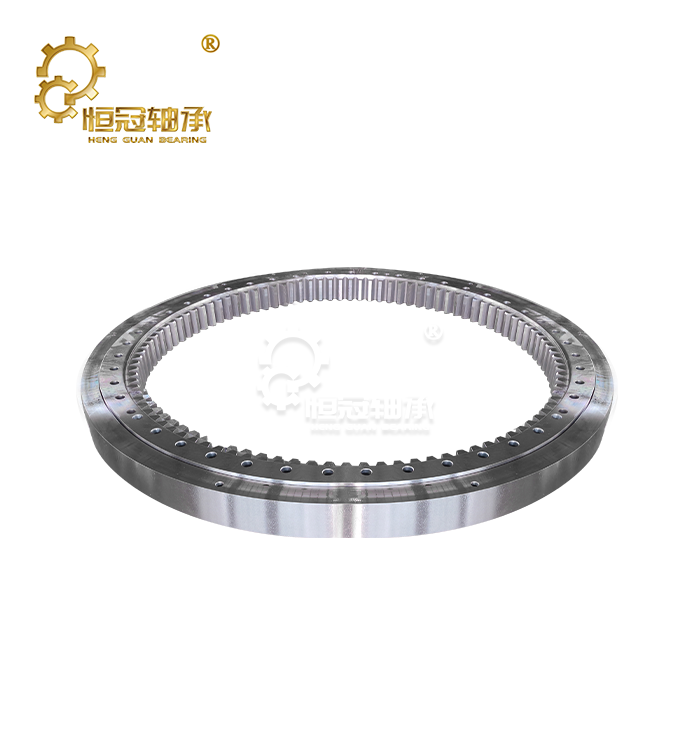
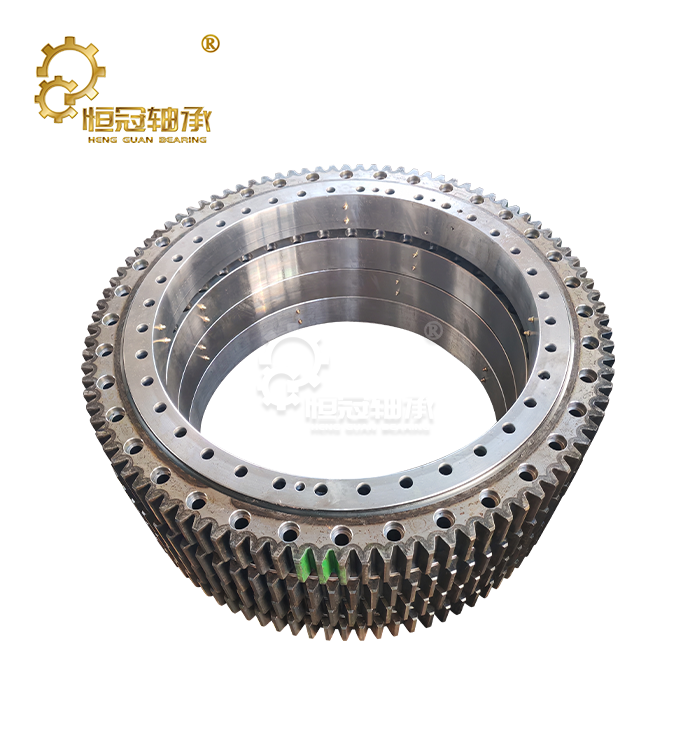
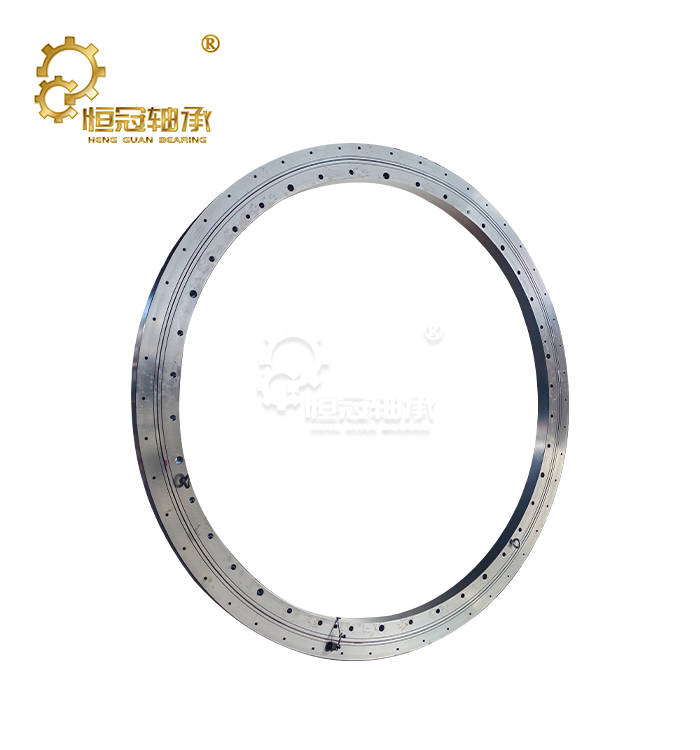
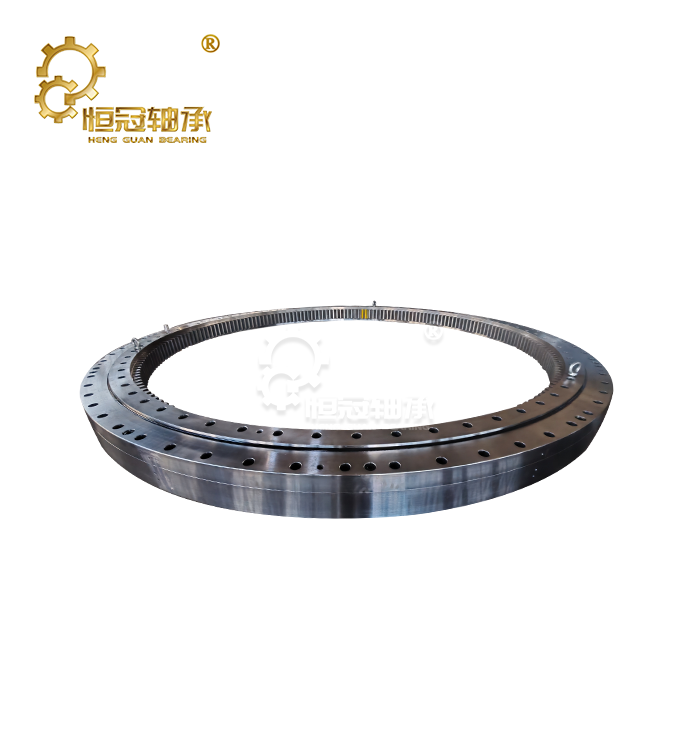
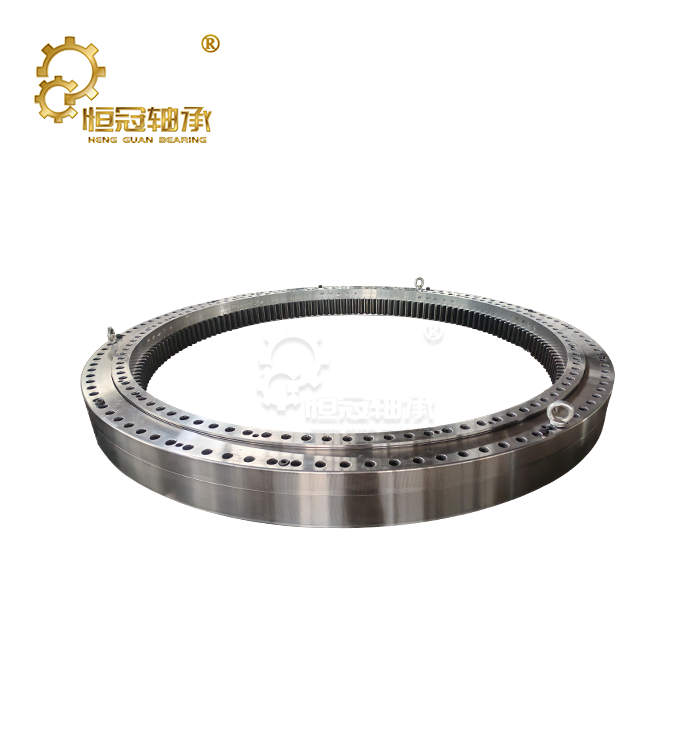
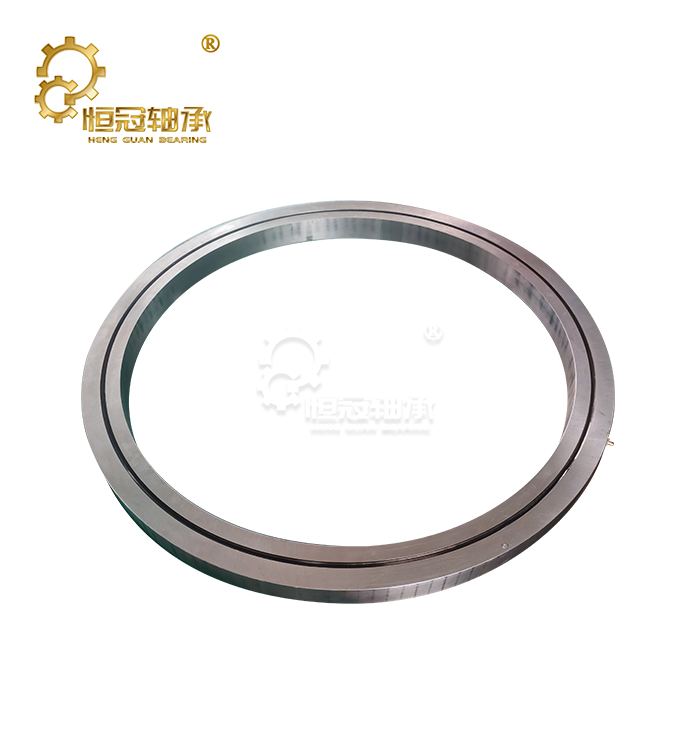
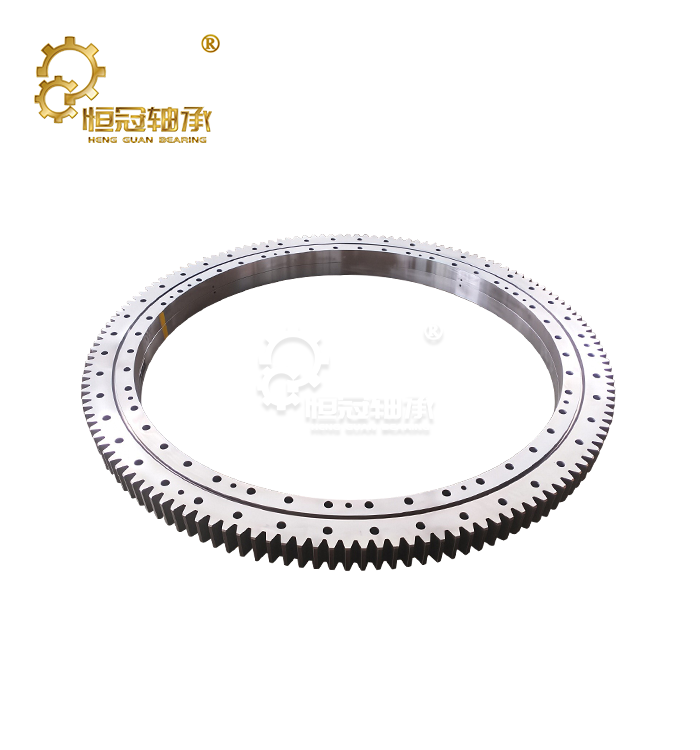
An uncoiling machine slewing ring is a large-diameter slewing bearing with an external gear structure, used as the core rotating interface in coil handling and uncoiling equipment. It connects the fixed machine base to the mandrel system, enabling controlled rotation while transmitting torque from the drive pinion.
In steel mill operations, this bearing must function under a combination of severe working conditions:
- Heavy axial load from multi-ton steel coils
- Radial forces generated by strip tension during unwinding
- Tilting moments caused by eccentric coil placement or mandrel expansion
- Continuous exposure to metallic dust, scale, and thermal fluctuations
The uncoiling machine slewing ring developed by Heng Guan Bearing is typically built using high-strength alloy steels such as 50Mn or 42CrMo, combined with precision heat treatment to ensure long fatigue life under cyclic loading. The external gear is integrally machined and hardened to maintain stable meshing performance even in abrasive environments.
A multi-seal protection system prevents ingress of dust and mill scale, ensuring stable lubrication film retention during long production cycles.
| Component | Material / Treatment | Functional Advantage |
|---|---|---|
| Inner & outer rings | 50Mn / 42CrMo alloy steel | High load-bearing capacity |
| Rolling elements | GCr15SiMn bearing steel | High fatigue resistance |
| External gear | Integral machining + induction hardening | Stable torque transmission |
| Raceway surface | Heat-treated hardened layer | Reduced wear under cyclic load |
| Sealing system | Multi-lip sealing design | Protection from dust and scale |
This structural foundation allows the bearing to operate reliably in both hot and cold rolling environments where contamination and load variation are constant challenges.
Can an Uncoiling Machine Slewing Ring Handle Extreme Loads, Shock Forces, and Continuous Operation?
In real steel mill conditions, the load on an uncoiling machine slewing ring is never constant. Instead, it fluctuates dynamically throughout each coil handling cycle, making load distribution and structural rigidity the most important performance indicators.
The bearing must simultaneously withstand:
- Axial load (Fa): Coil weight and vertical pressure from strip tension
- Radial load (Fr): Side forces from strip feeding alignment and wind load
- Tilting moment (M): Eccentric coil placement and uneven mandrel expansion
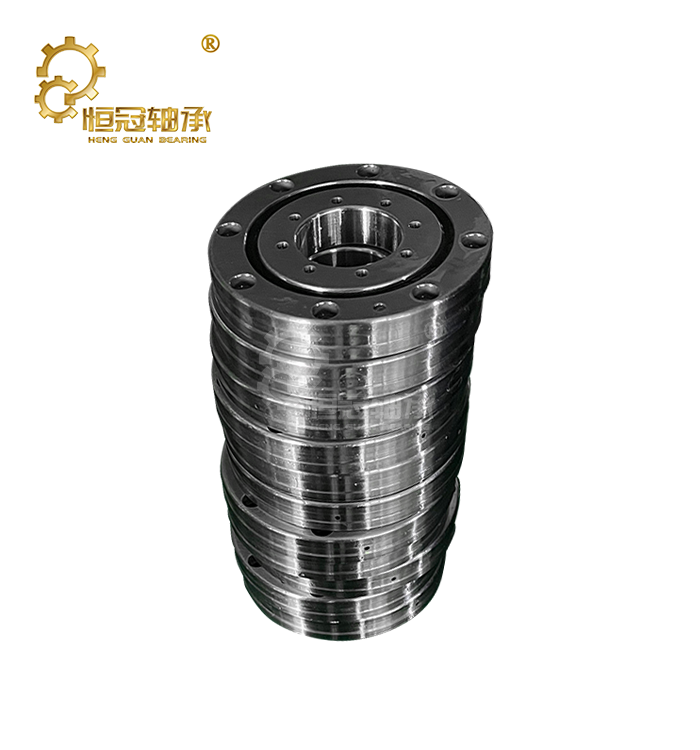
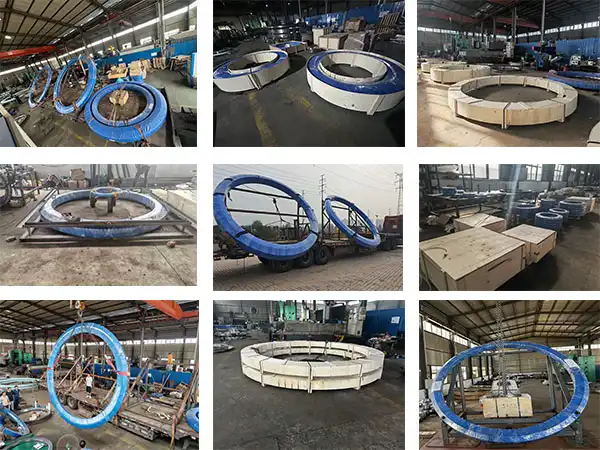
To address this, Heng Guan Bearing uses internal configurations such as cross roller or multi-row roller structures depending on application severity. These geometries distribute load across multiple raceway contact points, significantly reducing localized stress concentration and improving fatigue resistance.
A typical industrial specification, such as the 1598 × 1305 × 90 mm model, balances compact structural height with high rigidity, making it suitable for most steel coil handling systems while maintaining strong resistance to tilting deformation.
External gear integration improves transmission efficiency and reduces drivetrain losses, helping maintain stable torque output during frequent start-stop cycles — a common operating condition in coil processing lines.
For engineering validation or load confirmation, you can contact the technical team directly at mia@hgb-bearing.com, especially when working with non-standard coil weights or high-speed uncoiling systems.
|
|
Technical Parameters of Uncoiling Machine Slewing Ring (Industrial Reference)
To properly evaluate suitability for steel mill applications, the following technical parameters are commonly referenced during selection and design verification.
| Parameter | Specification Range | Engineering Significance |
|---|---|---|
| Standard size | 1598 × 1305 × 90 mm | Typical industrial uncoiler compatibility |
| Diameter range | 50 mm – 10,000 mm | Supports customized heavy-duty systems |
| Gear type | External involute gear | Direct torque transmission |
| Gear hardness | HRC 55–60 | Wear resistance in abrasive environments |
| Raceway hardness | 55–62 HRC | Long fatigue life under cyclic load |
| Precision grades | P0 / P6 / P5 / P4 | Match automation requirements |
| Safety factor (CLI) | 1.7 – 2.0 | Accounts for shock loading in steel mills |
These parameters ensure that the bearing can withstand both steady-state production loads and transient shock conditions during coil loading and acceleration phases.
Load Capacity and Structural Design Factors of Uncoiling Machine Slewing Ring for Heavy-Duty Steel Processing
Proper selection requires a full understanding of combined loading conditions rather than relying solely on coil weight. In practice, engineers must evaluate axial force (Fa), radial force (Fr), and tilting moment (M) together using a combined load index (CLI) model.
The slewing ring must also tolerate shock amplification factors, which occur during:
- Coil drop or placement impact
- Sudden acceleration during uncoiling start-up
- Strip tension fluctuations during line speed changes
A safety factor of 1.7–2.0 is typically recommended for steel mill applications due to the high cost of unplanned downtime and difficulty of on-site replacement.
The external gear system also plays a critical role in durability. Proper matching of module, pressure angle, and tooth count ensures correct gear meshing with the drive pinion, preventing edge loading and uneven wear. Heng Guan Bearing uses CNC gear machining and heat treatment processes to maintain tight tolerance control across full production ranges.
| Design Factor | Specification | Impact on Steel Mill Operation |
|---|---|---|
| Load type | Fa / Fr / M combined | Realistic simulation of operating conditions |
| Safety factor | 1.7 – 2.0 | Protection against shock loads |
| Gear hardness | HRC 55–60 | Extended service life in abrasive environments |
| Structural type | Cross roller / multi-row roller | Improved load distribution |
| Precision grade | P0–P4 | Application-specific accuracy control |
How to Select the Right Uncoiling Machine Slewing Ring for High-Load Rolling and Coil Handling Systems
A structured selection process ensures long-term reliability and prevents costly mismatches. The key inputs required from your system include:
- Maximum coil weight
- Uncoiling speed (RPM)
- Mounting flange and bolt circle dimensions
- Drive gear module and tooth specification
These parameters directly determine bearing diameter, internal structure, and gear configuration.
For standard coil handling systems, the 1598 × 1305 × 90 mm uncoiling machine slewing ring from Heng Guan Bearing is often a validated starting point across multiple steel processing environments.
For non-standard layouts or upgraded automation systems, internal structures can be adapted — including cross roller or multi-row roller configurations depending on load severity and rigidity requirements.
Precision selection should follow system control needs:
- P0 / P6: Standard coil handling systems
- P5 / P4: Servo positioning or tension-controlled lines
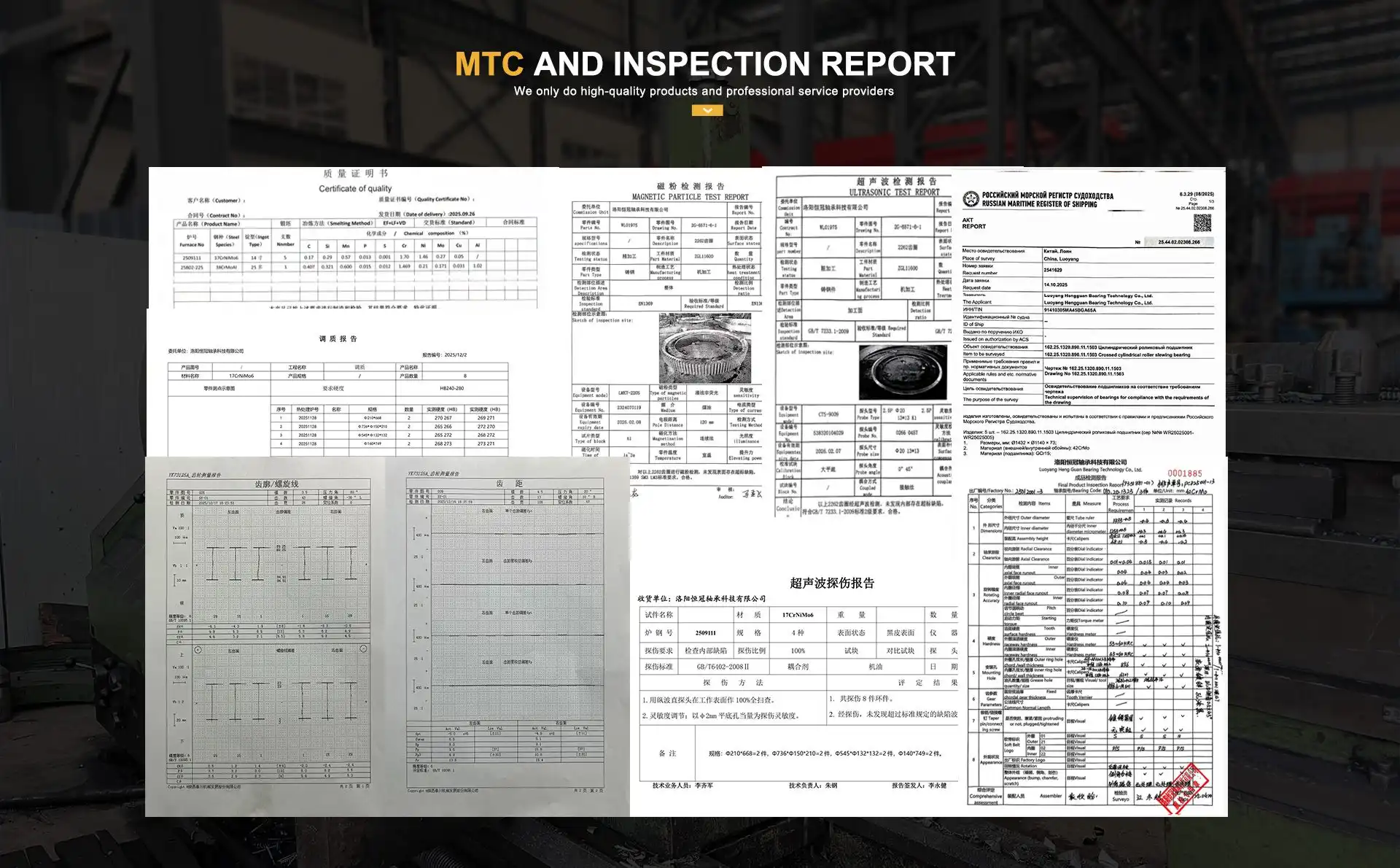
All products undergo dimensional inspection and vibration testing under ISO 9001 quality systems, ensuring consistent performance before shipment.
Conclusion
The uncoiling machine slewing ring is fully capable of handling high-load steel mill conditions when correctly engineered and selected. Its performance depends on proper load analysis, gear matching, and structural configuration rather than nominal size alone. With over two decades of engineering experience, Heng Guan Bearing provides reliable, heavy-duty slewing solutions designed specifically for continuous coil handling and steel processing environments.
|
|
FAQ
Q1: What is the standard size of the uncoiling machine slewing ring?
A: The standard specification is 1598 × 1305 × 90 mm, with full customization available up to 10,000 mm diameter.
Q2: What gear hardness is used in steel mill applications?
A: External gear teeth are hardened to HRC 55–60 for improved wear resistance in abrasive environments.
Q3: Can it withstand shock loads during coil handling?
A: Yes. The internal roller structure distributes axial, radial, and tilting loads, with a recommended safety factor of 1.7–2.0.
Q4: What internal structures are available?
A: Cross roller and multi-row roller configurations are available depending on load and rigidity requirements.
Spec Your Uncoiling Machine Slewing Ring with Engineering Confidence
Selecting the correct uncoiling machine slewing ring is critical to ensuring stable coil handling, reduced downtime, and long service life in steel processing environments. At Luoyang Heng Guan Bearing Technology Co., Ltd., we specialize in the design, R&D, and manufacturing of high-performance slewing rings and slewing bearings.
Our advantages include:
- Over 20 years of engineering and manufacturing experience
- Advanced CNC machining and heat treatment systems
- Full diameter range from 20 mm to 10,000 mm
- Multiple structure types including four-point contact, cross roller, and multi-row roller designs
- Precision grades from P0 to P4 for different industrial requirements
- Strict ISO 9001 quality control and full inspection before delivery
Whether you are upgrading an existing coil handling system or designing a new high-load steel processing line, our engineering team can provide tailored support—from load analysis to structural optimization. Contact our engineers directly: mia@hgb-bearing.com. We will review your coil weight, operating speed, and equipment layout and provide a technical recommendation, typically within one business day.
References
1. Harris, T. A., & Kotzalas, M. N. (2007). Rolling Bearing Analysis: Essential Concepts of Bearing Technology (5th ed.). CRC Press / Taylor & Francis Group.
2. ISO 76:2006. Rolling Bearings — Static Load Ratings. International Organization for Standardization.
3. Rothe Erde GmbH. (2011). Slewing Rings: Technical Documentation and Engineering Guidelines. ThyssenKrupp Rothe Erde.
4. Roberts, W. L. (1983). Hot Rolling of Steel. Marcel Dekker.
5. ISO 9001:2015. Quality Management Systems — Requirements. International Organization for Standardization.
6. Bhadeshia, H. K. D. H., & Honeycombe, R. (2017). Steels: Microstructure and Properties (4th ed.). Butterworth-Heinemann / Elsevier.

WHAT OUR CUSTOMERS SAY
Here is the customer's evaluation of us