



How to Choose the Best Bridge Scraper Slewing Bearing for Your System?
How can a bridge scraper system in a clarifier or thickener operate continuously for years without failure caused by corrosion, overload, or misalignment in harsh wastewater environments? Selecting the right bridge scraper slewing bearing is not just a procurement decision — it directly determines whether a clarifier or thickener runs continuously for years or suffers unexpected downtime, seal failure, and structural misalignment. These large-diameter slewing components operate at the core of water treatment bridge scraper systems, where they must simultaneously withstand axial thrust, radial forces, and continuous tilting moments in highly corrosive environments. At Luoyang Heng Guan Bearing Technology Co., Ltd., we have been designing and manufacturing slewing bearing solutions for water treatment, desalination, and marine engineering applications for more than 20 years.
What Is a Bridge Scraper Slewing Bearing and How Does It Work in Industrial Systems?
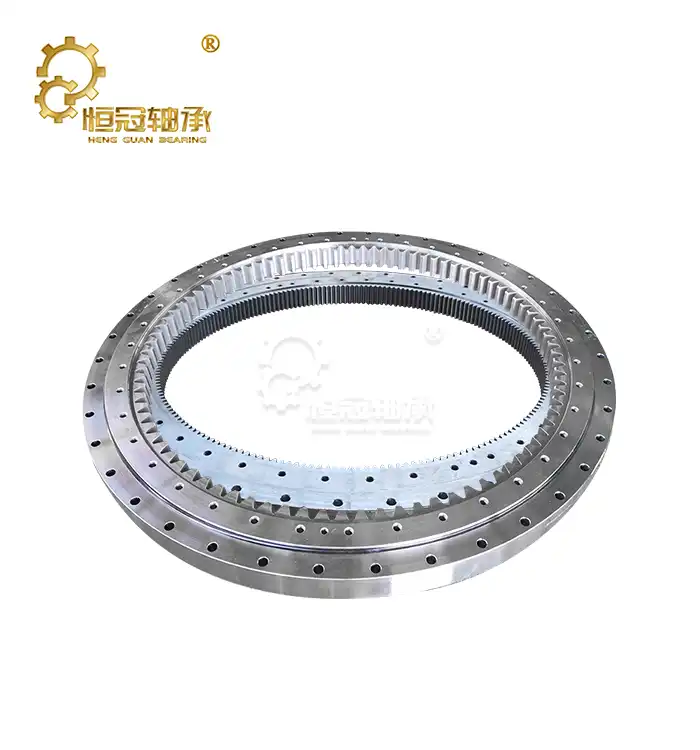
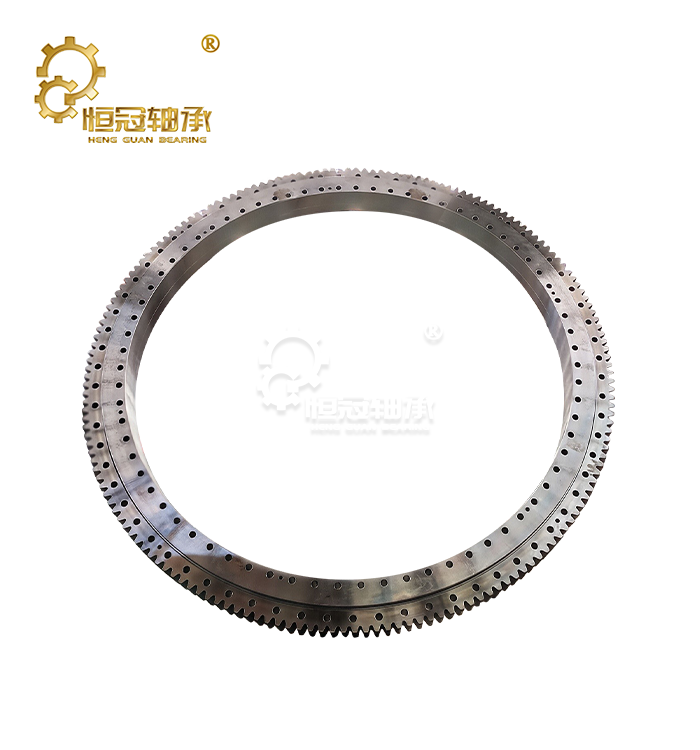
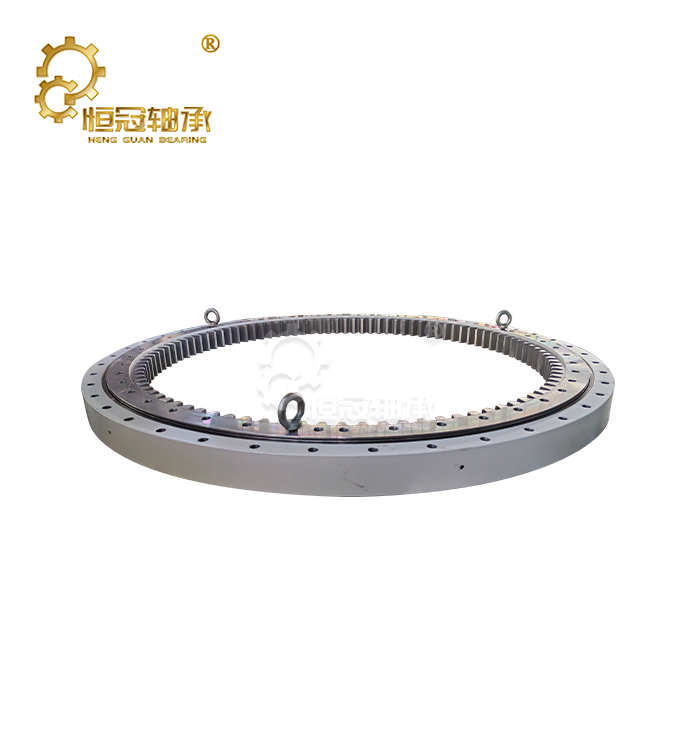
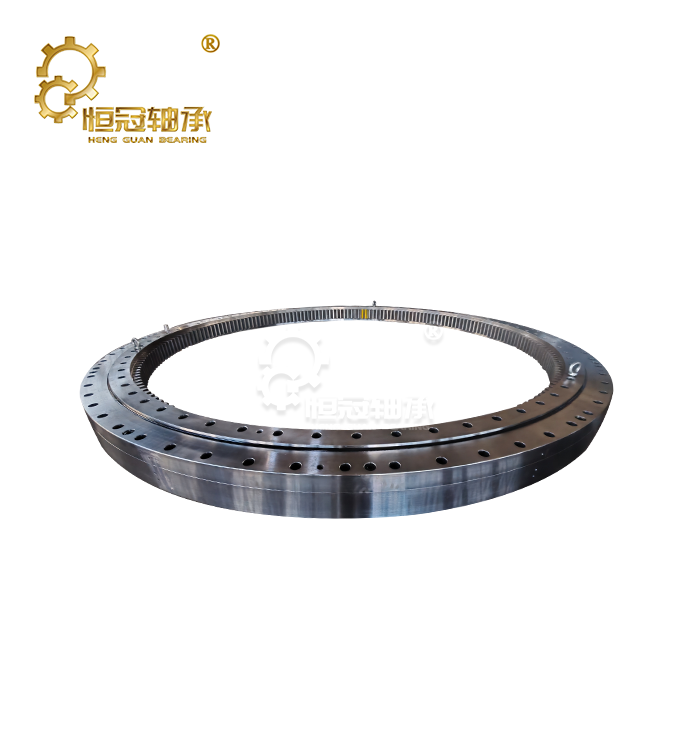
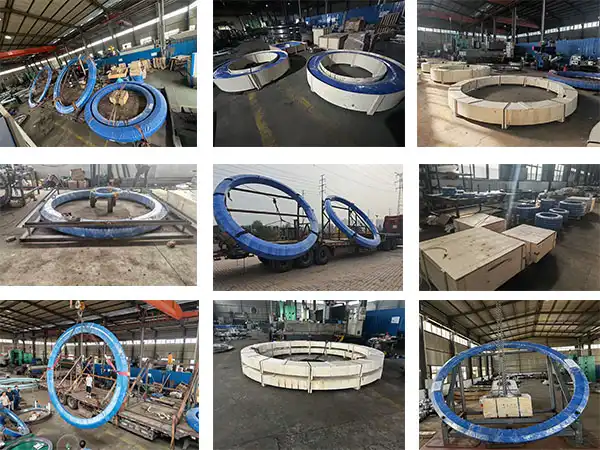
A bridge scraper slewing bearing is a large-diameter rotational support element used in bridge-type sludge scrapers installed in clarifiers and thickeners. It serves as the central pivot point that connects the rotating bridge structure to the tank foundation while transmitting torque from the drive unit to the scraper arms.
Unlike general slewing rings, this type of bearing is designed for continuous operation in corrosive and moisture-rich environments, such as municipal wastewater treatment plants, industrial effluent systems, and coastal desalination facilities. During operation, it must simultaneously manage:
- Axial load from bridge weight and sludge resistance
- Radial load from cantilevered scraper arms and wind forces
- Tilting moments caused by uneven sludge distribution
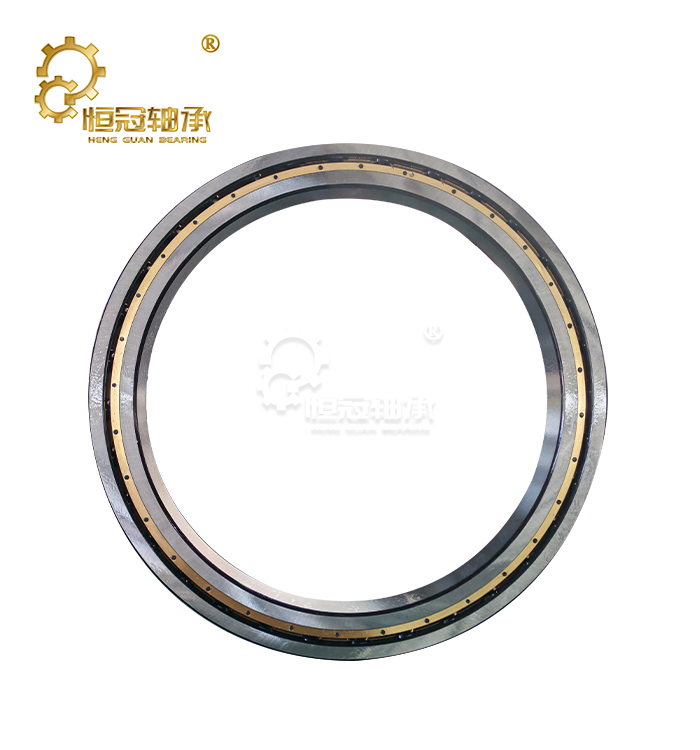
The standard design adopted by Heng Guan Bearing is a single-row four-point contact ball slewing bearing, which enables multi-directional load sharing through optimized raceway geometry. This structure ensures stable rotation even under uneven and cyclic loading conditions.
Key engineering features include hardened raceways (typically 55–62 HRC), precision-ground contact surfaces, and multi-lip sealing systems designed to prevent contamination ingress in submerged or splash-zone environments. Surface oxidation and blackening treatment further improve corrosion resistance in H₂S, chloride, and wastewater exposure conditions.
| Component | Material | Key Performance Feature |
|---|---|---|
| Inner & outer rings | 50Mn / 42CrMo alloy steel | High structural strength and fatigue resistance |
| Rolling elements | GCr15SiMn bearing steel | High hardness and wear resistance |
| Raceway hardness | 55–62 HRC | Long fatigue life under cyclic load |
| Seals | NBR (nitrile rubber) | Anti-oil, anti-water ingress |
| Surface treatment | Oxidation + blackening | Enhanced corrosion resistance |
Understanding this structure is essential because every selection decision — from size to protection level — depends on how these loads interact in real operating conditions.
|
|
Key Selection Criteria for Choosing the Right Bridge Scraper Slewing Bearing for Load and Rotation Requirements
Correct selection begins with matching the bearing specification to real operating conditions rather than nominal equipment dimensions. In bridge scraper systems, performance is driven by four core factors: size compatibility, environmental resistance, load characteristics, and gear interface design.
1. Dimensional compatibility
The bearing must match the structural interface of the clarifier bridge and tank mounting base. Heng Guan Bearing offers bridge scraper slewing bearings with diameters ranging from standard municipal clarifier sizes to fully customized large-scale industrial systems up to 10,000 mm.
A commonly used standard configuration in water treatment systems is approximately 2,152 × 1,922 × 67 mm, suitable for many medium-to-large clarifier designs. For retrofit projects or legacy equipment replacement, reverse engineering based on sample bearings or drawings is fully supported.
2. Corrosion and environmental protection
Water treatment environments expose bearings to chlorides, H₂S gases, sludge chemicals, and constant humidity. For reliable long-term operation, the bearing must meet at least:
- C5-M corrosion protection level
- IP67 sealing performance for splash or partial submersion
These are achieved through blackened surface treatment and multi-lip NBR sealing structures.
3. Precision and operational requirements
Most scraper systems operate at very low rotational speeds (< 1 rpm), so P0 or P6 precision grades are sufficient. However, when integrating automation systems or position feedback sensors, higher precision grades such as P5 or P4 are recommended.
| Selection Parameter | Standard Requirement | Enhanced Requirement |
|---|---|---|
| Diameter range | 50 mm – 10,000 mm | Custom engineering available |
| Corrosion protection | C5-M + blackening | Additional coating system |
| Sealing system | IP67 multi-lip NBR | Reinforced sealing for immersion |
| Precision grade | P0 / P6 | P5 / P4 (sensor integration) |
| Operating speed | < 1 rpm | Application-specific validation |
For technical clarification or project-specific sizing support, you can contact the engineering team directly at mia@hgb-bearing.com for selection review and drawing assistance.
Bridge Scraper Slewing Bearing Load Capacity and Torque Analysis: What You Need to Know Before Selection
Load analysis is the most critical engineering step in selecting a bridge scraper slewing bearing, and it is also where most system design errors occur.
Unlike standard rotating components, a bridge scraper bearing must simultaneously handle three interacting load types:
- Axial load (Fa): Structural weight of the bridge and vertical sludge resistance
- Radial load (Fr): Wind forces, cantilever arm weight, and structural eccentricity
- Tilting moment (M): Uneven sludge distribution causing rotational imbalance
The four-point contact ball design used by Heng Guan Bearing is specifically engineered to distribute these combined forces across multiple raceway contact points, reducing localized stress concentration.
However, correct selection still requires calculating the equivalent combined load using standard slewing bearing engineering formulas. A safety factor of ≥ 1.5 is strongly recommended for continuous-duty wastewater applications due to variable sludge density and unpredictable hydraulic conditions.
Another frequently overlooked factor is start-up torque. When sludge accumulates or partially solidifies during downtime, the breakaway torque can significantly exceed normal operating torque. Selecting a bearing based only on steady-state conditions may lead to drive system overload or premature gear wear.
Proper engineering validation ensures both the bearing and drive system operate within safe torque limits throughout the full duty cycle.
Conclusion
Selecting the right bridge scraper slewing bearing requires more than dimensional matching — it demands a complete evaluation of corrosion resistance, load behavior, and torque conditions in real wastewater environments. With over 20 years of engineering experience, Heng Guan Bearing provides fully engineered slewing solutions designed to ensure long-term reliability in continuous-duty clarifier systems.
|
|
FAQ
Q1: What corrosion protection level does this bearing provide?
A: It meets C5-M anti-corrosion standards with IP67 sealing performance through blackened surface treatment and multi-lip NBR seals.
Q2: What is the standard size of the bridge scraper slewing bearing?
A: The typical standard configuration is 2,152 × 1,922 × 67 mm, with full customization available up to 10,000 mm.
Q3: Can it operate continuously in wastewater treatment systems?
A: Yes. The design is optimized for 24/7 operation with hardened raceways (55–62 HRC) and corrosion-resistant sealing systems.
Q4: What precision grades are available?
A: P0, P6, P5, and P4 grades depending on system accuracy requirements.
Q5: Can non-standard designs be supported?
A: Yes. Custom engineering and reverse design services are available based on drawings or existing samples.
Get Professional Selection Support for Your Bridge Scraper Slewing Bearing
Incorrect selection of a bridge scraper slewing bearing can result in serious operational issues, including unexpected downtime, sealing failure, drive overload, and long-term structural misalignment in water treatment systems.
Luoyang Heng Guan Bearing Technology Co., Ltd. provides full engineering support throughout the selection and design process, including load calculation review, corrosion environment assessment, torque analysis, structural drawing evaluation, and customized bearing design based on actual project conditions. Our bridge scraper slewing bearing solutions are widely used in municipal wastewater treatment plants, industrial effluent systems, desalination facilities, and coastal water treatment projects, where continuous operation and corrosion resistance are critical requirements.
To ensure accurate selection and system reliability, our engineering team is ready to support you with professional analysis and tailored recommendations. For technical consultation, drawing review, or quotation requests, contact: mia@hgb-bearing.com
References
1. Rothe Erde GmbH. (2011). Slewing Rings: Technical Documentation and Engineering Guidelines. ThyssenKrupp Rothe Erde.
2. ISO 76:2006. Rolling Bearings — Static Load Ratings. International Organization for Standardization.
3. Duerr, A. (2004). Design of Circular Clarifiers and Thickeners for Water and Wastewater Treatment. Water Environment Federation Press.
4. Harris, T. A., & Kotzalas, M. N. (2007). Rolling Bearing Analysis: Essential Concepts of Bearing Technology (5th ed.). CRC Press.
5. NORSOK Standard M-501. (2012). Surface Preparation and Protective Coating. Standards Norway.
6. American Water Works Association (AWWA). (2013). AWWA Manual M36: Water Audits and Loss Control Programs (4th ed.). AWWA.

WHAT OUR CUSTOMERS SAY
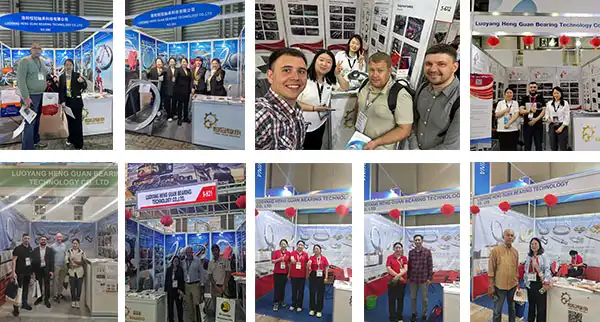
Here is the customer's evaluation of us