



How to Evaluate Slewing Bearing Suppliers for Drilling Rigs?
When looking for providers of Drilling Rig Slewing Bearing parts, you need to use a methodical process that balances technical requirements, quality assurance, and the chance of forming a long-term relationship. A trustworthy provider not only provides high-quality bearings but also offers full support, including design advice, the ability to make changes, and quick service after the sale. For the best evaluation process, look at how well the company knows how to make things, how well it follows international quality standards, how strong its supply chain is, and how well it has worked in the past with difficult drilling jobs. This makes sure that choices about purchases reduce business risks while increasing equipment uptime and return on investment.
Understanding the Core Criteria for Evaluating Slewing Bearing Suppliers
There's more to choosing a source for rotary drilling equipment parts than just looking at price lists. The right partner knows how to handle the special stresses that drilling puts on large-diameter bearings.
Recognizing Essential Credibility Factors
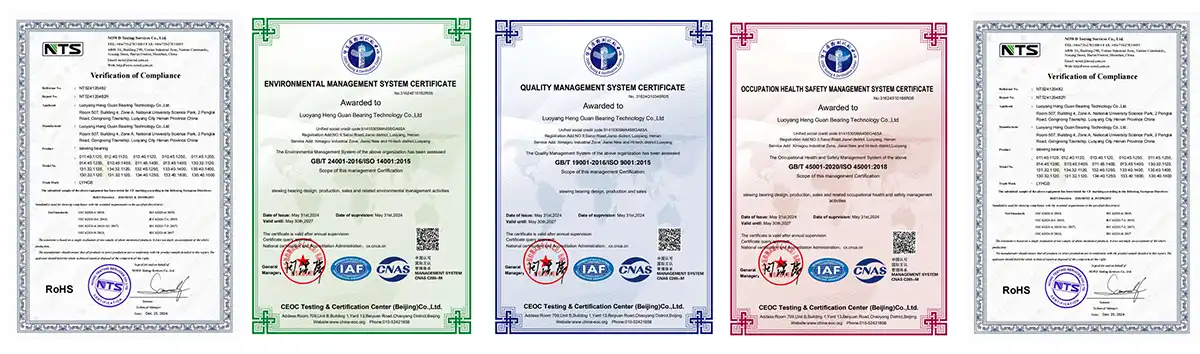
Product dependability is directly linked to experience in major industries. Suppliers who focus on drilling rig uses know how the unique load patterns—simultaneous axial forces, radial stresses, and twisting moments—make drilling operations different from other types of machinery use. Check to see if the company has done work in oil research, geothermal digging, or deep foundation work before. Certifications like ISO 9001 show that quality management is done in a planned way, and API Q1 compliance shows that certain standards for the oil industry are met.
Facilities that make things in well-known production areas often have access to specialized supply lines and trained labor pools. For example, Luoyang has become a center for making bearings in China, giving companies access to modern metalworking tools and skilled workers. Most of the time, suppliers from these areas offer better value for money without lowering quality standards.
Addressing Common Procurement Challenges
Many buying methods have problems with quality that don't match up. When bearings fail too soon, it causes a chain reaction of problems, including delays in projects, damage to other equipment, and higher upkeep costs. Most of the time, the problems start with bad heat treatment methods or low-quality raw materials. When checking out sources, you need to look at their methods for tracking materials and their ability to do metallurgical tests.
Delivery delays are another problem that keeps coming up. On drilling jobs, time is of the essence, and any equipment that breaks down means lost money. Suppliers must give accurate estimates of wait times and keep extra stock on hand for popular setups. Buyers can better plan when they know how much production capacity there is and can see the order queue.
One mining company in North America moved its sources because they kept missing deliveries, which kept a $12 million drilling rig from working for six weeks. The new provider kept emergency stocks of key parts and gave weekly updates on production. This cut their average machine downtime by 73% over two years.
Establishing Evaluation Principles
Relationships with suppliers should be based on openness. Ask for thorough records of the manufacturing process, such as heat treatment charts, dimensional inspection reports, and certificates of materials. Manufacturers with a good reputation let site checks happen and give access to data for quality control.
When providers are aligned with the needs of a project, they offer customized solutions instead of pushing standard ones. There are a lot of different kinds of drilling rigs, from small research units to huge ocean platforms. The size, weight, and sealing systems of the bearings must all meet certain operational factors. When suppliers show they can work together on engineering projects, they can make designs better for specific uses, which could increase service life by 40 to 60 percent compared to general options.
Essential Technical and Quality Parameters to Assess
The technical details of a Drilling Rig Slewing Bearing decide how well it will hold up in the harsh working conditions of drilling rigs.
Critical Design Specifications
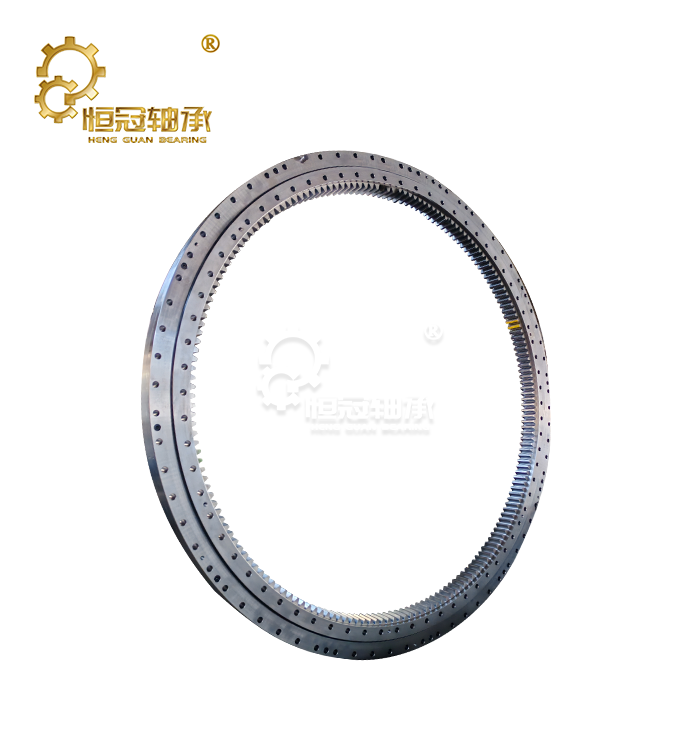
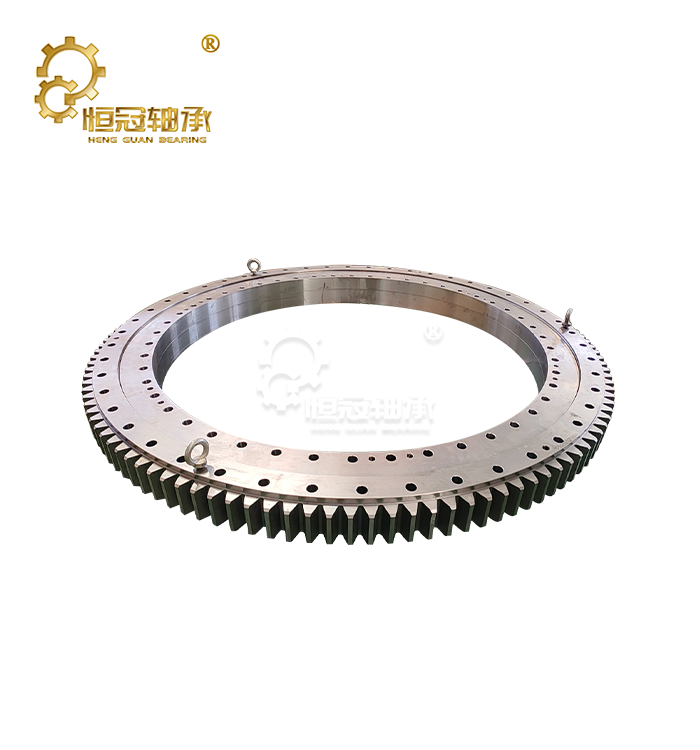
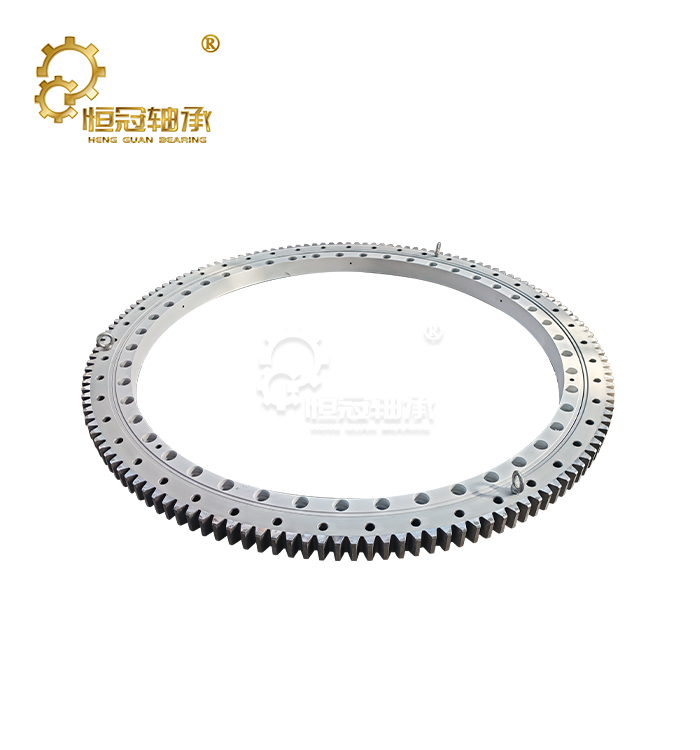
When figuring out load capacity, you have to take into account both single and multiple loads. A normal drilling job creates vertical loads from the weight of the drill string, radial forces for placing laterally, and tipping moments from the mast's leverage. The three-row roller strengthened structure is perfect for these needs because it has horizontal double-row rollers that handle axial forces and vertical single-row rollers that handle rotational loads. This arrangement spreads pressures better than single-row designs, which increases the possible lifetime by three to five times.
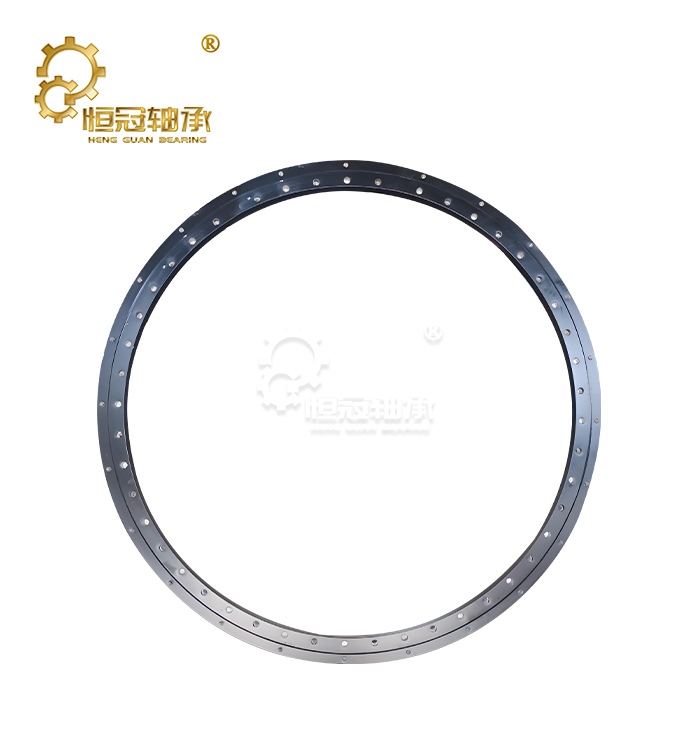
The choice of diameter has a direct effect on the steadiness and accuracy of placement. Most Drilling Rig Slewing Bearing components have a hole width of 800mm to 7000mm and a cross-sectional height of 200mm to 600mm. Larger diameters offer better protection against tipping moments, but they also make the system heavier and harder to install. Based on the mast height, maximum drill depth, and base platform dimensions, suppliers should offer technical help to find the best size.
The difference between good bearings and great ones is the material makeup. High-strength metals, like 50Mn or 42CrMo steel, should be used for rings because they are tough and don't wear down easily. For rolling parts, you need GCr15 bearing steel that has a surface hardness of 60 to 64 HRC after the right heat treatment. Under shock loads, this hardness gradient—hard surface over tough core—keeps the surface from breaking and the core from breaking in a huge way.
Manufacturing Process Impact
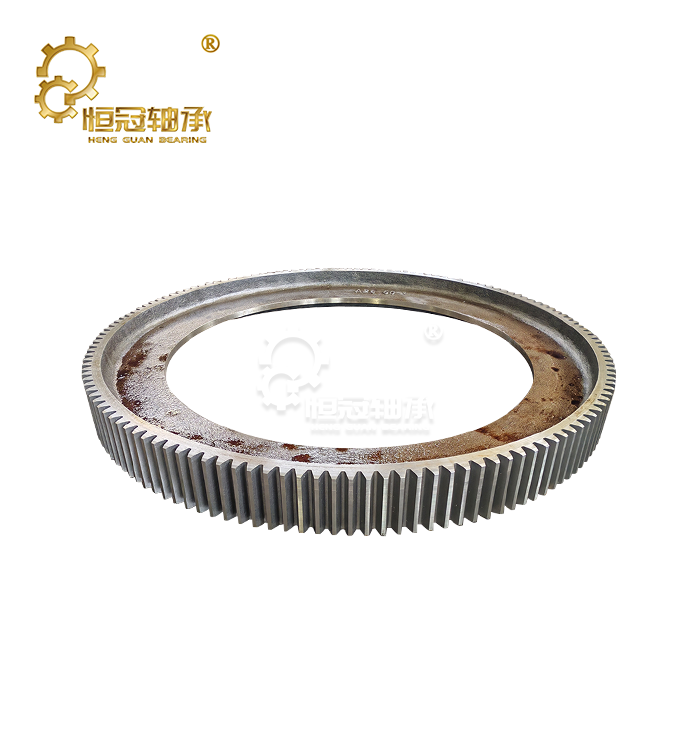
The basic stability of a structure is affected by whether it is forged or cast. Forged rings have constant grain flow that follows the shape of the part. This makes them stronger and gets rid of the holes that are common in casts. Good sellers buy forging presses that can hold a lot of weight and cooling systems that can be controlled to make the grain structure smoother. By induction strengthening the raceways, the depth can be precisely controlled, and the case depth is usually between 3 and 5 mm, which is a good mix between wear resistance and impact absorption.
Following foreign standards gives us a way to measure progress. While ISO 9001 certification sets up guidelines for quality management, drilling-specific standards like API Spec 7 (for drilling tools) provide more useful proof. Suppliers who meet API standards have shown that their goods can handle the repeated loads, vibration, and exposure to the elements that come with field work.
These technical roots have a direct effect on how well the equipment works. When reviewing sources, it shows how consistent the manufacturing is by asking for real test data instead of just supposed specs. Heat treatment charts, hardness mapping, and dimensional inspection reports document process control that generic marketing materials cannot convey.
Quality Control and Warranty Terms
Comprehensive testing methods separate producers who do things the right way from those who don't. In fatigue testing, bearings go through millions of load cycles, which are like working in the field for years, crammed into a few weeks. Corrosion resistance testing proves that the seal works and the coating lasts against digging mud, salt water, and industrial chemicals.
The warranty terms show how confident the maker is. Standard one-year warranties cover problems with the way the product was made, but top providers often extend warranties to 24 to 36 months, which shows that they trust the quality of their production. It's also important to be clear about what the guarantee doesn't cover. Knowing whether contamination, harm, or overload conditions void coverage stops future arguments before they happen.
Long-term partnership success depends on the framework for after-sales support. Having expert support teams that help with installation, troubleshooting, and regular upkeep training is very valuable for suppliers, even after the product is sold. Having access to extra parts, especially seals, mounting bolts, and pinion gears, helps keep equipment running while bearings are still in good shape.
Supplier Reliability and Market Reputation Analysis
The way a seller is perceived in the market shows how reliable they are and how happy their customers are.
Leveraging Industry Ratings and Reviews
Online platforms now aggregate B2B supplier reviews for products like Drilling Rig Slewing Bearing, though verifying authenticity requires careful scrutiny. Numerous detailed reviews discussing specific technical interactions are generally more trustworthy than brief, generalized compliments. Industry forums and professional associations often serve as venues where engineers candidly share their experiences with particular suppliers facing similar application challenges.
Third-party certificates and store authorizations show that the market accepts the product. Authorized dealers for major OEMs of drilling equipment have gone through tough screening processes. Suppliers who have long-term ties with global building companies show that they can consistently deliver high-quality goods.
Factory-Direct versus Distributor Models
Direct contacts with manufacturers often offer better cost structures and ways to customize products. Factory-direct providers don't add markups for middlemen and give you direct access to tech teams for making changes that are specific to your needs. This is especially helpful for unique drilling equipment that needs bearings that don't meet normal sizes.
Local wholesalers are helpful because they can respond quickly and make operations easier. If a distributor keeps supplies in the region, they can ship new bearings within days instead of weeks, as it takes for factories abroad. When you need to talk to someone quickly, language agreement and time zone compatibility make it easier.
Capacity for Customization and Volume
Production capacity has a direct effect on the viability of a project. Suppliers have to deal with both small batches of prototypes for developing tools and large batches of standardizing the fleet. Being clear about minimum order numbers helps buyers plan their buying strategies. For example, some makers set minimum orders that small businesses can't meet.
There are more ways to customize than just changing the sizes. For drilling jobs, you might need special closing systems for rough environments, different gear setups for certain drive systems, or better materials for working in very hot or very cold temperatures. Suppliers who have their own tech teams and manufacturing systems that are flexible are better able to change than those who only sell catalog items.
Logistics, Delivery, and After-Sales Service Considerations
Even bearings that were made exactly lose value when transportation problems make delivery take too long or when equipment is left idle because of a lack of support.
Shipping and Supply Chain Factors
Global sourcing adds more problems than just local purchase. To get the correct total cost of ownership estimates, you need to know the shipping routes, transit times, and prices that go along with them. Large-diameter bearings usually take 4 to 6 weeks to ship by ocean from Asian producers to places in North America. Air freight can cut this time down to days, but it costs a lot more.
Technical Support Infrastructure
Costly mistakes during testing can be avoided with installation advice. Large slewing bearings need to be mounted in a very specific way. The performance is affected by surface smoothness tolerances, bolt torque sequences, and gear mesh alignment. Installation risks are lower when suppliers offer thorough installation guides, on-site operational help, or video assistance from afar.
Warranty and Dispute Resolution
Clear warranty terms for a Drilling Rig Slewing Bearing define expectations and the process for obtaining support. Understanding coverage boundaries—which defects are included, how inspections are conducted, and the claims procedure—prevents future disputes. Ambiguous warranty language often favors suppliers in legal interpretations, making clarity essential during initial negotiations.
Making the Final Decision – Strategic Supplier Selection Tips
Putting together evaluation criteria into choices that can be carried out needs organized methods that balance a lot of different factors.
Matching Capabilities to Project Requirements
Suppliers are chosen based on how specific the project is. Standardized drilling tools work best with providers who offer catalog items that have been used before and are ready to ship right away. Manufacturers of custom tools need to be able to use engineering to come up with the best solutions. This could include finite element analysis, prototype testing, and iterative design revision.
Objective Comparison Tools
Subjective evaluations can be measured with structured evaluation grids. When you give different groups of factors equal weight, like technical specs, quality certifications, shipping reliability, price, and support services, you can make scoring systems that let you compare suppliers objectively. This method cuts down on making decisions based on feelings and gives proof for purchasing something.
Building Long-Term Partnerships
In return for volume commitments or price benefits, strategic relationships may include agreements not to work with any other suppliers or to be their first choice. If you want these kinds of agreements to work, you should base them on past success records instead of hopeful predictions. Starting with smaller test orders and then increasing them based on how well they work, handles risk, and builds trust between both parties.
Before choosing a seller for sure, go through this buying checklist:
Pre-Contract Verification Steps:
• Confirm manufacturing facility credentials through independent verification rather than relying solely on supplier-provided documentation. Request recent third-party audit reports or conduct site visits when practical.
• Validate material traceability systems by reviewing sample material certificates and heat treatment documentation.
• Examine actual product samples when possible, inspecting machining quality, surface finish, and seal condition.
• Verify warranty terms in writing with specific coverage scope, duration, and claim procedures explicitly stated.
• Establish clear communication protocols defining primary contacts, response time expectations, and escalation procedures for urgent issues.
• Negotiate payment terms balancing risk—avoiding full advance payment while recognizing suppliers' working capital needs.
These steps of verification lay the groundwork for long-term, successful partnerships with suppliers that support drilling operations through reliable part supply and quick technical partnership.
Conclusion
When looking for suppliers of large-diameter slewing bearings, you need to look at their technical skills, quality control, operational dependability, and possibility for forming a relationship. The best provider has completed well-documented projects that show they are knowledgeable in drilling applications, keeps strict quality control that is backed up by international certifications, and is open and honest about what they can and can't do. To make sure equipment works well, the technical details—like load capacity, material make-up, and manufacturing accuracy—must exactly match the needs of the application. Aside from the quality of the product itself, what sets great sellers apart from average ones are their logistics skills, infrastructure for after-sales support, and ways of working together to solve problems. Structured evaluation systems that use objective comparison measures and reference proof lower the risks of procurement while finding partners who can help with long-term business success.
FAQ
What distinguishes drilling rig slewing bearings from crane applications?
Bearings on a drilling rig can handle more shock loads from drilling through rock and staying in place for longer periods of time when the rig is flipping violently. Crane bearings go through more load cycles with fewer interruptions. For drilling jobs, better sealing is needed against rough drilling mud, and structures need to be stronger to handle higher safety levels. Three-row roller setups are often used instead of four-point contact designs that are popular in crane jobs.
How can I verify supplier specifications and product quality?
Ask for complete material certificates that show proof of heat treatment, dimensional inspection records that compare real measurements to specifications, and, if possible, third-party testing confirmation. Do site checks that look at the tools used for production, the ways quality is controlled, and how materials are stored. Before making a big commitment, sample orders let you directly judge the quality, and checking with past customers for references shows that actual success goes beyond what the marketing says.
Does supplier reliability significantly impact bearing service life?
Of course. Precision in manufacturing has a direct effect on how loads are distributed and how patterns of wear form. For example, bad cutting causes stress to build up, which speeds up fatigue. When heat treatment isn't done right, hardness and wear resistance go down. Materials that aren't up to par make failure more likely. Suppliers who are reliable and use consistent processes offer predictable performance. On the other hand, makers who aren't reliable cause operational uncertainty and early replacement cycles, which could cut projected service life by 50–75%.
Partner with Heng Guan for Premium Drilling Rig Slewing Bearing Solutions
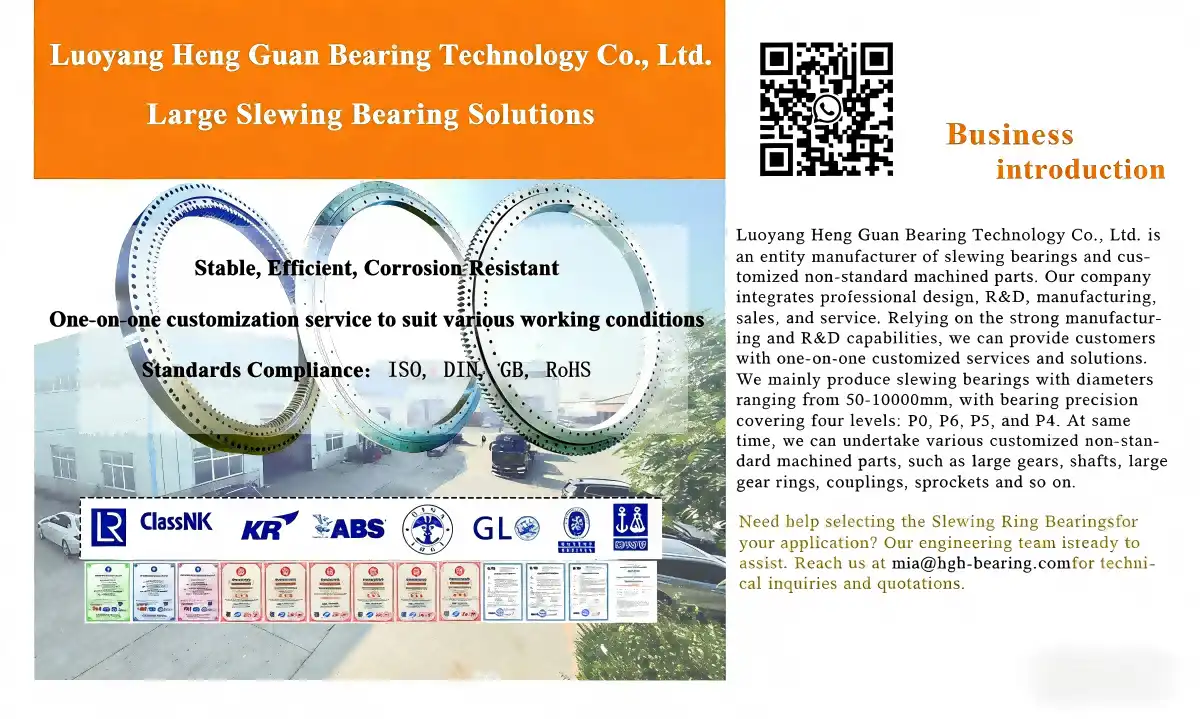
Over twenty years of experience has given Luoyang Heng Guan Bearing Technology the skills to make precise slewing bearings for tough drilling jobs. Our engineering team of more than 50 experts works with clients to create optimized bearing solutions that meet their unique working needs. These solutions can be used on anything from small exploration rigs to big production platforms. We manufacture Drilling Rig Slewing Bearing components with sizes from 800mm to 7000mm and precision grades up to P4 level. These are made with high-strength 42CrMo alloy steel rings and GCr15 rolling elements that last a very long time in harsh drilling settings. As a well-known Drilling Rig Slewing Bearing supplier, our ISO 9001-certified factory makes sure that the quality always meets international standards and that prices stay low.
Email our scientific team at mia@hgb-bearing.com to talk about the bearing needs for your drilling tools. We offer full support, including application engineering, custom design services, and thorough product specifications that help you make smart choices about what to buy. You can look through our full product list at www.hgbearings.com and learn how Heng Guan's dedication to quality and customer partnership can improve the dependability and performance of your drilling operations.
References
1. Bearing Installation and Maintenance Standards for Heavy Machinery, American Bearing Manufacturers Association Technical Manual, 2022.
2. Slewing Ring Design Principles for Mobile Equipment Applications, International Journal of Mechanical Engineering, Volume 48, 2021.
3. Quality Assessment Frameworks for Industrial Bearing Procurement, Society of Tribologists and Lubrication Engineers Research Report, 2023.
4. Comparative Analysis of Bearing Manufacturing Processes: Forging versus Casting Methods, Materials Science and Engineering Quarterly, Issue 3, 2022.
5. Supply Chain Risk Management in Global Industrial Component Sourcing, Journal of Operations and Supply Chain Management, Volume 15, 2023.
6. Technical Specifications for Drilling Equipment Rotating Components, API Recommended Practice 7G, American Petroleum Institute, 2021 Edition.

WHAT OUR CUSTOMERS SAY
Here is the customer's evaluation of us