



Understanding Slewing Bearings: The Backbone of Rotating Machinery
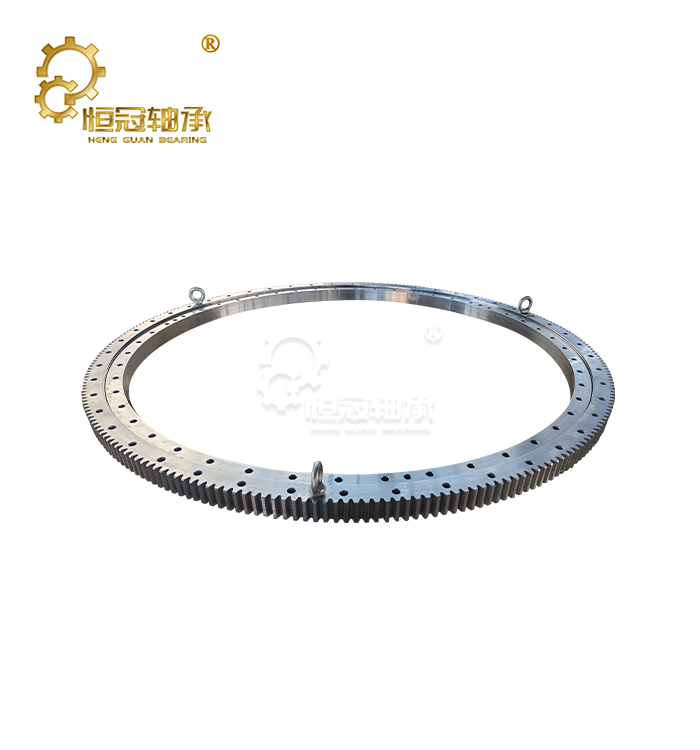
You can hear the quiet work of slewing bearings when you walk by a tall building crane or watch a wind turbine blade move to catch the wind. These huge rotational joints are the backbone of turning equipment used in big businesses all over the world. Large Slewing Bearings are special, high-load rotating parts that are made to support axial loads, radial loads, and large turning moments all at the same time in a single, small unit. These bearings, which come in diameters from 50mm to over 10,000mm, replace complicated multi-bearing kingpost setups. They lower the center of gravity of the equipment and make it easier for hydraulic hoses and electrical wires to pass through because they are open-center. Because they can hold a lot of weight and keep things from turning over, they are essential for equipment that needs to rotate 360 degrees in tough working conditions.

What Are Large Slewing Bearings and How Do They Work?
The Fundamental Design of Turntable Bearings
Compared to normal rolling bearings, Large Slewing Bearings are different. Instead of just decreasing friction, they connect parts of machinery that are fixed and parts that are rotating. The form of the bearing includes highly accurate raceways made from high-quality steel, as well as rolling elements that spread huge loads over a large diameter. Heng Guan makes slewing bearings out of 42CrMo and 50Mn special alloy steel as the base material. GCr15SiMn high-purity bearing steel is used to make the rolling elements. This choice of materials makes it long-lasting, even when holding loads that add up to hundreds of tons.
The beauty of slewing bearing design is how the load is spread out. The bearing handles the vertical weight (axial load), the horizontal wind forces (radial load), and the twisting moment caused by the stretched boom all at the same time when a crane lifts a container to its full height. Our goods are able to do this because they have different structural configurations, each of which is best for a certain type of load and function.
Structural Varieties and Their Operational Characteristics
We have several slewing bearing designs that are specifically designed for a range of industry uses:
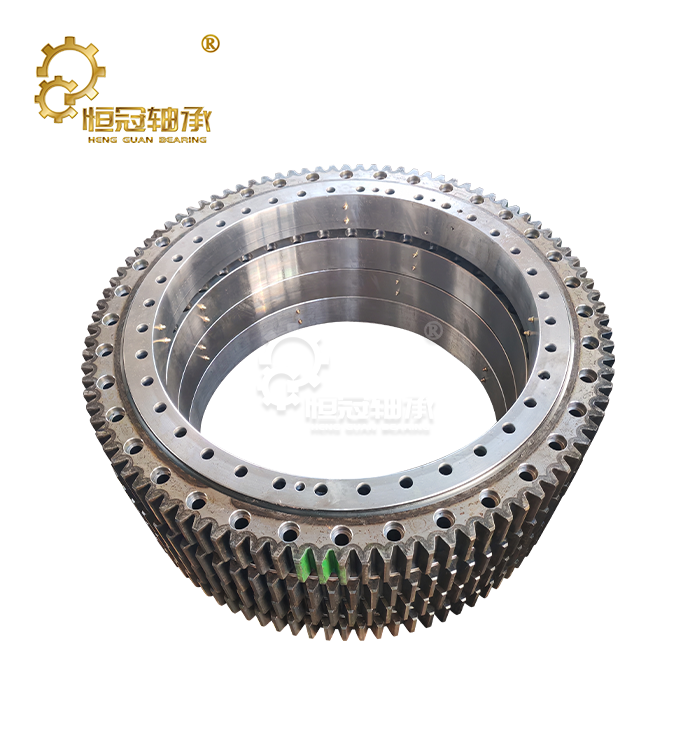
Three-Row Roller Configuration: This strong design has three different raceways that handle axial and rotational forces separately. The triple-row roller slewing bearing has three sitting rings that separate the upper, lower, and rotary raceways. This lets you set the exact load for each roller row. Heavy machinery with big diameters works great with this structure, like wheeled cranes, ship cranes, port cranes, ladle turrets, and heavy-duty mobile cranes. The strong construction and large axial and rotational dimensions make the equipment very stable, even when loads are distributed in very different ways.
Single-Row Four-Point Contact Ball Structure: This design places balls to contact raceways at four points, effectively managing combined loads while keeping a thin profile suitable for installations with limited space. It's best for uses that need a small height with a moderate load capacity.
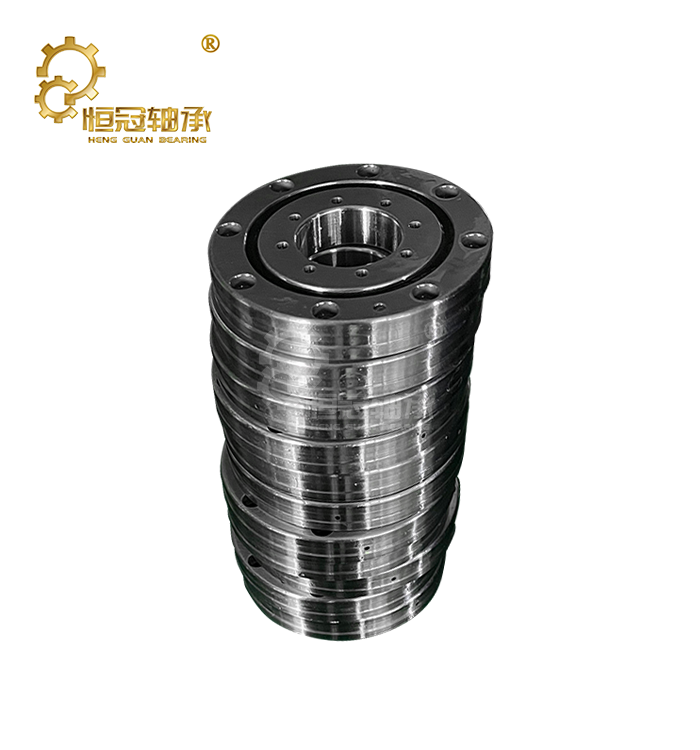
Cross-Roller Configuration: The alternating perpendicular roller configuration improves load capacity while minimizing axial space. This makes the structure perfect for medical devices and precision automation equipment that need to meet P4 or P5 accuracy standards.
Double-Row Ball Structure: This type of structure has two rows of balls with different diameters. It combines load capacity with smooth spinning, and it is often used for metallurgical equipment and port machinery that need to be stable while it's working.
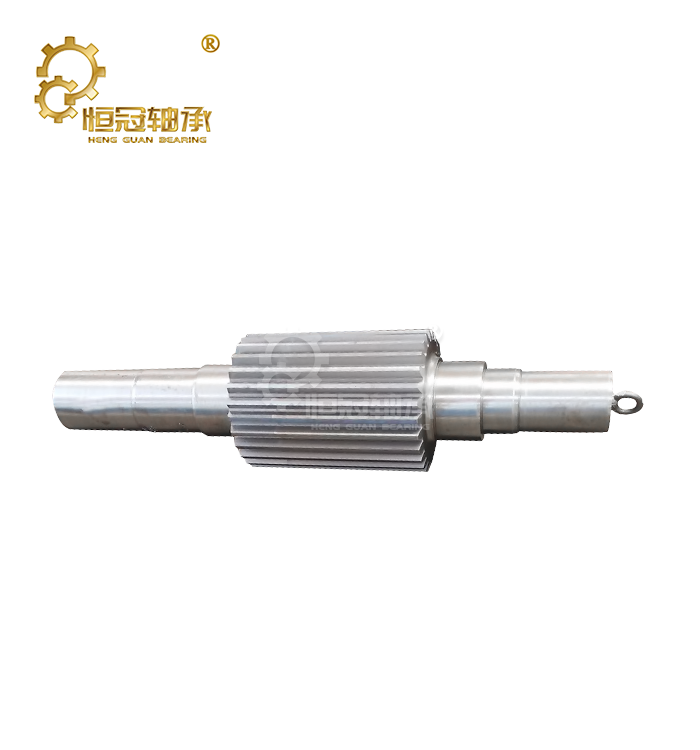
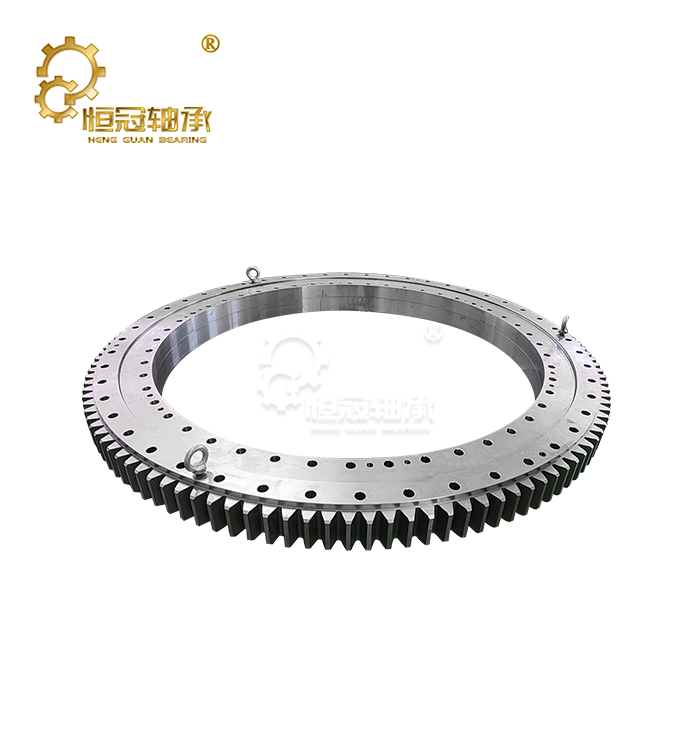
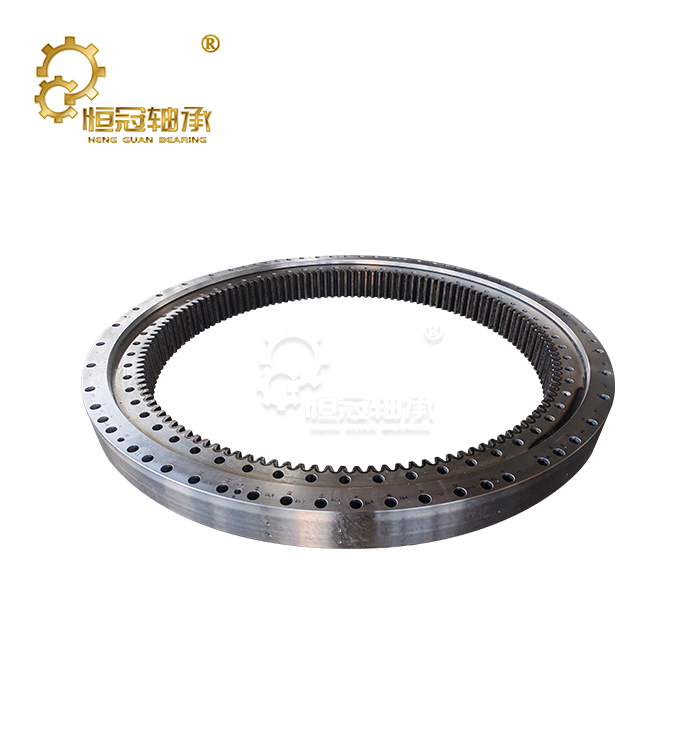
Depending on the needs of your drive system, each structure type can be made with exterior gears, internal gears, or no gears at all. The gear coupling gets rid of the need for different transmission parts, which makes designing machines easier and more reliable.
Material Engineering for Extreme Environments
How long slewing bearings last depends a lot on the material they are made of and how it is heated. In addition to the base steel and rolling parts, we use cages made of brass, steel, or engineering plastic, based on the speeds and temperatures of operation. For normal uses, sealing systems use foreign nitrile rubber. For places where chemicals or high temperatures are present, they use fluororubber. These closing technologies are especially important in shield equipment and tunnel boring machines, where bearings have to work in rock dust, water, and other contaminants all the time. Our marine-grade corrosion-resistant versions have special coatings and seals that can handle being exposed to saltwater in port cranes and offshore equipment. With proper care, they can last longer than twenty years.
Applications and Advantages of Large Slewing Bearings in Industry
Critical Sectors Relying on Slewing Bearing Technology
Infrastructure for wind energy: In megawatt-class wind turbines, Large Slewing Bearings control both the pitch of the blades and the yaw of the nacelle. Pitch bearings change blade angles dozens of times every day because the wind is blowing in different directions. This means that the bearings have to be able to handle constant movement and gusts of wind while still being accurate for 20 years. Yaw bearings turn the whole nacelle to face the direction of the wind. They support the weight of the engine, generator, and rotor assembly, which is often more than 100 tons, while making smooth rotational changes. Heng Guan sells wind power slewing bearings with diameters from 400 mm to 6,000 mm. The quality grades P5 and P6 make sure that there is little friction, which increases the efficiency of energy production.
Tower cranes, mobile cranes, and harbor container workers all rely on slewing bearings that are placed between the top and the undercarriage. When pulling big loads at large radii, these bearings keep the machine stable even when huge tilting moments happen. Lifting a 50-ton crane at a 40-meter radius causes tilting moments that smaller bearing systems can't handle. Our three-row roller setups work great in these situations because they can hold more than 200 tons of load axially and 150 tons of load radially at the same time, and they still rotate smoothly when they're fully loaded.
Structural Advantages Driving Industrial Adoption
Integrated slewing bearings provide measured performance advantages over traditional kingpost designs that use multiple standard bearings. The hollow center design lets hydraulic lines, electrical cables, and even material elevators go through the axis of rotation. This gets rid of the need for complicated rotary joints and slip rings, which can cause failures. This combination lowers the overall height of the equipment by 20–40%, which lowers the center of gravity and makes it more stable. This is especially helpful for ship-mounted and mobile cranes.
Our slewing rings spread out the load so that there aren't any stress clusters like there are in multi-bearing systems. A single large-diameter bearing spreads forces over hundreds of rolling elements and a large area of raceway contact, which greatly reduces wear in specific areas and greatly increases the time between service intervals. Instead of regular checks, maintenance now includes scheduled lubrication (every 100 to 500 hours, based on load strength) and full inspections once a year. Even though they cost more to buy at first, these bearing groups have lower lifetime costs because they are easier to maintain.
Choosing the Right Large Slewing Bearing: Comparative Insights for Procurement
Essential Performance Metrics for Selection
When purchasing managers look at Large Slewing Bearings providers, they should put a high priority on a number of technical factors that go beyond simple dimensional matching. Load capacity numbers should be based on how the system actually works, not on theoretical maximums. We give you full engineering calculations that take into account the total axial, radial, and moment loads at certain rotation speeds. These calculations also take into account the shock loads and misalignment tolerances that come with setups in the field.
In precision uses, accuracy grades have a big effect on how well things work. General building equipment that needs to be accurate to within a few degrees can use P0 grade bearings. P6 grade goods are used in mining and port equipment that needs more consistent spinning. P5 grade bearings can handle the needs of automatic equipment and smaller wind blades that need accuracy down to the degree. Our best product, P4 precision, is used in medical imaging equipment, aircraft platforms, and big telescope mounts where angular errors measured in arc-seconds can affect how well they work. Knowing how accurate you need something to be keeps you from over-specificating, which raises costs needlessly, or under-specificating, which lowers performance.
Evaluating Manufacturers and Building Supplier Trust
There are well-known European companies like SKF, Rothe Erde, and Liebherr in the global slewing bearing market, as well as American companies like Kaydon and Timken, and specialized Asian companies like Heng Guan. European names usually have higher prices because they have been in the aerospace and heavy industry for a long time, and their goods are great for very precise uses and come with a lot of technical information. American makers stress their ability to customize products and the benefits of their domestic supply chain for US-based OEMs that need to meet import compliance requirements.
Heng Guan is in a unique situation because it has twenty years of experience making specialized slewing bearings and can make them at a low cost in Luoyang, which is China's bearing production hub. The engineers on our team used to work for state-owned bearing companies and are very good at non-standard designs and special-shaped bearings that can't be made with off-the-shelf store items. From 50mm micro-slewing rings for medical robots to 10,000mm diameter giants for mine draglines, we've made custom solutions that show a level of production flexibility that bigger companies can't match cost-effectively.
Balancing Cost and Performance in Procurement Decisions
The total cost of ownership should be included in price research, not just the unit cost. A slewing bearing that is 30% less expensive than alternatives may need to be replaced twice as often, which adds to the costs of installation work, machine downtime, and damage to other parts. We have proof of situations where our goods, even though they were priced moderately at first, ended up costing 40% less in the long run than cheaper options. This was because they lasted longer and needed less maintenance.
OEMs that are making specialized tools should give customization a lot of thought. Standard stock bearings don't usually work best for specific uses. Our design team works with customers to change the shape of the teeth to fit different drive systems, change the way the seals are set up to fit different environments, and add fastening features that make the building process easier. This customization needs more technical work, but it gets rid of the problems that come with using standard goods in non-standard situations. Instead of just choosing from a catalog, procurement managers should look at how willing and able their providers are to provide custom optimization design.

Installation, Troubleshooting, and Technical Support for Large Slewing Bearings
Pre-Installation Verification and Preparation
Installing Large Slewing Bearings correctly starts before the parts get to the job site. Preparing the mounting area has a big effect on how well and how long a bearing lasts. To make sure that the load is spread evenly across bolt joints, mating surfaces must be flat within 0.05 mm per meter and have a surface roughness below 6.3μm. With every shipment, we include thorough mounting surface specs and testing steps that make sure they are followed before the bearing installation starts.
Step-by-Step Installation Methodology
The way each type of bearing is installed is a little different, but it generally follows the same steps. Once the mounting surface is ready, place the bearing using adjustment tools that keep the edges from being loaded when the bearing is lowered onto the mounting flange. Large diameter bearings that weigh several tons need to be moved with the help of a crane and spreading bars to keep them from deforming. To keep the alignment flexible during the first positioning checks, tighten all of the mounting bolts to a finger-tight level before adding force.
Troubleshooting Common Operational Issues
During operation, strange noises usually mean that there isn't enough grease, that the raceways are dirty, or that damage is starting to form. Grinding sounds mean that particles have gotten into the bearing and need to be taken apart, cleaned, and the seals checked right away. Making clicking or popping sounds regularly is usually a sign of damage to the raceways that gets worse over time, such as spalling or brinelling. Early discovery through regular acoustic tracking stops catastrophic failure and other damage to the equipment.
Maintenance Protocols for Maximum Service Life
Many times, proactive care can increase the life of a slewing bearing from 10 to 25 years. Lubrication plans rely on how often the equipment is used. For example, bearings that are constantly loaded with heavy loads need to be oiled every 100 hours, while equipment that is only used sometimes may need to be oiled every 500 hours. We choose the type of lubricant based on the temperatures, loads, and speeds that will be used. Lithium complex greases are best for most uses, while synthetic lubricants are better for areas with very high temperatures.
Future Trends and Innovations in Large Slewing Bearings
Advanced Materials and Surface Engineering
Discoveries in materials science are transforming how Large Slewing Bearings work. Using physical vapor deposition to apply a layer of carbide makes the surface of the raceway harder than with traditional through-hardening methods. This makes it 200–300% more resistant to wear in dirty settings. We've started putting these coatings on special bearings for tunnel-digging machines and mine equipment, where abrasive bits always find their way through seal systems, no matter how well they are designed.
Smart Bearing Technology and Condition Monitoring
Putting sensors right into slewing bearing structures lets you check on their state in real time, which is in line with Industry 4.0 connectivity standards. Embedded temperature monitors keep track of thermal profiles that show how well the bearings are lubricated and how evenly the pressure is distributed. Vibration accelerometers can find damage to a track weeks before it starts to affect how well it works. Rotational position encoders that are accurate to within a few degrees give input to precision control systems used in automation and aircraft.
Sustainable Design and Circular Economy Considerations
Environmental safety is becoming more and more important in purchasing decisions. When compared to disposable options, bearing designs that stress serviceability and component change increase operating life while using less material. Our flexible seal designs let you change the seal without taking the bearings apart. This saves money on upkeep and reduces waste. Rolling element repair methods can bring worn bearings back to their original performance levels for 30 to 40 percent of the cost of a new bearing.
|
|


Conclusion
Large Slewing Bearings are an important part of modern big machinery that allow it to work effectively even when it's under a lot of stress. Knowing the different types of structures, the engineering behind the materials, and the unique needs of each application helps procurement managers and engineers come up with the best solutions that balance performance with cost-effectiveness over the product's lifetime. When you stop thinking of these parts as common items and start seeing them as designed systems that need to be carefully chosen and regularly maintained, you can make big changes to how things work. As technology moves toward smart monitoring and environmentally friendly practices, it becomes more valuable to work with makers who offer full engineering help and the ability to make changes. If you choose the right bearings, install them correctly, and keep them in good shape, they will last for decades and work reliably. This will reduce unplanned downtime that affects production plans and profits in the mining, building, energy, and specialized equipment sectors.
FAQ
How do I determine the correct slewing bearing size and load capacity for my application?
For sizing, you have to figure out the total loads, which are the axial force, the radial force, and the tilted moment at their highest levels of operation. We do engineering calculations for you that look at your unique duty cycle and take into account things like misalignment and shock loading. Give our technical team information about your equipment and how it is used so they can do a thorough capacity analysis and make structural suggestions that fit your needs.
What maintenance schedule should I follow for slewing bearings in heavy-duty applications?
When heavily loaded bearings are used constantly, they need to be oiled every 100 hours. They also need to be inspected thoroughly once a year, with the bolt torque being checked and the state of the raceways being evaluated. Equipment with irregular job cycles can go up to 500 hours without being oiled. When the surroundings are dirty, seals need to be checked and cleaned more often to keep sharp particles from building up.
Can Heng Guan provide customized slewing bearings for specialized equipment designs?
Of course. Our engineering team specializes in making unique designs with gear configurations, seal systems, and mounting connections that range from 50 mm to 10,000 mm in diameter. We've made specific solutions, such as versions that can withstand wind, versions that can withstand corrosion in the marine environment, and versions that can be used for smart tracking with built-in sensors. Share your technology needs so that we can create a custom optimization plan that works best for your application.
Partner with Heng Guan for Superior Slewing Bearing Solutions
Every slewing bearing that Heng Guan Bearing Technology makes is backed by twenty years of specialized knowledge. We are a top seller of slewing bearings and are based in Luoyang, which is known as China's hub for making bearings. We offer advanced production capabilities and individual engineering support that is tailored to your specific business difficulties. Our product range has diameters from 50mm to 10,000mm and precision grades from P0 to P4. This means we can meet the needs of a wide range of industries, from general building tools to aerospace-grade uses. Our goods are shipped all over Europe, the United States, and Asia for business-to-business customers in the mining, wind energy, port machinery, and specialized equipment industries. Email our team at mia@hgb-bearing.com to talk about your application needs and get personalized technical advice based on a thorough engineering analysis. Get a full quote today to find out how our high-value, high-performance goods and expert service can help your business save money and time in the long run.
References
1. Harris, T.A. & Kotzalas, M.N. (2006). Advanced Concepts of Bearing Technology: Rolling Bearing Analysis, Fifth Edition. CRC Press, Boca Raton, Florida.
2. Wensing, J.A. (2012). On the Dynamics of Ball Bearings. Ph.D. Dissertation, University of Twente, Enschede, Netherlands.
3. International Organization for Standardization (2017). Rolling Bearings - Slewing Bearings - ISO 12043: Boundary Dimensions and Tolerance Classifications. ISO Technical Committee 4, Geneva, Switzerland.
4. Houpert, L. (2010). Bearing Life Calculation in Oscillating Applications - Rolling Bearing Life Prediction: Theory and Application. Tribology Transactions, Volume 53, Issue 3, pages 444-456.
5. American Gear Manufacturers Association (2015). AGMA 6123-B15: Design Manual for Enclosed Epicyclic Metric Module Gear Drives. Alexandria, Virginia.
6. German Engineering Federation (2019). VDI 2230: Systematic Calculation of High Duty Bolted Joints - Joints with One Cylindrical Bolt. VDI Standards, Düsseldorf, Germany.

WHAT OUR CUSTOMERS SAY
Here is the customer's evaluation of us
_1767713770881.webp)