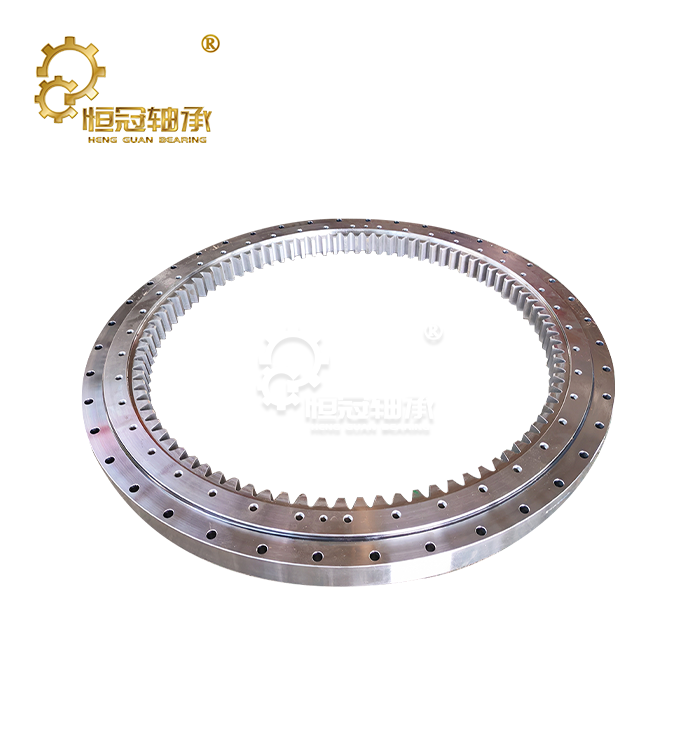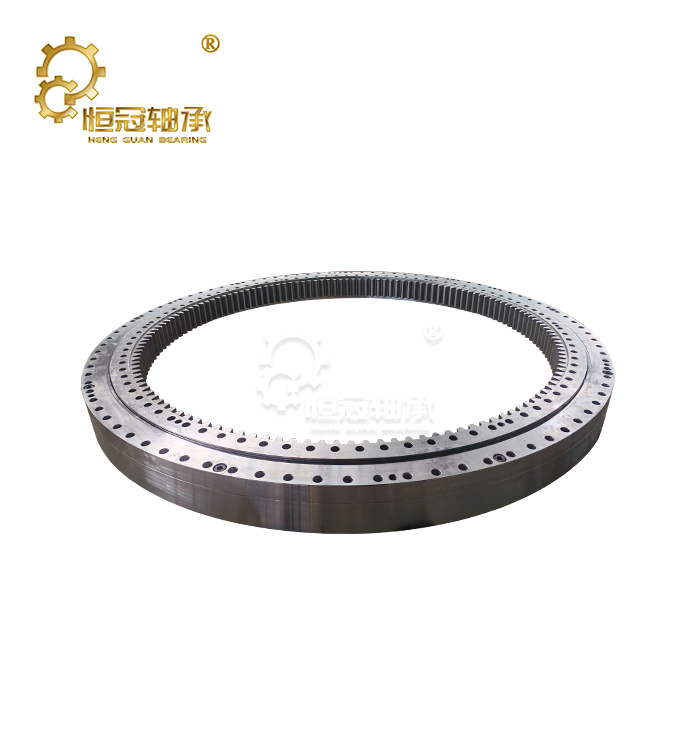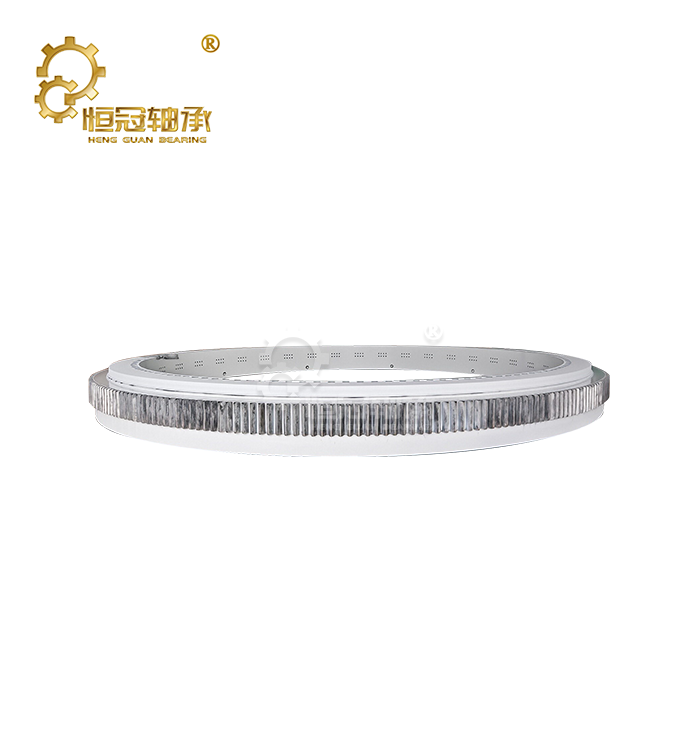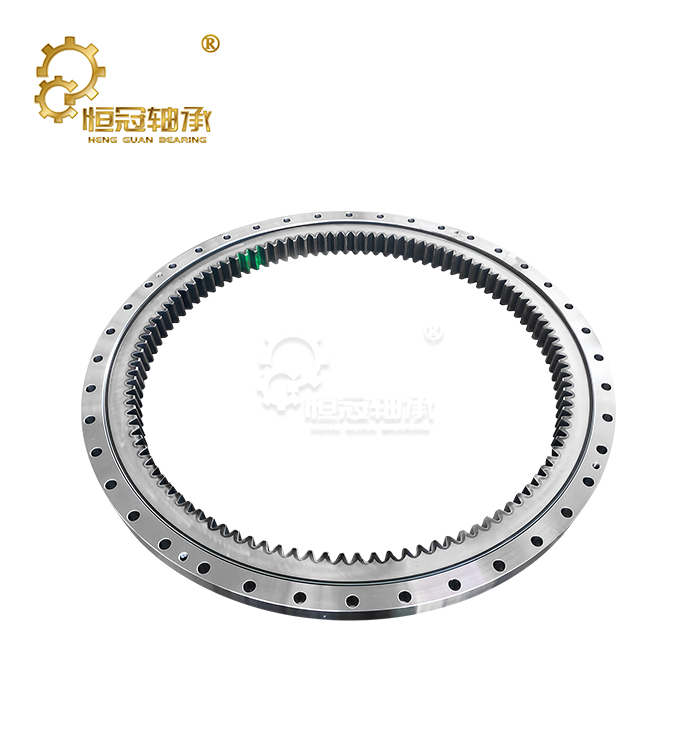




What are typical applications for no gear slewing bearings?
No Gear Slewing Bearings are used in many important businesses where stable rotational motion without external gear drive systems is needed. Construction machines like tractors and cranes use these precision-engineered parts. So do medical devices like CT scanners and X-ray rotation mechanisms, renewable energy systems like solar tracking platforms and wind turbines, automation equipment, and marine installations. Their flexibility comes from being able to spread loads more evenly, needing less upkeep, and being easier to install in machines that need to rotate smoothly and continuously under tough operating conditions.
Understanding No Gear Slewing Bearings and Their Design Features
Learn about No Gear Slewing Bearing and how they are made. When your machinery needs to be able to rotate reliably without the complexity of external gears, it's important to know what makes these parts different when you're buying them.
What Makes These Bearings Different?
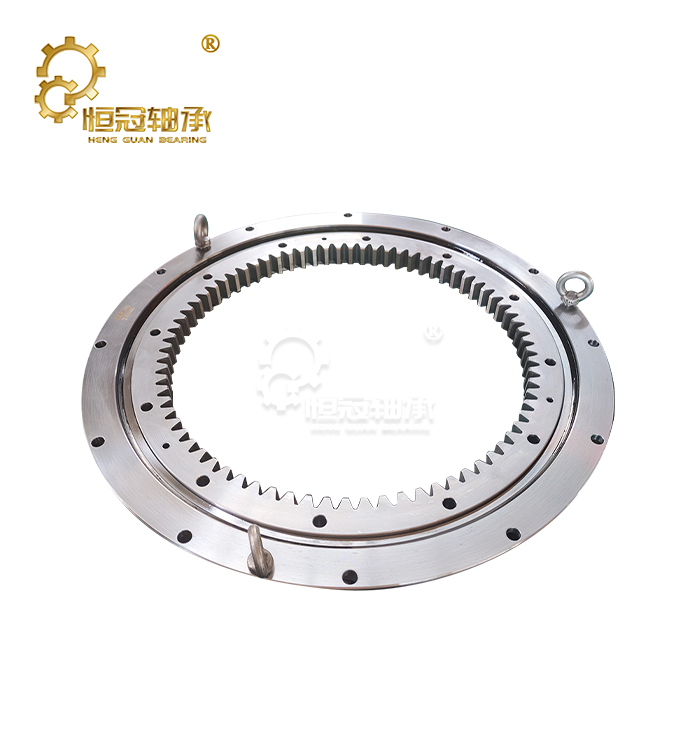
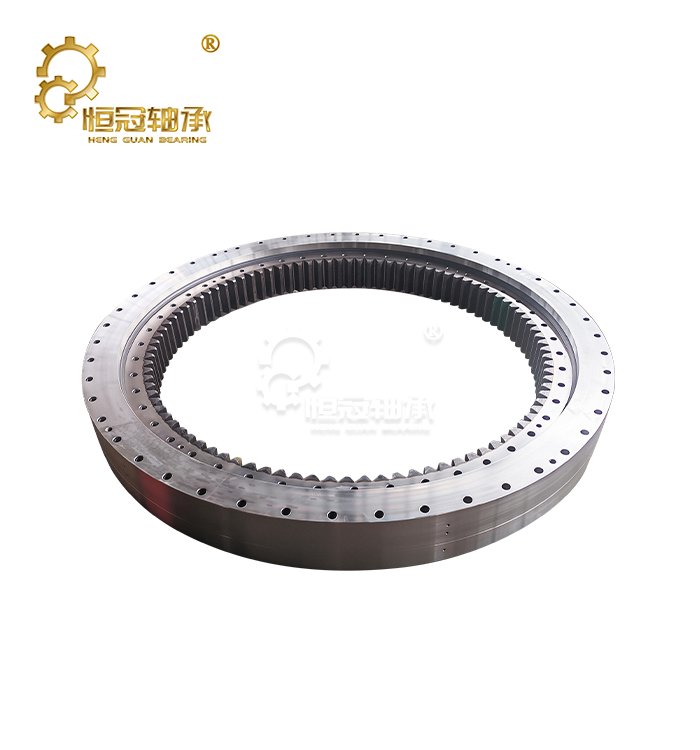
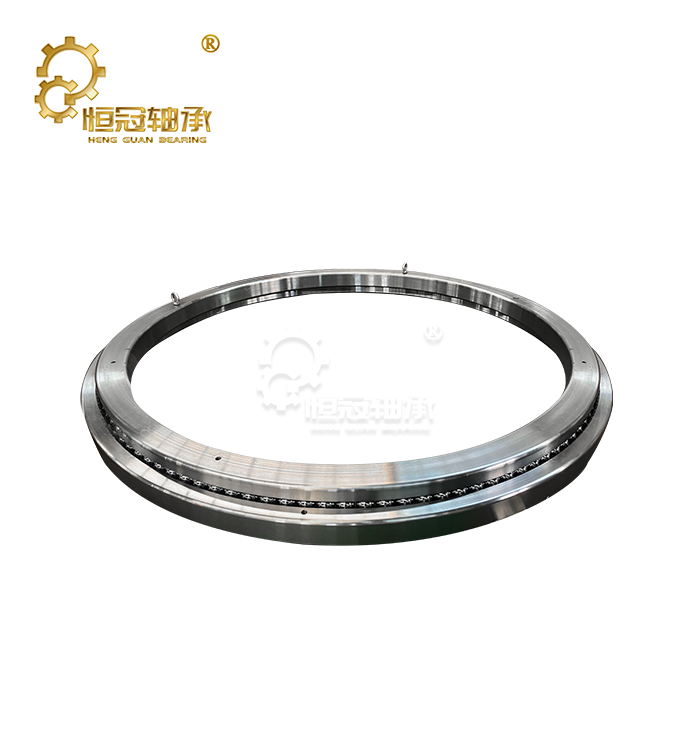
In what ways are these bearings different? A No Gear Slewing Bearing is made up of two rings that fit around each other and have rolling elements built in between them. These rings are intended to handle loads acting in all directions while still allowing the bearing to rotate continuously. Unlike geared versions that have teeth for direct drive contact, the simpler design gets rid of wear points caused by gears and makes the mechanism simpler. This basic difference in design leads straight to operational benefits that are important when choosing parts for important uses.
The simple structure doesn't mean that the functionality is lower. At Luoyang Heng Guan Bearing Technology, we make these bearings with 42CrMo and 50Mn special alloy steel as the base material. GCr15SiMn high-purity bearing steel is used for the rolling elements. This choice of material gives you the load-bearing strength you need for heavy-duty uses while still letting you keep the accuracy you need for delicate equipment.
Key Design Configurations Available
Key Design Options That Are Open. Our No Gear Slewing Bearing can be built in a number of different ways to meet your unique load and space needs. When room is limited, single-row four-point contact ball shapes are great for small uses because they offer high radial and axial load capacity in a small package. Double-row, different-diameter ball designs greatly improve the load capacity when your equipment has to handle more work.
Three-row roller setups offer the highest level of stiffness for situations where load-bearing structure stability is very important. This makes them perfect for big mining and building equipment. Cross-roller designs are great for spreading out loads in small areas, which is especially helpful when working with medical or precision automation equipment that needs to be very accurate with its measurements. Each bearing goes through a strict measurement check and raceway surface finishing to make sure it works smoothly and lasts a long time.
Advantages That Impact Your Bottom Line
Pros that can affect your bottom line. The optimized raceway design lowers noise and shaking during operation, which is very important if your equipment works in a noisy area or if the comfort of the user affects productivity. The building that saves space by not having gears lets equipment designs be smaller, which could lower the cost of materials and make them easier to move around.
Maintenance that is easy to do is a real practical benefit. If you don't have to grease the gears, your repair plans will be easier, and the cost of the grease will go down. When used correctly, high-quality materials make something last longer than 80,000 hours, which cuts down on the number of replacements needed and the costs of downtime. Our ability to customize means that we can meet a wide range of non-standard needs by making mounting holes, seal types, and surface processes that are specific to your equipment.
Typical Industrial Applications of No Gear Slewing Bearings
How No Gear Slewing Bearings are usually used in industry. When you look at where these parts offer the most value across different industries, you can see how flexible they are.
Construction and Mining Equipment
Tools for building and mining. In building equipment, like small excavators, these bearings allow the upper structure and undercarriage to rotate in a key way. Because they can take horizontal, axial, and moment loads all at the same time, they are essential for this use. Mining equipment has to work in some of the worst conditions you can imagine, with big loads all the time, dust, and water. The strong construction and protected designs using foreign nitrile rubber or fluororubber materials keep outside contaminants from getting into the internal parts.
The turntable system on aerial work platforms depends on these bearings to make the platform spin. The low-noise, smooth operation makes the machine safer for operators by preventing tiredness from vibrations during long work times. The small size lets platform makers get the best weight distribution, which is a key factor that affects stability and load rates.
Lifting and Material Handling
Moving and lifting things. Cranes with different weight capacities use turntable bearings for slewing motion. The load-bearing capacity and operating smoothness have a direct effect on safety and efficiency. Since there are no gear teeth, there is no way for them to break under shock loads that can happen when the crane is in use. In factories that make things, rotary tables need to be positioned precisely and consistently. The accuracy of these bearings helps with quality control standards.
To put workpieces at the best angles for welding, welder positioners need to rotate smoothly and steadily. The low-friction features lower the motor power needed while keeping the placement accuracy during the whole spinning cycle. This helps keep the quality of the welds consistent and lowers the amount of energy needed in high-volume production processes.
Medical and Precision Equipment
Medical and High-Tech Tools. Medical testing tools need to be very accurate and reliable. These bearings are used in the gantry movement mechanism of CT scanners. The quality of the images is directly affected by how smoothly and vibration-free the mechanism moves. Our precision grades—P6, P5, and P4—meet the very tight standards needed in medical settings where accurate measurements affect how well diagnostics work.
Low noise and smooth operation are also good for the spinning gears of X-ray machines. When equipment works quietly and doesn't vibrate, it makes patients more comfortable during treatments, and when equipment behaves in a reliable, expected way, it boosts the confidence of technicians. Because of the ability to customize, companies that make medical equipment can add bearings that fit into specific spaces and meet mounting needs that are unique to complicated medical device designs.
Renewable Energy Systems
Systems for renewable energy. Solar tracking systems are a growing field of use for these bearings, which let panels follow the direction of the sun all day long, making the most of the energy they collect. Bearings are exposed to changes in temperature, wetness, and UV rays when they are installed outside. These external factors are kept at bay by our seal materials and surface treatments, which also keep things running smoothly for years to come.
Wind turbine yaw and pitch systems in smaller sites are easier to build and keep up with because of this. For mechanical reasons, big utility-scale turbines usually use geared systems. However, distributed power and mid-scale wind installations prefer direct-drive systems because they are easier to use and require less upkeep.
Automation and Robotics
Robotics and automation. More and more, rotary joints and positioning steps in industrial robots and automatic manufacturing equipment depend on these bearings. Quality bearings allow for exact rotational control, which meets the needs of current automation systems for consistency. Low starting power means that motors don't have to be as big, which helps make robotic designs smaller and more energy-efficient.
Radar stations and surveillance systems are examples of observation equipment that need to be able to turn smoothly and safely, often through full 360-degree ranges. These bearings are perfect for situations where the rotating motion needs to be endless because they can rotate continuously without any mechanical interference points. The same features are used in exhibition and show equipment, stage machinery, and other related uses to make presentations and acts interesting.
Comparing No Gear Slewing Bearings with Other Types
Taking a look at different types of No Gear Slewing Bearings. When you know when these parts are better than other options, you can make smart purchasing choices that fit the needs of your project.
Performance Characteristics Versus Geared Alternatives
Performance Characteristics Compared to Geared Options. Geared slewing bearings have gear teeth built right into one or both rings, making it easy to connect the drive and engage the pinion. This design works well for tasks that require multiplying a lot of power or slowing down very precisely. But the gear teeth make the production process more difficult and add wear spots and maintenance needs.
The system without gears is more efficient because it doesn't lose energy to friction in the gear mesh. Noise levels stay lower during operation since gear teeth don't contact with each turn. If there is already a good speed drop in another part of your drive system, putting another one in the bearing may not be necessary and will cost you money.
Maintenance needs are very different. Geared bearings need to have their gear teeth checked regularly, oiled properly, and sometimes their teeth need to be replaced after they wear out. These jobs are taken off your maintenance plan because of the simpler construction we offer. This cuts down on both direct maintenance costs and machine downtime.
Cost Implications and Value Considerations
Effects on costs and thoughts on value. No Gear Slewing Bearing designs often have lower starting prices than geared ones with the same load capacity. This is especially true when you consider that no breaking of gears is needed during production. Because production methods use fewer steps and less specialized tools, lead times may be faster.
When you figure out the total cost of ownership, you should include the cost of repair staff, lubricant, replacement parts, and the effect of downtime over the planned service life. Quality No Gear Slewing Bearing often has lower total costs, even if they may have equal buying prices at first. This is because they last longer and need less maintenance. When comparing providers, don't just look at the price. Also, look at how well they can help with technical issues, how flexible they are with customization, and how committed they are to providing service after the sale.
Application Suitability Scenarios
No Gear Slewing Bearing works best when your drive system has different speed-reduction parts, when you want low upkeep, or when your application would benefit from the ease of putting together a two-piece assembly without having to think about gears. They work well in situations where the spinning speed is mild to high and gear tooth wear would happen quickly.
Conversely, geared designs are better when you need the mechanical benefit of integrated speed reduction, when you have enough space for the extra complexity, or when your drive setup benefits from direct pinion contact. Knowing these differences will help you choose the best component for your unique working situation.
Maintenance and Longevity: Best Practices for No Gear Slewing Bearings
How to keep No Gear Slewing Bearings in good shape and make them last longer. Paying attention to installation and upkeep procedures is necessary to get the most out of a service and keep it running at its best.
Installation Fundamentals That Prevent Problems
Basics of Installation That Keep Issues from Happening. Getting the fixing area ready correctly is the key to a long life. Your equipment's connecting surfaces must be flat, usually within 0.05 mm per 100 mm of radius, so that the load isn't spread out unevenly, which speeds up raceway wear. Aligning the bolt holes makes sure that the pressure is spread evenly across all attachment points, which stops stress from building up in one place.
Lubrication and Inspection Schedules
Schedules for lubrication and inspections. When you first lubricate a bearing, you should make sure that all of the rolling parts come into contact with fresh oil. This will get rid of any production preservatives. The frequency of relubrication depends on the operating conditions. For example, tough environments that are prone to contamination need service more often than clean, controlled environments.
Troubleshooting Common Issues
How to Fix Common Problems. Too much noise during spinning is often a sign of poor greasing or the presence of contaminants. You can fix this by re-lubricating the bearings or taking them apart, cleaning them, and putting them back together with new oil. Binding or rough spinning are signs of misalignment, mounting surface irregularities, or damage inside the part that needs to be checked out by an expert.
How to Source and Procure No Gear Slewing Bearings Efficiently
Tips for finding and getting No Gear Slewing Bearings quickly. A good buying process strikes a balance between quality, shipping time, and cost, while also making sure that the goods work with your equipment.
Identifying Quality Manufacturers and Suppliers
How to Find Good Manufacturers and Suppliers. Manufacturers who have been around for a while and have a track record of making slewing rings can give your important uses the reliability they need. Look for providers that can do all of the steps in the manufacturing process, such as forging, heat treating, precise cutting, and quality testing. Vertical unification makes sure that the standard of the process is always the same.
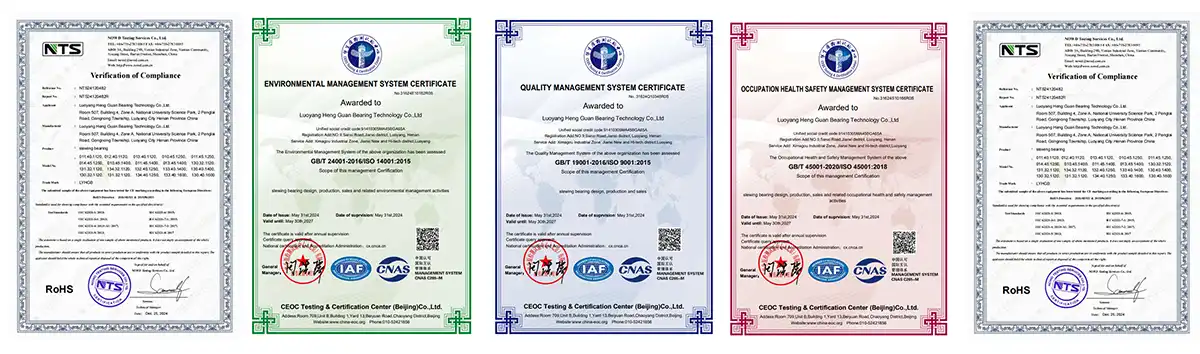
Certifications and quality control systems are concrete proof of a company's ability to make things. Suppliers who work with controlled industries like aircraft, medicine, and others have to show that they can meet strict quality standards. Referrals from customers in the same business can tell you a lot about how well a supplier does in terms of product quality, on-time delivery, and quick technical help.
Customization and Technical Collaboration
Customization and Working Together Technically. Standard stock items work well for many uses, but custom changes are often needed to get the most out of tools. You can change the mounting hole shapes, types of seals, raceway designs, and material specs to fit your needs. When you involve providers early on in the design process, their engineering teams can offer application knowledge that could help improve performance or lower costs.
The quality of a supplier's technical paperwork shows how professional and skilled they are. You can show that you are careful with detailed drawings, material certifications, inspection reports, and installation directions. These things also help your quality assurance processes. Problem-solving and design optimization are sped up by clear lines of contact with tech staff who understand your application.
Streamlining the Procurement Process
Making the process of buying things easier. Procurement benefits come from building relationships with capable sellers before pressing needs emerge. Negotiated price models for needs that happen over and over again lower transaction costs and make budgeting easier. Knowing the average lead time for standard configurations versus unique configurations can help you make more accurate plans for when to make tools.
For those who are making a lot of units or planning long production runs, buying in bulk may save you money. Talk about how to keep important spare parts in stock so that current equipment doesn't have to be shut down too often. Full support after the sale, including expert advice, help with fixing problems, and guarantee coverage, protects your investment and ensures that it works reliably.
Conclusion
No Gear Slewing Bearings have been used successfully in many different manufacturing settings where reliable rotation, easy upkeep, and design freedom are important. These parts are useful and versatile because they can be used in a wide range of situations, from tough building equipment that has to work in hard conditions to precise medical devices that need to run smoothly and quietly. If you know about the different designs, which ones are best for what, how to maintain them, and how to buy them, you can make choices that are in line with your practical needs and your budget. Making sure the equipment is well-made, installing it correctly, and keeping it in good shape will give it a long life and reliable performance.
FAQ
What size range is available for gearless slewing bearings?
What range of sizes do No Gear Slewing Bearings come in? Most of the time, standard production can handle inner diameters from 50 mm to 8,000 mm and outer diameters from 200 mm to 10,000 mm. Heights range from 80 mm to 400 mm, based on how the structure is set up and how much weight it needs to hold. Specialized manufacturing methods make it possible to make custom sizes outside of these ranges. For example, some makers offer outer lengths of up to 10 meters for special uses like big observation equipment or specialized industrial machinery. Talking to makers early on in the planning process about your specific size needs can help you figure out if the product is possible and how long it will take to make in custom sizes.
How do I determine the appropriate precision grade for my application?
How do I figure out which accuracy grade I need for my project? Precision grades P0, P6, P5, and P4 show rising levels of accuracy in length, width, and rotation. P4 is the best standard grade. P0 or P6 grades work well for most general industry uses in mining, building, and standard material handling. P5 grade accuracy is good for automation equipment, precise positioning steps, and industrial processes that care about quality. P4 grade parts are used in medical equipment, military uses, and ultra-precision automation systems that need the tightest tolerances. The engineering team at your bearing provider can help you choose the right types based on your performance goals, rotational speed, and positioning accuracy.
Partner with Heng Guan for Your Gearless Slewing Ring Requirements
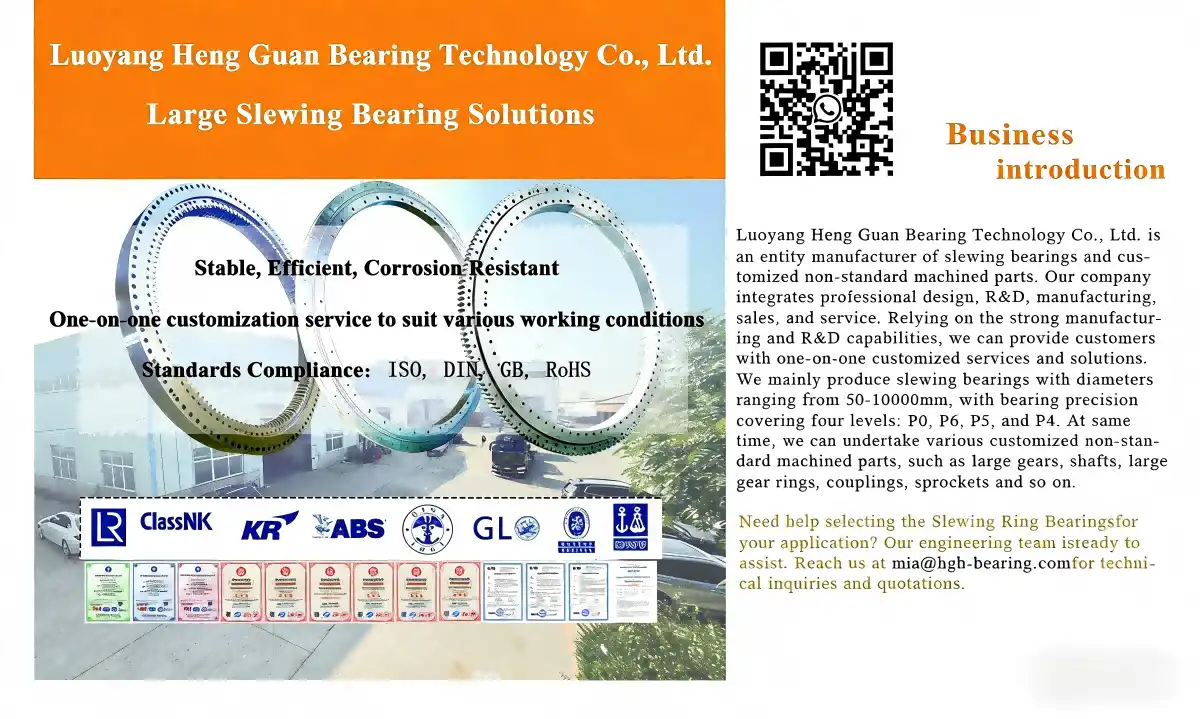
Luoyang Heng Guan Bearing Technology has been making No Gear Slewing Bearings for decades and is a reliable company that serves industry markets around the world. Our Luoyang plant uses the area's deep manufacturing knowledge to make parts that meet the strictest requirements. It does this by combining modern production equipment with skilled engineering staff. Bearings come in sizes ranging from 50 mm to 8,000 mm in diameter, and we can customize them up to 10 meters in diameter for certain uses. All of our bearings are made to precise grades from P0 to P4, based on your needs.
In addition to making high-quality parts, we also offer personalized optimization design and flexible production that is suited to your exact operating needs. Our expert team works with you to find the best option that balances performance, reliability, and cost-effectiveness, whether you're an OEM making new equipment, an engineering company choosing parts for a project, or a repair provider looking for replacements. Email our team at mia@hgb-bearing.com to talk about your application needs and find out how our skills can help your project succeed.
References
1. Schmelter, F. & Wagner, S. (2019). "Design Principles and Load Analysis of Large-Diameter Slewing Bearings for Industrial Applications." Journal of Mechanical Engineering Science, Vol. 233, Issue 8, pp. 2845-2861.
2. Chen, H. & Liu, Y. (2020). "Comparative Performance Study of Geared and Non-Geared Slewing Rings in Heavy Construction Equipment." International Journal of Precision Engineering and Manufacturing, Vol. 21, pp. 1537-1549.
3. Anderson, M. (2018). "Maintenance Strategies for Extending Service Life of Large Slewing Bearings in Mining Operations." Mining Equipment Technology International, Annual Review, pp. 78-89.
4. Petersen, K. & Zhao, L. (2021). "Material Selection and Heat Treatment Effects on Raceway Durability in Heavy-Duty Slewing Bearings." Tribology International, Vol. 156, Article 106845.
5. Williams, R. (2020). "Application Engineering Guide for Slewing Ring Bearings in Renewable Energy Systems." Wind Engineering & Industrial Aerodynamics, Vol. 198, pp. 104-118.
6. Rodriguez, J. & Kumar, A. (2019). "Procurement Best Practices for Critical Rotating Components in Industrial Equipment Manufacturing." Supply Chain Management Review, Vol. 23, No. 4, pp. 42-53.

WHAT OUR CUSTOMERS SAY
Here is the customer's evaluation of us