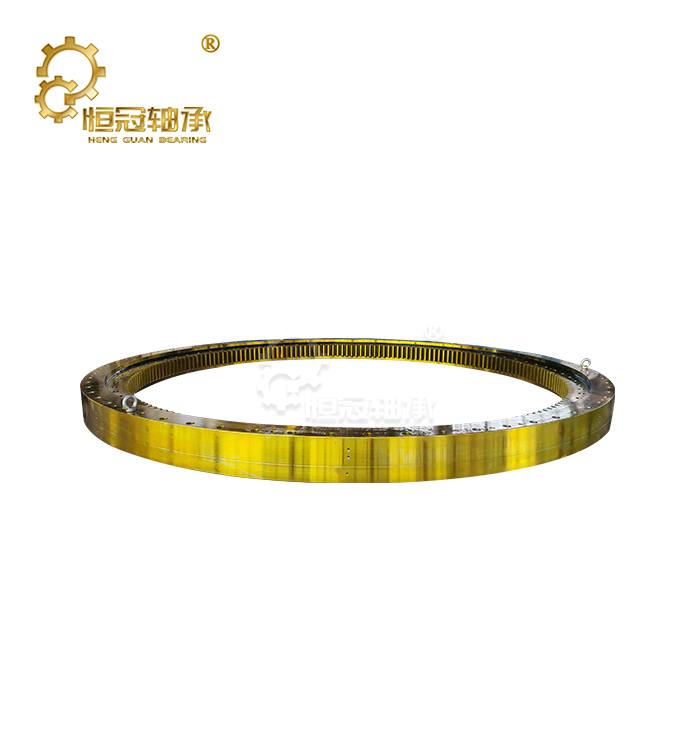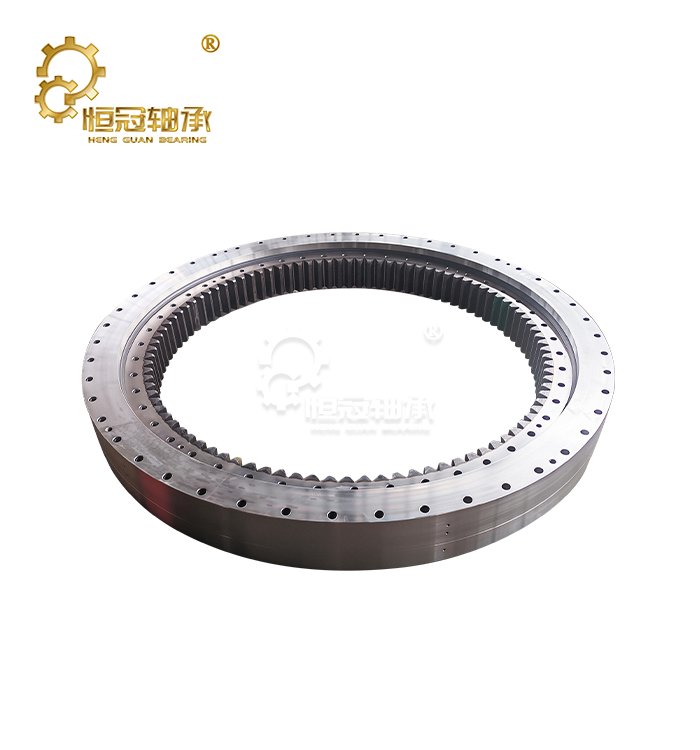




How Do You Replace an Excavator Slewing Bearing Efficiently?
When should an Excavator Slewing Bearing be changed, and how can it be done effectively without delay or machine damage? Understanding condition-based failure signals and a disciplined replacement strategy determines the solution. Slewing bearing replacement is usually needed when wear compromises rotational smoothness, load stability, or sealing integrity. Although speed is important, efficiency is also about a regulated procedure that involves accurate diagnosis, thorough disassembly, optimal model selection, and exact reinstallation to restore excavator performance. As a professional slewing bearing manufacturer, Luoyang Heng Guan Bearing Technology Co., Ltd. provides engineering support, customized bearing solutions, and high-precision replacement bearings for excavators operating in construction, mining, port, and heavy-duty industrial environments worldwide.
When Should an Excavator Slewing Bearing Be Replaced?
Excavator Slewing Bearings seldom fail unexpectedly; they generally display warning signals. These must be identified early to prevent expensive breakdowns.
Common signs include aberrant grinding or banging noises during rotation, increased axial clearance, uneven slewing resistance, and oil leaks around the sealing region. Operators may also notice gear engagement instability or vibration during load changes in advanced wear.
Construction and mining excavators, particularly heavy-duty ones, should be inspected every 1,000–2,000 hours.
| Warning Sign | Likely Cause | Recommended Action |
|---|---|---|
| Grinding or abnormal noise | Raceway or rolling element wear | Inspect clearance and raceway condition |
| Excessive axial movement | Advanced fatigue wear | Measure against tolerance limits |
| Jerky or uneven rotation | Gear tooth wear or deformation | Check gear mesh condition |
| Seal leakage | Seal aging or damage | Replace seals and inspect contamination |
| Rust or pitting | Moisture ingress | Full replacement recommended |
Excavator Slewing Bearing Technical Structure Overview
Modern excavator slewing bearings are engineered for different load capacities and machine sizes. Selection must be based on excavator tonnage, working environment, and load requirements.
| Excavator Class | Weight Range | Recommended Structure | Precision Grade |
|---|---|---|---|
| Mini Excavator | 1–6 tons | Single-row four-point contact ball | ABEC 3–5 |
| Small/Medium Excavator | 6–30 tons | Single-row four-point contact ball | ABEC 5 |
| Large Excavator | 30–90 tons | Double-row ball | ABEC 5–7 |
| Ultra-Large Excavator | 90+ tons | Triple-row roller | ABEC 7–9 |
Core materials typically include 42CrMo or 50Mn alloy steel rings and GCr15SiMn high-purity bearing steel rolling elements, with raceways hardened to HRC 55–60 for long fatigue life under heavy cyclic loads.
Luoyang Heng Guan specializes in the design, development, and manufacture of slewing bearings ranging from 20 mm to 10,000 mm in diameter. Supported by experienced bearing engineers, advanced machining equipment, and comprehensive testing systems, the company offers single-row four-point contact ball bearings, cross roller bearings, double-row ball bearings, and triple-row roller bearings that meet the demanding requirements of modern excavator applications.
Excavator Slewing Bearing Removal: Key Steps for Efficiency
Not disassembly, but preparation is key to efficient removal. Secure the top structure and set the excavator on firm ground to avoid unexpected spinning. Upper and lower structural alignment marks guarantee precise reinstallation placement.
To avoid unequal tension release, bolts must be loosened cross-pattern progressively. After removing all bolts, use proper lifting equipment to securely remove the bearing while maintaining it level to minimise structural binding or damage.
Carefully clean both mounting surfaces and verify for flatness variations (preferably 0.1 mm/m) after removal. Before installing the replacement bearing, repair bolt threads and seating surfaces.
For model selection, cross-reference replacement, or urgent technical support, contact the engineering team at Luoyang Heng Guan via mia@hgb-bearing.com for fast assistance. The company provides customized slewing bearing solutions, OEM replacement support, and application-specific engineering recommendations for excavators of all sizes.
|
|
How to Select a High-Quality Excavator Slewing Bearing Made in China?
Choosing a reliable excavator slewing bearing made in China requires evaluating more than just price. Leading manufacturers in Luoyang produce precision bearings that meet global OEM standards for Caterpillar, Komatsu, Volvo, Hitachi, Sany, Doosan, and others.
Key material and process requirements include:
- Ring material: 42CrMo or 50Mn alloy steel
- Rolling elements: GCr15SiMn high-purity bearing steel
- Raceway hardness: HRC 55–60
- Gear hardness: HRC 45–50
- Hardened layer depth: 2.5–5 mm
- Certifications: ISO 9001, CE, RoHS
Excavator Slewing Bearing Product Parameters
| Parameter | Specification |
|---|---|
| Diameter Range | 50mm – 10,000mm |
| Precision Grades | P0, P6, P5, P4 |
| Base Material | 42CrMo, 50Mn special alloy steels |
| Rolling Elements | GCr15SiMn high-purity bearing steel |
| Load Capacity | High radial and axial loads |
| Operating Temperature | -40°C to +120°C |
| Sealing Options | Multiple configurations available |
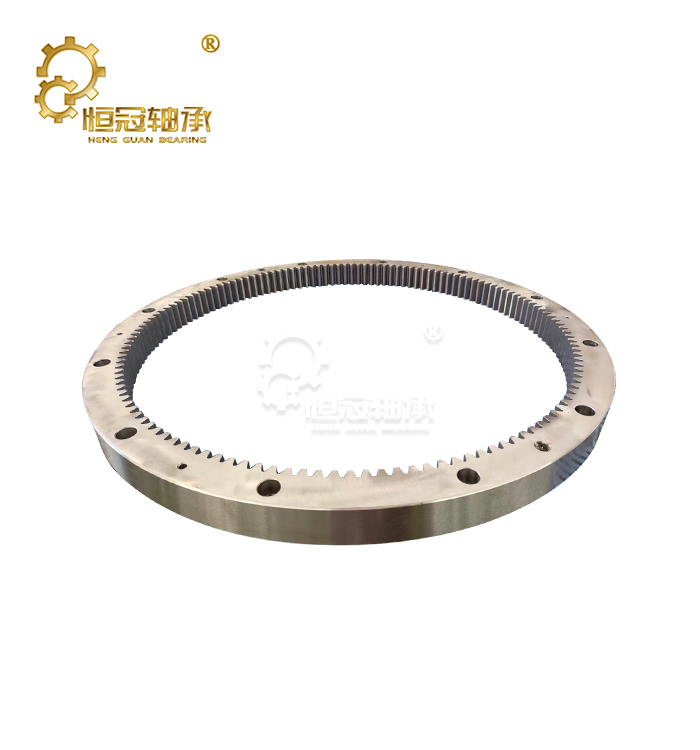
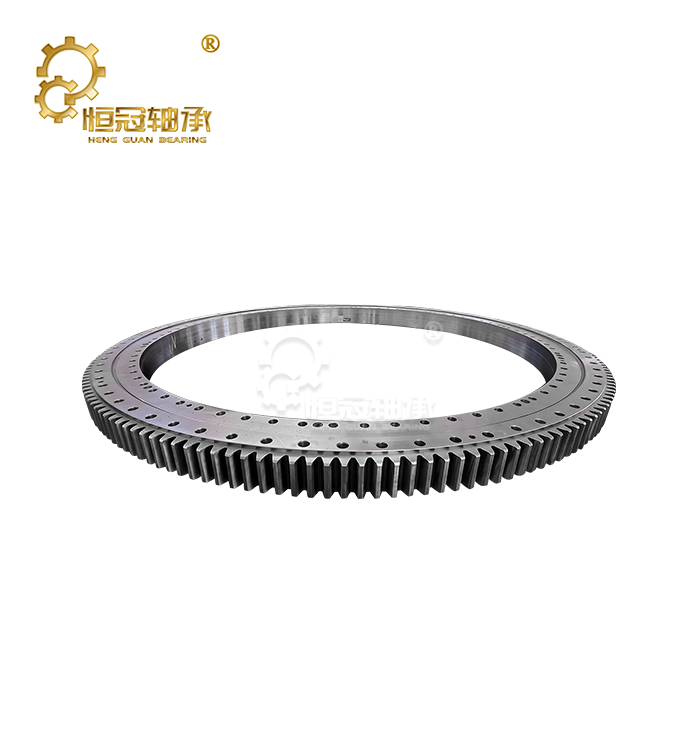
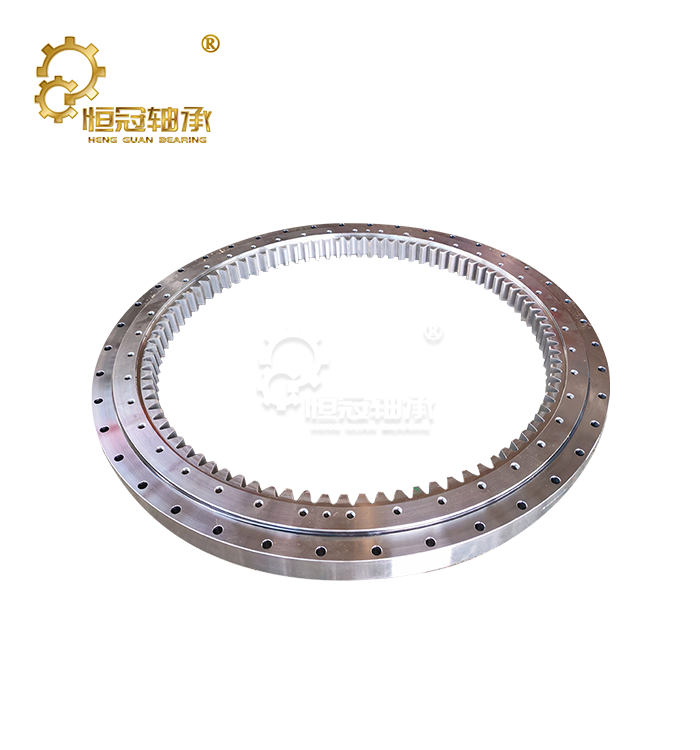
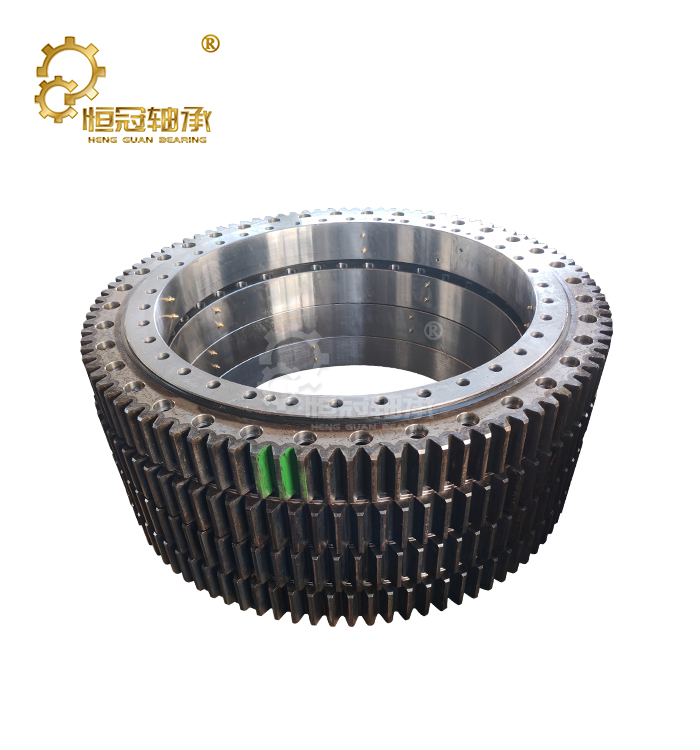
| Mounting Type | Internal gear, external gear, or no gear |
These parameters ensure compatibility across a wide range of excavator slewing bearing models and working environments, from urban construction to mining operations.
Efficient Installation Methods for Excavator Slewing Bearings
New bearings' lifespan depends on proper installation. Before installation, mounting surfaces must be clean, level, and contaminant-free.
Use rated lifting equipment to uniformly drop the bearing. To minimise early fatigue, the soft zone marking must face away from the principal load.
Bolt tightening must follow a staged cross-pattern procedure:
- 30% torque initial pass
- 70% torque intermediate pass
- 100% final torque
After installation, the bearing must be lubricated and rotated slowly to distribute grease evenly. A mandatory re-torque after 100 operating hours ensures long-term preload stability.
Why Excavator Slewing Bearing Replacement Quality Matters
A poorly selected or incorrectly installed slewing bearing can lead to:
- Structural misalignment
- Premature raceway fatigue
- Gear tooth failure
- Hydraulic system overload
- Unexpected machine downtime
This is why sourcing from experienced manufacturers with engineering support is essential for long-term excavator reliability.
|
|
Conclusion
Efficient Excavator Slewing Bearing replacement is not just a mechanical task — it is a structured engineering process involving condition diagnosis, correct product selection, careful removal, and precision installation. When executed properly, it restores full machine performance and significantly extends service life.
FAQ
Q1: How long does an excavator slewing bearing last?
A: Typically several thousand operating hours depending on load, environment, and maintenance quality.
Q2: What is the most common failure cause?
A: Poor lubrication and excessive contamination are the leading causes of failure.
Q3: Can I replace only the bearing without changing gears?
A: Yes, if gear teeth are within acceptable wear limits after inspection.
Q4: Are Chinese-made excavator slewing bearings reliable?
A: Yes, high-end manufacturers in Luoyang produce OEM-quality bearings using international standards.
Get Technical Support or Replacement Bearings
For excavator slewing bearing selection, replacement cross-reference, or urgent technical support, contact Luoyang Heng Guan at mia@hgb-bearing.com. As a professional manufacturer of slewing bearings and slewing rings, Luoyang Heng Guan provides factory-direct supply, customized production, OEM replacement solutions, and engineering support for Caterpillar, Komatsu, Hitachi, Volvo, Doosan, Sany, and other major excavator brands worldwide.
References
1. Harris, T.A. & Kotzalas, M.N. Rolling Bearing Analysis. CRC Press.
2. ISO 76:2006 Rolling Bearings — Static Load Ratings.
3. Shigley, J.E. Mechanical Engineering Design. McGraw-Hill.
4. Zhang, H. & Wang, F. Failure Analysis of Excavator Slewing Bearings. Engineering Failure Analysis.
5. Li, X. & Chen, M. Tribology of Large Slewing Rings. Tribology International.
6. ASME Standards for Heavy Equipment Components.

WHAT OUR CUSTOMERS SAY
Here is the customer's evaluation of us
_1767784942887.webp)
_1776668700508.webp)