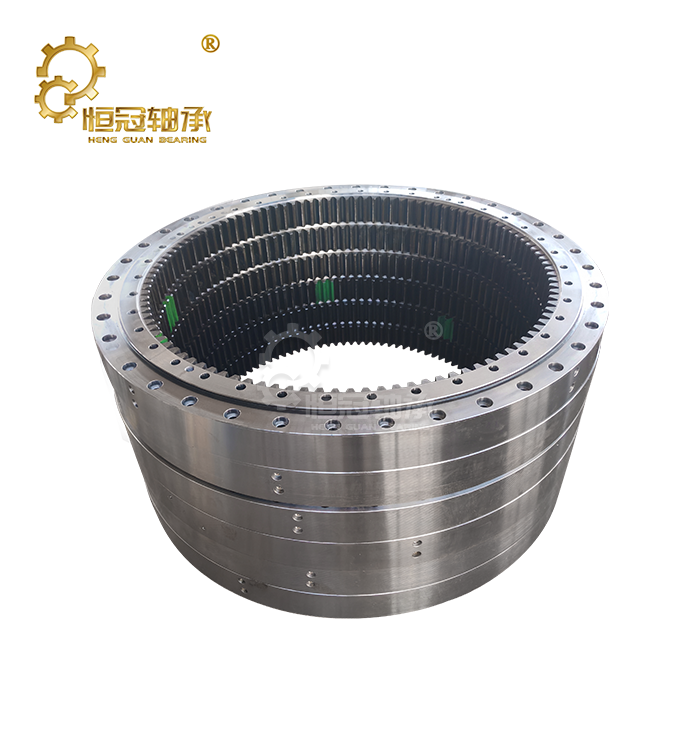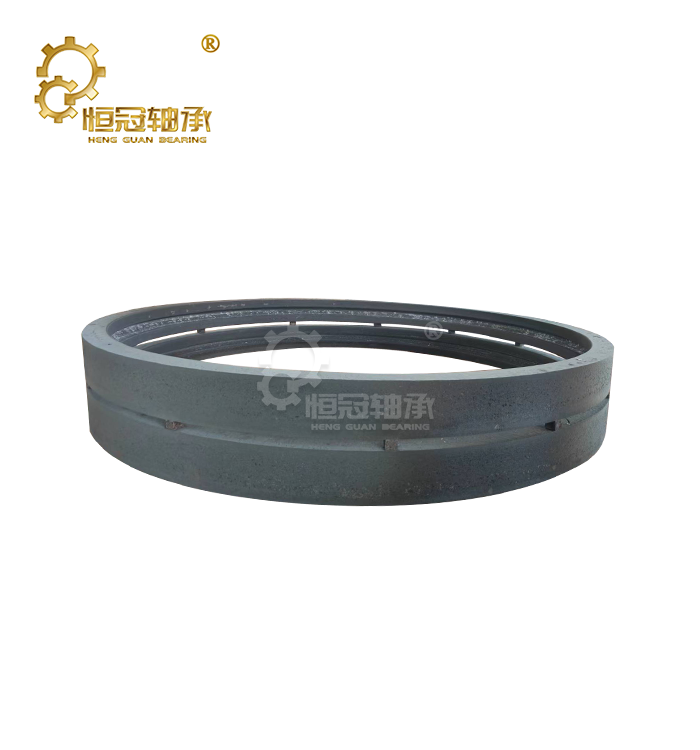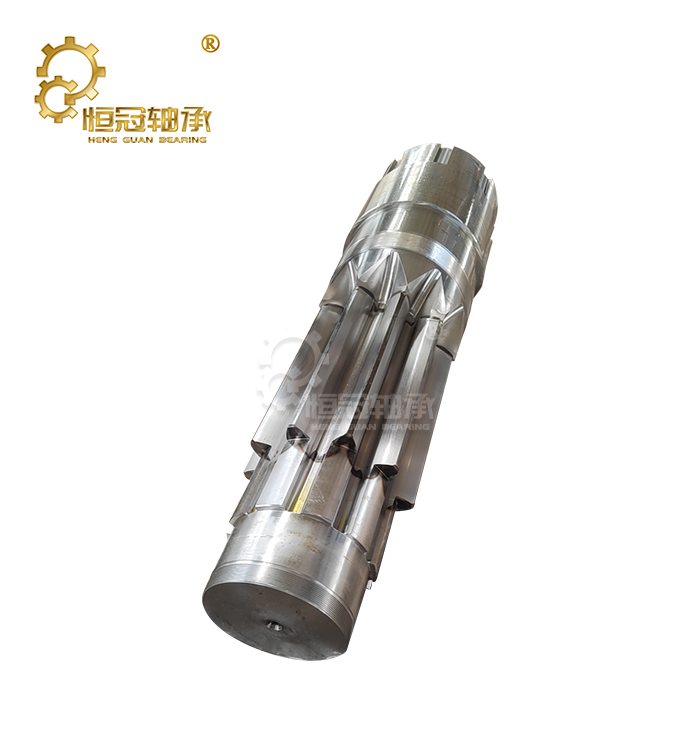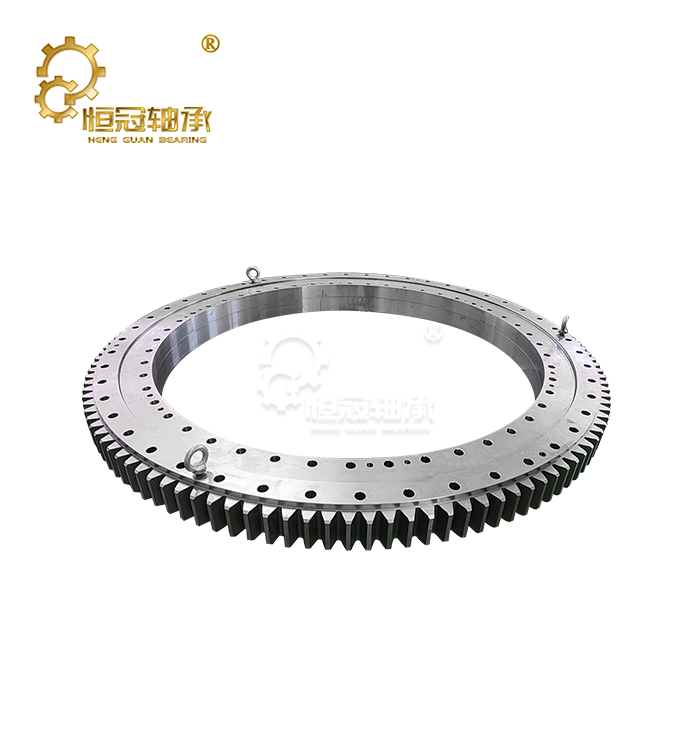




Why Choose a 4 Point Contact Ball Bearing for Axial Loads?
When industrial equipment needs to accommodate axial loads from both directions, bearing selection involves more than simply choosing a bearing with a high load rating. Space, radial loads, overturning moments, rotational requirements, mounting conditions, and maintenance requirements all influence the final design. A 4 Point Contact Ball Bearing can be a practical solution when a compact single-row arrangement needs to support bidirectional axial loads while also accommodating radial loads and moment loads.The main feature of this bearing is a particular geometry of the raceway. This allows for load-carrying capabilities in both axial directions inside one bearing system rather than separate bearing arrangements for axial forces in opposite directions. It can simplify the surrounding mechanical construction and reduce the bearing arrangement area. However, for designers and purchasing engineers of equipment, benefits should be assessed on the basis of real operational conditions and not as universal benefits. In selecting a particular bearing, the following must be considered: magnitude of load, combination of loads, rotational speed, bearing diameter, rigidity of mounting, lubrication, sealing, clearance and expected service life.

How a 4-Point Contact Ball Bearing Handles Axial Loads?
A four-point contact bearing (4-PCB) has a raceway profile that allows the rolling elements to contact the raceways under proper load circumstances. The bearing is capable of taking axial loads in both directions, making it particularly suitable in applications where the direction of axial loading can change during operation.
Raceway Geometry and Contact Behavior
What matters isn’t how many points of contact there are; it’s the shape of the raceway. Inner and outer rings are made with highly specified raceway shapes and contact angles. The contact conditions define the transfer of force between the balls and rings, depending on the combinations of axial and radial loads.
When one axial load acts in one direction, the raceway contact in the axial direction at one end of the bearing takes the main part of the axial load. When the load reverses, the opposite contact region is put into engagement. This flexibility to work in both directions is one of the key reasons to look at four point contact bearings for slewing mechanisms and other applications where axial forces do not remain constant in one direction.
The real load distribution is not necessarily the same throughout all the contact areas. The load sustained by each contact region is influenced by bearing clearance, manufacturing tolerances, mounting deformation, external loads, and contact angle. So, while selecting bearings, it is important to rely on the manufacturer’s load-rating data and application calculations rather than the assumption that the load is equally distributed at four points.
Why Does the Single-Row Arrangement Matter?
A single-row four-point contact layout can provide bidirectional axial load capacity without the need of two angular contact bearings in a pair. This can ease the bearing arrangement and cut down the axial space taken by the bearing system.
This benefit is especially important in tiny machines where designers have to make room for gears, seals, motor components, structural parts, or hydraulic and electrical systems. A more compact bearing arrangement can also make housing design and assembly easier.
But compactness should not be the only factor for selection. If the bearing fits in the envelope available, it must have appropriate static and dynamic load capacity, stiffness, and resistance to deformation for the working circumstances envisaged.
4 Point Contact Ball Bearing vs. Other Bearing Arrangements
Distinct bearing types tackle distinct load and motion concerns. Engineers can compare the load directions and structural features to see if a four-point contact design is adequate.
Four-Point Contact and Angular Contact Bearings
Angular contact ball bearings are commonly utilized in applications where both radial and axial loads are to be handled. Depending on their contact angle and configuration, they can take axial stresses in one direction only or in both directions if arranged as a pair.
In one bearing, a four-point contact design can offer bidirectional axial support. This can reduce the amount of components and simplify assembly compared to some paired angular contact designs.
It is contingent upon the use. They may be advantageous if high rotational speed, regulated preload, etc., or certain Shaft bearing arrangements are essential. Four-point contact bearings might be appealing in applications where compact construction, bidirectional axial loading, and combination loading are more essential design factors.
Four-Point Contact and Thrust Bearings
Thrust bearings are meant to handle the axial stresses; however, whether they can take the radial loads depends on the type of bearing. Hence, some thrust bearing arrangements are less favorable where large radial forces or overturning moments are present.
A four-point contact bearing can support both radial and axial loads in the same bearing arrangement and is therefore helpful in equipment where the load is not completely axial. This is one of the reasons these bearings are typically considered for rotating structures and slewing applications.
Engineers should still verify the manufacturer's radial, axial, and moment load values. Where the application has a very high axial load and little or no radial load, then a dedicated thrust bearing can be a more suitable alternative.
Four-Point Contact and Double-Row Bearings
Sometimes, 4 point contact ball bearing designs can be used in applications where a higher radial load capacity and enhanced stiffness are needed. Their internal geometry and contact arrangement determine the way in which they accommodate axial loads.
If support in both axial directions is necessary and a bigger or more complicated multi-row design is to be avoided, a design with four points of contact can be more compact. Other bearing arrangements may be preferred for very high radial loads, rigidity, or specified speeds.
Therefore, the optimum comparison is based on the total load spectrum and not only on the axial load.
Key Factors When Selecting a 4-Point Contact Ball Bearing
Selecting a bearing based only on bore or outside diameter can lead to an unsuitable design. Engineers should evaluate the complete operating envelope before placing an order.
Axial, Radial, and Moment Loads
The first step is to identify the loads acting on the bearing during normal operation, startup, shutdown, braking, acceleration, and abnormal conditions.
For many slewing applications, the bearing does not experience pure axial loading. Instead, axial force, radial force, and overturning moment act simultaneously. The combined load condition can significantly affect raceway stress and bearing life.
The load analysis should therefore include:
Maximum axial load
Maximum radial load
Overturning or tilting moment
Static load conditions
Dynamic operating loads
Shock or impact loads
Load reversals
Duty cycle and operating frequency
Using the worst-case operating condition rather than only the nominal load provides a more realistic basis for bearing selection.
Bearing Diameter, Clearance, and Internal Design
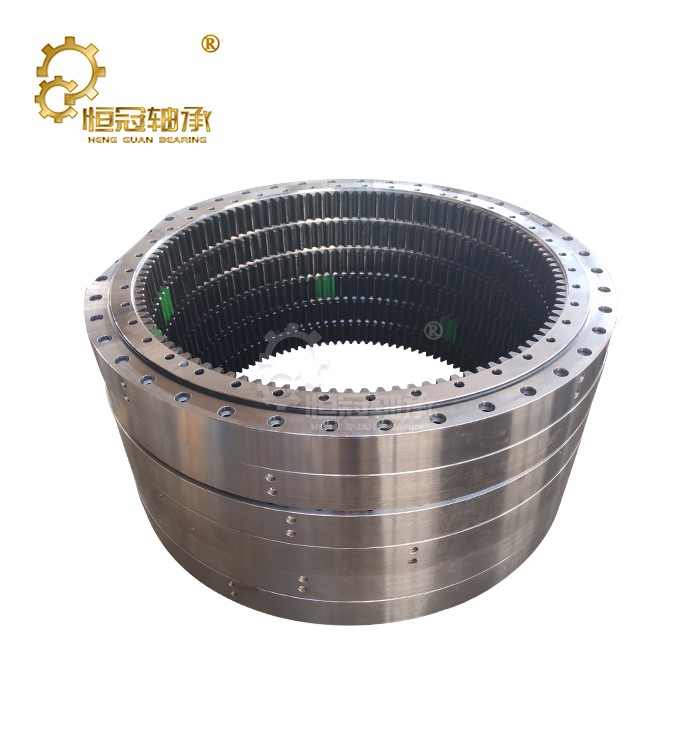
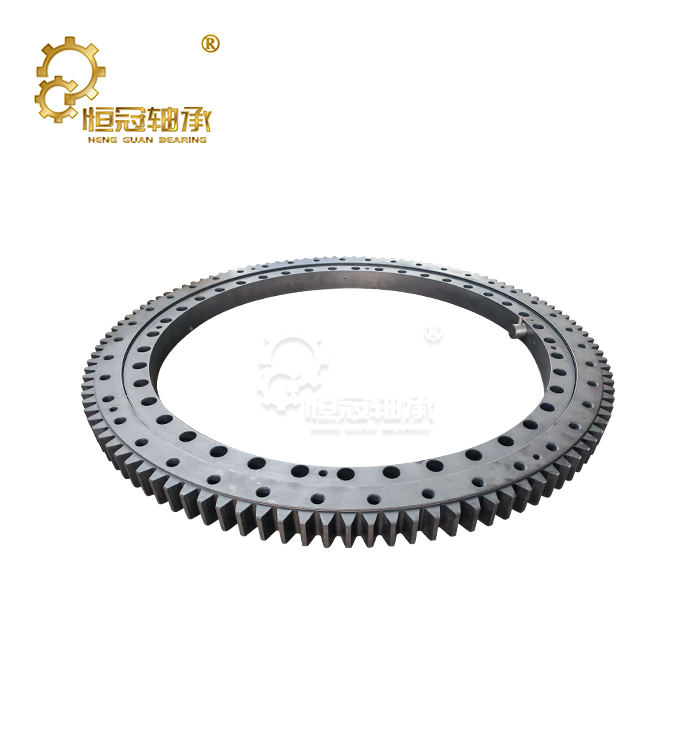
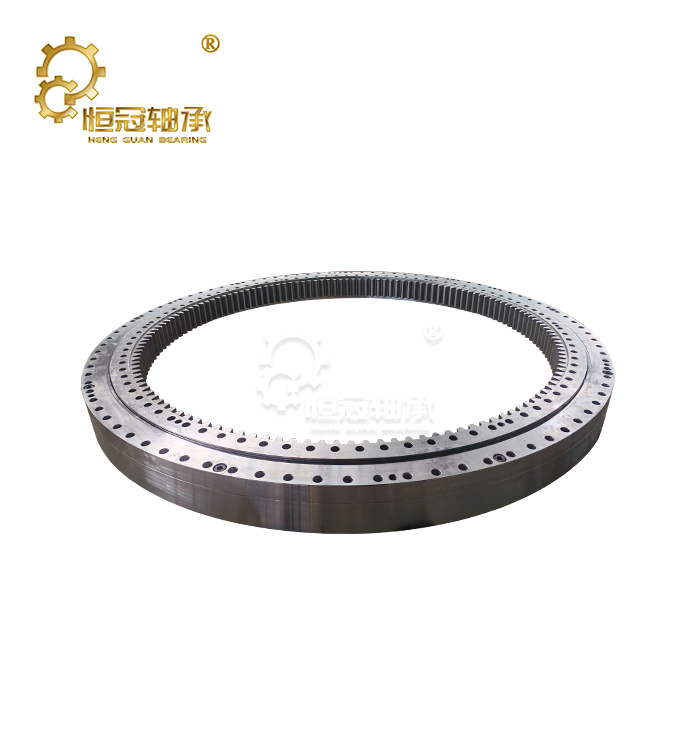
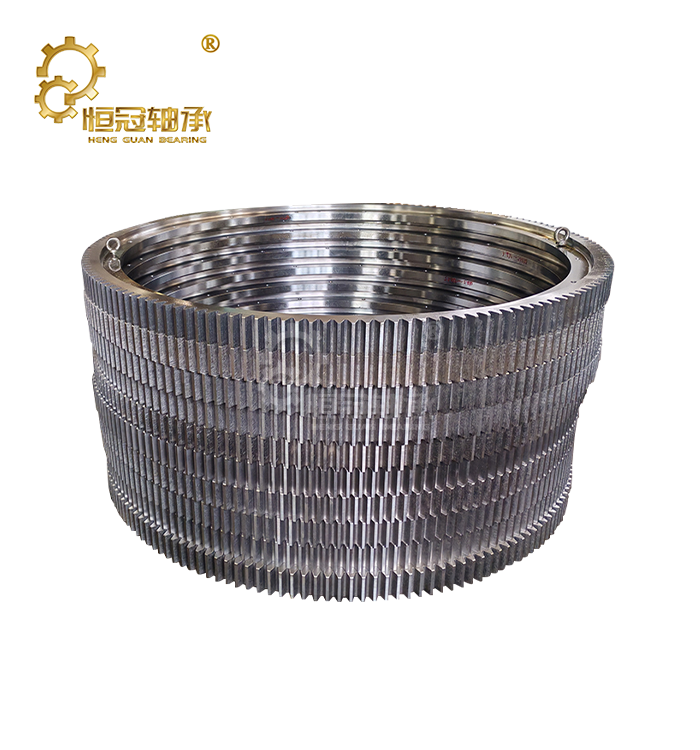
Bearing dimensions should be selected according to the available installation envelope and the required load capacity. Large four-point contact bearings are commonly used in machinery such as cranes, excavators, industrial positioning equipment, and other rotating structures.
Clearance is another important parameter. Excessive clearance can influence load distribution and stiffness, while insufficient clearance may increase friction, operating temperature, and sensitivity to mounting conditions.
The appropriate internal clearance depends on the bearing design and application. Engineers should therefore follow the manufacturer's recommended values rather than applying a general clearance rule to every bearing.
Speed, Lubrication, and Temperature
Rotational speed must be evaluated together with bearing size, load, lubrication method, seal configuration, and operating temperature. A bearing that performs well at a moderate speed under light loading may behave differently under high loads or frequent acceleration.
Lubrication is particularly important because the raceways and rolling elements require an adequate lubricating film to limit wear and friction. Grease is commonly used in many large bearing applications because it is relatively simple to apply and maintain, while oil lubrication may be selected for certain higher-speed or thermally demanding systems.
Temperature should also be considered. Ambient temperature, heat generated by operation, nearby heat sources, and inadequate lubrication can all affect bearing performance.
Where 4-Point Contact Ball Bearings Are Commonly Used
The combination of bidirectional axial load capability and compact construction makes four-point contact bearings suitable for a range of industrial applications.
Construction and Slewing Equipment
Construction machinery can generate simultaneous axial, radial, and overturning loads. Excavator upper structures, cranes, and other rotating assemblies may require bearings capable of supporting these combined forces while allowing controlled rotation.
For these applications, engineers need to evaluate not only the maximum load but also the frequency of load changes, shock conditions, environmental contamination, and mounting structure.
Port and Material-Handling Machinery
Container handling equipment and other port machinery often operate under repetitive loading conditions. The bearing may experience changing forces as the machine accelerates, stops, rotates, or handles different loads.
A four-point contact design can be considered when the application requires bidirectional axial support within a relatively compact arrangement. Sealing and lubrication become particularly important when the equipment operates outdoors and is exposed to dust, moisture, salt-laden air, or temperature fluctuations.
Industrial Automation and Positioning Systems
Automation equipment can place different demands on 4-point contact ball bearings. Instead of extremely high loads, some systems prioritize controlled movement, repeatability, compact dimensions, and predictable friction characteristics.
Four-point contact bearings can be considered for rotary positioning mechanisms when their load capacity, stiffness, clearance, and speed characteristics match the requirements of the system. For high-speed precision applications, engineers should compare them carefully with angular contact or other specialized bearing arrangements.
How to Specify a 4-Point Contact Ball Bearing to a Supplier?
A clear technical specification makes it easier for a bearing manufacturer to recommend an appropriate design and reduces the risk of ordering an unsuitable product.
Information Engineers Should Provide
A useful inquiry should include more than the required bearing diameter. At minimum, the supplier should receive information about:
Bearing dimensions or installation envelope
Axial load and its direction
Radial load
Overturning moment
Rotational speed
Operating cycle
Temperature range
Lubrication method
Environmental conditions
Required service life
Mounting arrangement
Accuracy or runout requirements
Sealing requirements
Material or heat-treatment requirements, if specified
Load diagrams or application drawings are especially useful for complex machinery because they allow the supplier's engineering team to understand how the bearing will actually be loaded.
Documentation and Quality Verification
For industrial procurement, documentation is part of the bearing specification. Buyers may need dimensional inspection reports, material certificates, heat-treatment records, test reports, or certificates of conformity depending on the application and project requirements.
It is also useful to confirm manufacturing tolerances, raceway inspection procedures, ball grade, surface quality, lubrication recommendations, and packaging conditions.
Rather than evaluating suppliers solely by unit price, procurement teams should consider manufacturing capability, engineering support, inspection capability, delivery reliability, and experience with similar applications.
Maintenance Practices That Support Bearing Life
Correct selection is only the first step. Installation and maintenance can have a major influence on bearing performance.
Installation and Mounting
The mounting structure for 4 Point Contact Ball Bearing should provide adequate stiffness and dimensional accuracy. Uneven mounting surfaces or excessive deformation can change the internal load distribution and create localized stress.
Fasteners should be tightened according to the specified installation procedure. For large bearings, the mounting bolt pattern and tightening sequence should be controlled carefully to reduce the risk of uneven loading.
Before commissioning, engineers should also verify rotation, clearance, lubrication, sealing condition, and the alignment of related components.
Lubrication and Contamination Control
Lubricant selection should consider load, speed, temperature, operating environment, and manufacturer recommendations. Relubrication intervals should be established according to actual operating conditions rather than applying a single interval to every application.
Contamination is another important source of bearing damage. Dust, water, metal particles, and other contaminants can enter through inadequate sealing or improper maintenance practices. Keeping lubrication equipment clean and inspecting seals regularly can help reduce contamination-related problems.
Condition Monitoring
For critical machinery, condition monitoring can provide early indications of abnormal bearing behavior. Temperature, vibration, noise, torque, and changes in operating resistance can all provide useful information.
A sudden temperature increase, unusual noise, increasing vibration, or changes in rotational resistance should be investigated rather than ignored. Early inspection can help identify lubrication problems, contamination, mounting issues, raceway damage, or other abnormal conditions before they result in an unplanned shutdown.
Why Work with an Experienced Bearing Manufacturer?
A four-point contact bearing is not simply a standard component that can be selected from a dimension table. For demanding applications, the bearing must be matched to the actual combination of axial load, radial load, moment, speed, environment, and installation conditions.
An experienced manufacturer can support the selection process by reviewing application data, recommending suitable dimensions and internal designs, preparing technical drawings, and providing inspection documentation.
For OEM projects, customization may also involve raceway geometry, materials, heat treatment, clearance, sealing, lubrication, mounting interfaces, and other design requirements. The value of engineering support becomes particularly important when the bearing is a critical component of the equipment.
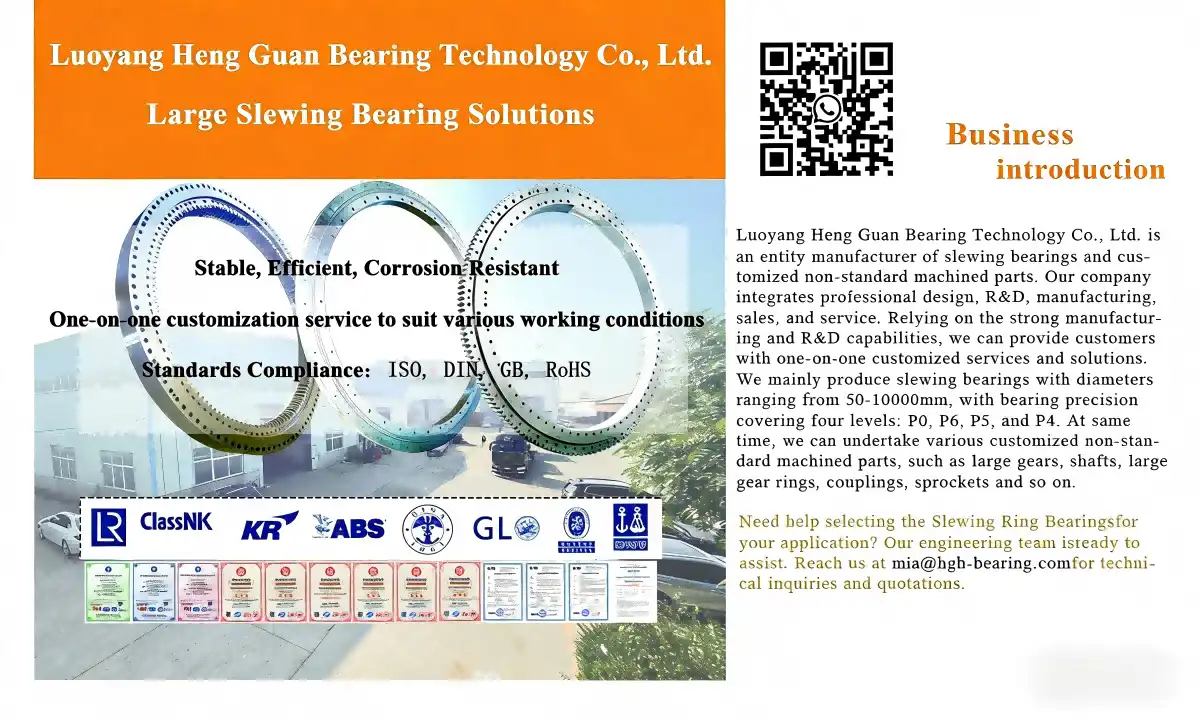
Luoyang Heng Guan Bearing Technology provides 4-point contact ball bearing solutions for industrial applications requiring combined load support and compact bearing arrangements. The company states that its manufacturing range covers bearing diameters from 50 mm to 10,000 mm and offers precision grades including P4, P5, and P6. For project-specific requirements, buyers can provide load data, dimensions, operating conditions, and application drawings so that the bearing configuration can be evaluated against the actual working conditions.
Conclusion
A 4 point contact ball bearing can be an effective choice when a machine requires bidirectional axial load support, combined-load capability, and a relatively compact bearing arrangement. Its raceway geometry allows axial forces to be accommodated in both directions within a single bearing, which can simplify the surrounding mechanical design in suitable applications.
However, four-point contact should not automatically be considered the best solution for every axial-load application. Bearing selection needs to account for axial and radial loads, overturning moment, speed, clearance, lubrication, temperature, mounting stiffness, contamination, and required service life. Comparing the bearing with angular contact, thrust, double-row, and other suitable designs can help engineers identify the most appropriate configuration.
For procurement teams and OEM engineers, providing complete application data to the manufacturer is one of the most effective ways to avoid incorrect sizing. Proper installation, lubrication, inspection, and condition monitoring are equally important once the bearing enters service. When the design and operating conditions are well matched, a four-point contact bearing can provide a practical balance between axial load capacity, compact construction, and system integration.
|
|


FAQ
1. What makes a 4 Point Contact Ball Bearing suitable for axial loads?
Its raceway geometry allows the bearing to accommodate axial forces in both directions. This makes it useful for applications where the direction of axial loading changes during operation. Its suitability still depends on the actual axial, radial, and moment loads.
2. Can a 4 Point Contact Ball Bearing support radial loads?
Yes, four-point contact bearings can accommodate radial loads in addition to axial loads, depending on their design and application. The allowable combined loading should be checked against the manufacturer's technical data rather than assumed from the bearing type alone.
3. Is a four-point contact bearing better than an angular contact bearing?
Neither design is universally better. A four-point contact bearing can be advantageous when bidirectional axial loading and compact construction are important. Angular contact bearings may be more appropriate for applications requiring specific preload arrangements, high-speed operation, or particular shaft-bearing configurations.
4. What information should I provide when ordering a 4 Point Contact Ball Bearing?
Provide the required dimensions, axial and radial loads, overturning moment, rotational speed, operating temperature, duty cycle, lubrication method, environmental conditions, mounting arrangement, and service-life requirements. Application drawings and load diagrams are also useful for engineering evaluation.
Are four-point contact bearings suitable for high-speed applications?
Suitability depends on bearing size, load, lubrication, cage design, clearance, temperature, and operating conditions. Large four-point contact or slewing bearings are generally selected for controlled rotational applications rather than assuming high-speed capability from the bearing type alone. Always confirm the permissible speed with the manufacturer for the specific 4 Point Contact Ball Bearing configuration. Contact our technical specialists at mia@hgb-bearing.com to discuss your specific axial load requirements and discover how our four-point contact ball bearing supplier services can optimize your equipment performance while reducing total ownership costs.
References
1. Harris, T.A. & Kotzalas, M.N. "Advanced Concepts of Bearing Technology: Rolling Bearing Analysis, Fifth Edition." CRC Press Engineering Handbook Series, 2018.
2. Hamrock, B.J., Schmid, S.R. & Jacobson, B.O. "Fundamentals of Fluid Film Lubrication in Rolling Element Bearings." Marcel Dekker Mechanical Engineering Series, 2019.
3. Eschmann, P., Hasbargen, L. & Weigand, K. "Ball and Roller Bearings: Theory, Design and Application in Industrial Machinery." John Wiley & Sons Engineering Reference, 2017.
4. Tallian, T.E. "Failure Atlas for Hertz Contact Machine Elements in Rolling Bearing Applications." ASME Press Mechanical Engineering Guidelines, 2020.
5. Society of Tribologists and Lubrication Engineers. "Rolling Element Bearing Design Standards and Load Rating Methods for Industrial Applications." STLE Technical Publication SP-65, 2019.
6. International Organization for Standardization. "Rolling Bearings - Dynamic Load Ratings and Rating Life Calculation Methods." ISO 281:2021 Technical Standard Documentation, 2021.

WHAT OUR CUSTOMERS SAY
Here is the customer's evaluation of us