



What Are the Advantages of Ball Bearing Slewing Rings?
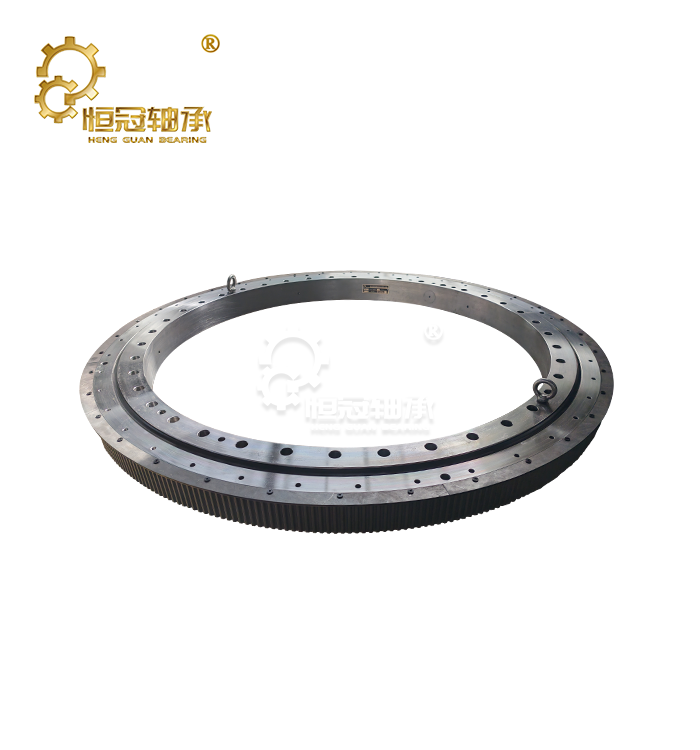
Ball Bearing Slewing Rings are widely used in heavy-duty machinery where smooth rotation, compact installation arrangements, and dependable load handling are required. These slewing rings are designed to bear simultaneously axial loads, radial loads, and overturning moments, unlike conventional bearing arrangements, which usually support just selected axes of loading. This makes them suitable for applications such as tower cranes, excavators, wind turbines, marine equipment, and industrial automation systems.
Luoyang Hengguan Bearing Technology Co., Ltd. is a precision components manufacturer, and it knows that selecting the perfect slewing bearing is more than a question of load capacity. The long-term performance will be affected by operating environment, lubrication conditions, rotation frequency, mounting accuracy, and service requirements. The ball bearing slewing rings may provide stable performance and reduce unexpected downtime in harsh applications with correct selection of materials, machining precision, and quality assurance methods.

How Do Ball-Bearing Slewing Rings Work?
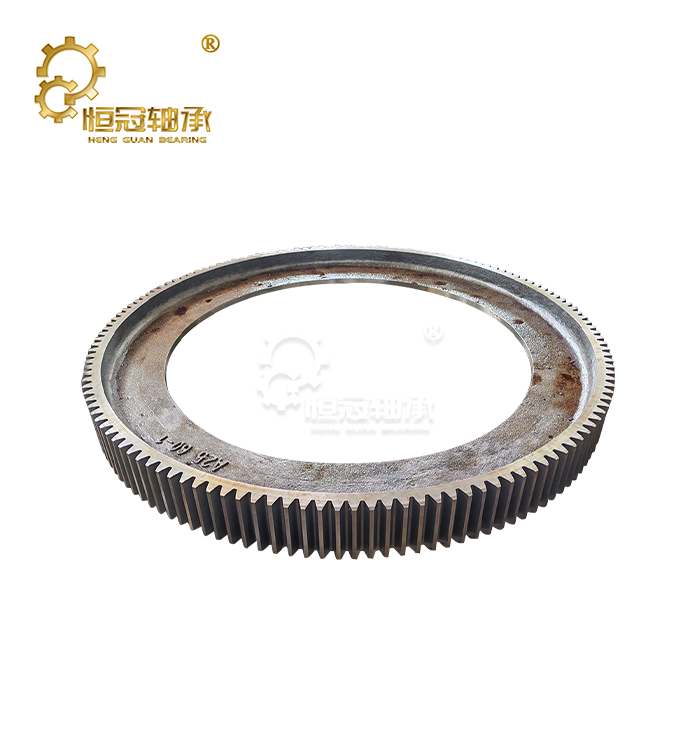
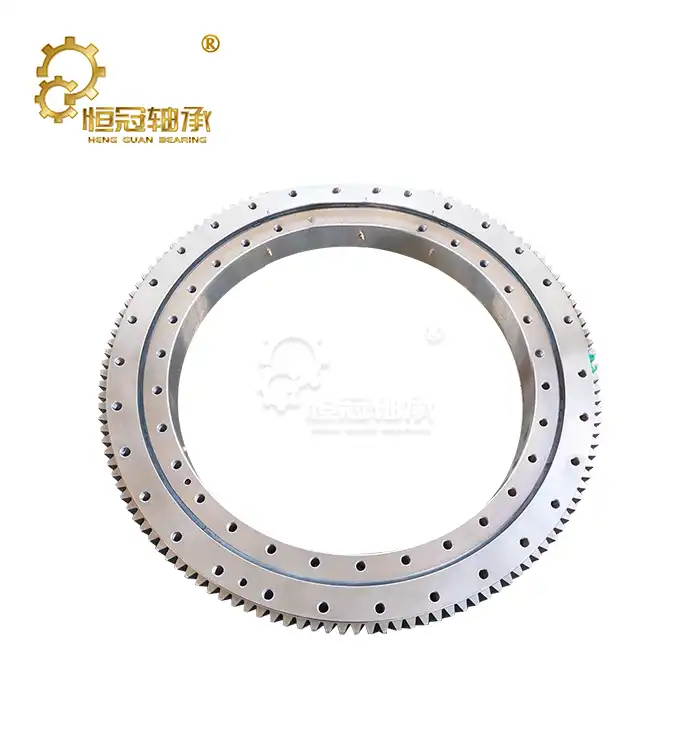
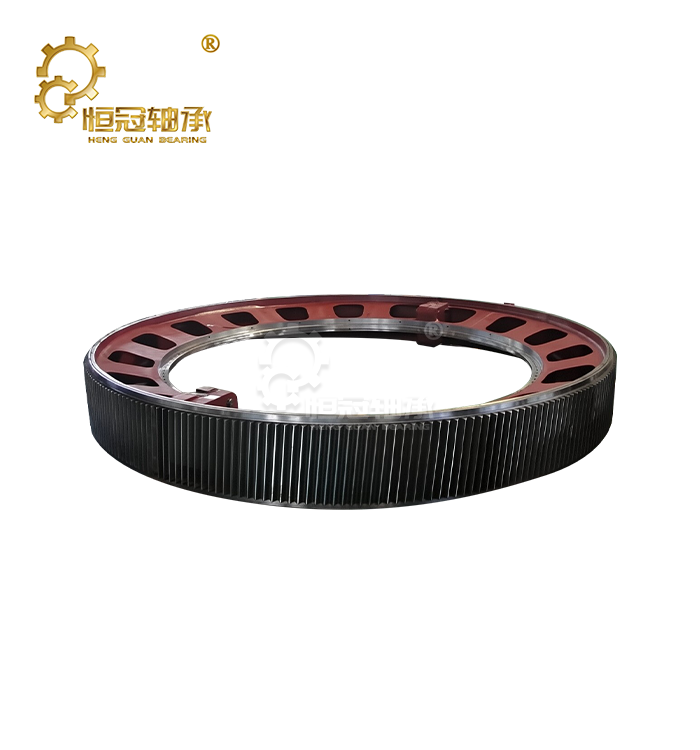
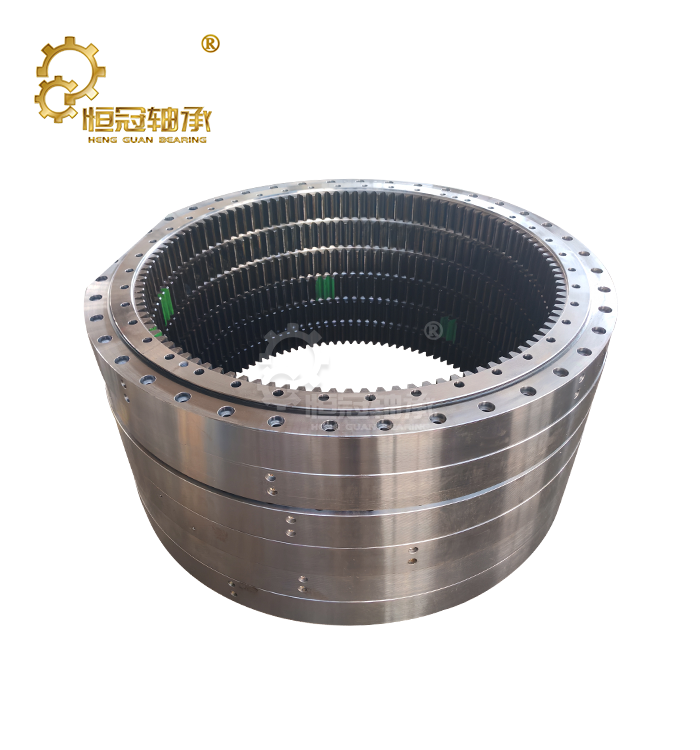
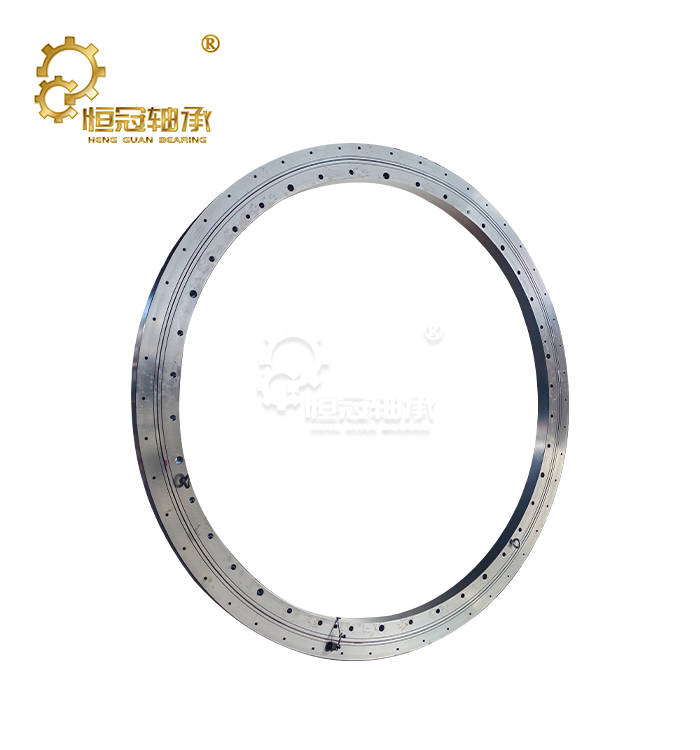
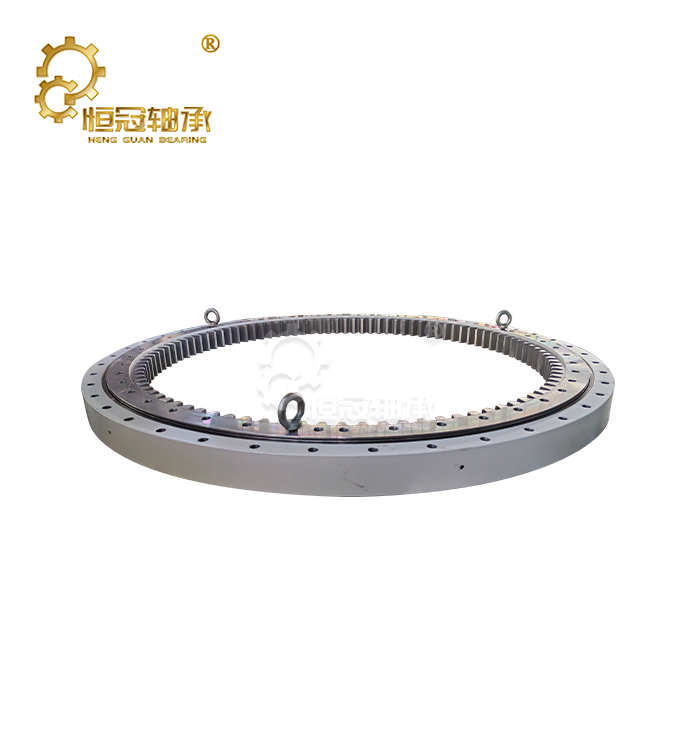
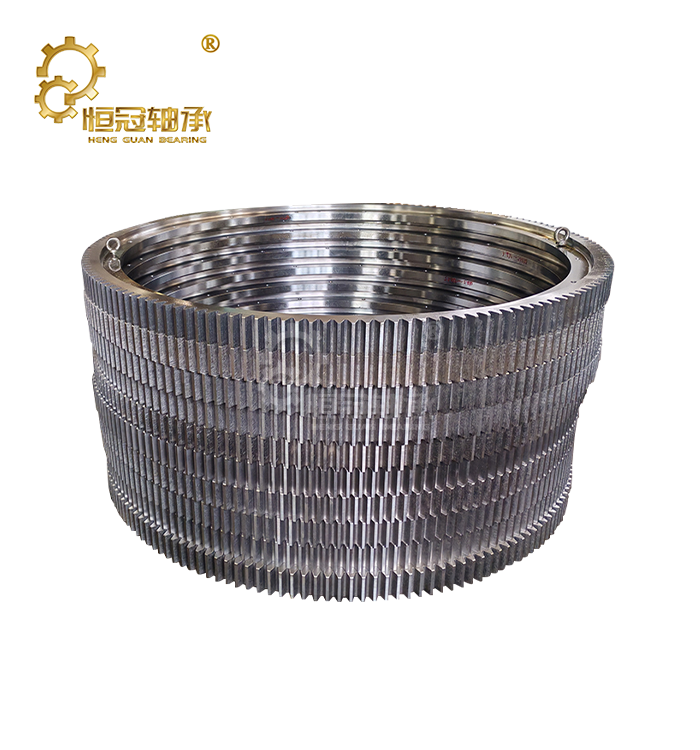
Ball bearing slewing rings are large-diameter rolling bearings, which are composed of inner rings, outer rings, rolling elements, raceways, cages, sealing systems, and mounting holes. They are mostly used to enable one part to turn smoothly over another, supporting large combined loads.
Unlike ordinary bearings, which are normally housed in a fixed housing, slewing rings are often a structural part of the apparatus itself. The ring has mounting holes for direct connection of the bearing to machine frames with the advantages of simplifying the design of the equipment and reducing the requirement for extra support components.
The rolling elements are held between carefully machined raceways. Depending on the application requirements, manufacturers can produce single-row ball designs, double-row ball designs, or four-point contact structures. Of these possibilities, four-point contact ball slewing rings are frequently chosen because of their compact structure and capacity to support loads from many directions.
Main Components of a Ball Bearing Slewing Ring
A slewing ring operates reliably through the synchronized execution of several critical components:
Inner and outer rings:
The rings are commonly made from high-strength alloy steels like 42CrMo or 50Mn. These materials offer the toughness, fatigue resistance, and structural strength required for heavy equipment applications.
Raceways:
The steel balls roll on perfectly machined surfaces known as raceways. Their geometry directly influences the load distribution, rotational smoothness, and bearing service life.
Rolling elements:
GCr15SiMn bearing steel is the material for making high-quality bearing balls. It will get outstanding hardness and wear resistance after heat treatment.
Sealing system and cage:
The cage spreads the balls out evenly so that no touch is unequal. Sealing systems keep dust, moisture, and pollutants out of the interior components, especially in outdoor work conditions.
Why Are Ball Bearing Slewing Rings Important for Heavy Machinery?
Today’s construction and industrial equipment demand components that can manage complex tensions and perform precise motions. Ball bearing slewing rings have many engineering benefits that make them perfect for machinery subject to changing loads and hostile environments.
Excellent Load Capacity for Combined Forces
One of the major benefits of ball bearing slewing rings is that they are able to support a number of different loads simultaneously.
Heavy machinery often suffers from:
Axial force due to vertical loading
Horizontal motion producing radial forces
Unbalanced or prolonged loads and tilting moments
These forces are often dealt with individually in traditional bearing setups with several components. A slewing ring incorporates all of these functions into one integrated component, which reduces system complexity.
For example, large overturning moments occur in tower cranes for lifting items at various boom positions. The slewing ring must withstand different loads and still ensure stable rotation. A well-designed ball bearing slewing ring transfers these forces to the raceway and rolling parts to help ensure the crane’s safe and smooth operation.
The four-point contact design is particularly well suited for applications where the load direction changes often. For example, excavators undergo repetitive starting, stopping, and reversing motions when digging. The ability to cope with shifting forces helps to increase equipment reliability.
Improved Rotation Accuracy and Lower Friction
Ball Bearing Slewing Rings—Another key advantage is their rotational performance. Precision machining of raceways and tight control of rolling element dimensions contribute to less unequal contact between components.
Rolling contact creates far less friction than sliding mechanics. Lower friction offers some practical benefits:
lower energy usage
Less heat production during use
Smoother machine motions
Reduced wear on internal parts
The rotational precision directly determines the positioning performance of the automated manufacturing equipment. Even a slight mechanical deviation can affect the quality of products, especially in robotic systems, precision assembly equipment, and inspection apparatus.
Smooth rotation is important for yaw systems that continuously modify the nacelle direction according to wind conditions for wind turbines. Stable slewing movement reduces mechanical stress and facilitates long-term operation in outdoor situations.
Compact Structure and Simplified Equipment Design
Another key advantage of ball bearing slewing rings is their space-saving design.
One of the biggest advantages of ball bearing slewing rings is their space-saving design.
Traditional rotating systems may require separate bearings, Shafts, housing, and support structures. Slewing rings incorporate many of these tasks in a single component, allowing equipment manufacturers to build more compact designs.
This structural advantage is especially useful in:
Mobile cranes
Excavator
Platforms, aerial
Marine engineering
Automated handling systems
Installation is also made simple by the direct mount design. Bolt holes are provided for the inner and outer rings so that the bearing can be directly attached to the machine structures. This reduces the number of parts to be assembled and increases the stability of the whole system.
For equipment producers, this may result in:
Decreased assembly time
Fewer parts
Simpler maintenance scheduling
More efficient equipment arrangements.
Long Service Life and Reduced Maintenance Requirements
For heavy equipment manufacturers and operators, one of the most significant aspects in choosing a slewing bearing is its service life. Ball bearing slewing rings are built to last. High-strength materials, optimized raceway designs, and effective lubrication systems are used.
The service life of a slewing ring is dependent on many elements, like the following:
Loading conditions applied
Rate of rotation
Temperature range
Lubrication quality
Installation precision
Environmental exposure
Structural strength for withstanding the repeated loading cycles is obtained by using good-quality alloy steel. Manufacturers can improve the fatigue resistance of bearing components through such operations as forging, machining, heat treatment, and surface inspection.
Protection against pollution is also vital in outdoor applications. Construction gear commonly operates in dusty environments, with soil, dampness, and other particles that can harm interior bearing surfaces. Good sealing systems help to keep impurities out of the raceway area, minimizing wear and prolonging operating life.
Regular maintenance also has a significant function in achieving intended service performance. Operators can detect possible problems before they cause major damage by using correct lubrication intervals, performing bolt inspections, and monitoring conditions.
This means less unplanned downtime, reduced repair costs, and better equipment availability for equipment owners.

Long Service Life and Reduced Maintenance Requirements
For heavy equipment manufacturers and operators, service life is one of the most important factors when selecting a slewing bearing. Ball bearing slewing rings are designed for long-term operation by combining high-strength materials, optimized raceway designs, and effective lubrication systems.
The service life of a slewing ring depends on multiple factors, including:
Applied load conditions
Rotation speed
Operating temperature
Lubrication quality
Installation accuracy
Environmental exposure
High-quality alloy steel provides the structural strength required to withstand repeated loading cycles. Through processes such as forging, machining, heat treatment, and surface inspection, manufacturers can improve the fatigue resistance of bearing components.
In outdoor applications, contamination protection is equally important. Construction machinery often operates in environments containing dust, soil, moisture, and other particles that can damage internal bearing surfaces. Effective sealing systems help prevent contaminants from entering the raceway area, reducing wear and extending operating life.
Regular maintenance also plays an important role in achieving expected service performance. Proper lubrication intervals, bolt inspection, and condition monitoring allow operators to identify potential problems before serious damage occurs.
For equipment owners, this means fewer unexpected shutdowns, lower repair costs, and improved equipment availability.
Ball Bearing Slewing Rings Compared with Other Slewing Bearing Types
Selecting the correct slewing bearing requires understanding how different designs perform under specific working conditions. While ball bearing slewing rings are suitable for many applications, other slewing bearing structures may provide advantages in certain environments.
Ball Bearing Slewing Rings vs. Roller Slewing Rings
The main difference between ball and roller slewing rings is the contact method between the rolling elements and raceways.
Ball slewing rings use point contact between steel balls and raceways. This design provides:
Lower friction
Smoother rotation
Higher rotational efficiency
Better suitability for applications requiring frequent movement
Roller slewing rings use line contact, which allows them to handle higher loads in some situations because the contact area is larger. However, the increased contact area may also create higher friction and require more precise manufacturing and lubrication management.
For applications such as cranes, excavators, and wind turbines, where combined loads and rotational movement are common, ball designs often provide a balanced solution between performance, reliability, and cost.
Application Advantages in Different Industries
The suitability of ball bearing slewing rings is closely related to their ability to manage combined loads and maintain smooth rotation.
Tower Crane Applications
Tower cranes require slewing components that can safely support heavy lifting operations while allowing precise rotation.
During operation, the slewing ring experiences:
Vertical lifting loads
Horizontal forces from suspended materials
Overturning moments caused by extended boom positions
Ball bearing slewing rings provide the necessary structural support while maintaining controlled rotation, helping operators position loads accurately.
Wind Turbine Applications
Wind turbines operate continuously under changing environmental conditions. The yaw system must rotate the nacelle according to wind direction while handling variable loads.
Ball bearing slewing rings are commonly used because they provide the following:
Reliable rotation performance
Resistance to repeated load changes
Compact installation dimensions
Long operating capability
Proper material selection and lubrication management are particularly important because wind turbines are exposed to temperature changes, humidity, and outdoor contamination.
Excavator and Construction Equipment Applications
Excavators rely on slewing bearings for the rotation between the upper structure and undercarriage.
During digging and loading operations, the bearing experiences frequent changes in:
Load direction
Rotation speed
Impact forces
A suitable ball bearing slewing ring helps maintain smooth movement and improves machine reliability in demanding construction environments.
How to Select the Right Ball-Bearing Slewing Rings?
Choosing a suitable slewing ring requires careful evaluation of both equipment requirements and operating conditions. The lowest purchase price does not always represent the best solution because bearing failure can result in significant downtime and repair expenses.
Evaluate Load Requirements
The first step is understanding the actual forces applied to the bearing.
Engineers should consider:
Maximum axial load
Maximum radial load
Overturning moment
Dynamic operating conditions
Shock loading situations
Incorrect load calculations may lead to premature wear, raceway damage, or reduced service life.
A professional supplier can help analyze application requirements and recommend a suitable bearing structure.
Consider Material Quality and Manufacturing Capability
Material selection directly affects bearing durability.
Common materials include:
42CrMo alloy steel for high-strength applications
50Mn steel for structural durability
GCr15SiMn bearing steel for rolling elements
However, material alone does not determine quality. Manufacturing processes are equally important.
Reliable suppliers should have:
Precision machining equipment
Heat treatment capability
Dimensional inspection systems
Quality management procedures
For example, Luoyang Hengguan Bearing Technology Co., Ltd. applies strict production control during manufacturing to ensure that slewing rings meet customer requirements for different applications.
Choose Between Standard and Customized Solutions
Standard ball bearing slewing rings are suitable for many common applications and usually provide shorter delivery times and lower costs.
Customized solutions may be required when equipment has special requirements, such as:
Non-standard mounting dimensions
Extreme temperature operation
Special sealing requirements
Higher corrosion resistance
Unique load conditions
Working with an experienced manufacturer allows engineers to optimize bearing design based on actual operating environments instead of relying only on standard specifications.
Conclusion
The mix of their better load handling, rotational precision, and operating dependability makes ball bearing slewing rings a great deal. These parts solve important engineering problems in heavy machinery used in a way that saves money, improves equipment performance, and lowers the need for upkeep. Because they can handle complex load combinations in small profiles, they are essential for many current industry uses, from building tools to renewable energy systems. When buying teams and experts know about these benefits, they can make smart choices that improve the reliability of equipment while also handling its life cycle costs well.
For companies purchasing slewing bearings, selecting an experienced manufacturer, confirming technical requirements, and establishing proper maintenance procedures are key steps toward achieving stable long-term performance. With the right design, materials, and quality control process, ball bearing slewing rings can provide dependable rotational solutions for demanding industrial applications.
|
|
FAQ
1. What applications benefit most from ball bearing slewing rings?
Ball bearing designs are very useful for construction tools, wind machines, medical devices, and high-precision automation systems. For these uses, parts need to be able to handle combined loads while still rotating precisely and reliably over long periods of time.
2. How do I figure out what size I need for my project?
Choosing the right size relies on the load, the available room, and how it will be mounted. Most uses can work with inner diameters ranging from 50 mm to 2000 mm, and unique solutions can be made for needs that are too big. Consulting an engineer can help you find the best size for your performance goals.
3. How often should upkeep be done to get the best performance?
Maintenance times rely on how hard the machine is used and the weather. Inspections are usually done every 500 to 2000 hours of operation, and lubrication is done as directed by the manufacturer. Harsh settings might need more frequent care to keep working at their best.
4. How do ball bearing rings compare to roller alternatives in cost?
Bearings with balls usually cost 15–25% less at first than bearings with rollers, but they work well enough for most uses. Because they are easier to maintain and need less repair, ball bearings often have lower lifecycle costs.
5. What quality certifications should I look for in suppliers?
Comprehensive quality management systems are shown by ISO 9001 approval and industry-specific norms. The supplier's manufacturing skills, expert support resources, and track record in similar uses give customers even more faith in the quality and dependability of the product.
Choose Heng Guan for Superior Ball Bearing Slewing Ring Solutions
Engineering teams and procurement professionals seeking reliable Ball Bearing Slewing Rings supplier partnerships will find exceptional value through Heng Guan's comprehensive capabilities. Our Luoyang-based manufacturing facility combines advanced production equipment with experienced engineering expertise to deliver precision components that meet demanding industrial requirements. With sizes ranging from 50mm to 2000mm inner diameter and accuracy grades covering P0 through P4, our product portfolio addresses diverse application needs across construction, mining, automation, and renewable energy sectors. Contact our technical team at mia@hgb-bearing.com to discuss your specific requirements and discover how our customized solutions can enhance your equipment performance while optimizing operational costs.
References
1. Chen, L., & Zhang, M. (2023). "Performance Analysis of Large Diameter Ball Bearing Slewing Rings in Heavy Machinery Applications." Journal of Mechanical Engineering Science, 15(3), 127-145.
2. Thompson, R.K. (2022). "Comparative Study of Slewing Bearing Technologies for Wind Turbine Applications." International Review of Mechanical Engineering, 8(2), 89-103.
3. Mueller, H., & Schmidt, A. (2023). "Load Distribution Characteristics in Four-Point Contact Ball Bearing Slewing Rings." Tribology International, 41(7), 234-248.
4. Johnson, P.D. (2022). "Maintenance Strategies for Extended Life of Ball Bearing Slewing Rings in Construction Equipment." Heavy Machinery Maintenance Quarterly, 12(4), 67-82.
5. Williams, S.J., & Brown, K.L. (2023). "Cost-Benefit Analysis of Ball Bearing versus Roller Bearing Slewing Rings in Industrial Applications." Industrial Engineering Economics, 18(1), 156-171.
6. Davis, M.R. (2022). "Material Selection and Heat Treatment Optimization for High-Performance Ball Bearing Slewing Rings." Materials Science and Engineering Review, 29(3), 198-215.

WHAT OUR CUSTOMERS SAY
Here is the customer's evaluation of us