




Why Are Turntable Bearings Critical in Rotating Equipment?
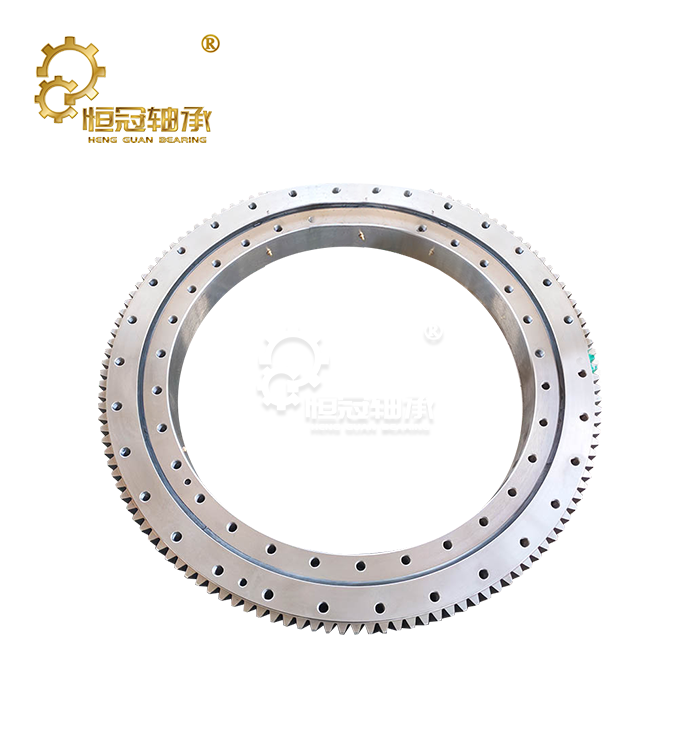
One part of machinery that turns while carrying a big, off-center, or changing load is what keeps it stable: the spinning bearing. Every day at Heng Guan Bearing, we see this in the cranes, wind turbines, and automation platforms that our customers build. Without a well-designed bearing in the middle, none of them would turn smoothly. Find out why Turntable Bearings are so important, how they're made, and what to look for when dependability is key. Let's go over the specifics together.
|
|
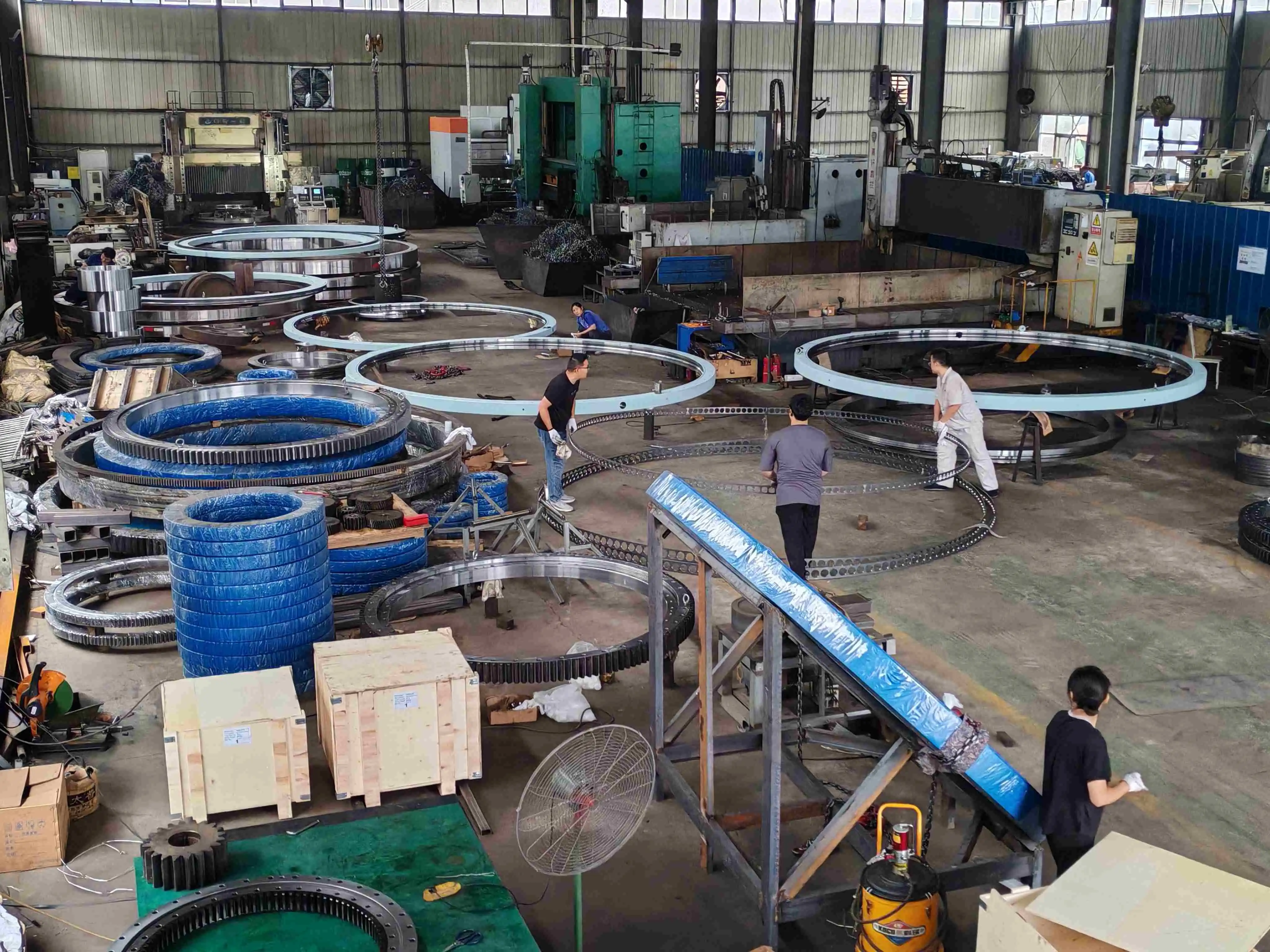
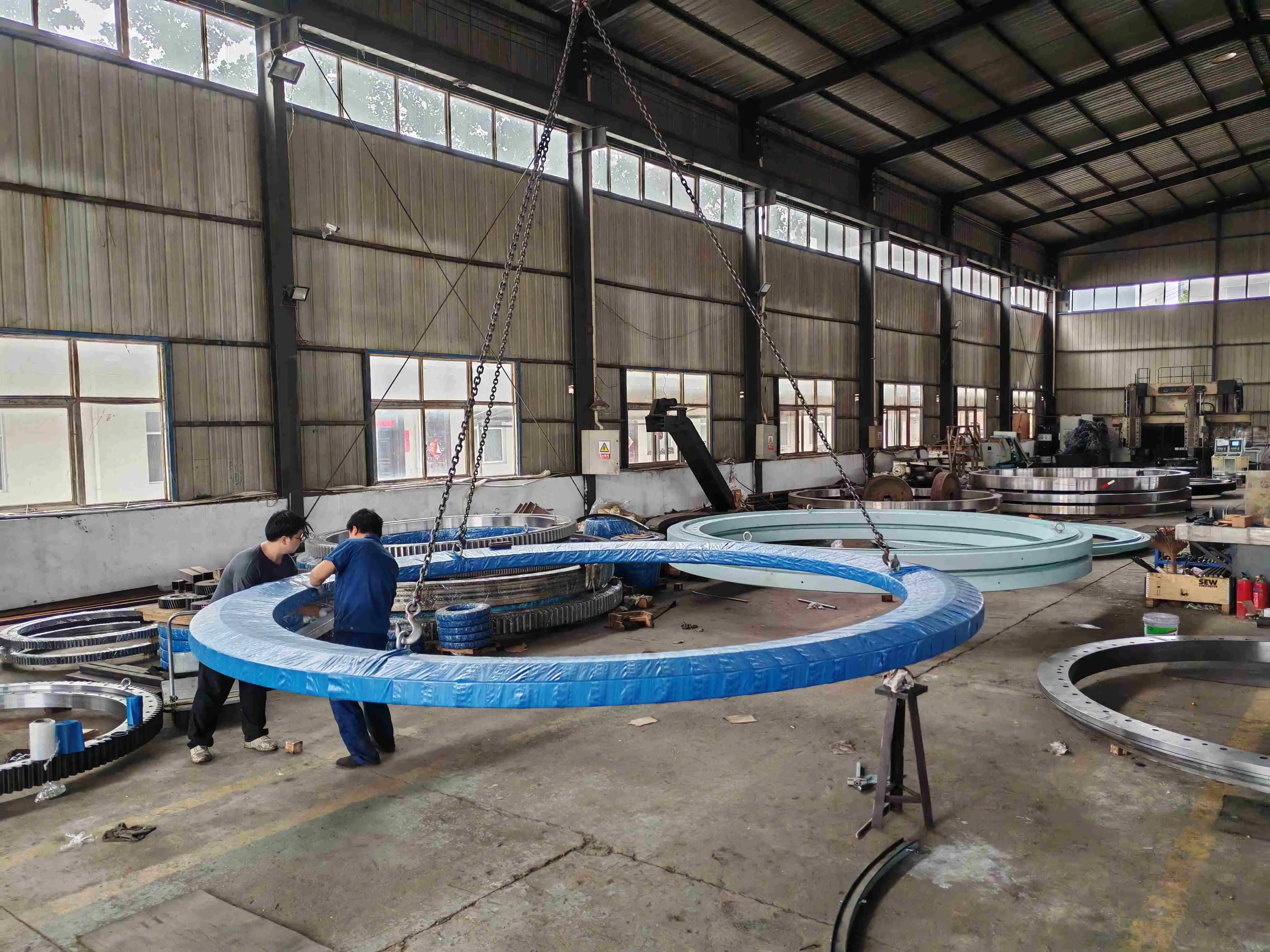
How Do Turntable Bearings Improve Stability and Precision in Rotating Systems?
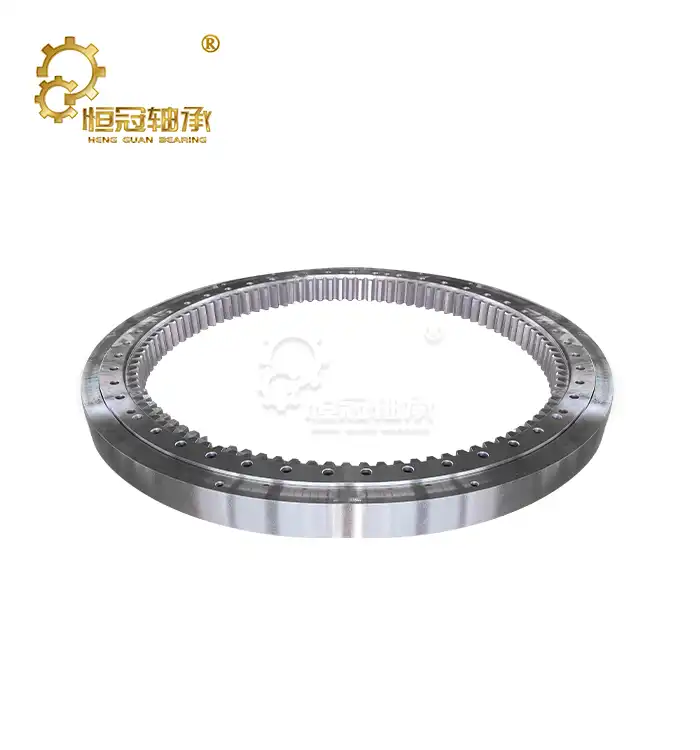
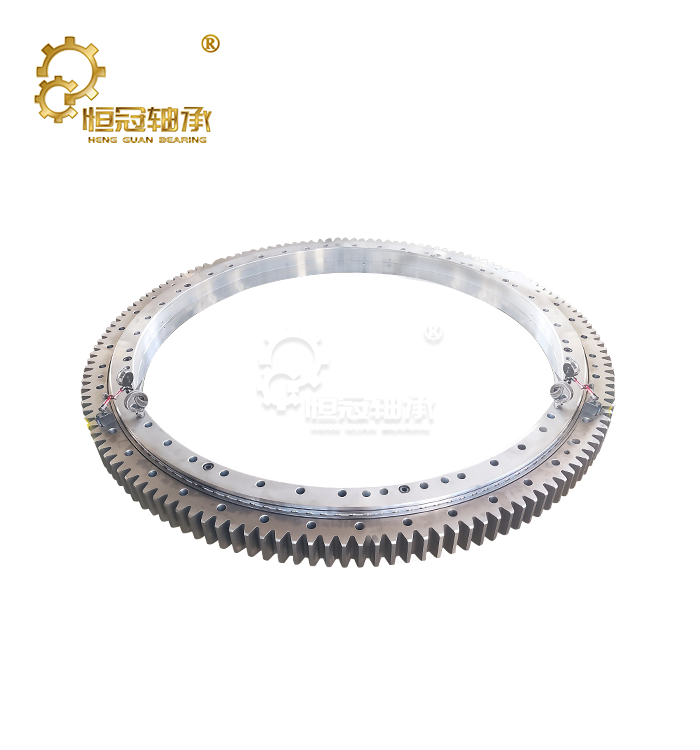
Turntable Bearings are different from other rolling-element bearings because they can handle three types of loads at the same time: axial thrust, radial force, and tilting moment. All three types of loads are contained within a single, small ring. This combined ability is what keeps a spinning platform steady even when the load moves off-center. This happens all the time in real life with things like robotic arms reaching across a workspace or cranes lifting at an angle. The raceway shape is designed to handle these mixed loads, so the bearing spreads stress evenly instead of gathering it at one contact point.
This lowers tremor and micro-movement during spinning. This is where precision can be measured: tighter raceway tolerances and controlled internal clearance directly lead to smoother, more consistent rotation, which is very important for tools like medical scanners and optical platforms where even a small wobble can change the results. Heng Guan Bearing makes bearings with four levels of accuracy so that customers can choose the right level of spinning precision for their needs without having to pay extra for tolerances they don't need.
| Precision Grade | Rotation Accuracy | Recommended Application |
|---|---|---|
| P0 | Standard | General machinery, conveyors, light-duty turntables |
| P6 | Higher | Standard cranes, excavators, construction equipment |
| P5 | High | Port machinery, automation platforms, wind yaw systems |
| P4 | Ultra-high | Medical scanners, optical platforms, precision positioning |
Key Design Features and Performance Advantages of Turntable Bearings
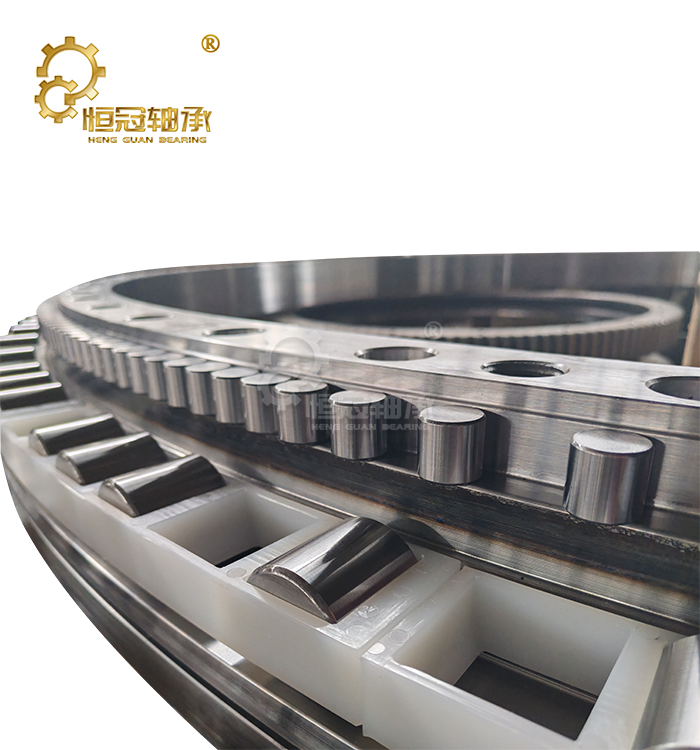
How well a wheel bearing works depends on a few design choices that affect how it reacts to load. The first type is structural. Single-row four-point contact ball designs work well for smaller, more cost-effective equipment. On the other hand, cross cylindrical roller or three-row roller structures are made for heavy, continuous-duty spinning, which is where wear resistance is most important. Which material you choose—50Mn or 42Cr—is just as important.
When you combine Mo high-strength alloy steel races with GCr15SiMn hardened rolling elements, they resist wear much better than regular steel, so they last longer even after being used over and over again. A lot more people don't realise how important sealing design is; built-in NBR seals keep dirt out of the track and keep the lubrication in, which is very important for equipment that works in dust, water, or outside.
As a skilled Heavy-duty turntable maker in China, Heng Guan Bearing pays close attention to these linked details. This is because a bearing that looks good on paper but isn't covered well will still fail soon after it's used. Advanced thermal treatment methods make materials stronger and longer-lasting for all types of structures, and CNC precision machining makes sure that they rotate smoothly with little noise and vibration.
| Technical Parameter | Specification Range |
|---|---|
| Inner diameter | 100 mm – 7,000 mm |
| Outer diameter | Up to 10,000 mm |
| Height | 50 mm – 500 mm |
| Precision grade | P0, P6, P5, P4 |
| Ring material | 50Mn / 42CrMo high-strength alloy steel |
| Rolling element material | GCr15SiMn bearing steel (ball or roller) |
| Sealing | Oil-resistant, wear-resistant NBR rubber |
| Structure type | Single-row four-point ball / double-row reducing ball / crossed roller / three-row roller |
| Operating temperature | -40 °C to +120 °C |
| Load capacity | Simultaneous axial, radial, and moment loads |
| Thermal treatment | Advanced heat treatment for enhanced strength & lifespan |
Why Are Turntable Bearings Essential for Heavy-Duty Industrial Applications?
In heavy industry, rotation rarely happens under light, predictable conditions — it happens under shock loads, contamination, and constant cycling, which is exactly the environment industrial turntable bearings are built to survive. Cranes and excavators rely on them to transfer massive lifting forces from the boom down through the chassis without failure, and because a slewing joint is one of the most stressed points on a crane, bearing reliability directly affects both uptime and safety. Port and mining equipment place similar demands on these components, often combined with dust, moisture, and temperature extremes that would quickly degrade a poorly sealed bearing.
Wind power installations add another dimension entirely, requiring bearings that can perform reliably for years with minimal maintenance access, since replacement at height is costly and disruptive. As a Heavy-duty turntable manufacturer in China with over 20 years of engineering experience, Heng Guan Bearing produces bearings across a 100 mm to 10,000 mm diameter range specifically to serve this spectrum of demanding conditions, from compact automation turntables to large-scale mining and construction machinery.
If you'd like help matching a bearing structure to your specific operating environment, our engineering team is reachable at mia@hgb-bearing.com for a no-obligation consultation. Choosing a supplier who understands these operating realities — not just the drawing dimensions — is often what separates equipment that runs for a decade from equipment that fails prematurely.
| Industry | Typical Application | Load Condition | Bearing Priority |
|---|---|---|---|
| Construction & lifting | Excavators, cranes, aerial work platforms | Great shock, offset loads | Load capacity, fatigue resistance |
| Wind energy | Blade pitch control, nacelle rotation | Long service intervals, remote access | Low-maintenance sealed design |
| Port & mining | Ship-to-shore cranes, mining excavators | Contamination, continuous cycling | Sealing integrity, wear resistance |
| Defense | Tank turrets, radar systems, missile launchers | Precision tracking, harsh environment | Tight tolerance, environmental sealing |
| Medical equipment | CT scanners, exam chairs, diagnostic platforms | Smooth low-speed rotation | High precision, low vibration |
| Industrial automation | Precision motion control systems | Repeatability, compact footprint | P4/P5 accuracy, minimal runout |
What Factors Should You Consider When Choosing Reliable Turntable Bearings?
To find the best provider of Turntable Bearings, you need to look beyond the price quote and into the details of the production process that decide how reliable the bearings will be in the long run. First, find out what precision grades and structural types the supplier can actually make in-house. This is important because components that are outsourced often cause batches to be inconsistent. Check to see what quality checks are done before the item is shipped. Checking the dimensions, testing the hardness, and testing the rotational torque should all be normal, not extras that you can choose to add on. It's also a good idea to talk about customisation early on. For example, non-standard diameters, changed flange patterns, or special sealing for harsh environments are common needs. An agile engineering team can save a lot of time on redesigning later on. If your project is outside of China, export knowledge is also important because the bearing will be safer during long transport with the right anti-rust covering and stronger packing.
As a well-known Heavy-duty turntable manufacturer in China, Heng Guan Bearing works directly with engineering teams to turn application requirements into finished bearings. All of their work is backed by documented quality checkpoints, from raw material to final testing, ISO 9001 and RoHS compliance, and a full warranty on every product. Standard sizes ship in two to four weeks, while custom designs can take up to eight weeks, depending on the details.
| Verification & Maintenance Item | Frequency / Detail |
|---|---|
| Bolt torque check | Monthly during initial operation period |
| Relubrication | Every 100–500 working hours (load & environment dependent) |
| External surface cleaning | Regular intervals to prevent contamination buildup |
| Seal inspection & replacement | When wear signs appear |
| Runout & vibration monitoring | Continuous — investigate abnormal noise or temperature rise |
| Installation steps | 5-step process: pre-check → surface prep → bolt torque → initial lubrication → alignment verification |
Conclusion
Turntable bearings are the quiet building blocks of stable movement in many fields. Heng Guan Bearing has been engineering bearings for more than 20 years, has quality control that is ISO 9001 certified, and can make bearings from 100 mm to 10,000 mm. This helps make sure that equipment will keep turning for years to come.
FAQ
Q: What makes turntable bearings different from standard bearings?
A: They handle axial, radial, and moment loads simultaneously within one compact ring, unlike standard bearings built for a single load direction. This combined-load capability is what makes them essential for rotating platforms under offset or shifting weight.
Q: What diameter range does Heng Guan Bearing offer?
A: Our turntable bearings are produced with inner diameters from 100 mm up to 7,000 mm and outer diameters up to 10,000 mm, with heights from 50 mm to 500 mm.
Q: Which precision grades are available?
A: We manufacture across P0, P6, P5, and P4 accuracy grades. P0 suits general machinery, P6 is standard for cranes, and P5/P4 serve precision positioning and medical imaging platforms.
Q: Can turntable bearings be customized for specific equipment?
A: Yes — diameter, structure type, sealing material, flange design, and mounting-hole pattern can all be tailored to your drawings. Non-standard applications also receive 3D modeling and comprehensive design support.
Q: What quality checks are performed before shipment?
A: Every bearing undergoes dimensional inspection, hardness testing, and rotation-torque testing before delivery, backed by ISO 9001 and RoHS compliance documentation.
Q: What are the lead times for standard and custom bearings?
A: Standard sizes ship in 2–4 weeks. Custom designs require 6–8 weeks depending on specifications, with comprehensive warranty coverage included.
Keep Your Equipment Turning with Engineered Precision
Don't settle for a bearing that barely fits when you can specify one that's built for your exact operating conditions. Heng Guan Bearing delivers ISO 9001-certified Turntable Bearings in 50Mn / 42CrMo steel with GCr15SiMn rolling elements, four structure types, P0–P4 precision, and diameters up to 10,000 mm — backed by 20+ years of cross-industry experience and exports to 50+ countries. Send your drawings, load specs, or equipment details to mia@hgb-bearing.com today and get a tailored recommendation with a quotation within 24 hours.
References
1. Harris, T. A., & Kotzalas, M. N. — Rolling Bearing Analysis, CRC Press.
2. ISO 9001:2015 — Quality Management Systems Requirements, International Organization for Standardization.
3. Brändlein, J., Eschmann, P., Hasbargen, L., & Weigand, K. — Ball and Roller Bearings: Theory, Design and Application, Wiley.
4. American Gear Manufacturers Association (AGMA) — Standard for Design of Slewing Ring Bearings.
5. Childs, P. R. N. — Mechanical Design Engineering Handbook, Butterworth-Heinemann.
6. Society of Automotive Engineers (SAE) — Bearing Design and Application Standards for Rotating Machinery.

WHAT OUR CUSTOMERS SAY
Here is the customer's evaluation of us
YOU MAY LIKE
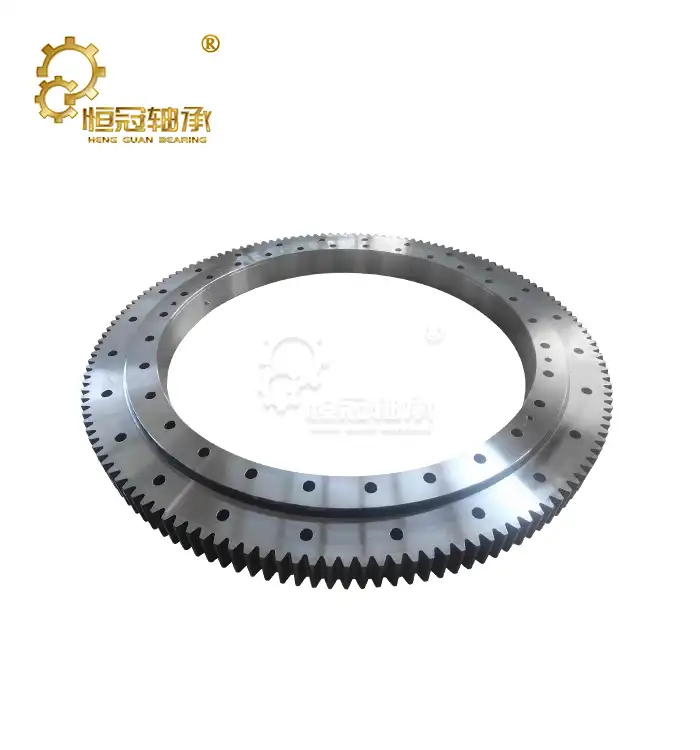 VIEW MORESingle Row Cross Roller Slewing Bearing - HJ Series
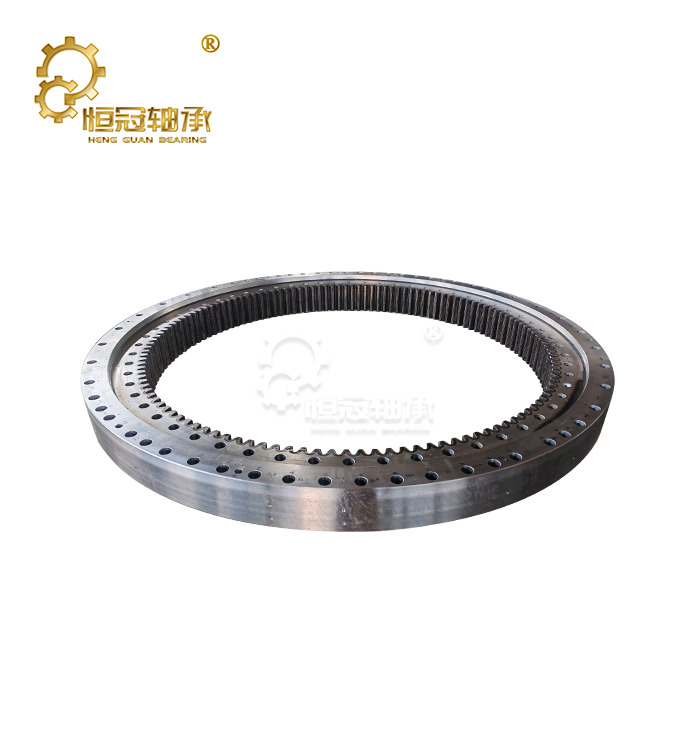 VIEW MORELiebherr Excavator slewing bearing
 VIEW MOREJohn Deere Excavator slewing bearing
 VIEW MOREThree-Row Roller Slewing Bearing
 VIEW MOREPackaging Machine Slewing Bearing
_1769754972666.webp) VIEW MOREWelding Positioners Slewing Bearing
VIEW MOREWelding Positioners Slewing Bearing VIEW MOREMarine Crane Slewing Bearing
 VIEW MOREAerial Work Platform Slewing Bearing