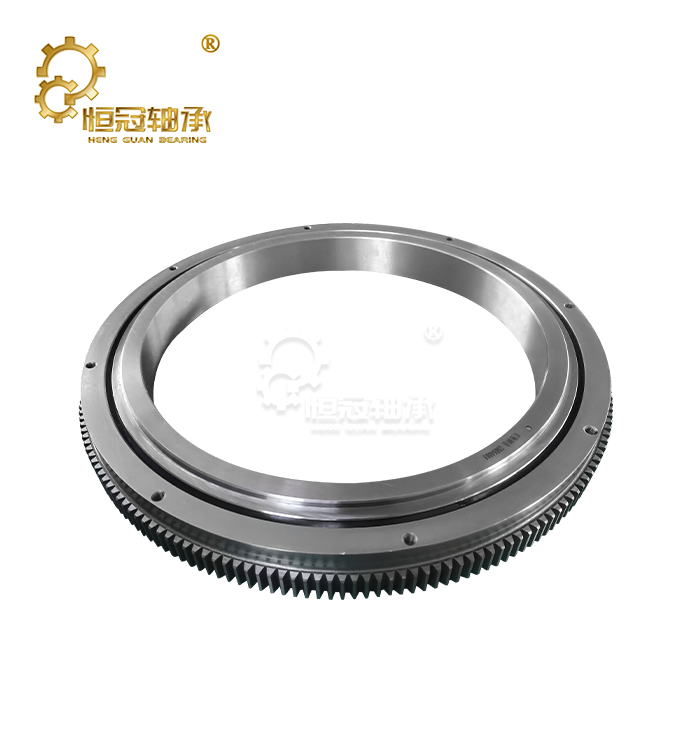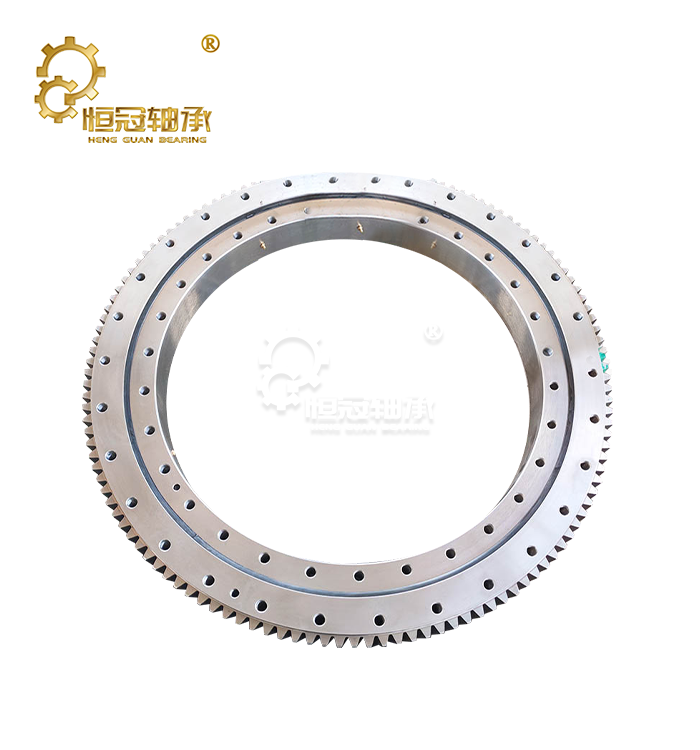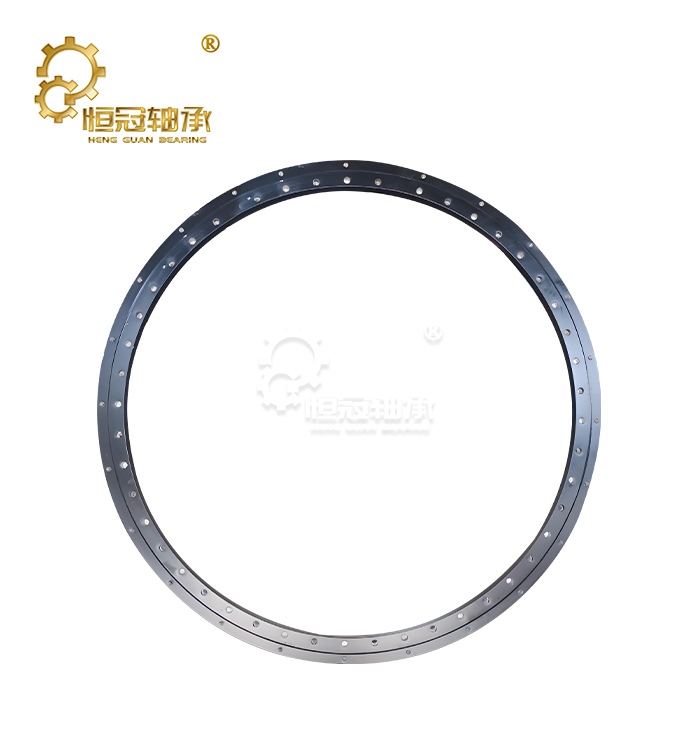




Why Are Custom Slewing Ring Turntable Solutions Worth It?
If you've ever looked at a standard rotation bearing next to a custom-built one, you know that the answer isn't always clear. This is the reason more engineers go to Heng Guan Bearing for unique slewing ring turntable help. Heng Guan Bearing makes slewing rings with diameters ranging from 200 mm to 10,000 mm. They help builders match the load capacity, footprint, and precision of their part to the exact needs of their machine, instead of making the machine adapt to a standard part. Let us look at why this method might be a good idea.
|
|
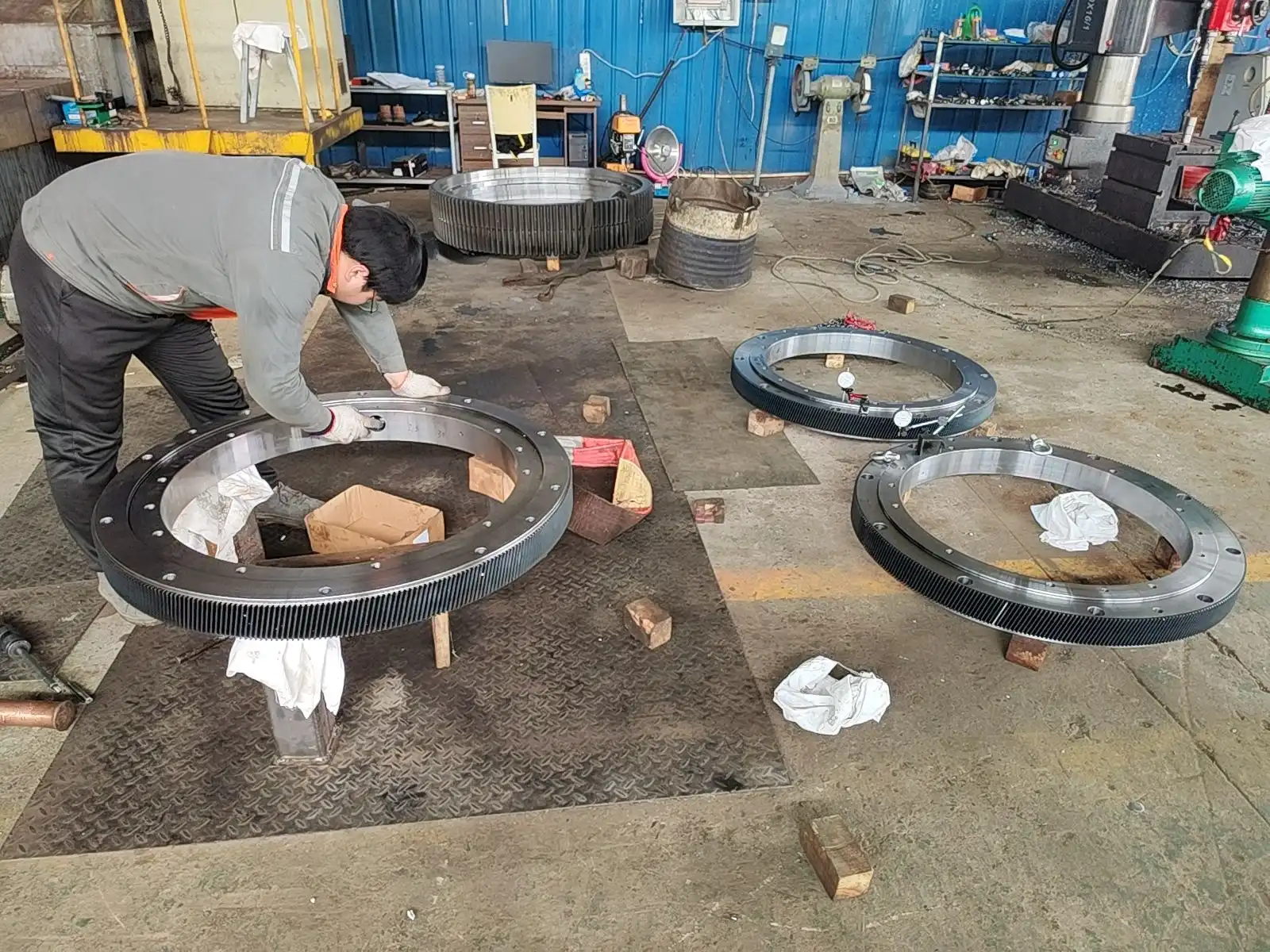
How Do Custom Slewing Ring Turntable Solutions Improve Equipment Performance?
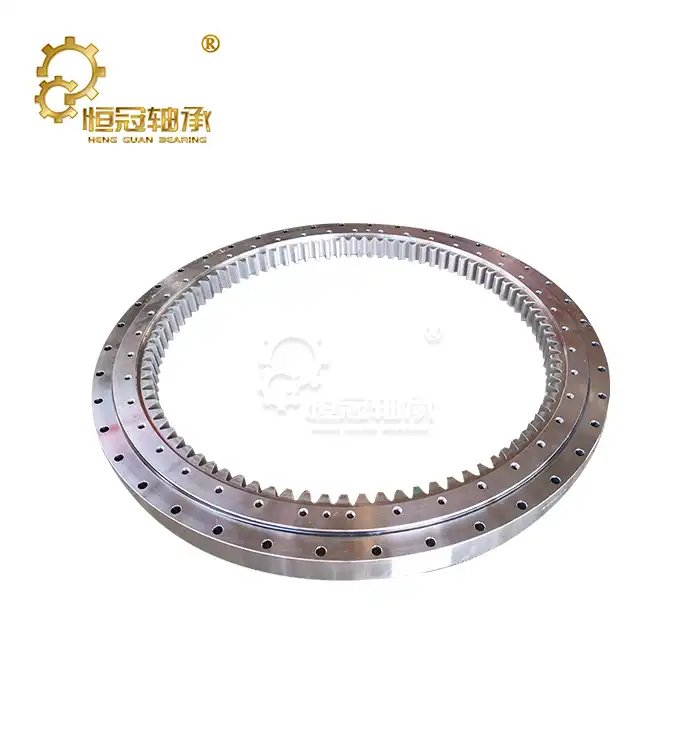
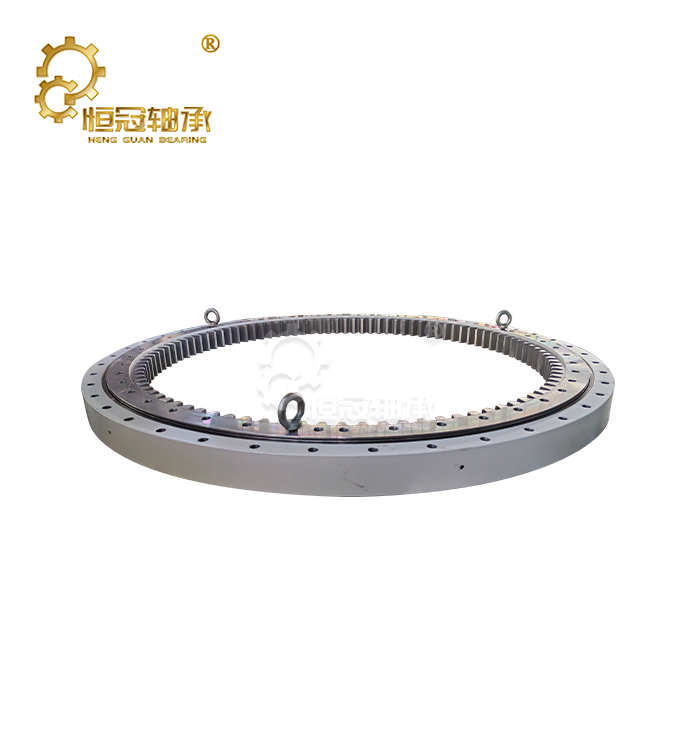
A slewing ring turntable is the most important part of any spinning platform, so how well it works affects the whole machine. It's rare for radial, axial, and tilting moment forces to show up in equal amounts, but a standard catalog part is made based on averages, not your specific case. On the other hand, a custom slewing ring turntable is built to work in the real world. The track hardness (HRC 55–62 through induction cooling with 3–6 mm stiffening depth), ball or roller arrangement, gear pitch, and seals can all be changed to fit the job.
This helps to lower vibration, even out start-stop cycles, and lengthen service intervals. This is useful for all kinds of machines, like cranes, wind turbines, medical imaging tables, and automated production lines. A purpose-matched bearing has a more reliable service life than a common one, as shown by fatigue tests at 120% of its stated load for 10 rounds.
| Performance Factor | Standard Slewing Ring | Custom Slewing Ring Turntable |
|---|---|---|
| Load matching | General-purpose rating | Matched to actual axial, radial & moment loads |
| Precision grade | Fixed (usually P0) | Selectable P0, P6, P5, P4 |
| Raceway hardening depth | Variable | 3–6 mm calibrated to rolling element size |
| Rotational smoothness | Adequate | Optimized — vibration spectrum verified |
| Service life predictability | Variable | Validated at 120% load, 10⁶ cycles |
| Thin-section height reduction | Not available | 30–50% lower overall machine height |
Key Design Considerations for Custom Slewing Ring Turntable Applications
Go through a short list of things to do before deciding on a design. The obvious places to start are the bore diameter, cross-section profile, and mounting hole pattern. But what makes a good slewing ring turntable great are the details that lie below them. One of the first things that needs to be decided is the type of structure. There are four types: single-row four-point contact, cross cylindrical roller, three-row cylindrical roller, and double-row ball. Each one reacts differently to mixed loads. Next are the material, how it will be heated, how it will be sealed to keep out dust or water, and the type of gear (internal, external, or non-geared), depending on how the platform will be driven.
For most industrial settings, 42CrMo rings (quenched and tempered to 229–269 HB core hardness) with GCr15SiMn rolling elements and double-lip NBR or fluororubber seals are enough. The cage material, which can be brass, steel, or engineering plastic, is chosen based on the speed and load characteristics. With tooth-face strengthening, gear quality can reach ISO/DIN Grade 8–10, and installation slack is usually set at 0.1–0.3 mm.
| Technical Parameter | Specification Range |
|---|---|
| Diameter range | 200 mm – 10,000 mm (micro / standard / large series) |
| Axial height | Compact — 30–50% lower than traditional assemblies |
| Precision grade | P0, P6, P5, P4 (ISO standard) |
| Gear precision | ISO/DIN Grade 8–10 |
| Ring material | 42CrMo (Q+T, core 229–269 HB) / 50Mn |
| Rolling element material | GCr15SiMn high-purity bearing steel |
| Cage material | Brass/steel/engineering plastic |
| Sealing | Double-lip NBR or fluororubber (imported) |
| Raceway heat treatment | CNC induction quenching, HRC 55–62, depth 3–6 mm |
| Structure type | Single-row four-point ball / double-row ball / crossed roller / three-row roller |
| Gear type | Internal/external / non-geared |
| Operating temperature | -40 °C to +80 °C (extended range available on request) |
Why Choose a Custom Slewing Ring Turntable Instead of Standard Bearings?
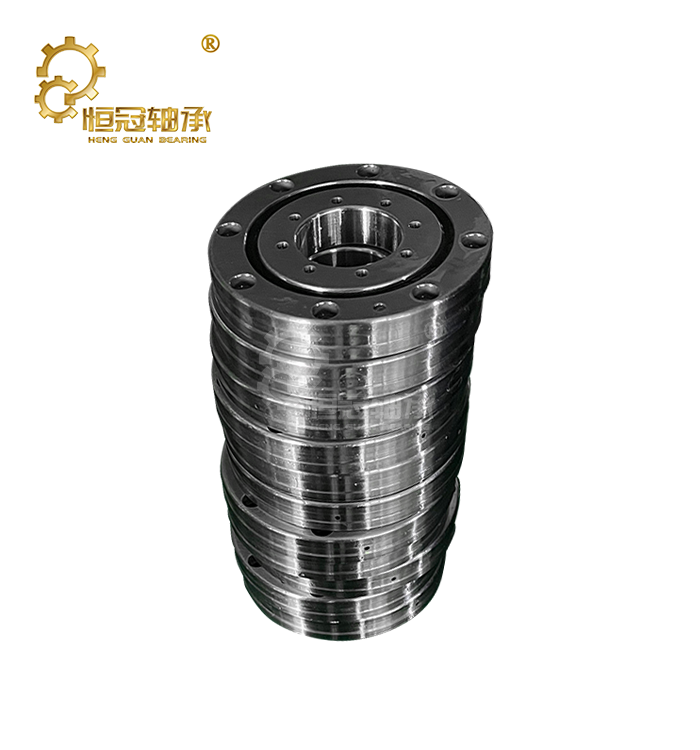
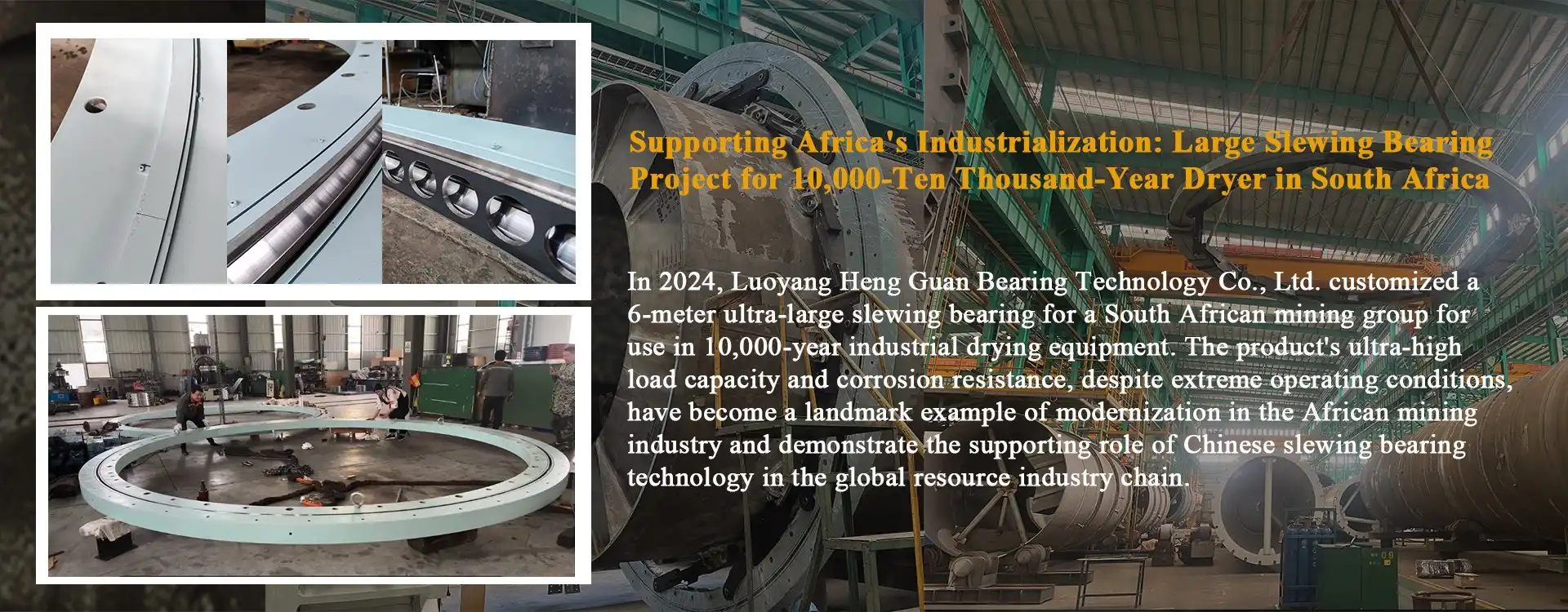
It's a fair question, since standard bearings are cheaper and readily available. But "available" and "optimal" aren't the same thing. A custom slewing ring turntable is worth considering whenever your platform has an unusual footprint, a tight envelope, an odd load path, or a duty cycle a catalog part wasn't designed around. Choosing a custom configuration also opens accuracy grades up to P4, non-standard flange shapes, and thin-wall designs that save weight without sacrificing stiffness — increasingly valued in new energy, robotics, and aerospace-adjacent equipment. Structure selection matters as much as precision: crossed-roller designs deliver ±0.02 mm repeatability for automation and welding robots, three-row roller structures handle extreme radial and axial forces in mining equipment, and single-row four-point ball suits space-constrained, lighter-duty platforms.
If you'd like to compare a standard option against a tailored alternative for your specific application, our engineering team is reachable at mia@hgb-bearing.com — send your drawings or load case, and we'll respond within 24 hours.
| Structure Type | Load Characteristic | Best-Suited Application | Key Advantage |
|---|---|---|---|
| Single-row four-point ball | Light to moderate mixed loads | Construction machinery, compact turntables | Space-efficient, cost-effective |
| Double-row ball | Higher load in compact envelope | Medium cranes, aerial work platforms | Increased capacity without size penalty |
| Crossed roller | High rigidity, precision | Welding robots, CNC rotary tables, CT scanners | ±0.02 mm repeatability, minimal runout |
| Three-row roller | Extreme axial & radial forces | Mining excavators, rotary kilns, heavy port cranes | Maximum load capacity, longest fatigue life |
How Can the Right Slewing Ring Turntable Manufacturer Reduce Long-Term Operating Costs?
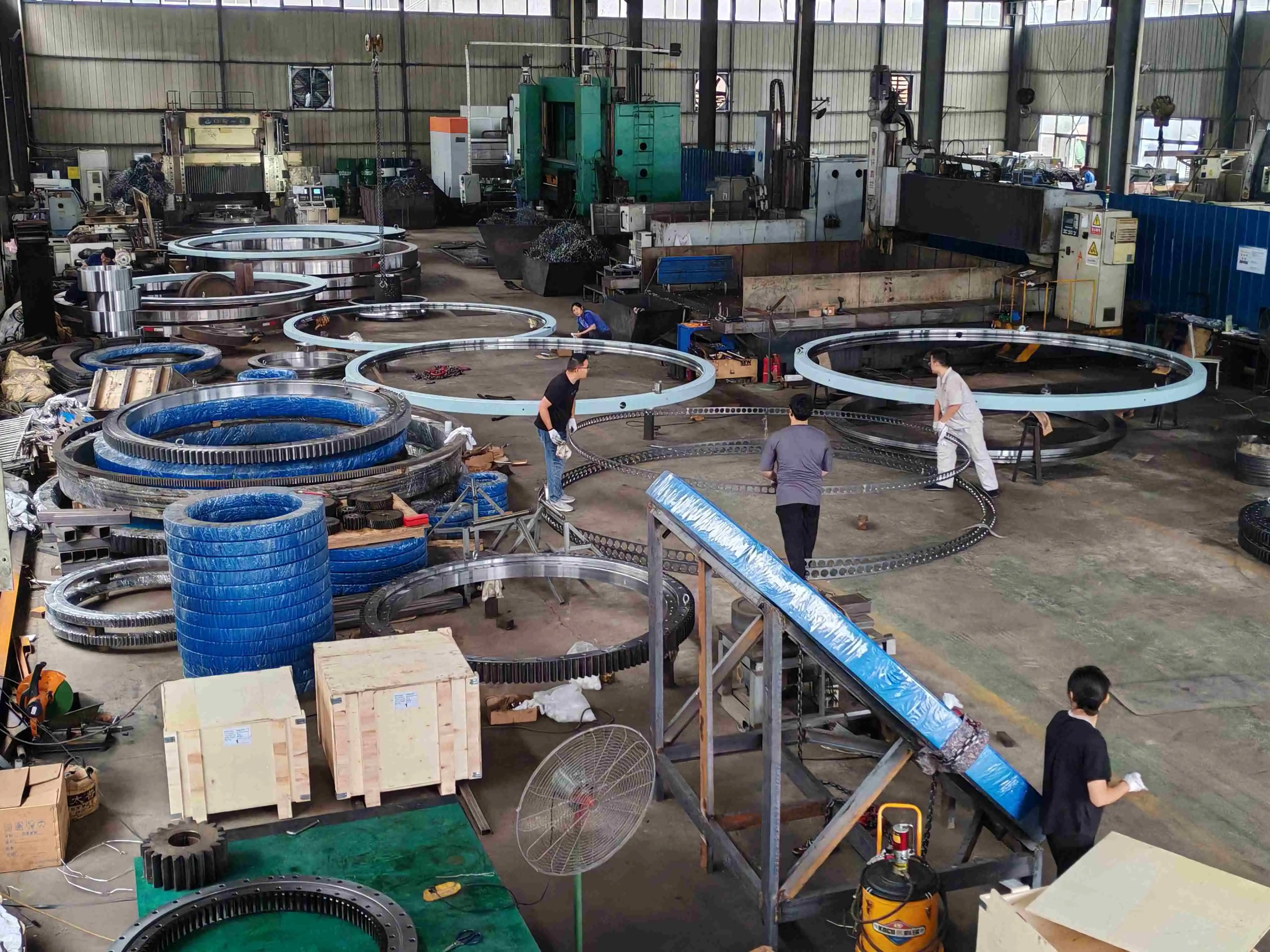
Upfront price is only part of the equation. The real cost of a rotation bearing shows up over years of operation, through downtime, replacement labor, and how well the part tolerates its environment. This is where manufacturer selection matters as much as design itself. Heng Guan Bearing's production base in Luoyang — long known within China as a center of bearing manufacturing — combines 30+ years of engineering experience with a 50-person R&D team, CNC vertical lathes, induction quenching systems, and gear-cutting equipment. Every unit passes CMM dimensional verification, portable Rockwell hardness testing, vibration spectrum analysis, and material traceability back to the steel mill's EN 10204 3.1 certificate.
A well-matched slewing ring turntable, built to the correct precision grade and sealed appropriately, typically needs fewer unplanned interventions — and that adds up across a fleet of machines. Standard sizes ship in 15–20 days; custom designs take 30–45 days. Every order carries a 12-month warranty after commissioning or 18 months after shipment, whichever comes first.
| Quality & Maintenance Item | Detail / Frequency |
|---|---|
| CMM dimensional inspection | Raceway geometry verified per ISO tolerances |
| Hardness testing | Portable Rockwell — confirms HRC 55–62 & hardening depth |
| Fatigue testing | 120% rated load, 10⁶ cycles |
| Vibration analysis | Spectrum analysis to detect manufacturing anomalies |
| Relubrication | Every 100 h (standard) / 50 h (harsh environment) |
| Bolt re-torque | After first 50 h, then annually |
| Seal & gear inspection | Monthly seal check; quarterly gear backlash measurement |
| Warranty | 12 months after commissioning / 18 months after shipment |
Conclusion
Custom slewing ring turntable solutions align performance, precision, and cost with your actual application. Heng Guan Bearing combines 30+ years of design expertise, ISO 9001:2015 certified manufacturing, and a 200 mm to 10,000 mm production range to deliver dependable, long-lasting rotation solutions built around your equipment's real-world needs.
FAQ
Q: What is a slewing ring turntable used for?
A: It supports and rotates heavy platforms while carrying simultaneous radial, axial, and moment loads — typically in cranes, wind turbines, mining equipment, medical scanners, and automated production lines.
Q: How is a custom slewing ring turntable different from a standard one?
A: It is engineered around your specific load path, footprint, precision requirements, and duty cycle, with selectable structure type, gear configuration, sealing, and material — rather than general catalog specifications.
Q: What accuracy grades are offered?
A: Four ISO precision grades: P0 for construction machinery, P6 for medium-precision needs, P5 for higher precision, and P4 for medical scanners and welding robots requiring high-accuracy rotation.
Q: What size range can be produced?
A: Diameters from 200 mm to 10,000 mm, covering micro (200–800 mm), standard (800–3,000 mm), and large (3,000–10,000 mm) series. Single-piece orders are accepted for both standard and custom prototypes.
Q: What testing is performed before shipment?
A: Every unit undergoes CMM dimensional verification, Rockwell hardness testing, vibration spectrum analysis, and material traceability confirmation. Fatigue validation is conducted at 120% rated load for 10⁶ cycles.
Engineer Your Custom Slewing Ring Turntable with Confidence
Stop compromising with catalog parts that almost fit. Heng Guan Bearing delivers ISO 9001:2015 certified custom slewing ring turntable solutions in 42CrMo / 50Mn steel with GCr15SiMn rolling elements, four structure types, P0–P4 precision, and diameters from 200 mm to 10,000 mm — backed by 30+ years of engineering experience, CMM and fatigue testing, and a 12-month warranty. Send your drawings, load specs, or equipment details to mia@hgb-bearing.com today and receive a tailored recommendation with a quotation within 24 hours.
References
1. American Bearing Manufacturers Association — Slewing Ring Bearing Standards.
2. Harris, T. A. — Rolling Bearing Analysis, CRC Press.
3. Brändlein, J., Eschmann, P., Hasbargen, L., & Weigand, K. — Ball and Roller Bearings: Theory and Application, Wiley.
4. International Organization for Standardization — ISO 76: Rolling Bearings — Static Load Ratings.
5. Society of Automotive Engineers — SAE Papers on Slewing Bearing Fatigue Life.
6. Burton, T., Jenkins, N., Sharpe, D., & Bossanyi, E. — Wind Energy Handbook, Yaw and Pitch Bearing Design Chapter, Wiley.

WHAT OUR CUSTOMERS SAY
Here is the customer's evaluation of us