




Where to buy a premium wind turbine slewing bearing directly?
You may have already looked into where to buy a high-quality wind turbine slewing bearing without having to go through a middleman if you're looking for parts for a wind energy project. From its base in Luoyang, China, LYHGB (Luoyang Heng Guan Bearing Technology Co., Ltd.) makes precision slewing rings and slewing bearings for the new energy sector around the world. Its diameters range from 1,500 mm to 5,500 mm, and its design life is 20 years or more according to IEC 61400. What does a wind turbine slewing bearing do? What should you check before you buy one? Why is it often better to buy directly from the factory?

What Is a Wind Turbine Slewing Bearing?
Let's start with the most important things. A slewing bearing in a wind turbine is a large-diameter rotational bearing that lets the nacelle turn into the wind and the blades pitch so that the most energy is captured. Unlike most bearings, it has to handle huge radial, axial, and moment loads all at the same time while rotating slowly and sometimes not at all for decades outside. When it comes to yaw systems, most designs use a single-row four-point contact ball structure. For heavier loads, double-row reduced-ball or three-row roller structures are used. The four-point contact shape makes the best use of contact angle distribution to avoid stress buildup and raceway spalling. Three-row roller bearings use changed roller profiles to make up for nacelle displacement caused by wind loads. The turbine must be reliable because changing a slewing bearing on a fixed turbine, especially one that is abroad, is slow and costs a lot of money. That's why, when engineers specify a wind turbine slewing bearing, they pay close attention to the raceway roughness, sealing design, and load grade.
| Bearing Structure | Primary Application | Load Capability | Key Design Feature |
|---|---|---|---|
| Single-row four-point contact ball | Yaw & pitch systems (onshore) | Axial up to 3,000 kN; radial up to 2,000 kN | Optimized contact angle for even stress distribution |
| Double-row reduced ball | Main yaw drive (large onshore) | Higher load distribution than single-row | Improved load sharing across two ball rows |
| Three-row roller | Offshore & large turbine yaw | Heaviest combined loads | Modified roller profile compensates nacelle deflection |
| Special anti-corrosion variant | Offshore wind farms | Standard load ratings with enhanced protection | Electroless nickel plating; 1,000-hour salt spray tested |
| Low-temperature variant | High-altitude /极寒 sites | Standard load ratings with low-temp toughness | Charpy impact-verified; special low-temp lubricant |
Key Factors to Consider Before Buying a Wind Turbine Slewing Bearing
Before placing an order, think through a few practical factors. Diameter and load rating come first — a wind turbine slewing bearing must be matched to the turbine's rated power and rotor size, with inner diameters from 1,500 mm to 5,000 mm and outer diameters from 1,800 mm to 5,500 mm. Beyond dimensions, consider raceway material and heat treatment: 42CrMo or 50Mn rings induction-hardened to HRC 55–62 paired with GCr15SiMn rolling elements at HRC 60–64 give the fatigue resistance needed for 20+ years of service. Sealing type matters enormously — NBR or FKM seals must protect the raceway from moisture, salt spray, and dust over decades. Check for lubrication ports compatible with centralized grease systems, and confirm that gear module (M16–M40), gear type (external, internal, or non-geared), and precision grade (P0–P4) match your drive configuration. Reviewing these details with your supplier before manufacturing begins can prevent costly mismatches later.
| Technical Parameter | Specification |
|---|---|
| Inner diameter | 1,500 mm – 5,000 mm |
| Outer diameter | 1,800 mm – 5,500 mm |
| Height | 100 mm – 400 mm |
| Ring material | 42CrMo alloy steel (tensile strength 900 MPa) / 50Mn |
| Rolling element material | GCr15SiMn high-carbon chromium steel (HRC 60–64) |
| Raceway hardness | HRC 55–62 (surface induction quenching) |
| Rolling element hardness | HRC 60–64 |
| Gear module | M16 – M40 |
| Gear type | External/internal / non-geared |
| Gear backlash (M20+) | 0.2–0.4 mm (four-quadrant verification) |
| Precision grade | P0, P6, P5, P4 |
| Sealing material | NBR (standard) / FKM (chemical & high-temp resistant) |
| Operating temperature | -40 °C to +120 °C |
| Design life | 20+ years (IEC 61400); endurance tested >1,000,000 cycles |
| Surface treatment (offshore) | Electroless nickel plating; 1,000-hour salt spray test |
| Lubrication | NLGI Grade 2 lithium-complex grease; pre-drilled grease channels |
| Raceway geometry tolerance | ±0.01 mm; runout <0.3 μm |
How to Choose a Reliable Wind Turbine Slewing Bearing Manufacturer or Supplier?
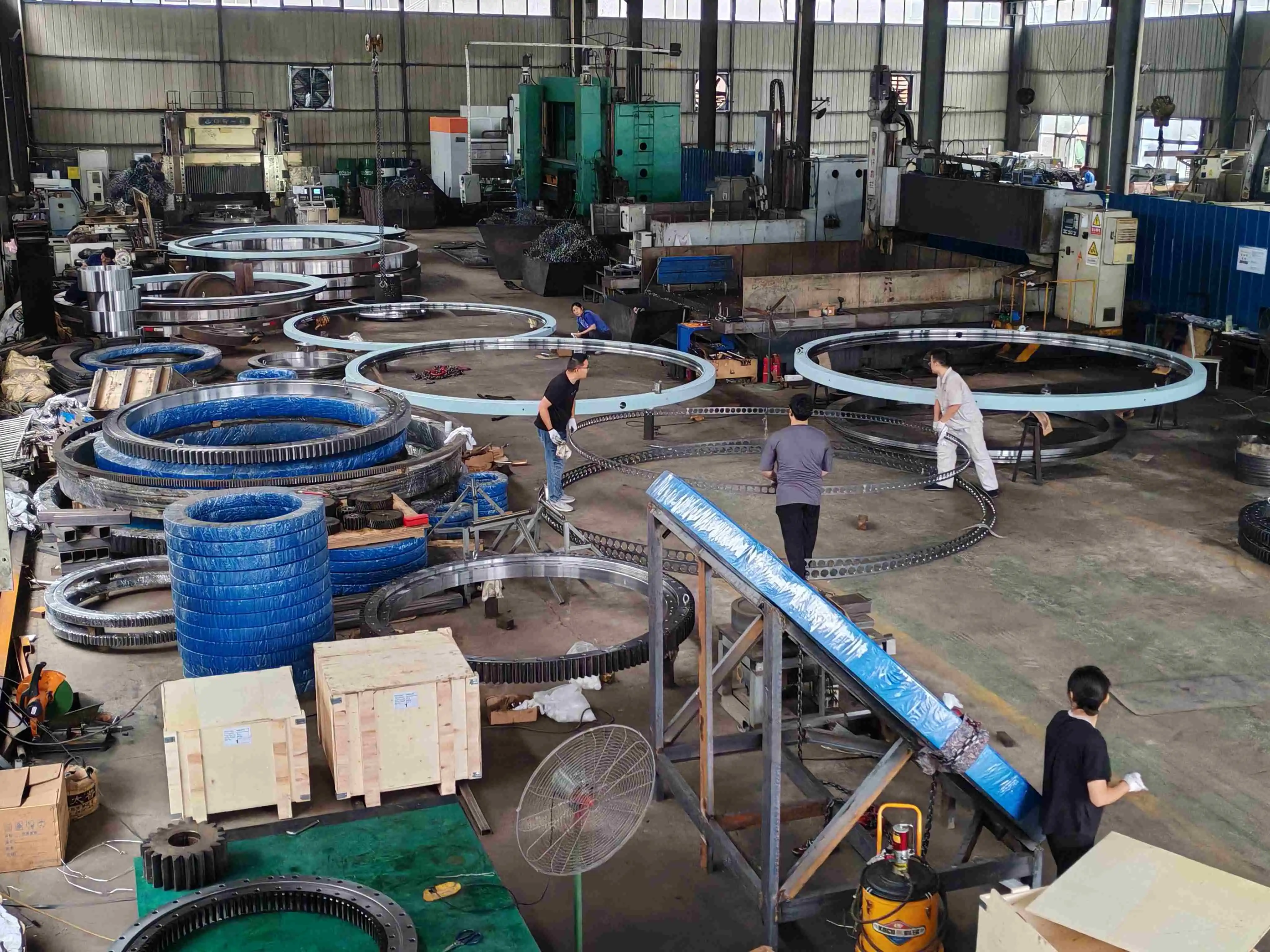
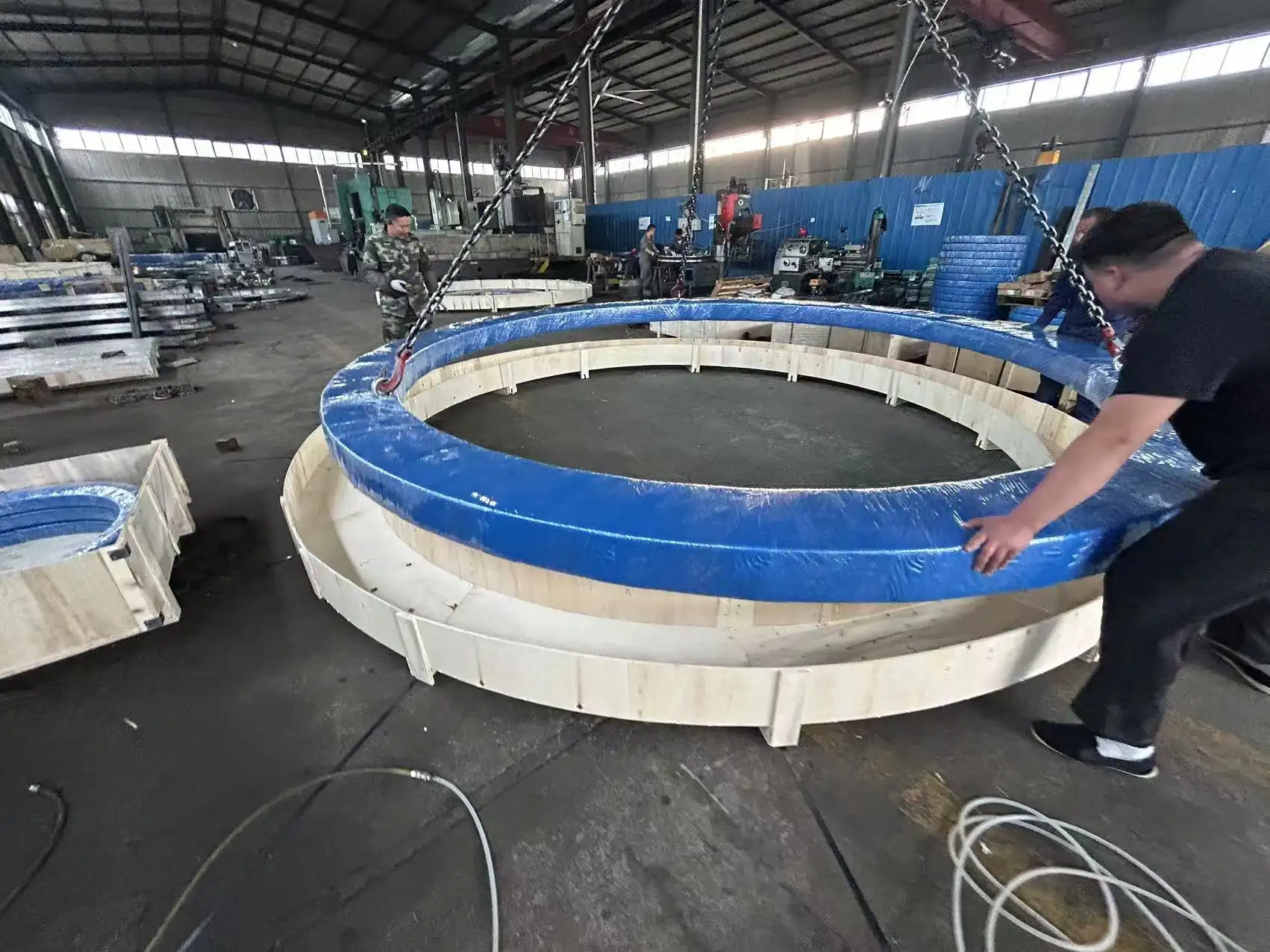
This is where many buyers get stuck, because not every bearing factory has genuine experience with wind power applications. A reliable wind turbine slewing bearing manufacturer should show project references, in-house design and testing capability, and consistent production across the 1,500–5,500 mm diameter range modern turbines require. It's also worth asking how the supplier handles quality control from raw forging through final inspection — spectrometer material analysis, ultrasonic testing, CMM full inspection, Rockwell hardness verification, gear profile measurement, and vibration testing should all be standard, not optional. For offshore projects, ask specifically about salt spray testing (1,000 hours minimum) and Charpy impact values for low-temperature toughness. Our team at HGB Bearing (reach us at mia@hgb-bearing.com) works closely with customers from drawing review through final testing, offering hands-on technical support that's hard to get from a general trading company. Choosing a supplier with real manufacturing depth — not just a sales office — tends to pay off over the turbine's 20-year lifetime.
|
|
| Evaluation Factor | What to Verify | HGB Capability |
|---|---|---|
| Wind power experience | Project references, turbine models served | Bearings installed in Norway offshore farms, Texas wind corridor, 50+ countries |
| In-house manufacturing | CNC vertical lathes, induction quenching, gear hobbing | Full-process production base in Luoyang; raceway tolerance ±0.01 mm |
| Testing capability | UT, CMM, hardness, gear profile, vibration, salt spray | All standard; 1,000-hour salt spray for offshore; Charpy impact verified |
| Engineering team | Design support, drawing review, reverse engineering | 50-person R&D team; reverse engineering from physical samples available |
| Quality documentation | Material certificates, inspection reports, batch traceability | Batch traceability code on every bearing; EN 10204 mill certificates |
| Certifications | ISO 9001, RoHS, IEC 61400 compliance | ISO 9001 certified; all products RoHS compliant |
Wind Turbine Slewing Bearing Certifications, Quality Standards & Customization Options
People who buy wind turbine slewing bearings can be sure that they will work as expected for a long time because they come with certifications and written quality standards. Manufacturers with a good reputation check the hardness of the raceways (HRC 55–62), check the sizes against ISO tolerance classes, and keep records of the raw materials used in each batch. Each bearing has a batch traceability code that is linked to its raw materials inspection certificate. Customization is just as important as approval because wind turbines from different makers and groups are very different. Customized design and flexible production are available at HGB Bearing. They offer non-standard diameters for retrofit projects, modified gear modules, different sealing options for offshore or high-altitude sites, low-temperature material grades with Charpy impact verification, anti-corrosion treatments like electroless nickel plating, and even sensor bearings that can detect developing defects up to six months in advance by monitoring temperature and vibration trends. This mix of quality assurance and design freedom is very helpful for repair projects, since an older rotor might need a slewing bearing that isn't readily available. You can also get yaw and pitch bearings together to make the process of buying them easier.
| Quality Checkpoint | Inspection Method | Acceptance Standard |
|---|---|---|
| Raw material composition | Spectrometer chemical analysis | 42CrMo / 50Mn / GCr15SiMn per mill certificate |
| Forging internal defects | Ultrasonic testing (UT) | No internal cracks, inclusions, or voids |
| Raceway hardness | Rockwell hardness test | HRC 55–62 (surface); core ductile |
| Rolling element hardness | Rockwell hardness test | HRC 60–64 |
| Gear tooth geometry | CMM full inspection + gear profile check | M16–M40; backlash 0.2–0.4 mm at four quadrants |
| Raceway geometry | CMM | Tolerance ±0.01 mm; runout <0.3 μm |
| Rotation stability | Vibration testing | No abnormal vibration signatures |
| Offshore corrosion resistance | Salt spray test | 1,000 hours minimum (EN ISO 9227) |
| Low-temperature toughness | Charpy impact test | Verified per material certificate |
| Endurance | Fatigue cycle test | >1,000,000 cycles at rated load |
Why Buy Wind Turbine Slewing Bearing Directly from the Factory Instead of Distributors?
Buying directly from the factory rather than through a distributor offers clear advantages. Direct sourcing shortens lead times — standard modifications ship in 8–10 weeks, while fully custom designs take 12–16 weeks from drawing confirmation, with no added layer of order processing in between. It also gives engineers direct access to technical support, letting design questions about a specific wind turbine slewing bearing be answered by the people who actually build it, rather than relayed through an intermediary. Cost transparency improves too, since distributor margins are removed. HGB Bearing works directly with customers across Europe, America, and Asia, offering a factory-direct relationship that supports both large production orders and smaller custom or replacement runs. Every shipment includes a dimensional inspection report, material certificate with Charpy impact values, assembly torque specifications, and maintenance interval recommendations — documentation that's hard to assemble piecewise through a middleman.
| Comparison Factor | Factory Direct (HGB Bearing) | Via Distributor |
|---|---|---|
| Lead time | 8–10 weeks standard; 12–16 weeks custom | Additional 2–4 weeks for intermediary processing |
| Pricing | Factory price, no distributor markup | 15–30% markup typical |
| Technical support | Direct access to 50-person engineering team | Relayed through sales channel |
| Customization | Full reverse engineering, non-standard sizes, sensor integration | Limited to catalog offerings |
| Quality documentation | Full inspection report + mill certificate + batch traceability | Often partial or generic |
| Retrofit support | Reverse engineering from physical samples | Rarely available |
| Minimum order | Single-piece MOQ accepted | Often higher minimums |
Conclusion
A dependable wind turbine slewing bearing depends on precise engineering, proven quality control, and a trustworthy manufacturer. HGB Bearing offers all three — 20+ years of design life per IEC 61400, HRC 55–62 raceway hardness, 1,000-hour salt spray testing for offshore variants, full NDT and CMM inspection on every unit, and a 50-person engineering team supporting 50+ countries — helping wind energy projects worldwide run reliably for decades.
FAQ
Q: What sizes can HGB Bearing produce for wind turbine slewing bearings?
A: Inner diameters from 1,500 mm to 5,000 mm and outer diameters from 1,800 mm to 5,500 mm, with heights from 100 mm to 400 mm. Non-standard sizes are available for retrofit projects.
Q: What accuracy grades are available?
A: Four precision grades: P0, P6, P5, and P4, depending on the rotational accuracy and environmental conditions of the application.
Q: Can the bearing be customized for offshore or high-altitude sites?
A: Yes — offshore variants feature electroless nickel plating and 1,000-hour salt spray testing; high-altitude variants use low-temperature material grades with Charpy impact verification and special low-temp lubricant.
Q: Why does sealing matter for wind turbine bearings?
A: NBR or FKM seals protect the raceway from moisture, salt spray, and dust over a 20+ year service life, preventing contamination-induced premature failure in outdoor environments.
Q: What is the design life and how is it validated?
A: Design life is 20+ years per IEC 61400, validated by endurance testing exceeding 1,000,000 fatigue cycles at rated load.
Specify Your Wind Turbine Slewing Bearing with Engineering Confidence
Don't leave your wind energy project's rotation-critical path to chance. HGB Bearing delivers IEC 61400-compliant wind turbine slewing bearing solutions in 42CrMo / 50Mn steel with GCr15SiMn rolling elements, HRC 55–62 raceway hardness, gear modules M16–M40, four structure types, P0–P4 precision, and diameters from 1,500 mm to 5,500 mm — backed by 1,000-hour salt spray testing, full NDT + CMM inspection, condition-monitoring sensor integration, and 20+ years of cross-industry experience across 50+ countries. Send your drawings, load specs, or turbine model to mia@hgb-bearing.com today and receive a tailored recommendation with a quotation within 24 hours.
References
1. International Electrotechnical Commission — IEC 61400: Wind Turbine Design Requirements.
2. ISO 76 — Rolling Bearings: Static Load Ratings, International Organization for Standardization.
3. Harris, T. A., & Kotzalas, M. N. — Rolling Bearing Analysis, CRC Press.
4. American Gear Manufacturers Association (AGMA) — Standard for Design of Slewing Ring Bearings.
5. Burton, T., Jenkins, N., Sharpe, D., & Bossanyi, E. — Wind Energy Handbook, Wiley.
6. ISO 9227 — Corrosion Testing in Artificial Atmospheres: Salt Spray Tests, International Organization for Standardization.

WHAT OUR CUSTOMERS SAY
Here is the customer's evaluation of us
YOU MAY LIKE
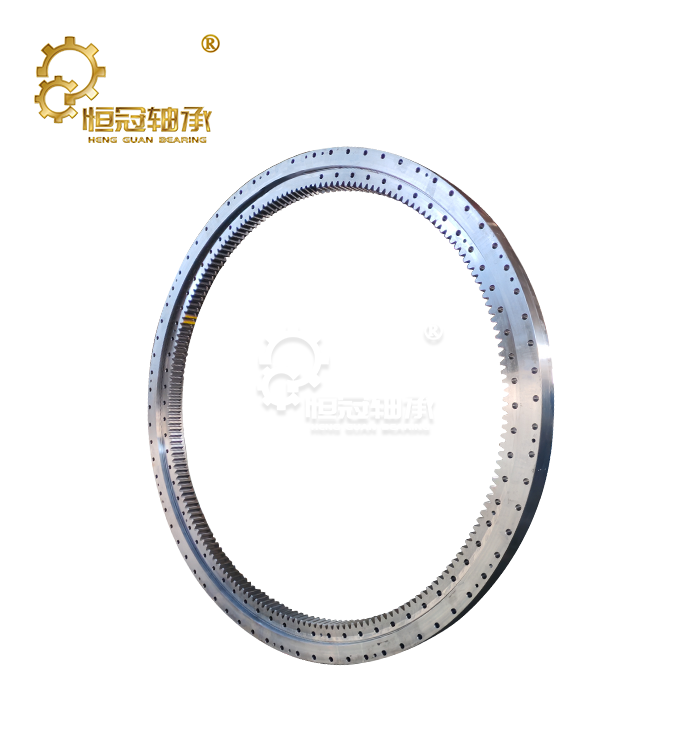 VIEW MOREPort Crane Slewing Bearing
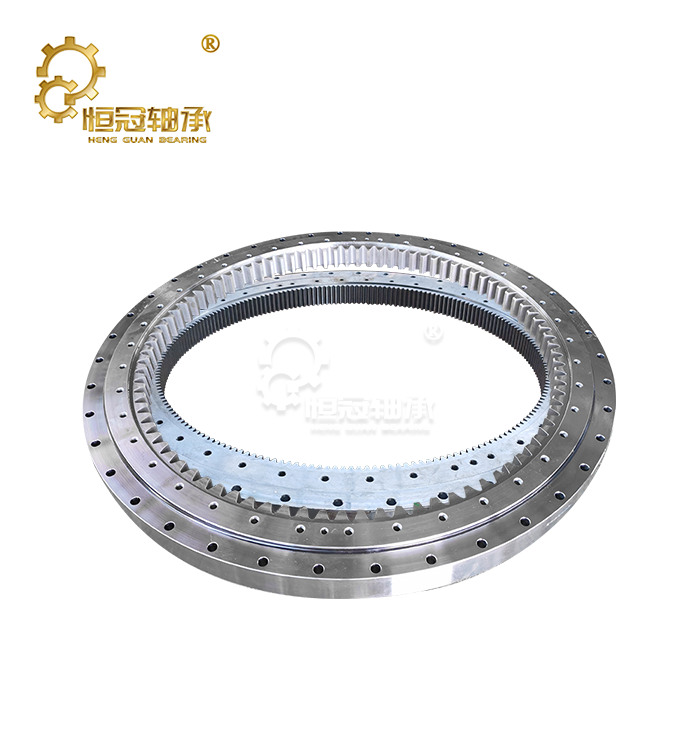 VIEW MORESany Excavator slewing bearing
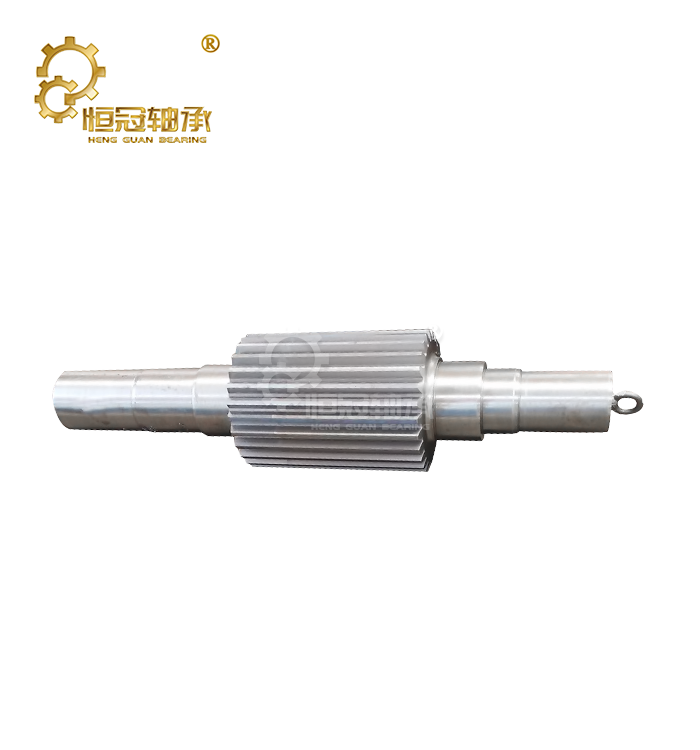 VIEW MORECrusher Gear Shaft
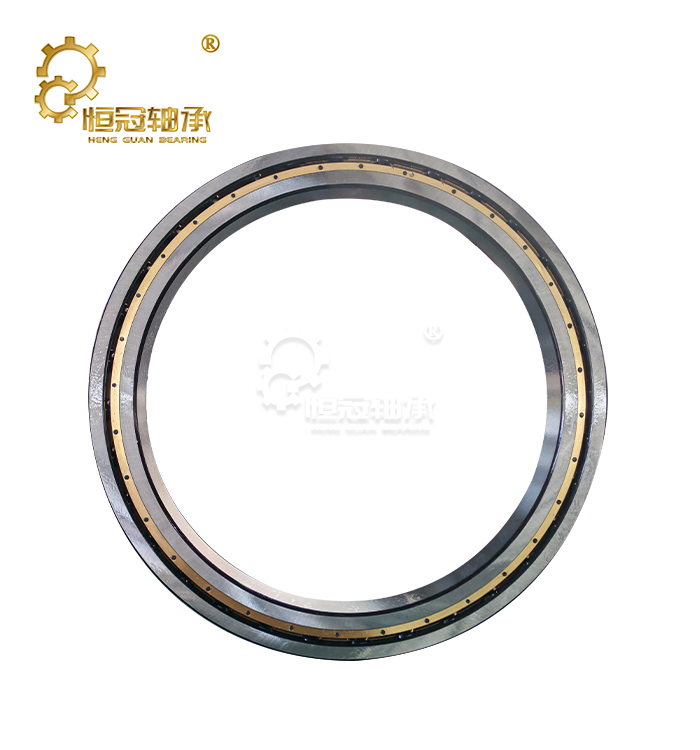 VIEW MORECrossed Roller Slewing Bearing
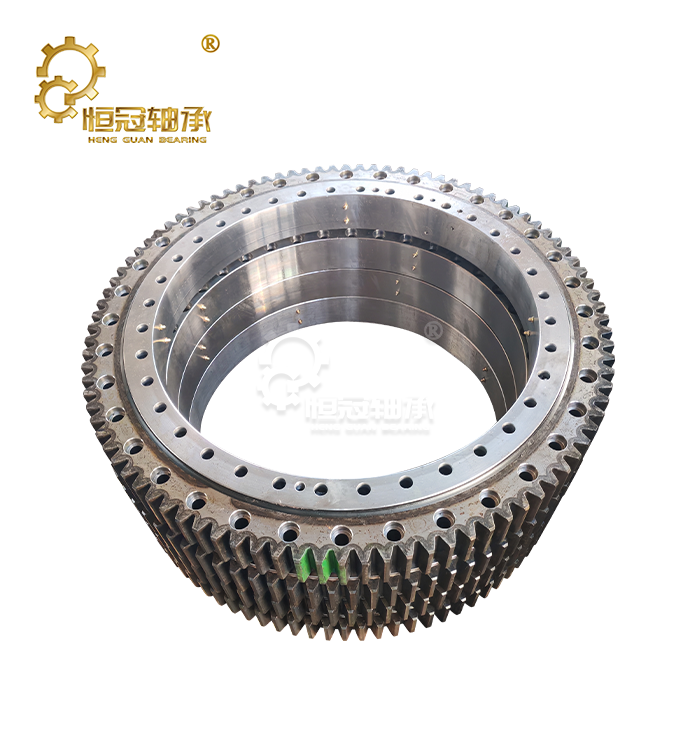 VIEW MORESlewing Ring Bearing With External Gear
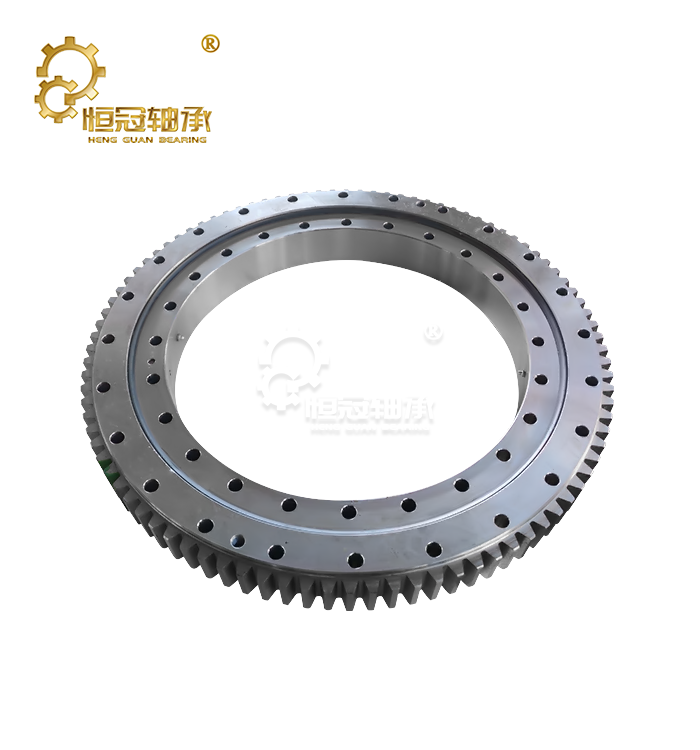 VIEW MORERotary Drilling Rig Slewing Bearing
 VIEW MOREConveying System Slewing Bearing
 VIEW MORElarge gear rings for mining