



What to Look for in a Reliable Deck Crane Slewing Bearing Supplier
When sourcing critical components for marine lifting equipment, choosing the right Deck Crane Slewing Bearing supplier is not simply a matter of comparing prices. A qualified supplier must understand the demanding operating conditions of vessels, offshore platforms, and port equipment, where bearings are exposed to heavy loads, saltwater corrosion, vibration, impact forces, and long operating cycles.
A dependable manufacturer is more than a spinning part. They provide engineering support, precision production, rigorous quality control, and long-term technical support to ensure safe and efficient crane operation. Deck cranes depend on slewing bearings for smooth 360° rotation under complex axial, radial, and overturning loads; thus, the choice of supplier is a key factor in equipment reliability and maintenance costs.
For shipowners, shipyards, and marine equipment manufacturers, it is necessary to analyze the supplier’s manufacturing capacity, material control, inspection system, customization capability, and after-sales service. The right partner can help avoid unplanned downtime, extend the service life of bearings, and provide solutions adapted to particular crane designs and operating conditions.
Why Does Supplier Selection Matter for Marine Crane Slewing Bearings?
Marine cranes are working in far more difficult conditions than many common industrial applications. Deck crane bearings are not like bearings in a controlled interior environment. They have to keep working despite seawater spray, humidity, temperature changes, and continuous mechanical stress.
A breakdown of a crane slewing bearing might have major operational effects. Cargo handling can be stopped, vessel schedules can be delayed, and replacement work at sea or in remote areas can cost a lot. Therefore, one of the most important decisions during equipment procurement is the choice of a supplier with proven manufacturing experience.
Professional vendors know that a marine bearing is not only a load-bearing component but also part of the safety-crucial system of the whole crane system. When advising an appropriate design, they take into account aspects such as crane capacity, rotation speed, working frequency, installation dimensions, environmental exposure, and estimated service life.
Understanding the Technical Requirements of Deck Crane Slewing Bearings
How Marine Crane Slewing Bearings Support Heavy-Duty Operations
The main function of a deck crane slewing bearing is to connect the rotating upper part of the crane with the fixed base and provide smooth rotation around the vertical axis. The resultant of the forces from boom weight, lifting load, counterweight, and external environment must be transmitted by the bearing in service.
Marine crane slewing bearings are not just any ordinary rotational bearing. They are built to manage various forces at once, such as the following:
Lifting activities generate axial loads.
Radial stresses due to crane rotation
Tilting moments from prolonged boom positions
Shock loads arising from vessel movement and rough sea conditions
A good provider should know these loading conditions, and engineering help should be available to assist in selection. Improper bearing sizing or incorrect internal design may lead to early wear, raceway damage, excessive clearance, or unexpected downtime.
Choosing the Right Bearing Structure for Marine Applications
The uses of cranes vary, and this necessitates diverse types of slewing bearings. The supplier’s technical team should be able to suggest the most appropriate structure depending on the operating needs.
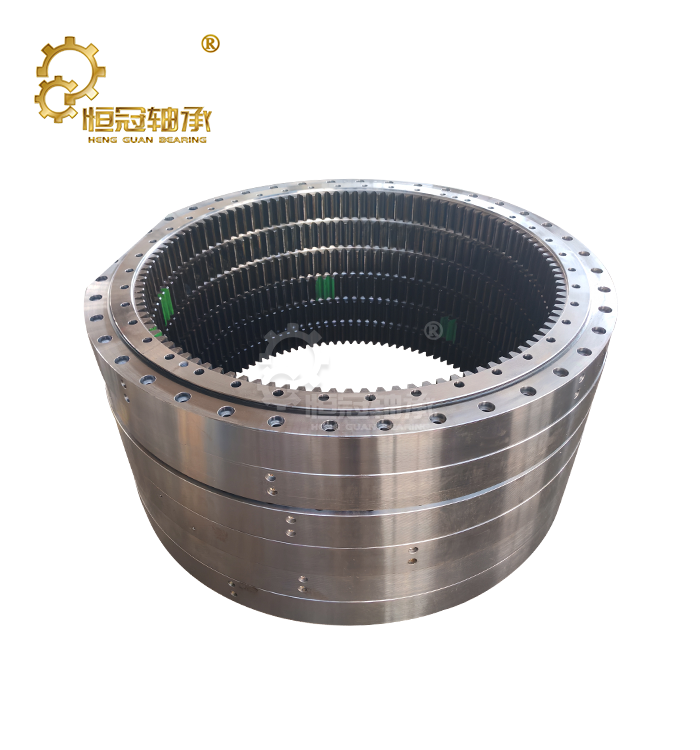
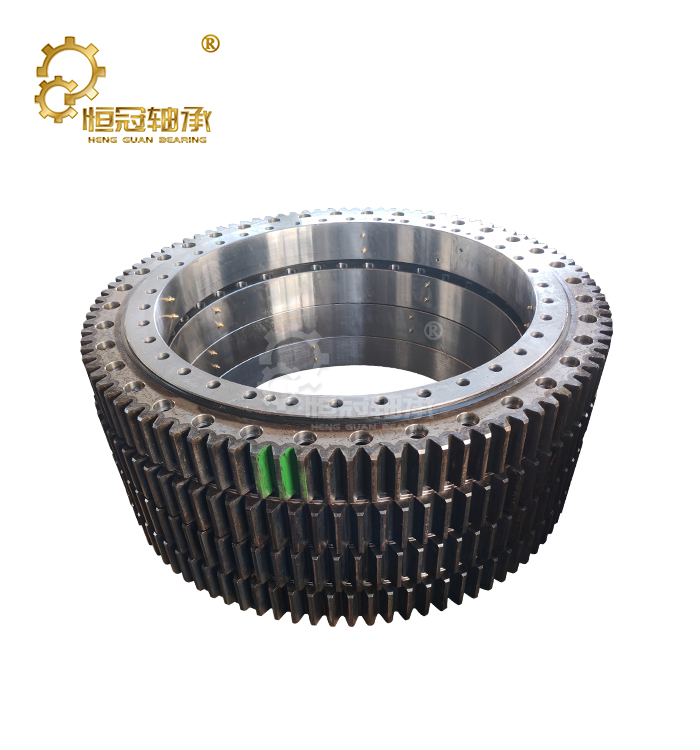
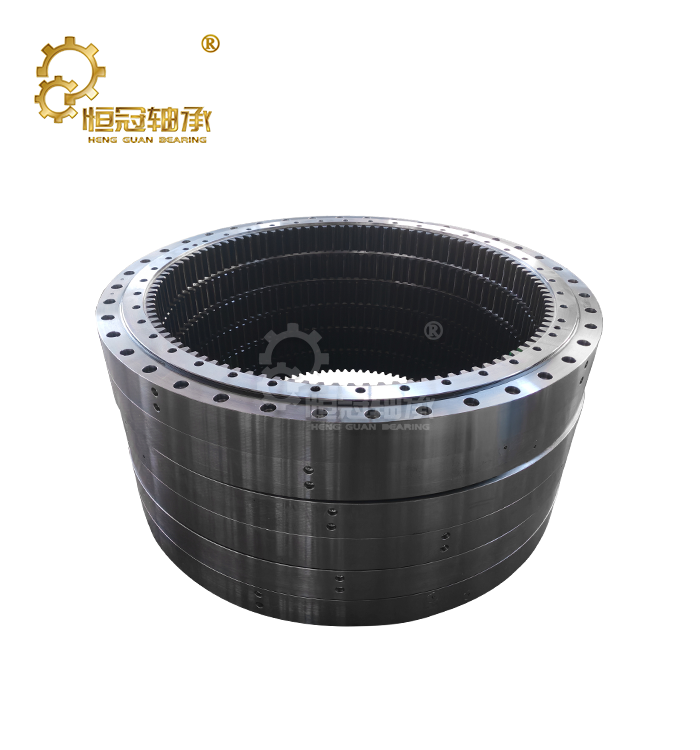
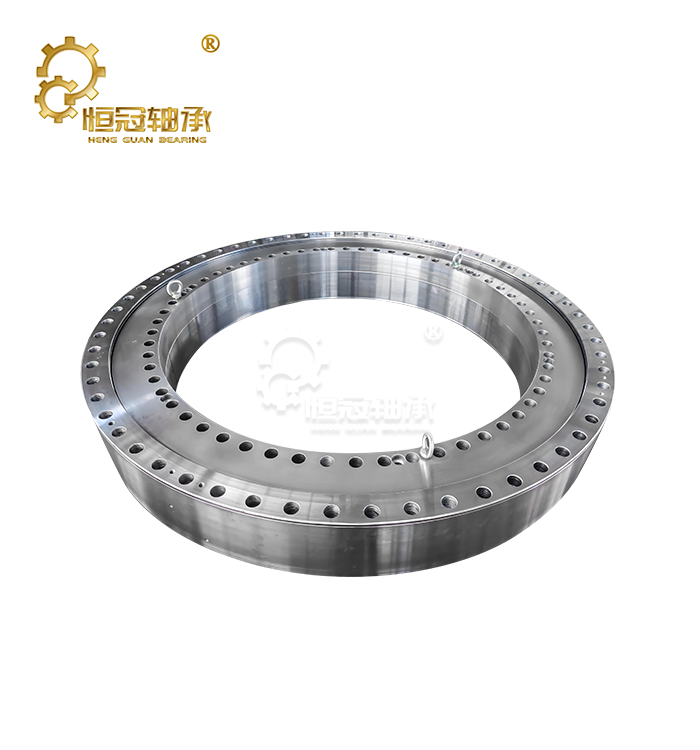
Three-row roller slewing bearings are widely utilized in heavy-duty maritime cranes because they can withstand huge loads. Their various raceways distribute axial, radial, and overturning loads effectively, making them ideal for situations where high loads are lifted often by cranes.
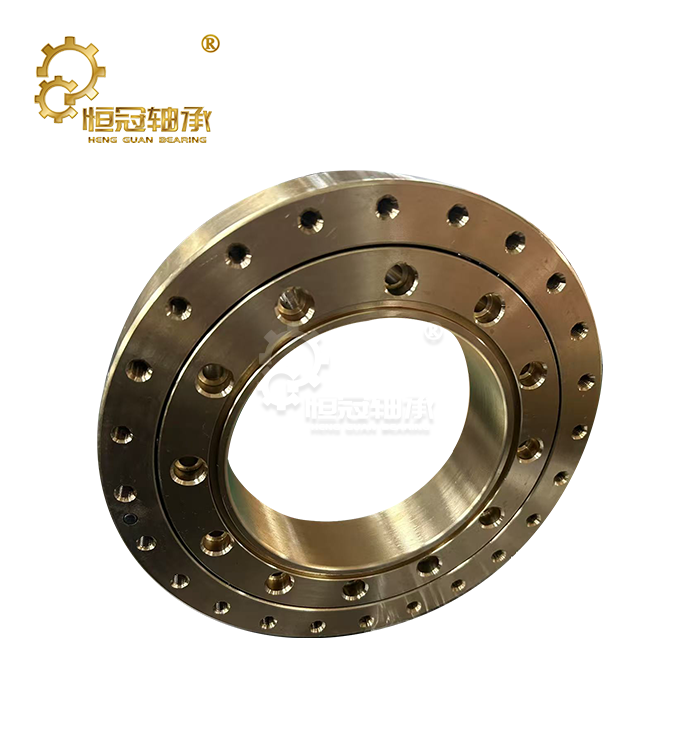
Cross roller slewing bearings are advantageous when installation space is at a premium and greater rotational accuracy is required. They have a small structure, good rigidity, and smooth movement. They are suitable for applications where precision placement is crucial.
A professional supplier does not merely suggest a conventional model. Rather, they should consider:
Crane load capacity
Maximum overturning moment
Mounting dimensions
What you need to have for gear
Rotational speed
Operating environment
This engineering technique helps to guarantee that the bearing fits the real working circumstances, not just dimensional specifications.
Key Material and Manufacturing Factors to Evaluate
Material Selection for Long-Term Marine Durability
Deck cranes operate in very corrosive conditions; therefore, material selection by suppliers is critical to strength, toughness, and fatigue resistance.
Large slewing bearings are usually manufactured from high-strength alloy steels such as 42CrMo and 50Mn. These materials have good mechanical properties following suitable heat treatment and are extensively used for heavy-duty rotating equipment.
The rolling elements must be sufficiently robust and wear-resistant, because they are subjected to frequent contact stress in operation. For applications needing high fatigue resistance, GCr15SiMn is frequently chosen as bearing steel.
Material selection alone, however, does not ensure performance. The supplier will additionally monitor:
Test of steel quality
Regularity of heat treatment
Hardness of raceway
Machining precision
Finishing the surface
A producer that has tight control over the material can minimize risks such as raceway cracking, distortion, and early fatigue failure.
Why Does Heat Treatment Quality Influence Bearing Life?
Heat treatment is one of the most critical steps in the production of large slewing bearings. Proper quenching and tempering increase the balance between the surface hardness and the inner toughness.
The surface of the raceway must have adequate hardness to resist wear due to repetitive rolling contact, while the core must have sufficient toughness to absorb impact loads without splitting.
A good supplier should control proper heat treatment and inspection methods to validate material performance. These may include hardness testing, metallographic examination, and dimensional inspection after heat treatment.
When evaluating manufacturers, consumers should question more than whether heat treatment is provided. They should also look at whether the provider can give process records and quality documents.
Considering Customization and Engineering Support Capabilities
Why Standard Products May Not Always Meet Marine Requirements
While standard dimensions are easy to get for a lot of slewing bearings, deck crane slewing bearing solutions may be required when marine cranes work in special settings. Custom solutions may be needed for different boats, crane models, and operating situations.
A good engineering provider should be able to change designs to meet customer requirements. Examples include:
Different mounting sizes
Custom Gear Specifications
Special sealing solutions
Other materials
Changed internal structures.
For example, a replacement bearing for an older vessel may need to fit a current mounting interface yet provide improved corrosion protection or load-bearing capacity.
These initiatives can be challenging for suppliers that solely sell typical catalog products. Conversely, manufacturers with design and engineering teams can look at the application and come up with practical solutions.
Evaluating Corrosion Protection for Marine Environments
While standard dimensions are easy to get for a lot of slewing bearings, marine cranes sometimes work in special settings. Custom solutions may be required for different boats, crane models, and operating situations.
A good engineering provider should be able to change designs to meet customer requirements. Examples include:
Different mounting sizes
Custom Gear Specifications
Special sealing solutions
Other materials
Changed internal structures.
For example, a replacement bearing for an older vessel may need to fit a current mounting interface yet provide improved corrosion protection or load-bearing capacity.
These initiatives can be challenging for suppliers that solely sell typical catalog products. Conversely, manufacturers with design and engineering teams can look at the application and come up with practical solutions.
Comparing Suppliers Based on Long-Term Value
Why the Lowest Price Is Not Always the Best Choice?
Cost is a crucial consideration in procurement, but choosing a supplier on the basis of the lowest quotation alone might generate considerable hazards.
A cheaper bearing may lower initial purchase costs, but difficulties such as poor machining accuracy, improper heat treatment, or inadequate corrosion protection can reduce service life.
The real cost of a bearing consists of:
Cost
Cost of installation
Maintenance needs
Loss of downtime
Complexity of substitution
A premium bearing from a long-term provider may add a higher value proposition over the long run since it will require less maintenance and provide more reliable functioning.
In terms of marine equipment, it will frequently be more economical to prevent an unforeseen breakdown than to save on the initial purchase.
Assessing Delivery Capability and Supply Stability
Marine projects are generally on tight schedules. Delays in delivery of replacement bearings can impact vessel repair and rebuilding schedules, as well as offshore activities.
Before choosing a provider, buyers should assess the following:
Production amount
Lead time for production
Availability of Raw Materials
Export experience
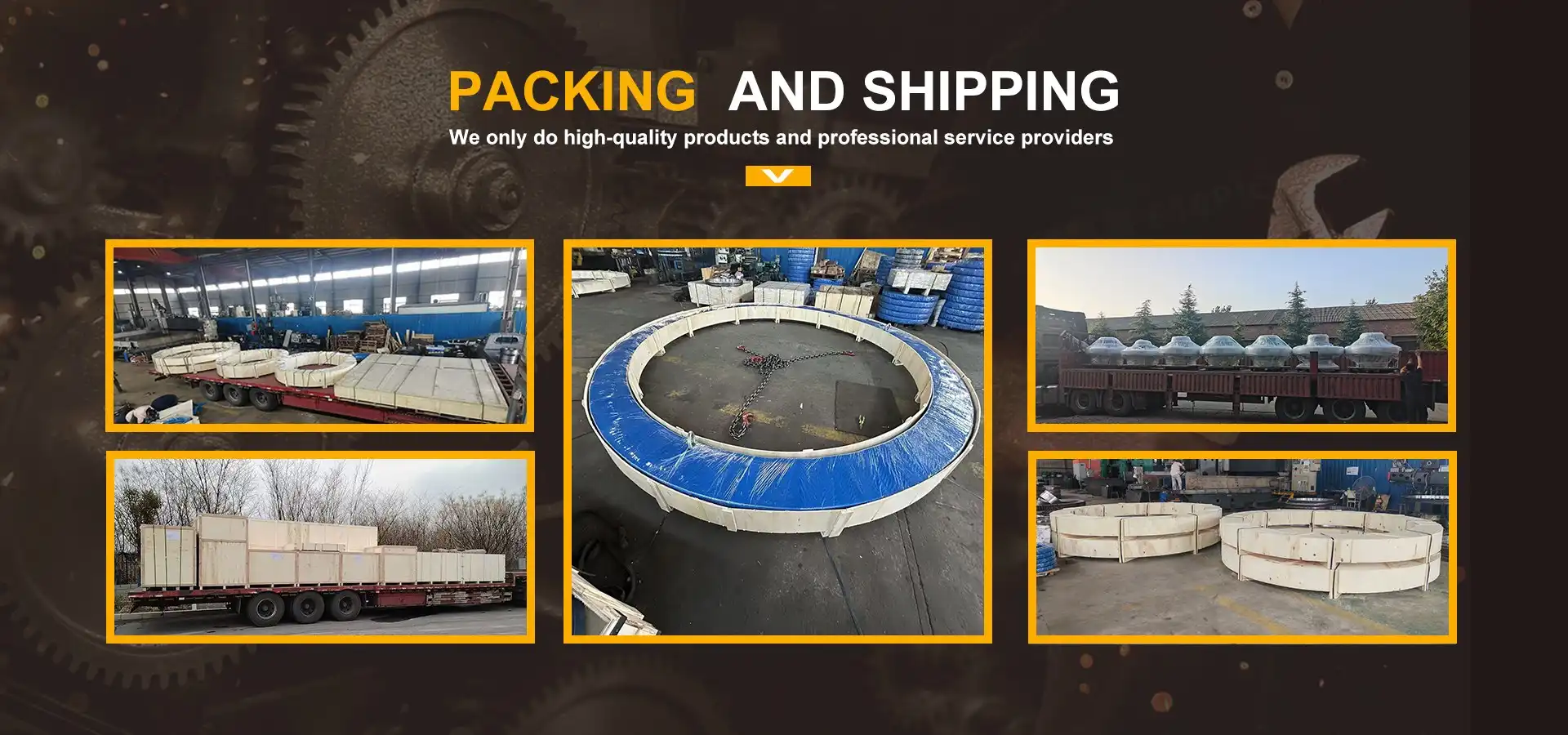
Packing and shipping methods
A good supplier should communicate clearly during the manufacturing process and give updates as necessary.
For emergency replacement projects, the importance of reliable delivery performance is extremely relevant as equipment downtime immediately impacts business operations.
Importance of Installation Guidance and After-Sales Support
Technical Assistance During Installation and Operation
The supplier connection should not terminate after the product has been delivered. Proper installation is vital in achieving the desired service life of a slewing bearing.
Improper installation practices can result in the following:
Uneven distribution of load
Loosening of bolts
Abnormal vibration
wear out
Initial failure
Professional providers should offer advice on installation, including:
Installation instructions
Recommendations for Bolt Tightening
needs for lubrication
Inspection methods
It also helps to verify that the bearing operates appropriately from the start by commissioning technical support.
Maintenance Support and Troubleshooting Services
Marine equipment should be inspected often to make sure it is reliable. Good after-sales service of a provider can allow the customer to detect early warning signs and prevent major problems.
Typical indications of bearing trouble are the following:
More noise in operation
Vibration, abnormal
Better resistance to turning
Pollution from grease
Seal damage visible
Unusual warming
Suppliers with experience are able to advise on maintenance based on operational conditions and aid their customers to develop inspection schedules.
Long-term technical support for deck crane slewing bearing is particularly important for fleet operators with a number of ships, helping to optimize maintenance planning and avoid surprise repair expenses.
Practical Checklist Before Choosing a Deck Crane Slew Ring Bearing Supplier
Before making a final purchasing decision, buyers should conduct a detailed evaluation instead of relying only on product price or basic specifications. A professional supplier should meet both technical and commercial requirements to ensure reliable performance throughout the bearing’s service life.
The following factors can help companies identify a suitable manufacturing partner:
Confirm the Supplier’s Marine Application Experience
A supplier with experience in marine lifting equipment will better understand the challenges of shipboard operation. Buyers should check whether the manufacturer has experience with:
Deck cranes
Offshore cranes
Port handling equipment
Shipbuilding projects
Heavy-duty rotating systems
Marine applications require different considerations compared with ordinary industrial equipment. Suppliers familiar with these environments can provide more accurate recommendations regarding bearing structure, sealing, lubrication, and corrosion protection.
Review Technical Documents Before Purchase
Professional suppliers should be willing to provide detailed technical information before an order is confirmed.
Important documents may include:
Product drawings
Technical specifications
Load capacity information
Material certificates
Inspection records
Installation instructions
These documents help engineers verify compatibility with existing crane systems and reduce risks during installation.
A supplier that avoids providing technical details may not have sufficient manufacturing transparency or engineering support.
Evaluate Communication and Project Support Ability
Large marine components usually involve long procurement cycles and cooperation between multiple teams, including shipowners, engineers, shipyards, and maintenance companies.
A reliable supplier should provide clear communication regarding the following:
Technical discussions
Production progress
Quality inspections
Shipping arrangements
After-sales assistance
Good communication is especially important for customized deck crane slewing bearing projects because design confirmation and manufacturing adjustments often require cooperation between the supplier and customer.
Common Mistakes When Selecting a Slewing Bearing Supplier
Choosing Only Based on Initial Price
One of the most common procurement mistakes is selecting a supplier only because they offer the lowest price.
Although lower purchase costs may appear attractive, they can lead to higher expenses later if the bearing experiences the following:
Short service life
Frequent maintenance requirements
Unexpected shutdowns
Difficult replacement procedures
Marine equipment downtime can be extremely costly, so total ownership value should always be considered.
Ignoring Supplier Engineering Capability
Some buyers focus only on dimensions and price while overlooking engineering support.
However, a slewing bearing is a highly customized mechanical component. A supplier without sufficient technical capability may not identify problems related to the following:
Incorrect load calculation
Unsuitable bearing structure
Poor mounting conditions
Inadequate corrosion protection
Working with an experienced manufacturer reduces these risks and improves equipment reliability.
Failing to Consider Long-Term Cooperation
A marine crane bearing may operate for many years after installation. During this period, customers may need spare parts, technical advice, or maintenance support.
Choosing a supplier with long-term service capability can simplify future procurement and reduce operational uncertainty.
A strong supplier relationship allows customers to receive faster technical responses and more efficient solutions when replacement or modification is required.
Why Do Experienced Manufacturers Provide Greater Reliability?
Experienced bearing manufacturers usually have accumulated knowledge from different industries and applications. This experience helps them understand how design choices influence real-world performance.
For marine crane applications, experienced suppliers can provide value through:
Better product recommendations
More accurate engineering calculations
Improved manufacturing consistency
Faster problem-solving
More reliable technical support
Manufacturers with long-term industry experience also tend to have stronger quality systems and better process control because they understand the consequences of product failure in critical applications.
When selecting a supplier, buyers should look beyond marketing statements and focus on measurable capabilities, including production facilities, inspection procedures, engineering resources, and customer support.
Conclusion
When choosing a supplier for marine crane components such as Deck Crane Slewing Bearing deck crane slewing bearings, companies should evaluate much more than product price. The ideal supplier should demonstrate strong manufacturing capabilities, reliable quality control, technical expertise, and the ability to provide long-term support.
A high-performance slewing bearing depends on many factors, including suitable material selection, accurate machining, proper heat treatment, effective sealing, and corrosion protection. However, these technical factors are only valuable when they are supported by a supplier with proven experience and professional engineering capabilities.
Before purchasing, buyers should carefully review a supplier’s marine application experience, production capacity, inspection procedures, customization ability, and after-sales service. A manufacturer that can provide technical documentation, installation guidance, and responsive support offers greater confidence throughout the entire product lifecycle.
Choosing the right supplier helps reduce maintenance risks, prevent unexpected downtime, and improve the reliability of marine lifting operations. By working with a qualified and experienced partner, shipowners, shipyards, and equipment manufacturers can ensure that their deck crane systems continue operating safely and efficiently in demanding marine environments.
|
|
FAQ
1. How Can I Verify a Supplier's Authenticity and Manufacturing Capabilities?
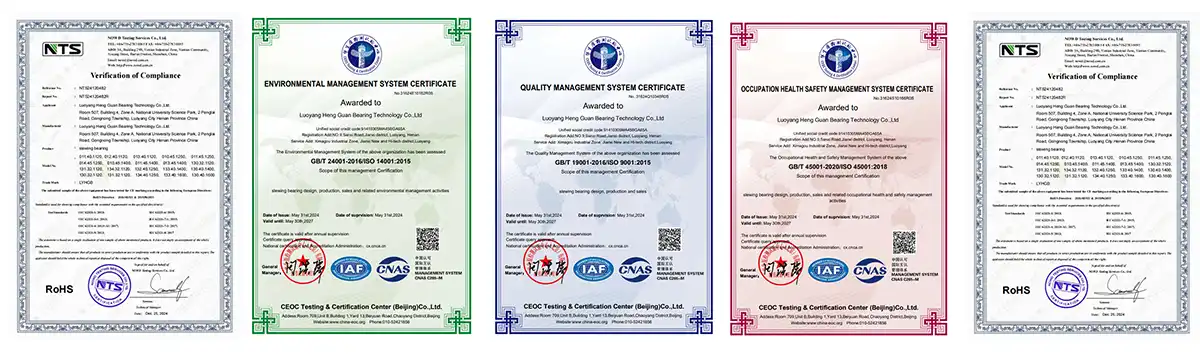
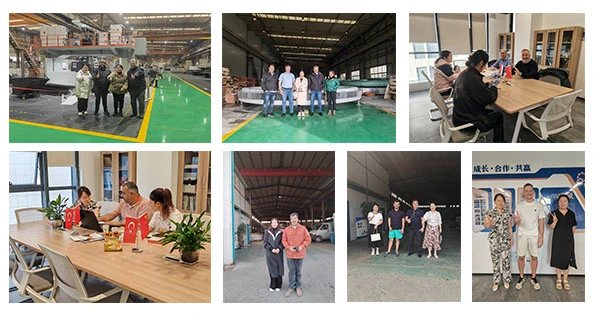
Ask for copies of any certifications that are important to your project, such as ISO 9001 and any marine classification society approvals. Ask for pictures of the production equipment in the facility and ask about specific manufacturing capabilities, like heat treatment rooms and precision grinding machines. Checking references with past customers is a great way to learn about real performance and support quality. Reliable suppliers run their businesses in a clear way and are happy to provide proof of their skills and quality management systems.
2. What Maintenance Practices Most Effectively Extend Bearing Service Life?
The most important part of maintenance is regularly greasing with marine-grade lubricants made for saltwater environments. At regular intervals, inspections should include checking the condition of the seals, making sure the bolts are tight, and listening for any strange noises, vibrations, or temperature rises. Corrosion can't happen because protective coating maintenance includes quickly fixing any damage. Following the manufacturer's suggested maintenance schedules and writing down all service activities creates maintenance records that can be used to figure out when to replace something and how to fix it if it breaks down.
3. Are Custom Bearing Solutions Available for Unique Vessel Configurations?
Suppliers with a lot of experience often offer custom solutions that are made to fit the needs of each vessel. Customization includes changing the size to fit the mounting space that's available, choosing the right material for the environment, and making sure that the sealing or coating configurations are just right. When original specifications are missing or not available, suppliers who can do reverse engineering can still make replacement bearings. This makes it easier to retrofit and upgrade equipment on existing vessels.
Partner With Heng Guan for Superior Marine Bearing Solutions
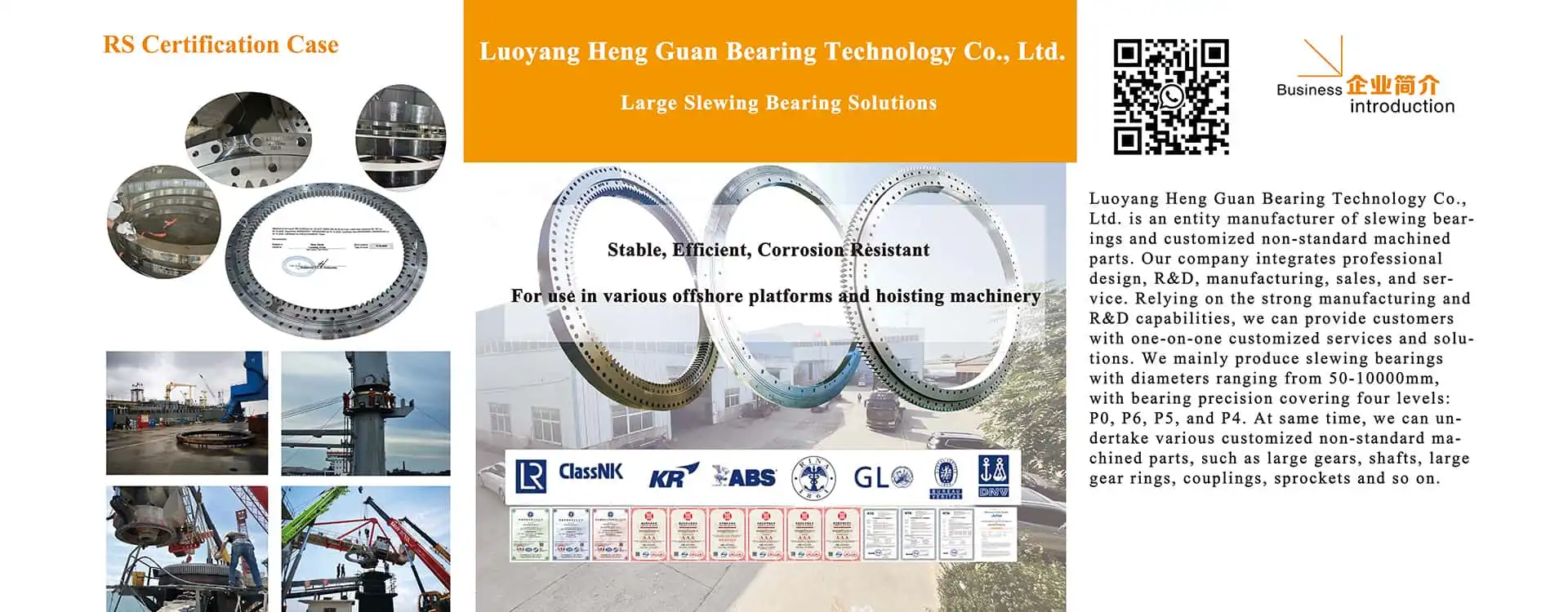
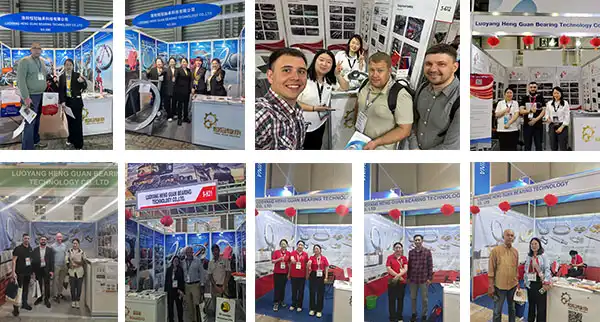
Heng Guan can help you with your most difficult applications when it comes to marine bearings. Our factory in Luoyang makes rotating parts with diameters from 50mm to 10,000mm and precision grades from P0 to P4. They use advanced CNC machining technology and quality systems that are ISO 9001 certified. Our engineering team specializes in custom solutions for difficult installations. We've sent parts for marine lifting equipment to customers in more than 50 countries, such as the US, Germany, and the UK. Whether you need standard three-row roller configurations or custom-engineered solutions that fit the needs of your specific vessel, we can help you with everything, from the initial design consultation to installation guidance and ongoing technical support.
Our marine-grade slewing bearings are made from high-quality 50Mn and 42CrMo alloy steel, go through a full heat treatment process to make them as strong and tough as possible, have precision-ground raceways, and come with marine-grade sealing systems. As a well-known company that makes Deck Crane Slewing Bearing for the marine industry around the world, we know how important it is for your operations to be reliable. Please email our team at mia@hgb-bearing.com to talk about your specific needs. We'll respond with detailed technical advice, competitive quotes, and delivery schedules that work with your project's schedule. You can count on Heng Guan to give you the quality, knowledge, and help your marine operations need.
References
1. Anderson, R. M. (2021). Marine Crane Systems: Engineering and Reliability. Maritime Technology Press.
2. Chen, W., & Roberts, P. (2020). "Material Selection and Heat Treatment for Heavy-Duty Slewing Bearings," Journal of Marine Engineering, 45(3), 178-195.
3. International Organization for Standardization. (2019). ISO 12944: Paints and Varnishes—Corrosion Protection of Steel Structures by Protective Paint Systems. Geneva: ISO.
4. Maritime Equipment Manufacturers Association. (2022). Best Practices for Specifying and Maintaining Marine Crane Components. London: MEMA Publications.
5. Stevens, J. L. (2020). Bearing Technology for Offshore and Marine Applications. Technical Engineering Publishers.
6. Zhang, L., Morrison, K., & Petersen, H. (2021). "Fatigue Life Analysis of Three-Row Roller Slewing Bearings Under Combined Loading," International Journal of Mechanical Engineering, 38(7), 892-910.

WHAT OUR CUSTOMERS SAY
Here is the customer's evaluation of us