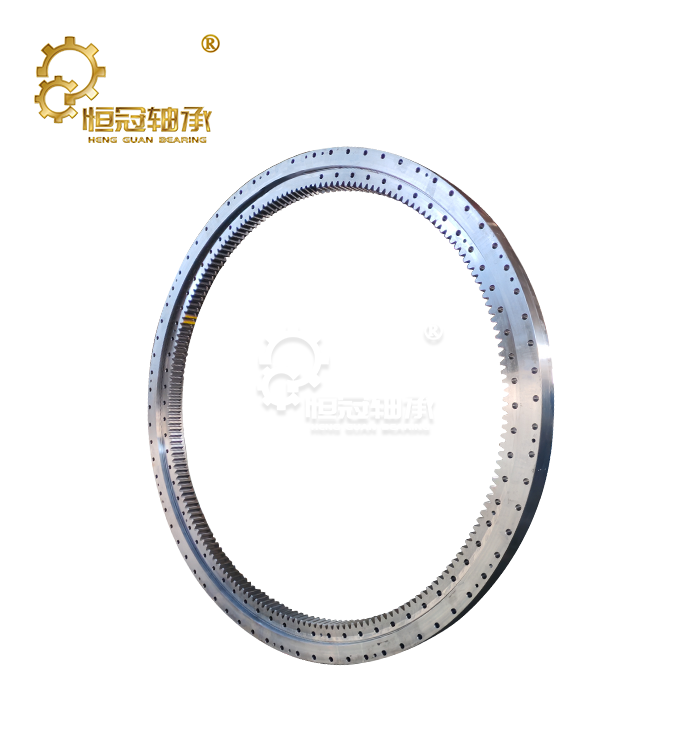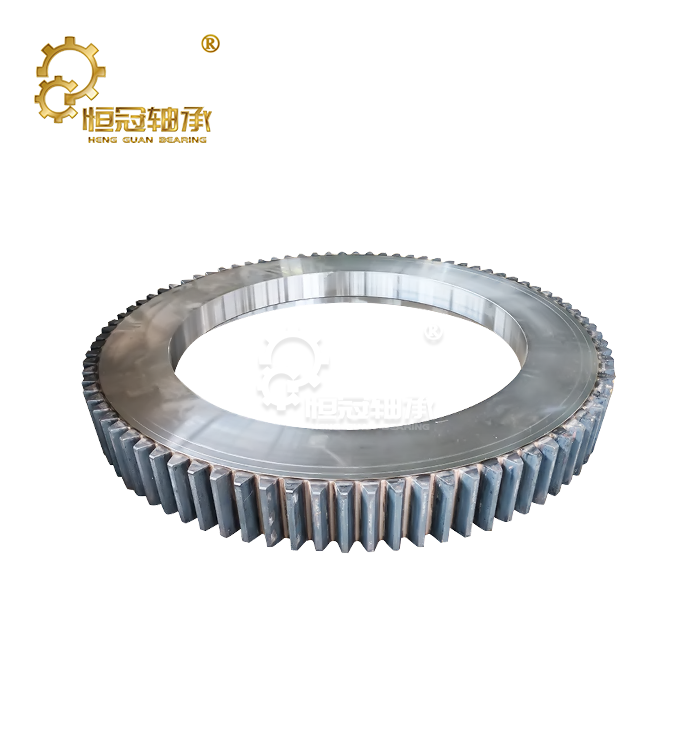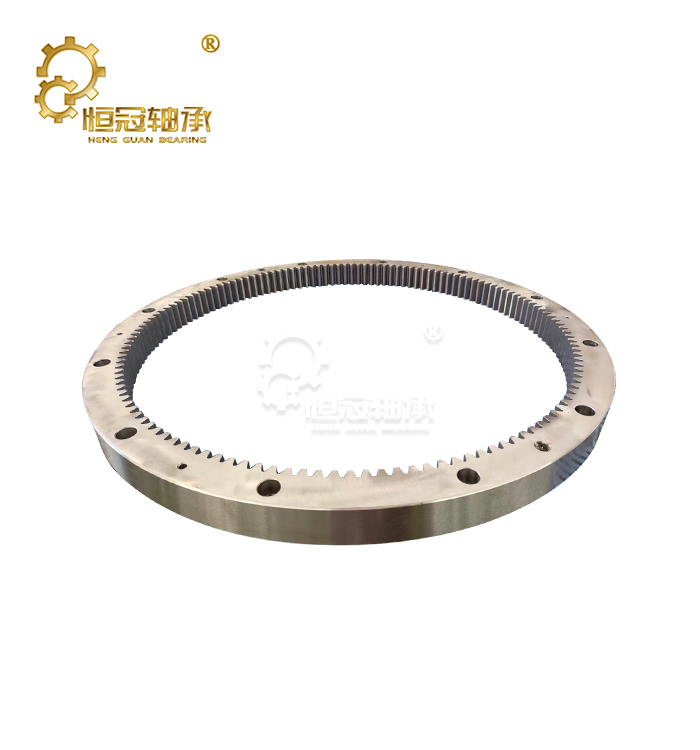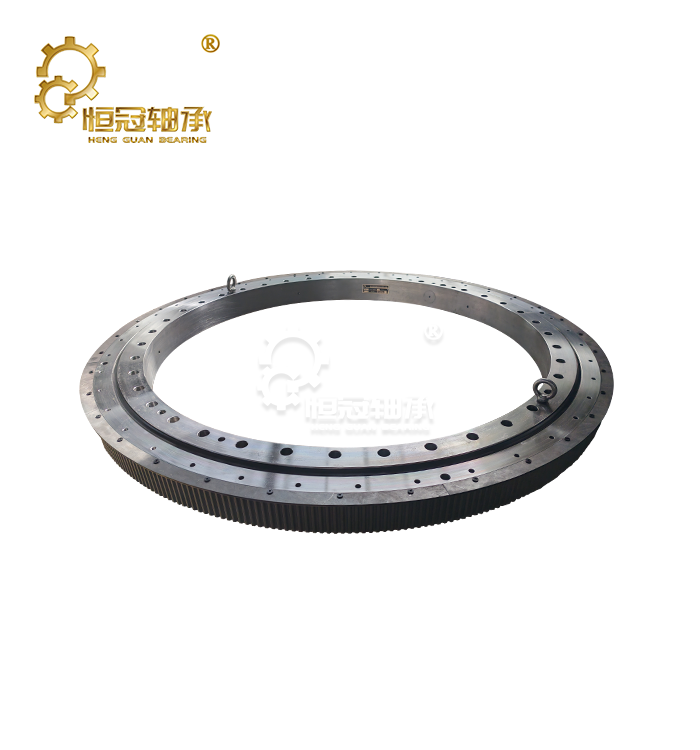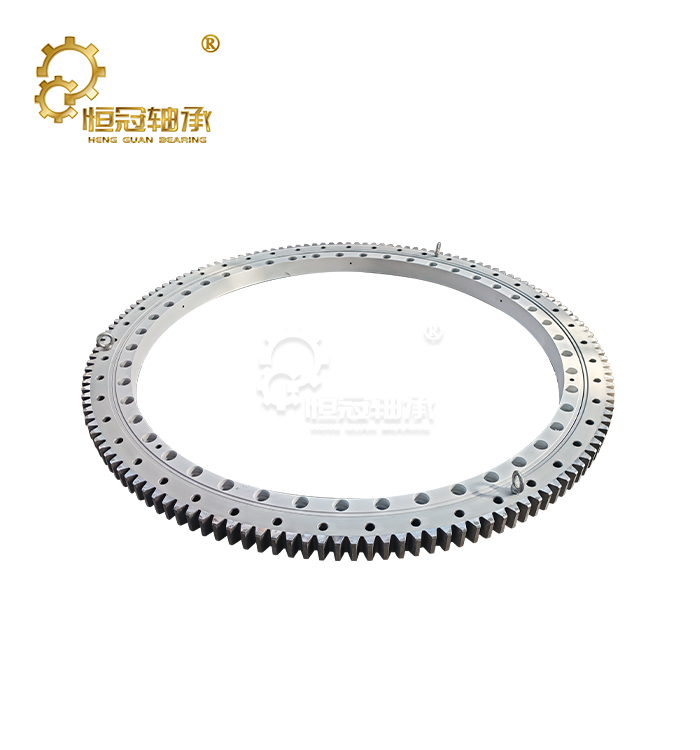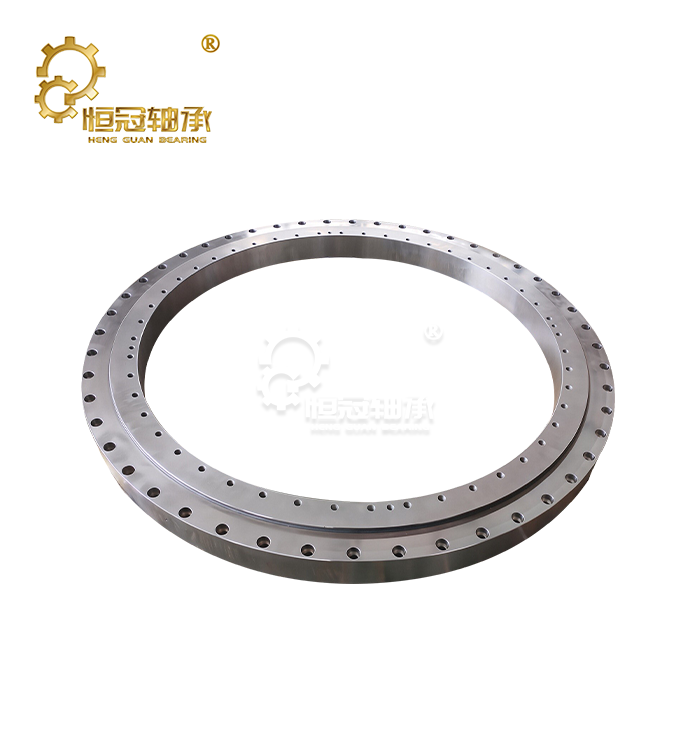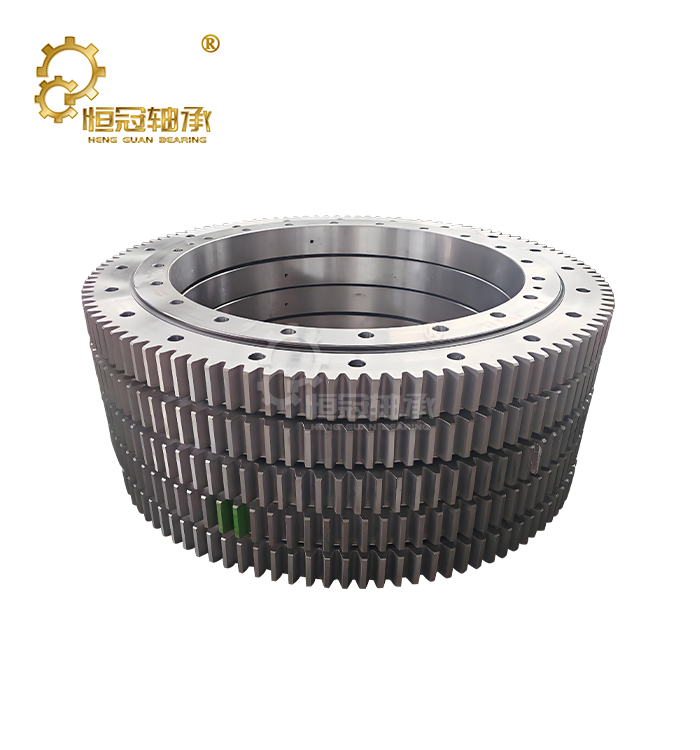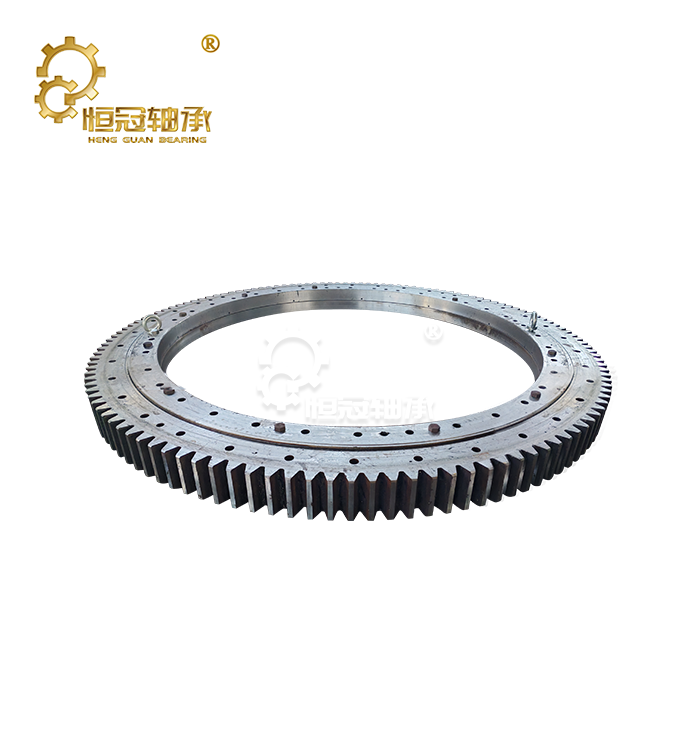




What is slewing bearing without gear?
A No Gear Slewing Bearing is a class of large rotary bearings that carry axial, radial, and tilting loads and allow smooth rotating motion without a built-in gear ring. This gearless design combines precision raceways and rolling elements to provide stable movement with the help of an external driving mechanism or actuator. This is unlike geared slewing bearings, which require external gear teeth and pinion drives to achieve rotation.
The selection of the correct slewing bearing configuration by manufacturers and OEM engineers has a direct effect on equipment design, installation space, maintenance requirements, and long-term operating reliability. No-gear slewing bearings are commonly used for applications where compact structure, precision alignment, and simplified mechanical integration are critical concerns.
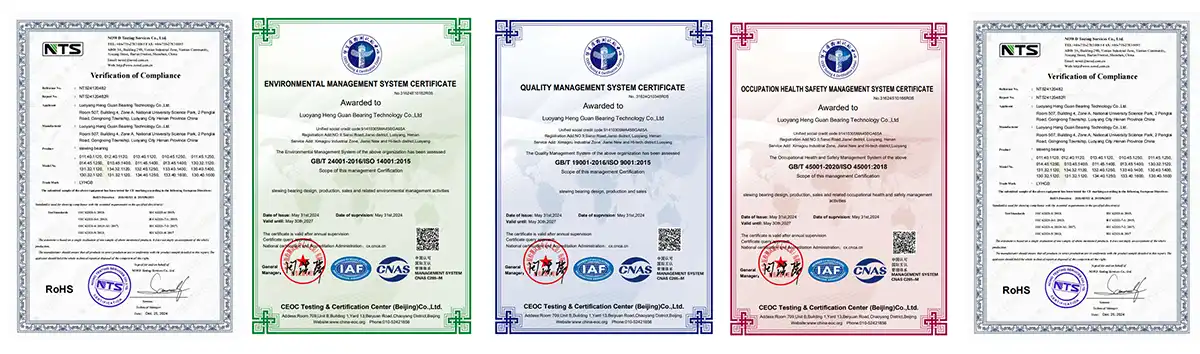
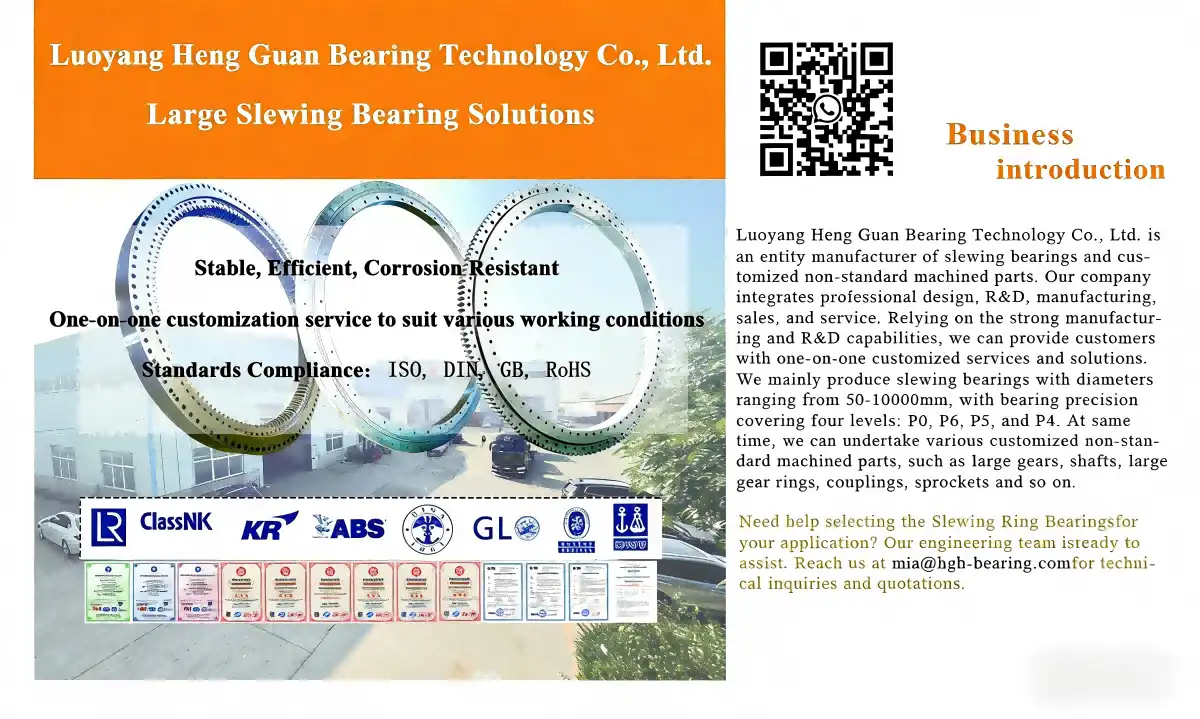
Luoyang Heng Guan Bearing Technology is a bearing manufacturer with rich experience in slewing bearing manufacturing and can supply customized bearing solutions for industrial equipment makers. The company supports diverse bearing structures, material choices, machining needs, and OEM design requirements depending on application conditions.
This article discusses the construction, working principles, benefits, applications, selection considerations, and procurement elements of gearless slewing bearings to assist engineering teams to make an informed purchasing decision.
Understanding the Structure and Working Principle of Gearless Slewing Bearings
Main Components and Engineering Design
A no-gear slewing bearing normally consists of an inner ring, an outer ring, rolling elements, spacers, seals, and lubrication systems. The two rings are produced with precision raceways that guide the rolling elements and enable regulated rotational movement.
Usual construction alternatives, depending on the requirements of the loads and the circumstances of the equipment:
Compact equipment and combined load applications: single-row four-point contact ball slewing bearings.
Double-row ball designs for greater load capacity needs
Three-row roller slewing bearings for heavy-duty machinery with higher stiffness demand
Cross roller slewing bearings for applications needing great positioning accuracy and low installation height
The choice of the structure is affected by such aspects as the direction of the load, rotation speed, installation area, and operational environment.
The choice of material also has a large impact on bearing performance in industrial applications. Rings are usually made of hardened alloy steels such as 42CrMo and 50Mn and rolling elements of high-quality bearing steels. The proper heat treatment may improve the wear resistance and load capacity, which can help the bearing to run stably in continuous operation.
How Do No-Gear Slewing Bearings Transfer Loads?
The fundamental working principle of a gearless slewing bearing is based on the regulated rolling contact between the raceways and rolling elements. When external forces are acting on the bearing, the load is distributed to the rings and rolling components by a number of contact points.
The bearing structure is simpler than geared options, without an incorporated gear ring. The rotation is generally attained via external drive systems, hydraulic cylinders, motors, or other mechanical means, depending on the equipment design.
This setup has a number of engineering advantages:
Lower mechanical complexity
Simpler integration with unique equipment layouts
less worrying about gear tooth wear or backlash
Variable installation possibilities for varied machine structures
This streamlined design can make equipment development easier for OEM manufacturers, especially when the rotating system does not need a direct gear gearbox.
Custom Dimensions and Manufacturing Flexibility
The size of the bearing is determined by the working conditions of industrial machinery. A no-gear slewing bearing can be customized as follows:
specification of inner and outer diameters
Hole patterns for mounting
Dimensions of bolt circle
With height limitations
Sealant Requirements
Conditions of lubrication
For instance, a compact machine may need a low-profile bearing design to reduce installation space, whereas massive construction equipment may need a robust design that can handle combined loads.
Heng Guan Bearing Technology of Luoyang delivers customization based on customer designs and technical requirements. During the design stage, before production begins, engineering communication is necessary to guarantee the bearing fits the equipment structure.
Why Choose No-Gear Slewing Bearings Instead of Geared Designs?
Compact Structure for Space-Limited Equipment
One of the main advantages of a no-gear slewing bearing is its simplified structure. Without an integrated gear ring, the overall assembly can be more compact, making it suitable for equipment where installation space is restricted.
This design advantage is valuable in applications such as:
- Mobile lifting equipment
- Compact cranes
- Robotic systems
- Positioning platforms
- Medical and precision machinery
For equipment designers, reducing unnecessary mechanical components can simplify the overall system layout and provide more flexibility during product development.
Smooth Rotation and Reduced Mechanical Complexity
Geared slewing bearings require accurate engagement between gear teeth and drive components. In comparison, gearless configurations eliminate direct gear meshing, which reduces concerns related to gear tooth alignment, backlash adjustment, and tooth wear.
The rolling contact design allows smooth rotational movement when properly lubricated and installed. This makes no-gear slewing bearings suitable for equipment where stable motion and consistent positioning are important.
Typical applications include the following:
- Rotary tables
- Welding positioners
- Antenna positioning systems
- Inspection equipment
Easier Maintenance and Lower Service Requirements
Maintenance requirements are an important consideration for industrial buyers. Since gearless slewing bearings do not contain integrated gear teeth, some maintenance tasks associated with gear systems, such as gear lubrication management and tooth inspection, are reduced.
However, regular maintenance is still necessary. Recommended practices usually include:
- Checking lubrication conditions
- Inspecting sealing performance
- Monitoring unusual vibration or noise
- Verifying bolt-tightening conditions
A proper maintenance plan helps extend bearing service life and reduces unexpected equipment downtime.
Advantages of No Gear Slewing Bearings in Industrial Equipment
Improved Reliability Through Simplified Mechanical Design
The absence of an integrated gear ring reduces the number of mechanical components involved in rotation. For equipment manufacturers, fewer components can simplify system design and reduce potential adjustment requirements during installation and operation.
In applications where rotation is controlled through external drive mechanisms, a No Gear Slewing Bearing provides a flexible solution that allows engineers to design the drive system according to specific equipment requirements.
This design approach is commonly used in machinery where reliability, compact construction, and easy integration are more important than direct gear transmission.
Better Adaptability for Customised Machinery
Different industries often require different rotary solutions. Standard bearing models may not always meet the requirements of specialised equipment, especially when machines operate under unique space, load, or environmental conditions.
A customised No-Gear Slewing Bearing can be designed with consideration of the following:
- Special mounting dimensions
- Different sealing structures
- Corrosion-resistant surface treatments
- Specific lubrication requirements
- Customised accuracy levels
For OEM manufacturers, this flexibility allows the bearing to become part of the overall equipment design rather than simply a replacement component.
Suitable Performance for Continuous Operation
Many industrial machines require reliable rotation during long working cycles. Applications such as renewable energy equipment, cranes, automation systems, and material handling machinery often operate under repeated loading conditions.
A properly selected gearless slewing bearing can support these operating environments by combining the following:
- High-strength materials
- Precision-machined raceways
- Appropriate lubrication systems
- Correct load distribution design
The final performance depends on factors such as bearing selection, installation accuracy, working conditions, and maintenance practices.
Common Applications of No Gear Slewing Bearings Across Industries
Construction Machinery and Heavy Equipment
Construction machinery is one of the most common application areas for slewing bearings. Equipment such as excavators, cranes, aerial platforms, and material handling machines require reliable rotary connections between different structural sections.
A no-gear slewing bearing can be used in these systems where rotation is achieved through hydraulic or mechanical drive solutions rather than integrated gear transmission.
For example:
- Excavators use slewing bearings to support upper structure rotation.
- Mobile cranes rely on rotary bearing systems for controlled load movement.
- Aerial work platforms require compact designs to maintain equipment balance and stability.
In these applications, engineers typically focus on load capacity, sealing protection, installation accuracy, and resistance to environmental conditions.
Renewable Energy Equipment
Renewable energy systems often operate in outdoor environments where equipment accessibility and maintenance efficiency are important considerations.
Wind turbines and solar tracking systems require reliable rotary components to adjust equipment orientation according to operating requirements.
In solar tracking systems, a no-gear slewing bearing can support panel positioning mechanisms by providing controlled angular movement. Engineers usually consider:
- Outdoor exposure
- Temperature variation
- Corrosion protection
- Long-term operational stability
For wind-related applications, bearing selection depends on factors such as equipment size, loading conditions, and manufacturer design requirements.
Medical and Precision Equipment
Precision equipment requires rotary components with stable movement and accurate positioning.
Compared with heavy industrial machinery, these applications usually place greater emphasis on:
- Low-vibration operation
- Accurate movement control
- Compact installation
- Smooth rotation
A no-gear slewing bearing can be used in equipment such as imaging systems, inspection platforms, and precision positioning devices where controlled movement is required.
The bearing design must match the accuracy requirements of the complete machine system, including the drive mechanism and control components.
Automation Systems and Robotics
Industrial automation continues to increase demand for compact and accurate rotary components.
Robotic equipment, welding systems, rotary inspection platforms, and automated production lines often require bearings that can support repeated movement cycles.
A gearless slewing bearing provides design flexibility because engineers can combine the bearing with different external drive methods according to system requirements.
For automation applications, important selection factors include:
- Rotational accuracy
- Repeatability requirements
- Load conditions
- Operating frequency
- Installation limitations
Marine and Specialised Industrial Equipment
Marine equipment operates under challenging conditions involving humidity, salt exposure, and continuous mechanical loading.
Applications such as:
- Deck cranes
- Marine lifting systems
- Offshore equipment
- Port handling machinery
often require slewing bearings with appropriate sealing systems and corrosion-resistant treatment.
Special industrial equipment, including tunnel boring machines and processing machinery, may also use customised slewing bearing solutions when reliable rotary support is required.
For these applications, manufacturers usually evaluate environmental protection, material selection, lubrication methods, and maintenance accessibility before finalising the bearing design.
How to Select the Right No-Gear Slewing Bearing for Your Application?
Evaluate Load Requirements Before Selection
The first step when selecting a no gear slewing bearing is understanding the actual loads applied during operation.
Engineers should consider:
- Axial loads
- Radial loads
- Tilting moments
- Shock loads
- Operating frequency
Selecting a bearing based only on static dimensions may result in performance issues. The bearing capacity should match the actual working conditions of the equipment.
For heavy-duty machinery, additional safety margins may be required depending on operating conditions and industry requirements.
Confirm Installation Dimensions and Mounting Conditions
Correct dimensional matching is essential for successful installation.
Before purchasing, buyers should review:
- Inner diameter
- Outer diameter
- Height restrictions
- Mounting hole locations
- Bolt specifications
- Connection structure
For OEM projects, providing technical drawings to the manufacturer during the early design stage can help avoid installation problems and reduce modification costs.
Consider Operating Environment Factors
The working environment directly affects bearing selection.
Important considerations include:
Temperature
Extreme temperatures may require special lubrication solutions or material adjustments.
Contamination Protection
Dust, moisture, and industrial particles can affect bearing performance. Appropriate sealing designs help protect internal components.
Corrosion Resistance
Outdoor and marine applications may require surface treatments or protective coatings to improve resistance against corrosion.
A professional manufacturer can recommend suitable configurations based on actual operating conditions.
Precision Requirements and Customized Engineering Support
Matching Accuracy Levels With Equipment Needs
Different machines require different levels of rotational accuracy. A standard industrial application may focus mainly on load capacity and durability, while precision equipment may require tighter manufacturing tolerances.
When selecting a no-gear slewing bearing, engineers should consider the following:
- Rotation accuracy requirements
- Positioning repeatability
- Operating speed
- Structural stiffness
- System control requirements
For example, automation equipment and precision positioning systems may require higher-accuracy designs compared with general construction machinery.
Choosing the appropriate accuracy level helps balance performance requirements and project costs.
Working With Manufacturers for Customized Solutions
Standard bearing models can meet many application requirements, but customized solutions are often necessary for specialized equipment.
A professional slewing bearing manufacturer can support customers with the following:
- Technical drawing review
- Bearing structure recommendations
- Material selection
- Raceway design optimization
- Mounting solution suggestions
- Production and inspection documentation
For OEM equipment manufacturers, early cooperation with a bearing supplier can improve design efficiency and reduce potential problems during assembly.
Customization should focus on the actual working conditions of the equipment rather than simply selecting the largest available bearing size.
Procurement Guide for No Gear Slewing Bearings
Assess Manufacturer Capability and Quality Control
Choosing a reliable supplier is an important part of industrial procurement. Buyers should evaluate not only product pricing but also manufacturing capability, technical support, and quality management systems.
Key evaluation factors include the following:
- Manufacturing experience
- Production equipment
- Machining capability
- Heat treatment processes
- Inspection methods
- Quality documentation
A qualified manufacturer should be able to provide technical information such as product drawings, specifications, inspection reports, and material details.
For companies purchasing No-Gear Slewing Bearing products for OEM projects, supplier capability directly influences product consistency and long-term equipment reliability.
Review Material Selection and Production Processes
The performance of a slewing bearing depends heavily on manufacturing quality.
Important production stages include:
Material Preparation
High-quality alloy steel selection provides the foundation for bearing strength and durability.
Heat Treatment
Proper heat treatment improves hardness, wear resistance, and load-bearing capability.
Precision Machining
Accurate machining of raceways and mounting surfaces ensures smooth operation and proper load distribution.
Final Inspection
Inspection procedures help confirm that finished bearings meet required specifications before shipment.
Understanding these processes allows buyers to evaluate suppliers more effectively.
Consider Total Cost Rather Than Initial Price
When purchasing industrial components, the lowest purchase price does not always represent the best value.
A complete cost evaluation should include:
- Initial product cost
- Installation requirements
- Maintenance needs
- Replacement frequency
- Equipment downtime risks
A well-designed no-gear slewing bearing may provide better lifecycle value when it reduces maintenance complexity and improves equipment integration.
For long-term projects, working with a supplier that offers technical support and stable production capability is often more beneficial than selecting only based on price.
Lead Time and Supply Chain Planning
Production schedules are important for OEM manufacturers and equipment builders.
Before placing orders, buyers should confirm:
- Standard product availability
- Custom production timelines
- Inspection requirements
- Packaging methods
- Shipping arrangements
Clear communication between customers and suppliers helps prevent delays during equipment assembly.
For customized slewing bearings, early technical confirmation is especially important because design review and manufacturing preparation may require additional time.
After-Sales Support and Long-Term Cooperation
Industrial bearing purchases often involve long-term cooperation between manufacturers and customers.
A reliable supplier should provide support, including:
- Installation guidance
- Technical consultation
- Product documentation
- Maintenance recommendations
- Response to operational questions
For OEM customers, continuous cooperation with a professional bearing manufacturer can help improve future equipment designs and simplify supply management.
Why Choose Luoyang Heng Guan Bearing Technology for No-Gear Slewing Bearing Solutions?
Selecting the right manufacturer is just as important as selecting the right bearing structure. Luoyang Heng Guan Bearing Technology focuses on providing customized slewing bearing solutions for different industrial applications.
The company supports customers through:
- Customized bearing design
- OEM technical communication
- Different structural configurations
- Material and manufacturing recommendations
- Quality inspection procedures
From initial drawing review to final production, professional engineering support helps ensure that each bearing solution matches the requirements of the customer's equipment.
For businesses looking for a reliable No Gear Slewing Bearing supplier, cooperation with an experienced manufacturer can improve product compatibility, reduce development risks, and support long-term equipment performance.
Conclusion
Gearless slewing bearings, commonly known as no gear slewing bearing provide a practical solution for industrial equipment that requires reliable rotary support without an integrated gear transmission system. Their simplified structure, flexible installation options, and adaptability to different applications make them suitable for construction machinery, renewable energy systems, automation equipment, precision devices, and specialized industrial applications.
Compared with geared alternatives, gearless designs offer advantages in mechanical integration and maintenance considerations when correctly selected for the working environment. However, achieving reliable performance depends on several factors, including load requirements, dimensional compatibility, operating conditions, manufacturing quality, and proper installation.
For OEM engineers and purchasing teams, selecting a professional manufacturer is essential. A supplier with strong engineering capabilities, customization experience, and quality control processes can provide more than a standard component—they can support the development of complete equipment solutions.
By evaluating technical specifications, application requirements, and supplier capabilities carefully, businesses can choose the right no-gear slewing bearing solution to improve equipment reliability and create long-term operational value.
|
|
FAQ
1. What maintenance routines do gearless slewing bearings require?
As part of regular care, the seals must be visually checked every 500 hours to make sure they are still in good shape and to look for signs of contamination or odd wear patterns. Depending on how the machine is being used, it may need to be oiled every 1000 to 2000 hours using approved greases that are safe for the bearings and seals. During checks, clean the mounting surfaces to get rid of any buildup of dirt that speeds up wear. Keep an eye on the noise and smoothness of the spinning and look into any changes that could mean problems are starting to appear. Gearless slewing bearings that are well taken care of usually last 80,000 hours or more.
2. Can gearless designs handle the same loads as geared slewing bearings?
When chosen based on the needs of the application, gearless slewing bearings can hold the same amount of weight as or more than geared versions. Without gear teeth, those exact load lines aren't possible, but raceways and rolling elements that are the right size do a good job of spreading forces around. Three-row roller setups can handle very big loads when used in heavy equipment, while single-row designs are better for lighter-duty tasks. Read the load rating paperwork and work with experienced experts to make sure you choose the right bearings for your load situations.
3. How does removing the gear affect bearing reliability and lifespan?
Getting rid of gear components actually makes them more reliable because they get rid of common failure modes like tooth wear, misaligned gear mesh, and backlash buildup. Fewer moving parts mean less upkeep and fewer places where things could go wrong. When used properly, high-quality materials, precise production, and optimized raceway geometry allow service lives of more than 80,000 hours, which is often longer than geared options. The simpler design is especially helpful in situations where repair access is limited or where keeping operations running is very important.
Partner with Heng Guan for Your Gearless Slewing Bearing Needs
Luoyang Heng Guan Bearing Technology has been making No Gear Slewing Bearing products for OEM clients and equipment makers around the world for decades and has built a reputation for quality. Our wide range of products, with diameters from 50 mm to 10 m, can be used for everything from small medical devices to big industrial machines. Individualized technical advice, low bulk prices for large orders, and the ability to adapt to specific needs that standard catalog goods can't meet are some of the things that we offer.
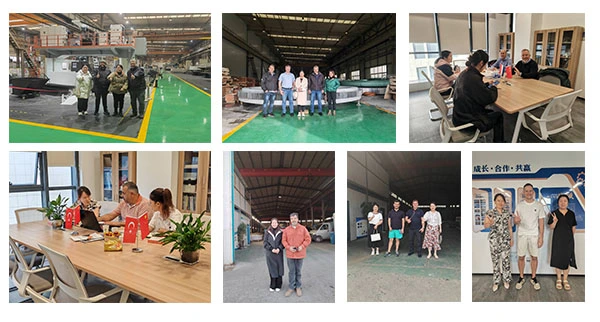
Our factory is in Luoyang, which is known as China's bearing production hub. It uses cutting-edge precision drilling tools and strict quality control procedures to make sure that every bearing meets the strict requirements for accuracy grades P0 through P4. Our experienced team is ready to help you, whether you need instant technical support to fix problems with an application or detailed quotes for future projects. Get in touch with mia@hgb-bearing.com right away to talk about your needs with an experienced seller dedicated to giving you the best value and reliable performance to help you reach your business goals.
References
1. Harris, T.A., and Kotzalas, M.N. (2006). Advanced Concepts of Bearing Technology: Rolling Bearing Analysis, Fifth Edition. CRC Press.
2. Shigley, J.E., and Mischke, C.R. (2001). Mechanical Engineering Design, Seventh Edition. McGraw-Hill Education.
3. American Bearing Manufacturers Association (2020). Load Rating and Fatigue Life for Ball Bearings. ABMA Standard 9-2020.
4. International Organization for Standardization (2007). Rolling Bearings - Slewing Bearings. ISO 12043:2007.
5. Budynas, R.G., and Nisbett, J.K. (2014). Shigley's Mechanical Engineering Design, Tenth Edition. McGraw-Hill Education.
6. Society of Tribologists and Lubrication Engineers (2018). Bearing Lubrication: A Practical Guide to Lubricant Selection and Application. STLE Technical Publication.

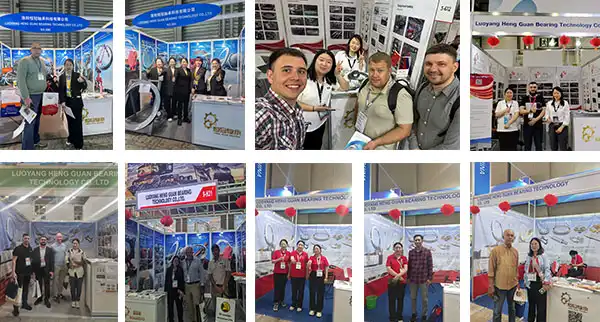
WHAT OUR CUSTOMERS SAY
Here is the customer's evaluation of us