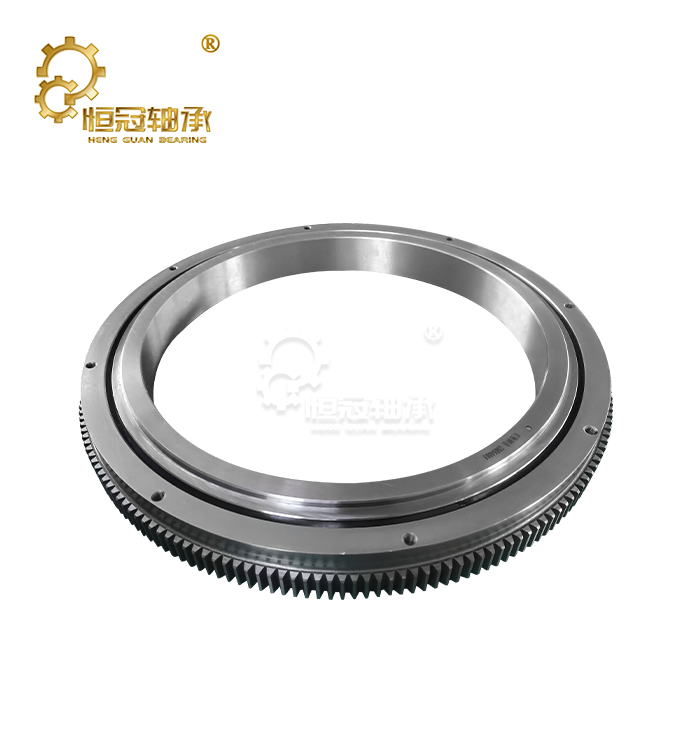




What Is an Amusement Ride Slew Bearing Used For?
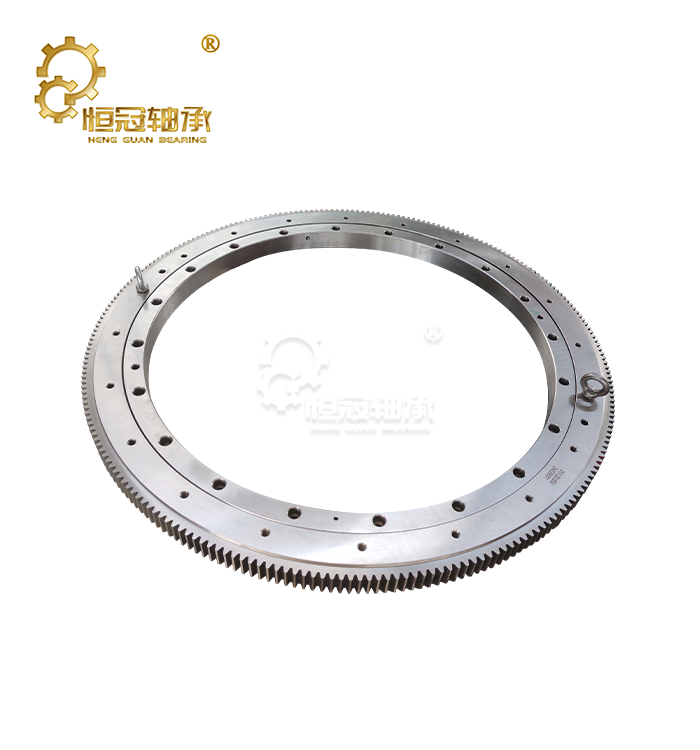
An Amusement Ride Slew Bearing is a huge piece of amusement equipment, particularly built with a spinning component to support heavy constructions and to provide smooth and controlled movement. It is commonly used in attractions such as Ferris wheels, observation towers, rotating platforms, pirate ships, and other rides that require dependable rotation under changing loads.
The amusement ride slew bearing is designed to handle mixed loads, such as radial loads, axial loads, and overturning moments, as opposed to the typical industrial bearing that generally handles one primary direction of loading. When an amusement ride is running, the bearing must constantly endure the weight of shifting passengers, stresses from acceleration and braking, vibration, wind loads, and the elements of the outdoors.
These bearings have a close relationship with ride stability and passenger safety. So the producer should pay more attention to the selection of materials, machining accuracy, heat treatment, sealing performance, and quality inspection. Proper design of a slew bearing will allow entertainment equipment to run smoother, last longer, and require less maintenance.
How Does an Amusement Ride Slew Bearing Work in Entertainment Equipment?
The point of interaction between the fixed and rotating structures is the amusement ride slew bearing. This makes it possible to rotate the upper part of an attraction and to reliably transfer complex loads to the supporting frame.
For example, in a Ferris wheel system, the bearing supports the revolving wheel framework and carries the combined weight of:
The frame of the wheel itself
Passenger compartments.
Traffic of passengers when in operation
Wind load on the structure: "Impacts that come and go”
The bearing raceway and rolling parts distribute the forces over a larger contact area, reducing concentrated stress and preventing premature wear.
Structural Components of an Amusement Ride Slew Bearing
The slewing bearing of a typical amusement ride consists of a number of precision-engineered components working as a unit:
Inner and Outer Rings
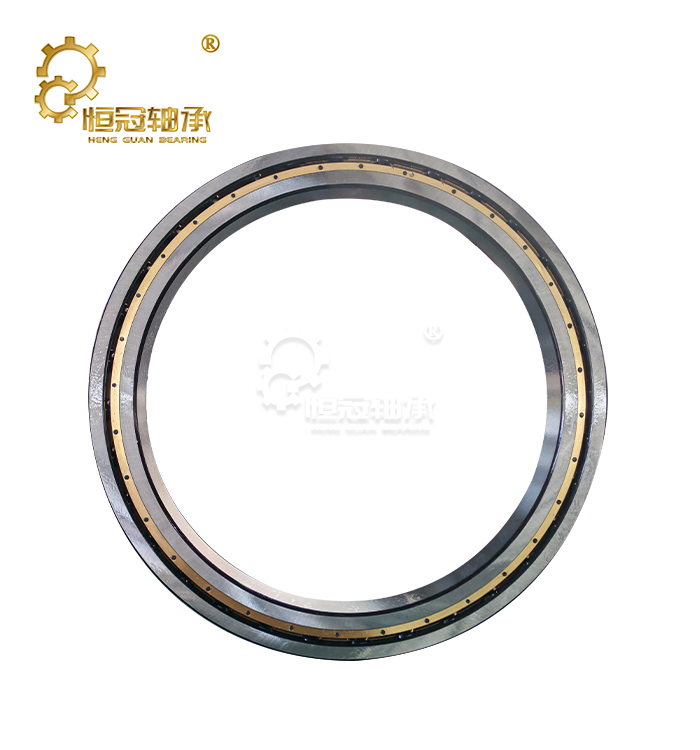
The inner and outer rings are the primary load-bearing structure. They are mostly constructed of high-strength bearing steels, such as 42CrMo or 50Mn, which have good mechanical strength, impact resistance, and fatigue performance.
In production these rings are often treated by such processes as the following:
Forged or machined
Heat processing
Raceway grinding
Dimensional quality assurance
These manufacturing process processes improve the bearing’s resistance to the repetitive loads during long-term operation of the amusement ride.
Rolling Elements and Raceway Design
Design of Rolling Elements and Raceways
The rolling elements transfer loads from the inner race to the outside race. depending on the application requirements. Manufacturers may choose:
single-row ball types
Double row ball designs.
Cross Roller Type (4)
Roller Type Setups
Double-row ball slewing bearings are generally chosen for large amusement rides, as they can carry heavier loads and yet rotate smoothly.
Accuracy of the raceway surface is directly related to the following:
Stability of rotation
Noise from running
Friction level.
Service life
A good raceway finish will help to reduce uneven contact stress and improve the overall bearing reliability.
Lubrication and sealing systems
Many amusement rides are outdoors; thus, it is vital to protect them against dust, rain, humidity, and temperature variations.
The sealing system prevents contaminants from accessing the internal bearing structure, and the lubrication reduces friction between the rolling elements and the raceways.
Typical maintenance requirements are the following:
greasing periodically again
Seal examination
Listen for odd sounds or vibrations.
Monitoring of lubrication contamination
Additional corrosion protection may be necessary at coastal amusement parks, as salt exposure can accelerate the breakdown of surfaces.
What Makes Slew Bearings Suitable for Amusement Ride Applications?
Amusement rides create demanding operating conditions that are different from many standard industrial machines. The bearing must provide both mechanical strength and long-term reliability.
Ability to Handle Multiple Load Directions
One of the main advantages of an Amusement Ride Slew Bearing is its ability to support different types of loads simultaneously.
During operation, the bearing may experience the following:
Radial loads: Generated by the weight of rotating structures and passengers
Axial loads: Created by vertical forces and operational movement
Tilting moments: Caused by uneven loading, wind pressure, and dynamic movement
A suitable bearing design distributes these forces through the raceway system, reducing stress concentration and improving operational safety.
This multi-directional load capability makes slew bearings a practical choice for equipment where space limitations prevent the use of multiple separate bearing systems.
Why Are Material Selection and Manufacturing Accuracy Important?
The performance of an amusement ride slew bearing depends heavily on manufacturing quality. Since amusement equipment often operates for many years with repeated daily cycles, even small defects can affect long-term reliability.
High-Strength Steel Materials
Materials commonly used for slewing bearings include:
42CrMo alloy steel: Known for high strength, toughness, and resistance to impact loading
50Mn steel: Commonly used for bearing rings because of its good hardness and wear resistance
GCr15 bearing steel: Frequently used for rolling elements due to its excellent contact fatigue performance.
The selected material must match the expected load conditions and operating environment.
Precision Machining and Inspection
Large amusement ride bearings require strict manufacturing control because installation accuracy directly affects performance.
Important inspection procedures may include:
Dimensional measurement
Raceway accuracy testing
Hardness testing after heat treatment
Surface quality inspection
Clearance verification
For OEM amusement equipment manufacturers, these quality controls help ensure that the bearing integrates correctly with the overall ride structure.
Common Applications of Amusement Ride Slew Bearings
The application range of amusement ride slew bearing technology continues to expand as amusement equipment becomes larger and more complex.
Ferris Wheels and Observation Towers
Ferris wheels require bearings capable of supporting large rotating structures while maintaining smooth movement.
The bearing must handle:
Heavy static loads
Continuous rotation
Wind forces
Passenger weight variations
For observation towers and similar attractions, low vibration and stable rotation are especially important because passengers expect a comfortable experience.
Rotating Platforms and Scenic Attractions
Many modern entertainment facilities use rotating platforms, including:
Interactive ride systems
Rotating stages
Viewing platforms
Themed attractions
These applications require accurate positioning and consistent rotation performance.
Large Mechanical Entertainment Equipment
Other applications include:
Carousel systems
Simulation rides
Rotating amusement structures
Custom-designed entertainment machinery
Each application has different requirements for bearing diameter, load capacity, mounting dimensions, and operating speed.
How Should Amusement Ride Slew Bearings Be Maintained for Long-Term Performance?
Regular maintenance is essential for extending the service life of an amusement ride slew bearing. Although these bearings are designed for heavy-duty applications, improper lubrication, contamination, incorrect installation, or excessive loading can reduce their operating lifespan.
For amusement parks, maintenance is not only about preventing equipment downtime. It is also directly related to passenger safety, ride availability, and long-term operating costs.
Routine Inspection Practices
A practical maintenance program should include regular checks of the bearing’s operating condition.
Important inspection points include:
Checking grease condition and lubrication level
Inspecting sealing performance
Monitoring abnormal noise or vibration
Checking mounting bolts for proper tightening
Observing any unusual movement or clearance changes
Early detection of problems allows operators to perform corrective maintenance before serious damage occurs.
For example, increased operating noise may indicate insufficient lubrication, raceway wear, or rolling element damage. Visible grease leakage may suggest seal aging or installation issues.
Lubrication Requirements
Lubrication plays a critical role in reducing friction between rolling elements and raceways.
The correct lubricant helps:
Minimize wear
Reduce operating temperature
Protect internal components from corrosion
Maintain smooth rotation
The lubrication interval depends on several factors, including:
Bearing size
Operating frequency
Load conditions
Outdoor exposure
Climate environment
A Ferris wheel operating in a coastal area may require different lubrication and inspection schedules compared with an indoor amusement attraction.
Common Failure Causes
Most slewing bearing failures are related to operating conditions rather than basic design problems.
Common causes include:
Insufficient Lubrication
A lack of grease can increase friction between contact surfaces, causing accelerated wear and possible raceway damage.
Contamination
Dust, moisture, and corrosive substances can enter through damaged seals and affect internal bearing performance.
Excessive Loading
Unexpected overload conditions, improper installation, or structural changes may create forces beyond the original design requirements.
Improper Installation
Incorrect mounting surface preparation, uneven bolt tightening, or misalignment can create uneven load distribution and shorten service life.
What factors should be considered when selecting an amusement ride slew bearing?
Choosing the correct amusement ride slew bearing requires more than selecting a suitable diameter. Engineers must evaluate the complete operating environment and mechanical requirements of the amusement equipment.
Load Capacity and Operating Conditions
The first consideration is understanding the actual forces applied to the bearing.
Important factors include:
Total equipment weight
Maximum passenger capacity
Rotation speed
Acceleration and braking conditions
Wind loading
Required safety factors
A bearing that is correctly matched to the application can provide better reliability and reduce unexpected maintenance costs.
Bearing Size and Mounting Requirements
The bearing dimensions must match the mechanical structure of the ride.
Engineers usually evaluate:
Inner and outer diameter
Mounting hole pattern
Installation space
Bearing height
Connection method
Proper dimensional matching ensures effective load transfer between the bearing and the ride structure.
Environmental Conditions
Outdoor amusement equipment faces many environmental challenges.
The selection process should consider:
Temperature changes
Rain exposure
Humidity
Dust levels
Salt spray near coastal locations
For harsh environments, manufacturers may recommend enhanced sealing systems, corrosion-resistant treatments, or customized protection solutions.
How to Choose a Reliable Amusement Ride Slewing Bearing Manufacturer?
Selecting the right supplier is an important step because bearing quality directly affects equipment safety and maintenance costs.
A professional manufacturer should provide not only products but also engineering support throughout the project.
Manufacturing Capability and Quality Control
A reliable slewing bearing manufacturer should have complete production capabilities, including:
Forging and machining processes
Heat treatment facilities
Precision grinding equipment
Quality inspection systems
Customized engineering support
Strict quality control helps ensure that every bearing meets the required dimensional and performance specifications.
Manufacturers with ISO 9001 quality management systems can provide a more controlled production process, from raw material inspection to final product testing.
Custom Design Support
Different amusement rides have different structural designs and operating conditions. Standard bearing models may not always provide the best solution.
A professional supplier can help optimize the following:
Bearing dimensions
Load capacity
Raceway design
Sealing solutions
Lubrication requirements
For large amusement equipment manufacturers, early cooperation with a bearing supplier can help avoid design problems during later production stages.
Why Choose Heng Guan Bearing Technology?
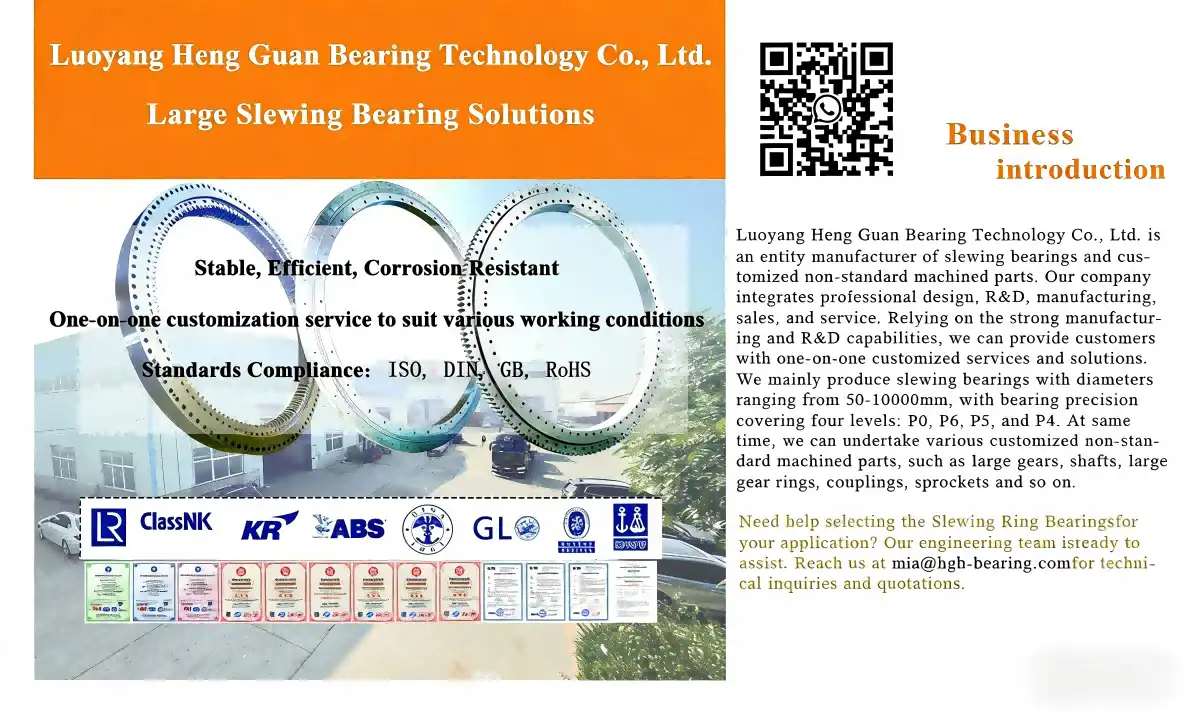
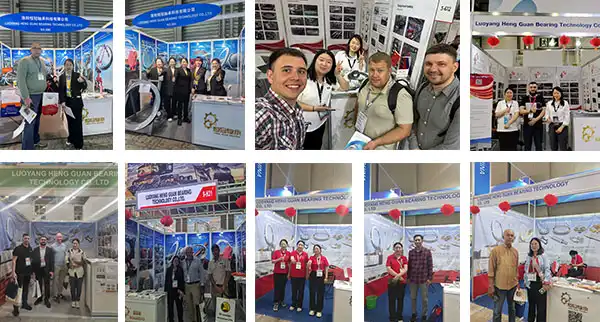
Heng Guan Bearing Technology specializes in manufacturing customized slewing bearing solutions for various industrial applications, including amusement equipment.
Located in Luoyang, China, a well-known bearing manufacturing region, the company provides engineering support and customized production capabilities for different application requirements.
Its product range covers large-diameter slewing bearings with different structural designs, precision grades, and performance requirements. Through controlled manufacturing processes and inspection procedures, Heng Guan Bearing Technology helps customers develop reliable bearing solutions for demanding applications.
For amusement ride manufacturers and operators, working with an experienced supplier can provide advantages such as:
Customized bearing design support
Technical communication during project development
Quality inspection documentation
Solutions based on actual operating conditions
What Should Buyers Know Before Purchasing Amusement Ride Slew Bearings?
For large amusement equipment projects, bearing selection should be considered a long-term investment rather than a simple component purchase.
The lowest initial price does not always represent the lowest overall cost. A bearing with better manufacturing quality and a suitable design may reduce the following:
Maintenance frequency
Unexpected downtime
Replacement costs
Safety risks
Before placing an order, buyers should confirm:
Required load ratings
Operating environment
Bearing dimensions
Material requirements
Inspection standards
Delivery schedule
After-sales technical support
Clear communication between the equipment manufacturer and bearing supplier helps ensure the selected bearing meets both performance and safety expectations.
Conclusion
Amusement ride slew bearing technology plays an essential role in modern amusement equipment by providing stable rotation, reliable load support, and long-term operational performance. From Ferris wheels and observation towers to customized rotating attractions, these bearings allow large structures to move smoothly while handling complex forces generated during operation.
The performance of an amusement ride bearing depends on multiple factors, including material quality, manufacturing accuracy, lubrication management, installation conditions, and supplier expertise. Choosing the correct bearing design and working with an experienced manufacturer can significantly improve equipment reliability and reduce lifecycle maintenance costs.
For amusement ride manufacturers, operators, and engineering companies, understanding the application requirements of an amusement ride slew bearing helps ensure safer designs and more efficient operations. A professional bearing supplier can provide customized solutions based on load conditions, environmental challenges, and project requirements, helping entertainment equipment achieve dependable performance throughout its service life.
|
|
FAQ
1. What maintenance schedule should I follow for slewing bearings?
Maintenance intervals depend on operational intensity and environmental conditions. For outdoor amusement uses, the usual plans are daily eye checks while the rides are running, monthly thorough checks that include checking the torque on the bolts, and yearly full maintenance that includes replacing all the seals and servicing the whole lubrication system.
2. What factors determine slewing-bearing pricing?
Costs for bearings are mostly affected by the quality of the material, the level of personalization, the size requirements, and the level of accuracy needed. High-strength alloys, precise grinding tolerances, specialty sealing systems, and custom mounting setups all make production more difficult and raise the cost of the finished product. Buying in bulk and making long-term deals to sell goods often offer big cost savings.
3. Can slewing bearings be customized for unique ride designs?
Yes, some of the biggest companies, like Heng Guan, focus on making custom bearings for specific uses. Customization includes changing shapes, using special materials, making sealing systems better, and adding fixing options that are best for the ride and the area in which it will be used.
Partner with Heng Guan for Premium Amusement Ride Slew-Bearing Solutions.
When your theme park operation demands reliable, high-performance slewing bearings, Heng Guan Bearing Technology delivers proven expertise and superior manufacturing quality. As a specialized amusement ride slew bearing manufacturer, we combine decades of engineering experience with advanced production capabilities to create custom solutions for demanding amusement applications. Our comprehensive product range spans 20-10000 mm diameter bearings with precision grades from P0 to P4, ensuring optimal solutions for any ride configuration.Contact our technical team at mia@hgb-bearing.com to discuss your project requirements and discover how our personalized engineering approach can enhance your ride reliability while optimizing operational costs through superior bearing performance.
References
1. Chen, L., & Wang, S. (2023). "Advanced Materials and Design Principles for Heavy-Duty Slewing Bearings in Amusement Applications." International Journal of Mechanical Engineering and Applications, 15(3), 78-92.
2. Thompson, R.D. (2022). "Safety Standards and Testing Protocols for Rotating Components in Passenger-Carrying Amusement Rides." Theme Park Engineering Quarterly, 8(4), 156-171.
3. Martinez, A.J., & Kumar, P. (2023). "Load Analysis and Bearing Selection Methodology for Modern Amusement Ride Applications." Mechanical Systems and Design, 41(2), 234-249.
4. International Organization for Standardization. (2022). "ISO 17842-1:2022 Safety of amusement rides and amusement devices - Design and manufacture." Geneva: ISO Publications.
5. Anderson, K.M. (2023). "Maintenance Strategies and Lifecycle Cost Analysis for Outdoor Bearing Applications in Entertainment Equipment." Industrial Maintenance Engineering, 29(7), 45-58.
6. Liu, H., & Brown, D.T. (2022). "Environmental Protection and Sealing Technologies for Slewing Bearings in Harsh Operating Conditions." Tribology and Lubrication Technology, 78(9), 112-125.

WHAT OUR CUSTOMERS SAY
Here is the customer's evaluation of us
_1767784942887.webp)