




AC100 Crane Slewing Bearing Supplier for OEM and Aftermarket
Selecting the right AC100 Crane Slewing Bearing The supplier is doing more than just checking product specifications and prices. The quality of the bearings has a direct impact on lifting safety, rotation precision, equipment uptime and long-term operating expenses for mobile crane manufacturers, distributors and maintenance firms.
A good slewing bearing manufacturer should give engineering support, quality inspection records, customisation capability and reliable after-sales service along with high-performance bearings. The slewing bearing is an important connection between the crane chassis and the upper structure, and it needs to bear complicated loads such as axial force, radial load and overturning moment in the lifting process.
This article discusses the important technical parameters, supplier evaluation approaches, OEM purchasing considerations and maintenance practices that allow buyers to determine the appropriate AC100 Crane Slewing Bearing solution for both OEM and aftermarket replacement applications.
What Makes the AC100 Crane Slewing Bearing Suitable for Mobile Crane Applications?
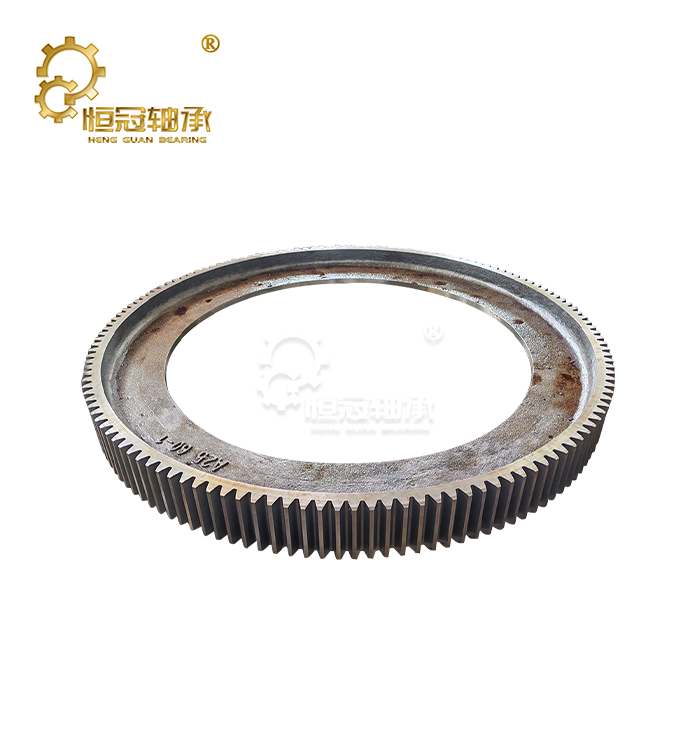
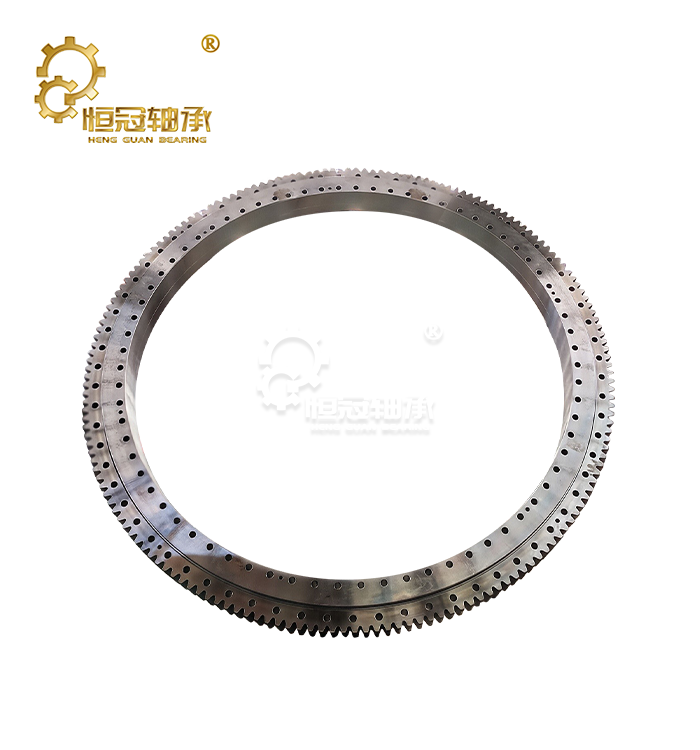
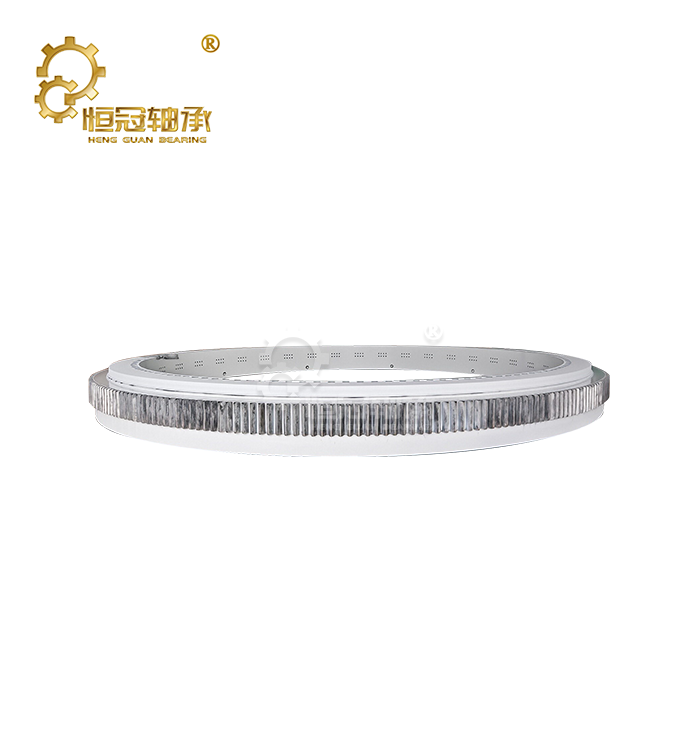
The AC100 crane slewing bearing is developed for heavy-duty mobile crane systems, which require steady rotation performance under severe working situations. The bearing is situated between the lower carriage and the higher rotating platform. The crane superstructure can smoothly rotate and transfer the loads generated during lifting, slewing, and braking.
Crane slewing bearings are required to withstand a mix of forces rather than a single direction of load as with normal industrial bearings. The load distribution in the bearing is continuously changing during operation due to the boom movement, the lifting weight changes, and uneven ground conditions.
Therefore, the AC100 crane bearing is designed with a strong raceway structure, high-strength material, and a precision production method, which can provide reliable operation in a long service life.
Structural Design and Load Handling Capability
The standard AC100 crane slewing bearing is a three-row roller arrangement. It has a high load carrying capacity since the forces are distributed over several roller rows. This design allows the bearing to take significant axial loads, radial loads, and overturning moments at the same time.
Compared with basic bearing structures, the three-row roller structure may reduce local stress concentration and increase the stability under varied lifting conditions of cranes. This is especially true for mobile cranes, which often operate outside and may have varying loads throughout rotation.
The bearing dimensions, the arrangement of mounting holes, gear design, and internal clearance must be properly matched to the crane type. Manufacturers often demand precise dimensional control for OEM applications to achieve seamless assembly and dependable performance.
Material Selection and Manufacturing Quality
The service life of the crane slewing bearing is very related to the quality of the materials. The bearing rings are normally selected from high-strength alloy steels, such as 42CrMo and 50Mn, which can meet the requirements on strength, hardness, and wear resistance.
The raceway surface is heat treated for adequate hardness and impact resistance under specified conditions. Proper heat treatment can minimize common problems such as surface fatigue, cracking, and early damage to the raceway from repeated heavy loads.
Manufacturing processes use precise machining, grinding, and dimensional inspection to maintain accuracy. Key parameters are usually checked by professional vendors, such as
Raceway size
Hole Locations for Mounting
Gear precision
Deformation of the ring
Uniform hardness
These inspection procedures are used to guarantee that all AC100 crane slewing bearing are sent in the proper working conditions.
Key Technical Features That Influence AC100 Crane Slewing Bearing Performance
Model numbers are not the primary criteria for choosing a crane slewing bearing. Buyers must consider a number of technical parameters that affect durability, operating stability, and maintenance requirements.
Sealing Design for Outdoor Crane Environments
Mobile cranes are used in difficult conditions, e.g., on building sites, in ports, mining areas, and industrial plants. The performance of bearing lubrication can be influenced by dust, moisture, sand, and temperature variations due to poorly designed sealing systems.
A good sealing structure prevents outside pollutants from penetrating into the raceway area and also retains the lubricating grease within the bearing system. This lowers contamination-induced wear and allows steady operation over lengthy service intervals.
For cranes functioning in coastal locations or dusty areas, suppliers shall supply acceptable sealing solutions according to the actual working environment. The right seal material and lubrication procedure can greatly affect maintenance intervals and bearing service life.
Gear Accuracy and Rotation Performance
Many cranes incorporate slewing bearings with external or internal gears that couple to the slewing drive system. The quality of gears has a direct impact on the smoothness of rotation, operational noise, and gearbox efficiency.
Poor gear machining precision can result in:
Uneven resistance to rotation
Vibration increased
Abnormal wear of teeth
More frequent maintenance
A skilled manufacturer will employ controlled machining procedures to guarantee the gear is accurate and the bearing and driving mechanism are compatible.
The OEM customer may demand customized gear specs to suit different crane designs. Experienced vendors should be able to provide engineering support for the design and replacement process.
How to Evaluate an AC100 Crane Slewing Bearing Supplier Before Purchasing?
Choosing a supplier is one of the most crucial factors in ensuring long-term crane performance. The cheapest buying price isn’t always the best value, as bearing problems can lead to costly downtime, repair costs, and safety issues.
The right supplier will have demonstrated manufacturing skills, quality control systems, technical expertise, and reliable customer support.
Manufacturing Capability and Quality Management
It is advisable for the buyers to evaluate the supplier's production experience and quality control system before placing an order.
The main factors for assessment are:
Slewing-Bearing Manufacturing Experience
CNC machining ability
Heat Treatment Control
Inspection tools
Materials traceability system
Experience in OEM projects.
A professional supplier should provide technical documents such as material certificates, inspection reports, product drawings, and performance data.
Traceability is particularly important for OEMs of cranes, since it can be necessary to link each bearing to manufacturing data for future maintenance or warranty purposes.
Certification and Testing Requirements
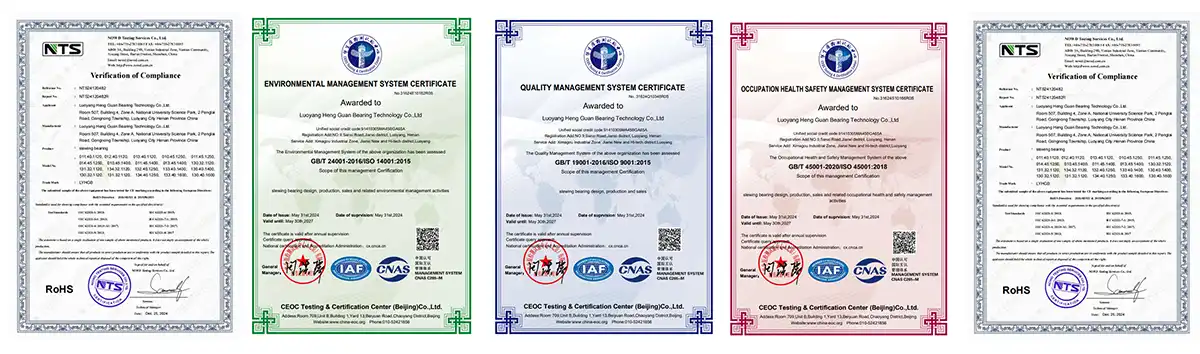
Quality certification means the buyer knows that the provider is going to do the same things again and again in their production. Manufacturing systems adhere to standards such as ISO 9001, which offer a structured methodology for quality control.
But certifications alone do not suffice. Buyers should also see if the vendor carries out actual inspections during the production process.
Common inspection processes include:
Inspection of raw material
Dimensions to measure
HARDNESS TESTS
Inspection of Raceways
Testing accuracy of gear
Final assembly check
Certification systems + realistic inspection procedures are a bigger guarantee of product reliability.
OEM and Aftermarket Purchasing Considerations for AC100 Crane Slewing Bearing
The purchasing requirements for OEM manufacturers and aftermarket customers are different, but both require accurate product matching, stable quality, and reliable technical support.
OEM buyers usually focus on long-term cooperation, production consistency, and customization capability. Aftermarket buyers often need fast replacement solutions, dimensional compatibility, and professional guidance to avoid equipment downtime.
A capable AC100 crane slewing bearing supplier should understand both requirements and provide flexible solutions.
OEM Customization and Engineering Support
For crane manufacturers, a standard bearing may not always meet specific equipment requirements. Different crane models can require variations in:
Mounting dimensions
Bolt hole patterns
Gear specifications
Internal structure
Sealing design
Lubrication methods
An experienced manufacturer can support OEM projects by reviewing technical drawings, confirming operating conditions, and recommending suitable bearing configurations.
Engineering cooperation at the early design stage helps prevent problems such as incorrect load selection, insufficient clearance, or installation difficulties after production.
For new crane models, suppliers with design experience can also assist with bearing optimization to improve rotation stability and reduce maintenance requirements.
Aftermarket Replacement and Compatibility Checking
Aftermarket buyers often need to replace worn or damaged slewing bearings on existing cranes. In these situations, selecting a compatible replacement is more complicated than simply matching the original model number.
Before purchasing an AC100 crane slewing bearing replacement, customers should confirm the following:
Original bearing dimensions
Outer and inner diameter requirements
Mounting hole positions
Gear specifications
Crane lifting capacity
Operating environment
A professional supplier should provide technical assistance during the identification process. This reduces the risk of ordering an unsuitable bearing and helps customers restore crane operation more quickly.
Bulk Purchasing and Delivery Reliability
For distributors, rental companies, and large maintenance providers, supply stability is an important purchasing factor.
Reliable suppliers should offer:
Consistent production quality
Stable raw material supply
Professional export packaging
Accurate delivery schedules
Technical documentation support
Bulk purchasing may help reduce procurement costs, but maintaining product consistency is equally important. Receiving bearings with different quality levels between batches can create unexpected installation and maintenance problems.
Installation and Maintenance Practices to Extend Bearing Service Life
Even a high-quality slewing bearing requires correct installation and maintenance to achieve its expected performance. Incorrect mounting procedures, insufficient lubrication, or improper bolt tightening can shorten service life and create safety risks.
Proper Installation Preparation
Before installing an AC100 crane slewing bearing, technicians should carefully inspect the crane mounting structure.
Important preparation steps include:
Cleaning the mounting surfaces
Checking surface flatness
Confirming bolt hole alignment
Inspecting connecting components
Verifying bearing orientation
Uneven mounting surfaces can create additional stress on the bearing rings, resulting in abnormal raceway loading and accelerated wear.
The supporting structure should provide sufficient rigidity to prevent deformation during crane operation. Proper alignment ensures that loads are distributed evenly across the bearing structure.
Correct Bolt Installation and Torque Control
Mounting bolts are critical components that secure the slewing bearing to the crane structure. Incorrect bolt tightening can lead to uneven preload distribution and reduce connection reliability.
During installation:
Bolts should be tightened according to the recommended sequence.
Calibrated torque tools should be used.
Final torque values should follow the manufacturer’s specifications.
Bolt conditions should be checked during scheduled maintenance.
High-strength bolts are commonly used for crane slewing bearing applications because they must withstand repeated dynamic loads. Regular inspection helps identify loosening problems before they affect equipment safety.
Lubrication and Routine Inspection
Proper lubrication is essential for reducing friction and protecting raceway surfaces.
Maintenance teams should establish inspection schedules based on the following:
Crane working frequency
Environmental conditions
Load intensity
Operating hours
Regular maintenance usually includes:
Checking grease condition
Adding lubricant when required
Inspecting seal condition
Monitoring abnormal noise or vibration
Measuring possible clearance changes
Early detection of problems can prevent major failures and reduce unexpected downtime.
Why Choose Heng Guan as Your AC100 Crane Slewing Bearing Partner?
Selecting a supplier is not only about purchasing a bearing. For many crane manufacturers and maintenance companies, the supplier relationship directly influences equipment reliability, project efficiency, and long-term operating costs.
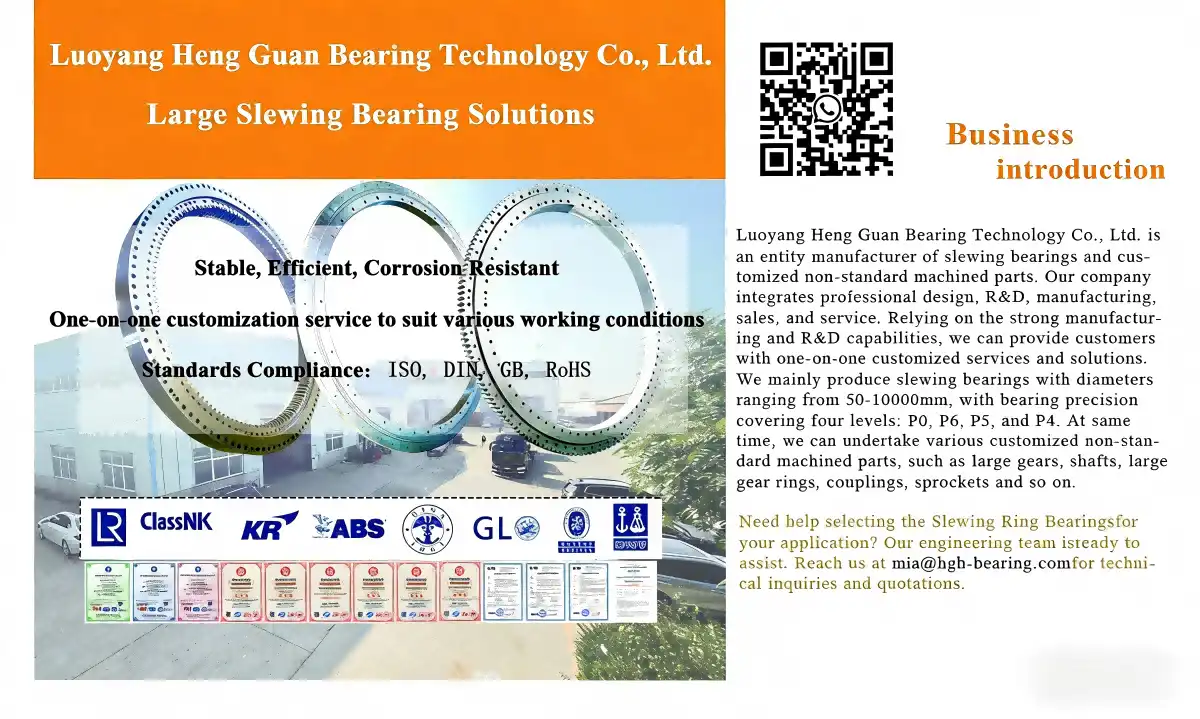
Luoyang Heng Guan Bearing Technology Co., Ltd. focuses on slewing bearing manufacturing and provides solutions for OEM equipment manufacturers, replacement markets, and industrial applications.
Professional Manufacturing Experience and Technical Capability
Heng Guan combines bearing manufacturing experience with modern production processes to provide reliable slewing bearing solutions.
The company supports customers with:
Slewing-bearing design assistance
Customized manufacturing
Precision machining
Quality inspection
Technical consultation
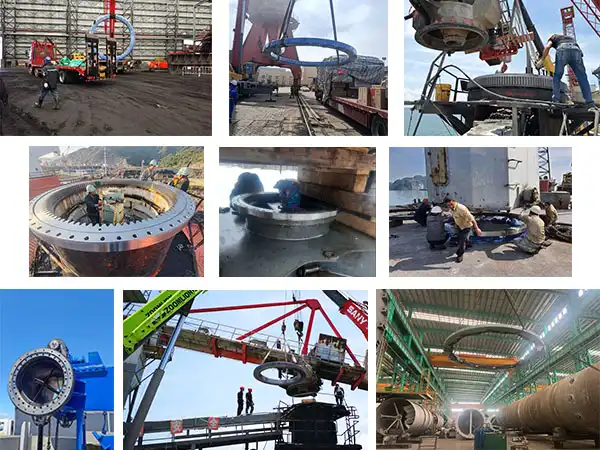
With experience across different industrial applications, the engineering team can help customers select suitable bearing structures according to load requirements, installation conditions, and working environments.
The product range covers various slewing bearing types, including:
Single-row four-point contact ball bearings
Cross roller slewing bearings
Three-row roller slewing bearings
Customized slewing bearing solutions
This manufacturing capability allows Heng Guan to support both standard requirements and special OEM projects.
Strict Quality Control from Raw Material to Finished Product
Quality consistency is essential for crane components because bearing failure can affect equipment safety and operational efficiency.
Heng Guan applies quality control throughout the production process, including the following:
Incoming material inspection
Machining accuracy control
Heat treatment monitoring
Dimensional inspection
Final product testing
Material records and inspection information help provide better product traceability. This is especially valuable for OEM customers that require stable quality management throughout their supply chain.
Conclusion
Choosing the right AC100 crane slewing bearing supplier has a direct impact on crane reliability, maintenance costs, and long-term operating performance. A suitable supplier should provide more than a standard bearing product. Manufacturing capability, quality control, engineering support, customization services, and after-sales assistance are all important factors in successful procurement.
For OEM manufacturers and aftermarket customers, working with an experienced slewing bearing supplier helps reduce purchasing risks and ensures better compatibility with crane applications. Through accurate product selection, professional installation, and proper maintenance practices, the AC100 Crane Slewing Bearing can provide stable rotation performance and dependable service in demanding lifting environments.
Heng Guan supports customers with technical expertise, customized bearing solutions, and quality-focused manufacturing services. Whether for new crane production or replacement requirements, professional supplier support can help customers achieve safer operation, improved efficiency, and long-term value.
|
|

FAQ
1. What indicates when an AC100 crane slewing bearing requires replacement?
The main sign is too much axial clearance, which can be seen on a dial display during tilt tests. When play goes beyond the manufacturer's limits (usually 2.0–3.0 mm, based on the specs) or metal particles show up in grease analysis that shows high iron/chromium content, the bearing needs to be replaced right away. Extra warning signs include strange noises when the machine is turning, more force when it's working, and wear that can be seen on the gear teeth or mounting surfaces.
2. How often should gear teeth receive lubrication maintenance?
For active crane operations, high-viscosity open gear oil with EP additives must be used to grease the gear teeth once a week or every 50 hours of operation. Usually, the internal track system needs to be re-greased every 100 hours or once a month. Conditions in the environment, such as dust, extreme temperatures, and high or low humidity, may require more frequent oil to keep things running smoothly and stop them from wearing out too quickly.
3. Can damaged AC100 bearings undergo repair instead of replacement?
For safety reasons, most repair choices stay restricted. Minor surface rust on gears can be fixed by carefully dressing them, but damage to hardened raceways, such as spalling or wear cracks in mounting holes, makes bearings dangerous. Only very large bearings can be remanufactured, so replacement is the standard for AC100 size groups to ensure safety and dependability in operation.
Partner with Heng Guan for Superior AC100 Crane Slewing Bearing Solutions
Are you ready to improve how you use your crane with high-quality AC100 Crane Slewing Bearing solutions? Heng Guan's expert team can give you full technical advice, make unique bearing designs, and make sure you get your orders on time, whether you're an OEM or an aftermarket customer. Leading equipment makers around the world choose us as their AC100 Crane Slewing Bearing source because we are dedicated to producing high-quality products at low prices and providing excellent customer service. Get free quotes from our technical experts today by emailing mia@hgb-bearing.com. Find out how our knowledge of bearings can improve the performance and economy of your crane.
References
1. Chen, L., Wang, M., & Zhang, H. (2023). "Advanced Materials and Heat Treatment Techniques for Heavy-Duty Crane Slewing Bearings." International Journal of Mechanical Engineering and Applications, 45(3), 78-92.
2. Johnson, R.K., & Smith, P.D. (2022). "Load Distribution Analysis in Multi-Row Roller Slewing Bearings for Mobile Crane Applications." Proceedings of the International Conference on Heavy Machinery Engineering, 156-171.
3. Thompson, A.J., Rodriguez, C., & Kim, S.H. (2023). "Comparative Study of Sealing Technologies in Construction Equipment Bearings Operating in Harsh Environments." Tribology and Lubrication Engineering, 38(7), 23-35.
4. Williams, D.R., & Brown, K.L. (2022). "Quality Management Systems and Certification Requirements for Critical Bearing Applications in Heavy Industry." International Standards and Quality Assurance Review, 29(4), 112-127.
5. Anderson, M.P., Liu, X., & Patel, N.K. (2023). "Life Cycle Cost Analysis of Premium Versus Standard Slewing Bearings in Mobile Crane Operations." Industrial Maintenance and Plant Operation, 67(2), 45-58.
6. Garcia, F.S., O'Brien, J., & Yamamoto, T. (2022). "Installation Best Practices and Maintenance Protocols for Large Diameter Slewing Bearings in Construction Equipment." Heavy Equipment Maintenance Quarterly, 51(8), 34-49.

WHAT OUR CUSTOMERS SAY
Here is the customer's evaluation of us
_1769754972666.webp)