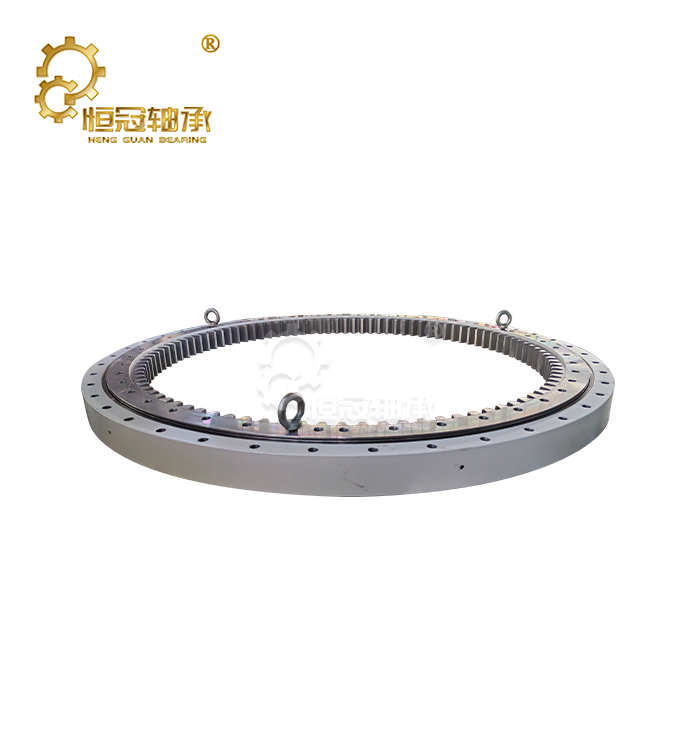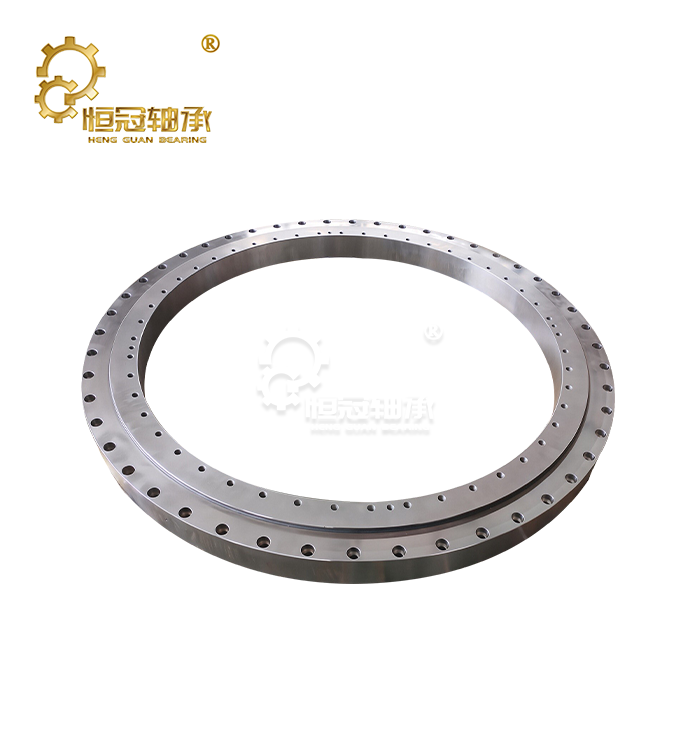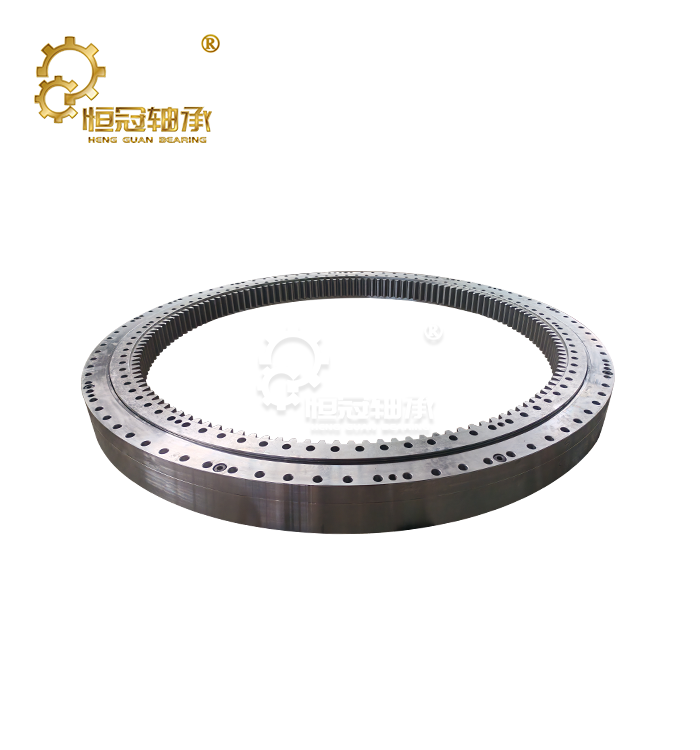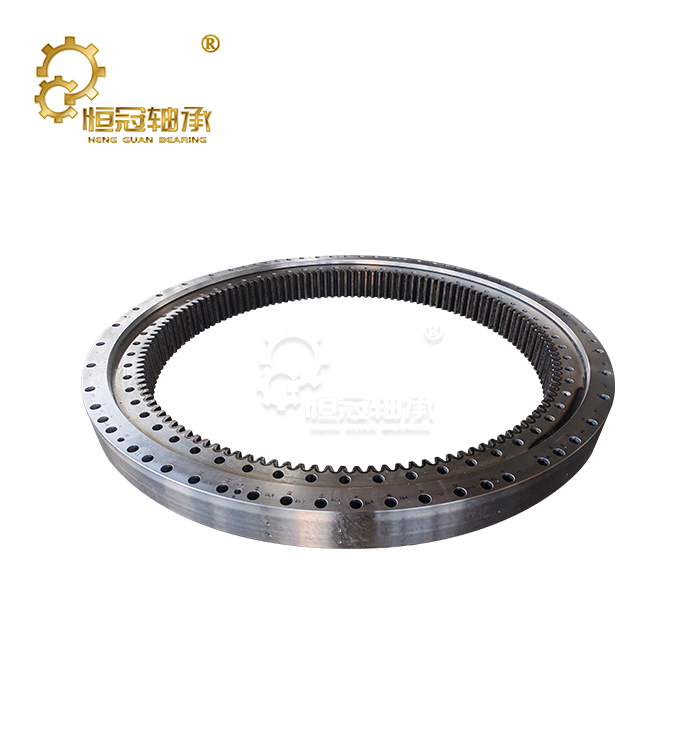




What Is an Amusement Equipment Slewing Bearing?
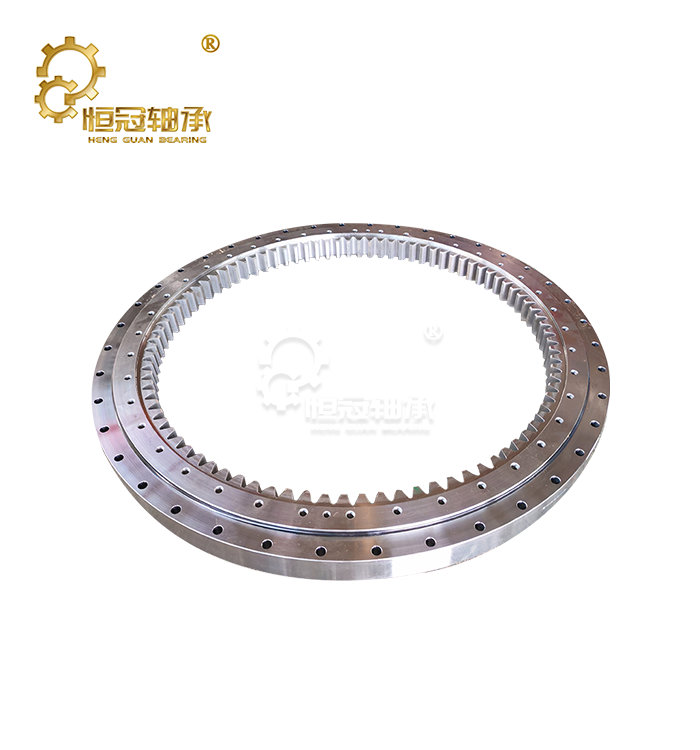
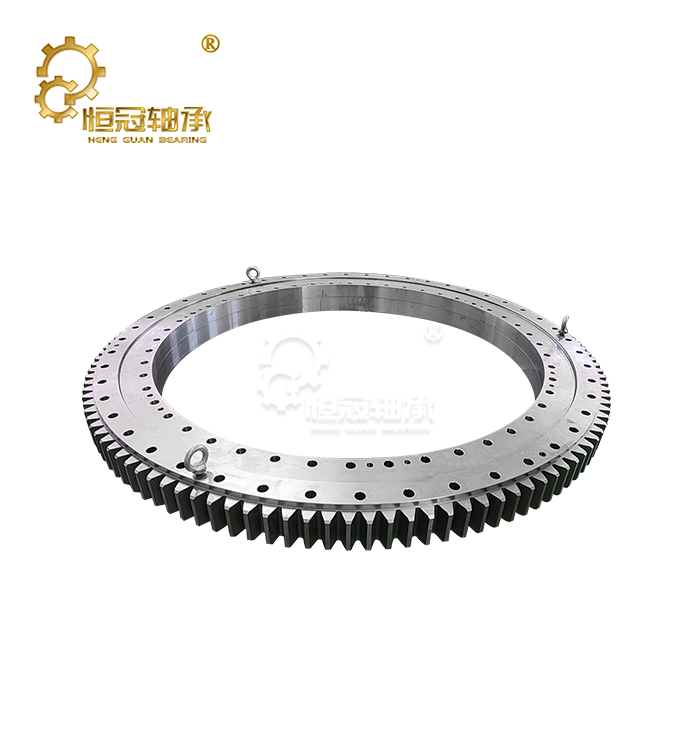
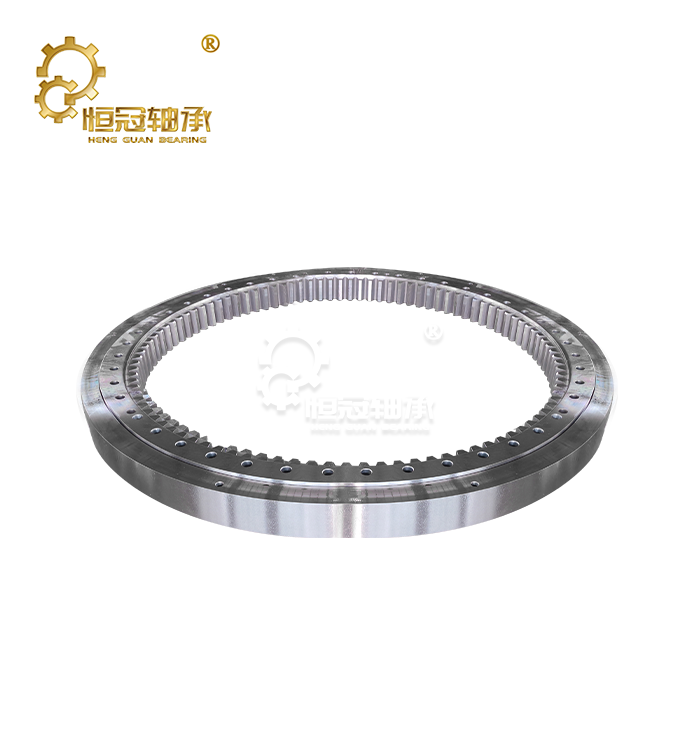
An Amusement Equipment Slewing Bearing is a large-diameter bearing for amusement rides and related equipment to sustain and guide controlled rotating movement. Unlike most ordinary industrial bearings, which are only capable of supporting either radial or axial loads, a slewing bearing can be engineered to support a combination of axial loads, radial loads, and overturning moments in one compact unit. This makes it useful for equipment such as observation wheels, rotating platforms, pendulum rides, tower attractions, and other constructions where a major component has to revolve relative to a fixed structure. With entertainment equipment, bearing selection is more than merely choosing a diameter that will suit the machine. The bearing must operate with the riding structure, drive system, mounting bolts, lubrication system, seals, and control system. The required bearing specification is influenced by a number of factors, including passenger loading, acceleration, braking, exposure to wind, operating cycles, and installation conditions. Therefore, OEMs and procurement teams should consider the overall operating environment before choosing a slewing bearing.
Why Are Slewing Bearings Important in Amusement Rides?
Supporting Combined Loads During Rotation
Amusement rides can generate changing loads that are more complicated than those found in many stationary machines. Depending on the ride design, the bearing may experience axial forces from the weight of the rotating structure and passengers, radial forces generated by the machine arrangement, and overturning moments caused by eccentric loads or dynamic movement.
A properly selected slewing bearing distributes these forces through its rolling elements and raceways while maintaining the required rotational movement. The actual load distribution depends on the bearing configuration, internal geometry, mounting stiffness, bolt arrangement, and operating conditions.
For example, an observation wheel may experience significant structural loads while rotating at relatively low speed. A pendulum ride can introduce more substantial changes in load direction as the ride accelerates and reverses movement. A rotating platform may place greater emphasis on smooth rotation and resistance to moment loads. These differences should be considered during the bearing selection process.
Connecting the Rotating and Stationary Structures
A slewing bearing does more than allow a ride to rotate. It also forms an important mechanical connection between the rotating and stationary parts of the equipment.
The inner and outer rings are normally attached to different structural components. One ring rotates while the other remains stationary, depending on the equipment arrangement. The bearing therefore becomes part of the structural load path, which means the supporting structure and mounting surfaces are just as important as the bearing itself.
If the mounting structure is not sufficiently rigid, even a high-quality bearing may experience uneven loading. Poor surface flatness, incorrect bolt tightening, structural deformation, or inadequate alignment can change the internal load distribution and affect bearing performance.
How an Amusement Slewing Bearing Is Designed
Raceways and Rolling Elements
Slewing bearings are available in several configurations, including ball and roller designs. The appropriate configuration depends on the required load capacity, moment resistance, rotational characteristics, available space, and expected operating conditions.
Four-point contact ball slewing bearings can accommodate combined loads and are often considered where a relatively compact cross-section is beneficial. Double-row ball arrangements can provide additional load-carrying capability compared with some single-row configurations. Roller-based designs can be selected when higher load capacity or greater stiffness is required.
There is no single bearing configuration that is automatically suitable for every amusement ride. Engineers should compare the expected axial load, radial load, overturning moment, rotation pattern, and required service life with the manufacturer's calculation results.
Bearing Rings, Gear Teeth, and Sealing
The bearing rings form the primary structural components of the assembly. Depending on the application, manufacturers may use bearing steels and controlled heat-treatment processes to obtain the required raceway properties. The exact material grade and hardness should be confirmed against the manufacturer's technical documentation rather than assumed to be identical for every model.
Some amusement equipment uses a gear-integrated slewing bearing to transmit drive torque. Gear teeth may be positioned internally or externally depending on the drive arrangement and available installation space. When a geared bearing is specified, the gear module, tooth geometry, pitch diameter, allowable torque, backlash, lubrication, and pinion alignment should be evaluated together.
Seals are also important because many amusement rides operate outdoors. Rain, dust, cleaning water, temperature changes, and airborne contaminants can affect the bearing if the sealing arrangement is not appropriate. The seal design should therefore be matched to the actual environment rather than selected only by bearing size.
Which Slewing Bearing Configuration Fits an Amusement Ride?
Single-Row Ball Designs
Single-row ball slewing bearings can be considered for applications where the combined load and overturning moment remain within the calculated capacity of the bearing. Their relatively compact structure can make them attractive for smaller rotating platforms and other applications where space and weight are important.
However, a compact design should not be interpreted as a universal solution. Passenger capacity, acceleration, braking, duty cycle, and structural stiffness still need to be included in the engineering calculation.
Double-Row Ball Designs
Double-row designs can provide a larger load-carrying arrangement than some single-row configurations. They may be appropriate when an amusement ride places greater demands on axial or moment loading while still requiring a ball-bearing solution.
For OEM projects, the important point is to compare the calculated bearing loads with the manufacturer's permissible values rather than selecting a double-row bearing simply because the ride is large.
Roller Slewing Bearings
Roller slewing bearings can be considered when high load capacity and stiffness are important design priorities. Their internal arrangement can provide a substantial load-carrying path, but they may also require more attention to installation accuracy, lubrication, and operating conditions.
For large amusement equipment, the final selection should be based on calculated loads and the manufacturer's engineering recommendation. A larger bearing is not necessarily a better bearing if its internal configuration does not match the actual loading pattern.
Key Factors When Selecting Amusement Equipment Slewing Bearings
Load, Moment, and Operating Cycle
Load calculation should be the starting point for bearing selection. Engineers should provide more than the static weight of the ride. The calculation should consider passenger loading, rotating mass, acceleration, braking, eccentric loading, wind effects where applicable, and the resulting overturning moment.
The operating cycle is equally important. A bearing used for slow, continuous rotation has a different duty profile from one used in repeated acceleration and deceleration. The supplier should understand how frequently the ride starts, stops, reverses, or changes speed.
A useful engineering data package normally includes:
Maximum and minimum axial loads
Radial loads
Overturning moments
Operating speed or oscillation range
Acceleration and braking conditions
Expected operating hours
Number of cycles
Environmental conditions
Required design or service life
Providing this information allows the manufacturer to make a more meaningful selection than simply supplying the desired bearing diameter.
Mounting Structure and Bolt Connection
The mounting structure has a direct influence on bearing performance. Both mounting surfaces should have sufficient stiffness and appropriate geometric accuracy. Uneven surfaces can introduce localized deformation, which changes the contact conditions inside the bearing.
Bolt selection and tightening are also important. The bolt grade, diameter, quantity, spacing, tightening method, and preload should be determined according to the bearing and ride design. Cross-pattern tightening is commonly used during installation to distribute the clamping force, but the manufacturer's installation instructions should always take priority.
For large amusement equipment, the mounting interface should be checked before the bearing arrives. Correcting structural problems after installation can be significantly more difficult than identifying them during the design stage.
Environment, Sealing, and Lubrication
Outdoor amusement equipment can face rain, humidity, dust, cleaning operations, and seasonal temperature changes. A suitable sealing arrangement helps protect the raceways and rolling elements, but seals should not be treated as a substitute for regular inspection and lubrication.
Lubricant selection should consider the bearing design, load, speed, ambient temperature, and manufacturer's recommendations. Grease should be compatible with the sealing materials and intended operating conditions.
Maintenance intervals should not be based on a universal number of operating hours. They should be established according to the manufacturer's lubrication instructions, operating environment, duty cycle, inspection results, and the applicable maintenance requirements for the ride.
Installation and Maintenance Practices That Matter
Preparing the Mounting Surfaces
Before installation, the mounting surfaces should be cleaned and inspected for flatness, damage, burrs, paint buildup, and contamination. The actual allowable flatness and surface requirements should come from the bearing manufacturer's installation documentation and the ride design.
The bearing should not be forced into position by correcting structural misalignment with excessive bolt tightening. If the mounting structure is distorted, the problem should be corrected before the bearing is fully installed.
Correct Bolt Tightening
The mounting bolts form a critical part of the load path. Incorrect tightening can result in uneven preload and may affect bearing performance.
OEMs should use calibrated torque equipment or another approved tightening method for amusement equipment slewing bearing and record the installation results where required by the project's quality system. The tightening sequence should follow the manufacturer's instructions rather than relying on a generic procedure.
For safety-critical amusement equipment, installation records are valuable because they provide traceability for later inspections and maintenance.
Lubrication and Inspection
Regular lubrication helps maintain an appropriate lubricating film between the rolling elements and raceways. However, more grease does not automatically mean better lubrication. Excessive or incompatible grease can create its own problems.
Inspection should include the bearing's operating condition, unusual noise, temperature changes, abnormal vibration, seal condition, grease condition, gear tooth condition where applicable, and evidence of bolt or mounting problems.
Amusement ride maintenance should also be integrated with the broader inspection program for the entire machine. ASTM F770, for example, addresses ownership, operation, maintenance, and inspection of amusement rides and devices. In Europe, EN 13814-2:2019+A1:2024 addresses safe maintenance, operation, inspection, and testing of amusement rides and devices.
Standards and Documentation for Amusement Ride Bearings
Understanding the Role of Ride-Level Standards
A slewing bearing should not be evaluated as though it were an isolated component. The applicable amusement ride standards, local regulations, structural calculations, and manufacturer requirements all need to be considered as part of the overall equipment design.
For example, ASTM F2291 establishes criteria for the design of amusement rides and devices and includes areas such as mechanical systems and components, loads, strengths, and environmental degradation. ASTM F1193 addresses quality, manufacture, and construction of amusement rides and devices.
In Europe, EN 13814-1:2019+A1:2024 covers requirements related to the safe design, calculation, manufacture, and installation of amusement devices.
These standards do not mean that a bearing should simply be marketed as “ASTM F24 certified". ASTM F24 is the ASTM technical committee responsible for standards covering amusement rides and devices. The applicable individual standard should be identified according to the ride, location, and project requirements.
Documents Buyers Should Request
Before placing an order, procurement teams should request technical documentation that allows the bearing to be evaluated against the project requirements.
Depending on the project, useful documents may include the following:
Product drawings
Material specifications
Heat-treatment information
Dimensional inspection records
Raceway or hardness inspection results where applicable
Gear inspection records for geared bearings
Manufacturing and quality-control records
Load calculation or selection documentation
Lubrication recommendations
Installation instructions
Maintenance guidance
Inspection and test reports
Traceability information
Packing and shipping specifications
The exact documentation package for amusement equipment slewing bearing should be agreed upon before production begins, especially for customised or safety-critical components.
How to Evaluate a Slewing-Bearing Supplier?
Manufacturing and Engineering Capability
A suitable supplier should be able to do more than manufacture a bearing to a drawing. For amusement equipment, the supplier should understand how bearing loads interact with the supporting structure and drive system.
Ask whether the supplier can provide engineering support for:
Bearing selection
Load and moment calculations
Customised dimensions
Gear integration
Seal configuration
Material and heat-treatment selection
Lubrication recommendations
Installation guidance
Inspection requirements
This is particularly important for OEM projects where the bearing is designed specifically for a new ride rather than purchased as an off-the-shelf replacement.
Quality Control and Traceability
Quality assurance should cover the entire manufacturing process rather than relying only on final dimensional inspection.
Buyers should ask how the supplier controls raw materials, machining, heat treatment, raceway processing, rolling elements, sealing, gear manufacturing, assembly, and final inspection. Traceability from raw material to finished bearing can also be important when the component forms part of a safety-critical ride.
A supplier's ability to provide inspection records and respond to technical questions is often more useful than a general statement that the factory has “strict quality control".
Customisation and After-Sales Support
Large amusement rides frequently require customised bearing dimensions or mounting interfaces. A capable supplier should be able to review drawings and clarify key technical information before production.
Customisation may involve the following:
Bearing diameter
Ring dimensions
Mounting-hole arrangement
Gear teeth
Internal clearance
Seal configuration
Lubrication ports
Material and heat treatment
Special environmental requirements
After-sales support should also be considered before purchase. The buyer should know who will provide installation guidance, troubleshooting assistance, inspection recommendations, and replacement support if the bearing develops an abnormal operating condition.
What Information Should Buyers Send for a Bearing Enquiry?
A detailed enquiry can significantly shorten the selection process. Instead of sending only the required outer diameter, OEMs should provide the operating information available at the design stage.
A useful enquiry package can include the following:
Equipment type and application
Bearing installation position
Inner and outer diameter limitations
Mounting-hole dimensions
Static axial load
Static radial load
Maximum overturning moment
Operating speed or oscillation angle
Acceleration and braking conditions
Expected operating cycles
Outdoor or indoor environment
Temperature range
Corrosive or coastal exposure
Gear requirements
Lubrication requirements
Target service life
Applicable project standards
Required inspection documents
With this information, the supplier can evaluate whether a standard design is suitable or whether a customised bearing should be developed.
Conclusion
Amusement Equipment A slewing bearing is a structural and rotational component that can have a significant influence on the performance and reliability of an amusement ride. Its selection should be based on the complete operating condition rather than bearing diameter alone. Axial load, radial load, overturning moment, operating cycles, mounting stiffness, environmental exposure, lubrication, and drive requirements all need to be considered.
Different bearing configurations can provide different combinations of load capacity, stiffness, space efficiency, and rotational characteristics. Single-row ball, double-row ball, and roller slewing bearings should therefore be compared according to calculated application loads rather than selected solely by ride size.
Installation quality is equally important. Accurate mounting surfaces, correctly specified bolts, controlled tightening, appropriate lubrication, and planned inspection all contribute to dependable bearing operation. The bearing should also be considered as part of the complete ride safety and maintenance system. Applicable standards such as ASTM F2291, ASTM F770, and EN 13814 should be reviewed according to the ride type, market, and project requirements rather than treating one standard as a universal bearing certification.
For OEMs and procurement teams, supplier evaluation should extend beyond price. Engineering capability, manufacturing experience, traceability, inspection documentation, customisation capability, installation support, and after-sales service can all affect the total project risk. Providing complete load and operating information at the enquiry stage also gives the manufacturer a better basis for recommending the appropriate slewing bearing.
Ultimately, the best bearing is not simply the largest or most expensive option. It is the configuration that matches the actual load spectrum, structural interface, operating environment, required life, and applicable safety requirements of the amusement equipment.
FAQ
1. How often should I inspect amusement ride slewing bearings?
How often you inspect relies on how busy your operations are and what the surroundings is like. High-use rides need to be visually checked every month and more thoroughly checked every three months. Moderate-use systems can have visual checks every three months and thorough checks every six months. Seal quality, lubrication state, mounting bolt tightness, and strange noise or sound patterns are some of the most important things to check.
2. When should I replace rather than repair a slewing bearing?
When raceway wear goes beyond what the maker says is acceptable (usually 0.1 to 0.2 mm of material loss), it needs to be replaced. Damage to the seal that can't be fixed without taking it apart also means it needs to be replaced. If you can see cracks in the bearing rings or fixing structures, you need to repair them right away. In economic analysis, the costs of repair should be weighed against the costs of replacement, taking into account the time lost and the effects on future efficiency.
3. What are the warning signs of imminent bearing failure?
Some early danger signs are louder operation, strange sound patterns, higher operation temperatures, and lubricant leaks that can be seen. Loosening mounting bolts or ride structure movement during operation are signs of worn bearings or mounting issues. Using vibration tracking, advanced warning systems can find problems weeks before they break down. This lets planned maintenance happen instead of emergency fixes.
Contact Heng Guan for Your Amusement Equipment Slewing Bearing Needs
Luoyang Heng Guan Bearing Technology Co., Ltd. stands as a leading Amusement Equipment Slewing Bearing manufacturer with comprehensive capabilities spanning design, manufacturing, and technical support. Our extensive experience serving theme parks worldwide demonstrates our commitment to safety, reliability, and performance excellence. The 1200×877×135mm standard configuration for pendulum rides represents just one example of our specialized amusement industry solutions, with custom engineering available for any application requirements. Heng Guan's advanced manufacturing facilities and quality control systems ensure consistent delivery of precision components that meet the demanding safety standards required for public entertainment equipment. Contact our technical team at mia@hgb-bearing.com to discuss your specific project requirements and find out how our expertise can enhance your ride performance and operational reliability.
References
1. International Association of Amusement Parks and Attractions. "Safety Standards for Amusement Ride Bearings and Rotating Components." IAAPA Technical Bulletin, 2023.
2. Smith, Robert J., and Martinez, Carlos A. "Fatigue Life Analysis of Large Diameter Slewing Bearings in Amusement Equipment Applications." Journal of Mechanical Engineering Research, Vol. 45, No. 3, 2022.
3. European Committee for Standardization. "EN 13814: Safety of Amusement Rides and Amusement Devices - Requirements for Structural Components." CEN Technical Report, 2021.
4. Thompson, Sarah K. "Corrosion Protection Strategies for Outdoor Amusement Ride Components." Materials and Coatings Technology Quarterly, Issue 2, 2023.
5. Williams, David P., et al. "Maintenance Best Practices for Slewing Bearings in High-Cycle Applications." Industrial Maintenance and Plant Operation Magazine, September 2022.
6. Chen, Michael L. "Economic Analysis of Bearing Selection Criteria in Amusement Ride Design." Theme Park Engineering Symposium Proceedings, 2023.

WHAT OUR CUSTOMERS SAY
Here is the customer's evaluation of us