



What Are the Key Benefits of Using a Slewing Ring?
A port crane locks up mid-shift, a wind turbine yaw drive resists its own rotation, a stacker reclaimer’s top structure wanders out of line. In each instance, the problem is generally the same: a rotating support never intended for a combined load. When engineers are looking for rotational support for large or precise equipment, they generally come to the same conclusion: a Slewing Ring is the answer to difficulties stacked bearings just can't handle. Every day at Heng Guan Bearing, we design and produce this part, so this article walks through the practical benefits that make a slewing ring the go-to choice—from its space-saving, high-load design to how it simplifies machine architecture, how integrated gears improve drive efficiency, and which industries get the most value from it. If you’re shopping for rotational assistance for your next project, this should help you understand when a slewing ring is worth its weight.
Space-Saving Design and High Load-Carrying Capacity
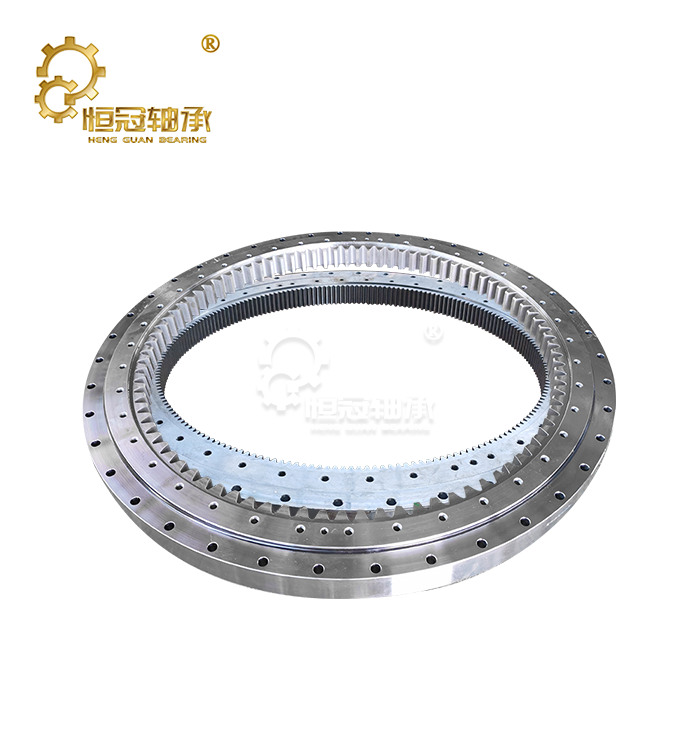
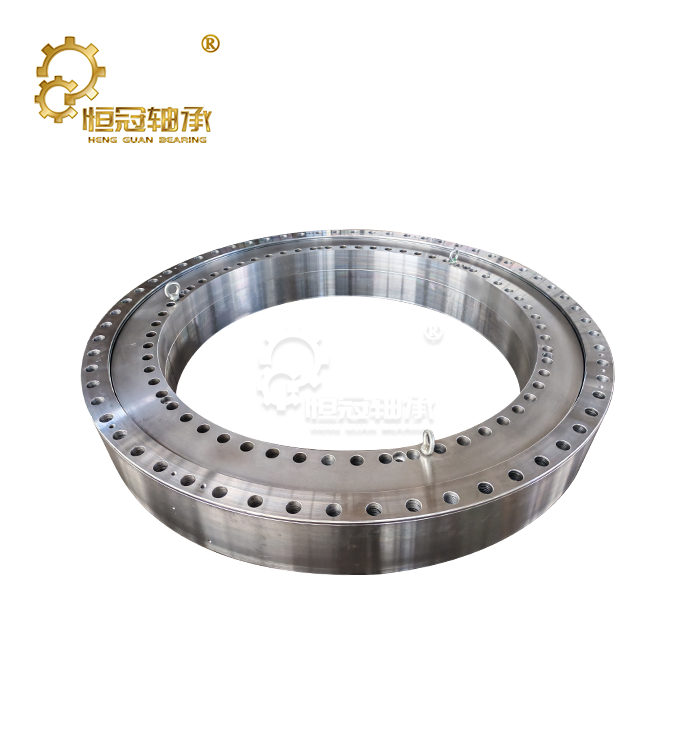
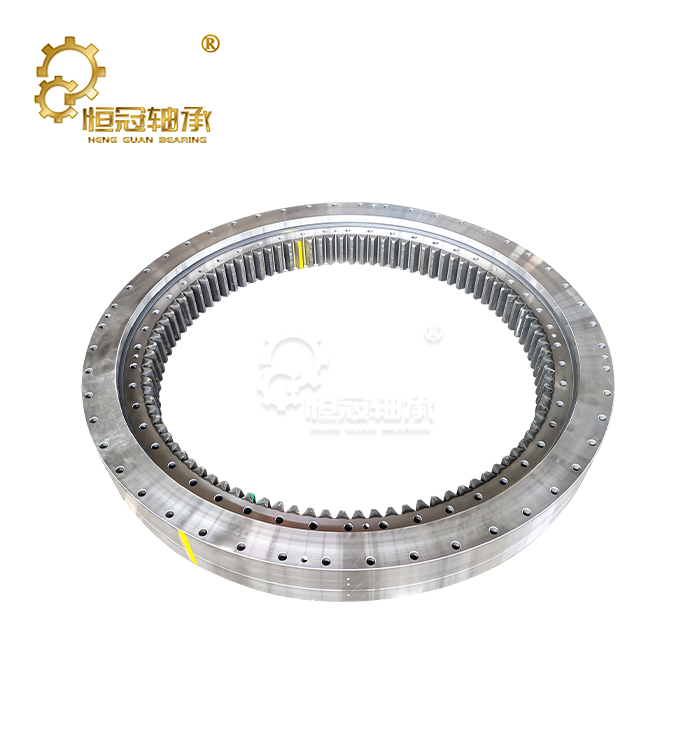
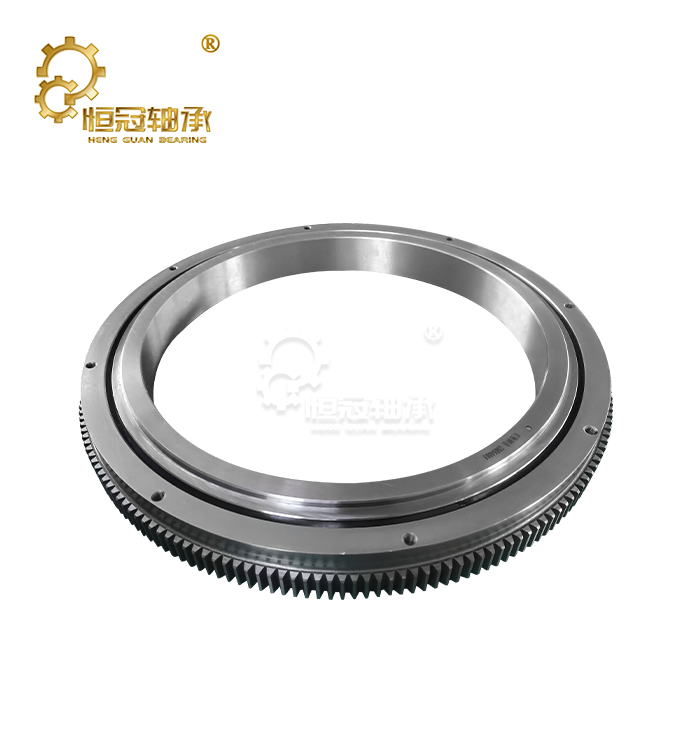
A slewing ring is a single compact device that incorporates what would otherwise be many distinct components – a radial bearing, a thrust bearing, and a gear ring. This is undoubtedly its major structural benefit. Due to the arrangement of rolling parts to take radial, axial, and tilting moment loads at the same time, a machine designer no longer has to stack different bearing types to support a rotating structure.
Heng Guan Bearing manufactures slewing ring products in diameters from 50mm up to 10,000mm in single-row four-point contact ball, cross-cylindrical roller, three-row cylindrical roller, and double-row ball structures, so the load-carrying capacity scales to fit anything from a compact positioning table to a massive port crane. We often provide clients with the solution of replacing a cumbersome multi-bearing arrangement with one compact ring, saving space without sacrificing load rating, due to our expertise as a slewing ring distributor. It is this combination of compactness and strength that makes a slewing ring so difficult to replace once properly defined by an engineer.
| Feature | Traditional Multi-Bearing Setup | Slewing Ring |
|---|---|---|
| Component count | Multiple radial + thrust bearings | Single integrated ring |
| Combined load handling | Requires separate load paths | Radial, axial, moment in one unit |
| Mounting complexity | Higher, more parts to align | Lower, single mounting interface |
| Space footprint | Larger | Compact |
Because every structure shares the same 50–10,000 mm diameter envelope, the same catalog philosophy covers everything from a welding positioner table to a ship-to-shore crane pedestal — one supplier, one traceable quality system.
| Structure Type | Typical Duty | Characteristic |
|---|---|---|
| Single-row four-point contact ball | General industrial | Balanced economy and capacity |
| Crossed cylindrical roller | High rigidity needs | Line contact, high stiffness |
| Double-row ball | Moderate moment loads | Low friction, smooth rotation |
| Three-row cylindrical roller | Extreme loads | Separate raceways per load direction |
Why Does a Slewing Ring Simplify Machine Design and Rotation?
Beyond load capacity, a Slewing ring wholesaler dramatically simplifies the mechanical layout of any rotating machine. Since the bearing itself provides the mounting interface, the rotational support, and — in geared versions — the drive interface, engineers spend less time designing brackets, Shafts, and secondary supports around it. This matters enormously in equipment like stacker reclaimers, cranes, and rotary tables, where the slewing ring effectively becomes the structural connection between the upper rotating body and the fixed base. Naturally, fewer components also mean fewer points of failure and less time spent on assembly and alignment during manufacturing.
As a China stacker slewing bearing supplier, Heng Guan Bearing works with customers who need this simplified rotational architecture for continuous-duty bulk material handling equipment, where reliability under constant rotation is non-negotiable. Choosing the right slewing ring from the outset, rather than retrofitting one into an existing multi-bearing design, generally produces a cleaner, more maintainable machine overall.
How Do Integrated Gears Improve Slewing Ring Drive Efficiency?
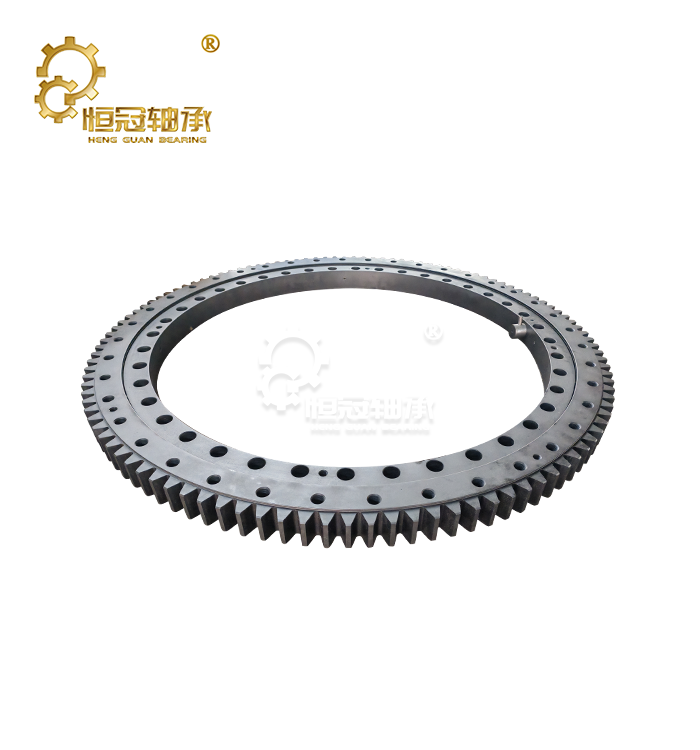
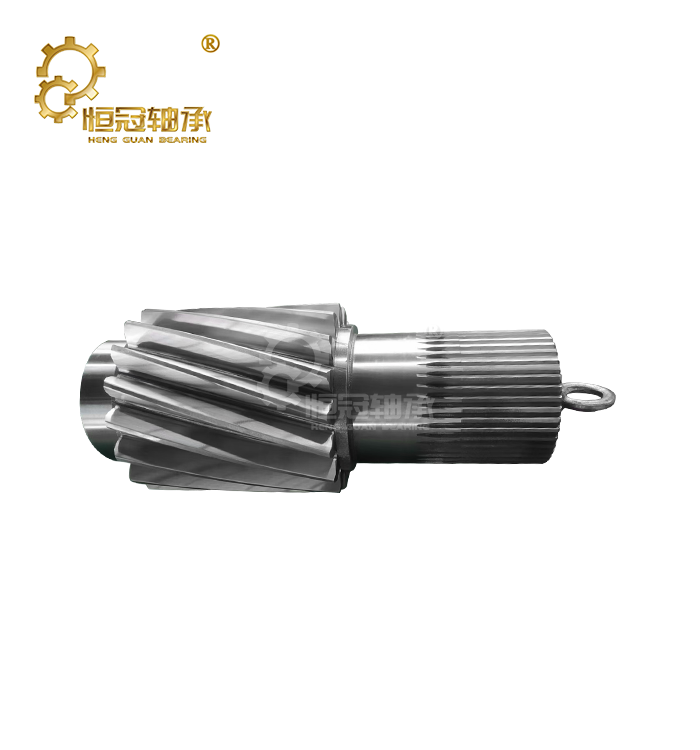
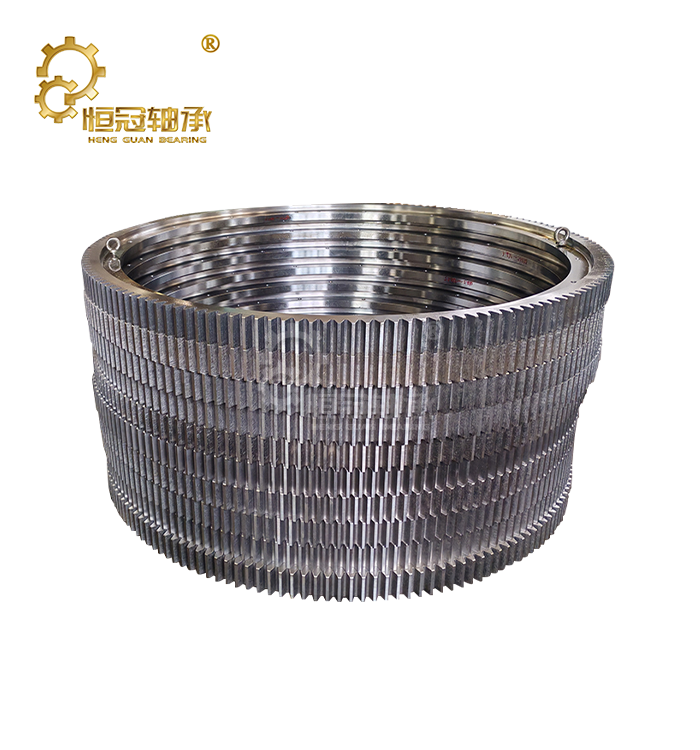
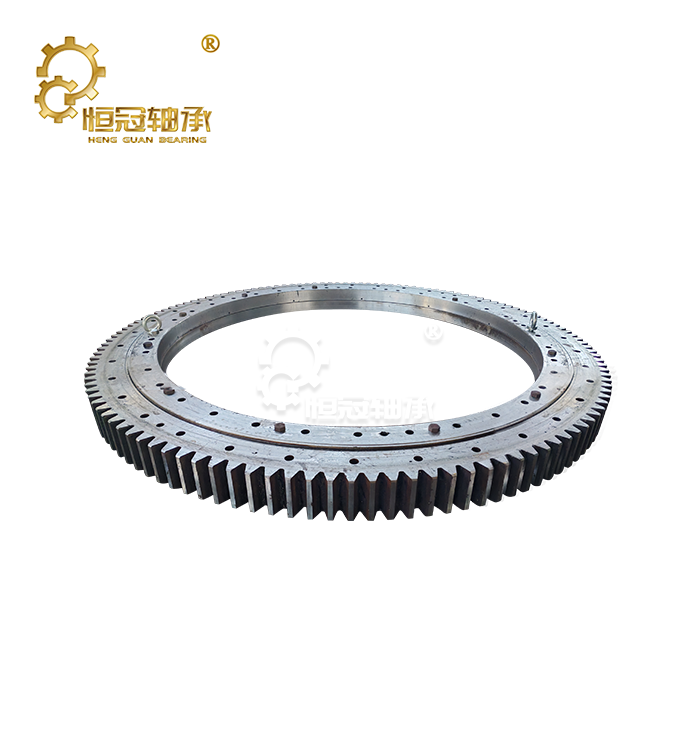
Many slewing ring designs incorporate gear teeth machined directly into the inner or outer ring, turning the bearing itself into part of the drive system. A pinion, driven by a hydraulic or electric motor, meshes with these integral teeth to rotate the structure, which eliminates the need for a separate gear ring and reduces the overall part count even further. This integration improves drive efficiency in a few concrete ways: it removes backlash sources associated with coupling a separate gear to the bearing, it allows the gear ratio between pinion and ring to be tuned for the torque and speed the application needs, and it keeps the entire rotational assembly compact enough to fit inside tight machine envelopes. Feel free to contact our engineering team at mia@hgb-bearing.com if you need help selecting internal versus external gear configurations for your slewing ring — the right choice often depends on whether you need a clear inner bore for cabling or a tighter outer profile. Heng Guan Bearing offers both internal and external gear slewing ring options, plus non-geared versions, and every gear tooth is induction-hardened to HRC 45–50 to balance wear resistance with core toughness.
| Gear Configuration | Best For | Key Advantage |
|---|---|---|
| Internal gear | Compact outer profile applications | Smaller overall footprint |
| External gear | Open-bore or cable routing needs | Easier gear inspection and maintenance |
| No gear | Driven by an external mechanism | Maximum design freedom, lowest cost |
With raceway hardness held at HRC 55–60 and a case depth of 2.5–5 mm, the ring keeps its load-carrying geometry through years of continuous rotation while the softer core retains toughness against shock loads.
|
|
Which Applications Benefit Most from Slewing Ring Bearings?
Excavator Slewing Bearing Applications in Cranes and Wind Turbines show up wherever a machine needs to rotate a heavy or precisely positioned structure relative to a fixed base. In construction and lifting equipment, they support the rotation of cranes, excavators, and concrete pumps under continuous heavy-duty cycles. In material handling, large-diameter slewing rings are the backbone of stacker reclaimers and port cranes, supporting long booms while withstanding constant rotational stress. Renewable energy applications rely on them too — wind turbine yaw and pitch systems, along with solar tracking arrays, all depend on slewing ring reliability to keep equipment properly oriented over decades of service. Heng Guan Bearing's products extend into medical, automation, mining, metallurgy, port, and aerospace fields as well, reflecting just how broadly this single component type gets deployed.
| Industry | Typical Application |
|---|---|
| Construction & lifting | Cranes, excavators, aerial platforms, concrete pumps |
| Bulk material handling | Stacker reclaimers, port ship-to-shore cranes, unloaders |
| Renewable energy | Wind turbine yaw/pitch, solar tracking arrays |
| Mining & marine | Heavy excavators, deck cranes, offshore equipment |
| Automation & medical | Robot cells, rotary tables, AGVs, CT scanner gantries |
Whether you're sourcing through a slewing ring wholesaler for a batch of standard sizes or need a China stacker slewing bearing built to custom specifications, matching the ring's load rating and gear configuration to your specific duty cycle is what determines long-term reliability.
Conclusion
A Slewing Ring combines high load capacity, compact design, and an efficient integrated drive into one reliable component. Heng Guan Bearing engineers each ring to fit your exact application.
FAQ
Q: What loads can a slewing ring handle simultaneously?
A: Radial load, axial load, and tilting moment can all be supported within a single slewing ring assembly.
Q: What's the difference between internal and external gear slewing rings?
A: Internal gears keep a tighter outer profile, while external gears leave an open bore for cabling and are easier to inspect.
Q: What diameter range does Heng Guan Bearing produce?
A: We manufacture slewing rings from 50mm up to 10,000mm in diameter across multiple structures and precision grades.
Q: Are slewing rings suitable for continuous-duty equipment like stacker reclaimers?
A: Yes, slewing rings are specifically engineered to handle the combined loads and continuous rotation seen in bulk material handling equipment.
Q: How do I choose between a geared and non-geared slewing ring?
A: It depends on whether the ring itself needs to drive rotation directly; geared versions integrate the drive interface, and non-geared versions require a separate drive mechanism.
Q: What quality certifications back a Heng Guan Bearing slewing ring?
A: Our rings are manufactured under ISO 9001 with CE and RoHS compliance, verified by CMM, vibration, hardness, and life testing with full material traceability.
Ready to Source Your Next Slewing Ring?
Whether you need a standard catalog size or a custom Slewing Ring for demanding continuous-duty equipment, Heng Guan Bearing's engineering team is ready to help. Email mia@hgb-bearing.com today, and let's find the right fit for your application.
References
1. Harris, T. A., & Kotzalas, M. N., Rolling Bearing Analysis: Advanced Concepts of Bearing Technology, 5th ed., CRC Press.
2. International Organization for Standardization, ISO 281:2007 Rolling Bearings — Dynamic Load Ratings and Rating Life.
3. International Organization for Standardization, ISO 76:2006 Rolling Bearings — Static Load Ratings.
4. Brändlein, J., Eschmann, P., Hasbargen, L. & Weigand, K., Ball and Roller Bearings: Theory, Design and Application, 3rd ed., Wiley.
5. International Organization for Standardization, ISO 1328-1:2013 Cylindrical Gears — ISO System of Flank Tolerance Classification.
6. International Organization for Standardization, ISO 9001:2015 Quality Management Systems — Requirements.

WHAT OUR CUSTOMERS SAY
Here is the customer's evaluation of us