



What Is a Thin Section Slewing Bearing? A Buyer’s Guide
A robotic joint that jitters on the first shift, a CT gantry that barely fits its housing, a satellite pedestal that blows the weight budget — all three failures share one root cause: a rotary component chosen without understanding what a Thin Section Slewing Bearing really is. At Heng Guan Bearing, we get this question from engineers working on everything from robotics joints to medical imaging platforms, so this guide breaks down what defines the category, why it saves space and weight, what to check for load and accuracy, and how to actually select the right one for your application. By the end, you should have a clear framework for comparing options rather than guessing from a datasheet alone.
|
|
What Are the Key Features of a Thin Section Slewing Bearing?
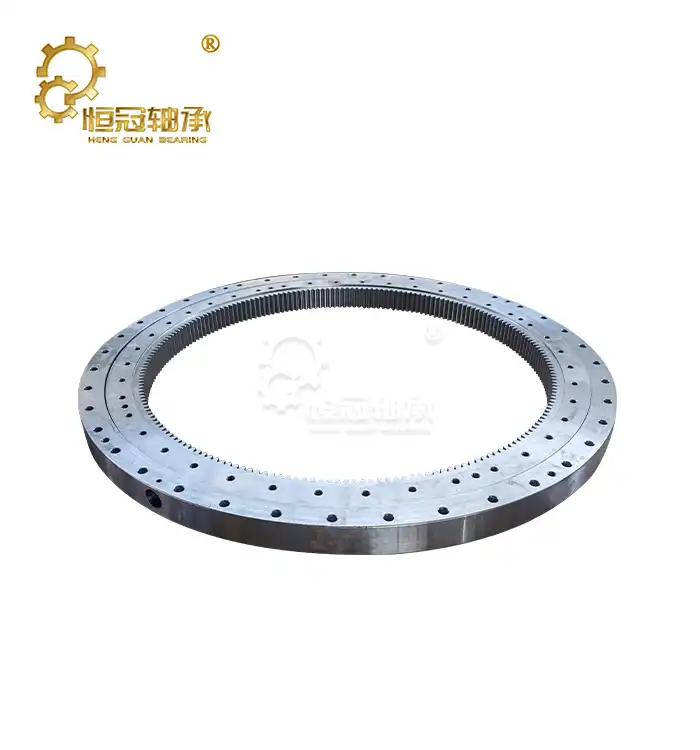
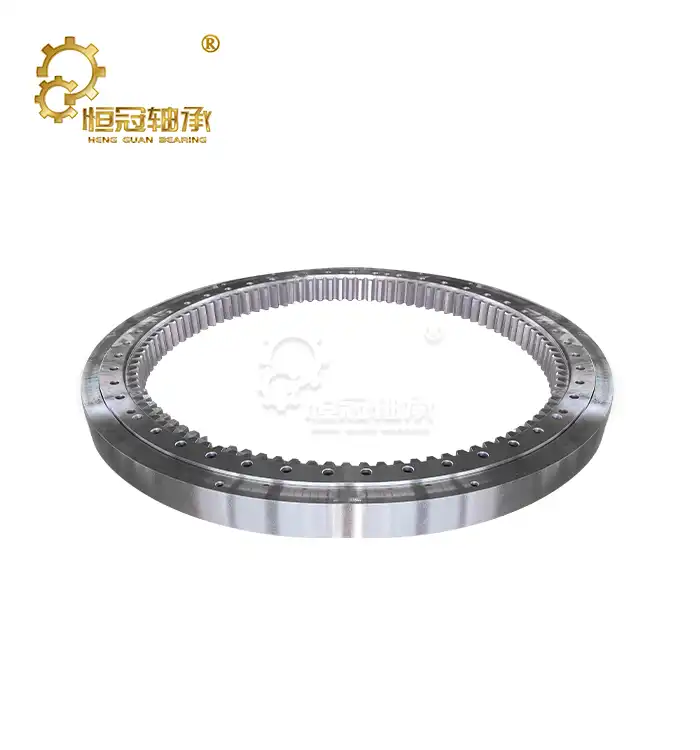
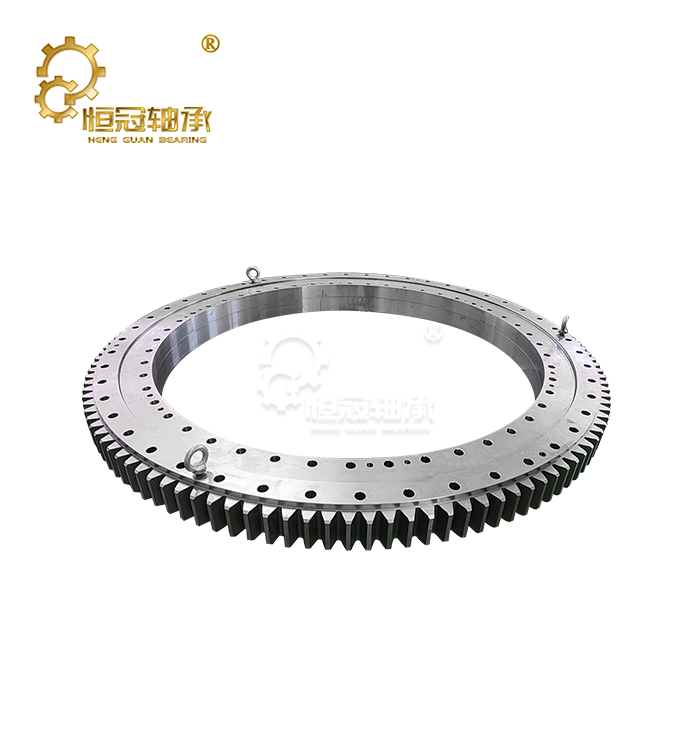
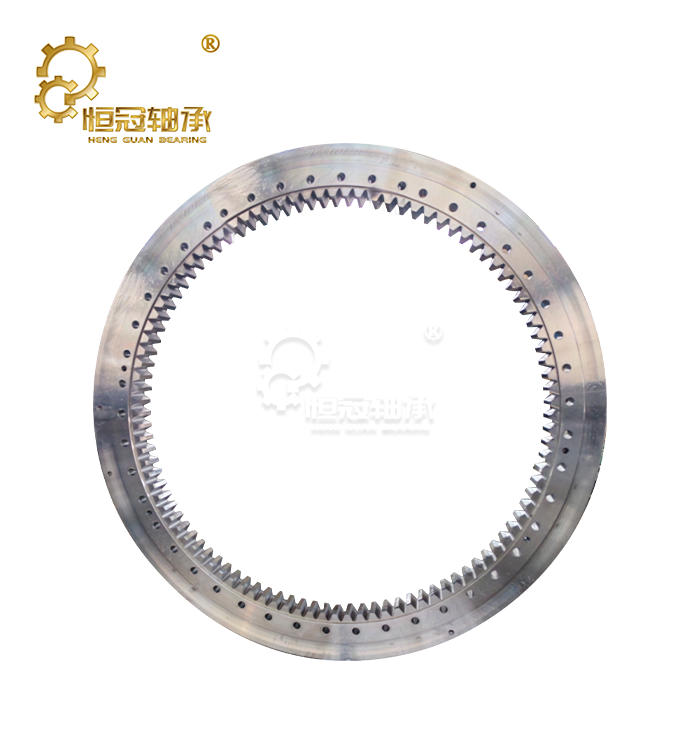
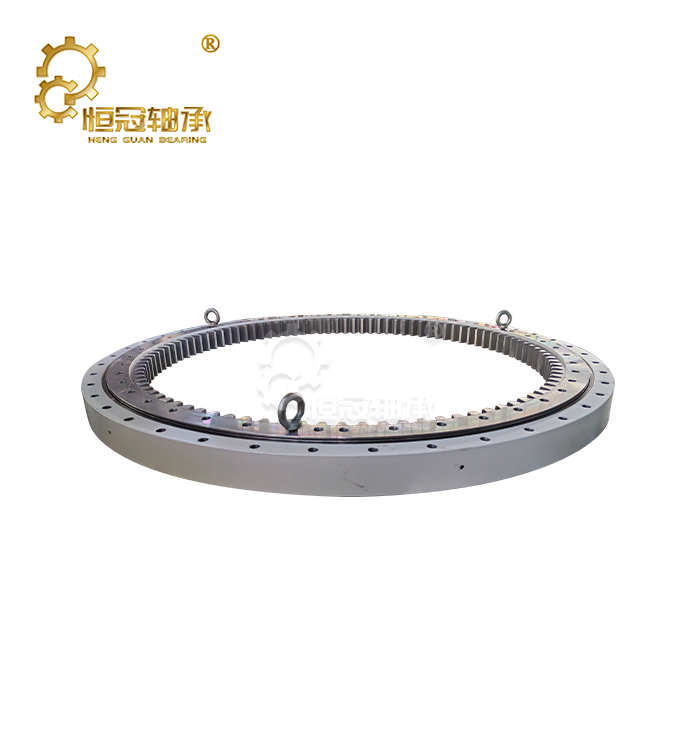
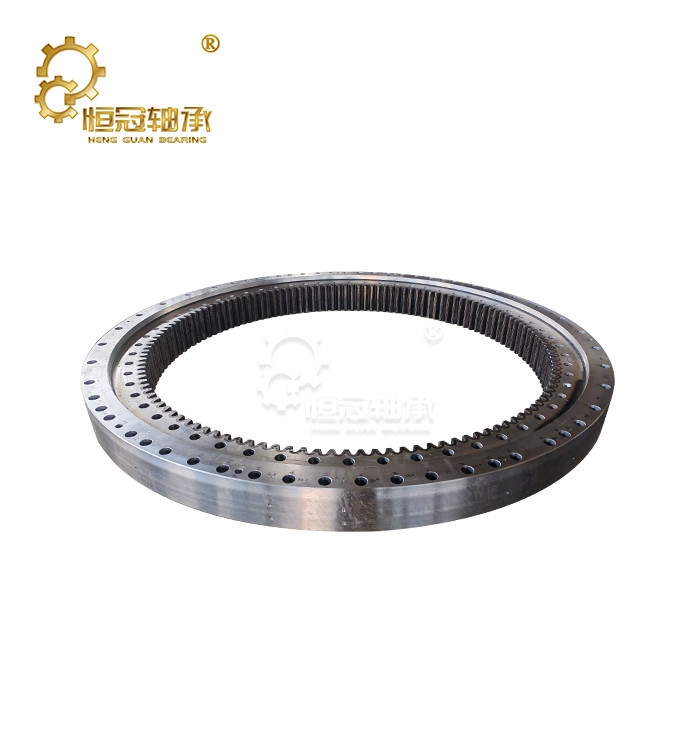
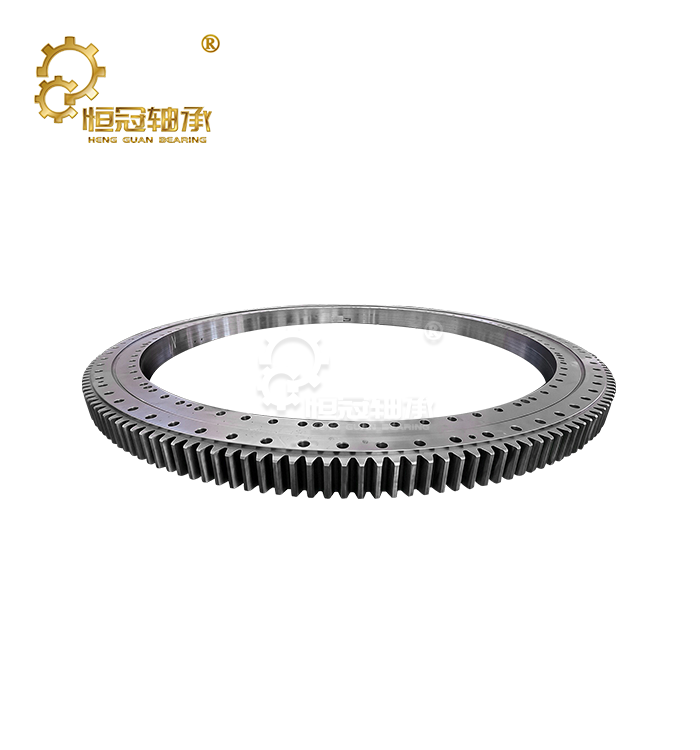
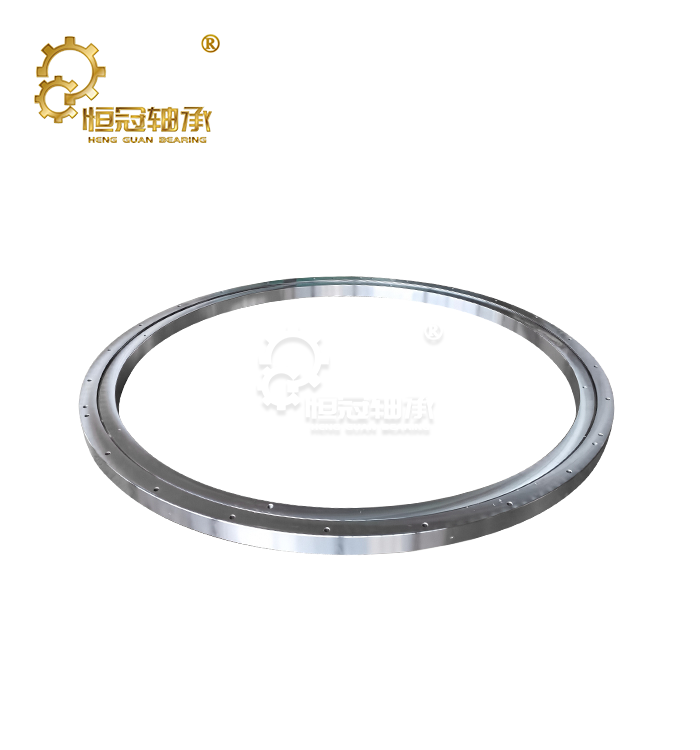
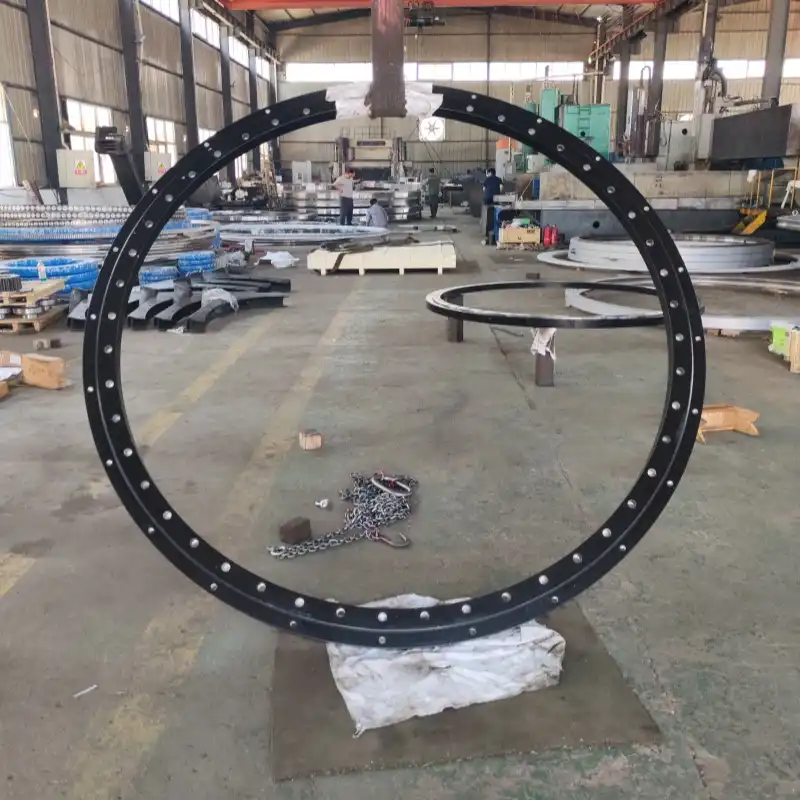
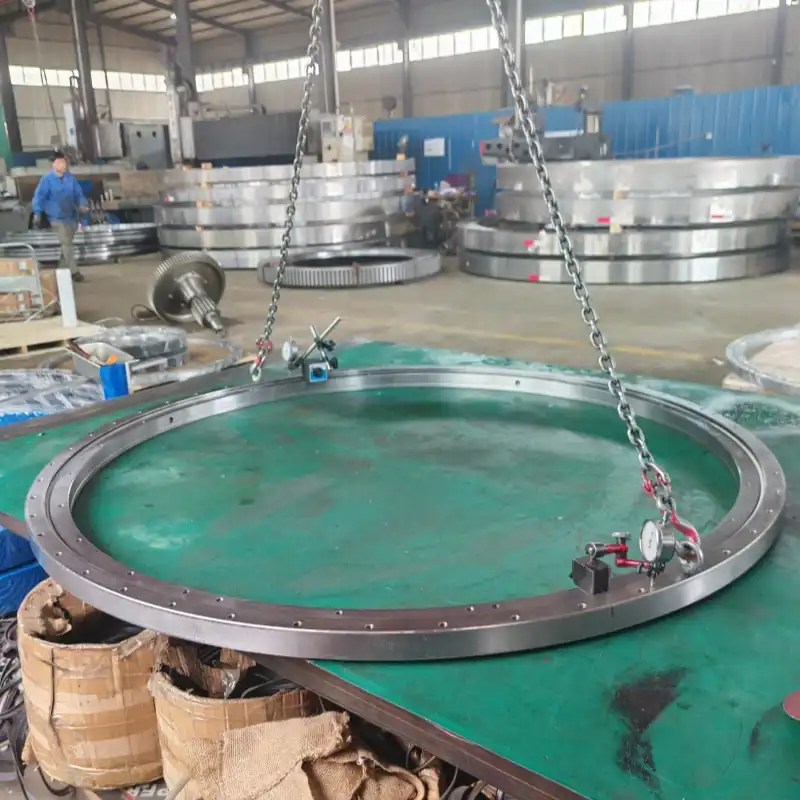
A high bore diameter, but a relatively tiny and usually constant cross-section, is one of the defining characteristics of a thin section slewing bearing. Traditional bearings have a cross-section that increases as the bore size increases. This allows designers to squeeze a big-diameter rotational support into a shallow envelope – and that’s precisely why the category exists at all. Let’s see what else makes it different. Most thin-section slewing bearings can support radial load, axial load, and tilting moment concurrently in a single ring, comparable to traditional slewing rings, but in a substantially reduced profile package. Heng Guan Bearing offers thin section slewing bearing products that use single-row four-point contact ball structures and thin-wall flange designs that provide a small choice for engineers without sacrificing combined load capabilities. As a seasoned producer of ultra-thin slewing bearings, we also provide accuracy grades from P0 to P4, so the same thin-profile idea may be used for general-purpose equipment as well as precision-critical instruments.
| Specification | Thin Section Slewing Bearing Range |
|---|---|
| Diameter range | 50 – 10,000 mm (0.05 – 10 m) |
| Structure | Single-row four-point contact ball, thin-wall flange |
| Raceway hardness | HRC 55–62, induction hardened (±2°C process control) |
| Ring materials | 42CrMo, 50Mn special alloy steels |
| Operating temperature | -40°C to +120°C |
| Sealing | Lip seal standard; labyrinth seal optional |
| Accuracy grades | P0, P6, P5, P4 (CMM-verified runout data included) |
Because the cross-section stays nearly constant regardless of bore size, the same thin-profile concept scales from a 200 mm robot joint to a 3-meter medical gantry without re-engineering the surrounding structure — a modularity that standard slewing rings simply cannot offer.
How Does a Thin Section Slewing Bearing Save Space and Weight?
Space and weight savings are usually the entire reason a designer specifies a Thin Section Slewing Bearing over a conventional one. Because the cross-section stays thin and largely constant regardless of bore diameter, the bearing occupies far less axial height than a standard bearing of the same bore, which frees up room for motors, cabling, or additional structure within the same mechanical envelope. This matters most in robotics, where every rotary joint adds mass that the rest of the arm has to move, and in aerospace or satellite platforms where weight budgets are strict.
It's worth noting that the trade-off is manageable: thin section slewing bearing designs still deliver meaningful load capacity relative to their footprint; they simply concentrate material more efficiently than a bulkier ring. Heng Guan Bearing engineers our thin-wall flange and cross-cylindrical roller structures specifically with this efficiency in mind, working with customers to strip unnecessary bulk out of a rotary joint without compromising the combined load path.
| Bearing Type | Relative Cross-Section | Typical Weight vs. Standard Slewing Ring |
|---|---|---|
| Standard slewing bearing | Larger, grows with bore | Baseline |
| Thin section slewing bearing | Small, near-constant | 30–50% lighter |
| Ultra-thin variant | Minimal, specialized | Lightest, lower load ceiling |
The 30–50% weight saving is not just a packaging convenience — it lowers the center of gravity of mobile equipment, cuts rotational inertia, and increases effective payload on cranes, AGVs, and gimbal assemblies. For a satellite pedestal or a robot base, that margin often decides whether the overall design meets its mass target at all. Naturally, the right choice depends on how much load capacity you're willing to trade for envelope savings, which brings us to the next consideration.
Load Capacity, Accuracy, and Rigidity: What Should Buyers Check?
Before committing to a Thin Section Slewing Bearing, buyers should verify three interconnected specifications: load rating, accuracy grade, and rigidity under moment load. Load rating tells you the maximum radial, axial, and moment loads the bearing can sustain without premature wear, and it should always be checked against the worst-case combined load your application will actually see, not just the average. Accuracy grade — P0, P6, P5, or P4 in Heng Guan Bearing's line — determines how tightly the bearing holds runout tolerance, which matters enormously in optical, medical, or metrology equipment where even small deviations degrade output quality.
If you're unsure which grade fits your project, our engineering team can review your load case directly; reach us anytime at mia@hgb-bearing.com, and we'll help translate your requirements into a bearing specification. Rigidity, meanwhile, reflects how much the bearing deflects under moment load — a thinner cross-section generally means lower inherent rigidity, so mounting surface flatness and bolt preload become more important than they would be with a bulkier bearing.
| Precision Grade | Typical Use Case | Key Characteristic |
|---|---|---|
| P0 | General industrial machinery | Standard tolerance |
| P6 | Automated equipment | Improved runout control |
| P5 | Precision robotics, motion control | Tight positioning repeatability |
| P4 | Medical imaging, metrology | Minimum runout, CMM-verified |
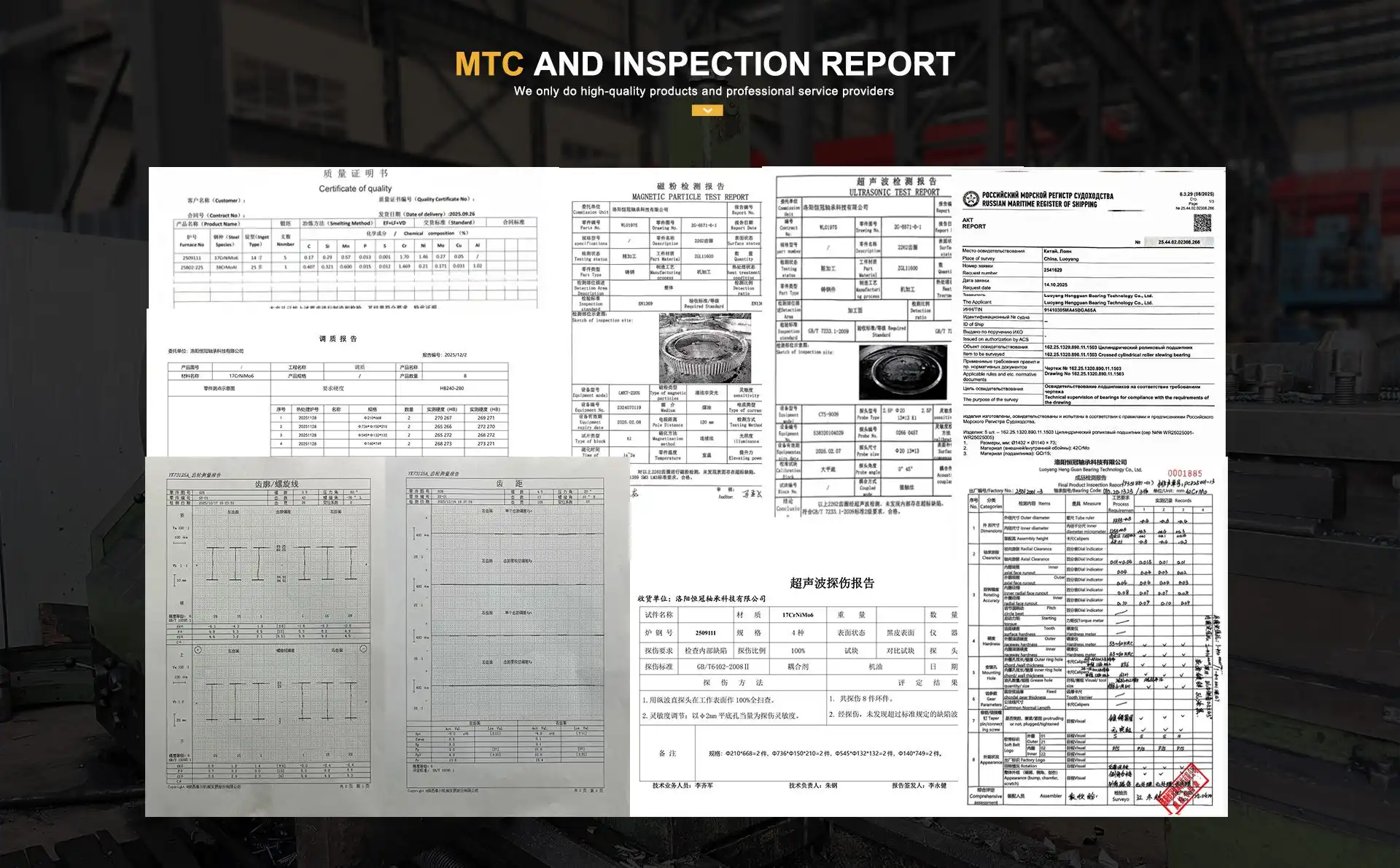
Every grade shipped from Heng Guan Bearing is measured on a coordinate measuring machine, and the formal runout data travels with the delivery documents — so the accuracy claim can be verified rather than trusted.
How to Choose the Right Thin Section Slewing Bearing for Your Application?
Selecting the right thin section slewing bearing starts with mapping your application's constraints rather than starting from a catalog number. First, define the available envelope — bore diameter and maximum stack height — since this immediately narrows the field to compatible cross-sections. Next, calculate the combined load and compare it against candidate ratings with a safety margin appropriate to your duty cycle; continuous rotation in automation equipment demands a different margin than intermittent positioning in inspection tooling. From there, match the accuracy grade to your positioning tolerance, and confirm sealing or lubrication needs based on the operating environment — dust, moisture, or cleanroom conditions all affect that choice. Working with an experienced ultra-thin slewing bearing manufacturer that offers customized, flexible production, rather than a fixed catalog, generally produces a better long-term fit, since your combination of bore size, load, and accuracy is rarely identical to someone else's. Heng Guan Bearing supports this process with personalized design review for every inquiry, helping customers avoid over-specifying — or under-specifying — a thin section slewing bearing for their equipment.
| Selection Step | What to Define | Typical Lead Time |
|---|---|---|
| Envelope & bore diameter | Max stack height, flange style | Standard: 4–6 weeks |
| Combined load & safety margin | Peak moment vs. duty cycle | — |
| Accuracy grade | Positioning tolerance target | — |
| Custom diameter/mounting | Reverse engineering or new design | Custom: 8–12 weeks |
| Installation plan | Star-pattern torque: 30% → 60% → 100% | Mounting flatness ≤ 0.05 mm/m |
During installation, use a star (cross) pattern with three torque passes — 30%, then 60%, then 100% of final torque — and verify runout at four quadrants of the bearing diameter before locking down. A mounting face held to ≤ 0.05 mm/m flatness is the single cheapest way to protect the rigidity you paid for.
Conclusion
A Thin Section Slewing Bearing delivers combined-load capability in a compact, lightweight footprint. Heng Guan Bearing engineers each one to match your envelope, load, and precision needs.
FAQ
Q: What makes a thin section slewing bearing different from a standard slewing ring?
A: Its cross-section stays small and largely constant regardless of bore diameter, saving significant space and weight.
Q: Can a thin section slewing bearing handle combined loads?
A: Yes, most designs support radial, axial, and tilting moment loads simultaneously within a single ring.
Q: Which accuracy grades does Heng Guan Bearing offer for thin-section slewing bearings?
A: We manufacture across P0, P6, P5, and P4 grades, with CMM-verified runout data included with delivery documents.
Q: Does a thinner cross-section reduce rigidity?
A: Generally, yes, so mounting surface flatness (≤ 0.05 mm/m) and bolt preload become more important during installation.
Q: What industries commonly use thin-section slewing bearings?
A: Robotics, medical imaging, aerospace ground support, port handling, and automated production lines are the most common applications.
Q: What is the delivery lead time for a thin section slewing bearing?
A: Standard configurations ship in 4–6 weeks; custom diameters or special mounting arrangements take 8–12 weeks.
Ready to Specify Your Thin Section Slewing Bearing?
Whatever your envelope, load, or accuracy requirements, Heng Guan Bearing's engineers can design a Thin Section Slewing Bearing tailored to your project. Email mia@hgb-bearing.com today, and let's turn your specification into a reliable, space-saving solution.
References
1. American Bearing Manufacturers Association, ABMA STD 26.2 Thin Section Ball Bearings — Inch Design Boundary Dimensions and Tolerances.
2. Harris, T. A., & Kotzalas, M. N., Rolling Bearing Analysis: Advanced Concepts of Bearing Technology, 5th ed., CRC Press.
3. International Organization for Standardization, ISO 281:2007 Rolling Bearings — Dynamic Load Ratings and Rating Life.
4. International Organization for Standardization, ISO 76:2006 Rolling Bearings — Static Load Ratings.
5. International Organization for Standardization, ISO 492:2014 Rolling Bearings — Radial Bearings, Geometrical Product Specifications (GPS) and Tolerance Values.
6. Slocum, A. H., Precision Machine Design, Society of Manufacturing Engineers.

WHAT OUR CUSTOMERS SAY
Here is the customer's evaluation of us