




The Ultimate Guide to Understanding Slewing Ring Components
If you're in the business of getting important rotating parts for big machinery, you need to know a lot about Slewing Ring bearings. Such special bearings are used as the rotating "joint" in a wide range of machines, from tower cranes, slewing rings, and loaders to wind turbines and medical imaging tools.
Slewing rings enable regulated rotation for construction cranes and excavators, wind turbines, offshore equipment and medical devices at challenging operating circumstances. But picking the proper design is more than simply determining ticking dimensions. Long term performance is dependent on load requirements, mounting conditions, operational environment, level of precision and supplier capabilities.
This guide details the basic components, working principles, available designs, selection variables, maintenance practices and purchase considerations to assist OEMs and industrial customers in making better selections when sourcing slewing ring solutions.
Understanding Slewing Ring Components and Their Working Principles
Main Components of Slewing Rings
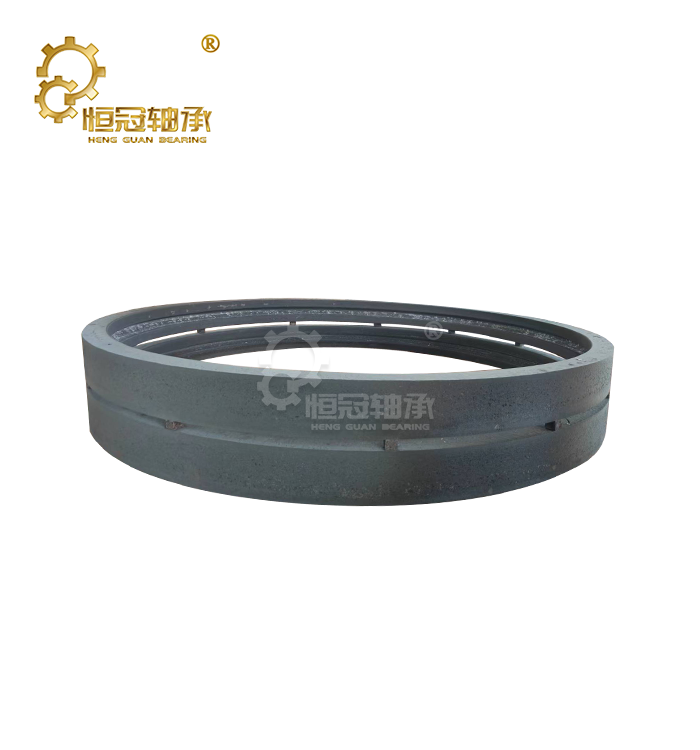
Slewing rings are a type of massive bearing arrangement that allows huge loads to be supported and rotational movement between two connected structures. As opposed to conventional bearings, which are largely designed for one direction of load, slewing rings are designed for combined loading and a compact design.
The main components are:
- inner and outer circle
- Precision-machined raceways
- Rolling elements (balls or rollers.
- Separators / spacers
- Sealing systems
- Holes for mounting
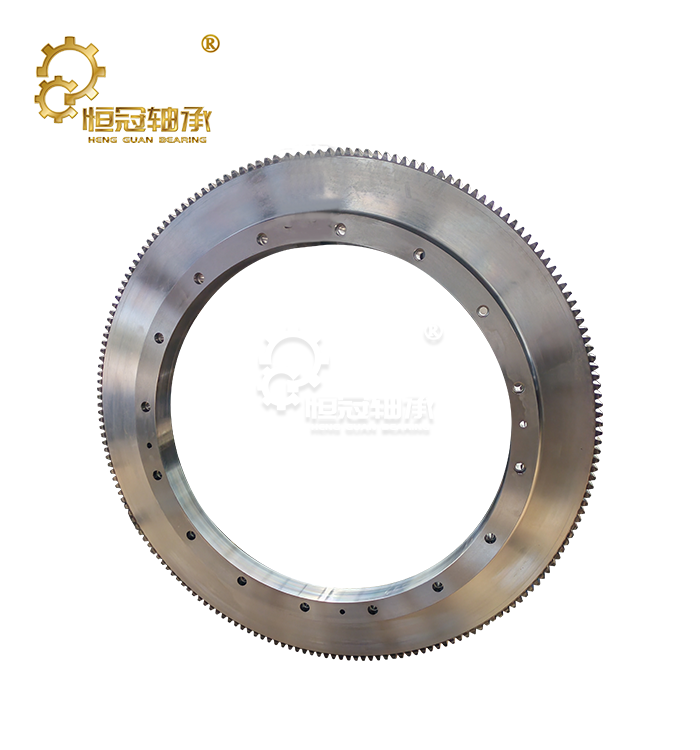
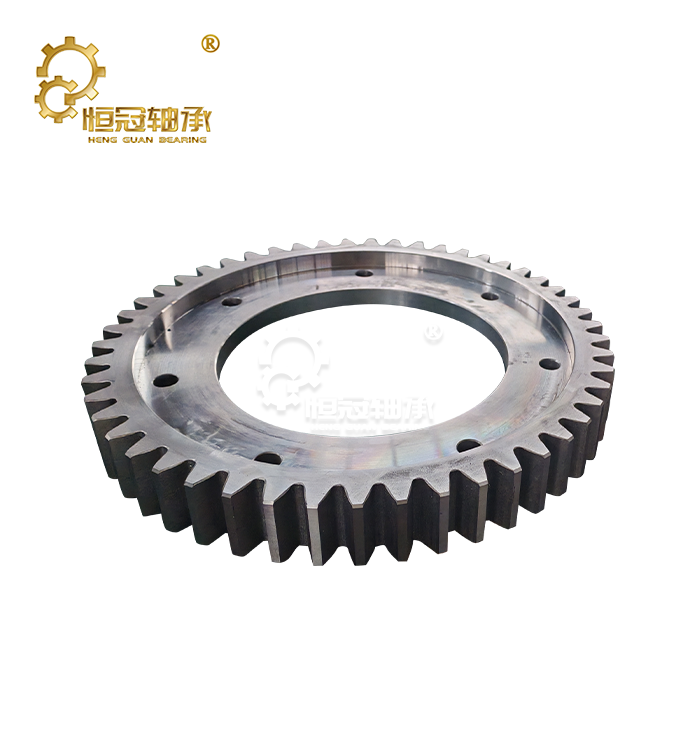
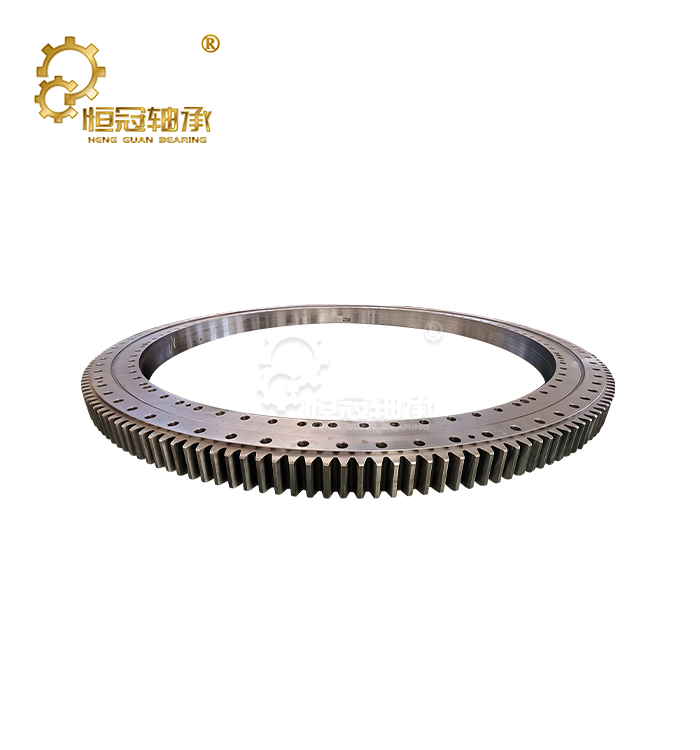
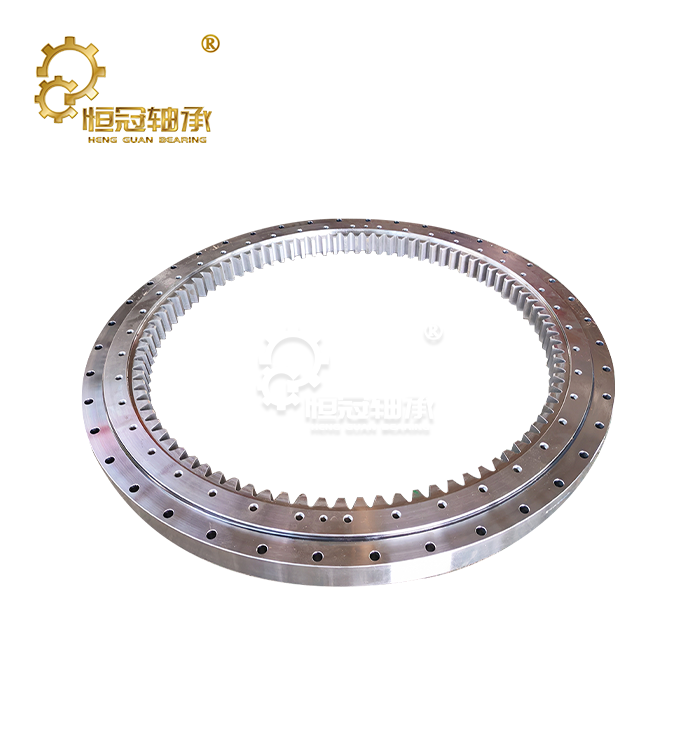
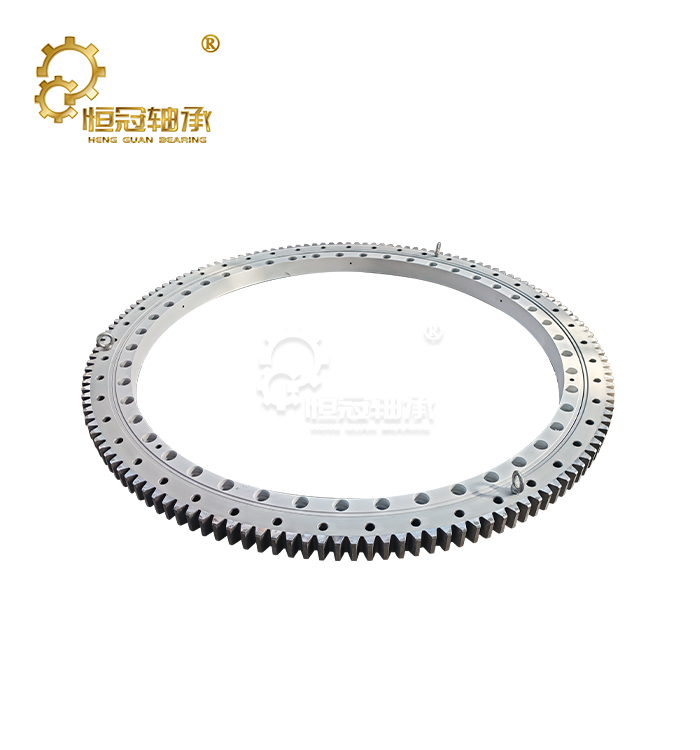
- Optional gear teeth for rotary drive systems
The bearing has an inner and outer ring to support its structure, and the rolling elements minimise the friction between the raceways. Depending upon the use , the makers can add internal or external gears to connect with pinion drive to allow controlled rotation .
Tower cranes, for instance, need slewing rings capable of bearing enormous lifting loads and allowing smooth rotation during operation. Wind turbines must be designed to resist fluctuating wind forces and sustained environmental exposure so that they can operate in a steady manner.
How Slewing Rings Handle Different Loads?
The working basis of slewing rings is controlled rolling contact between raceways and rolling elements. During the operation of the equipment, the forces are dispersed on several contact points, which reduces friction and improves the stability of the load.
Loads are dealt with in different ways by different designs:
Ball type slewing rings include point contact between the balls and raceways. They provide for smooth rotation and are perfect for applications that require moderate loads and smooth motion.
The roller type slewing bearings use line contact, therefore the contact area is bigger. This increases load capacity and rigidity making them suited for mining equipment, offshore systems and heavy-duty machines.
The right design depends on the real operational conditions including:
- Static and dynamic loading
- Rotation velocity
- Shock loads
- Work cycles
- Exposure, environmental
Choosing a bearing only by size can result in premature wear and shortened service life.
Different Types of Slewing Rings for Industrial Applications
Single-Row Ball Slewing Rings
Single-row ball slewing rings are one of the most common designs, as they offer a good compromise between performance, size and cost.
Bearings with four-point contact balls can accommodate axial loads, radial loads and moment loads concurrently. Their tiny size makes them suited for equipment with limited installation space.
Applications are generally:
- Mobile crane
- Mini Excavator
- Rotary tables
- Solar tracking systems
- Automation equipments
These designs are particularly successful when the application needs smooth rotation but does not encounter excessively severe shock loads.
Double-Row and Triple-Row Roller Slewing Rings
If your large industrial equipment needs to carry a heavier load, slewing rings with rollers are more stable and stronger.
Double-row and triple-row designs separate distinct load directions using several roller layouts. This permits each group of rolling elements to better take up certain forces.
Typical applications are:
- Cranes in harbours
- Mining equipment
- Platforms Offshore
- Heavy construction machinery
- Systems for heavy lifting
Rollers have a wider contact area, which means resistance to deformation is increased and performance is maintained in harsh working conditions.
However, these designs also demand correct installation and sufficient lubrication as uneven loading might limit the service life.
Crossed Roller Slewing Rings
Crossed roller designs are intended for applications where a higher degree of accuracy and rotational accuracy is required.
In this arrangement cylindrical rollers are placed alternately at right angles between raceways. This arrangement enhances rigidity and decreases rotation due to overturning moments.
They are frequently used in:
- Medical imaging devices
- Precision Automation Systems Inc.
- Semiconductor production equipment
- Testing machines
Crossed roller slewing rings offer you outstanding precision, but require strict mounting control. Improper installation or uneven mounting surfaces might lead to increased stress on the raceways.
Customized Slewing Rings for Special Applications
Many industrial applications cannot be served with typical bearing designs. With custom slewing rings, producers can change dimensions, gear designs, sealing arrangements, materials and internal structures to fit particular needs.
“Custom solutions can range from:
- Special mounting sizes
- Integrated Condition monitoring sensors
- Altered Gear Designs
- Corrosion-resistant coating
- Modifications for offshore or high temperature
For OEM projects, early interaction between engineers and manufacturers is vital. Giving the manufacturers specifics of the application such as load conditions, running speed, installation space and environmental conditions allows them to design a suitable solution.
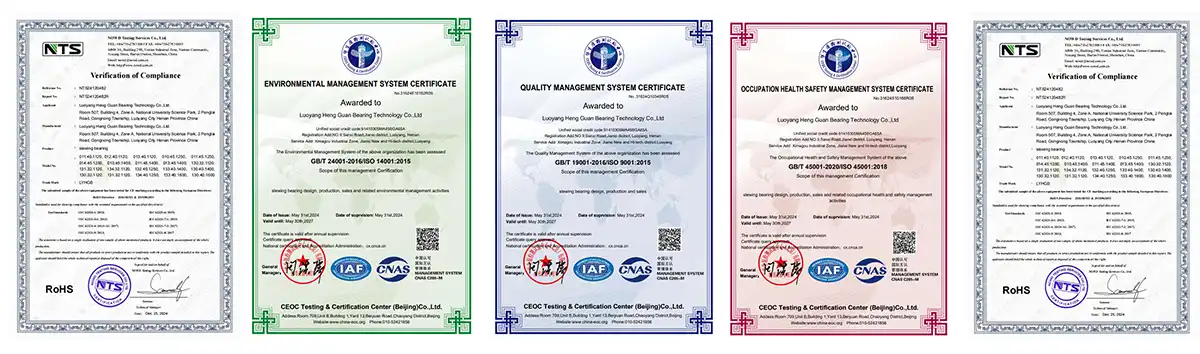
Heng Guan also partners with industrial customers to deliver customised slewing ring solutions to satisfy equipment needs and help OEMs achieve improved compatibility and reliability.
How to Select the Right Slewing Rings for Your Equipment?
The selection of appropriate slewing rings cannot be made by matching exterior dimensions, but only after a thorough assessment of the operating conditions. Choosing the improper bearing design leads to increased wear, unsteady rotation and unplanned equipment downtime.
Before confirming a spec, OEM engineers and purchasing teams should consider several crucial criteria.
Evaluate Load Requirements and Operating Conditions
The ability to carry a load is one of the most essential factors in the selection of slewing rings. Slewing rings are often subject to many forces at once, unlike ordinary bearings, including:
- Axial stress due to lifting or vertical forces
- Radial loads for horizontal movement
- Tilting force moment loads
The regular operation and possible shock circumstances should be considered in a proper estimate.
For instance, requirements for a crane working in a controlled indoor environment are different from offshore equipment exposed to wind, vibration and corrosion.
Safety factors must also be considered to prevent failure during unexpected operational conditions.
Consider Dimensions, Mounting Space, and Gear Configuration
Another important issue in bearing selection is mechanical compatibility.
Before ordering, purchasers should check:
- Outer and inner diameters specs
- Hole placements for mounting
- Bolt circle data
- Installation height available
- Technical Data and Gear Position
The gear specifications of the equipment with geared rotating systems should fit the drive mechanism. Wrong gear module, tooth profile or alignment can lead to poor gearbox efficiency and wear.
CAD models are often supplied by manufacturers to assist customers in checking installation compatibility before manufacturing.
Select Suitable Materials and Precision Grades
The longevity of slewing rings is directly affected by the quality of the materials, especially in heavy duty applications.
Common bearing materials are high strength alloy steels developed for increased wear resistance and fatigue life. The proper heat treatment provides the necessary hardness and enhances the reliability of the raceway.
The precision requirements may vary with the application.
broad industrial equipment may need broad levels of precision while medical systems, robotics and advanced automation technology need finer control of:
- Rotational precision
- Runout Vibration levels
- Machining tolerance
The correct precision grade means you don’t pay for what you don’t need, but you still ensure the bearing can do the job.
Evaluate Manufacturer Capability and Quality Control
Selection of the correct supplier is as crucial as selection of the right bearing specification.
A reputable slewing ring maker should have:
- modern machining equipment
- Regulated heat treatment procedures
- Professional engineering assistance
- Inspection capabilities
- Material traceability systems
- Experience in custom projects
Buyers are expected to ask for technical documentation like:before placing the order:
- Drawings of products
- Material certificates
- Inspection reports
- Test results.
- Performance specifications:
A supplier who provides good engineering support might help spot design issues before manufacturing starts, saving expensive changes later.
Installation and Maintenance Practices to Prolong Service Life
Installation and Maintenance Practices to Extend Service Life
Follow Proper Installation Procedures
The correct installation has a direct impact on the operation of slewing rings.
Before installation, inspect mounting surfaces to verify they are clean, flat and undamaged. unequal mounting surfaces can cause unequal load distribution and raise stress in localised parts of the raceway.
Recommended installation procedures are:
- Check mount surface for correctness
- Bolt holes properly aligned
- Use calibrated torque tools
- Tightening bolts per manufacturer’s specifications.
- Check the gear engagement after installation
One of the primary reasons of early bearing difficulties is improper bolt tightening, when structural integrity is affected by insufficient or unequal clamping force.
Maintain Proper Lubrication
Lubrication lowers friction, protects the raceways, and prevents contaminants from damaging internal parts.
How to properly lubricate depends on:
- Working temperature
- Rotational frequency
- Working conditions
- Environmental exposure
Heavy duty machinery used outside may need more regular lubrication than apparatus used indoors.
Over-lubrication should be avoided as well, since too much grease will add to resistance and generate more heat.
Automatic lubrication systems can offer more constant protection for equipment that runs continually or in a tough environment.
Identify Common Failure Signs Early
Regular inspection helps identify problems before they become significant failures.
Some common warning indicators are:
Strange Sound
Signs of unusual sounds during rotation:
- Without lubrication
- Contamination in the bearing
- Damage to raceway
- Rolling elements wear
- Greater rotational resistance
You might have trouble rotating because:
- Wrong install
- Overload
- Gear alignment problems
- Damage to internal parts
- Seal/Grease Problems
Damaged seals can let the entrance of impurities into the bearing and shorten its service life.
Check for the following during regular inspections:
- Seals condition
- Bolt tension
- Gear teeth wear out
- Lubrication status
- Working Temperature
Preventive maintenance is usually cheaper than replacing a defective slewing ring after it has failed.
Purchasing Strategies for OEM Buyers
Work Directly With Experienced Manufacturers
But for custom work or big quantities manufacturers will frequently provide some benefit in the technical communication, customisation options and control over the production.
Thru direct cooperation, buyers can discuss:
- Requirements for application
- Improvements in engineering
- Production timetables
- Expectations of Quality
This is very useful for OEM customers building new equipment.
Plan Lead Times and Production Requirements
Manufacturing of slewing rings requires the following manufacturing steps:
- Material readiness
- Machining or forging.
- Heat treatment
- Accuracy of processing
- Inspection of Assembly
The production cycle for standard items is normally shorter, but customised designs can take longer because of the extra engineering and tooling.
Early communication prevents delays and allows businesses to plan production capacity accordingly.
Balance Cost With Long-Term Performance
The lowest purchasing price is not necessarily the lowest total cost.
When comparing suppliers the customer should consider:
- Products reliability
- Expected operating life
- Maintenance Needs
- Trusted Delivery
- Technical assistance
Better quality bearing can reduce the number of replacements and minimise the downtime of equipment during the whole working cycle.
Collaborate During Custom Slewing Ring Development
Custom projects require cooperation between the equipment manufacturer and bearing supplier.
Before production, customers should provide:
- Equipment drawings
- Load calculations
- Operating environment information
- Rotation requirements
- Installation limitations
Experienced manufacturers can recommend improvements in bearing structure, materials, sealing solutions, and gear design.
This engineering collaboration helps create slewing rings that match the actual working conditions instead of relying on unsuitable standard products.
Conclusion
Knowing the components of a slewing ring helps engineers and buying teams make more reliable judgements when specifying rotating systems for industrial equipment.
Whether you are working with construction machinery and wind turbines or precise automation and medical equipment, the right design of slewing ring depends on load requirements, structural circumstances, material selection, installation accuracy and supplier capability.
A proper purchasing process should involve technical review, manufacturer appraisal and performance over time. Proper installation and maintenance can also help extend service life and avoid unplanned downtime.
Businesses may obtain safer operation, increased equipment dependability and better overall value from their rotational systems thru a partnership with an experienced manufacturer and the proper solution for each application.
FAQ
1. What factors affect the load capacity of slewing rings?
The load capacity of slewing rings depends on several factors, including bearing structure, rolling element design, material strength, raceway geometry, and mounting conditions.
Roller designs generally provide higher load capacity because their line contact structure distributes forces over a larger area. However, actual performance also depends on installation accuracy and operating conditions.
2. How can I check whether a slewing ring fits existing equipment?
Before purchasing, compare the bearing drawing with the equipment design requirements.
Important information includes:
- Inner and outer diameter
- Mounting hole pattern
- Bolt circle dimensions
- Gear specifications
- Installation height
Many manufacturers can provide CAD models to help customers confirm compatibility before production.
3. How often should slewing rings be maintained?
Maintenance intervals depend on application conditions, operating hours, load levels, and environment.
Regular inspections should include:
- Checking lubrication condition
- Inspecting seals
- Monitoring unusual noise or vibration
- Checking mounting bolts
- Examining gear wear
Equipment operating in heavy-duty or outdoor environments usually requires more frequent inspection.
Partner With Heng Guan for Reliable Slewing Ring Solutions
Heng Guan Bearing Technology provides customized slewing rings for OEMs and industrial equipment manufacturers requiring reliable rotational solutions.
With experience in producing different slewing ring designs, including four-point contact ball bearings, crossed roller bearings, and roller slewing solutions, Heng Guan supports applications across construction machinery, renewable energy, mining equipment, and industrial automation.
The company provides engineering assistance throughout the project process, including application analysis, bearing selection, customized design, and production support.
By combining manufacturing capability with technical experience, Heng Guan helps customers develop slewing ring solutions that meet specific load requirements, installation conditions, and long-term operating expectations.
For OEM buyers looking for a dependable slewing ring partner, professional engineering support and consistent manufacturing quality are key factors in achieving successful equipment performance.
Contact our technical experts at mia@hgb-bearing.com to talk about your unique needs and find out how our high cost-performance Slewing Ring manufacturer services can help you improve the performance of your tools and strengthen your supply chain.
References
1. Harris, Tedric A., and Kotzalas, Michael N. "Rolling Bearing Analysis: Essential Concepts of Bearing Technology." CRC Press, 2006.
2. Schweitzer, Gerhard, and Maslen, Eric H. "Magnetic Bearings: Theory, Design, and Application to Rotating Machinery." Springer Science & Business Media, 2009.
3. Budynas, Richard G., and Nisbett, J. Keith. "Shigley's Mechanical Engineering Design." McGraw-Hill Education, 2014.
4. American Gear Manufacturers Association. "AGMA 6123-B06: Design Manual for Enclosed Epicyclic Gear Drives." AGMA Standards, 2006.
5. International Organization for Standardization. "ISO 199:2014 Rolling Bearings - Thrust Bearings - Geometrical Product Specifications and Tolerance Values." ISO Standards Catalogue, 2014.
6. Wensing, Jos A. "On the Dynamics of Ball Bearings." PhD Dissertation, University of Twente, Netherlands, 1998.

WHAT OUR CUSTOMERS SAY
Here is the customer's evaluation of us
_1776668700508.webp)