



Stacker Slewing Bearing vs Standard Slewing Ring: Key Differences
A slewing bearing failure on a stacker reclaimer is never a little affair: the machine stops, the entire yard operation backs up, and replacing the bearing might take days of jacking, alignment, and recommissioning. However many of these problems may be traced back to one early choice, using a normal slew ring when what was required was a specifically constructed stacker slew bearing. If you're defining rotating components for bulk material handling equipment, it's important to know how a Stacker slewing bearing varies from a normal slewing ring before you lock in your design. At LYHGB (Luoyang Heng Guan Bearing Technology Co., Ltd.), we produce both sorts of products, from 50 mm to 10,000 mm in diameter, and we often walk clients through this very comparison. This article will describe what makes a stacker slewing bearing unique, the common kinds and load characteristics, why it’s used in heavy-duty equipment, and how to pick the best one for your application. First, let's look at the main distinctions.
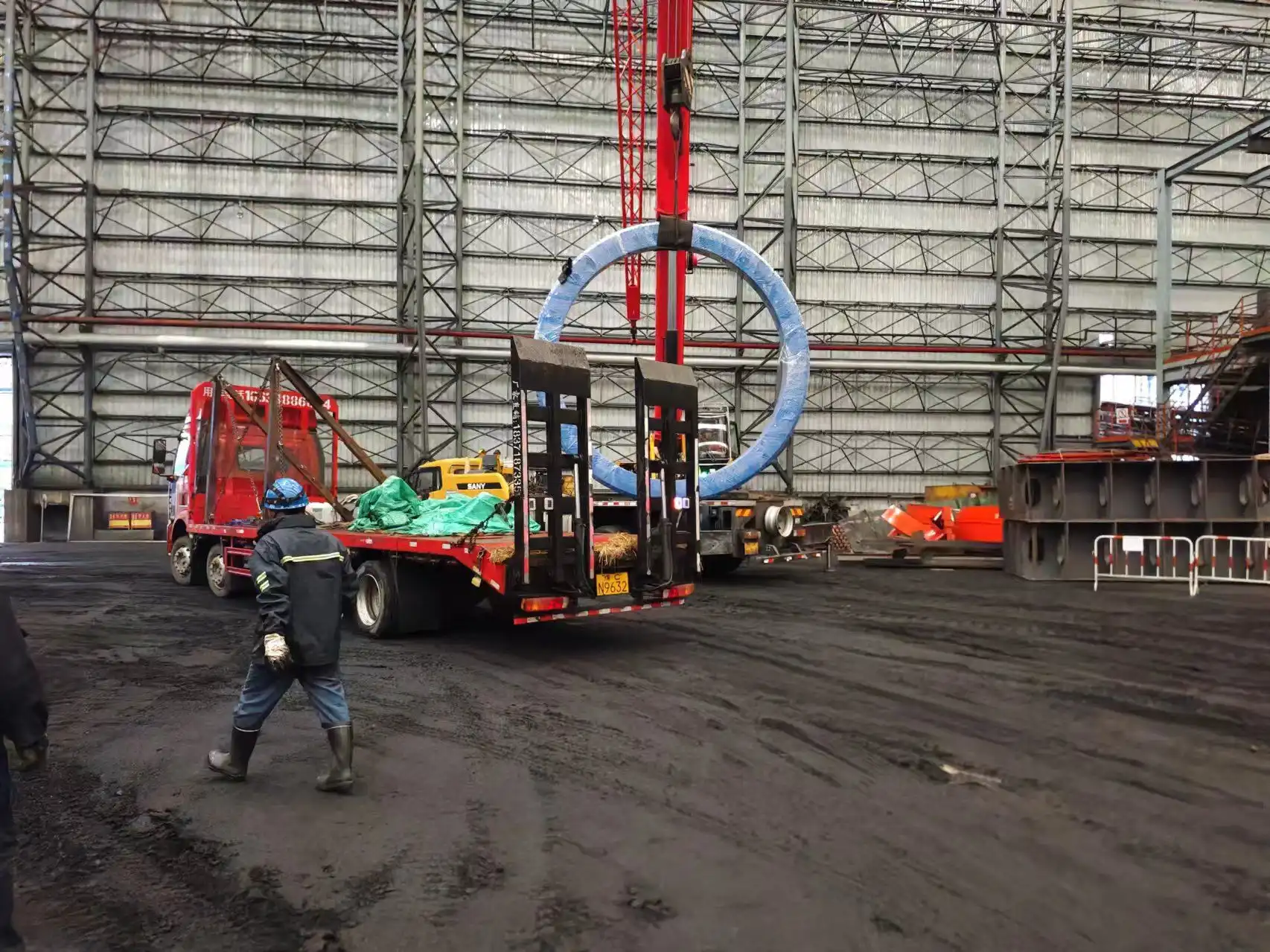
What Makes a Stacker Slewing Bearing Different from Standard Rings?
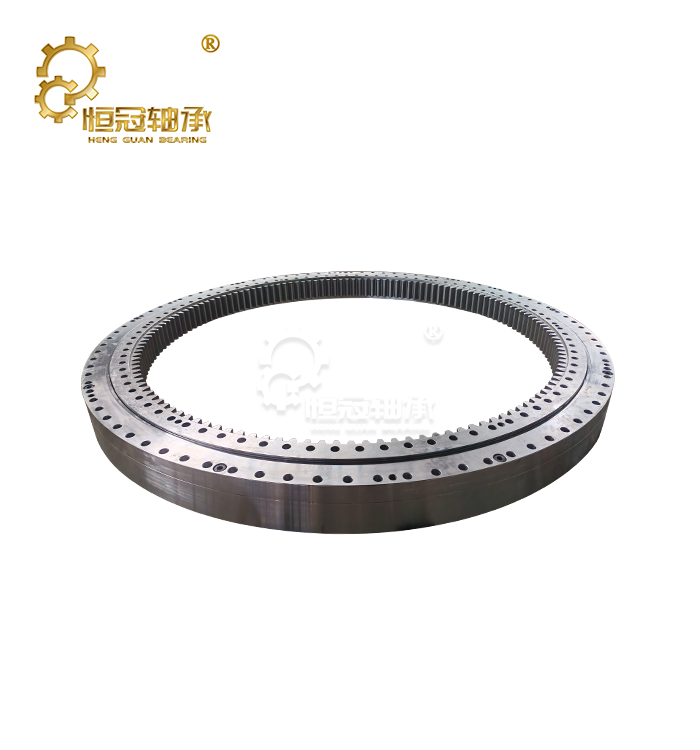
At first sight, a stacker slewing bearing looks very much like a regular slewing ring, but when you analyse the operating circumstances, the design goals are much different. Standard slewing rings are often designed for balanced or moderate loads. Such applications include rotating tables or smaller lifting platforms where the load center is reasonably near the bearing axis.
A Stacker slewing bearing, in contrast, is designed for continuous, strongly imbalanced loads – stacker reclaimers depend on a long cantilevered boom counterbalanced by a heavy weight, which means the bearing must withstand considerable overturning moments at all times. This is why reinforced raceways are used and why stricter flange flatness tolerances and higher safety factors for stacker bearings are used than for general-purpose rings. The difference is also evident in materials and operating range, with stacker grade units being made from 50Mn or 42CrMo forged alloy steel rings with GCr15SiMn rolling elements, and NBR seals that can endure the coal dust and ore powder, and a working temperature range of -20°C to +120°C, versus more modest specifications on general purpose rings. Let’s have a look next at how these variances play out in certain bearing types and load ratings under these challenging circumstances.
| Feature | Standard Slewing Ring | Stacker Slewing Bearing |
|---|---|---|
| Load profile | Balanced, moderate loads | Continuous, heavily unbalanced loads |
| Structure | Single or double row | Typically three-row roller |
| Ring / roller material | Standard steel grades | 50Mn or 42CrMo rings, GCr15SiMn rollers |
| Sealing | Standard | NBR seals reinforced against dust and debris |
| Working temperature | Narrower standard range | -20°C to +120°C |
| Safety factor | Standard industry margin | Elevated for overturning moment risk |
Stacker Slewing Bearing Types, Load Capacity, and Design Features
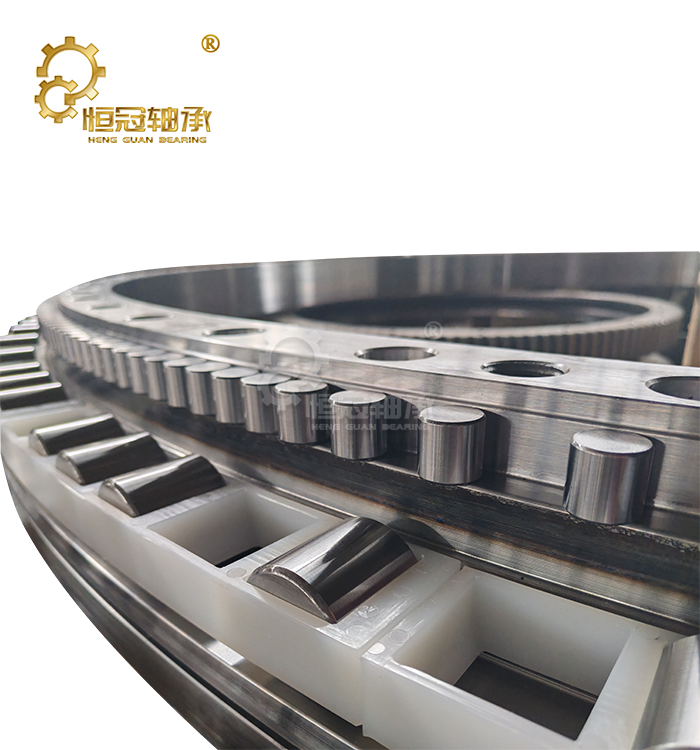
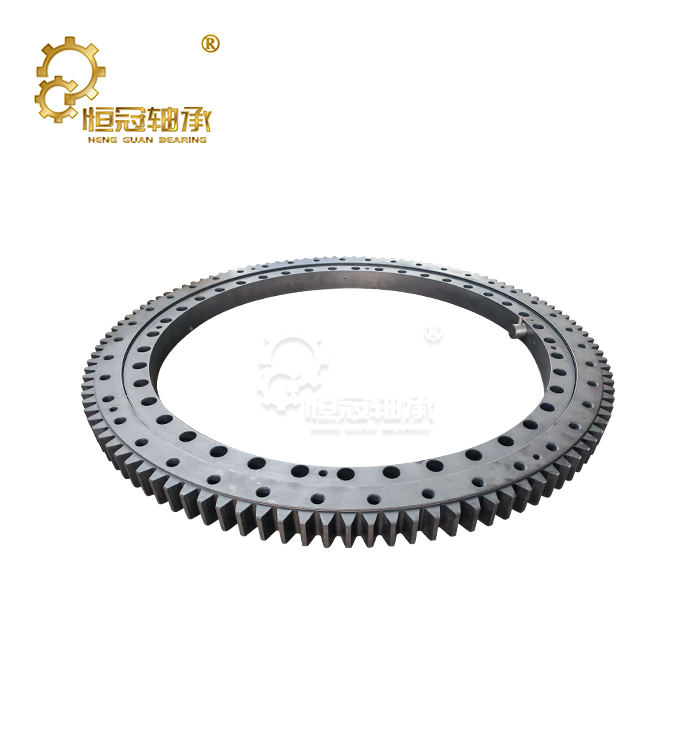
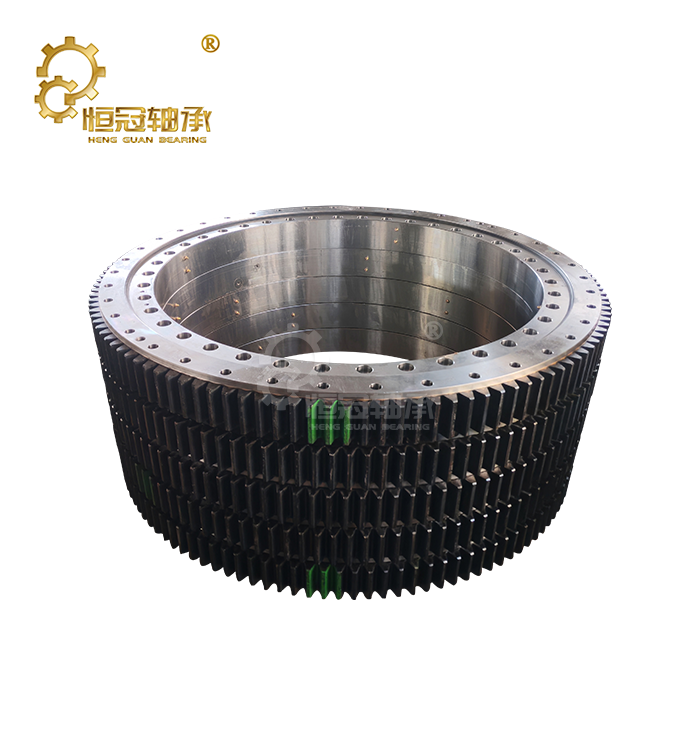
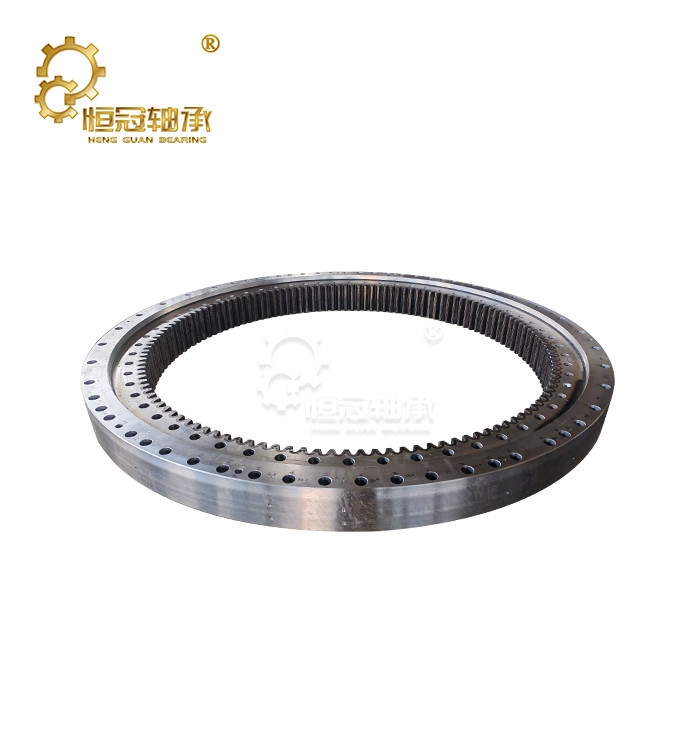
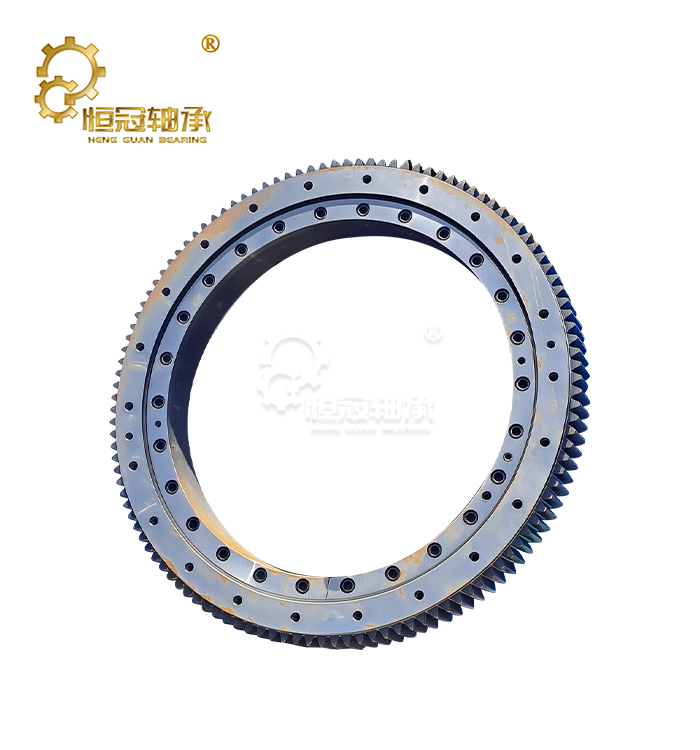
Stacker slewing bearings are most typically constructed as three-row roller assemblies. This design is chosen with this distinction in mind, since the upper, lower, and radial raceways are separated and each row of rollers bears a precisely set portion of the load. The separation enables the bearing to take axial, radial, and overturning moment loads concurrently, which is important considering the unequal loading that might occur on a stacker reclaimer structure in service. The load capacity is generally confirmed by ISO 281 calculation standards, with safety factors much beyond the industry requirement to avoid point-loading or premature wear of the raceways.
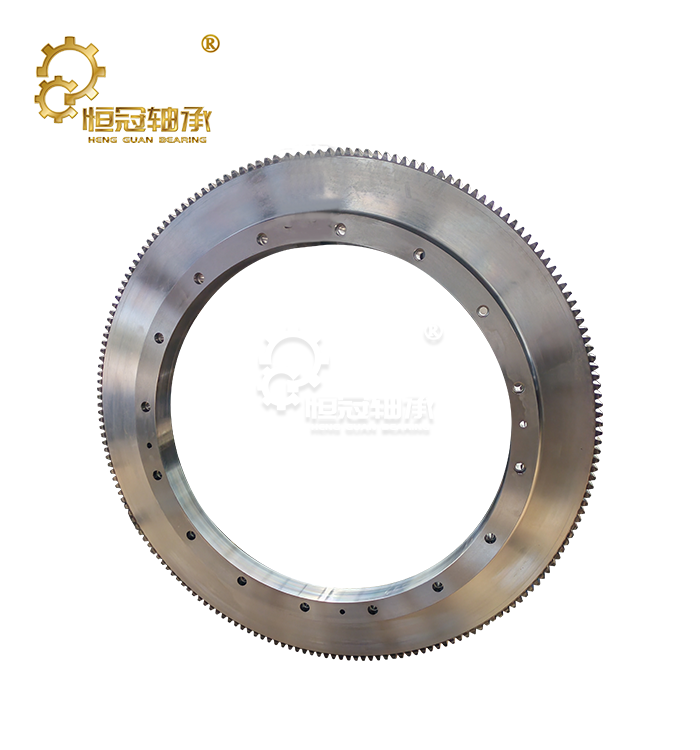
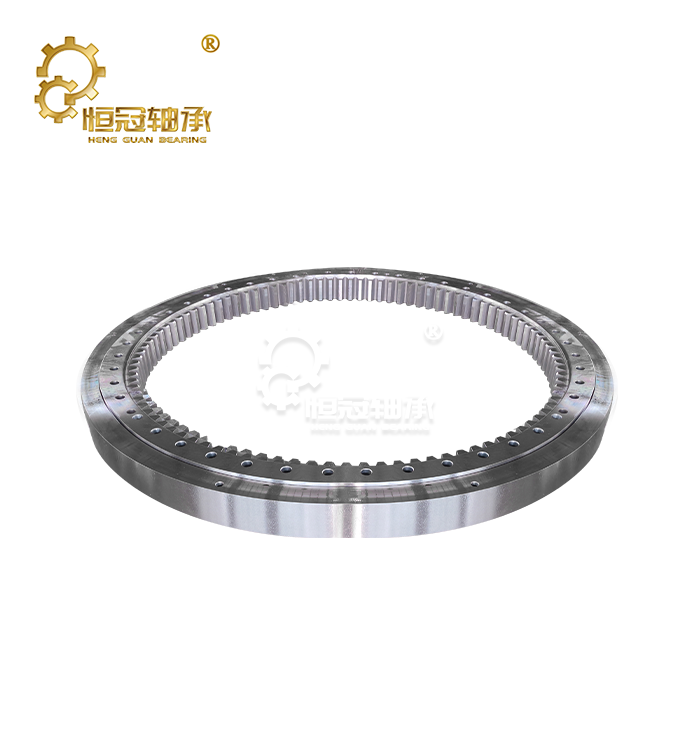
A Stacker reclaimer slew bearing will also often have mounting holes, gearing, either internal or external, lubrication points, and sealing mechanisms to prevent pollutants such as coal dust or ore powder from entering the raceway. HGB. They come in P0, P6, P5, and P4 accuracy classes – P6 for general yard duty, P5 for more accurate slewing control, and P4 for high-precision positioning, and the complete range is manufactured to DIN, ISO, and GB standards under ISO 9001 and RoHS certification. Here’s a brief assessment of how they measure up versus regular slewing rings:
| Specification | Value |
|---|---|
| Structure | Three-row roller, separate axial/radial/moment load paths |
| Machinable diameter range | 50 – 10,000 mm (custom non-standard sizes on request) |
| Accuracy classes | P0, P6, P5, P4 (P6 general duty, P5 precision, P4 high precision) |
| Ring material | 50Mn or 42CrMo high-strength alloy steel |
| Rolling elements | GCr15SiMn bearing steel |
| Seal material | Oil-resistant nitrile rubber (NBR) |
| Working temperature | -20°C to +120°C |
| Standards & certification | DIN, ISO, GB; ISO 9001 and RoHS compliant |
| Typical applications | Port ship loaders, coal yards, steel and cement stockyards |
Why Choose a Stacker Slewing Bearing for Heavy-Duty Equipment?
Choosing the right bearing for heavy-duty yard machinery isn't just about load rating on paper — it's about long-term reliability in harsh, continuous-duty environments. Stacker reclaimers operate almost non-stop at ports and bulk terminals handling iron ore, coal, and sand, so the slewing bearing at the heart of the rotation system must withstand repeated overturning moments without developing point loads that shorten service life.
This is exactly why a purpose-built stacker slewing bearing outperforms a generic ring in these conditions: its raceway geometry and material selection are matched to the specific stress pattern created by cantilevered, counterweighted structures. Because a Stacker reclaimer slew bearing replacement is a complex, costly procedure involving precise center-of-gravity calculations and synchronized hydraulic jacking, choosing a well-engineered bearing from the start significantly reduces the frequency and risk of these interventions. The same heavy-duty logic extends across the industries these machines serve — ports, power plants, steel mills, cement plants, and chemical stockyards — where dust, moisture, and round-the-clock duty put every component to the test.
If you'd like our engineers to review your equipment's load chart before you commit to a bearing type, reach out at mia@hgb-bearing.com, and our team at LYHGB will help confirm the right fit.
| Industry | Typical Application | Why Stacker-Grade Matters |
|---|---|---|
| Ports & terminals | Ship loaders, stacker-reclaimer bulk handling | Continuous duty, heavy unbalanced loads |
| Power plants | Coal yard stacking and reclaiming equipment | Dust exposure, long operating hours |
| Steel industry | Ore and coal stockyard machinery | Impact loading, abrasive contaminants |
| Cement manufacturing | Dusty material handling systems | Sealing and wear resistance in dust |
| Chemical industry | Raw material stockyards | Corrosion-resistant solutions available |
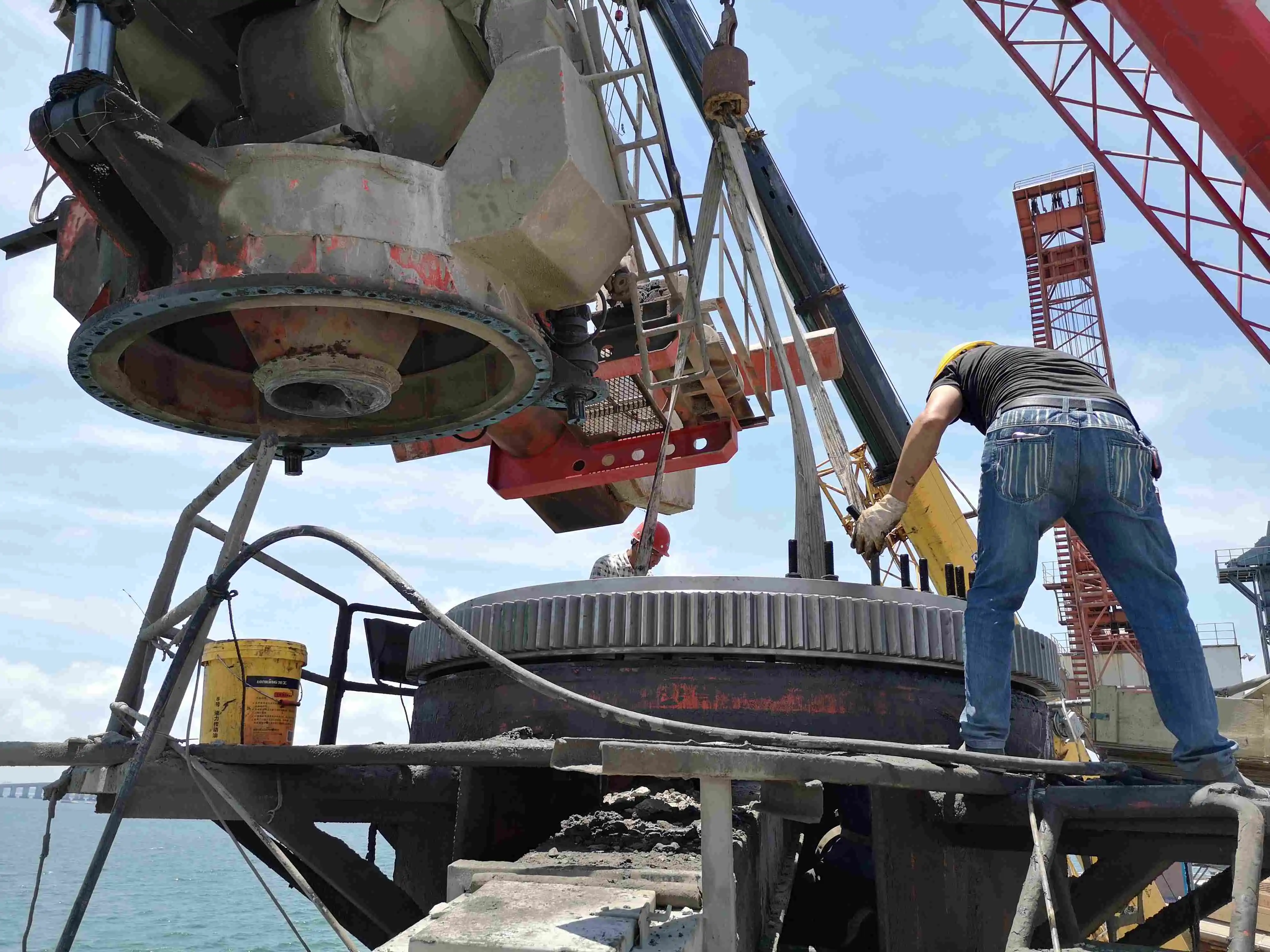
How to Select the Right Stacker Slewing Bearing for Your Application?
Selecting the right bearing starts with gathering accurate load data: static axial load, radial load, and the maximum overturning moment your equipment will generate during normal and peak operation. Next, consider the safety factor you need relative to ISO 281 calculations — most reputable stacker bearing designs target a factor well above the 1.2 industry minimum to account for eccentric loads and sudden material pile shifts. Flange flatness and bolt torque specifications also matter significantly during installation, since even small deviations can lead to point loading once the machine returns to service; bolts should be tightened in a cross-diagonal sequence and the raceway fully centered before commissioning.
Sealing and lubrication design should match your site conditions, particularly for coastal or dusty bulk-handling environments, and the unit should be re-checked every 500 working hours with vibration testing and visual inspection, with seals examined regularly and loads kept within rated values. Because every stacker reclaimer has a different boom length, counterweight, and duty cycle, LYHGB recommends starting with your actual equipment specifications rather than a catalog size:
| Selection Step | What to Check |
|---|---|
| Load data | Axial, radial, and overturning moment values |
| Safety factor | Target margin above ISO 281 minimum |
| Accuracy class | P6 general duty / P5 precision / P4 high precision |
| Installation tolerance | Flange flatness, cross-diagonal bolt tightening sequence |
| Environment | NBR sealing and lubrication matched to site conditions |
| Service interval | Vibration test and visual inspection every 500 working hours |
Our team can design a Stacker slewing bearing around your exact specifications — including custom non-standard diameters from 50 mm to 10,000 mm — helping avoid the downtime and cost associated with an undersized or mismatched bearing down the line.
Conclusion
Stacker slewing bearings are built for continuous, unbalanced heavy loads, unlike standard rings. With three-row roller construction, reinforced NBR sealing, and accuracy classes from P0 to P4, LYHGB offers engineered solutions and replacement support — Contact Us to specify the right bearing for your equipment.
FAQ
Q: What is the main difference between a stacker slewing bearing and a standard slewing ring?
A: A stacker slewing bearing is designed for continuous, heavily unbalanced loads with reinforced raceways, elevated safety factors, and dust-resistant sealing, while standard rings suit more balanced applications such as rotary tables and smaller lifting platforms.
Q: What structure is most common for stacker reclaimer slew bearings?
A: Three-row roller designs are most common, since they separate the load paths for axial, radial, and overturning moment loads, allowing each roller row to carry a precisely determined share of the total load.
Q: Why is stacker reclaimer slew bearing replacement considered complex?
A: It requires precise center-of-gravity calculations and synchronized hydraulic jacking to avoid structural imbalance during the swap — one more reason to specify a well-engineered bearing from the start.
Q: Can LYHGB customize a stacker slewing bearing for specific load charts?
A: Yes. We design bearings based on your equipment's actual axial, radial, and overturning moment data, and manufacture custom non-standard diameters from 50 mm to 10,000 mm to your drawings.
Q: What safety factor should a stacker slewing bearing meet?
A: Most designs target a safety factor well above the ISO 281 industry minimum of 1.2 to handle eccentric loads and sudden material pile shifts during operation.
Q: What accuracy classes and service checks apply to stacker slewing bearings?
A: LYHGB supplies P0, P6, P5, and P4 accuracy classes — P6 for general yard duty, P5 for precision slewing, P4 for high-precision positioning. Under normal duty, units should be checked every 500 working hours with vibration testing and visual inspection.
Request a Stacker Slewing Bearing Consultation
Need a reliable Stacker slewing bearing or replacement guidance for your reclaimer? Contact LYHGB's engineering team at mia@hgb-bearing.com today, and let's match the right bearing to your equipment's exact load and environment — from load chart review to custom three-row roller design and installation support.
References
1. Harris, T. A., & Kotzalas, M. N. (2006). Rolling Bearing Analysis: Essential Concepts of Bearing Technology (5th ed.). CRC Press.
2. Brandlein, J., Eschmann, P., Hasbargen, L., & Weigand, K. (1999). Ball and Roller Bearings: Theory, Design and Application (3rd ed.). John Wiley & Sons.
3. ISO 281:2007. Rolling bearings — Dynamic load ratings and rating life. International Organization for Standardization.
4. ISO 76:2006. Rolling bearings — Static load ratings. International Organization for Standardization.
5. ISO 4301-1:2016. Cranes — Classification — Part 1: General. International Organization for Standardization.
6. ISO 9001:2015. Quality management systems — Requirements. International Organization for Standardization.

WHAT OUR CUSTOMERS SAY
Here is the customer's evaluation of us