



Are Crossed Cylindrical Roller Bearings Right for Your Design?
The cost is high for engineers when the supporting bearing doesn’t fit. Downtime from a bearing that bends under load, positional drift that only becomes evident after the machine is on the factory floor, or a rotating axis that cannot retain tolerance under combined stress. If your design requires great stiffness, precise positioning, and the capacity to accommodate combined loads in a small footprint, Crossed Cylindrical Roller Bearings are worth a second look. LYHGB (Luoyang Heng Guan Bearing Technology Co., Ltd.) manufactures precision bearings for such rigorous specifications in bore sizes from 20 mm to 2,000 mm, cross-section heights from 5 mm to 50 mm, and accuracy grades from P0 to P4. In this post, we’ll discuss their primary benefits, when they make sense for your project, where they are most typically used, and how to choose the correct one. Let us talk about the advantages of such a bearing.
|
|
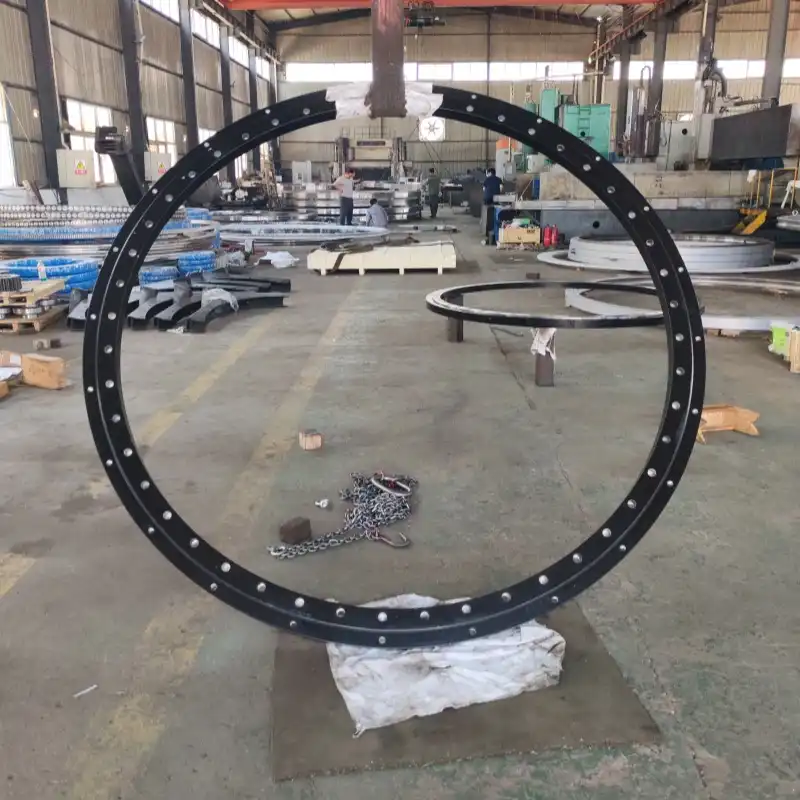
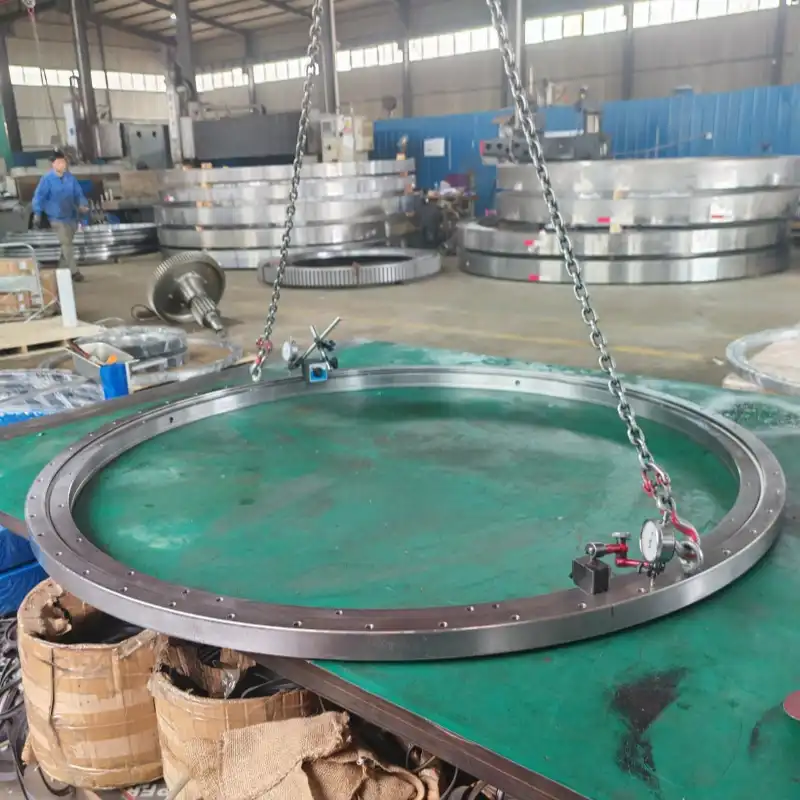
What Are the Key Advantages of Crossed Cylindrical Roller Bearings?
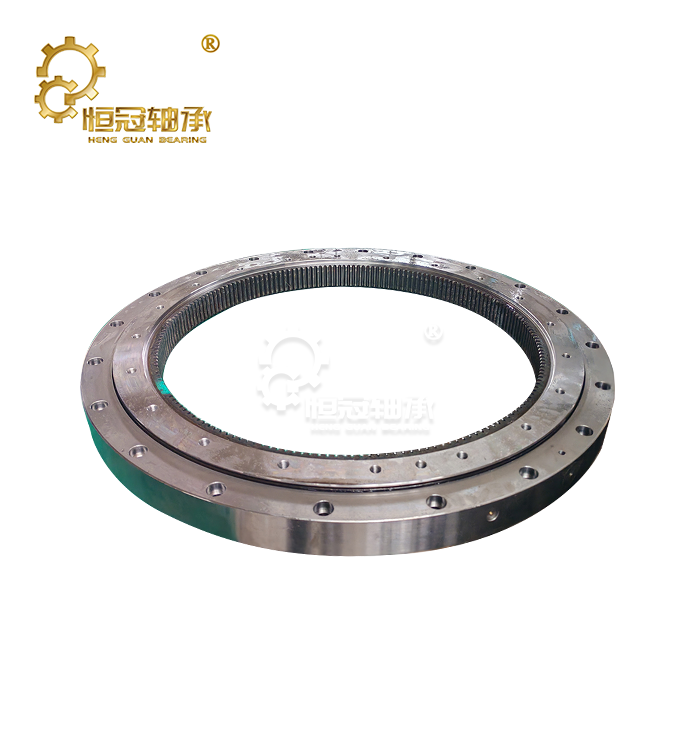
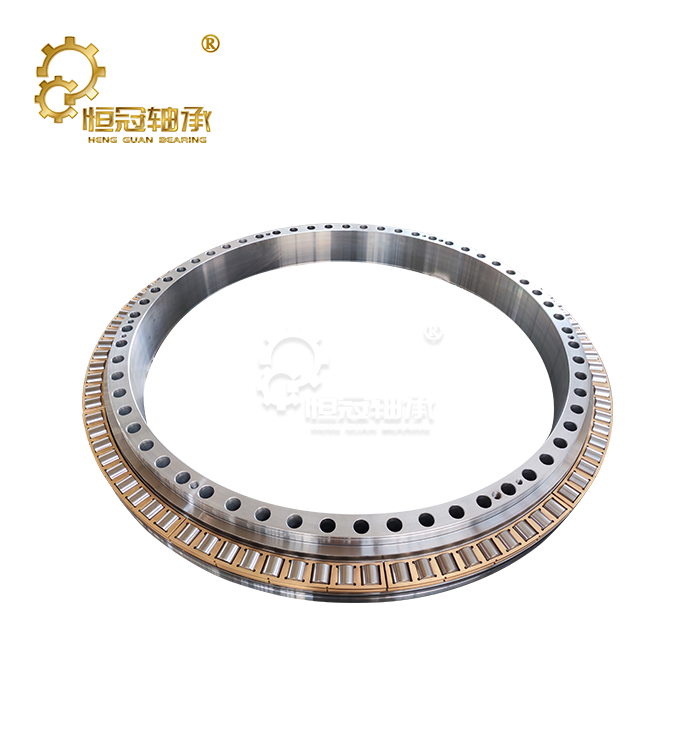
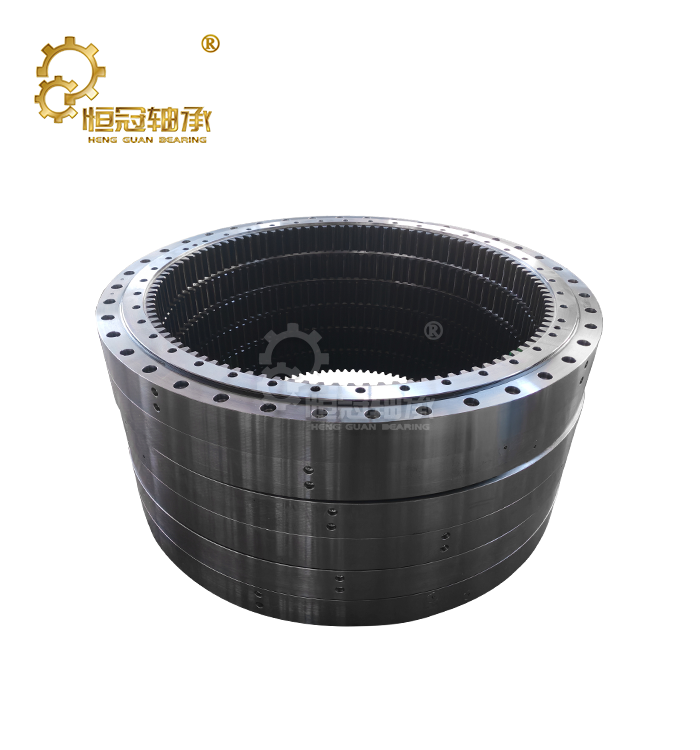
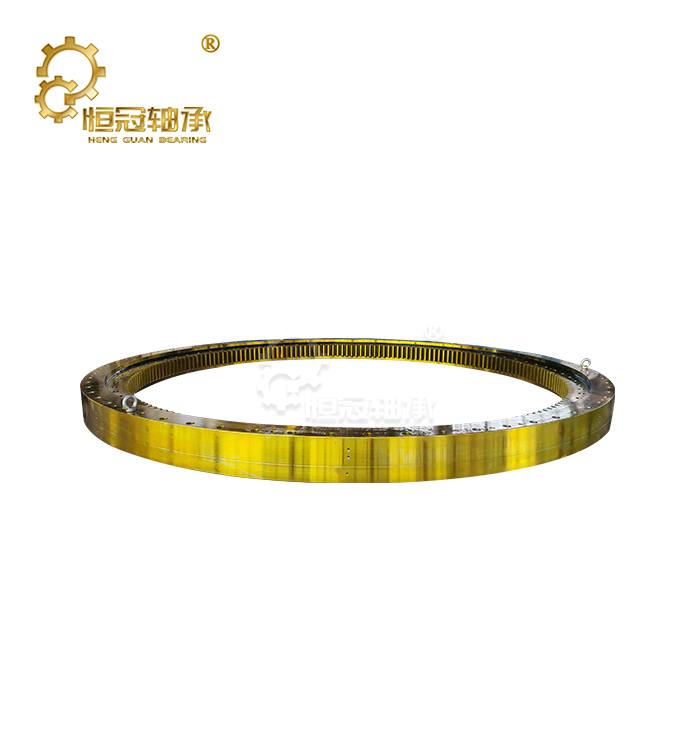
Crossed cylindrical roller bearings have rollers that are arranged in an X pattern, with the rollers alternating at 90-degree angles to each other between the inner and outer rings. This orthogonal design enables a single bearing to carry the radial, axial, and moment loads concurrently. It may commonly replace two conventional bearings in a back-to-back arrangement, reducing both space and weight. Because rollers make line contact rather than point contact, the load is dispersed across a greater surface area, lowering the contact stress and enabling the bearing to handle higher loads than a ball bearing of equivalent size. This design also offers good rigidity, since the elastic deflection is reduced by the line contact and the positioning precision is maintained under severe loads.
The V-shaped raceway grooves evenly distribute the contact stress across the whole length of the roller, and precise spacers between rollers avoid skewing and direct roller-to-roller friction; all this results in the elimination of internal clearance and zero-backlash performance. As you can see, these properties make Crossed Cylindrical Roller Bearings particularly advantageous when compact size, high stiffness, and support of loads from many directions all matter at once.
| Specification | Value |
|---|---|
| Bearing structure | Crossed cylindrical rollers, 90° alternating arrangement |
| Bore diameter range | 20 – 2,000 mm |
| Cross-section height | 5 – 50 mm (ultra-thin design) |
| Raceway design | V-shaped grooves, uniform contact stress along roller length |
| Roller separation | Precision spacers prevent skewing and direct contact |
| Ring material | 50Mn or 42CrMo forged alloy steel |
| Roller material | GCr15 high-purity bearing steel |
| Precision classes | P0, P6, P5, P4 |
| Seal type | NBR (nitrile rubber), IP54 dust and splash protection |
| Operating temperature | -30°C to +100°C (standard) |
When Should You Choose Crossed Cylindrical Roller Bearings?
With these benefits in mind, when does this style of bearing truly make sense for your design? As a rule of thumb, if you want to combine a small area with excellent rotational precision and stiffness, crossed cylindrical roller bearings are the perfect solution for your application. If your design already has two angular contact customized crossed roller bearings back-to-back only to handle axial loads from both directions, a single crossed roller bearing may simplify the assembly a bit. They are especially well suited for situations when there are tilting moments in addition to radial and axial loads, since the crossing arrangement can take all three at the same time without the need for any further parts.
In the case of extremely high-speed rotation and smaller weights, a conventional ball bearing may still be a more cost-efficient solution. LYHGB's customised crossed roller bearings let you choose the exact stiffness and clearance required for your design, rather than settling for an off-the-shelf part for projects with unusual bore sizes, preload requirements, or mounting geometry — including non-standard diameters made to your drawings or reverse-engineered from an existing sample. The suitability of this kind of bearing for typical design criteria is summarised in the table below.
| Design Requirement | Crossed Roller Bearing Fit |
|---|---|
| High rigidity, compact space | Excellent |
| Combined radial, axial, tilting loads | Excellent |
| Very high speed, light load only | Consider ball bearing instead |
| Custom bore or preload needs | Customized crossed roller bearing |
Crossed Cylindrical Roller Bearings for Robotics, CNC, and Precision Equipment
Precision-driven industries are where crossed cylindrical roller bearings truly shine. In industrial robotics, they're commonly used in RV reducers and six-axis robot joint modules, where high rigidity and moment-load capacity enable faster, more repeatable movements — a critical factor as robotic arms and even humanoid robots demand finer motion control. In CNC machining, these bearings support spindles, rotary tables, and milling or grinding equipment, where their ability to handle radial and axial loads together helps maintain tight tolerances and reduce vibration during cutting operations. Semiconductor and medical equipment manufacturers also rely on this design for wafer-handling robots, lithography tools, and CT gantry rotation, where positional accuracy and minimal friction torque are non-negotiable. Defense and aerospace applications — radar antenna positioners, optical tracking platforms — and precision measurement systems add their own demands for zero-backlash rotation under multi-directional loading.
If your engineering team needs technical drawings or load calculations for any of these applications, our team is reachable at mia@hgb-bearing.com for direct support. Across all these fields, the common thread is a need for smooth, precise, and reliable rotation in a limited footprint.
| Industry | Typical Application | Why It Matters |
|---|---|---|
| Industrial robotics | RV reducers, 6-axis robot joint modules | High rigidity, repeatable motion |
| Precision CNC | 5-axis machining center rotary tables | Combined load support, low vibration |
| Semiconductor | Wafer-handling robots, lithography tools | Positioning accuracy, minimal friction torque |
| Medical equipment | CT gantry rotation | Smooth, precise rotation in compact space |
| Defense & aerospace | Radar antenna positioners, optical tracking platforms | Multi-directional load capacity, zero backlash |
| Precision measurement | Optical positioning and inspection systems | Stable accuracy, minimal deflection |

How to Select Crossed Cylindrical Roller Bearings for Your Design?
Selecting the right bearing starts with clearly defining your load conditions — radial, axial, and any tilting moments your assembly will experience during operation. Next, consider mounting space and bore diameter, since customized crossed roller bearings are prized for their compact profile, but the available envelope will still shape flange and housing dimensions. Preload and clearance matter too: applications like CNC spindles or robotic joints typically benefit from a preloaded configuration to virtually eliminate clearance and maximize positioning accuracy, while general-purpose applications may use normal clearance.
Precision grade is another factor, and LYHGB manufactures to P0, P6, P5, and P4 accuracy levels depending on how tight your tolerances need to be — P5 is suitable for most industrial robots, while P4 supports collaborative robots with positioning repeatability below 0.02 mm.
Finally, think about material, sealing, and lubrication requirements, particularly if your equipment operates in a corrosive or contaminated environment: standard NBR seals with IP54 protection handle most shops, while marine or chemical exposure calls for upgraded seals and anti-corrosion coatings, and rotation above 500 rpm typically requires oil lubrication engineering guidance rather than the standard NLGI 2 lithium grease (re-lubricate every 2,000 hours and check for abnormal noise or temperature rise every 500 hours under normal conditions). Let's summarize these selection factors below:
| Selection Factor | What to Consider |
|---|---|
| Load type | Radial, axial, tilting moment combinations |
| Precision class | P0 / P6 / P5 (most industrial robots) / P4 (cobots, repeatability < 0.02 mm) |
| Preload/clearance | Preloaded for precision, normal for general use |
| Lubrication | NLGI 2 lithium grease standard; oil lubrication consult for > 500 rpm |
| Sealing | NBR / IP54 standard; upgraded seals + anti-corrosion coating for marine/chemical |
| Operating temperature | -30°C to +100°C (standard) |
| Custom lead time | 4 – 6 weeks for non-standard sizes, depending on complexity and quantity |
Because every design has different priorities, LYHGB works directly with engineering teams to recommend or build a customized crossed roller bearing that fits the actual application rather than a generic standard part — supported by a 50-person engineering team for sizing, custom design, and installation guidance, with quality verified through spectral chemical analysis, ultrasonic inspection, CMM measurement, and surface hardness testing.
Conclusion
Crossed Cylindrical Roller Bearings deliver rigidity, precision, and compact multi-load support for robotics, CNC, and precision equipment — from the 90° crossed roller geometry that eliminates clearance, to the line-contact design that carries higher combined loads than ball bearings of the same envelope. With bore diameters from 20 mm to 2,000 mm, precision classes from P0 to P4, and full customization including reverse engineering and corrosion-resistant sealing, LYHGB Bearing can help you choose or customize the right fit — reach out today.
FAQ
Q: What loads can crossed cylindrical roller bearings handle?
A: They handle radial, axial, and tilting moment loads simultaneously in a single compact bearing. The 90° crossed roller arrangement means one bearing can replace two conventional bearings in a back-to-back configuration, and the line-contact design provides significantly higher rigidity and load capacity than a point-contact ball bearing of similar size.
Q: How do crossed roller bearings compare to standard ball bearings?
A: Crossed roller bearings offer higher rigidity and load capacity due to line contact, and their V-shaped raceways distribute contact stress uniformly along the roller length, which minimizes deflection under load. Ball bearings may still suit lighter, very high-speed applications where extreme stiffness is not the priority.
Q: Can LYHGB produce customized crossed roller bearings?
A: Yes. We tailor bore size, preload, precision grade, and sealing to match your specific design requirements. Non-standard diameters can be manufactured to your drawings or reverse-engineered from an existing sample, with a typical lead time of 4–6 weeks depending on complexity and quantity.
Q: What precision grades are available for these bearings?
A: LYHGB manufactures crossed cylindrical roller bearings in P0, P6, P5, and P4 accuracy grades. P5 covers most industrial robotics applications, while P4 supports collaborative robots and ultra-precision equipment, with positioning repeatability below 0.02 mm.
Q: Which industries commonly use crossed cylindrical roller bearings?
A: Robotics (RV reducers and joint modules), CNC machining (spindles and 5-axis rotary tables), semiconductor equipment (wafer handling and lithography), medical devices (CT gantries), and defense/aerospace (radar and optical tracking platforms) are among the most common applications.
Q: What lubrication and maintenance do these bearings require?
A: Standard units are greased with NLGI 2 lithium grease and re-lubricated every 2,000 hours under normal conditions, with a visual and noise check every 500 hours. For rotation speeds above 500 rpm, contact the engineering team for oil lubrication recommendations.
Discuss Your Bearing Requirements With Our Team
Not sure which Crossed Cylindrical Roller Bearings fit your design? Contact LYHGB's engineers at mia@hgb-bearing.com for a personalized recommendation or customized crossed roller bearing quote — our team will help you match precision class, preload, sealing, and custom sizing to your exact load case, so your project achieves the precision and rigidity it needs.
References
References
1. Harris, T. A., & Kotzalas, M. N. (2006). Rolling Bearing Analysis: Essential Concepts of Bearing Technology (5th ed.). CRC Press.
2. Slocum, A. H. (1992). Precision Machine Design. Society of Manufacturing Engineers.
3. ISO 281:2007. Rolling bearings — Dynamic load ratings and rating life. International Organization for Standardization.
4. ISO 76:2006. Rolling bearings — Static load ratings. International Organization for Standardization.
5. ISO 9409-1:2004. Manipulating industrial robots — Mechanical interfaces — Part 1: Plates. International Organization for Standardization.
6. ISO 492:2014. Rolling bearings — Radial bearings — Geometrical product specifications (GPS) and tolerance values. International Organization for Standardization.

WHAT OUR CUSTOMERS SAY
Here is the customer's evaluation of us