



Why Choose a High-Precision Rotary Table Bearing for Automation?
When automated equipment must position a workpiece with micron-level accuracy, the bearing supporting that rotation is rarely an afterthought — and choosing the wrong one shows up fast: scrap parts at the inspection station, indexing drift that creeps in over a shift, or a rotary axis that won't hold tolerance once the spindle warms up. At Heng Guan Bearing, we see this decision made every day by engineers who need a Rotary Table Bearing that can carry radial, axial, and tilting-moment loads at once, without sacrificing repeatability. Built on Luoyang's bearing-manufacturing heritage, our rotary table bearing series covers diameters from 50 mm to 10,000 mm, in P0 through P4 accuracy grades, with gear precision to Class 6. This article walks through what makes these bearings suited to automation, how accuracy and runout shape real-world performance, how to choose the right one, and where they end up doing the heavy lifting across modern industry. If you have been comparing suppliers, keep reading — by the end, you should have a clearer picture of what to look for.

What Makes a Rotary Table Bearing Ideal for High-Precision Automation?
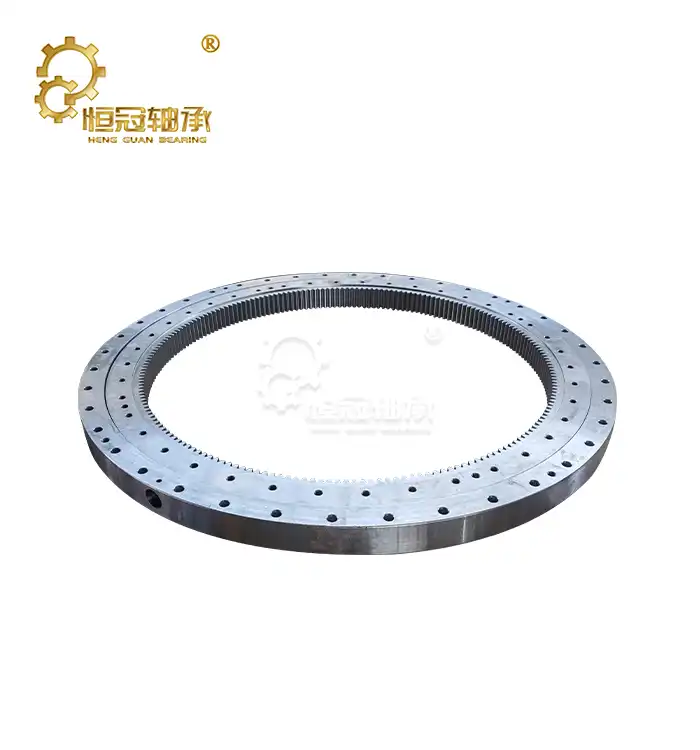
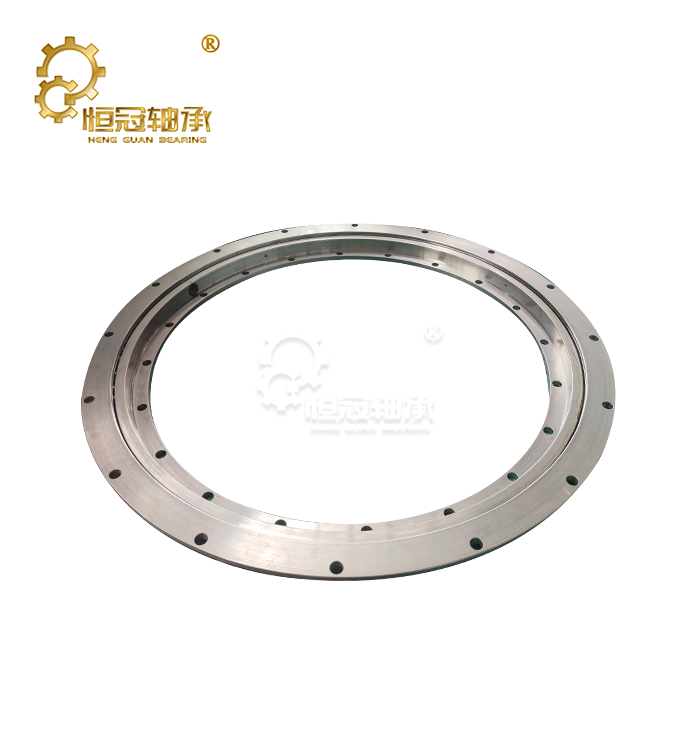
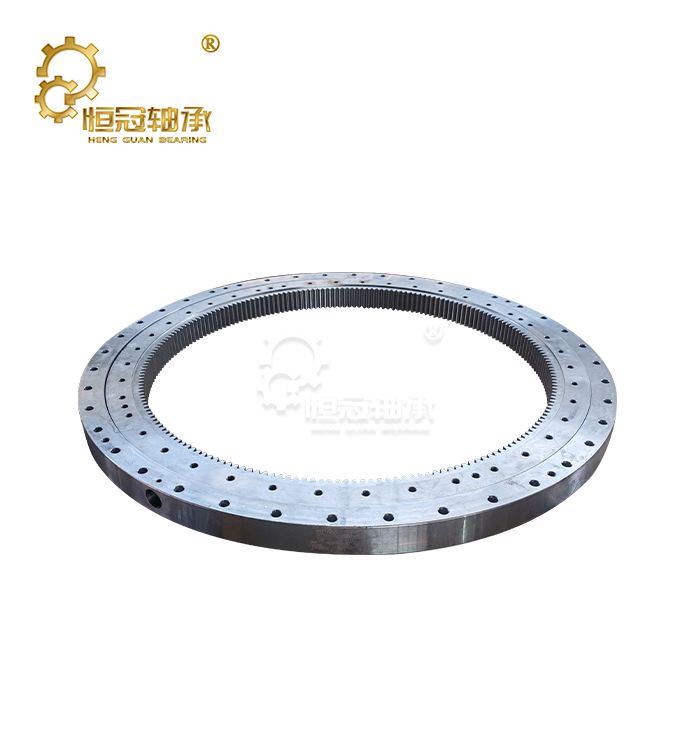
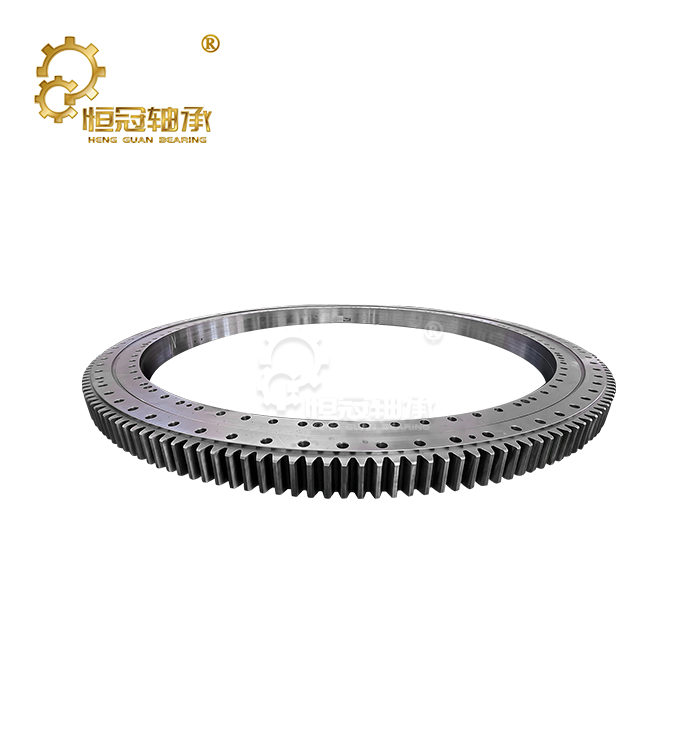
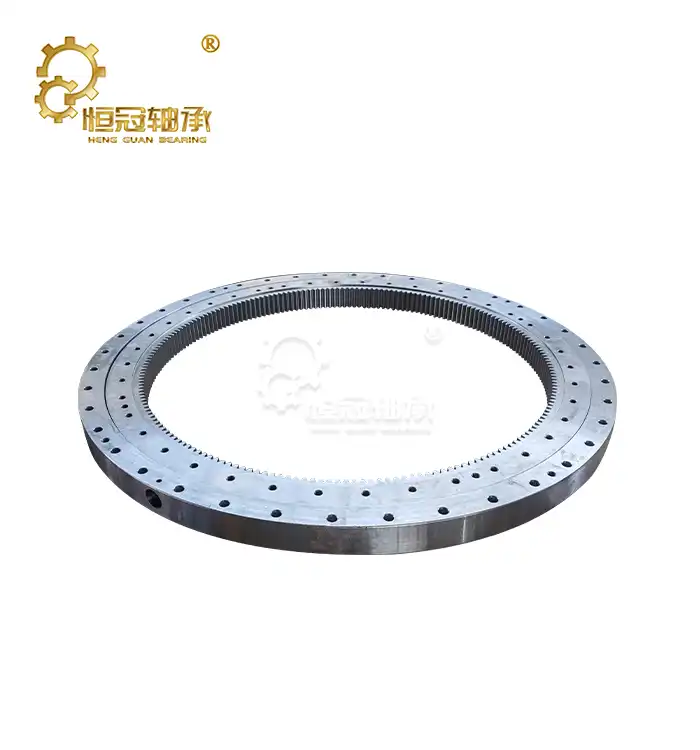
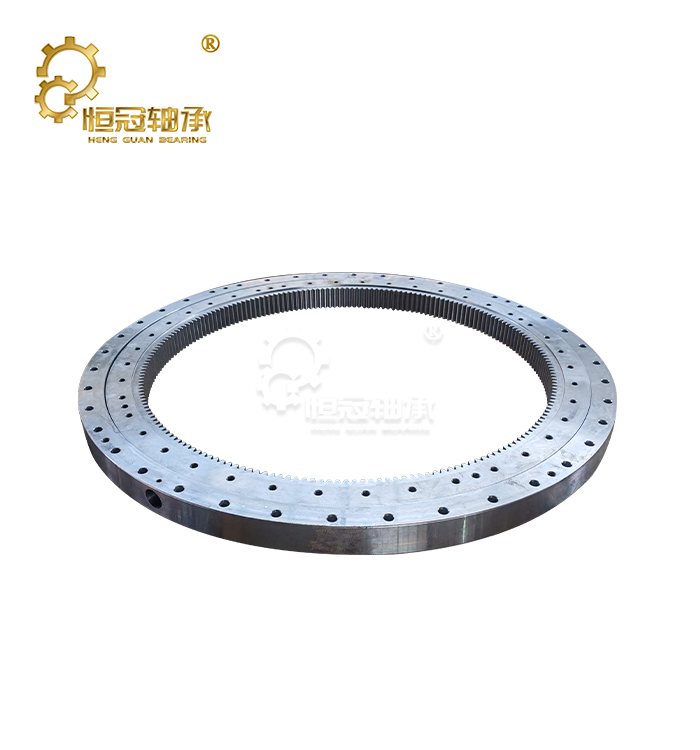
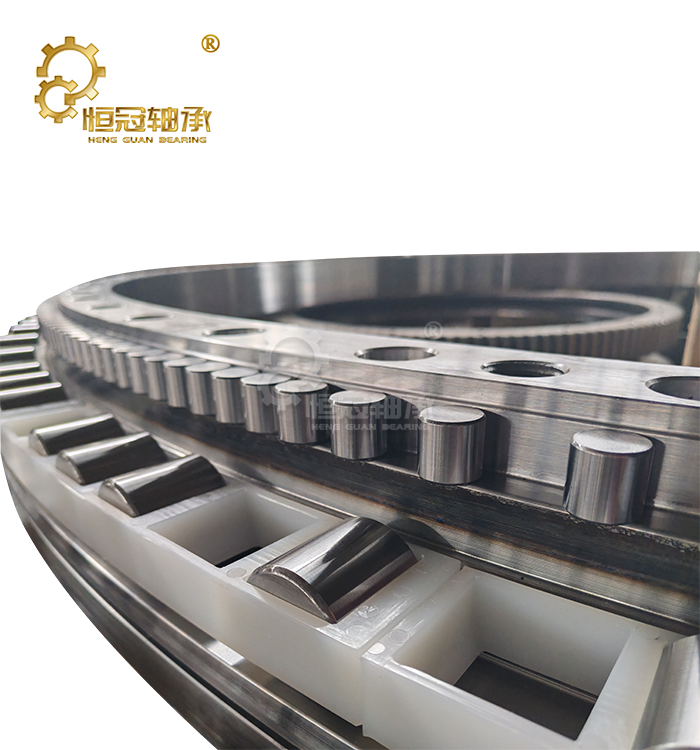
A rotary table bearing is built differently from a general-purpose ball or roller bearing. Instead of handling a single load direction, it combines radial rollers with two rows of axial thrust rollers (or a four-point-contact ball arrangement) inside one compact ring, so a single component absorbs radial load, axial load, and tilting moment simultaneously. That simplifies the mechanical design of a rotary table dramatically, since designers no longer need to stack separate radial and thrust bearings.
Let's break down why this matters for automation: fewer components mean fewer tolerance stack-ups, easier mounting, and a lower risk of misalignment over the machine's service life. At Heng Guan Bearing, our rotary table bearing series is manufactured with pre-set preload, so it arrives ready to install without field adjustment, and its integrated one-piece construction reduces the number of assembly parts for a more compact, dimensionally stable package. This is exactly the kind of plug-and-play reliability that automated cells, indexing tables, and robotic joints depend on for consistent, repeatable motion cycle after cycle.
| Specification | Value |
|---|---|
| Standard product size | 540 mm × 360 mm × 60 mm (reference unit) |
| Machinable diameter range | 50 – 10,000 mm (custom on request) |
| Accuracy classes | P0, P6, P5, P4 |
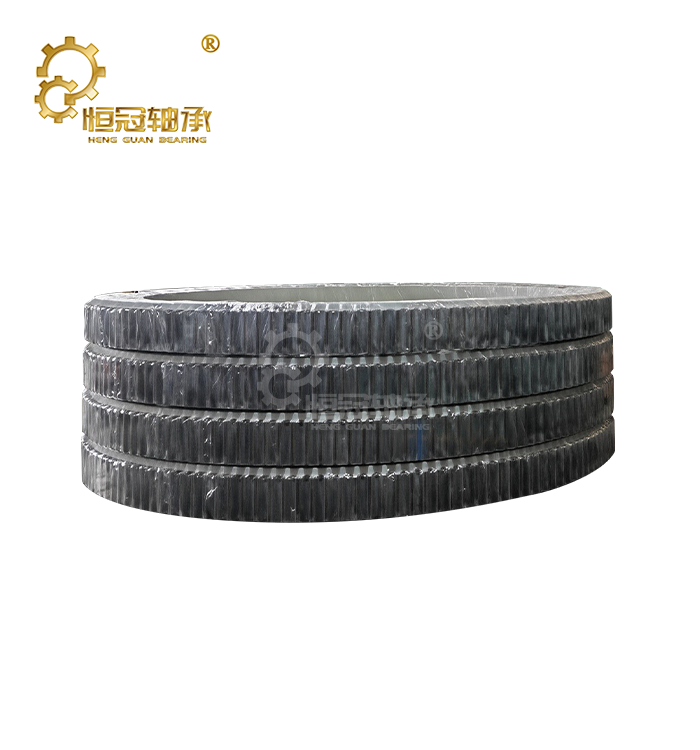
| Gear precision | Class 6 (ground gear) |
| Axial / radial clearance | 0.03 – 0.04 mm |
| Ring material | 50Mn or 42CrMo high-strength alloy steel |
| Rolling elements | GCr15SiMn bearing steel |
| Gear surface hardness | HRC 45 – 55 (case-hardened, tough core) |
| Seal | Integrated NBR (oil-resistant, wear-resistant) |
| Standards & certification | ISO, DIN (noise), GB; ISO 9001 and RoHS compliant |
How Do Accuracy and Runout Affect Rotary Table Bearing Performance?
Accuracy and runout are the two figures that determine whether a Rotary Table Bearing will actually deliver on its promise. Runout describes how much the rotating ring deviates from a perfect circular path, and even a few microns of deviation can translate into visible positioning error at the tool tip or sensor head. Naturally, this is why precision grade matters so much when comparing options. Our rotary table bearing line covers P0, P6, P5, and P4 accuracy grades, letting engineers match the grade to the application rather than overpaying for tolerances they don't need. Ground-to-Class-6 gearing and a controlled axial/radial clearance of 0.03–0.04 mm further tighten the assembly's effective runout, while case-hardened gear surfaces (HRC 45–55) keep that precision stable as loads cycle over time. Below is a simplified comparison of how grade generally relates to typical use:
| Precision Grade | Typical Runout Behavior | Common Use Case |
|---|---|---|
| P0 | Standard accuracy | General indexing tables |
| P6 | Improved accuracy | Light automation, conveyors |
| P5 | High accuracy | CNC rotary axes, robotics |
| P4 | Ultra-high accuracy | Metrology, optical inspection |
It's worth noting that runout is influenced not only by the bearing itself but also by mounting surface flatness, bolt torque uniformity, and thermal expansion during operation — factors worth reviewing together with your bearing supplier before final assembly. Each Heng Guan Bearing unit is verified through CMM measurement, vibration analysis, dimensional checks, and functional rotation testing, with full traceability from raw material to finished product.
How to Select the Right Rotary Table Bearing for Automated Equipment?
Choosing a Rotary Table Bearing is less about picking the "best" bearing and more about matching specifications to the actual duty cycle. Start by identifying combined load conditions: how much radial force, axial force, and tilting moment the table will see under worst-case payload. Next, consider rotational speed and duty cycle, since continuous high-speed indexing calls for different lubrication and cage design than intermittent positioning. Feel free to reach out to our engineering team at mia@hgb-bearing.com if you'd like help matching a bearing profile to your load case — we walk customers through this regularly.
Bore diameter, flange style, and sealing also matter: automation environments often expose bearings to dust, coolant mist, or washdown, so sealing selection should not be an afterthought, and the integrated NBR seal should be paired with a compatible grease at the manufacturer-recommended interval (avoid over-lubrication, which raises operating temperature). The table below outlines a few common selection factors side by side.
| Selection Factor | Question to Ask | Why It Matters |
|---|---|---|
| Combined load | What is the peak radial/axial/moment load? | Prevents premature wear |
| Precision grade | What positioning tolerance is required? | Determines P0–P4 selection |
| Clearance | Is 0.03–0.04 mm acceptable? | Sets effective runout envelope |
| Sealing | Is the environment dusty or wet? | Protects the raceway from contamination |
| Mounting | Flanged, thin-wall, or standard? | Affects overall table footprint |
| Custom lead time | Standard (in stock) or custom (4–6 weeks)? | Shapes project schedule |
Working through these questions with a supplier that offers customized, flexible production — including non-standard sizes and special gears from 50 mm to 10,000 mm, built to 2D/3D drawings or reverse-engineered from an existing sample — generally produces a better long-term fit for automated equipment.
|
|
Where Are High-Precision Rotary Table Bearings Used in Modern Automation?
Rotary Table Bearings show up wherever a machine needs to rotate something precisely and hold that position under load. In CNC machining centers, they support the A and C rotary axes on 5-axis machines, enabling complex tool paths with minimal backlash. In robotics, they form the rotary joints that carry heavy payloads while maintaining repeatable positioning across millions of cycles. Coordinate measuring machines and optical inspection systems rely on the same bearing family for stable, near-zero-play rotation during measurement. Beyond machine tools, Heng Guan Bearing's rotary table bearing products also serve turntables in packaging automation, indexing stations on assembly lines, and rotary platforms in semiconductor and medical device manufacturing. Given how broadly this component is deployed, it's easy to see why so many automation engineers treat bearing selection as a core design decision rather than a late-stage purchasing item, and why choosing an experienced manufacturer matters as much as the part number itself.
| Industry | Typical Application | What the Bearing Delivers |
|---|---|---|
| CNC machine tools | 5-axis A/C rotary axes, precision spindles | Minimal backlash, stable runout |
| Robotics | Heavy-payload rotary joints, positioners | Repeatable positioning, long cycle life |
| Metrology & inspection | CMMs, optical inspection systems | Near-zero-play rotation |
| Packaging automation | Rotary turntables, indexing stations | Smooth duty cycling, sealing against dust |
| Semiconductor & medical | Rotary platforms in wafer and device handling | High accuracy in clean, controlled environments |
Conclusion
A high-precision Rotary Table Bearing simplifies automated equipment while improving accuracy and reliability. With integrated one-piece construction, P0–P4 accuracy, Class 6 ground gearing, and case-hardened raceways, Heng Guan Bearing — built on Luoyang's bearing-manufacturing heritage — is ready to help engineer the right solution for your project.
FAQ
Q: What load types can a rotary table bearing support at once?
A: Radial load, axial load from both directions, and tilting moment — all within a single compact bearing. The integrated one-piece design replaces separate radial and thrust bearings, reducing part count and tolerance stack-up.
Q: Which precision grade should I choose for CNC rotary axes?
A: P5 or P4 is typically recommended for CNC and robotic applications requiring tight positioning accuracy. P6 suits lighter automation such as conveyors, while P0 covers general indexing tables.
Q: Does a rotary table bearing need field adjustment after installation?
A: No. Heng Guan Bearing's rotary table bearings are preloaded and set at the factory, so no clearance adjustment is needed — clean the mounting faces, lubricate the contact surfaces, position the bearing carefully, tighten bolts in a cross-pattern to the specified torque, and verify smooth rotation before full commissioning.
Q: What causes a runout error in a rotary table bearing?
A: Bearing tolerance grade, mounting surface flatness, bolt torque uniformity, and thermal expansion during operation all contribute to runout. A controlled axial/radial clearance of 0.03–0.04 mm and Class 6 ground gearing help keep it within spec.
Q: What size range does Heng Guan Bearing produce for rotary table bearings?
A: We manufacture slewing and rotary table bearings from 50 mm up to 10,000 mm in diameter, across P0–P4 grades. Standard units ship from stock within about one week; custom non-standard sizes and special gears take 4–6 weeks depending on specification and quantity.
Q: What sealing and lubrication do these bearings require?
A: An integrated NBR seal keeps lubricant in and contaminants out. Use a grease compatible with nitrile rubber at the manufacturer-recommended interval, and avoid over-lubrication, which raises operating temperature — seals should also be inspected regularly for tightness.
Ready to Discuss Your Rotary Table Bearing Project?
Whatever your load, speed, or accuracy requirements, Heng Guan Bearing's engineering team can design a Rotary Table Bearing tailored to your automated equipment — from standard stocked sizes to custom non-standard diameters built to your 2D/3D drawings. Email us at mia@hgb-bearing.com today, and let's build a solution that keeps your production running precisely, on time, every time.
References
1. Harris, T. A., & Kotzalas, M. N. (2006). Essential Concepts of Bearing Technology (5th ed.). CRC Press.
2. Slocum, A. H. (1992). Precision Machine Design. Society of Manufacturing Engineers.
3. International Organization for Standardization. (2007). ISO 281:2007: Rolling bearings — Dynamic load ratings and rating life. ISO.
4. International Organization for Standardization. (2006). ISO 76:2006: Rolling bearings — Static load ratings. ISO.
5. International Organization for Standardization. (2023). ISO 492:2023: Rolling bearings — Radial bearings — Geometrical product specifications (GPS) and tolerance values. ISO.
6. International Organization for Standardization. (2015). ISO 9001:2015: Quality management systems — Requirements. ISO.

WHAT OUR CUSTOMERS SAY
Here is the customer's evaluation of us